摩尔定律

Search documents
关闭六英寸晶圆厂,构成风险
半导体芯闻· 2025-08-19 10:30
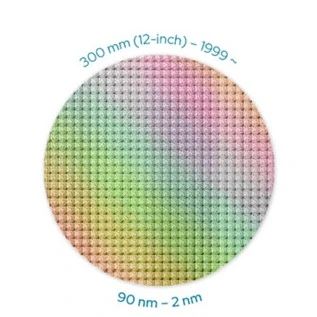
Core Viewpoint - The discontinuation of 150mm CMOS production represents not just a product change but a structural industry risk, particularly affecting manufacturers reliant on stable integrated circuit supplies in sectors like automotive, industrial, medical, and aerospace [1][11]. Group 1: Industry Challenges - The halt of 150mm wafer CMOS production marks the end of 0.6-micron and larger process nodes, posing challenges for manufacturers in various industries that still utilize these mature nodes for analog and mixed-signal ICs [1][2]. - The decline in 150mm wafer production has made the supply of direct and indirect materials more difficult and expensive, leading many foundries to cease production [5][6]. - The urgent timeline imposed by product discontinuation notifications creates significant pressure on companies to quickly assess customer needs and plan for replacements [6]. Group 2: Transition to New Technologies - Many manufacturers are not directly adopting processes below 130nm on 300mm wafers but are instead transitioning to 200mm wafers using 350nm or 180nm nodes, balancing efficiency, design simplicity, and long-term viability [7]. - The 350nm node is particularly suitable for analog ASICs, supporting high-voltage transistors and low-noise analog devices, making it ideal for mixed-signal, sensor fusion, power management ICs, and motor control applications [10]. Group 3: Market Dynamics - The global supply chain for 200mm wafers remains strong, with over 38% of monthly wafer production in Q3 2023 being for nodes larger than 90nm, ensuring continued material and equipment supply [9][10]. - The transition from 150mm to 300mm wafers is economically unfeasible for small batch production due to significantly higher development and mask costs [9][10].

一家初创公司,要颠覆传统CPU
半导体行业观察· 2025-08-14 01:28
Core Viewpoint - NeoLogic, an Israeli semiconductor startup, aims to develop energy-efficient server CPUs using a new design method called "CMOS+" to address the limitations of traditional chip design and the increasing energy demands of data centers [2][3][6]. Group 1: Company Overview - NeoLogic was founded in 2021 by Avi Messica and Ziv Leshem, who have a combined 50 years of experience in the semiconductor industry [2]. - The company is working on a server CPU that simplifies logic, uses fewer transistors, and operates faster while consuming less power [2][3]. Group 2: Technology and Innovation - The CMOS+ design method combines standard CMOS gates with low-complexity gate circuits, potentially reducing processor size by 40% and power consumption by half [6][7]. - This technology allows for a significant reduction in the number of transistors needed, which in turn lowers power consumption [6][7]. - NeoLogic's design enhances processing efficiency by improving the ability to handle multiple data points in parallel, thus increasing speed while reducing power usage [7]. Group 3: Market Potential and Financials - NeoLogic recently completed a $10 million Series A funding round led by KOMPAS VC, with participation from M Ventures, Maniv Mobility, and lool Ventures [3]. - The company plans to use the funds to expand its engineering team and accelerate CPU development [3][8]. - The anticipated growth in AI technology is expected to double data center electricity consumption in the next four years, highlighting the need for NeoLogic's energy-efficient solutions [3][8]. Group 4: Future Outlook - NeoLogic aims to launch a single-core test chip by the end of this year and plans to deploy its server CPUs in data centers by 2027 [3][8]. - The company expects to capture a double-digit market share in the server processor market within five years, driven by the cost-effectiveness of its CPUs compared to GPUs [8].
“明战”先进封装,芯片厂商加码布局
2 1 Shi Ji Jing Ji Bao Dao· 2025-08-13 10:29
Group 1: Industry Developments - Advanced packaging technology is becoming crucial for extending Moore's Law, as traditional scaling methods face limitations due to rising costs in processes below 7nm [1][4] - The demand for advanced packaging is driven by high-performance computing, AI, data centers, autonomous driving, smartphones, and 5G communications [4][5] - Major global players like TSMC, Intel, and Samsung are prioritizing advanced packaging as a strategic focus [3][4] Group 2: Company Activities - Zhizheng Co., Ltd. plans to acquire Advanced Assembly Materials International Limited, a leading semiconductor lead frame supplier, through a significant asset swap and fundraising [1] - Huada Technology announced the establishment of a wholly-owned subsidiary for advanced packaging, indicating a trend among domestic chip companies to invest in this area [1][3] - Qizhong Technology aims to raise up to 850 million yuan for advanced packaging projects, while Baiwei Storage completed a private placement to fund its advanced packaging manufacturing expansion [3] Group 3: Equipment Demand - The shift towards advanced packaging is creating new demands for semiconductor equipment, with companies like ASMPT reporting a 50% year-on-year increase in orders for advanced packaging equipment [5] - The performance of advanced packaging equipment is critical, especially in complex scenarios like multi-layer stacking and hybrid bonding [5][6] - Domestic companies are striving to catch up, with projections of significant revenue growth for firms like Tuojing Technology, which anticipates a 52% to 58% increase in revenue by Q2 2025 [6]
晶晨股份: 晶晨股份2025年半年度报告
Zheng Quan Zhi Xing· 2025-08-12 16:13
Core Viewpoint - The report highlights the financial performance and growth of Amlogic (Shanghai) Co., Ltd. in the first half of 2025, showcasing significant increases in revenue and net profit, driven by strong sales in smart home products and advancements in chip technology [1][3][4]. Financial Performance - The company achieved a revenue of CNY 3.33 billion in the first half of 2025, representing a year-on-year increase of 10.42% [3][5]. - The total profit reached CNY 481.53 million, up 25.93% from the previous year [3][5]. - The net profit attributable to shareholders was CNY 496.57 million, reflecting a 37.12% increase compared to the same period last year [3][5]. - The net cash flow from operating activities was negative at CNY -632.32 million, a significant decline from the previous year's positive cash flow [3][5]. Product and Market Development - The company reported a record shipment of nearly 5 million wireless connection chips in a single quarter, marking a historical high [3][4]. - Smart home product sales grew over 50% year-on-year in the first half of 2025, indicating strong market demand [3][4]. - The company launched 19 commercial chip models featuring self-developed intelligent edge computing units, with over 9 million units shipped in the first half of 2025 [3][4]. - The W series products achieved sales of over 8 million units in the first half of 2025, with Wi-Fi 6 chip sales significantly increasing [3][4][9]. Research and Development - The company increased its R&D expenditure by CNY 61 million compared to the previous year, emphasizing its commitment to innovation [3][4]. - The R&D investment accounted for 22.06% of total revenue, slightly down from 22.35% in the previous year [5]. - The company continues to focus on enhancing operational efficiency and product development, aiming for sustained growth in the semiconductor market [3][4]. Industry Position - Amlogic is recognized as a leading player in the integrated circuit design industry, specializing in system-on-chip (SoC) solutions for various applications [6][7]. - The company has established a strong global presence, with products used in smart home devices, automotive electronics, and multimedia terminals [6][7][8]. - Amlogic's SoC chips integrate multiple functionalities, making them essential for smart devices, and the company is positioned to capitalize on the growing demand for intelligent technology [6][7][8].

人类会被困在1nm吗?深度解析光刻机与芯片制程的未来
Hu Xiu· 2025-08-08 13:04
Core Insights - The discussion around the "death of Moore's Law" has intensified, raising questions about whether chip manufacturing has reached physical limits [1] - The lithography machines used in chip manufacturing are highly profitable yet extremely fragile, with only two companies capable of repairing core components [1] - Intel's significant investment of €350 million in High-NA EUV technology contrasts with TSMC's initial hesitation, highlighting differing strategic approaches in the industry [1] - The actual size of chips marketed as "3nm" can exceed 20nm, indicating a discrepancy in naming conventions within the chip industry [1] - The evolution of lithography technology is increasingly fueled by advancements in GPU and AI, suggesting a shift in the industry's focus [1] - ASML, a key player in precision machinery production, has faced stock price declines due to repeated operational errors [1] - The unstable international landscape poses potential challenges for the development of the semiconductor industry [1]

SIA:2025年第二季度全球半导体销售额同比增长近20%
Zheng Quan Shi Bao Wang· 2025-08-05 11:39
Core Insights - The global semiconductor sales are projected to reach $179.7 billion in Q2 2025, marking a nearly 20% year-over-year increase and a 7.8% quarter-over-quarter increase [1] - The growth in the semiconductor market is primarily driven by sales increases in the Asia-Pacific and Americas regions, with expectations for annual growth in the second half of the year [1] - The global semiconductor market size is forecasted to reach $700.9 billion in 2025, reflecting an 11.2% year-over-year growth [1][2] Regional Analysis - In June 2025, global sales reached $59.9 billion, a 19.6% increase from $50.1 billion in June 2024, and a 1.5% increase from May 2025 [1] - Sales growth by region in June 2025: Asia-Pacific (excluding China and Japan) at 34.2%, Americas at 24.1%, China at 13.1%, and Europe at 5.3%. Japan experienced a decline of 2.9% [1] - The Americas and Asia-Pacific are expected to lead growth with projected rates of 18% and 9.8%, respectively, while Europe and Japan are anticipated to see moderate growth [2] Market Segmentation - The semiconductor market growth is expected to be led by logic and memory segments, driven by sustained demand in AI, cloud infrastructure, and advanced consumer electronics, with double-digit year-over-year growth [2] - Sensor and analog segments are also expected to contribute positively, albeit with more moderate growth [2] - Certain product segments, such as discrete semiconductors, optoelectronic devices, and micro-integrated circuits, are projected to experience low single-digit declines due to ongoing trade tensions and negative economic developments [2] Future Outlook - The global semiconductor market is forecasted to grow by 8.5% to reach $760.7 billion by 2026, with growth expected across all major regions and product categories [2] - Memory is anticipated to lead growth again, with logic and analog devices also contributing [2] - The semiconductor industry is viewed positively, with predictions of double-digit growth in global sales by 2025, marking an unprecedented golden era for the sector [3]
300亿芯片巨头大动作!砸20亿设立先进封测公司
中国基金报· 2025-08-01 15:15
Core Viewpoint - Huatian Technology plans to invest 2 billion yuan to establish an advanced packaging and testing company, Huatian Advanced, focusing on 2.5D/3D advanced packaging technology [2][7][8]. Group 1: Company Investment and Structure - Huatian Technology announced on August 1 that it will set up a wholly-owned subsidiary, Nanjing Huatian Advanced Packaging Co., Ltd., with a total registered capital of 2 billion yuan [7]. - The investment will be contributed by Huatian Technology (Jiangsu) Co., Ltd. (50%), Huatian Technology (Kunshan) Electronics Co., Ltd. (33.25%), and Huatian Advanced No.1 (Nanjing) Equity Investment Partnership (16.75%) [7]. Group 2: Market Trends and Growth - The advanced packaging sector is becoming a major trend in the global semiconductor industry, driven by increasing demand for chip computing power in high-performance computing, AI, data centers, autonomous driving, smartphones, and 5G communications [10]. - The global advanced packaging market is projected to reach a total revenue of 56.9 billion USD in 2025, with a year-on-year growth of 9.6%, and is expected to reach 78.6 billion USD by 2028, reflecting a compound annual growth rate of 10.05% from 2022 to 2028 [10]. - By 2027, the market share of advanced packaging is expected to surpass that of traditional packaging for the first time [10]. Group 3: Company Performance - In the first quarter of 2025, Huatian Technology reported a net profit attributable to shareholders of -18.53 million yuan, a significant decline from 57.03 million yuan in the same period last year [2]. - The company's non-recurring net profit was -82.86 million yuan [2]. Group 4: Stock Information - On August 1, Huatian Technology's stock closed at 9.91 yuan per share, with a market capitalization of 31.8 billion yuan [11].

300亿芯片巨头大动作!砸20亿设立先进封测公司
Zhong Guo Ji Jin Bao· 2025-08-01 14:07
Core Viewpoint - Huatian Technology plans to invest 2 billion yuan to establish an advanced packaging and testing company, Huatian Advanced, focusing on 2.5D/3D packaging technology, in response to the growing demand in the semiconductor industry [1][2]. Company Summary - Huatian Technology announced on August 1 that it will set up a wholly-owned subsidiary, Nanjing Huatian Advanced Packaging Co., Ltd., with a total registered capital of 2 billion yuan [2]. - The investment will be shared among Huatian Technology (Jiangsu) Co., Ltd. (1 billion yuan, 50%), Huatian Technology (Kunshan) Electronics Co., Ltd. (665 million yuan, 33.25%), and Huatian Advanced No. 1 (Nanjing) Equity Investment Partnership (335 million yuan, 16.75%) [2]. - The establishment of Huatian Advanced aims to enhance the company's competitiveness in the advanced packaging sector and expand its market share [2]. Industry Summary - The advanced packaging market is expected to grow significantly, with a projected revenue of 56.9 billion USD in 2025, representing a 9.6% year-on-year increase [3]. - By 2028, the market size is anticipated to reach 78.6 billion USD, with a compound annual growth rate (CAGR) of 10.05% from 2022 to 2028 [3]. - The advanced packaging market is predicted to surpass traditional packaging for the first time in 2027, driven by increasing demands in high-performance computing, AI, data centers, and 5G communications [3].
随便聊聊 | 我为什么坚定看好未来半导体市场发展趋势
傅里叶的猫· 2025-07-30 09:28
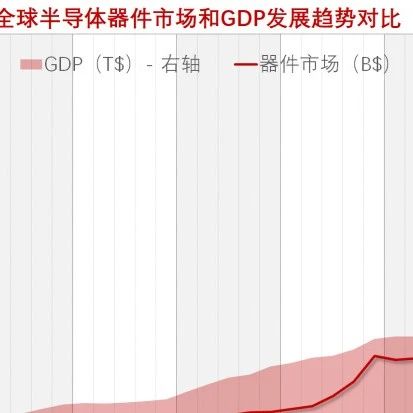
Core Viewpoint - The semiconductor industry has experienced significant growth, with global semiconductor device sales projected to reach $617.9 billion by 2024, a 162-fold increase since 1977, outpacing global GDP growth [1][3]. Summary by Sections Industry Phases - Phase 1 (1977-1994): The semiconductor industry experienced explosive growth as it filled market demand gaps [5]. - Phase 2 (1995-2009): The market reached saturation, with semiconductor sales growth aligning closely with GDP growth, stabilizing around 0.45% of GDP [5]. - Phase 3 (2010 onwards): The emergence of smartphones and mobile internet led to renewed growth, with an average annual growth rate of approximately 6% [6]. Characteristics Driving Growth - The semiconductor industry serves as the foundation for the information sector, with increasing data generation driving demand for chips [6]. - The existence of Moore's Law ensures continuous performance improvements in chips, fostering rapid technological advancements that benefit the entire semiconductor supply chain [6]. Current Market Dynamics - The semiconductor industry is currently in a phase driven by artificial intelligence (AI), marking the beginning of a fourth growth stage [10]. - The demand for high-performance computing chips has surged due to AI advancements, leading to increased average prices despite stable wafer output [10][14]. Future Outlook - The AI sector is expected to provide long-term growth opportunities for the semiconductor industry, similar to the mobile communications boom [14]. - The anticipated explosion in data generation from AI applications will significantly increase the demand for various types of chips [16].


有制造业,才有Rapidus
日经中文网· 2025-07-28 02:25
Core Viewpoint - Rapidus, Japan's cutting-edge semiconductor foundry, has entered the trial operation phase before mass production, but concerns remain about its ability to secure strong customers and achieve profitability [1][2]. Group 1: Company Overview - Rapidus has successfully initiated the operation of the advanced EUV lithography machine, which is crucial for its production goals [2]. - The company aims to start formal production by 2027, but the ability to achieve a yield rate of over 70% is uncertain [2]. - There is a lack of enthusiasm from private enterprises regarding investment in Rapidus, indicating a reliance on continued government support [2][3]. Group 2: Market Context - The success of Rapidus hinges on its ability to attract customers, particularly in Japan, as it competes with TSMC, which has a strong client base including major companies like Apple and Nvidia [3]. - Rapidus has signed memorandums with several powerful companies, including NTT Group, to produce chips for next-generation communication infrastructure [3]. - The semiconductor industry operates on a virtuous cycle, where the number and quality of customers directly impact product excellence and innovation [3][4]. Group 3: Industry Dynamics - The semiconductor industry is characterized by rapid advancements, as indicated by Moore's Law, which predicts that the number of transistors on a chip will double approximately every two years [4]. - Japan's semiconductor industry has faced challenges, including a trade deficit in digital products since the 2010s, leading to a decline in its once-dominant position [5]. - The establishment of Rapidus is seen as an attempt to restore the connection between semiconductor manufacturing and the broader digital product market in Japan [5].