机构库存

Search documents
大趋势向好的背后,有些话机构都不肯说!
Sou Hu Cai Jing· 2025-08-08 10:51
最近A股市场热闹非凡,半导体、医疗器械、稀土永磁轮番上阵,上证指数四连阳,外资回流,私募加仓,一切看起来都很美好。但作为一个在量化投资领 域摸爬滚打多年的上海人,我深知这表面的繁华背后,藏着多少散户看不见的暗流涌动。 机构专家,有时候真的是"浆糊",券商素来牛心熊胆,总要提示风险,但又说向好趋势不变。表面看,这就是浆糊,实际浆糊的背后,一些大实话不肯说, 说没有神秘感。就是为何大趋势不变,就是因为他们身处一线,自然清楚钱在不断通过ETF、私募、公募、重新激活的股民账户进来。 真正的风险,根本不是中报风险,而是你看不清具体的机构动作,导致了这么多股票, 二、定价权才是股市的本质 股市争夺的从来不是对错,而是定价权。没有定价权的一方,永远是被收割的韭菜。而定价权,永远掌握在机构手里。 机构投资者也是一百个心眼。但无论他们怎么玩花样,最终都要落实到交易行为上。这就好比黄浦江再浑浊,水质检测数据总能告诉你真相。 一、专家观点为何总是"浆糊"? 最近中报预增概念炒得火热,但同样是预增股,「盛屯矿业」和「齐峰新材」的表现却天差地别。有人说是行业不同,有人说市场情绪使然。要我说,这些 都是表象。 上面两张图中的橙色柱体就是 ...


科技股要走独立行情?很多钱已提前行动!
Sou Hu Cai Jing· 2025-08-06 13:50
Core Viewpoint - The current market sentiment is reminiscent of previous cycles, with a focus on technology growth leading the August market, but caution is advised as many investors may be left holding positions at high levels [1] Group 1: Market Dynamics - The concept of "high" and "low" in the market is subjective, as evidenced by the contrasting views on market levels at 2800 points last year versus 3600 points now [2] - Predicting market peaks and troughs is not a reliable strategy for survival; many who claim to do so have faced significant losses [4] Group 2: Market Behavior - The current market exhibits a pattern where upward movements are rapid while corrections are slow, leading to investor frustration and premature exits or poor timing in buying [5] - Analyzing institutional trading characteristics reveals that even during periods of stagnation, institutions may be accumulating positions, indicating a potential for future growth [7] Group 3: Institutional Participation - The assumption that institutional involvement guarantees safety is flawed; for instance, despite increased holdings in stocks like Moutai, the lack of active trading indicated a decline in institutional interest [9] - A significant portion of the market, estimated at 30%, consists of "zombie institutions" that do not actively participate in trading, which can mislead retail investors [13] Group 4: Investment Strategy - For the upcoming August market, it is crucial to focus on two dimensions: the accumulation of funds over time and changes in volatility, as these factors can signal potential market shifts [14] - In an era of information overload, the ability to discern the authenticity of information is more valuable than merely following market trends [14]
重返3600,背后推手让人意外!
Sou Hu Cai Jing· 2025-08-06 01:40
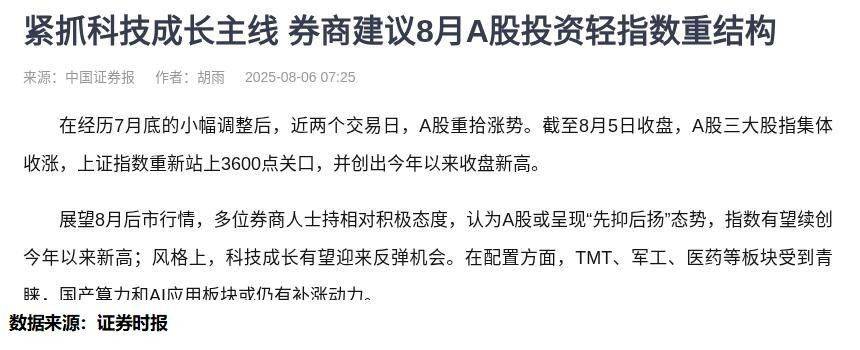
Market Overview - The Shanghai Composite Index has returned to 3600 points, with nearly 4000 stocks rising, indicating a potential bull market [1] - Investor sentiment remains cautious, with questions about whether the market is truly accelerating [1] Retail Investor Focus - The strong market performance is attributed to the Federal Reserve's dovish stance, suggesting two interest rate cuts this year, which could prevent a bubble burst in the U.S. stock market [3] - The People's Bank of China has also acted to strengthen the RMB, which is expected to boost the stock market [4] Institutional Behavior - Despite nearly 4000 stocks rising, only about 3000 stocks are driven by bullish sentiment, indicating a predominance of short-term trading funds rather than long-term investments [8] - The current market environment shows a decrease in institutional trading activity, as many institutions are now in a "lock-up" phase, leading to a higher number of stocks in this category [12] Data Insights - The market's current activity level may mislead investors into thinking it is a strong bull market, but caution is advised as many funds are entering and exiting quickly [16] - The distinction between a temporary pullback and a market top can be made by observing institutional behavior, with a focus on data rather than emotional reactions [19]

10年顶部被突破,融资盘反噬很危险!
Sou Hu Cai Jing· 2025-07-31 06:53
Group 1 - The core viewpoint highlights a disparity between the rising index and individual stock performance, with nearly 40% of stocks underperforming despite the index surpassing 3600 points [1] - The record high in financing balance indicates a strong speculative atmosphere in the A-share market, suggesting increased market activity and participation [1] - The article emphasizes the importance of understanding institutional actions in the market, as financing can be a double-edged sword [1] Group 2 - The article discusses the cognitive traps in a bull market, where superficial market movements can mask underlying volatility and risks [3] - It illustrates the consequences of being on the wrong side of institutional support, showing that stocks without institutional backing may struggle to recover [4][6] - The concept of "institutional inventory" is introduced, indicating that active institutional participation can signal confidence in a stock [7][8] Group 3 - The article warns about the dangers of timing the market incorrectly, as many retail investors may react impulsively to short-term fluctuations [9] - It explains the phenomenon of "institutional shaking," where institutions may sell off shares to drive prices down before buying back at lower prices [11] - The article provides strategic advice for investors, emphasizing the need to focus on underlying trading behaviors rather than being swayed by index movements [13]
沪市融资额超1万亿,击鼓传花还有多久?
Sou Hu Cai Jing· 2025-07-30 14:47
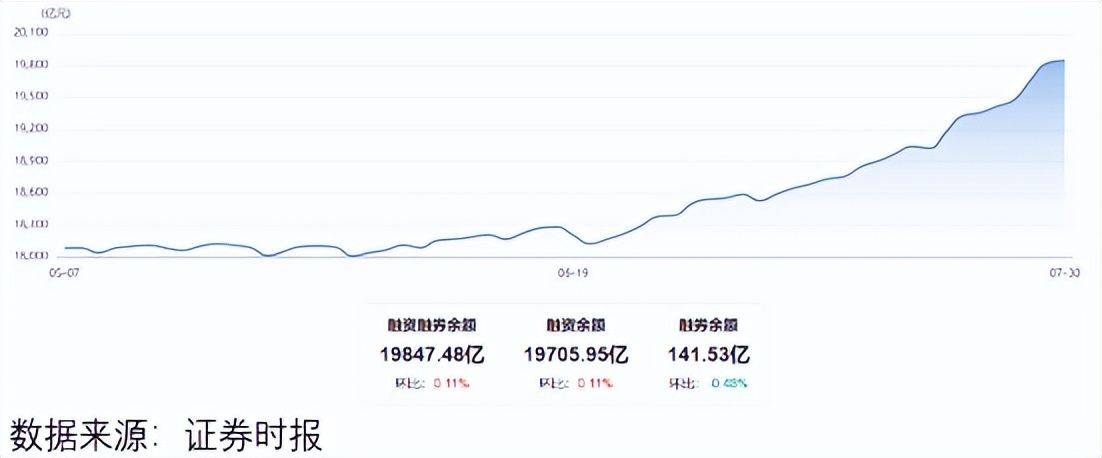
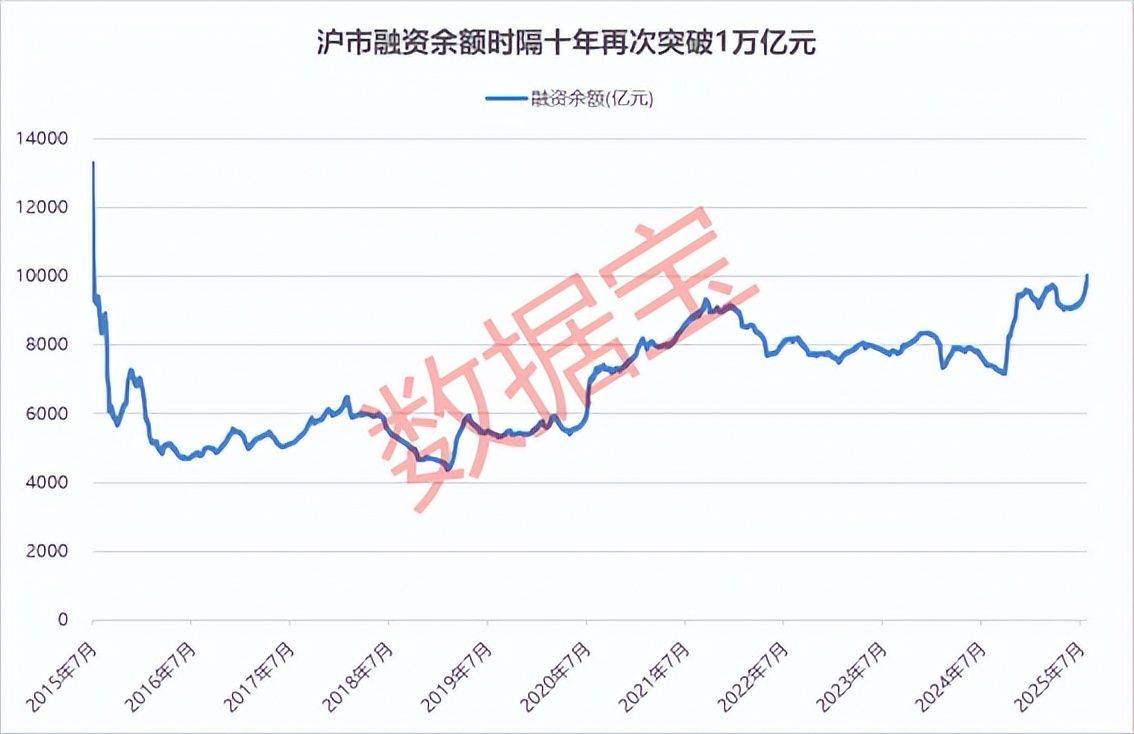
Core Insights - The financing balance in the Shanghai market has surpassed 1 trillion yuan, marking a nearly ten-year high, which superficially indicates strong market confidence [2] - However, this high level of financing also suggests speculative funds are involved, raising concerns about the suitability for retail investors [2] Group 1: Anxiety in Retail Investors - Despite the record high in financing balance, retail investors continue to experience anxiety regarding their investment decisions, often second-guessing their actions whether to sell, switch, take profits, or cut losses [3] - This pervasive anxiety is advantageous for institutional investors, as it allows them to capitalize on retail investors' indecision and potentially exploit them [3] Group 2: Pricing Power Dynamics - The performance of stocks like "Shengtun Mining" and "Qifeng New Materials" illustrates the disparity in market reactions to earnings forecasts, highlighting the importance of pricing power rather than just positive news [4][6] - Institutional investors leverage retail investors' fixation on concepts and good news to manipulate stock price movements [6] Group 3: Quantitative Insights - Long-term trading behavior data and models reveal distinct characteristics of trading activities, particularly the "institutional inventory" data that reflects institutional investor activity [7] - Active "institutional inventory" data correlates with rising stock prices, while inactivity suggests potential declines [11] Group 4: Understanding Financing Balance - The significance of the record financing balance lies in the direction of the funds; if they flow into quality stocks favored by institutions, the market may improve, but if they are driven by retail sentiment, risks may accumulate [12] - In an era of information overload, the ability to discern market fundamentals is crucial, and quantitative data can help reveal the market's true nature [12]
7月股基吸金超债基,要懂生力军的喜好!
Sou Hu Cai Jing· 2025-07-28 19:16
Group 1 - The recent fund issuance market has seen an influx of 27.6 billion in capital, with equity funds accounting for 60% of this amount, indicating investor confidence in the current market conditions [1] - The behavior of investors differs between the beginning and end of a bull market; at the start, they fear missing out on performance, while at the end, they worry about losing market share to competitors [1][2] - The characteristics of a bull market include significant capital inflow and active trading, with a focus on understanding institutional behavior rather than just surface-level market indicators [4][6] Group 2 - Quantitative data reveals a different narrative than traditional technical analysis, showing that while some stocks appear to be declining, institutional buying is actually occurring [6][9] - The true value in the market lies in understanding trading behavior rather than relying solely on news or technical indicators, which can mislead investors [9][12] - The recent trend of new fund issuance, particularly the shift from bond funds to equity funds, highlights the importance of understanding where and how capital flows in the market [12]
钨矿股有惊人利好,但背后资金更值得注意!
Sou Hu Cai Jing· 2025-07-27 20:05
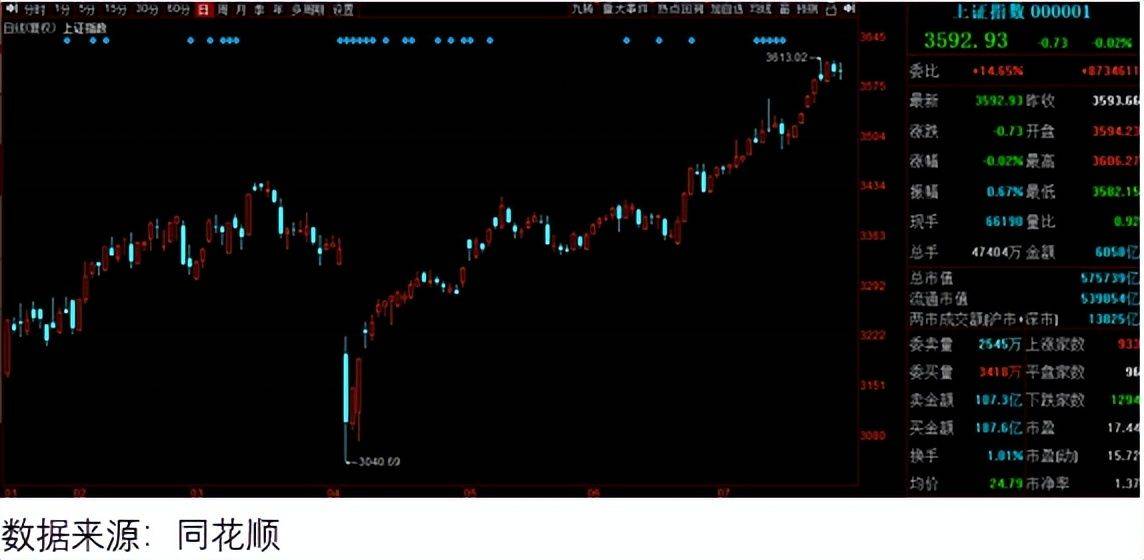
Group 1 - The core viewpoint is that while the "anti-involution" trend may be coming to an end, speculation on price increases, particularly in tungsten, is likely to continue due to rising prices and supply constraints [1] - Tungsten concentrate prices have reached new highs since May 13, driven by tightening supply and stricter environmental policies, with predictions of a supply-demand gap exceeding 4,600 tons by 2025 [1] Group 2 - There is a significant cognitive gap between institutions and retail investors, as institutional funds may not always translate positive news into stock price increases [6][11] - The market reality shows that over 80% of stocks have institutional funds, but the key factor is whether these funds are actively participating in trading [11] - The "institutional inventory" data indicates that institutional participation can significantly influence stock price movements, as seen in the case of Moutai, where institutional activity decreased before the stock price fell [11][13] Group 3 - The demand for tungsten is expected to grow in sectors like photovoltaics, military, and nuclear fusion, with companies like Xiamen Tungsten and Zhangyuan Tungsten appearing to be promising investment targets [6][14] - However, these positive indicators may already be priced in, and true investment opportunities often arise from discrepancies between market expectations and actual performance [14] - Investors should be cautious of superficial positive news and utilize data analysis tools to assess institutional behavior and actual fund movements [16]
美联储讲话暗藏玄机,A股机构已领会抢跑!
Sou Hu Cai Jing· 2025-07-23 07:49
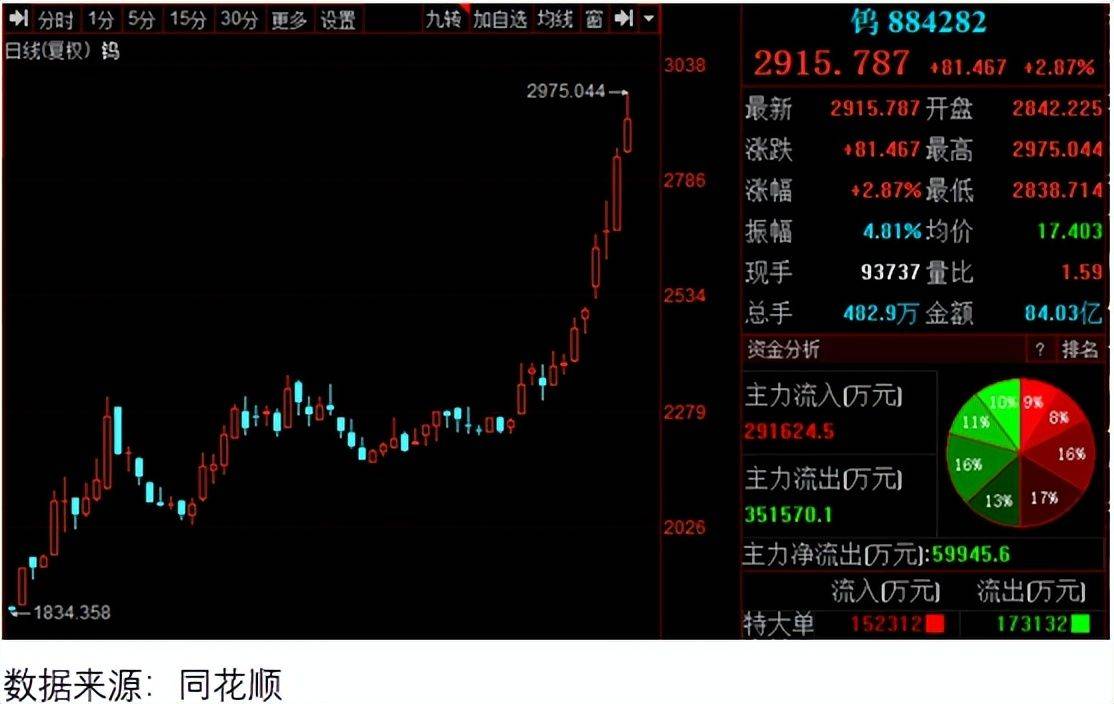
Core Viewpoint - The article emphasizes the disconnect between market movements and news, suggesting that institutional investors often act on information before it becomes public knowledge, leading to potential traps for retail investors [1][3][9]. Group 1: Market Dynamics - The Federal Reserve's signals regarding regulatory relaxation for banks are seen as a potential precursor to market instability, reminiscent of past market crashes [1][2]. - Institutional activities often precede public news, indicating that significant market movements may occur before retail investors are aware of the underlying changes [5][8]. Group 2: Retail Investor Behavior - Retail investors are cautioned against relying solely on news for trading decisions, as the market often reacts to information long before it is reported [3][11]. - The article highlights a common phenomenon where positive news leads to negative market reactions, suggesting that retail investors may be misled by the timing of information release [9][10]. Group 3: Quantitative Analysis - The importance of quantitative data is stressed, with a recommendation for investors to focus on actual market movements rather than speculative interpretations of news [6][10]. - A call for the establishment of a data observation system to track real-time capital flows is made, emphasizing the need to identify genuine market trends [13].

历史重演?即将崩盘的美元为A股送上大礼!
Sou Hu Cai Jing· 2025-07-18 07:27
Group 1 - Morgan Stanley recently stated that the independence of the Federal Reserve is a "myth," drawing parallels to historical pressures from past presidents [1] - The market reacted to the conflicting signals from the White House regarding the potential dismissal of Fed Chair Powell, reflecting uncertainty among investors [1] - The commentary highlights the volatility in expert opinions, comparing them to unreliable fortune-telling, which can mislead investors [3] Group 2 - The behavior of Huawei-related stocks serves as a case study in behavioral finance, where stock prices did not rise despite positive announcements, indicating underlying market dynamics [5] - Quantitative data, such as "institutional inventory," provides a clearer picture of market trends, contrasting with superficial stock movements [5] - The analogy of the market as a high-stakes game emphasizes the importance of understanding institutional trading characteristics over speculative predictions [7]

老美通胀或愈演愈烈,A股有望迎来新盟军!
Sou Hu Cai Jing· 2025-07-17 11:28
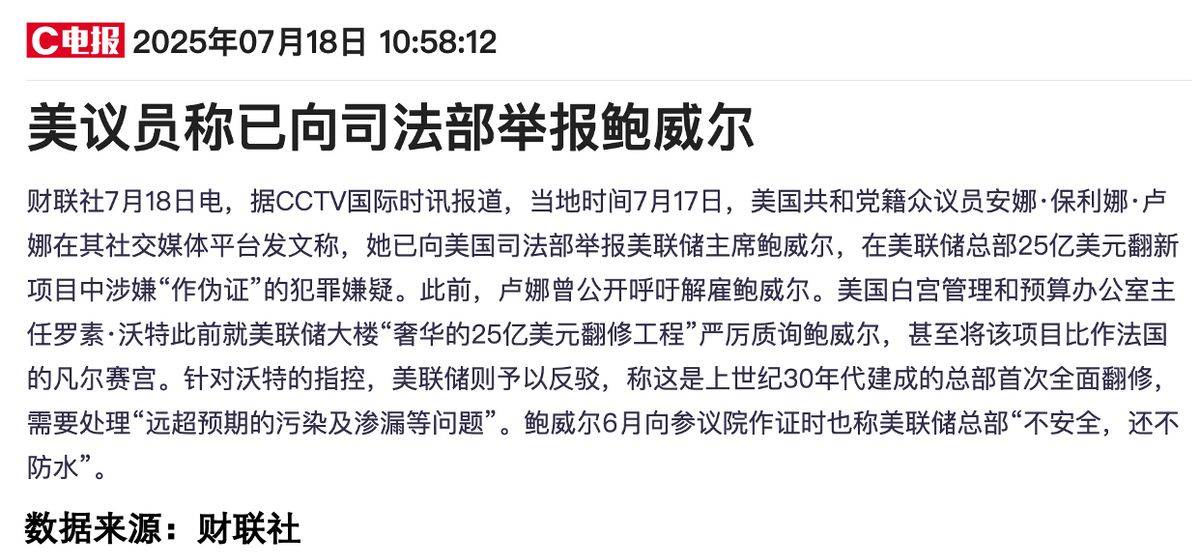
Group 1 - The latest Federal Reserve's Beige Book reveals the harsh reality of the U.S. economy, with all 12 regions reporting rising costs, particularly in manufacturing and construction [4] - The term "uncertainty" appears 63 times in the report, indicating a significant level of hesitation among businesses and consumers, which may signal larger economic challenges ahead [4][6] - Core CPI has increased by 2.9% year-on-year, suggesting that inflation pressures may be re-emerging, especially with new tariffs on the horizon [6] Group 2 - The concept of "expectation difference" is highlighted as a critical battleground in the market, where stock prices are driven more by anticipated changes than by current realities [7][8] - The "dilemma reversal" theory emphasizes the importance of understanding information asymmetry in the market, where institutional investors may act on insights before retail investors catch on [8] Group 3 - Case studies illustrate institutional behavior, such as the semiconductor sector's stock performance, where institutional activity preceded significant price movements, demonstrating the power of expectation differences [11][13] - Another case shows how institutions can manipulate market sentiment, using price declines to shake out less committed retail investors [15] - A cautionary example highlights that even strong earnings reports can lead to stock declines if institutional investors have already exited their positions [17] Group 4 - Recommendations for retail investors include developing a data observation system, recognizing true capital flows, avoiding superficial analysis, and maintaining independent thinking [19][20]