
民间投资

Search documents
滨州市固定资产投资始终保持稳中有进态势
Sou Hu Cai Jing· 2025-12-01 08:31
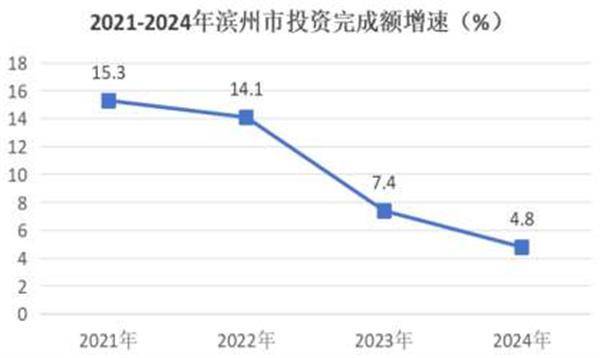
Core Viewpoint - The city of Binzhou is focusing on high-quality development during the "14th Five-Year Plan" period, optimizing investment structures to lead economic transformation and enhance quality and efficiency [1][2]. Investment Structure Optimization - Binzhou's investment strategy has shifted from scale expansion to quality improvement, with an average annual growth rate of 10.3% in fixed asset investment from 2021 to 2024, and a year-on-year growth of 6.4% in the first nine months of this year [2]. - The proportion of manufacturing investment increased from 26.5% at the end of the "13th Five-Year Plan" to 41.2% by 2024, with an average annual growth of 23.2%, making it a core driver of investment growth [2]. - In the first nine months of this year, manufacturing investment grew by 12.2%, contributing 4.9 percentage points to overall investment growth [2]. Traditional and Emerging Industries - Binzhou is focusing on upgrading traditional industries while simultaneously promoting emerging industries, with an average annual growth of 9.0% in industrial technological transformation investment from 2021 to 2024, and a year-on-year growth of 5.2% in the first nine months of this year [3][6]. - The high-end aluminum industry is a key focus, with 32 technological transformation projects planned for 2024, accounting for 71.1% of the total projects in this sector [6]. - Investment in "four new" industries (new technologies, new industries, new business models, and new forms of consumption) has consistently accounted for over 55% of total investment, with an average annual growth of 11.8% [6]. Infrastructure and Social Investment - Binzhou is actively promoting infrastructure projects, with infrastructure investment maintaining over 20% of total investment and an average annual growth of 4.3% from 2021 to 2024 [7]. - In the first nine months of this year, infrastructure investment grew by 8.4%, driven by major projects in road transportation [7]. - Social sector investment has an average annual growth of 2.6%, with education sector investment growing at 16.7%, outpacing overall investment growth [7]. Policy and Market Dynamics - The local government is implementing policies to support project construction and resource allocation, with a focus on enhancing the business environment and encouraging private investment [8]. - From 2021 to 2024, private investment has consistently accounted for over 60% of total investment, with an average annual growth of 9.2%, significantly higher than the provincial average [8]. - In the first nine months of this year, private investment grew by 20.5%, making up 70.4% of total investment, an increase of 8.2 percentage points compared to the same period last year [8].

重大项目释放投资新动能,多地民营经济促进条例密集落地
Di Yi Cai Jing· 2025-12-01 08:09
Group 1 - The core viewpoint emphasizes the positive progress of private capital participation in major projects, with the National Development and Reform Commission (NDRC) encouraging private enterprises to expand effective investment and promote high-quality development of the private economy [1][2] - The NDRC highlighted the importance of private enterprises seizing opportunities in technological revolutions, industrial transformations, and urban-rural coordinated development to actively participate in national strategic projects [1][3] Group 2 - Since the 14th Five-Year Plan, the overall operation of China's private economy has improved, with private enterprises adjusting their development methods and structures, leading to an average annual growth rate of over 10% in private investment in manufacturing and high-tech industries [2] - The introduction of private capital into nuclear power projects is a significant example, with plans to increase private participation from 2% in 2020 to 10-20% by 2025, potentially driving over 24 billion yuan in private investment [2] Group 3 - The NDRC's recent measures aim to stimulate private investment by addressing market access, fair competition, and service optimization, with 13 specific initiatives proposed to stabilize employment and promote the development of the private economy [3][4] - The implementation of the Private Economy Promotion Law in May 2023 marks a significant step in protecting the rights of private enterprises and entrepreneurs [5] Group 4 - Local regulations are being enacted to support private economic development, with the Fujian Province's Private Economy Promotion Regulation set to take effect in January 2026, focusing on fair competition and investment promotion [6][7] - Other provinces, including Tianjin and Shandong, are also advancing similar regulations to enhance support for private enterprises [7] Group 5 - Experts emphasize the need for a supportive environment for private enterprises, including reducing non-market risks from policy changes and administrative controls, to boost confidence in the private economy and facilitate economic recovery [8]
国家发展改革委:鼓励支持引导广大民营企业把握新一轮民间投资发展机遇
Xin Hua She· 2025-11-30 16:00
Core Viewpoint - The National Development and Reform Commission (NDRC) is committed to enhancing the development of the private economy by expanding market access, strengthening support for resources, and establishing a national venture capital guidance fund to improve the sense of gain for private enterprises [1] Group 1: Market Access and Support - The NDRC plans to further broaden market access for private enterprises, which is essential for fostering a more competitive economic environment [1] - There will be a focus on reinforcing support for essential resources to ensure that private enterprises can thrive [1] Group 2: Investment Opportunities - The NDRC encourages private enterprises to seize opportunities arising from the new technological revolution, industrial transformation, and the vast domestic market [1] - Emphasis is placed on the coordination of urban and rural development as a key area for private investment growth [1] Group 3: Legal Protection and Investment Vitality - Strengthening the protection of legal rights for private enterprises is a priority to ensure their sustainable development [1] - The initiative aims to continuously stimulate the vitality of private investment, contributing to high-quality development in this sector [1]
盈新发展:本次股权收购尚处于意向协议阶段
Sou Hu Cai Jing· 2025-11-26 12:57
Core Viewpoint - The company is responding to investor inquiries regarding the implications of the State Council's recent policy aimed at promoting private investment and its relevance to the acquisition of Changxing Semiconductor [1] Group 1: Policy Context - The State Council issued a significant policy document on November 26, 2025, titled "Several Measures to Further Promote the Development of Private Investment," aimed at stimulating private investment activity [1] - The policy includes provisions for facilitating the listing and financing of technology enterprises and establishing a "green channel" for mergers and acquisitions [1] Group 2: Company Response - The company acknowledges the importance of the new policy and expresses its intention to actively respond and study market policies [1] - The acquisition of Changxing Semiconductor is currently in the intention agreement stage, pending due diligence, audit evaluation, and necessary approval processes [1] - The company commits to timely information disclosure regarding project progress in accordance with legal and regulatory requirements [1]

上半年民间固投同比增8.4% 制造业投资增速连续3个月回升
Mei Ri Jing Ji Xin Wen· 2025-11-24 04:09
数据显示,上半年,民间固定资产投资184539亿元,同比增长8.4%。第二产业投资增长3.8%,其中制 造业投资增长6.8%,增速连续三个月回升,比一季度加快3.0个百分点,比上年同期加快1.3个百分点。 高技术制造业投资同比增长13.1%,增速比全部投资快7.1个百分点。 对此,中原银行首席经济学家、中国国际经济交流中心学术委员会委员王军认为,在投资增速放缓的情 况下,民间投资增长相对较快的主要原因是,今年以来,在大力降低实体经济以及制度性交易成本方 面,我国顺应国际间税收竞争的大趋势,降低制造业、交通运输、建筑、基础电信服务等行业及农产品 图片来源:新华社 每经记者|张钟尹 每经编辑|毕陆名 7月16日,国家统计局发布上半年国民经济运行数据。数据显示,2018年1~6月份,全国固定资产投资 (不含农户)297316亿元,同比增长6%,增速比1~5月份回落0.1个百分点。从环比速度看,6月份固定 资产投资(不含农户)增长0.48%。 在当日举行的国新办新闻发布会上,国家统计局新闻发言人毛盛勇分析指出,从投资的三大领域看,制 造业投资连续三个月增长速度加快,增长势头还是不错的,这个势头下半年还有望延续。对于房 ...

丁薛祥在山东、河北调研
Yang Shi Wang· 2025-11-22 12:04
Group 1 - The core message emphasizes the need to implement the spirit of the 20th Central Committee's Fourth Plenary Session and ensure the achievement of economic and social development goals for the year [1] - The focus is on optimizing traditional industries and nurturing emerging industries through deep integration of technological and industrial innovation [1] - There is a strong emphasis on enhancing the resilience and quality of industrial and supply chains, as well as promoting collaboration among enterprises, academia, and research institutions [1] Group 2 - The importance of leveraging government investment to stimulate effective investment and promote high-quality development of private investment is highlighted [2] - Ensuring stable energy production and supply during the winter heating season is critical, with a focus on coal, electricity, oil, and gas regulation [2] - The success of local ecological restoration efforts is acknowledged, with a call to share and promote effective practices for environmental protection [2]
美国AI版“四万亿”,能给中国民间投资带来什么启示?
经济观察报· 2025-11-21 12:57
在人工智能等新科技领域竞争日趋激烈的情况下,提振民间投 资的政策应该进一步调整着力点,合理设置"红绿灯",让敢 投、能投、愿投的企业,挑起新增投资的大梁,成为在新科技 赛场上实现突破的关键力量。 作者:宋笛 封图:图虫创意 尽管美国AI(人工智能)投资是否存在泡沫还有待时间检验,但一个事实是:AI驱动的巨量投资, 已对美国宏观经济产生了显著影响。 2025年前两个季度,投资对美国GDP的贡献升至每季度年化1个百分点,创下2023年以来的最高 水平。美国经济的"三驾马车"中,消费长期占据主导地位,而2025年AI带动的投资,少见地让投 资对GDP增长贡献率逼近消费。这些投资主要投向了数据中心和相应设备领域。 主导这一轮投资的是美国头部企业。2025年第二季度,美股"七姐妹"( 苹果、微软、英伟达、 亚马逊、谷歌母公司Alphabet、Meta和特斯拉)的资本开支规模近1000亿美元,较三年前同期 规模翻倍,年增速接近65%。预计2025年全年,美国科技巨头的资本开支将达到5000亿美元。 摩根士丹利预测,从2025年至2028年,全球数据中心支出将接近3万亿美元,其中1.4万亿美元 来自科技巨头。 这俨然是一个 ...






美国AI版“四万亿”,能给中国民间投资带来什么启示?
Jing Ji Guan Cha Wang· 2025-11-21 06:20
Group 1 - The core point of the article highlights the significant impact of AI-driven investments on the U.S. macroeconomy, with contributions to GDP growth reaching an annualized 1 percentage point per quarter by the first half of 2025, marking the highest level since 2023 [2] - The "Magnificent Seven" tech companies (Apple, Microsoft, Nvidia, Amazon, Alphabet, Meta, and Tesla) are leading this investment surge, with capital expenditures nearing $100 billion in Q2 2025, doubling from three years prior and showing a year-on-year growth rate of nearly 65% [2] - Morgan Stanley predicts global data center spending will approach $3 trillion from 2025 to 2028, with $1.4 trillion coming from tech giants, indicating a massive influx of private investment in the U.S. [2] Group 2 - Tech giants have raised $75 billion in the investment-grade bond market over the past two months, significantly exceeding pre-pandemic levels and the average annual financing amount from 2015 to 2024 [3] - Companies like Meta are employing complex financing structures to manage their capital expenditures, including off-balance-sheet financing to mitigate impacts on cash flow statements [3][4] - The financing strategies employed by these companies, such as Meta's partnership for a data center project, involve a mix of equity, debt, and project financing, showcasing innovative approaches to capital management [3] Group 3 - Concerns arise regarding the sustainability of these investment models, as not all tech companies possess the same financial strength as leaders like Google and Microsoft, raising questions about the viability of their capital expenditure plans [4] - The article draws parallels between the current AI investment climate and the tech bubble of the early 2000s, suggesting potential systemic financial risks similar to those seen during the 2008 financial crisis [4] Group 4 - In contrast to the U.S. AI investment boom, China's private investment is facing challenges, with a decline in growth rates and a drop in the share of private investment in fixed asset investment below 50% [5] - Recent policies in China aim to stimulate private investment, particularly in key sectors like railways and nuclear power, allowing for increased private capital participation [5][6] - The article suggests that China should focus on creating opportunities for private capital in emerging fields like AI, rather than solely addressing barriers to entry in traditional sectors [6] Group 5 - The article emphasizes the importance of financial markets in facilitating investment, noting that the "financial + technology" model has driven substantial investment in the U.S. AI sector [7] - It highlights the need for China to adapt its financing models to support private investment in new technologies, moving away from a reliance on traditional bank-led financing [7][8] - The article advocates for a balanced approach to risk management, allowing for some level of risk and potential bubbles in the pursuit of innovation, particularly in the context of private investment [8][9] Group 6 - The article concludes that boosting private investment is crucial not only for overall fixed asset investment growth but also for leveraging the efficiency and innovation potential of private capital in competitive sectors like AI [9]

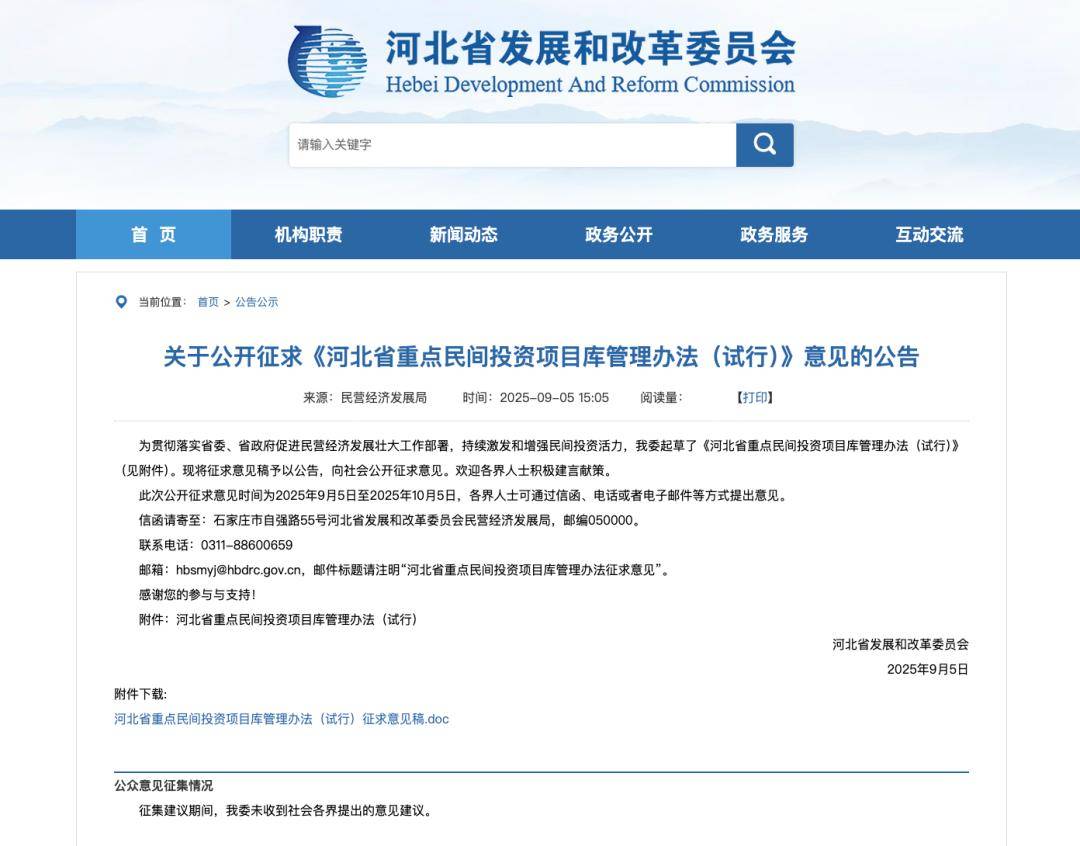
省级全国领跑!河北出台《河北省重点民间投资项目库管理办法(试行)》
Sou Hu Cai Jing· 2025-11-20 07:41
扫码文末"投小圈" 加入行业交流群 文章来源:河北省人民政府官网、河北省发展和改革委员会官网 11月11日,全国首个省级民间投资项目库支持政策——《河北省重点民间投资项目库管理办法(试行)》(以下简称"《办法》")印发。 "项目投资回报周期长、未知风险多,常出现'项目决生死'的现象,成为民营企业发展中'最难答的题'。"河北省发展和改革委员会民营经济发展局局长黄 文忠介绍,出台该《办法》,就是要通过降低制度性交易成本、强化要素保障、稳定政策预期等一系列举措,帮助广大民营企业降低项目风险、提高项目 质量,激发和增强投资信心,尤其是培育战略性新兴产业和未来产业在我省生根发芽。 "对民营企业而言,项目不仅是生存发展问题,也是实现企业价值创造的具体载体。"河北经贸大学经济管理学院教授张瑞锋说,该《办法》的亮点主要体 现在机制设计的系统性、政策工具的集成度、支持方式的精准性等多个方面,让民营企业"看得懂、够得着",其创新做法有显著的示范价值。 日前,为贯彻落实省委、省政府促进民营经济发展壮大工作部署,持续激发和增强民间投资活力,河北省发展和改革委员会起草了《河北省重点民间投资 项目库管理办法(试行)》(见附件)。并将征求 ...
强化金融保障促进民间投资
Sou Hu Cai Jing· 2025-11-19 22:43
Group 1 - The core viewpoint of the news is that the recent measures issued by the State Council aim to enhance private investment by increasing support through central budget investments and innovative financial tools, facilitating deeper participation of private capital in high-quality development [1][3] - The new policy measures focus on addressing the high capital threshold and financing costs that have historically hindered private enterprises from participating in major projects, thereby enabling them to engage in key sectors like advanced manufacturing and digital economy [1][2] - The innovative financial tools introduced are designed to lower the initial investment pressure on private capital and improve the financing qualifications of projects, thus attracting more social capital to follow [1][2] Group 2 - Policy coordination is emphasized as a crucial support for the effective implementation of financial guarantees, combining access openness and service optimization to create a comprehensive support system for private investment [2] - The measures include clarifying unreasonable restrictions on service industry operators and requiring financial institutions to set annual service goals for private enterprises, which aims to alleviate lending concerns [2] - There are existing challenges in the implementation of these measures, such as lengthy project approval processes and unclear application details for financial tools, which need to be addressed to fully realize the policy benefits [2][3] Group 3 - Private investment plays a significant role in stabilizing economic growth, and financial guarantees are seen as catalysts to activate this potential [3] - The deployment of these measures responds to the real demands of private capital and injects market vitality into high-quality development [3] - As new financial tools are accurately implemented and policy coordination deepens, private capital is expected to play a larger role in developing new productive forces and promoting industrial upgrades [3]