生产制造

Search documents
中国企业社会化用工趋势分析报告
艾瑞咨询· 2026-02-28 00:06
Core Viewpoint - The trend of socialized employment is expanding, driven by macroeconomic pressures and the need for flexible labor arrangements in various industries, particularly in manufacturing and retail sectors [1][2][6]. Group 1: Concept and Environment - Socialized employment refers to various forms of labor relationships outside standard employment, including outsourcing, labor dispatch, hourly pay, platform-based flexible employment, and shared employment [3][4]. - The macroeconomic environment is characterized by a decline in the working-age population, leading to labor shortages and rising costs for companies, particularly in labor-intensive sectors like manufacturing and retail [1][16]. Group 2: Trends and Policy - The scale of socialized employment continues to grow, with supportive policies expected to improve further [2][9]. - The relationship between individuals and organizations is shifting from dependency to symbiosis, requiring diverse skill sets [2]. Group 3: Industry-Specific Insights - In the retail sector, socialized employment is used to manage sales fluctuations and market changes, with a significant portion of employment being flexible [1][29]. - The manufacturing sector employs socialized labor to address capacity fluctuations and strategic focus, with foreign and leading private enterprises showing a preference for this model [1][44]. Group 4: Employment Characteristics - Socialized employment in retail is characterized by high employee turnover, with rates exceeding 30% for frontline positions, leading to management challenges [37]. - In manufacturing, the recruitment process is a critical pain point, especially during peak periods, affecting production stability [52]. Group 5: Technological and Talent Dynamics - Digital technology is reshaping employment relationships, fostering new forms of platform-based flexible work that enhance labor resource allocation efficiency [12]. - The demand for cross-disciplinary and composite talents is increasing in manufacturing, driven by the need for skills in emerging technologies [54].


线上线下送岗位!“春风行动”畅通渠道促就业
Yang Shi Xin Wen· 2026-02-27 13:10
Group 1 - Various recruitment activities are being held across regions to connect job seekers and employers efficiently [1][3] - In Suining, Sichuan, a recruitment fair attracted 186 companies offering over 10,000 positions across multiple industries including manufacturing, digital economy, and healthcare [1] - A live-streaming job matching event attracted over 73,000 viewers, with more than 4,600 individuals expressing initial employment interest [3] Group 2 - In Bazhong, Sichuan, a specialized recruitment fair for migrant workers featured 142 companies providing over 8,000 job opportunities in various fields such as skilled labor and management [3] - A company representative from Jinhua, Zhejiang, highlighted the availability of over 80 positions with competitive benefits including a minimum salary of 6,000 yuan, transportation, and accommodation [3] Group 3 - A large-scale recruitment event in Qiannan, Guizhou, offered 24,000 job positions from over 180 companies, focusing on the collaboration between eastern and western regions [4] - The event aimed to facilitate job placements during the critical post-holiday period, with participation from companies across four provinces and eight cities [4] Group 4 - A spring recruitment fair in Yangzhou, Jiangsu, featured over 200 companies and provided more than 6,500 job openings, with a significant focus on technical positions [6][8] - Companies implemented direct interview opportunities with executives to enhance recruitment precision and attract suitable candidates [6][7]


稳岗就业惠民生 暖心举措助力务工人员从“家门口”直达“厂门口”
Yang Shi Wang· 2026-02-24 02:12
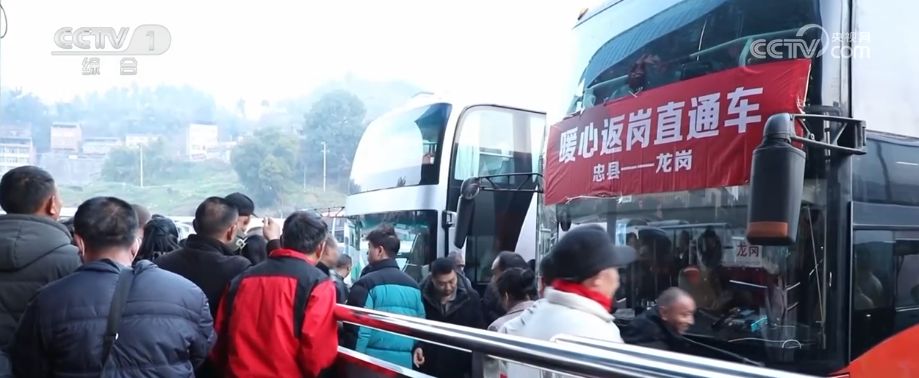
Group 1 - The article highlights the efforts made by various regions to facilitate the return of migrant workers to their jobs after the holiday season, including "point-to-point" transportation services [1][4][5] - In Chongqing's Zhongxian County, over 300 dedicated buses have been organized to ensure safe and convenient travel for migrant workers, with local specialties included in their travel bags [4][5] - In Guizhou's Danzhai County, a "point-to-point" service has successfully transported over 100 workers directly to their workplaces, addressing the challenges of ticket purchasing during the busy Spring Festival travel period [7][9] Group 2 - Various regions are also hosting job fairs to promote local employment opportunities, with over 4,000 job positions available in industries such as automotive, new energy, and electronic information in Anhui's Wuhu [12] - In Xinjiang's Wusu, a job fair attracted 122 companies offering 1,360 job positions across diverse sectors, catering to different employment needs [15]
中国企业社会化用工趋势分析报告
艾瑞咨询· 2026-02-18 00:05
Core Viewpoint - The trend of socialized employment is expanding, driven by macroeconomic pressures, labor shortages, and the need for flexible workforce solutions across various industries [1][2][6]. Group 1: Concept and Environment - Socialized employment refers to various forms of employment outside standard labor relations, including outsourcing, labor dispatch, hourly pay, platform-based flexible employment, and shared employment [1][3]. - The macroeconomic environment is characterized by fluctuations, a declining working-age population, and rising labor costs, leading to a dual pressure on enterprises [1][6]. - The manufacturing and wholesale retail sectors are the most receptive to socialized employment due to their large workforce and inherent employment characteristics [1][16]. Group 2: Trends and Policy - The scale of socialized employment continues to grow, with supportive policies expected to improve [2][9]. - Socialized employment is becoming a standard practice for enterprises, with human resource service providers upgrading towards specialization and digitalization [2][9]. - The relationship between individuals and organizations is shifting from dependency to symbiosis, requiring a more diverse skill set [2][9]. Group 3: Macro Environment - The digital economy is rapidly growing, projected to reach 63.2 trillion yuan by 2024, accounting for 46.8% of GDP, driving high-quality economic development [6][12]. - Government policies are encouraging the development of socialized employment models to enhance competitiveness [9][12]. Group 4: Industry Penetration - As of 2024, over 240 million flexible workers are employed in various sectors, with socialized employment deeply penetrating industries [19]. - Business outsourcing has a penetration rate exceeding 50%, while labor dispatch accounts for 20-30%, and platform-based employment is below 20% [19]. Group 5: Micro Environment - Enterprise Demand - External competitive pressures and internal management needs are driving the shift towards socialized employment strategies [23]. - Socialized employment allows enterprises to build agile organizational structures and control labor costs flexibly [23][26]. Group 6: Core Value of Socialized Employment - Socialized employment effectively balances the need for cost efficiency in enterprises with the personal development needs of workers [26]. - It enables dynamic adjustments to labor costs based on business fluctuations while providing flexible employment options for workers [26]. Group 7: Pain Points in Employment - High employee turnover is a core pain point for retail enterprises, with turnover rates exceeding 30% for socialized employment [37]. - Traditional recruitment and training methods struggle to meet fluctuating demand, leading to imbalances in labor flexibility [37]. Group 8: Sector-Specific Characteristics - In the retail sector, socialized employment is characterized by diverse employment forms, with a focus on flexibility to meet peak demand [31][35]. - Manufacturing enterprises prefer socialized employment for non-core positions while maintaining core technical roles with full-time employees [46][49].

中国企业社会化用工趋势分析报告
艾瑞咨询· 2026-02-07 00:04
Core Viewpoint - The trend of socialized employment is expanding, driven by macroeconomic pressures, labor shortages, and the need for flexible workforce solutions across various industries [1][2][6]. Group 1: Concept and Environment - Socialized employment refers to various forms of employment outside standard labor relations, including outsourcing, labor dispatch, hourly pay, platform-based flexible employment, and shared employment [1][3]. - The macroeconomic environment is characterized by fluctuations, a declining working-age population, and rising labor costs, leading to a dual pressure on enterprises [1][6]. - The manufacturing and wholesale retail sectors are the most receptive to socialized employment due to their large workforce needs and inherent employment characteristics [1][16]. Group 2: Trends and Policy - The scale of socialized employment continues to grow, with supportive policies expected to improve further [2][9]. - Socialized employment is becoming a standard practice for enterprises, with human resource service providers upgrading towards specialization and digitalization [2][9]. - The relationship between individuals and organizations is shifting from dependency to symbiosis, requiring a more diverse skill set [2]. Group 3: Macro Environment - The digital economy is rapidly growing, projected to reach 63.2 trillion yuan by 2024, accounting for 46.8% of GDP, driving high-quality economic development [6]. - Recent policies encourage the development of socialized employment, pushing enterprises to enhance competitiveness through these models [9][12]. Group 4: Industry Penetration - As of 2024, over 240 million flexible employment individuals exist in China, indicating deep and high-quality penetration of socialized employment across various sectors [19]. - Business outsourcing has a penetration rate exceeding 50%, while labor dispatch accounts for 20%-30%, and platform-based employment is below 20% [19]. Group 5: Micro Environment - Enterprise Demand - External competitive pressures and internal management needs are driving enterprises to adopt socialized employment strategies [23]. - Socialized employment allows companies to build agile organizational structures and control labor costs flexibly [23][26]. Group 6: Value of Socialized Employment - Socialized employment effectively balances the need for cost efficiency in enterprises with individual development needs, enhancing labor market flexibility [26]. - It allows for dynamic adjustments in workforce size based on business fluctuations, reducing recruitment and management risks [26]. Group 7: Sector-Specific Characteristics - In the retail sector, socialized employment is characterized by high employee turnover, with rates exceeding 30% for frontline positions [37]. - The manufacturing sector utilizes socialized employment to address capacity fluctuations and strategic focus, with outsourcing and labor dispatch being common practices [44][49]. Group 8: Pain Points in Socialized Employment - High employee turnover in retail leads to management challenges, including training costs and operational inefficiencies [37][52]. - Recruitment difficulties during peak periods and compliance challenges related to labor relations are significant issues for manufacturing enterprises [52].

国央行的量价平衡术
Guoxin Securities· 2026-02-01 03:20
Monetary Policy Insights - The discussion on whether the People's Bank of China (PBOC) should create new price-based overnight tools is driven by the need to enhance guidance on overnight market rates and the recent volatility in interbank overnight rates[1] - The PBOC is currently in a phase of balancing both quantity and price in its monetary policy, with the 7-day reverse repo rate serving as the short-term policy rate[2] - The effectiveness of a price-based framework in China hinges on the establishment of an "ample reserve system," which has not yet been fully realized[2] Economic Indicators - Fixed asset investment has decreased by 3.80% year-on-year[3] - Retail sales have shown a modest increase of 0.90% year-on-year[3] - Exports have increased by 6.60% year-on-year, indicating some resilience in external demand[3] Market Trends - The real estate market shows signs of recovery, with both new and second-hand home transactions increasing, although inventory pressure remains high with a sales-to-inventory ratio of 127.8, a historical high[40] - The logistics data indicates a year-on-year increase of 12.2% in commercial activity, reflecting a recovery in consumer demand despite a 70.1% decline in movie box office revenues[20] - The port cargo throughput has decreased by 1.70% month-on-month but increased by 6.87% year-on-year, influenced by seasonal factors[23] Fiscal and Monetary Developments - The broad deficit issuance is expected to increase, with net financing of government bonds projected at 1,420 billion and new special bonds at 3,024 billion in the upcoming week[32] - The willingness to leverage in the bond market remains high, with the balance of bonds awaiting repurchase still above historical levels[38]
智慧财务 | 生产制造企业的成本管理应用:从单体成本管控到集团协同化管控
Sou Hu Cai Jing· 2026-01-30 07:58
Core Insights - The manufacturing industry is facing profit pressure due to current international situations and market volatility, necessitating urgent cost management and efficiency improvements [2] - The core challenge of cost management has shifted from internal efficiency of single production units to systemic collaborative management across multiple production organizations and processes [2] Pain Points - **Puzzle Challenge**: The complete cost structure of a product is fragmented across subsidiaries, making it difficult for group-level management to quickly and accurately piece together the overall cost [3] - **Black Box Operations**: The value creation and cost loss between production stages remain unclear, complicating the assessment of efficiency and effectiveness at the group level [4] - **Disconnection Between Ideal and Reality**: Adjustments made during production due to material availability or cost control pressures lead to discrepancies between actual production BOM and design BOM, making it hard to trace cost differences [5] Solutions and Strategies - Establishing a management system that penetrates production organization boundaries to restore full-chain cost data and drive collaborative cost reduction is essential for high-quality development [2][5] - Utilizing existing information systems and data to reflect the overall value of products at the group level, while respecting the differences and business logic of each production stage [5] - Implementing a penetrating analysis path that guides managers from identifying macro issues to pinpointing micro root causes, thus enabling effective application of cost data [8] Cost Management Framework - A multi-dimensional cost analysis framework is proposed to transition from cost accounting to cost planning, allowing for proactive cost control and enhancing product cost competitiveness [10] - The framework emphasizes the integration of cost data streams to provide a comprehensive view of costs, enabling informed decision-making based on a unified cost landscape [10][11] Monitoring and Action - Utilizing dashboards to present key operational indicators and trends, helping to identify abnormal fluctuations in product lines or customer groups [12] - Analyzing the structure of abnormal indicators to trace back to specific cost types, facilitating actionable insights for procurement and operational improvements [12]

鲸准12月募资月报:江浙领跑,4786亿涌向科创与产业
Cai Fu Zai Xian· 2026-01-21 05:04
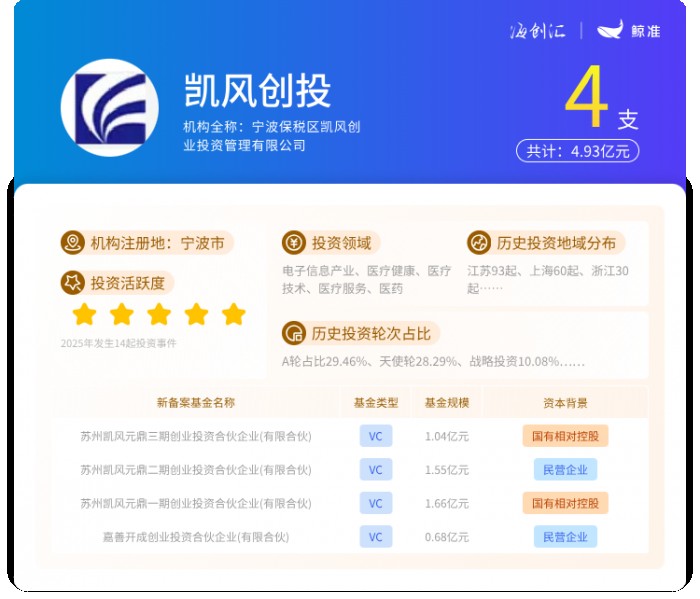
Core Insights - The primary focus of the article is the significant surge in fundraising activities in the primary market during December 2025, driven by policy support and capital concentration, leading to record-breaking fundraising amounts and a favorable market structure [1][9][13]. Fundraising Overview - December 2025 saw a total of 726 new registered funds with a combined scale of approximately 4786.52 billion yuan, marking a month-on-month increase of 148.29% [14][25]. - The number of new registered venture capital funds reached 453, with a scale of about 645.65 billion yuan, while private equity funds accounted for 273 new registrations totaling approximately 4140.86 billion yuan [15][18]. Regional Dynamics - Jiangsu and Zhejiang provinces led the fundraising activities, with Jiangsu achieving a fundraising scale of 1283.17 billion yuan, while Zhejiang registered 162 new funds, the highest in the country [9][10][34]. - The top five provinces accounted for approximately 74% of the total fundraising scale, indicating a concentration of capital in these regions [10][11]. Institutional Focus - State-owned funds emerged as the primary contributors to large-scale fundraising, with significant funds like the Suzhou Guofa Venture Capital and the Central Enterprise Strategic Emerging Industry Fund leading the way [11][12]. - Investment focus has shifted towards high-value sectors, particularly strategic emerging industries and technology-driven fields, with venture capital funds concentrating on electronic information and healthcare sectors [11][12]. Year-on-Year and Month-on-Month Comparisons - Year-on-year, the scale of private equity funds surged by 133.95%, while venture capital funds saw a 24.45% increase in number but a 37.05% decrease in scale, reflecting a trend towards more targeted investments in quality early-stage projects [12][21]. - Month-on-month, the number of new registered funds increased by 72.04%, with private equity funds experiencing a remarkable 198.15% growth in scale [25][26]. Fund Management Insights - Key institutions such as Suzhou Guofa Venture Capital and Chengdu Sci-Tech Investment Group have been highlighted for their active investment in sectors like manufacturing and electronic information, with substantial fundraising activities reported [8][9][65][69]. - The article emphasizes the importance of monitoring these institutions for potential investment opportunities, particularly in the context of their historical investment performance and sector focus [4][5][7].
江苏省人才夜市火热开启 掀起新年求职“开门红”
Xin Lang Cai Jing· 2026-01-11 18:13
Core Insights - Jiangsu Province has launched a "Talent Night Market" initiative aimed at enhancing employment opportunities, featuring the innovative concept of "finding jobs while strolling through the night market" [2][4] Group 1: Event Overview - The first talent night market of 2026 took place in Nanjing's Fuzimiao scenic area, attracting over 50 companies looking to recruit talent [4] - The event offered more than 2,300 job positions across various sectors, catering to a wide range of job seekers [4][8] - The night market format allows job seekers to engage with employers in a relaxed atmosphere, making the job search process more enjoyable and efficient [4][6] Group 2: Job Opportunities - Positions available ranged from high-end roles such as AI algorithm engineers with salaries exceeding 10,000 yuan per month to flexible entry-level jobs in service sectors [8] - Companies like JD and SF Express are actively recruiting, with SF Express seeking to hire around 700 individuals to meet delivery demands during the busy season [12] - The event also featured a variety of roles in technology and manufacturing, with salaries for model engineers ranging from 200,000 to 280,000 yuan annually [10] Group 3: Support Services - The talent night market included areas for policy consultation and career planning, providing a comprehensive support system for job seekers [12] - The initiative aims to regularly host these night markets in high-traffic areas to stimulate both the local economy and talent development [14] - Jiangsu's public employment service institutions plan to conduct 350 talent night markets in the first two months of the year, with schedules available on official platforms [14]

遵义市温暖送岗搭建就业桥梁
Xin Lang Cai Jing· 2025-12-26 22:03
Group 1 - The recruitment event themed "Serving the People and Delivering Jobs" was held at the Huichuan Art Center in Zunyi City, organized by the local Human Resources and Social Security Bureau and the Civil Affairs Bureau, aiming to stabilize employment and ensure livelihoods [2] - A total of 170 companies participated in the event, covering various industries such as trade and retail, electronic technology, manufacturing, healthcare, and domestic services, offering over 5,300 job positions [2] - The event attracted more than 1,200 job seekers, with 325 initial employment intentions reached, and over 5,800 interactions during the online live broadcast [2][3] Group 2 - The "Enterprise Home" service was present at the event, providing a platform for integrating government and business association resources, offering services such as policy consultation, financing connections, and talent introduction [2] - The recruitment event reflects Zunyi City's ongoing efforts to optimize employment services, establishing a three-dimensional service system that includes a "smart employment platform, live job broadcasts, and special recruitment events" [3] - The local government has implemented measures such as special support for job retention and expansion, "enjoying benefits without application" policies, and skills training to promote more sufficient and higher-quality employment [3]