生成式人工智能

Search documents
软件股恐慌下,本周SAP财报能稳住市场吗?
Hua Er Jie Jian Wen· 2026-01-26 14:39
Group 1: Market Sentiment and Focus - The European software sector is experiencing a sharp sell-off, leading to a search for stabilizing factors, with SAP's upcoming earnings report being a focal point for market sentiment [1] - Morgan Stanley analysts expect core software companies to report solid Q4 data despite ongoing concerns about generative AI, which has weakened investor sentiment [1][3] - Barclays previously indicated that the earnings season may not serve as a positive turning point for market sentiment, citing fears over AI's disruptive potential and unsustainable capital expenditures by large cloud service providers [1] Group 2: SAP's Performance Expectations - Morgan Stanley's data highlights that the market is focused on whether SAP can deliver on its high growth promises for cloud business, with expected cloud revenue growth of 26% to 28% year-over-year [3] - SAP's total revenue is projected to be between €33.1 billion and €33.6 billion, with non-IFRS EBIT expected to reach €10.3 billion to €10.6 billion, reflecting a year-over-year growth of 26% to 30% [3] - Morgan Stanley maintains a positive outlook on SAP, emphasizing that achieving its mid-term goals could instill much-needed confidence in the software sector [3] Group 3: Payment and Fintech Sector Dynamics - The payment and fintech sectors are showing increasing divergence, with companies like Wise demonstrating acceleration in growth, while others like Worldline face transformation risks [2][4] - Morgan Stanley is optimistic about Adyen, viewing it as a structural winner with growth acceleration potential, while Worldline is rated underweight due to execution risks in its transformation plan [4] Group 4: Performance Disparities in Tech Stocks - In the IT services and hardware sectors, significant performance disparities are noted, with Computacenter showing strong growth and exceeding profit expectations [5] - Morgan Stanley adopts a cautious stance on Oracle, citing potential revenue opportunities from GPUaaS but also highlighting risks related to infrastructure costs and financing needs [6] - The firm advises investors to focus on companies demonstrating resilient growth and not adversely affected by structural technological changes like generative AI [6]

AI并非“泡沫”,而是产业趋势
3 6 Ke· 2026-01-26 12:26
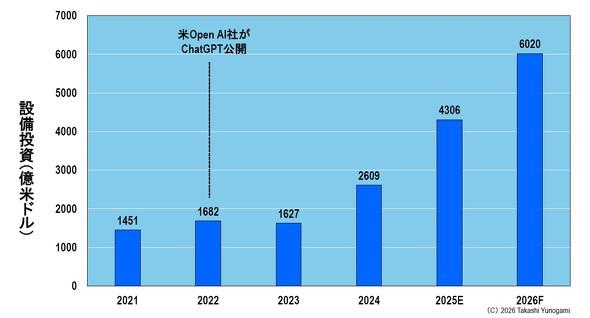
Core Insights - The capital expenditure (Capex) of the top eight cloud service providers is projected to grow from $145.1 billion in 2021 to $602 billion by 2026, representing an increase of over four times [1][5][20] - This surge in investment is driven by the exponential demand for computing power, particularly due to generative artificial intelligence (AI), which requires significantly more computational resources than traditional services [1][2][12] - The current investment trend is not a bubble but a structural shift in demand for computing infrastructure, fundamentally different from past economic bubbles [14][19] Group 1: Investment Trends - The top eight cloud service providers include Amazon (AWS), Microsoft (Azure), Google Cloud, Meta, Oracle (OCI), Alibaba Cloud, Tencent Cloud, and ByteDance [3] - Despite a temporary decline in capital expenditure during 2022-2023, a rebound is expected starting in 2024, coinciding with the launch of ChatGPT by OpenAI [5][20] - The investment in generative AI is seen as essential for maintaining competitive advantage in the cloud market, as failing to invest would lead to a loss of core value [2][23] Group 2: Computing Demand - The demand for computing power driven by generative AI is fundamentally different from traditional computing needs, necessitating a complete overhaul of the cloud computing infrastructure [6][12] - Generative AI's processing requirements are orders of magnitude greater than those of traditional search engines, with computational needs differing by a factor of 10,000 to 100,000 times [10][12] - The industry is experiencing a structural change in computing demand, with a significant increase in the need for data centers, power supply, cooling technologies, and network architecture [13][19] Group 3: Market Dynamics - The semiconductor market, particularly for data center logic chips, is expected to expand significantly, with the GPU market projected to grow from $100 billion to over $230 billion by 2030 [24][26] - The AI ASIC market is anticipated to grow ninefold, from $9 billion to $84 billion, indicating a shift towards specialized hardware for AI applications [24][26] - The memory market, especially for high-bandwidth memory (HBM), is also expected to see substantial growth, with DRAM market projections reaching $194 billion by 2030 [27][29] Group 4: Competitive Landscape - The competitive landscape for cloud service providers is becoming increasingly harsh, with a clear delineation that companies lacking sufficient computing power will be eliminated from the market [23][24] - Investment in AI-related infrastructure is viewed as a necessity for maintaining market position rather than a discretionary expenditure [23][24] - The transition from traditional computing to AI-driven infrastructure represents a significant shift in the market, with companies like TSMC poised to benefit from the demand for advanced semiconductor technologies [32][35]


MSCI:全球化在重启,而非倒退
Xin Lang Cai Jing· 2026-01-26 11:44
Group 1 - The core viewpoint is that the restructuring of investment risks and opportunities has become a global phenomenon, with investors reassessing these factors more urgently than ever before [1] - The rapid development of generative artificial intelligence (AI) is redefining the essence of finance and investment, with Asia-Pacific companies investing a higher percentage of their annual revenue in digital technology and generative AI compared to their North American and European counterparts [1] - Generative AI and other advanced technologies are expanding investment areas that previously attracted only a few investors, such as the private equity market, with MSCI predicting that by 2030, approximately one-sixth of global investable funds will flow into private equity [1] - Private equity assets are becoming mainstream, with a significant increase in allocation plans among wealth management institutions in the Asia-Pacific region, where 55% plan to increase private equity asset allocation in the coming years [1] Group 2 - Globalization is being rebooted rather than reversed, which holds extraordinary significance for the Asia-Pacific region [2] - According to McKinsey Global Institute data, 18 out of the 20 fastest-growing trade corridors globally are located in Asia, and 13 out of the 20 largest trade corridors are also situated there [2] - The current trend is not de-globalization but re-globalization, with trade volumes continuing to rise while trade patterns are being restructured, influenced by geopolitical competition and the reorganization of global supply chains [2]

芯原股份(688521.SH):2025年全年新签订单金额59.60亿元 AI算力相关订单占比超73
Ge Long Hui· 2026-01-26 09:49
基于自有的IP,公司已拥有丰富的面向人工智能(AI)应用的软硬件芯片定制平台解决方案,涵盖如智 能手表、AI/AR/VR眼镜等实时在线(Always on)的轻量化空间计算设备,AI PC、AI手机、智慧汽 车、机器人等高效率端侧计算设备,以及数据中心/服务器等高性能云侧计算设备。作为"AI ASIC龙头 企业",芯原在云端算力(训练和推理)芯片定制领域已建立起显著优势;面向未来,公司将在持续服 务数据中心、高性能计算等市场需求的同时,大力拓展端侧AI市场,为端侧AI微调和推理提供高效的 算力支持。 格隆汇1月26日丨芯原股份(688521.SH)近日在电话会议中表示,近年来,随着人工智能技术的快速发 展,尤其是生成式人工智能(AIGC)模型的广泛应用,半导体产业迎来了高速增长期。AI ASIC凭借 其定制化架构、高计算密度和低功耗特性,可以在特定场景中实现高性价比和低功耗,正成为市场增长 的核心驱动力。2025年全年,公司新签订单金额59.60亿元,同比增长103.41%,其中AI算力相关订单占 比超73%,预计未来AI算力相关领域的客户需求将驱动公司业绩增长。 ...

芯片,没有泡沫
半导体芯闻· 2026-01-26 08:44
Group 1 - The capital expenditure (Capex) of the top eight cloud service providers is projected to grow from $145.1 billion in 2021 to $602 billion by 2026, representing an increase of over four times [1][4] - This investment surge is driven not by market speculation but by the fundamental need for computational power, particularly due to the demands of generative artificial intelligence (AI) [1][5] - The current trend is characterized as a "structural transformation" in the semiconductor market rather than a bubble, as the demand for computing resources is fundamentally changing [10][14] Group 2 - The growth in cloud investment is accelerating, with a notable increase following the release of ChatGPT by OpenAI [4][5] - Generative AI requires significantly more computational resources compared to traditional search engines, with processing demands being 10,000 to 100,000 times greater [6][7] - The competition among cloud providers is fierce, as failure to invest in generative AI capabilities could lead to losing market relevance [8][17] Group 3 - The semiconductor market, particularly the data center logic chip sector, is expected to expand significantly, with the GPU market projected to grow from $100 billion to $230 billion and the AI ASIC market from $9 billion to $84 billion by 2030 [19] - The memory market is also anticipated to experience a shift, with DRAM and HBM prices expected to rise due to increased demand from AI applications [22][24] - The transition in TSMC's primary products from N5 to N3 nodes indicates a shift towards advanced technology driven by AI demands, with NVIDIA and Broadcom expected to surpass Apple in chip investments [28][33] Group 4 - The bottleneck in AI semiconductor development is primarily due to the limited capacity of 2.5D packaging technologies like CoWoS, which are essential for integrating high-bandwidth memory with AI chips [37][39] - Once the CoWoS capacity constraints are resolved, it is expected that investment in AI infrastructure will surge, leading to further competition among cloud service providers [39][42] - The ongoing trend signifies a profound and irreversible change in the semiconductor industry, driven by the structural demands of generative AI [42]






大事小情习惯“问问AI”?警惕AI的“种草式”推荐
Xin Lang Cai Jing· 2026-01-25 05:55
Core Viewpoint - The increasing use of generative AI in decision-making is leading to concerns about hidden marketing and advertising within AI-generated content, affecting user experience and trust in AI recommendations [1][9]. Group 1: User Experiences - Users like Lin Xiaoyan and Zhou Jianmin have encountered hidden advertisements while seeking recommendations from AI tools, leading to confusion and dissatisfaction with the purchasing process [3][5]. - Zhou Jianmin's experience with AI recommending lesser-known brands resulted in a product that did not meet expectations, highlighting the risks of relying on AI for product selection [5][9]. Group 2: Advertising Techniques - Advertisers are employing methods such as role-playing and prompt manipulation to influence AI recommendations, making the advertisements appear more genuine and less like traditional ads [7][8]. - The concept of Generative Engine Optimization (GEO) is introduced, where businesses create content designed to be favored by AI search algorithms, thus embedding their products into AI responses [9]. Group 3: Implications for Users and AI - The presence of hidden advertisements can degrade user experience, as users expect neutral and reliable information from AI, which is compromised when ads are mixed in [9][10]. - Trust in AI as an objective information source may decline if users suspect ulterior motives behind recommendations, potentially leading to a lack of confidence in AI tools [9][10]. Group 4: Regulatory and User Recommendations - Experts suggest that AI platforms need to enhance transparency and develop mechanisms to identify commercial content within AI responses, while regulatory bodies should adapt existing advertising guidelines to cover AI-generated content [10]. - Users are encouraged to critically evaluate AI responses, seek multiple options, and ask probing questions to ensure they receive balanced recommendations [10].

美妆行业周度市场观察-20260125
Ai Rui Zi Xun· 2026-01-25 03:01
Investment Rating - The report does not explicitly provide an investment rating for the beauty industry Core Insights - The beauty industry is facing significant challenges in 2025, including market contraction, the end of traffic dividends, and intensified competition, leading to many brands exiting the market. However, leading companies are showing resilience due to their scale and R&D advantages, while smaller brands struggle due to limited resources [4] - The luxury goods sector is witnessing a trend where high-end brands are leaving premium shopping malls, which are now embracing new consumer brands to attract foot traffic. This shift indicates a failure of the traditional "top brands + prime locations" model [4] - The global beauty industry is entering a transformation phase in 2025, with growth rates slowing from 7% to 5%. The market is shifting towards segmentation and premiumization, with significant mergers and acquisitions occurring [6] - The beauty industry is experiencing an upgrade in 2026, characterized by a surge in plant-based ingredients and significant changes in packaging, indicating a move towards ecological and high-end transformations [6] Industry Trends - In 2025, over 30 well-known beauty brands are expected to exit the Chinese market, with a significant proportion being Japanese and Korean brands. This is attributed to the rise of domestic brands and changing consumer demands [6] - The application of generative AI in the fragrance sector is projected to contribute $9-10 billion to the global beauty industry, enhancing product development, marketing insights, and customer experiences [7] - The beauty industry is witnessing a rise in plant-based ingredient registrations, with nearly 25% of new ingredient registrations being plant-based by the end of 2025, indicating a shift towards ecological beauty [6] Head Brand Dynamics - Aldi's beauty brand Lacura has gained popularity by offering high-quality products at low prices, appealing to young consumers and reflecting a shift towards value-driven beauty consumption [10] - Lin Qingxuan has successfully listed on the Hong Kong Stock Exchange, becoming the first high-end domestic skincare brand to do so, with a focus on research and global expansion [10] - The brand Hai Gui Ba Ba is leveraging emotional resonance and cultural connections in its marketing strategies, particularly targeting youth during the New Year period [10]
事关未成年人身心健康!八部门发文→
Xin Lang Cai Jing· 2026-01-24 04:12
转自:洛阳发布 近日,国家互联网信息办公室、国家新闻出版署、国家电影局、教育部、工业和信息化部、公安部、文 化和旅游部、国家广播电视总局发布《可能影响未成年人身心健康的网络信息分类办法》(以下简称 《办法》),自2026年3月1日起施行。 《办法》落实《未成年人网络保护条例》要求,明确可能影响未成年人身心健康的网络信息的4种类型 及具体表现形式,将不当使用未成年人形象等近年来突出问题纳入治理范围,对算法推荐、生成式人工 智能等新技术、新应用、新业态可能带来的内容风险提出防范要求,确保《办法》科学严谨、与时俱 进。 《办法》要求,对可能影响未成年人身心健康的网络信息,网站平台和内容生产者应当采取防范和抵制 措施,避免对未成年人产生负面影响。 国家互联网信息办公室有关负责人表示,网信部门将持续净化网络环境,督促网站平台切实履行主体责 任,加大对各类可能影响未成年人身心健康的信息内容的治理力度,为未成年人营造清朗网络空间。 一起看《办法》全文—— 可能影响未成年人身心健康的网络信息分类办法 第一条为了营造有利于未成年人身心健康的网络环境,进一步明确可能影响未成年人身心健康的网络信 息的具体种类、范围、判断标准和提示 ...
恒大汽车等被执行2亿|首席资讯日报
首席商业评论· 2026-01-24 03:58
Group 1 - Evergrande Auto and its subsidiaries have been listed as defendants in a legal case with an execution amount exceeding 200 million yuan, as reported by Tianyancha [2] - Moutai has corrected the packaging for its 53% vol 500ml classic version of Moutai liquor (Year of the Horse) and plans to resume production on January 23, 2026 [3][4] - The Ministry of Industry and Information Technology has announced the 2025 National Key R&D Program for the industrialization of high-tech achievements, with a two-year implementation period [4] Group 2 - Victory Technology has denied rumors of placing an order for 1,000 ultra-fast devices with Dazhu CNC, stating that the information circulating online is false [5] - Shanghai has registered 8 new generative AI services, bringing the total to 153 registered services as of January 23 [6] - Ericsson reported a 6% year-on-year increase in sales for Q4 2025, with sales amounting to 69.29 billion Swedish Krona and an adjusted EBITA of 12.7 billion Swedish Krona, achieving a profit margin of 18.3% [7] Group 3 - TikTok has announced the establishment of a U.S. data security joint venture, TikTok USDS Joint Venture LLC, which will handle data protection, algorithm security, and content review in the U.S. [8][9] - The inventory of passenger vehicles in China is projected to reach 3.65 million units by the end of December 2025, with a year-on-year increase of 600,000 units [10] - UBS plans to offer cryptocurrency trading services to select private banking clients, marking a significant move into the digital asset space [11] Group 4 - Reports of Tesla's Full Self-Driving (FSD) system being approved in China next month have been deemed false by reliable sources [12] - The company behind the "Is it dead?" app has been listed as operating abnormally due to remote work, according to the Zhengzhou market supervision authority [13] - Tongyuan Environment clarified that it is not involved in the optical module industry chain and has no business ties with Wang Xiaodong's employer [14]

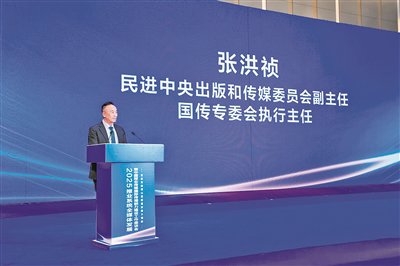
创新为翼 铸就文化自信丰碑
Xin Lang Cai Jing· 2026-01-23 20:58
(来源:团结报) 转自:团结报 □ 张洪祯 社会建设,建好用好国家文化公园、基层文化场馆等阵地,同时依托互联网平台,扩大优质文化资源的 覆盖面,让文化成果更多更公平惠及全体人民,不断提升人民群众的文化获得感与幸福感。 推进文化与科技深度融合,是激发文化创新活力的关键路径。全会提出要"推进文化和科技融合,推动 文化建设数智化赋能、信息化转型,发展新型文化业态"。在数字化浪潮席卷之下,出版传媒行业正经 历深刻变革,传统业态与新兴技术的碰撞融合,既是挑战更是机遇。2024年,我参与完成的民进中央 《关于发展生成式人工智能加强出版业前沿技术应用的提案》,荣获"民进中央2024年度参政议政成果 二等奖",这份荣誉不仅是对我工作的肯定,更印证了科技赋能文化创新的时代价值。在调研过程中, 我深入走访多家出版机构、科技企业,既看到了生成式人工智能在内容创作、编辑校对、个性化推送等 环节的应用潜力,也发现了技术落地过程中存在的版权保护、内容质量把控等痛点问题。为此,提案中 明确提出要建立健全出版业AI技术应用规范、加强复合型人才培养、完善知识产权保护机制等建议, 力求为出版业数字化转型扫清障碍。这正是对全会"完善文化管理体制和 ...