第二增长曲线

Search documents
一A股突然宣布:终止重大资产重组
Zhong Guo Ji Jin Bao· 2025-10-31 13:06
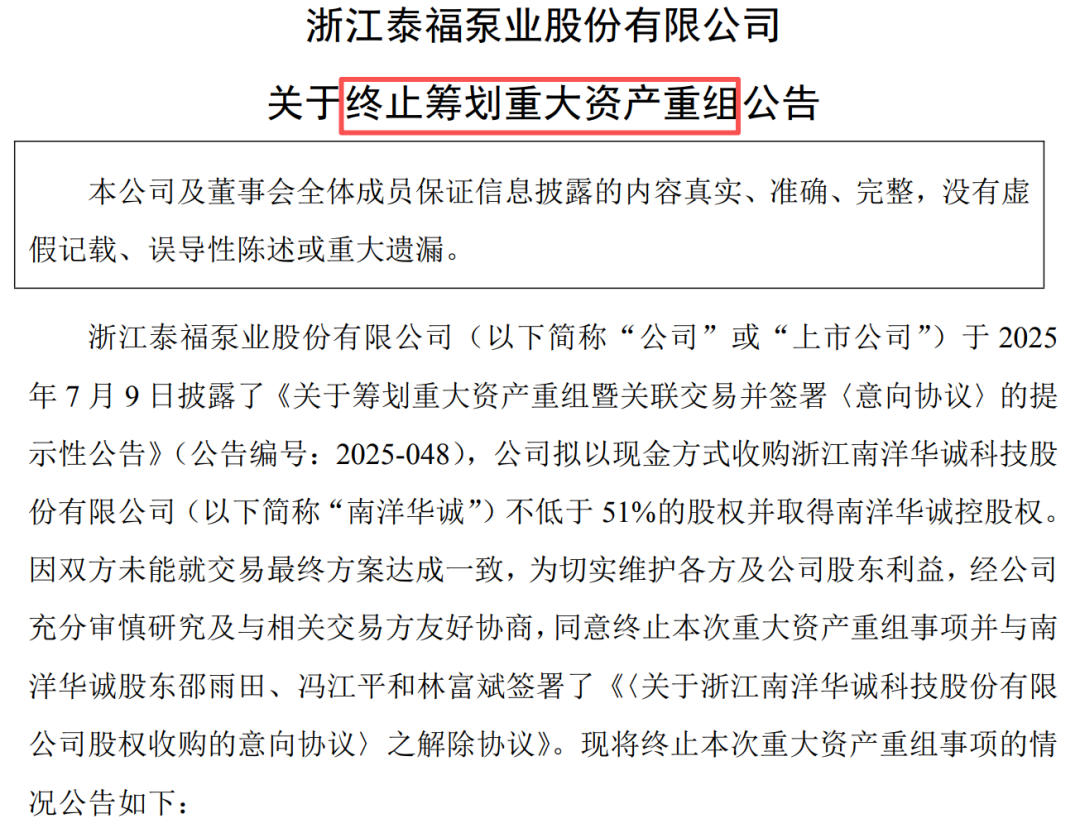
Core Viewpoint - Taifeng Pump Industry announced the termination of its cash acquisition of at least 51% of Zhejiang Nanyang Huacheng Technology Co., Ltd. due to a lack of agreement on the final transaction plan [1]. Group 1: Acquisition Details - The initial announcement for the acquisition was made on July 9, 2025, where Taifeng Pump signed a letter of intent with shareholders of Nanyang Huacheng to acquire a controlling stake [3]. - Nanyang Huacheng specializes in the research, production, and sales of BOPP film materials for capacitor applications, holding the largest market share in China for polypropylene electronic film materials in 2023 [3]. - The acquisition was intended to create a second growth curve for Taifeng Pump, as its main business in civil water pumps has been underperforming [3]. Group 2: Financial Performance - Following its listing in 2021, Taifeng Pump's performance stagnated, with a significant decline in 2024, where net profit and net profit excluding non-recurring items dropped by 76% and 90%, respectively, to 12.65 million and 5 million yuan [4]. - The Q3 2025 report indicated continued year-on-year declines in net profit and net profit excluding non-recurring items, decreasing by nearly 14% and 27% [4]. - Key financial metrics for the year ending December 31, 2024, show total revenue of 743.4 million yuan, a gross profit of 159.1 million yuan, and a net profit attributable to shareholders of 12.65 million yuan, reflecting a year-on-year revenue growth of 4.05% but a net profit decline of 76.35% [5].

转型焦虑的中顺洁柔:推多个新品,着急培育第二增长曲线
Nan Fang Du Shi Bao· 2025-10-31 08:59
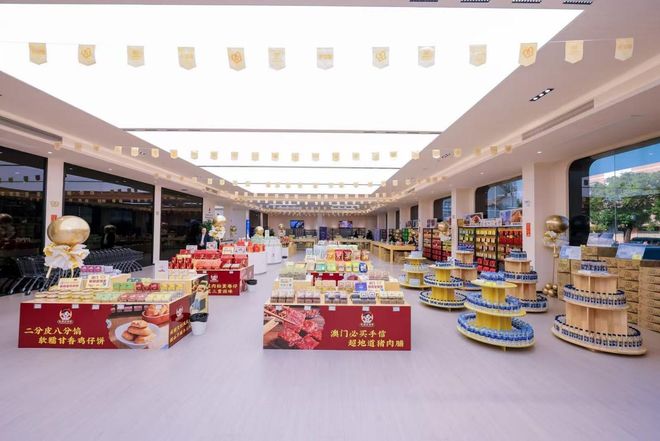
Core Viewpoint - Zhongshun Jierou is expanding its product offerings beyond paper products to include various consumer goods, aiming to establish a strong second growth curve while maintaining its dominance in the paper segment, which still accounts for approximately 99% of its revenue [1][6]. Group 1: Business Expansion - Zhongshun Jierou has launched multiple new products this year, including toothpaste, bottled water, and Lingzhi beverages, as part of its diversification strategy [1][2]. - The company has developed a brand system that includes 12 brands, such as Jierou and Duoleimi, to support its expansion into new markets [2]. - The "Daily Health Experience Hall," opened in June, serves as a physical space for consumers to experience the company's health-related products, showcasing its commitment to health trends [4]. Group 2: Financial Performance - In the first half of the year, Zhongshun Jierou's paper product revenue grew by 8.17% to 4.28 billion yuan, accounting for 98.85% of total revenue, while personal care and other segments saw a 22.75% decline in revenue to 49.65 million yuan, representing only 1.15% of total revenue [6]. - For the first three quarters, the company reported a revenue increase of 8.78% to 6.48 billion yuan and a net profit growth of 329.59% to 230 million yuan [7]. - Sales expenses increased by 11.98% to 1.43 billion yuan, while R&D expenses decreased by 33.89% to 119 million yuan, attributed to improved R&D efficiency and resource adjustments [7].

货拉拉六递招股书能成否?
Zhong Guo Qi Che Bao Wang· 2025-10-31 08:01
Core Insights - After five unsuccessful attempts to go public, the company has refiled for an IPO on the Hong Kong Stock Exchange, facing challenges in balancing regulation and profitability [1] Financial Performance - The company reported impressive revenue growth from 2022 to 2024, with annual revenues of $1.036 billion, $1.334 billion, and $1.593 billion respectively, while net profits shifted from a loss of $49.091 million in 2022 to a profit of $973 million in 2024 [1] - In the first half of 2025, the company achieved revenue of $935 million, a year-on-year increase of 31.8%, with over 455 million completed orders, reflecting a 34% growth [1] - The net profit for the first half of 2025 was $245 million, up 33.3% year-on-year [1] Business Model and Challenges - The company has faced a declining monetization rate in its domestic freight platform services, which fell to 9.2% in the first half of 2023, continuing a three-year downward trend [2] - The company's market capitalization has decreased to 65 billion yuan, losing over 565 billion yuan in value over four years, representing a nearly 90% decline [2] Diversification and Growth Strategy - The company is actively seeking diversified development paths, expanding its business scope to include various logistics services, with diversified logistics service revenue accounting for 40.1% of total revenue in the first half of 2025 [3] - The company has expanded its operations to 14 major markets globally, including Southeast Asia and Latin America, since 2014 [3] Regulatory Compliance and Driver Relations - The company has made efforts to balance the interests of drivers and the platform, including the public disclosure of its core algorithm rules and optimization mechanisms [4] - The company has committed to investing at least 50 million yuan to support low-revenue drivers and has expanded its occupational injury protection pilot to cover over 80% of its drivers [4] IPO Prospects and Future Outlook - The upcoming IPO emphasizes the company's profitability and the construction of a second growth curve, with experts noting that successful listing could accelerate business innovation and market expansion [5] - The company faces the challenge of achieving sustainable profitability post-IPO, as failure to do so could lead to delisting risks [5]
千亿攻防战:从刘靖康朋友圈看影石与大疆的生死竞速
Zhong Guo Neng Yuan Wang· 2025-10-31 01:35
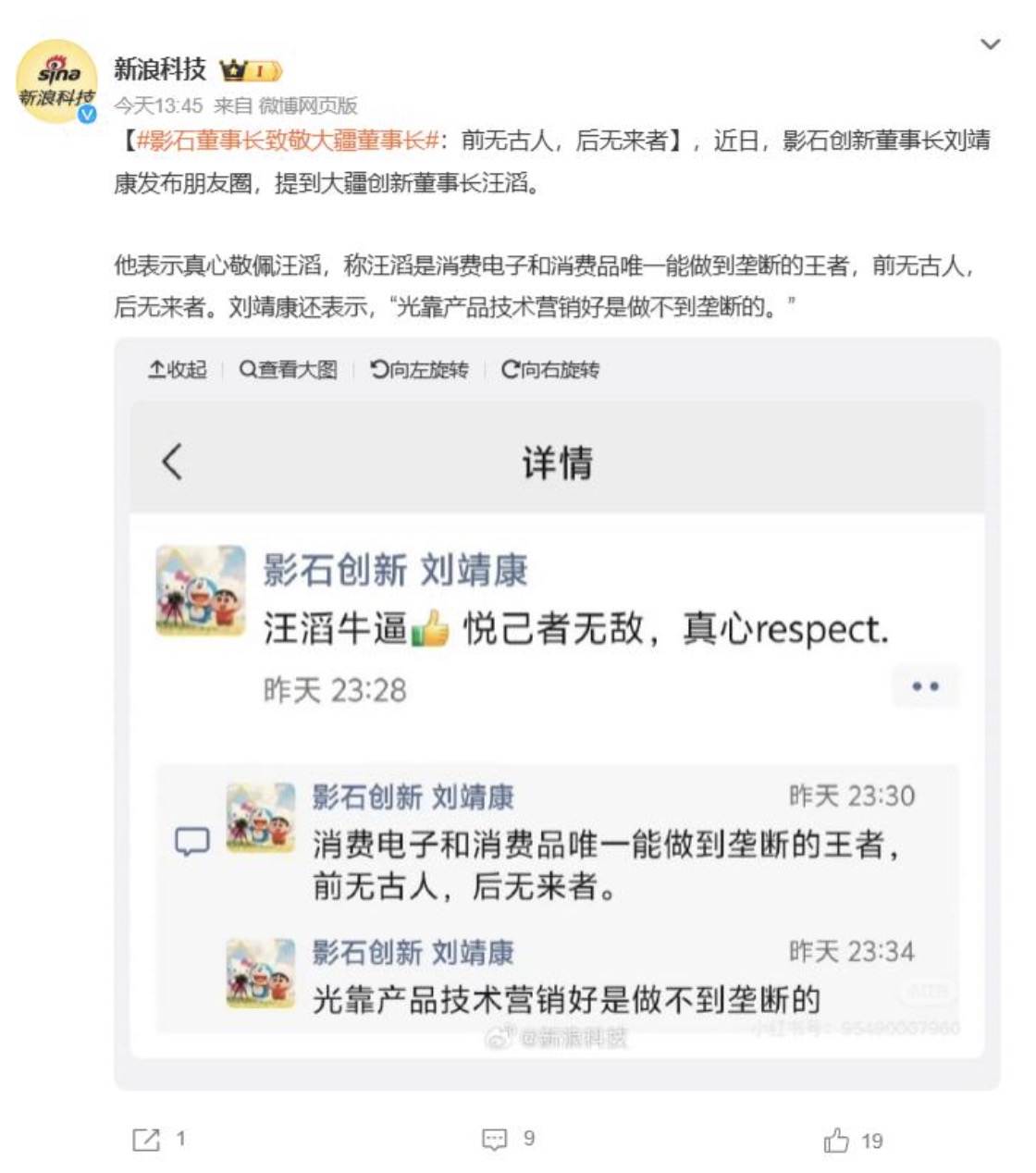
Core Insights - The interaction between Liu Jingkang, chairman of Yingshi Innovation, and Wang Tao, chairman of DJI, highlights the competitive dynamics in the consumer electronics market, particularly in the drone and panoramic camera sectors [1][3] Group 1: Competitive Landscape - DJI launched its first panoramic camera, Osmo 360, at a price point 800 yuan lower than Yingshi's flagship product, X5, directly targeting Yingshi's core market [3] - Yingshi responded by announcing its own panoramic drone, Yingshi Antigravity A1, aiming to penetrate DJI's drone market [3] - In October, DJI significantly reduced prices on several popular products, which was perceived as a strategy to suppress competition, while Yingshi countered with promotional offers to affected customers [3] Group 2: Financial Performance - Yingshi reported Q3 2025 revenue of 2.94 billion yuan, a year-on-year increase of 92.64%, but net profit attributable to shareholders decreased by 15.90% due to increased R&D expenses [4] - R&D expenses surged by 164.81% year-on-year, with a significant portion allocated to the panoramic drone project [4] Group 3: Market Position and Strategy - Yingshi holds a 67.2% market share in the global panoramic camera market, maintaining its position as the leader for six consecutive years, despite the niche nature of the market [4] - The global panoramic camera market reached 5.03 billion yuan in 2023, with a projected growth to 7.85 billion yuan by 2027, while the drone market is expected to reach 402.5 billion yuan by 2030 [4] - DJI commands over 70% of the consumer drone market and has quickly gained market share in the panoramic camera sector, capturing 49% of the Chinese e-commerce market and 43% globally with the Osmo 360 [4] Group 4: Industry Dynamics - Liu Jingkang acknowledged the competitive pressure from DJI when Yingshi decided to enter the drone market, indicating a strategic awareness of industry dynamics [5] - He described DJI as a formidable competitor, emphasizing the importance of competing with strong players in the industry [5]

五粮液,净利骤降超65%
Zhong Guo Ji Jin Bao· 2025-10-30 14:04
Core Insights - Wuliangye's Q3 revenue and net profit saw significant declines, with revenue dropping by 52.66% to 8.17 billion yuan and net profit falling by 65.62% to 2.02 billion yuan compared to the same period last year [2][3] - For the first three quarters of 2025, the company reported a revenue of 60.95 billion yuan, down 10.26%, and a net profit of 21.51 billion yuan, down 13.72% [2][3] Financial Performance - Q3 revenue: 8.17 billion yuan, down 52.66% YoY [3] - Q3 net profit: 2.02 billion yuan, down 65.62% YoY [3] - First three quarters revenue: 60.95 billion yuan, down 10.26% YoY [3] - First three quarters net profit: 21.51 billion yuan, down 13.72% YoY [3] - Basic and diluted earnings per share for Q3: 0.52 yuan, down 65.63% YoY [3] - Total assets at the end of the reporting period: 181.07 billion yuan, down 3.81% from the previous year [3] Industry Context - Wuliangye's performance decline is part of a broader trend in the liquor industry, with most companies reporting lower earnings, except for Guizhou Moutai which showed slight growth [8] - Compared to peers, Wuliangye's decline was more severe than Shanxi Fenjiu and Luzhou Laojiao, which reported smaller decreases in revenue and profit [8] Strategic Response - The company is undergoing a "pain period of energy conversion," focusing on new growth areas such as low-alcohol products and international expansion [9] - Wuliangye plans to launch a 29-degree version of its product to attract younger consumers and adapt to health trends [9] - The company is also enhancing its cultural marketing efforts to strengthen its brand [9] Market Reaction - Investor sentiment has been negative, with many expressing confusion and concern over the drastic decline in performance [5][8] - Wuliangye's stock closed at 118.47 yuan per share, with a total market capitalization of 459.9 billion yuan [9]


从大国重器到全球引领:中信重工的“十四五”进阶与“十五五”远征
Zhong Guo Ji Jin Bao· 2025-10-30 08:14
Core Viewpoint - 中信重工 has successfully transformed from a traditional heavy equipment manufacturer to a comprehensive industrial giant covering mining and heavy equipment, robotics, new energy equipment, and special materials during the "14th Five-Year Plan" period, aiming for high-quality development in the "15th Five-Year Plan" [2][3][10] Group 1: Achievements During "14th Five-Year Plan" - The company has significantly improved its core operating indicators, with net profit attributable to shareholders increasing from 195 million yuan in 2020 to 375 million yuan in 2024, a growth of 92% [3] - The company has reduced interest-bearing liabilities from 5.369 billion yuan in 2020 to 2.03 billion yuan in 2024, indicating improved asset quality [3] - 中信重工 was listed among the "Top 50 Global Mining Equipment Manufacturers" in 2024, showcasing its comprehensive capabilities across multiple industries [3] Group 2: Strategic Focus for "15th Five-Year Plan" - The company aims to transition from a follower to a leader in the global high-end equipment sector, focusing on a progressive development program centered on "four new" [10] - 中信重工 plans to maintain a research and development investment intensity of over 7%, aiming for leadership in the mining equipment sector and high market share in various sub-sectors [10] - The company is accelerating the cultivation of its robotics and new energy equipment businesses as new growth drivers [10] Group 3: Innovation and Digital Transformation - 中信重工 has established a comprehensive innovation system, including a national key laboratory for intelligent mining heavy equipment and multiple national-level technology centers [5] - The company has maintained a research and development investment of over 2.6 billion yuan during the "14th Five-Year Plan," driving advancements towards high-end, intelligent, and green technologies [5] - A digital application system named "6+1+N" has been developed, enhancing efficiency in product development and management [3] Group 4: International Expansion - The company's international business saw explosive growth in 2024, with overseas orders increasing by approximately 80% year-on-year [7] - 中信重工 has established a global marketing and service network, exporting products to 68 countries and regions [7][8] - The company has secured significant orders in the international market, including supplying large-scale grinding machines to major mining projects [7][9]

科顺股份(300737):收入压力延续 加大布局零售和海外
Xin Lang Cai Jing· 2025-10-30 00:37
Core Insights - The company reported a revenue of 4.7 billion yuan for the first three quarters of 2025, a year-on-year decline of 8%, with a net profit attributable to shareholders of 20 million yuan, down 84% year-on-year [1] - The third quarter saw a revenue of 1.5 billion yuan, a decline of 11% year-on-year, and a net profit of -30 million yuan, a decrease of 183% year-on-year [1] Revenue Performance - Revenue growth has been under pressure, with the last four quarters showing declines of -1%, -6%, -8%, and -11% respectively [2] - The decline in revenue is attributed to weak demand in the construction industry, with new construction area down 19% year-on-year from January to September 2025 [2] Profitability Analysis - Gross margin for the first three quarters was approximately 24.3%, an increase of 1.3 percentage points year-on-year, while the third quarter gross margin was about 23.6%, up 1.4 percentage points year-on-year but down 1.3 percentage points quarter-on-quarter [2] - The company faced increased operating expenses, with a period expense ratio of approximately 18.9% for the first three quarters, up 1.0 percentage points year-on-year, and 20.8% for the third quarter, up 1.5 percentage points year-on-year [2] Cash Flow and Receivables - The cash collection ratio improved to 1.04 for the first three quarters of 2025, compared to 0.83, 0.90, and 0.98 in the previous three years [3] - Despite the improvement in cash collection, the net cash flow remained negative at -820 million yuan for the first three quarters [3] Business Strategy and Market Position - The company is actively optimizing its business structure, with a significant increase in retail and overseas business contributions [3] - Future revenue structure plans include 30% from retail, 20% from overseas, and 50% from construction and related businesses [3] Strategic Partnerships and Market Outlook - The company has established strategic cooperation with SAC Group and set up two modern production bases in Malaysia [4] - The waterproof materials industry is experiencing a significant supply exit, with production expected to decline by 38% from 2021 to 2024, indicating potential for profit recovery if demand stabilizes [4] Profit Forecast - The company is projected to achieve a net profit of approximately 50 million yuan in 2025 and 340 million yuan in 2026, with corresponding valuations of 107 and 17 times [5]
天禄科技2025年三季报:净利润逆势增长106%,战略布局TAC膜开启第二增长曲线
Quan Jing Wang· 2025-10-29 11:15
Core Viewpoint - Tianlu Technology (301045) demonstrated strong profitability and operational resilience in Q3 2025, achieving a net profit of 10.099 million yuan, a significant year-on-year increase of 106% despite industry cyclical adjustments and external challenges [1][2]. Financial Performance - In Q3 2025, the company reported an operating income of 151 million yuan, with a notable increase in net profit and a 125.87% growth in non-recurring net profit, indicating substantial improvement in core business profitability [2]. - The net cash flow from operating activities surged to 90.6104 million yuan, reflecting a year-on-year increase of 468.16%, showcasing effective capital turnover and cost control [2]. - As of September 30, 2025, total assets reached 1.486 billion yuan, a 9.28% increase from the previous year, while equity attributable to shareholders grew by 3.07% to 1.025 billion yuan [2]. Strategic Initiatives - The company has extended its focus beyond light guide plates to adjacent segments in the display industry, establishing Anhui Jiguang New Materials Co., Ltd. to specialize in the research, production, and sales of TAC film [3]. - TAC film is a critical raw material for display panels, playing a vital role in protecting polarizers and adjusting optical properties, positioning the company for a "second growth curve" [3]. R&D and Capacity Expansion - Tianlu Technology has maintained steady R&D investment, with expenses reaching 26.7604 million yuan, reflecting a commitment to technological innovation [4]. - The ongoing construction projects have increased by 45.09% since the beginning of the year, primarily due to the continuous advancement of optical plate and TAC film projects, indicating future capacity release and product structure optimization [4]. - Analysts note that the company has achieved counter-cyclical growth in a complex market environment, with improved cash flow and asset structure, making its future performance in high-end display materials promising [4].
“举高高”引爆30城,海底捞“红石榴计划”跑出真正第二增长曲线!
Jiang Nan Shi Bao· 2025-10-29 08:05
Core Insights - Haidilao is successfully replicating its next "Haidilao" with the launch of "Jugaogao Self-Service Hotpot," which has quickly become a phenomenon in the market [2][13][19] Company Overview - Haidilao's new brand "Jugaogao" has expanded to over 50 locations across 9 provinces within six months, demonstrating a rapid growth trajectory [2][14] - The brand's first store in Wuhan achieved a remarkable 11 rounds of table turnover, while the first store in Xi'an saw over 4,000 tables queued [2][5] Market Dynamics - The self-service hotpot segment is gaining traction, with the market for small hotpot restaurants exceeding 56,000 locations and a market size nearing 100 billion, growing by 30% year-on-year [16] - Jugaogao's pricing strategy at approximately 60 yuan per person positions it well within the competitive landscape, appealing to a broader consumer base [16][10] Innovation and Strategy - The launch of Jugaogao is part of Haidilao's broader "Pomegranate Plan," aimed at diversifying its offerings and exploring new business models [13][18] - Jugaogao's unique product offerings and service enhancements, such as timely clearing of empty plates and customer care, differentiate it from traditional self-service hotpot experiences [10][12] Competitive Advantage - Jugaogao's rapid expansion and ability to replicate its business model across regions highlight its potential as a significant growth driver for Haidilao [14][15] - The brand's focus on high-quality ingredients and innovative menu items has redefined customer expectations in the self-service hotpot category [9][12] Future Outlook - The success of Jugaogao in Xi'an is seen as a testament to the city's potential as a culinary hub and a fertile ground for Haidilao's expansion [4][20] - Jugaogao is positioned to become a key player in Haidilao's portfolio, contributing to the company's second growth curve and opening new revenue streams [13][17]

5300亿:钟睒睒的身家是如何计算的?
首席商业评论· 2025-10-29 04:07
Core Viewpoint - Zhong Shanshan's wealth, primarily derived from his beverage and vaccine businesses, demonstrates a resilient business model that effectively combines high-margin products with essential health services, allowing him to maintain a leading position in the Hurun Rich List despite market fluctuations [2][9][10]. Group 1: Wealth Composition - Zhong Shanshan's wealth is mainly sourced from two companies: Nongfu Spring (港股:9633.HK) with approximately 84% ownership and Wantai Biological Pharmacy (A股:603392.SH) with about 73.5% ownership [4][6]. - As of October 28, 2025, Nongfu Spring's market value is approximately 537.8 billion RMB, while Wantai Biological's market value is around 71.138 billion RMB, leading to a total wealth estimation of 504.038 billion RMB for Zhong [6]. Group 2: Business Model and Market Position - The combination of Nongfu Spring's high-margin beverage business and Wantai Biological's HPV vaccine market dominance creates a robust financial structure, showcasing a unique business model that is less susceptible to economic cycles [9][10]. - Nongfu Spring's revenue growth of 16% in the first half of the year, coupled with the potential of Wantai Biological's vaccine segment, forms a strong defensive and offensive wealth structure [10]. Group 3: Strategic Insights - The commercial value of "natural water" is significantly underestimated; Zhong Shanshan maintains high profit margins for bottled water by leveraging premium water sources and consumer willingness to pay for perceived quality [11][24]. - Wantai Biological's HPV vaccine, with a near-monopoly market position and high government procurement rates, ensures superior cash flow quality compared to competitors [15][18]. Group 4: Growth Potential - Wantai Biological is preparing for the launch of its nine-valent HPV vaccine, which could open a market worth hundreds of billions, further enhancing its growth prospects despite current losses [15][18]. - The tea beverage segment, particularly the "Dongfang Shuye" brand, has shown rapid growth, with a revenue increase of approximately 59.8% year-on-year in the first half of 2023, indicating a successful diversification strategy [20][22]. Group 5: Business Philosophy - Zhong Shanshan's business strategy focuses on essential consumer needs, targeting high-frequency consumption markets such as bottled water and HPV vaccines, which are characterized by strong demand [26]. - The combination of stable cash flow from Nongfu Spring and growth potential from Wantai Biological creates a balanced wealth model, allowing for strategic decision-making without external investor constraints [26].