
高质量发展

Search documents
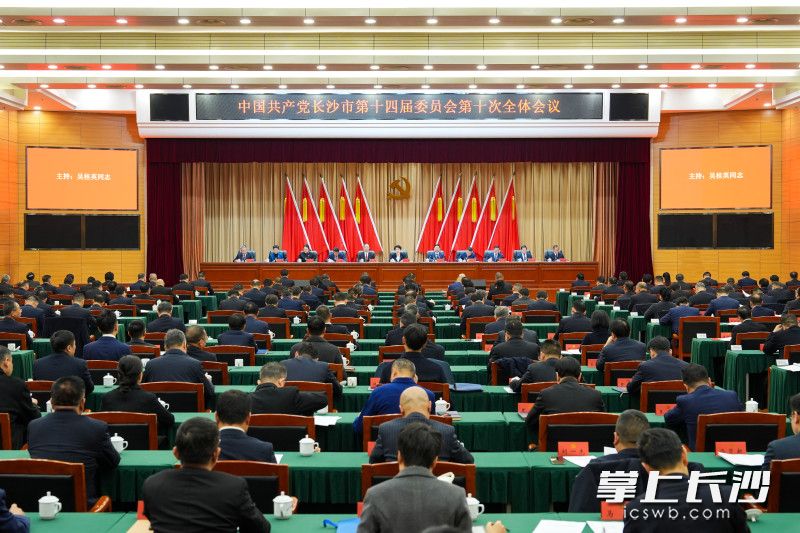
中共长沙市委十四届十次全体会议召开 吴桂英讲话
Chang Sha Wan Bao· 2025-12-15 11:39
Core Points - The meeting emphasized the importance of accelerating high-quality development and modernization in Changsha, aligning with the "Three Highs and Four New" blueprint [5][9] - The meeting approved the proposal for the 15th Five-Year Plan, which outlines the overall strategy, goals, and key measures for the city's development over the next five years [6][8] Group 1 - The meeting was chaired by the Standing Committee of the Municipal Party Committee, with key officials including Wu Guiying and Chen Bozhang in attendance [3] - The Standing Committee's work this year was recognized, highlighting adherence to Xi Jinping's thoughts and the successful implementation of the 14th Five-Year Plan [5] - The meeting called for a focus on high-quality development, emphasizing the need for political awareness, mission responsibility, and practical measures [6][7] Group 2 - The meeting outlined current priorities, including completing annual goals, ensuring a successful conclusion to the 14th Five-Year Plan, and preparing for the 15th Five-Year Plan [8] - There was a call for unity and collaboration among all levels of government to achieve the outlined development goals [9] - The meeting also stressed the importance of maintaining a focus on public welfare and safety, ensuring effective resource allocation for the benefit of citizens [7]

国联证券:11月经济:投资消费谁先回稳?
Xuan Gu Bao· 2025-12-15 10:47
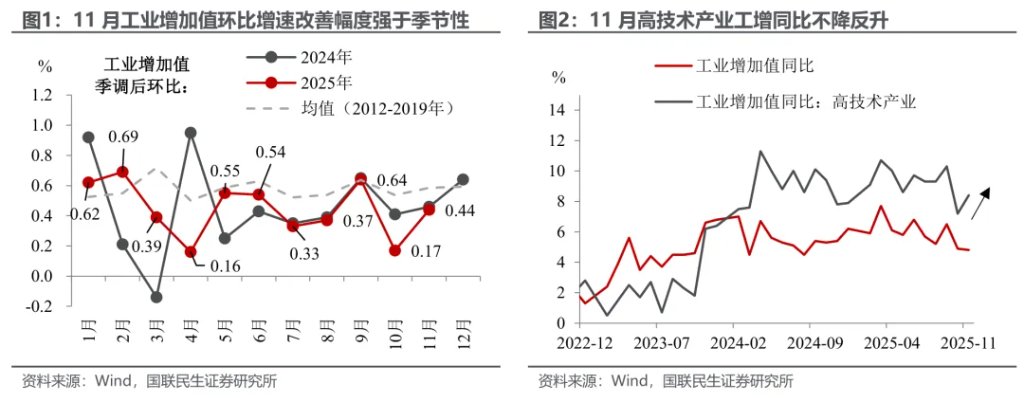
11月经济呈现出 "工业稳、投资与消费缓" 的格局。鉴于政策效果将在明年一季度更为充分显现,当前消费与投资仍面临阶段性逆风,"谁先企 稳"对明年经济"开门红"具有关键的信号意义。对此,我们认为可以从如下角度考虑: 投资端:"乌云中的银线"。虽然房地产下行压力仍在释放,但基建与制造业已不时释放积极信号:11月制造业投资增速止跌回升,初步显现"拐 点";建筑业PMI表现偏强,叠加新增专项债加速发力项目建设,表明"稳投资"的政策储备与执行已在跟进。 消费端:增速放缓背后的复杂局面。除高基数效应外,前期"国补"政策的火热、"双十一"促销前置,均在一定程度上透支了部分消费力,对短期 消费增速形成压制。长远来看,消费复苏仍需依赖消费场景实质性拓展以及居民收入预期改善。 尤其在中央经济工作会议"推动投资止跌回稳"的指引下,"稳投资"政策意图明确。投资有望先于消费实现企稳,成为支撑明年一季度"开门红"的 主要亮点。后续关键仍在于政策"愿望清单"能否如期兑现、向实物工作量有效转化。 工业:同环比背离释放了哪些信号?与改善幅度明显强于季节性的环比增速不同,11月工业增加值同比增速却小幅放缓至4.8%(前值4.9%),两 者的背离 ...
金融大家评 | 如何理解“投资于人”?
清华金融评论· 2025-12-15 09:59
Core Viewpoint - The article emphasizes the concept of "investment in people" as a transformative development ideology that prioritizes human resources as a crucial form of capital, aiming to enhance individual capabilities and improve overall societal value, thereby supporting China's modernization efforts [2]. Summary by Sections Definition and Relationship of "Investment in People" - "Investment in people" refers to allocating more fiscal resources towards education, employment, healthcare, and social security, focusing on enhancing individual capabilities and driving high-quality economic development through human capital [3]. - It contrasts with "investment in material," highlighting a shift from a purely material-focused investment approach to one that recognizes the importance of human development [3]. Economic Growth and Investment Strategies - Traditional economic growth has focused on expanding production capacity, with "investment in material" being favored due to its quicker returns and easier cost-benefit analysis [4]. - However, overemphasis on material investment has led to structural imbalances in supply and demand, with a significant decline in the return on investment in material from 2008 to 2023, indicating a need for a shift towards human-centered investment strategies [4]. Pursuit of Quality of Life - The pursuit of a better life encompasses not only diverse and high-quality consumption but also broader social and individual development goals [5]. - "Investment in people" is positioned as a practical application of the goal to meet the growing needs of the populace, emphasizing the integration of material and human investments [5]. Implications for Domestic Demand and Supply Structure - The article discusses the necessity of improving the interaction between consumption and investment to address domestic demand issues, with a focus on optimizing investment directions to better align with changing consumer needs [6][7]. - It highlights that people are the core of consumption and production, and "investment in people" aims to enhance human capabilities and foster sustainable economic growth [7]. Comprehensive Development and Policy Considerations - "Investment in people" should transcend short-term economic logic, addressing broader human needs, including cultural and spiritual dimensions [8]. - The article advocates for a holistic approach to investment that includes education, healthcare, and environmental considerations, aiming for a sustainable and equitable development model [9][10]. Long-term Goals and Systematic Advantages - The long-term objective of "investment in people" is to achieve comprehensive human development, distinguishing it from other countries' approaches that may reduce human value to mere economic tools [12][13]. - China's unique institutional advantages, such as a people-centered approach and systematic planning, are highlighted as key factors in successfully implementing "investment in people" strategies [13][14]. Future Directions and Implementation Strategies - The article suggests focusing on key areas such as income distribution, public services, and education to effectively "invest in people," while balancing market forces and government roles [17]. - It emphasizes the importance of a long-term perspective in evaluating the effectiveness of such investments, advocating for a comprehensive assessment framework that aligns with the overarching goals of human and societal development [11][15].

证监会点明12条重点改革方向
财联社· 2025-12-15 09:35
Core Viewpoint - The article outlines the key measures for capital market reform as revealed by the Chairman of the China Securities Regulatory Commission (CSRC), Wu Qing, following the Central Economic Work Conference, emphasizing stability, risk prevention, and high-quality development in the capital market. Group 1: Key Measures for Capital Market Reform - The CSRC will actively cooperate in formulating the national "14th Five-Year" plan and establish a systematic capital market "14th Five-Year" planning framework [1] - The implementation of deepened reforms for the ChiNext board and acceleration of the "1+6" reform measures for the Sci-Tech Innovation Board will be initiated [2] - A new round of corporate governance initiatives will be launched to cultivate high-quality listed companies, encouraging increased dividend payouts and share buybacks [3] - The focus will be on fostering top-tier investment banks and institutions while revising key regulations in securities and investment funds [4] - The private equity fund industry will be promoted for high-quality development [5] - A long-term assessment mechanism for medium- and long-term funds will be fully implemented, with a strong push for the development of equity public funds and high-quality index investment [6] - The system for qualified foreign institutional investors (QFII) will be optimized, enhancing cross-market risk monitoring and establishing a long-term market stabilization mechanism [7] - The CSRC will strengthen policy interpretation and market expectation guidance, ensuring accountability for reputation management among industry institutions and listed companies [8] - Regulatory technology will be enhanced to combat financial fraud, insider trading, and market manipulation [9] - The pilot program for commercial real estate REITs will be expedited [10] - New key futures products will be researched and launched [11] - The CSRC will support the disciplinary inspection team in intensifying case investigations and enhancing supervision of public power in key areas [12] Group 2: Focus Areas for Market Stability - Enhancing the intrinsic stability of the market is a key focus for the upcoming year, with an emphasis on strengthening the foundation and core elements of market operation [14] - Mechanism construction will be crucial for consolidating stability, including cross-market risk monitoring and policy interpretation to guide market expectations [15] Group 3: Reform Expectations for ChiNext and Sci-Tech Innovation Board - The ChiNext board will undergo reforms to better serve growth-oriented innovative enterprises, with adjustments to key institutional arrangements [16] - The "1+6" reform measures for the Sci-Tech Innovation Board will be accelerated, focusing on improving liquidity and nurturing hard technology enterprises [17][18] Group 4: Development Path for Securities, Public, and Private Funds - The meeting clarified the development paths for the securities industry, public funds, and private funds, all centered around "high-quality development" [19] - The CSRC will promote high-quality development in the private equity fund sector and expedite the pilot for commercial real estate REITs [20] Group 5: Strengthening Regulatory Measures - Regulatory enforcement will be enhanced, with a focus on digital and intelligent regulatory measures to improve risk identification and enforcement efficiency [22] - The CSRC will maintain a high-pressure enforcement stance against financial fraud and other violations [22] Group 6: Long-term Planning for Capital Market - The meeting emphasized the need for a strategic approach in formulating the capital market "14th Five-Year" planning framework, covering key areas such as market infrastructure, reform directions, and risk prevention mechanisms [23]

形势政策系列报告会首场报告会在北京举行
Xin Hua She· 2025-12-15 09:33
韩文秀表示,形势越是复杂,越要加强党对经济工作的全面领导,坚持党中央集中统一领导,形成统一 意志和强大合力。要增强大局观、执行力,结合实际、因地制宜,全面落实党中央关于明年经济工作的 思路、任务、政策。要树立和践行正确政绩观,完善差异化考核评价体系。要科学编制"十五五"规划, 追求实实在在、没有水分的增长,推动高质量、可持续的发展。 报告会由中央宣传部负责同志主持。在京党政军机关干部、中央企业干部职工、首都高校师生和首都各 界群众代表约730人参加报告会。 新华社北京12月15日电 由中央宣传部、中央和国家机关工委、教育部、中央军委政治工作部、北京市 委联合举办的形势政策系列报告会首场报告会15日在北京举行。中央财办分管日常工作的副主任、中央 农办主任韩文秀作了"坚持稳中求进、提质增效 努力实现'十五五'良好开局"的专题报告。 韩文秀在报告中指出,今年以来,以习近平同志为核心的党中央团结带领全党全国各族人民迎难而上、 奋力拼搏,推动我国经济平稳运行、向新向优发展,全年经济社会发展主要目标将顺利完成。过去5 年,我们有效应对世纪疫情等超乎寻常的冲击挑战,推动党和国家事业取得新的重大成就。要充分认识 今年和"十四 ...
多方为“十五五”环境企业发展支招,聚焦三大方向
Di Yi Cai Jing· 2025-12-15 09:17
Core Insights - The environmental industry in China is experiencing a significant transformation, with 24 out of the top 50 environmental companies reporting year-on-year revenue growth [1][4]. Group 1: Industry Growth and Trends - The "14th Five-Year Plan" period is crucial for achieving carbon peak goals and advancing high-quality development in China [2]. - Experts indicate that the ecological environment industry has a promising future, supported by the central government's focus on "dual carbon" initiatives and green transformation [3]. - The average revenue of the top 50 environmental companies in 2025 is projected to be 7.536 billion yuan, reflecting a year-on-year decrease of 3.91% [4]. Group 2: Company Performance - Among the top 50 companies, three have revenues exceeding 20 billion yuan: China Everbright Environment (28.02 billion yuan), Beijing Enterprises Water Group (24.27 billion yuan), and Beijing Capital Eco-Environment Protection (20.05 billion yuan) [4]. - Of the top 50 companies, 43 are publicly listed, with 36 on A-shares, 6 on Hong Kong stocks, and 1 in Singapore [5]. Group 3: Strategic Directions - Environmental companies are encouraged to focus on three main areas: embracing development trends, deepening green transformation, and adhering to high-quality development standards [3]. - There is a need for systematic restructuring around policies, technology, market, and finance to improve profitability and cash flow in the environmental sector [4].
从规模竞速到质量突围!公募格局重塑升级,集中度上演“V形”涅槃
券商中国· 2025-12-15 08:50
站在2025年末回望,在系列重磅政策的指引下,公募基金行业的高质量发展已步入关键阶段。在此进程中,以非货币型基金(以下简称"非货基")规模集中度为 镜,可以清晰窥见行业竞争生态的深层演变。 纵观持牌公募基金2015年至2024年年报、2025年三季报(时间跨度约10年)的非货基规模数据,前二十强非货基规模占比从2015年的64.09%先降至2023年的 57.72%,后于2025年9月末回升至64.23%;前十强份额也同步呈现先抑后扬的相似轨迹。这一"V形"反转不仅勾勒出行业从"规模竞速"向"质量突围"的转型轨迹,更 揭示了资金向优质管理人汇聚的长期逻辑,为投资者优化配置、从业者制定战略提供了重要参考。 | | 非货币型基金 | 股票型基金 | 信券型基金 | 混合型基金 | | --- | --- | --- | --- | --- | | 时间 | 规模前二十占比 | 规模前二十占比 | 规模前二十占比 规模前二十占比 | | | | (%) | (%) | (%) | (%) | | 2015年末 | 64.09 | 87.24 | 72.32 | 58.45 | | 2016年末 | 64.24 | ...

中国经济呈现显著韧性——访世界银行中国首席经济学家米丽莎
Xin Hua Wang· 2025-12-15 08:43
Core Viewpoint - Despite facing numerous challenges, the Chinese economy demonstrates significant resilience, with a notable potential for future growth as highlighted by the World Bank's Chief Economist for China, Melissa [1] Economic Performance - The World Bank has raised its forecast for China's economic growth in 2025 by 0.4 percentage points, reflecting better-than-expected performance compared to earlier predictions [1] - The term "resilience" is emphasized as a key descriptor of China's economic performance this year [2] Policy Measures - The Chinese government has implemented stronger macroeconomic policies, including more proactive fiscal policies and moderately loose monetary policies, which have helped boost domestic consumption and investment [2] - The diversification of export markets, particularly towards emerging markets, has supported overall export performance [2] Structural Reforms - Continuous reforms, such as enhancing social security measures and promoting private sector confidence, are crucial for maintaining economic resilience [3] - Initiatives like increasing basic pension benefits, providing childcare subsidies, and promoting free preschool education are aimed at reducing precautionary savings and sustainably boosting domestic consumption [3] Innovation and Investment - China has established an innovative ecosystem that drives cutting-edge research, with foreign direct investment (FDI) in high-tech sectors accounting for about one-third of new inflows, indicating strong interest from international investors [3] - The focus on high-quality development, particularly in consumption-driven growth, innovation transformation, and low-carbon development, presents numerous new opportunities [3] Long-term Outlook - The World Bank has also raised its growth forecast for China in 2026 by 0.4 percentage points, anticipating that macroeconomic policies and structural reforms will continue to yield positive effects [4] - The transition from rapid growth to a more sustainable growth model emphasizes quality, with ongoing green and low-carbon transformations expected to create new growth and employment opportunities [4] Global Impact - China's economic growth is deemed crucial for global economic growth, playing a significant role in global value and supply chains, not only through exports but also by investing overseas and transferring technology and skills [4]
中国太平传达学习中央经济工作会议精神
Xin Lang Cai Jing· 2025-12-15 07:04
要聚焦主责主业,在服务国家大局中展现新作为。紧紧围绕会议部署的"八个坚持"重点任务,特别是与 金融保险密切相关的领域,丰富保险产品服务供给,发挥保险长期资金优势,积极服务扩大内需和建设 强大国内市场、服务创新和培育新动能、服务绿色转型和民生保障、服务对外开放和"一带一路",支持 香港国际金融中心建设,助力港澳更好融入国家发展大局。要坚守风险底线,在服务大局与稳健经营中 体现担当。牢记"安全第一、稳慎经营、高质量发展"的要求,守住不发生重大风险的底线,实现高质量 发展与高水平安全的统一。要深化改革开放,在激发内生动力中实现新突破。持续完善公司治理,深化 市场化体制机制改革,着力推动数智化转型,积极探索产品、服务、模式创新,培育差异化竞争优势。 要强化战略引领,高标准编制"十五五"规划,谋划好高质量发展新篇章。 来源:共享太平 12月15日,中国太平保险集团召开会议传达学习中央经济工作会议精神、全国金融系统工作会议精神, 结合实际研究贯彻落实措施。集团董事长尹兆君主持会议并讲话,集团领导班子、经营班子成员,股权 董事,驻集团纪检监察组负责人,集团各部门和境内及港澳子公司主要负责人参加会议。 这次中央经济工作会议, ...


博时基金陈显顺:中央经济工作会议释放积极信号,为“十五五”开局定向领航
Xin Lang Cai Jing· 2025-12-15 06:53
Core Viewpoint - The Central Economic Work Conference held on December 10-11 in Beijing outlines the economic work for 2026, emphasizing high-quality development to address uncertainties in the current economic landscape [1][8]. Group 1: Macroeconomic Policy - The conference signals a continuation of a more proactive fiscal policy and moderately loose monetary policy, enhancing the synergy of macroeconomic policies [1][2][3]. - Emphasis on "optimizing expenditure structure" and scientific management within fiscal policy aims to stabilize total demand while directing funds towards key areas such as technology innovation and public welfare [3][10]. - Monetary policy is set to remain "moderately loose," with flexibility in using various tools like reserve requirement ratio cuts and interest rate reductions to ensure adequate liquidity [3][10]. Group 2: Domestic Demand and Economic Structure - The conference prioritizes "expanding domestic demand" as a key task, reflecting a strategic decision to strengthen the internal economic drive amid rising external uncertainties [3][4][11]. - Key strategies for expanding domestic demand include stabilizing income, enhancing consumer confidence, optimizing supply, and promoting investment to create a virtuous cycle [4][11]. Group 3: Innovation and New Growth Drivers - Future growth drivers will focus on the integration of cutting-edge technology with industries, particularly in areas like artificial intelligence, new energy, and high-end manufacturing [5][11]. - The capital market is identified as a crucial element in nurturing new growth drivers, with a call for reforms to better support national innovation strategies [5][11]. Group 4: Reform and High-Quality Development - The conference highlights the need for reforms to eliminate "involutionary" competition and establish a unified national market, which is essential for enhancing economic vitality [6][12]. - Recommendations include setting high standards for market access and fair competition rules to guide enterprises in phasing out outdated capacities [12]. Group 5: International Cooperation and Investment Opportunities - China's opening up is shifting towards institutional openness, with future cooperation expected to focus on service trade, digital trade, and green low-carbon sectors [6][13]. - Investment opportunities are anticipated in domestic leading service enterprises, technology companies in digital trade, and firms in the renewable energy sector that can engage in international standard-setting [13].