生成式AI

Search documents
英伟达H20芯片被要求停产并缴纳15%押金,高志凯提议引博弈
Xin Lang Cai Jing· 2025-09-01 14:23
Group 1 - The core issue revolves around NVIDIA's CEO Jensen Huang facing complex challenges after paying a 15% "protection fee" to the U.S. to prove chip safety, followed by a demand for an additional 15% deposit related to the H20 chip, which is crucial for AI applications [2] - The Chinese Cyberspace Administration's request for NVIDIA to suspend H20 chip production stems from safety concerns, emphasizing the need for detailed safety research before resuming production [2] - The temporary suspension of H20 chip production is not expected to significantly impact NVIDIA's revenue due to sufficient chip supply in the short term [2] Group 2 - The demand for an additional deposit reflects a strategic move by the U.S. to ensure the safety and reliability of chips, highlighting the competitive landscape in the global semiconductor industry [2] - Market reactions indicate a shift, with JD.com opting to use chips from Cambricon instead of NVIDIA, suggesting a potential loss of market share for NVIDIA [2] - The situation illustrates a broader trend of using U.S. regulatory practices to impose requirements on American companies, raising questions about the implications for NVIDIA and the semiconductor industry [2]

超预期的商汤:生成式AI连涨背后的系统进化论
市值风云· 2025-09-01 10:09
Core Viewpoint - The article emphasizes the significant growth of SenseTime's revenue driven by generative AI, highlighting the effectiveness of its "1+X" strategy in fostering a sustainable business ecosystem [5][21]. Group 1: Financial Performance - In the first half of 2025, SenseTime's total revenue reached RMB 2.4 billion, a year-on-year increase of 36% [5]. - Generative AI revenue grew by 73%, marking the third consecutive year of high growth, contributing to 77% of the total revenue [21]. - The adjusted net loss decreased by 50% year-on-year, and cash reserves increased to RMB 13.2 billion, providing ample funding for long-term strategic initiatives [6][5]. Group 2: Strategic Framework - SenseTime's "1+X" strategy focuses on generative AI and visual AI as core businesses, while the "X" represents innovative business sectors such as smart driving, smart healthcare, home robotics, and smart retail [6][23]. - The company has restructured its organization to enhance both specialization and diversification, appointing independent teams for innovative business sectors to boost operational vitality [8][9]. Group 3: Ecosystem Development - SenseTime's strategic shift from a technology supplier to an ecosystem operator is marked by the integration of large model algorithms and foundational software systems [9]. - The "1" core business acts as a decision-making platform, while the "X" matrix allows for agile, independent operations across various sectors, enhancing adaptability and collaboration [11][12]. - The company has successfully attracted approximately RMB 2 billion in financing for its "X" ecosystem, with a cumulative investment value of around RMB 10 billion [25]. Group 4: Market Position and Future Outlook - According to IDC, SenseTime holds a 13.8% market share in China's large model application market, ranking among the top players [21]. - Goldman Sachs has raised SenseTime's target price from HKD 1.83 to HKD 2.72, reflecting a positive outlook on the company's growth potential in generative AI [26]. - Recent reports from domestic brokerages also indicate a bullish sentiment towards SenseTime, with multiple firms issuing buy or hold ratings [27][28].


中国企业大模型日均调用量破10万亿Tokens,通义豆包DeepSeek领跑市场
Sou Hu Cai Jing· 2025-09-01 09:05
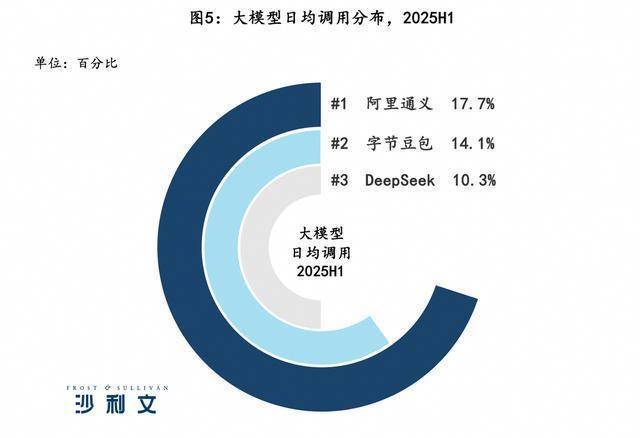
Core Insights - The Frost & Sullivan report highlights the rapid growth and adoption of generative AI in the Chinese enterprise market, with an astonishing daily consumption of 10.2 trillion tokens expected by the first half of 2025 [1] - The report indicates a significant increase of 363% in daily model invocation compared to the second half of 2024, surpassing the 10 trillion tokens mark [1] - Leading platforms in this market include Alibaba Tongyi, ByteDance Doubao, and DeepSeek, which collectively hold over 40% market share [1] Industry Trends - Public cloud has emerged as the preferred method for Chinese enterprises to deploy and invoke large models, with 70% of companies favoring this approach [3] - A notable 71% of enterprises plan to further increase their use of generative AI services in public cloud environments, indicating a shift towards seeking optimal solutions for specific business scenarios [3] - The rise of open-source models is becoming a key driver for market growth, with a significant reduction in performance gaps between domestic open-source models and top international closed-source models [3] Future Projections - It is predicted that over 80% of enterprises will adopt open-source large models, suggesting that open-source solutions will dominate enterprise-level applications in the future [3]

企业级大模型报告:阿里通义第一
Yang Zi Wan Bao Wang· 2025-09-01 04:59
Core Insights - The report by Frost & Sullivan indicates that the Chinese enterprise-level generative AI market is experiencing explosive growth, with a projected daily consumption of 10.2 trillion tokens by the first half of 2025, marking a 363% increase from the second half of 2024 [1][2] Group 1: Market Overview - The daily consumption of enterprise-level large models in China is expected to exceed 10 trillion tokens by mid-2025, with Alibaba Tongyi leading the market with a 17.7% share [1] - The top three players in the market, Alibaba Tongyi, ByteDance Doubao, and DeepSeek, collectively hold over 40% of the market share [1] Group 2: Deployment Trends - 70% of enterprises are opting for public cloud deployment or utilization of large models, with 71% indicating plans to increase their use of generative AI services in public cloud formats [2] - There is a shift from seeking the "strongest single model" to finding the "optimal solution for specific business scenarios," indicating a growing demand for tailored models [2] Group 3: Open Source Models - Open source models are becoming a key growth driver in the enterprise-level large model market, with predictions that over 80% of enterprises will adopt open source large models in the future [2] - The performance gap between domestic open source models and top international closed-source models is narrowing, with models like Qwen and DeepSeek leading the way [2] Group 4: Alibaba's Developments - Alibaba Tongyi has recently open-sourced several new foundational models, including Qwen3-Coder and Qwen-Image, leading to a surge in global interest in Chinese models [3] - Alibaba has open-sourced over 300 models, establishing itself as a leader in the global open-source model market, surpassing competitors like OpenAI and Llama [3] - The Qwen3-Coder model saw a dramatic increase in usage, with a 1474% rise in one week, making it the second most used model in the programming field globally [3]

沙利文最新报告:中国企业调用大模型日均超10万亿Tokens,阿里通义份额第一
Zheng Quan Shi Bao Wang· 2025-09-01 04:21
Core Insights - The report by Frost & Sullivan indicates that the Chinese enterprise-level generative AI market is experiencing explosive growth, with daily consumption of large models expected to reach 10.2 trillion tokens by the first half of 2025, a 363% increase compared to the second half of 2024 [1][2] - Alibaba Tongyi leads the market with a 17.7% share, followed by ByteDance's Doubao at 14.1% and DeepSeek at 10.3%, collectively accounting for over 40% of the market [1] Group 1: Market Trends - 70% of enterprises are opting for public cloud deployment or invocation of large models, with 71% planning to increase their use of generative AI services in public cloud formats [2] - The shift in focus from seeking a single strongest model to finding optimal solutions for specific business scenarios is noted, indicating a growing demand for diverse model types and applications [2] Group 2: Open Source Models - Open source models are identified as a key growth driver in the enterprise-level large model market, with predictions that over 80% of enterprises will adopt open source large models in the future [2] - The performance gap between domestic open source models and top international closed-source models is narrowing, with models like Qwen and DeepSeek expected to continue gaining traction [2] Group 3: Alibaba's Developments - Alibaba Tongyi has recently open-sourced several foundational large models, including Qwen3-Coder and Qwen-Image, leading to a surge in global interest in Chinese models [3] - The Qwen model has achieved a global market share of over 12.3%, surpassing OpenAI and Llama models, and Qwen3-Coder's usage increased by 1474% in one week, making it the second most used in the programming field [3] - Alibaba has open-sourced over 300 models, promoting a comprehensive approach to "full size," "full modality," and "multi-scenario" applications [3]
深度|成立一年再获数千万融资,坚持结果交付,坚持端对端多智能体
Z Potentials· 2025-09-01 03:32
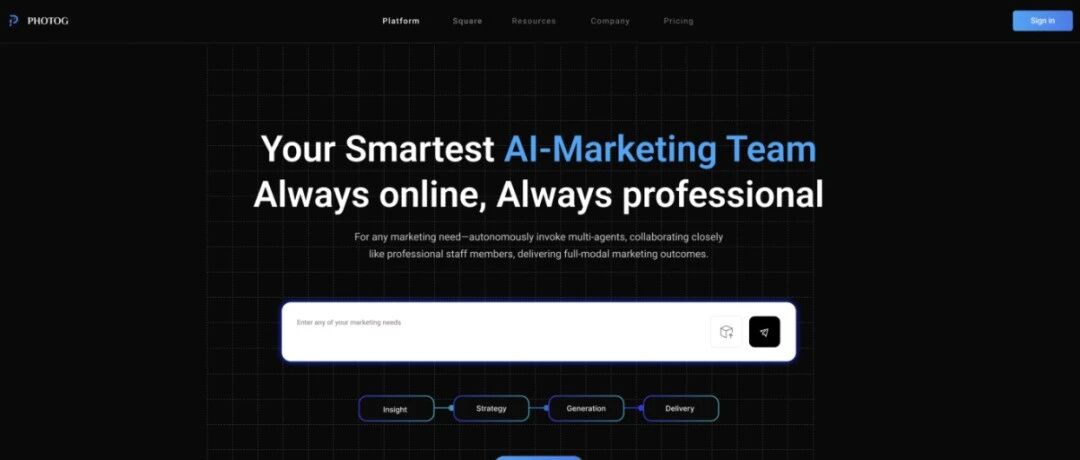
Core Insights - Orange Vision, the parent company of PhotoG, has recently completed a multi-million yuan financing round led by Cloud Angel Fund, with participation from Lihe Venture Capital and Jinsha River Capital. The funds will be used to expand industry data scale and accelerate the deployment of intelligent marketing solutions across various sectors [1] - The company aims to transform the advertising industry by leveraging generative AI technology to fundamentally reconstruct the logic of advertising, focusing on brand building and effective conversion [12] Financing and Team Development - The recent financing round will support the expansion of industry data and the iteration of post-training models for vertical industries [1] - The founding team, which met in an open-source community in 2022, decided to fully commit to AI entrepreneurship in 2023, securing seed investment from a publicly listed design company [1] - Wang Xu, former head of the AI accelerator at Feishu, has joined as Chief Strategy Officer, bringing experience from major tech companies [1] Product Development and Innovation - PhotoG's overseas product was first showcased on Product Hunt in December, gaining a user base due to its high aesthetic standards and product consistency [3] - The team has shifted focus to hosted agents, which will serve marketing needs through content generation strategies determined by large language models (LLMs) [3] - The upcoming version 2.0 of PhotoG aims to integrate multiple roles in content marketing into a multi-agent system powered by LLMs, distinguishing itself from traditional SaaS tools [3] Technological Advancements - The company has developed an a-t diffusion algorithm that maintains high accuracy in understanding across product, scene, and copy modalities [5] - The marketing-related dimensions of the VB ench 2.0 scoring system have achieved state-of-the-art consistency levels exceeding 0.92 [5] Market Trends and Projections - According to third-party data, 37% of online ads globally will feature AI-generated content by Q2 2025, with higher rates in fast-moving consumer goods (52%) and beauty products (68%) [8] - The founder predicts that by 2026, 90% of advertisements will be replaced by AI-native ads [8] Business Model and Compliance - The company is addressing two core issues in AI advertising commercialization: product delivery effectiveness and compliance with copyright regulations [10] - Orange Vision is focused on building a comprehensive compliance framework for AI-generated content [12]
“AI购物代理”电商下一个必争之地
Hua Er Jie Jian Wen· 2025-09-01 00:36
Group 1 - A shopping revolution driven by artificial intelligence is emerging, transforming consumer-brand interactions through AI systems that understand user needs and facilitate direct conversations for product searches and orders [1] - Major AI companies like OpenAI, Google, and Microsoft are rapidly commercializing shopping scenarios, with OpenAI introducing an updated shopping system "Agent" that integrates payment features [2][3] - The rise of AI agents is forcing brands to rethink their visibility strategies, as nearly 60% of Google searches in Europe no longer generate clicks, leading to a shift towards AI-generated summaries [4] Group 2 - The transaction landscape may shift from brand websites and e-commerce platforms to AI chatbots, prompting brands to prepare for this new reality [5] - There are concerns that AI agents could limit consumer choice by filtering products, potentially diminishing the importance of stores and brands [5]


科股早知道:机构称到2030年全球半导体营收将突破1万亿美元
Sou Hu Cai Jing· 2025-09-01 00:30
Group 1: Semiconductor Industry - The global semiconductor revenue is projected to exceed $1 trillion by 2030, nearly doubling from 2024 to 2030, driven by generative AI infrastructure in cloud and edge devices [1] - In the short term, the growth is fueled by the optimistic outlook for AI-driven downstream growth in 2025, with significant performance forecasts for various semiconductor segments [1] - The establishment of domestic supply chains and ongoing policy upgrades to address supply chain disruptions are expected to enhance the industry's resilience [1] Group 2: Low-altitude Economy - The first low-altitude economic mutual insurance body in China has been established in Chongqing, with the launch of the exclusive product "Yucheng Low-altitude Insurance" and a total risk coverage of 61.15 million yuan [2] - The low-altitude economy is expected to exceed 1 trillion yuan by 2026, reaching 1,064.46 billion yuan, with projections of 2.5 trillion yuan by 2030 and 3.5 trillion yuan by 2035 [2] - The national strategy is focusing on the low-altitude economy, with local policies and resources being aligned to support the development of low-altitude logistics and tourism applications [2]

商汤(0020.HK)2025年中期业绩点评:25H1亏损大幅收窄 大模型+算力+AI应用构筑生态壁垒
Ge Long Hui· 2025-08-31 19:54
Core Insights - The company achieved a revenue of 2.36 billion yuan in H1 2025, representing a year-on-year growth of 35.6%, driven by the increasing contribution of generative AI to overall revenue [1] - The overall gross margin decreased to 38.5% in H1 2025 from 44.1% in H1 2024 due to the rising share of generative AI revenue [1] - Adjusted net loss narrowed significantly to 1.16 billion yuan, a 50% year-on-year reduction, while adjusted EBITDA loss decreased by 72.5% to 520 million yuan [1] Revenue Breakdown - Generative AI revenue reached 1.82 billion yuan in H1 2025, up 60.4% year-on-year, accounting for 77.0% of total revenue, an increase from 60.4% in H1 2024 [1] - Visual AI revenue, which now includes smart cockpit-related business from the original smart automotive segment, was 436 million yuan, growing 29.4% year-on-year [1] - The X Innovation business, encompassing smart driving, smart healthcare, home robots, and smart retail, generated 107 million yuan, reflecting a 10.2% year-on-year increase [1] Operational Efficiency - Sales expense ratio, administrative expense ratio, and R&D expense ratio were 11.6%, 25.3%, and 89.8%, respectively, showing declines of 7.4 percentage points, 16.9 percentage points, and 18.9 percentage points year-on-year [1] - Operating cash outflow improved significantly, narrowing by 81.9% to 640 million yuan [1] Business Highlights - The company’s large model, "日日新V6.5," has performance metrics that are competitive with top international models, achieving comprehensive testing results on par with Claude 4 Opus [2] - Total computing power reached 25,000 PetaFLOPS as of August 2025, with a 20% year-on-year improvement in computing power per watt [2] - The productivity tool "小浣熊" surpassed 3 million users, processing approximately 10 billion tokens daily [2] Future Outlook - Revenue forecasts for 2025-2027 have been adjusted to 4.86 billion, 6.21 billion, and 7.85 billion yuan, reflecting slight changes from previous estimates [3] - Non-GAAP net profit forecasts for the same period have been revised to -2.14 billion, -230 million, and 170 million yuan, indicating improved operational efficiency [3] - The synergy between large models, computing power, and AI applications is expected to create a robust ecosystem, enhancing the company's competitive edge [3]
全球Top 100 AI应用最新榜单:ChatGPT居首,谷歌大幅追赶位居次席,阿里夸克冲到第9
硬AI· 2025-08-31 17:14
Group 1 - ChatGPT remains the top generative AI application, while Google's Gemini has significantly narrowed the gap, capturing approximately 12% of ChatGPT's web traffic, ranking second [2][3][6] - Chinese AI products are performing strongly in the global market, with Alibaba's Quark AI assistant rising to 9th place and ByteDance's Doubao ranking 12th [2][3][12] - Among the top 50 web applications, three major products serving Chinese users are in the top 20, and seven Chinese-developed products primarily target overseas markets [3][12] Group 2 - Google's multi-product matrix strategy has allowed it to independently track and rank its AI products, with Gemini showing strong growth in both web and mobile user engagement [6][8] - AI Studio, aimed at developers, has successfully entered the top 10, while NotebookLM, an academic research tool, ranks 13th, indicating steady growth despite a slight decline during the summer [8][11] - Google Labs ranks 39th, hosting various AI experimental projects, with a notable traffic surge of over 13% following the release of the video model Veo 3 [11] Group 3 - The globalization of Chinese AI products is evident, with Alibaba's Quark and ByteDance's Doubao generating over 75% of their traffic from China [13][16] - In the mobile application sector, nearly half of the top 50 apps are developed by Chinese teams, with only three primarily serving the Chinese market [16] - The competition among general-purpose assistants is intensifying, with Grok from X platform rapidly gaining traction, reaching over 20 million monthly active users [17] Group 4 - AI-assisted programming tools are emerging as a new growth area, with Lovable and Replit entering the main rankings, indicating a rapid rise in AI application generation [20] - User retention data shows that certain "ambient programming" platforms have exceeded 100% revenue retention rates in the U.S., suggesting expanding user engagement [20]