
AI算力

Search documents
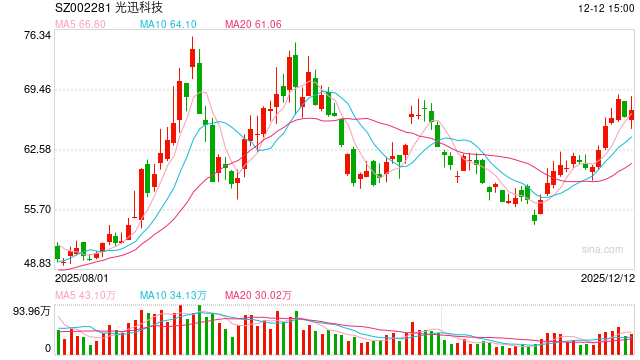
光迅科技资金充裕仍定增补流 毛利率畸低、存货/周转天数/跌价全线攀升|CPO融资潮
Xin Lang Zheng Quan· 2025-12-12 09:35
Core Viewpoint - The capital market is witnessing a surge in interest in the optical communication industry, driven by the demand for AI computing power, with companies like Guangxun Technology planning significant fundraising despite having substantial cash reserves and low debt levels [2][3][6]. Group 1: Fundraising and Financial Position - Guangxun Technology is in the final stages of a private placement, aiming to raise up to 3.5 billion yuan for the production of optical connection and high-speed optical transmission products, as well as for research in emerging optoelectronic technologies [3][6]. - The company currently holds over 4.1 billion yuan in cash, with interest-bearing liabilities below 500 million yuan, indicating a low debt burden [3][6]. - Out of the 3.5 billion yuan to be raised, 800 million yuan is planned for working capital, raising questions about the necessity of this allocation given the company's strong cash position [6]. Group 2: Performance Metrics - In the first three quarters of the year, Guangxun Technology reported revenues of 8.532 billion yuan, a year-on-year increase of 58.65%, and a net profit of 719 million yuan, up 54.95% [7]. - The third quarter alone saw revenues of 3.289 billion yuan, reflecting a 45.01% year-on-year growth and a 9% quarter-on-quarter increase, with net profit reaching 347 million yuan, a 35.76% increase year-on-year [7]. Group 3: Competitive Landscape and Challenges - Guangxun Technology's gross margin is significantly lower than comparable companies, hovering around 20%, indicating insufficient product competitiveness [7][9]. - The company is facing rising inventory levels, with inventory value reaching 6.183 billion yuan, a more than 50% increase year-on-year, and inventory turnover days extending to 208.72 days, a 7.7% increase [9]. - The optical module market is experiencing an oversupply of low-end products, while high-end segments are under pressure from leading competitors like Zhongji Xuchuang, which has secured significant orders from Nvidia [12].


天孚通信市值1600亿,小镇青年如何逆袭江西宜春首富?
Xin Lang Cai Jing· 2025-12-12 09:29
Core Viewpoint - The article highlights the rise of Tianfu Communication, a key player in the optical communication industry, particularly its strategic positioning within the NVIDIA supply chain and its impressive financial growth. Company Overview - Tianfu Communication is the smallest among the "Yizhongtian" trio, which includes Xinyi Technology and Zhongji Xuchuang, but it has shown the least volatility in growth and a higher gross margin [2][12] - As of December 12, Tianfu Communication's market capitalization reached 167.3 billion yuan, with a stock price increase of 36% since December [2][12] Founder Background - The founder, Zou Zhinong, hails from a rural background in Jiangxi and established Tianfu Communication at the age of 37 after recognizing a critical supply gap in the optical communication sector [3][13] - The company initially focused on producing zirconia ceramic sleeves, which were previously imported from Japan, and after overcoming significant production challenges, it successfully launched its products on the ChiNext board [3][4] Product Development and Market Position - Tianfu Communication has developed three core product lines: ceramic sleeves, fiber optic adapters, and optical transceiver components, which collectively cover essential areas of passive optical components [4][14] - The company was listed on the ChiNext in 2015, becoming the first stock in the domestic optical communication components sector [6][16] Strategic Growth and Innovation - The company adopted a dual strategy of "R&D + M&A" for growth, focusing on high precision and reliability in its operations [6][16] - In 2020, Tianfu Communication raised 786 million yuan to invest in high-speed optical engine projects aimed at 5G and data centers, anticipating future demands in AI computing [6][16] Partnership with NVIDIA - Tianfu Communication has established a close partnership with NVIDIA, being recognized as a key supplier for optical components in NVIDIA's Quantum X800 silicon photonic CPO switch [7][17] - The company is expected to provide customized high-density fiber array units (FAUs) and is involved in critical processes that determine product performance [7][18] Financial Performance - In the third quarter of 2025, Tianfu Communication reported revenues of 3.918 billion yuan, a year-on-year increase of 63.63%, and a net profit of 1.465 billion yuan, up 50.07% year-on-year [22] - This financial performance supports its market valuation of 167.3 billion yuan, reflecting the company's successful strategic positioning and technological advancements [22]


光库科技募资近20亿并购或新增14亿商誉 债务负担快速攀升募投项目全线延期|CPO融资潮
Xin Lang Zheng Quan· 2025-12-12 09:25
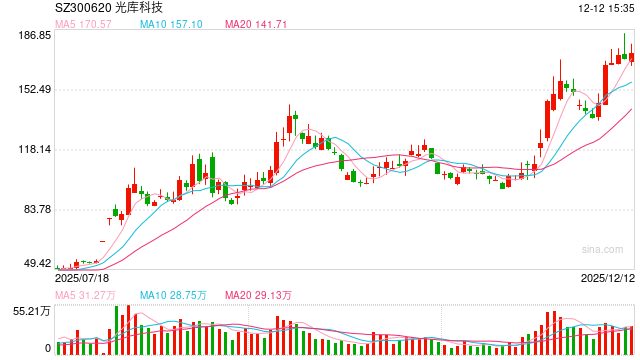
Core Viewpoint - The optical communication industry is experiencing a surge in capital interest, driven by the demand for AI computing power, with companies like Guangku Technology planning significant financing and high-premium acquisitions to expand their market position [2][3]. Financing and Acquisition - Guangku Technology's recent shareholder meeting approved a financing plan to raise approximately 19.5 billion for acquiring 99.97% of Suzhou Anjie Xun Optoelectronics, with 16.4 billion allocated for the acquisition and the remainder for working capital and debt repayment [3][4]. - The acquisition of Anjie Xun is characterized by a high premium, with an assessed value of 16.5 billion against a book value of 2.26 billion, resulting in a valuation increase of 630.26% [4]. Financial Health and Risks - Despite previous fundraising efforts, Guangku Technology's debt levels and debt ratios are projected to rise significantly after 2024, raising concerns about financial sustainability [9][10]. - The company has a history of high-premium acquisitions, with a previous acquisition of 52% of Bai'an Industrial at a premium rate of 1192.56% [4][5]. - The goodwill on Guangku Technology's balance sheet is expected to increase significantly, from 1.1 billion at the end of 2023 to potentially over 14 billion post-acquisition, indicating a heavy reliance on major clients [8]. Industry Context - The optical communication sector is poised for growth, with the CPO market expected to reach 8.1 billion by 2030, reflecting a compound annual growth rate of 137% [13]. - Despite the industry's growth, Guangku Technology's previous fundraising projects have faced delays, with key projects now expected to be completed in 2026, raising questions about the effectiveness of its capital allocation [13].

光库科技募资近20亿并购或新增14亿商誉 债务负担快速攀升募投项目全部延期|CPO融资潮
Xin Lang Cai Jing· 2025-12-12 09:24
Core Viewpoint - The capital heat in the optical communication industry is shifting from stock market exuberance to private placements and mergers and acquisitions, with companies like Guangku Technology planning significant financing for high-premium asset acquisitions amid rising AI computing demands [2][3][25]. Financing and Acquisition Details - Guangku Technology's recent shareholder meeting approved a financing plan to raise approximately 19.5 billion yuan through share issuance and convertible bonds, primarily to acquire 99.97% of Suzhou Anjie Xun Optoelectronics Technology Co., Ltd. [3][17] - The financing includes 6.56 billion yuan from share issuance, 4.92 billion yuan from convertible bonds, and 8 billion yuan in supporting funds, with 16.4 billion yuan allocated for the acquisition and 3.08 billion yuan for working capital and debt repayment [3][17]. Valuation and Premium Concerns - Anjie Xun's book value is reported at 226 million yuan, with an assessed value of 1.65 billion yuan, resulting in a valuation increase of 630.26% [4][17]. - This acquisition is not Guangku Technology's first high-premium purchase; a previous acquisition in January 2024 had a premium rate of 1192.56% [4][17]. Financial Health and Debt Issues - Despite multiple rounds of financing since 2020, Guangku Technology's interest-bearing debt and debt ratio are expected to rise significantly after 2024 [9][22]. - The company has faced delays in completing its fundraising projects, with all previous projects postponed, raising concerns about its financial management and operational efficiency [9][25]. Market Context and Future Outlook - The optical communication industry is experiencing growth driven by increasing AI data center demands and network bandwidth upgrades, with the CPO market projected to reach 8.1 billion USD by 2030, growing at a compound annual growth rate of 137% [25]. - The ongoing capital operations in the industry raise questions about whether they represent a strategic move to secure technological advantages or a potential overcapacity situation [25].
688368,20%涨停!A股午后拉升
Zheng Quan Shi Bao· 2025-12-12 08:53
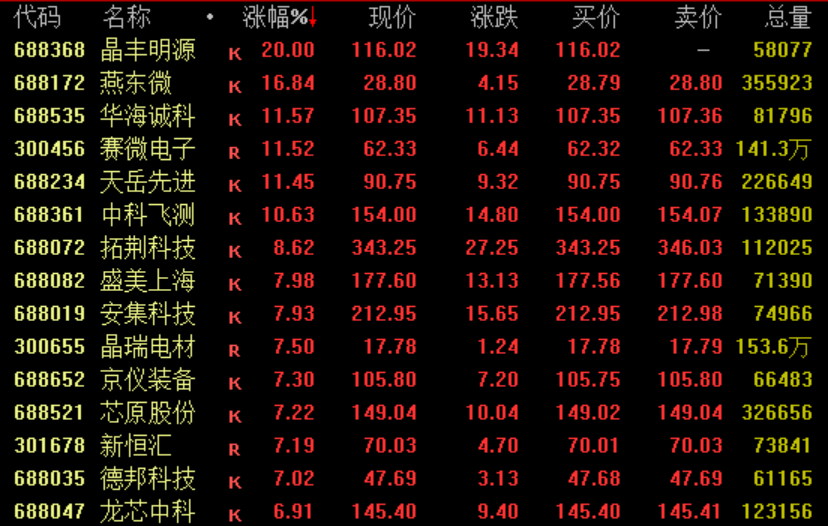
半导体板块午后强势。 中信建投(601066)证券认为,国产化驱动下的渗透率提升依然是设备板块后续增长的重要来源。未来设备国产化率 将实现快速提升,头部整机设备企业2025年订单有望实现20%—30%以上增长,零部件国产化进程有望加快,板块整 体基本面向好。景气度方面,预计2025年先进制程维持较强表现,成熟制程复苏;后道封装温和复苏,2.5D/3D先进 封装下半年有望有积极进展。国产替代方面,头部客户的国产替代诉求仍较强,不在清单的客户也在加速导入国产, 预计后续国产化率提升斜率更陡峭。设备厂对供应链的国产化推进也非常迅速。 核电概念爆发 港股方面,中国人寿(601628)涨超5%,中通快递、阿里健康、商汤、网易等涨超4%。 半导体板块强势 半导体板块午后强势拉升,截至收盘,晶丰明源20%涨停,燕东微涨近17%,华海诚科、天岳先进、中科飞测等涨超 10%。 | 代码 | 名称 | � | 涨幅% | 现价 | 不正大 | 买价 | 卖价 | 总量 | | --- | --- | --- | --- | --- | --- | --- | --- | --- | | 688368 | 晶丰明源 | K 20. ...

688368,20%涨停!A股午后拉升
证券时报· 2025-12-12 08:44
Core Viewpoint - The semiconductor sector showed strong performance in the afternoon trading session, with significant gains in various stocks, indicating a bullish trend in the market [2][4]. A-Share Market Summary - On the 12th, major A-share indices experienced a surge in the afternoon, driven by sectors such as brokerage, insurance, and semiconductors. The Shanghai Composite Index rose by 0.41% to 3889.35 points, while the Shenzhen Component increased by 0.84%, and the ChiNext Index gained 0.97% [2]. - The total trading volume in the Shanghai and Shenzhen markets reached 21.193 billion yuan, an increase of over 2.3 billion yuan compared to the previous day [2]. Semiconductor Sector Performance - The semiconductor sector saw a notable rise, with stocks like Jingfeng Mingyuan (688368) hitting the daily limit with a 20% increase, and others like Huahai Chengke and Tianyue Advanced rising over 10% [5][6]. - According to WSTS, the global semiconductor market is projected to grow by 22.5% year-on-year in 2025, driven by increased investments in data centers by major IT companies, particularly in memory and logic chips [6]. Nuclear Power Sector Surge - The nuclear power sector experienced a strong performance, with stocks such as Tianli Composite rising by 30% and others like Zhongzhou Special Materials and Boying Special Welding also hitting the daily limit [8][9]. - The demand for nuclear energy is expected to increase due to the surge in AI computing power needs, with significant projects underway in China [8]. Market Volatility of Moer Thread - Moer Thread (688795) experienced a significant drop, closing down 13.4% after a previous surge of approximately 28%. The stock's trading volume exceeded 10.38 billion yuan [11]. - The company warned of potential risks due to its recent stock price increase, which significantly outpaced related indices, and highlighted uncertainties regarding its new products and future profitability [11].



“千问速度”引爆科技圈,中国AI开启全球领先叙事
Quan Jing Wang· 2025-12-12 08:39
Core Insights - Alibaba's Qwen APP has surpassed 30 million monthly active users within 23 days of its public beta launch, marking a significant achievement in the AI application space [1] - The rise of Chinese AI models like Qwen and DeepSeek signifies a shift from being imitators to becoming industry leaders and rule-makers in the global AI landscape [1][2] - The 2025 State of AI Report recognizes China's AI ecosystem as a parallel competitor, highlighting its role in setting the pace for open-source AI and commercial deployment [2] Group 1: Market Dynamics - Chinese AI models have significantly increased their global market share, with open-source models rising from 1.2% at the end of 2024 to nearly 30% by mid-2025 [4] - The demand for computing power has surged due to the growth of AI model vendors, leading to a historical low data center vacancy rate of 5.8% in the Asia-Pacific region [4] - Alibaba plans to invest 380 billion yuan in AI infrastructure, with potential for further increases due to rapid customer demand outpacing server deployment [4] Group 2: Company Collaborations - Lenovo, as Alibaba's largest server supplier, has seen a 155% year-on-year increase in AI server revenue in Q2, continuing strong growth in Q3 [5] - Lenovo's collaboration with Alibaba and other AI model vendors has led to customized products that align with market demands, enhancing their competitive position [6][7] - The partnership strategy allows Lenovo to adapt to customer needs while strengthening cooperation with major clients like Alibaba [6] Group 3: Application and Performance - Chinese AI models are focusing on application-oriented development strategies, contrasting with competitors' emphasis on parameter size [8] - Alibaba's Qwen APP serves as an entry point for various applications, aiming to integrate AI technology across e-commerce, mapping, and local services [8] - Lenovo's AI products, including personal and enterprise intelligent systems, leverage Qwen and other models to enhance their market offerings [9][10] Group 4: Financial Performance - Lenovo's AI-related business revenue has increased to 30% of total revenue, reflecting a 13 percentage point year-on-year growth [11] - The enterprise intelligent system has surpassed one million weekly active users, generating over 1.8 billion yuan in revenue within six months [11] - The success of AI applications in various sectors, including personal, enterprise, and urban intelligence, underscores the strong return on AI investments by Chinese companies [11]


摩尔线程连涨3天后,英伟达回来了
Feng Huang Wang· 2025-12-12 08:11
Core Insights - The future AI computing landscape is likely to be characterized by coexistence rather than a single dominant player, indicating a shift towards a more diversified market [1][7][11] Group 1: Nvidia's Market Position - Nvidia has received permission to export its H200 AI chips to China, but with a stipulation that 25% of sales revenue must be paid as tax to the U.S. government [1] - Nvidia's CEO Jensen Huang expressed concerns about the company's performance, stating that even a slight miss in quarterly results could lead to significant market repercussions [1] - Nvidia's revenue from China has plummeted by 63% year-over-year, dropping from 13% to 5% of total revenue, indicating a severe market contraction [4] Group 2: Rise of Domestic Competitors - Chinese GPU companies like Moore Threads and Muxi are rapidly advancing, with Moore Threads achieving a revenue growth rate of 208.44% from 0.46 billion yuan in 2022 to an expected 4.38 billion yuan in 2024 [3] - Muxi's IPO saw a subscription rate of nearly 3000 times, highlighting strong market interest and confidence in domestic alternatives [3] - Domestic GPU firms are making significant technological strides, with Moore Threads investing over 4.3 billion yuan in R&D and achieving competitive performance metrics against Nvidia's offerings [3] Group 3: Market Dynamics and Challenges - Nvidia's stock has seen a significant decline of approximately 16% within a month, losing over 800 billion yuan in market value, despite reporting a 62% year-over-year revenue increase in Q3 [7] - The emergence of Google's TPU as a competitive threat is notable, with the TPU's cost-effectiveness and system-level optimizations posing challenges to Nvidia's market dominance [8][9] - Major tech companies are increasingly developing their own AI chips, further fragmenting the market and reducing reliance on Nvidia [10]

英伟达H200获准出口中国的三个关键问题
腾讯研究院· 2025-12-12 08:00
Core Viewpoint - The U.S. is set to allow NVIDIA to export its H200 products to mainland China, contingent on a 25% revenue share with the U.S. government, indicating a shift in policy amidst previous concerns about maintaining U.S. AI leadership [4][12]. Group 1: Export Approval Process - The timeline for the export approval process remains uncertain, with previous tensions between U.S. administrative and legislative bodies affecting the decision [5][9]. - Trump's announcement suggests a consensus has been reached, but the actual implementation will require time to navigate regulatory processes [9][10]. Group 2: H200 Product Performance - The H200, set to be released in Q2 2024, features advanced specifications, including a performance of 989T FP16 compute power, significantly surpassing the H20's 148T [10][11]. - Despite its advanced capabilities, the H200 is expected to become relatively outdated by late 2025 with the introduction of the Blackwell architecture [10][11]. Group 3: Market Impact and Financial Implications - The 25% revenue share for H200 exports represents a 10% increase from the previous H20 export agreement, potentially generating $10 billion annually for the U.S. government based on estimated revenues from the Chinese market [12][13]. - NVIDIA's market share in mainland China, previously at zero, is expected to improve significantly with the H200's approval, as it offers superior performance compared to the H20 [13][16]. Group 4: Competitive Landscape - The H200's release is anticipated to attract new orders, converting previously unfulfilled demand for the H20 into new business opportunities [17][18]. - The introduction of the H200 is not expected to directly conflict with domestic Chinese chip manufacturers, as the H200 serves practical applications that align with current market needs [18][19].

芯片ETF(512760)涨超1.8%,机构称AI算力与国产化驱动行业景气
Mei Ri Jing Ji Xin Wen· 2025-12-12 07:02
Group 1 - The core viewpoint is that the listing of Moore Threads on the Sci-Tech Innovation Board demonstrates China's strategic commitment to investing in the domestic computing power industry, particularly in the development of next-generation AI and graphics chips [1] - Domestic GPU companies still lag behind international leaders in technology accumulation and ecosystem development, but have achieved breakthroughs in single-chip support for AI computing and graphics rendering [1] - Micron's exit from the consumer storage business to focus on high-growth areas like AI and data centers reflects a trend of supply shortages and rising prices in the storage chip market [1] Group 2 - The current recovery in electronic industry demand, effective supply clearance, and unexpected progress in domestic production efforts indicate structural opportunities in semiconductor equipment, key components, and rising storage prices [1] - The Chip ETF (512760) tracks the China Semiconductor Index (990001), which selects listed companies involved in semiconductor materials, equipment, design, manufacturing, packaging, and testing to reflect the overall performance of semiconductor-related stocks [1] - This index includes 50 representative stocks, focusing on industry leaders and high liquidity companies, covering the entire semiconductor chip industry chain in the information technology sector [1]