
全球能源转型

Search documents
“构建新型电力系统 推进绿色低碳转型”主题边会在COP30“中国角”举办
Xin Hua She· 2025-11-17 02:41
Core Viewpoint - The event "Building a New Power System and Promoting Green and Low-Carbon Transition" hosted by the State Grid Corporation of China at COP30 showcased China's efforts in addressing climate change and promoting green low-carbon living, providing a model for energy transition to other countries [1][2]. Group 1: Event Overview - The event marked the first time the State Grid Corporation hosted a "China Corner" side event at the UN Climate Change Conference [1]. - It aimed to demonstrate the measures and achievements of the State Grid Corporation in promoting energy transition and achieving carbon neutrality goals [1][2]. Group 2: Key Speakers and Contributions - Key speakers included Li Gao, Vice Minister of Ecology and Environment, and Liu Zhenmin, China's Special Envoy for Climate Change, who emphasized China's role in global climate governance and its commitment to low-carbon energy technologies [2]. - IRENA Director-General Camila highlighted China's establishment of the world's largest renewable energy system and its ongoing investments in energy infrastructure [2]. Group 3: Discussions and Initiatives - Discussions focused on clean energy policies, new power system construction, and carbon accounting systems [3]. - The "Global Time-of-Use Carbon Factor Brazil Initiative" was launched to promote accurate carbon accounting in electricity supply, enhancing the value of clean energy [3][4]. Group 4: Achievements and Reports - The event released several reports, including the "State Grid Corporation's Service for New Energy Development Report" and the "Carbon Business System Construction Case Collection" [5]. - The initiative aims to create a more precise and transparent carbon accounting system for electricity, facilitating low-carbon choices [4][5]. Group 5: Cultural and Collaborative Aspects - The event included cultural activities showcasing the State Grid's contributions to public welfare and environmental protection in Brazil [6]. - Participants praised China's adaptable transition path and international cooperation, highlighting its relevance for fossil resource-dependent countries [4][6].
沪铝 警惕短线回调风险
Qi Huo Ri Bao· 2025-11-17 01:29
Core Viewpoint - The aluminum market is expected to experience upward price trends in the medium to long term due to strong demand and rigid supply, despite potential short-term price declines due to seasonal pressures in the consumption off-season [1][5]. Group 1: Macro Environment - The macroeconomic outlook has improved, with the Federal Reserve lowering interest rates in September and October, boosting sentiment in the non-ferrous metals market [1]. - The easing of trade tensions between China and the U.S. has alleviated concerns regarding aluminum product trade barriers, contributing to a more optimistic macro environment [1]. - Political uncertainties in the U.S. have decreased, and economic data has not been as pessimistic as expected, further strengthening the positive macro outlook [1]. Group 2: Supply Dynamics - Recent weather conditions in Guinea and reduced shipments from Australia have led to a significant decline in bauxite inventory at ports, but shipments are expected to return to previous levels after the rainy season [2]. - Domestic aluminum oxide production remains stable due to sufficient raw material inventory, with a capacity utilization rate of 84.05% as of October, despite a slight decline [2]. - Domestic electrolytic aluminum production capacity is nearly fully utilized at 97.46%, with limited room for future capacity growth [3]. - Global electrolytic aluminum production is estimated at 72 million tons for 2024, with China contributing about 60%, while overseas production faces constraints from energy costs and infrastructure issues [3]. Group 3: Demand Trends - Overall consumption of aluminum shows resilience, although the average operating rate for aluminum profiles is significantly lower than in previous years [4]. - Demand in traditional construction sectors is weak, but strong demand in sectors such as new energy vehicles, photovoltaics, and ultra-high voltage infrastructure supports consumption resilience [5]. Group 4: Price Outlook - The global aluminum market is characterized by a tight supply-demand balance, heavily reliant on China's nearly full production capacity [5]. - Short-term price pressures may arise as the market enters the traditional consumption off-season, following a recent surge in prices above 22,000 yuan/ton [5].
与“十三五”末相比,我国新型储能装机规模暴增超3000%
Guo Ji Jin Rong Bao· 2025-11-15 14:20
Core Insights - As of September 2025, China's new energy storage installed capacity is expected to exceed 100 million kilowatts, representing a growth of over 30 times compared to the end of the 13th Five-Year Plan, and accounting for over 40% of the global total installed capacity, making it the world's largest [1] - In the first half of 2025, Chinese energy storage companies added 163 GWh of overseas orders, a year-on-year increase of 246%, indicating a significant surge in demand in international markets [1] - The acceleration of energy storage "going abroad" is primarily driven by the rapid global energy transition, with emerging markets accelerating their energy storage deployment due to policy support, and geopolitical factors leading to increased demand for stable energy supply [1] Industry Trends - Some power generation companies have their energy storage system orders booked until next year, reflecting strong demand in the sector [1] - In Europe and North America, demand for energy storage has increased by 3 to 5 times this year, highlighting the growing market opportunities in these regions [1]
构建新型电力系统 推进绿色低碳转型——中国国家电网公司在COP30“中国角”举办主题边会
Xin Hua Cai Jing· 2025-11-15 07:19
Core Points - The China State Grid Corporation showcased its efforts in addressing climate change and promoting green low-carbon transformation at the COP30 conference, providing a model for energy transition for other countries [1][2] - China has become one of the fastest countries in reducing energy intensity, supporting over 6% economic growth with an average energy consumption growth rate of 3.4% [2] - The conference highlighted the importance of international cooperation and the establishment of unified international carbon accounting standards to support global climate governance [4] Group 1: Company Initiatives - The State Grid Corporation aims to empower better living and drive the energy revolution, collaborating with other countries to build a clean, low-carbon, safe, and efficient energy system [2][3] - The company, along with 51 other organizations, launched the "Global Time Zone Electric Carbon Factor Brazil Initiative" to promote research and practical application of electric carbon factors [3] Group 2: Industry Developments - The conference featured discussions on clean energy policies, new power system construction, and carbon business system development, emphasizing the need for precise carbon accounting methods [3][4] - The event showcased several reports and achievements, including the "State Grid Corporation Service New Energy Development Report" and the "State Grid Corporation Carbon Business System Construction Case Collection" [4]

崧盛股份:公司将充分把握政策机会,助力设施农业发展及全球能源转型
Zheng Quan Ri Bao Zhi Sheng· 2025-11-13 11:38
Core Viewpoint - The company aims to leverage policy opportunities and enhance its business layout in LED driver power supplies and new energy storage sectors, focusing on technological innovation to support agricultural development and global energy transition [1] Group 1 - The company is actively responding to investor inquiries regarding its strategic direction [1] - The company emphasizes its commitment to technological innovation as a key driver for growth [1] - The company is positioning itself to support the development of facility agriculture and contribute to the global energy transition [1]
新型储能助力全球能源转型
Jing Ji Ri Bao· 2025-11-12 22:22
Group 1 - The core viewpoint is that new energy storage technology is rapidly developing in China, with installed capacity expected to exceed 100 million kilowatts by September 2025, playing a crucial role in promoting renewable energy consumption and ensuring reliable electricity supply [1] - The development of new energy storage in China is driven by a dual mechanism of "proactive government" and "effective market," which has successfully facilitated the rapid growth of the industry [1] - China's energy storage policies have evolved from early "new energy with storage" to market-oriented incentives such as capacity compensation and spot trading, establishing independent market entities for energy storage and broadening value realization channels [1] Group 2 - The installed capacity of energy storage has seen a significant increase, with system costs dropping by over 50% since 2022 [1] - China is recognized as a global leader in controlling the costs of large wind turbines, battery storage, and nuclear reactor construction, according to Nobel laureate Steven Chu [1] - The technology landscape of China's energy storage industry is diversifying, with lithium-ion batteries remaining dominant while new technologies like sodium-ion batteries, flow batteries, and compressed air storage are accelerating in demonstration applications [2]
专栏丨破“经济脱碳”困局 中国方案有启示
Xin Hua She· 2025-11-12 12:46
Core Insights - The article emphasizes China's significant role in global energy transition, providing a "Chinese solution" for global climate governance through practical actions [1][3] - China's investment in research and development has led to breakthroughs in renewable energy, energy storage, and long-distance transmission technologies, transforming these advantages into cost benefits [1][2] - The article highlights the successful export of Chinese wind and solar products, which have reduced carbon emissions by approximately 4.1 billion tons over the past five years, contributing to global low-carbon transition [2] Group 1 - China has become a major provider of clean energy capacity, offering low-cost and abundant clean energy prospects, particularly benefiting developing countries [1][2] - The alignment of China's development goals with global interests provides a viable path for other countries facing energy shortages and emission reduction pressures [2][3] - The export of China's "new three items" (new energy vehicles, solar products, and lithium batteries) has seen significant growth, with exports surpassing 1 trillion yuan in 2023 and a year-on-year increase of 12.7% expected in the first half of 2025 [2] Group 2 - European countries are increasingly collaborating with China on new energy initiatives, with Chinese electric vehicles gaining popularity in markets like the UK [2] - The article posits that global climate governance is a collective action rather than a zero-sum game, with China turning challenges into cooperative opportunities [3]
燃爆全球!cippe四展联动,解锁油气产业新动能
Sou Hu Cai Jing· 2025-11-12 12:45
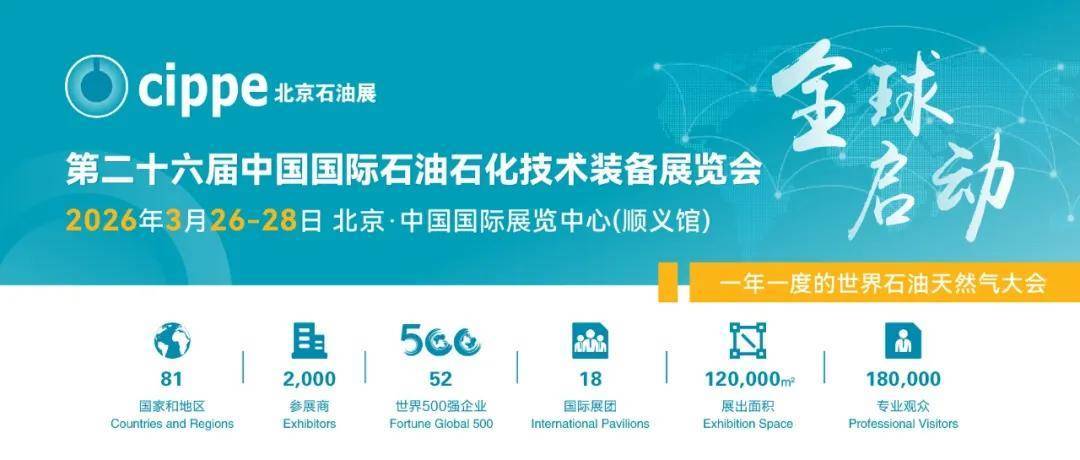
Core Insights - The cippe exhibition is positioned as a leading platform for the global oil and gas industry, focusing on high-quality upgrades and international collaboration in response to the dual pressures of carbon neutrality and energy structure adjustments [2][3][5]. Group 1: Exhibition Overview - The cippe Beijing Oil Exhibition will cover a total area of 120,000 square meters, attracting around 2,000 exhibitors, including 52 Fortune 500 companies and 18 international exhibition groups from over 30 oil and gas developed countries [3]. - The exhibition will focus on 16 core industry sectors, including oil and petrochemicals, natural gas, digital oil and gas, and hydrogen energy, showcasing advanced low-carbon extraction technologies and smart oilfield solutions [5][6]. Group 2: Regional Focus - The cippe Xinjiang Oil Exhibition aims to connect the Eurasian oil and gas markets, with an exhibition area of 40,000 square meters and an expected attendance of over 30,000 visitors from more than 500 companies [8]. - The cippe Chengdu Oil Exhibition will cover 30,000 square meters and attract 400 exhibitors, including international companies from South Asia and Southeast Asia, focusing on energy cooperation and technology exchange [10][12]. Group 3: Strategic Goals - The cippe exhibition series aims to build an international cooperation platform, facilitating resource sharing and deep collaboration among enterprises across different regions, thereby enhancing the global oil and gas industry's ecosystem [2][12]. - The exhibitions will serve as a bridge for domestic companies to access international markets while attracting high-quality international resources to participate in China's oil and gas industry development [12].

曾毓群:宁德时代第四代磷酸铁锂电池全面领先,第五代已开始量产
Xin Lang Cai Jing· 2025-11-12 08:54
Core Viewpoint - The 2025 World Power Battery Conference, themed "New Vision, New Ecology, New Opportunities," emphasizes the need for innovation as the core driving force for the industry to explore new growth spaces amid global energy transition challenges [1] Group 1: Technological Breakthroughs - The company has laid out diverse cutting-edge battery technologies, including the mass production of the fourth-generation lithium iron phosphate battery, which leads the industry in high energy density, long lifespan, and high power compared to second and third-generation products [1] - The fifth-generation product has begun mass production, achieving new breakthroughs in energy density and cycle life [1] - The ternary system is widely applied in the company's Qilin and Xiaoyao batteries due to its leading performance [1] Group 2: Resource Efficiency and Safety - Sodium-ion batteries, branded as "Sodium New," significantly reduce reliance on lithium resources while enhancing safety and low-temperature performance, facilitating the adoption of new energy vehicles in northern high-latitude regions [1] Group 3: Customization and Research - The Xiaoyao "dual-core" battery supports the free combination of multiple material systems, enabling battery customization [1] - Research and industrialization progress of solid-state batteries is also at the forefront globally [1]

外媒聚焦COP30:造福全球南方,中国绿色技术引领全球能源转型
Zhong Guo Xin Wen Wang· 2025-11-11 11:54
Core Insights - The COP30 conference highlights China's leadership in green technology and its significant role in global energy transition [1][2][3] - China produces approximately 80% of the world's solar panels and over 70% of electric vehicles, drastically reducing costs and enabling renewable energy adoption in developing countries [1][2] - The conference emphasizes the need for global cooperation to address climate change, with a focus on inclusive and just transitions [1] Group 1: China's Role in Climate Change - China's investment in global manufacturing since 2011 exceeds $225 billion, with 75% directed towards developing countries [2] - The COP30 chair noted that developed nations have lost enthusiasm in addressing climate crises, while China leads in clean energy production and application [2] - China's low-cost green technologies are pivotal in driving global energy transitions [2][3] Group 2: Economic Development and Climate Policy - China's approach integrates climate policy with industrial planning, infrastructure development, and international trade, exemplified by the Belt and Road Initiative [2][3] - The economic logic behind China's climate strategy is compelling, as its advancements in photovoltaic manufacturing and battery technology create economies of scale benefiting other nations [3] - The success of COP30 will depend on the credibility of commitments, resource availability, and willingness to collaborate across differences [3]