货币政策正常化

Search documents
通胀粘性VS就业疲软,全球央行在紧缩与宽松间艰难求衡
Xin Hua Cai Jing· 2025-09-26 03:06
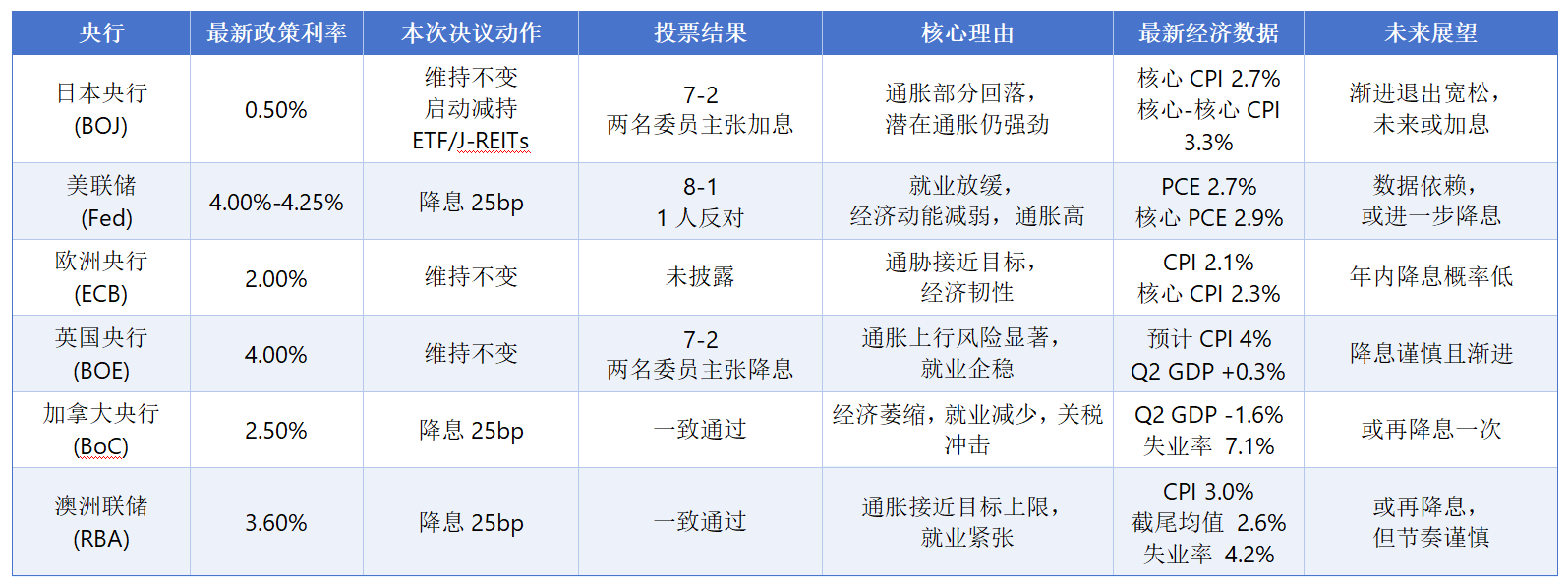
Core Viewpoint - Global central banks are entering a new phase of policy adjustment characterized by unprecedented divergence, with Japan initiating asset reduction, the Federal Reserve starting preventive rate cuts, while the European and UK central banks remain cautious amid persistent inflation pressures [1][18]. Central Bank Policy Summary Japan - The Bank of Japan (BOJ) maintained its policy rate at 0.50% while initiating a reduction plan for its large ETF and J-REITs holdings, starting with an annual reduction of approximately 620 billion yen (about 4.2 billion USD) [2][6]. - The decision reflects a significant step towards normalizing the ultra-loose monetary policy that has been in place for over a decade, despite the slow pace of asset reduction indicating a cautious approach [6][7]. United States - The Federal Reserve lowered the federal funds rate target range by 25 basis points to 4.00%-4.25%, citing economic slowdown and labor market cooling as key factors [3][4]. - Fed Chair Powell emphasized that the decision was a risk management measure, balancing the dual risks of a weakening labor market and persistent high inflation [3][4]. Europe - The European Central Bank (ECB) kept the deposit facility rate unchanged at 2%, indicating that current inflation is close to the medium-term target of 2% and that the eurozone economy shows resilience [9][10]. - There are internal divisions within the ECB regarding future actions, with some members advocating for rate cuts due to long-term deflation risks, while others believe current rates are sufficient to address multiple challenges [10][11]. United Kingdom - The Bank of England (BoE) maintained its rate at 4%, highlighting significant medium-term inflation pressures despite a slight GDP growth [11][12]. - The BoE plans to slow its quantitative tightening from £100 billion to £70 billion annually, reflecting concerns over long-term bond market pressures [12][13]. Canada and Australia - The Bank of Canada cut its benchmark overnight rate by 25 basis points to 2.50%, responding to economic shrinkage and employment declines due to U.S. tariffs [14][15]. - The Reserve Bank of Australia (RBA) has also reduced its cash rate to 3.60%, indicating a cautious shift towards easing while monitoring economic data closely [16][17]. Global Monetary Policy Landscape - The global monetary policy environment is marked by high uncertainty, with central banks facing complex challenges such as intricate inflation structures, external risks from trade policies, and political instability [18]. - The divergence in policy approaches among major central banks reflects a transition from a highly coordinated response during the pandemic to a more nuanced, differentiated strategy in response to evolving economic conditions [18].

日本央行玩 “鹰式操作”,稳利率抛资产,美联储降息算盘遇变数
Sou Hu Cai Jing· 2025-09-25 09:30
Core Viewpoint - The Bank of Japan (BOJ) has signaled a hawkish stance by maintaining interest rates while planning to reduce its ETF holdings, which may disrupt the Federal Reserve's interest rate reduction plans [1][3][11]. Group 1: BOJ's Policy Actions - On September 19, 2025, the BOJ decided to keep the benchmark interest rate at 0.5% but announced plans to reduce its ETF holdings by approximately 3.3 trillion yen annually and 5 billion yen in real estate investment trusts [3]. - This decision reflects a gradual exit from strong market intervention, indicating a potential shift towards a more hawkish monetary policy [3][10]. - The internal discussions within the BOJ revealed a divide, with two policymakers advocating for an immediate rate hike to 0.75%, highlighting the emergence of hawkish sentiments within the institution [3]. Group 2: Market Reactions - Following the BOJ's announcement, the Japanese yen appreciated against the US dollar, causing the USD/JPY exchange rate to breach critical support levels [5]. - The Nikkei index experienced a decline, signaling investor concerns over tightening liquidity [5]. - The BOJ's actions, while domestic in nature, have significant implications for global financial markets, particularly affecting the US due to the timing with the Federal Reserve's recent rate cut announcement [5]. Group 3: Implications for the Federal Reserve - The appreciation of the yen may lead to a corresponding rise in the dollar, which could weaken US export competitiveness and impact the manufacturing sector and job market [7]. - The Federal Reserve faces internal disagreements regarding the necessity of further rate cuts, with some officials expressing skepticism about the need for additional reductions [7]. - The BOJ's subtle yet impactful maneuvering has complicated the Fed's previously clear path for rate cuts, necessitating a reassessment of risk and liquidity in global markets [11][12].

日本央行会议纪要:内部加息阵营隐现裂痕 中性利率论争浮出水面
Xin Hua Cai Jing· 2025-09-25 09:28
Core Viewpoint - The Bank of Japan (BOJ) maintains a cautious yet optimistic stance on the current economic and inflation situation, with notable internal disagreements on the pace of monetary policy normalization [1][4]. Monetary Policy Decisions - The BOJ decided to keep the benchmark interest rate unchanged at 0.5% for the fifth consecutive meeting, aligning with market expectations [1]. - The BOJ unanimously approved the initiation of selling its holdings of Exchange-Traded Funds (ETFs) and Japanese Real Estate Investment Trusts (J-REITs), with the sale scale expected to be roughly equivalent to the amount of stocks purchased from financial institutions [1]. Inflation Dynamics - Inflation is primarily driven by rising food prices, with core inflation expected to remain weak; current core inflation is estimated to be between 1.5% and 2.5% [2]. - Despite a recent consumer price index increase of 2.5% to 3.0%, policymakers believe this rise lacks sustainability, and core inflation may revert to lower levels once food price shocks dissipate [2]. Interest Rate Hikes - There is a growing call for interest rate hikes, with two members advocating for an immediate increase to 0.75%, citing that the current policy rate is below neutral levels and that the output gap is closing [3][4]. - Some members emphasize the importance of timely rate hikes from a risk management perspective, suggesting that the technical preparations for a policy shift are in place [3]. External Economic Influences - The external environment, particularly U.S. tariff policies, is a significant concern for BOJ members, with worries about indirect impacts on export industries [5]. - While some members view the U.S.-Japan trade agreement as a stabilizing factor, there are warnings about the potential negative effects of U.S. tariff policies on Japanese exports and production [5]. Asset Management Strategies - The focus is shifting towards optimizing the asset structure on the balance sheet, with calls for a "market impact neutral" asset portfolio [6]. - There are concerns that reducing the balance sheet to pre-financial crisis levels could impair short-term interest rate control, indicating a cautious approach to exiting unconventional monetary policies [6]. Gradual Adjustment Path - The majority of members advocate for a cautious approach, emphasizing the need to monitor key variables such as U.S. monetary policy shifts and the impact of declining corporate profits on wage negotiations [7]. - The BOJ's baseline scenario remains unchanged, indicating a temporary stagnation in economic growth and core inflation improvement, while some members propose decisive adjustments if inflation continues to exceed targets [7].
美联储重启降息周期 亚洲央行或掀新一轮降息潮
Sou Hu Cai Jing· 2025-09-22 16:48
Group 1: Inflation and Interest Rates in Asia - India's inflation rate rose to 2.07% in August, marking the first increase in 10 months, slightly above the Reserve Bank of India's target range lower limit of 2% to 6% [1][3] - Several Asian central banks, including those in South Korea and India, are expected to continue lowering interest rates in the fourth quarter, with concerns about domestic inflation and the impact of U.S. tariffs persisting [2][3] - The recent rate cuts by the Federal Reserve have narrowed the yield gap between U.S. and Asian bonds, providing more room for Asian economies to ease monetary policy [2][4] Group 2: Economic Outlook and Policy Responses - Analysts suggest that the easing of monetary policy in Asia may be more prolonged than in the U.S., driven by resilient growth data and low inflation in the region [4] - The Australian Reserve Bank has lowered rates to a two-year low, while the Indian central bank has made significant cuts to support domestic growth amid external pressures [2][3] - The economic growth in export-dependent economies like South Korea and Singapore has been modest, while India has shown strong growth driven by domestic demand [3] Group 3: Japan's Monetary Policy - The Bank of Japan is expected to raise interest rates before January next year, with a market probability of approximately 58% for a rate hike by the end of the year [5][6] - Despite political uncertainties following the resignation of Prime Minister Shigeru Ishiba, the Bank of Japan officials believe they can proceed with a rate hike if economic conditions align with expectations [5][6] - Concerns remain regarding the impact of U.S. tariffs on Japanese corporate profits, which have already seen a decline of 11.5% in the second quarter [6]
美联储重启降息周期,亚洲央行或将掀起新一轮降息潮
Di Yi Cai Jing· 2025-09-22 07:12
Group 1 - The Federal Reserve's recent decision to cut interest rates by 25 basis points is expected to provide Asian central banks with the opportunity to ease their monetary policies amid tariff pressures and global economic slowdown [1][3] - Analysts suggest that the easing cycle in Asia may extend beyond that of the Federal Reserve, as many Asian economies face domestic headwinds [3][5] - The Reserve Bank of Australia and the Bank of Korea have already lowered their policy rates to near historical lows, indicating a trend towards more accommodative monetary policies in the region [3][4] Group 2 - Economists from Fidelity International and Oxford Economics predict that several Asian central banks, including those in Korea and India, may continue to lower rates in the fourth quarter [4][5] - The weakening of the US dollar is seen as providing additional space for Asian central banks to further relax their policies by the end of the year [4][5] - Despite some concerns about currency depreciation, the actual interest rates in many Asian economies remain above historical averages, allowing for potential rate cuts [4][5] Group 3 - In contrast to the easing trend in Asia, the Bank of Japan is expected to raise interest rates as it aims for monetary policy normalization, with a significant probability of a rate hike by the end of the year [6][7] - The Japanese economy faces uncertainties due to political changes and the impact of US tariffs, which have pressured corporate profits [6][7] - Analysts are divided on whether the Bank of Japan will raise rates in its upcoming meeting, with some expecting a hike while others anticipate a delay due to political and economic uncertainties [7]
国际金融市场早知道:9月22日
Xin Hua Cai Jing· 2025-09-22 00:01
【资讯导读】 ·美参议院否决临时拨款法案政府"停摆"风险升高 ·冯德莱恩提交欧盟第19轮对俄制裁措施 ·多国宣布承认巴勒斯坦国 ·日本央行维持利率不变将出售资产缩减宽松规模 ·日本央行19日在结束为期两天的货币政策会议后宣布,维持现行利率水平不变,未来将择机出售其持 有的金融资产,缩减宽松规模,推动货币政策正常化。 ·日本总务省19日公布的报告显示,今年8月日本去除生鲜食品后的核心消费价格指数(CPI)同比上升 2.7%至111.6,自去年11月以来涨幅首次降至3%以下。报告显示,食品价格上涨仍是拉动日本物价上涨 的最主要原因。 ·美国国会参议院19日否决众议院通过的一项临时拨款法案,推高部分联邦政府机构因资金耗尽而"停 摆"的风险。 ·欧盟审计机构欧洲审计团发布报告指出,由于供应链脆弱、内部市场分割等结构性问题,欧盟至今未 能找到有效解决方案,常用抗生素、疫苗等药品短缺现象仍将持续存在。 ·欧盟委员会主席冯德莱恩19日发表声明,宣布向成员国提交第19轮对俄罗斯制裁措施,主要涉及能 源、金融等领域。 ·英国、加拿大和澳大利亚21日分别发表声明,宣布承认巴勒斯坦国。葡萄牙外交部长保罗·兰热尔21日 也宣布,葡萄 ...
新华财经早报:9月20日
Zhong Guo Jin Rong Xin Xi Wang· 2025-09-20 01:02
Group 1 - Xi Jinping and Donald Trump had a phone call discussing the current state of China-US relations and strategic guidance for future development [3] - The State Council, led by Premier Li Qiang, held a meeting focusing on the implementation of the "Beautiful China" initiative and discussed the revision of the Banking Supervision Law [3] - The People's Bank of China will hold a significant press conference on September 22, 2025, to introduce achievements in the financial sector during the 14th Five-Year Plan period [3] Group 2 - The Ministry of Ecology and Environment reported that China has achieved its 2030 renewable energy targets ahead of schedule, with a continuous decline in carbon intensity during the 14th Five-Year Plan [3] - The Ministry of Commerce is promoting reforms in the automotive aftermarket to stimulate consumption and will work to eliminate restrictive measures in this sector [3] - The National Medical Products Administration is seeking opinions on a draft to enhance cosmetics regulation, aiming for a more robust regulatory framework by 2030 and achieving international standards by 2035 [3] Group 3 - Longi Green Energy and JinkoSolar have reached a settlement regarding global patent disputes, agreeing to end all ongoing legal proceedings and establish cross-licensing arrangements [3] - Huadian Co. announced plans to issue H-shares and list on the Hong Kong Stock Exchange, with discussions ongoing with relevant intermediaries [3] - Dingxin Communications faced regulatory warnings for misleading information regarding its agreement with Alibaba's semiconductor subsidiary, PingTouGe [3] Group 4 - ByteDance announced it will comply with Chinese laws to ensure TikTok's continued service in the U.S. [4] - The U.S. House of Representatives passed a temporary spending bill to avoid a government shutdown, but it faces significant resistance in the Senate [4] - The European Commission proposed new sanctions against Russia, including a ban on liquefied natural gas and a price cap on Russian oil [4]

刚刚!“黑天鹅”突袭!崩了
Sou Hu Cai Jing· 2025-09-19 13:59
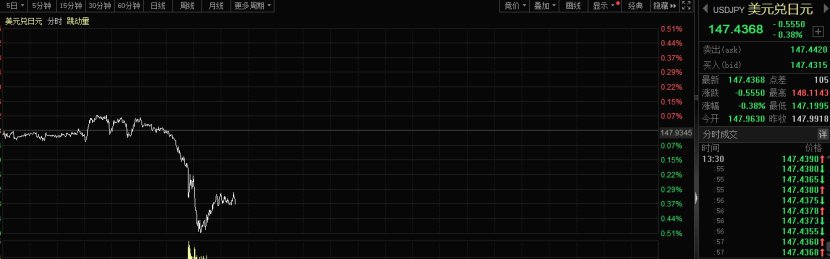
Core Viewpoint - The Japanese yen strengthened significantly on September 19, leading to a sharp decline in the Japanese stock market and a ripple effect across Asian markets, driven by the Bank of Japan's decision to begin selling its holdings of domestic exchange-traded funds [1][2]. Group 1: Bank of Japan's Policy Decision - The Bank of Japan maintained its benchmark interest rate at 0.5%, marking the fifth consecutive meeting without change, which was in line with market expectations [2]. - The announcement of gradually selling off its holdings in domestic exchange-traded funds caused market turbulence, with the Nikkei index dropping by 1.6% [2]. - Analysts interpret this move as a significant step away from the ultra-loose monetary policy of the Abe administration, indicating a potential tightening of policy [5]. Group 2: Economic Indicators and Market Reactions - Despite some signs of weakness, the Japanese economy is described as being on a path of moderate recovery, with stable private consumption and moderate growth in capital expenditure [5]. - A media survey indicated that most observers expect the Bank of Japan to raise the benchmark interest rate by January next year, with a 58% probability of a rate hike by the end of the year [5]. - The strengthening of the yen is expected to impact various markets, particularly through the reversal of carry trade positions, which could lead to significant market adjustments [5][6]. Group 3: Historical Context and Future Implications - Historical data shows that reversals in yen carry trade have occurred in specific periods, leading to yen appreciation and pressure on equity and commodity markets [6]. - Current carry trade volumes in yen are significantly lower than historical highs, suggesting a reduced scale of arbitrage trading due to narrowing interest rate differentials between the US and Japan [6].
“超级央行周”落幕 美联储领衔降息
Sou Hu Cai Jing· 2025-09-19 13:39
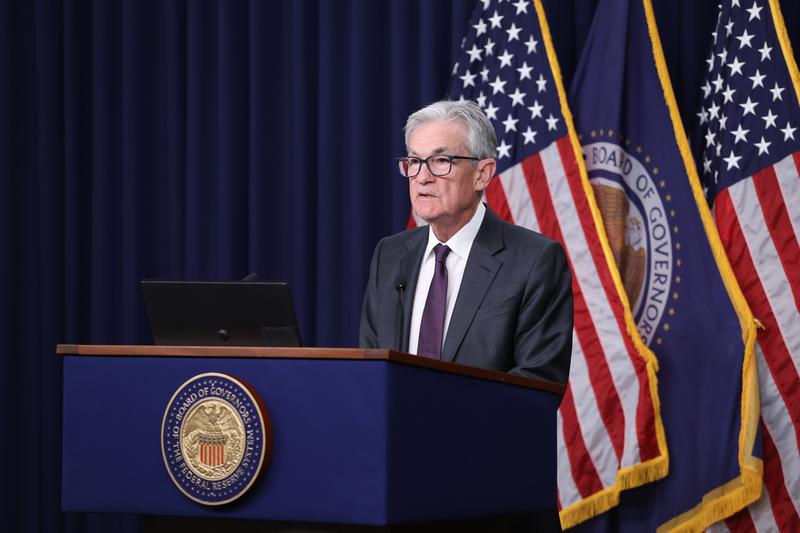
Group 1 - The Bank of Japan announced to maintain its current interest rate level and plans to sell financial assets to further reduce its easing measures and normalize monetary policy [1] - The Canadian central bank cut its benchmark interest rate by 25 basis points to 2.5%, aiming to stimulate economic growth and alleviate downward pressure on the economy [1] - The Federal Reserve lowered the federal funds rate target range by 25 basis points to between 4.00% and 4.25%, marking its first rate cut of the year and indicating potential further cuts in the future [2] Group 2 - The Federal Reserve's rate cut is expected to lower corporate financing costs, stimulate investment and consumption, and inject vitality into the U.S. economy [2][3] - The Fed's decision is likely to influence major asset classes, with expectations of a limited decline in U.S. Treasury yields, support for U.S. stocks, and a weaker dollar index [3] - Global funds may seek higher returns due to the U.S. rate decrease, potentially flowing into emerging market equities [3]
日央行抛售ETF持仓惹争议!投资者担忧股市将受冲击
智通财经网· 2025-09-19 12:49
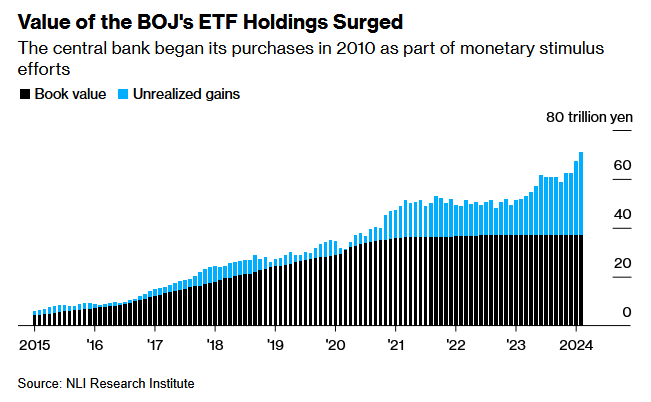
Core Viewpoint - The Bank of Japan (BOJ) has decided to maintain its benchmark interest rate at 0.5% for the fifth consecutive meeting, aligning with market expectations, while announcing plans to sell its holdings in exchange-traded funds (ETFs) and Japanese real estate investment trusts (J-REITs) [1][4]. Group 1: BOJ's ETF and J-REITs Sale Plan - The BOJ will sell ETFs at an annual rate of approximately 3.3 trillion yen (book value) and J-REITs at about 5 billion yen annually, marking the first time the BOJ has detailed its plan for disposing of ETF holdings [1][4]. - As of March 2025, the BOJ's ETF holdings have a book value of 37 trillion yen and a market value of 70 trillion yen, with an estimated unrealized gain of 4.38 trillion yen as of mid-September [1][4]. Group 2: Implications of the Sale - The sale of ETFs is seen as a step towards normalizing the BOJ's operations after years of unconventional monetary policy, which included purchasing ETFs to stimulate the economy and combat deflation [5][7]. - The BOJ's ETF holdings account for approximately 7% of the total market capitalization of the Japanese stock market, raising concerns that the sale could undermine investor confidence, especially as the Japanese stock market reaches historical highs [5][7]. Group 3: Historical Context of ETF Purchases - The BOJ began purchasing ETFs in 2010 to revitalize the corporate sector and encourage risk investment by increasing the supply of funds and lowering capital costs [7][8]. - The BOJ's ETF purchases significantly increased after Haruhiko Kuroda became governor in 2013, leading to a 57% rise in the Nikkei index that year, although the effectiveness of these purchases has diminished over time [7][8]. Group 4: Criticism of BOJ's ETF Holdings - The BOJ's initial purchase of Nikkei 225 index ETFs faced criticism for favoring a few high-weighted stocks, distorting the market and leading to excessive volatility during policy adjustments [8]. - The large ETF holdings have reduced the availability of tradable shares in the market and weakened shareholder influence on corporate governance [8].