货币贬值交易

Search documents
再度大跳水!黄金失守4000美元大关,日内大跌超100美元
Jin Shi Shu Ju· 2025-10-27 14:51
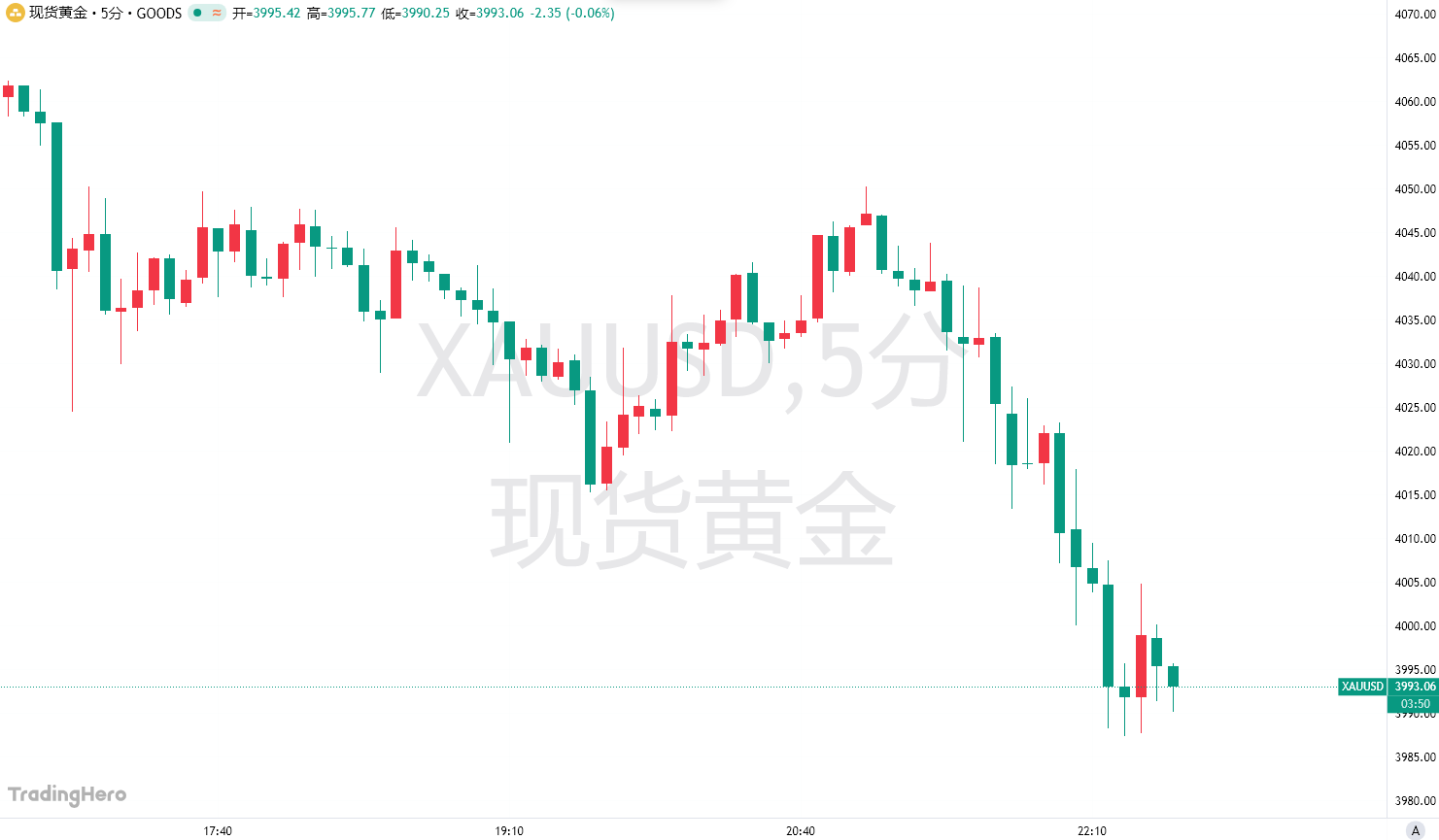
周一,黄金继续下跌,延续了自八月中旬以来首次周度收跌的势头。 截止周一美盘,金价大跌近3%,并失守4000美元大关,日内跌超100美元,交易员们乐观地认为一些曾支撑贵金属价格的经济风险和地缘政治紧张局势已经 缓解。 本周将是各国央行密集公布利率决议的一周,美联储、欧洲央行和日本央行都将做出利率决定。市场预测美联储将降息25个基点,而欧洲央行和日本央行预 计将维持利率不变。三菱日联分析师Soojin Kim表示,这些央行进一步放松货币政策可能会为黄金等无息资产提供新的支持。 与此同时,近1000名专业的黄金交易员、经纪商和精炼商齐聚日本,参加由伦敦金银市场协会举办的会议。这场于上周日开始的盛会出席人数创下历史新 高,而黄金交易员之间日益激烈的人才争夺战很可能成为热门话题。 世界黄金协会的市场策略师John Reade在该活动上表示,央行的需求已不像以前那么强劲,专业交易员可能乐于见到一次更深度的回调。 他援引在会议上的交谈称,有人认为每盎司3500美元的价位"对黄金市场来说是健康的,因为这仍然是一个高得离谱的价格。" 瑞银分析师Giovanni Staunovo表示:"可能达成的贸易协议正在支撑风险资产并打压黄 ...

伦敦市场借贷成本从纪录高位回落,白银“逼空”大战结束了?
Jin Shi Shu Ju· 2025-10-27 08:56
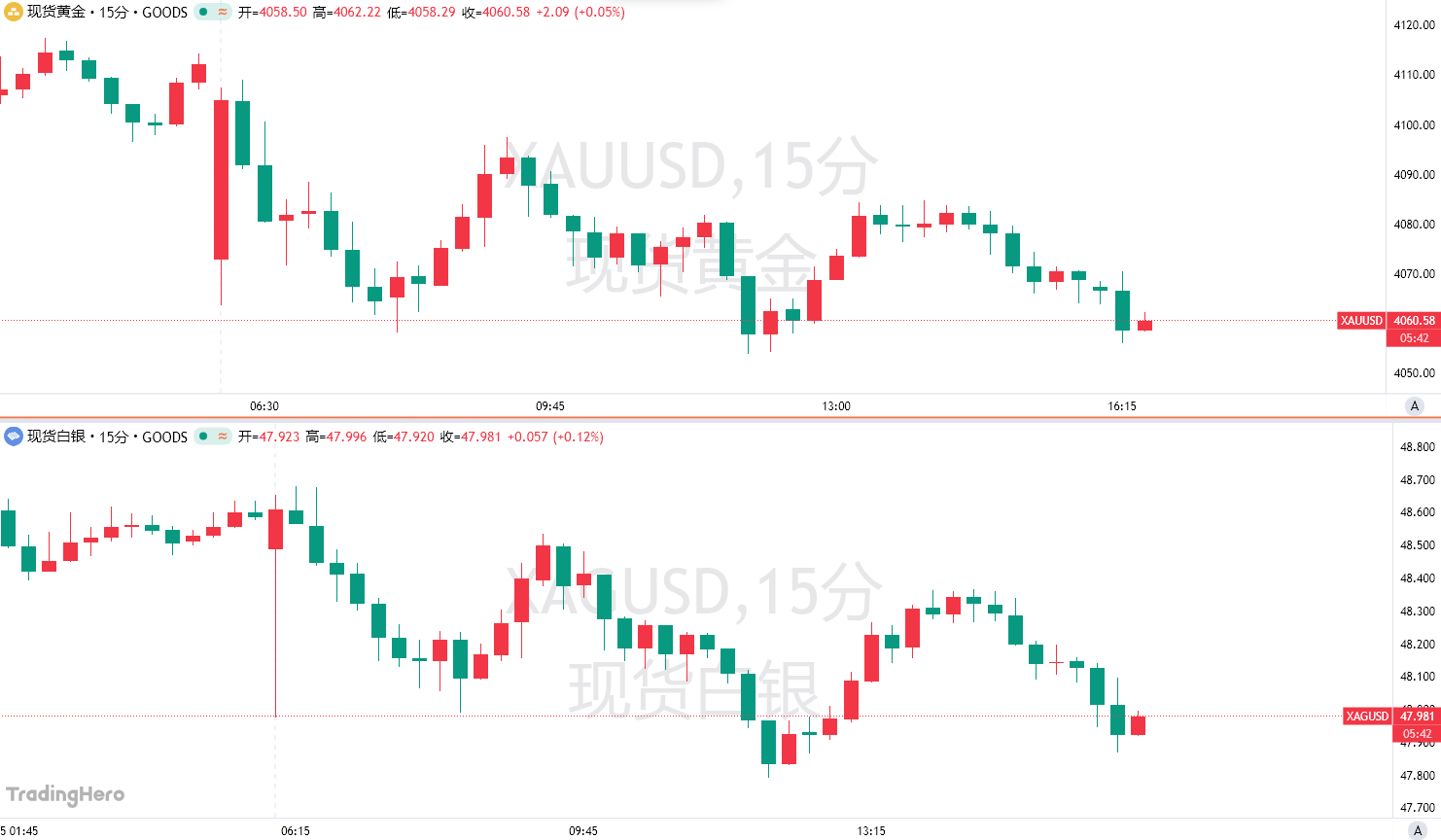
Group 1 - The borrowing cost of silver in London has decreased from record highs, indicating that more liquidity has returned to the market after a recent "short squeeze" [1] - The silver leasing rate surged to a historical peak of 34.9% on October 9, but fell to 5.6% this week [1] - A global "scramble" for precious metals occurred earlier this month due to liquidity shortages in the London silver market, leading traders to take unusual measures such as booking transatlantic cargo flights to transport silver bars [1] Group 2 - The CEO of the London Bullion Market Association, Ruth Crowell, stated that the historic "short squeeze" has prompted the association to consider weekly updates on silver inventory levels, prioritizing silver over gold [1] - Currently, inventory levels for both metals are published monthly, but more frequent updates will provide early warnings of potential supply tightness [1] - Gold and silver prices continued to decline by over 1% on Monday after a weekly drop, attributed to progress in US-China trade negotiations that reduced market risk appetite [1] Group 3 - Gold prices reached a historical high of over $4,380 per ounce last week but began to reverse due to signs of overbuying [4] - Despite the recent downturn, gold prices have increased by 55% and silver prices by over 60% this year, supported by central bank purchases and "currency devaluation trades" [4] - Market sentiment is shifting towards a more rational basis, with analysts noting that the recent trade progress has led to a neutral market mood, while the outlook for future fiscal and monetary easing supports gold's upward trend [4]
外媒:黄金创纪录涨势落幕,十周以来首现周度跌幅
Huan Qiu Wang· 2025-10-26 01:39
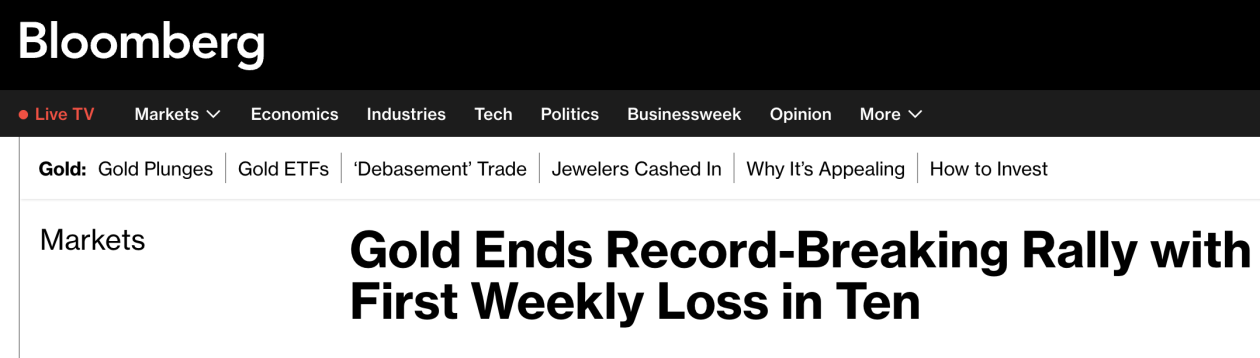
Group 1 - The core viewpoint of the article highlights that gold prices have experienced a significant correction after a nine-week rally, driven by market reassessment and profit-taking by investors [1][4]. - Gold reached a historical high of $4,381.52 per ounce on October 20, but saw a sharp decline the following day as investors liquidated positions [4]. - The decline in gold prices coincided with substantial outflows from gold-backed exchange-traded funds (ETFs), marking the largest single-day drop in holdings in five months [4]. Group 2 - Year-to-date, gold prices have increased by 57%, supported by central bank purchases and a trend of "currency debasement" trading as investors seek to avoid risks associated with sovereign debt and budget deficits [4]. - The current price of spot gold is $4,113.05 per ounce, reflecting a weekly decline of 3.3% [5]. - Platinum prices showed volatility, initially rising by 2% before retracting, with significant tightening observed in the London platinum market [4].
以史为鉴:金价暴跌后怎么走?
财联社· 2025-10-23 04:53
Core Viewpoint - The international gold price has experienced significant volatility, with a record drop followed by potential for recovery, indicating a complex market sentiment influenced by economic uncertainties and speculative trading [1][2][3]. Group 1: Recent Market Movements - On Tuesday, the gold price saw a historic drop, with spot gold falling by 6.3% at one point, marking the largest single-day decline since April 2013, closing at $4,123.85 per ounce [1]. - The New York Mercantile Exchange's December gold futures also fell sharply, closing at $4,109.10 per ounce, down 5.7%, the largest single-day drop in 12 years [1]. - Following this decline, gold prices continued to trend downward, approaching the $4,000 per ounce mark [2]. Group 2: Market Analysis and Sentiment - Analysts attribute the sharp decline to "short-term speculators" being forced to liquidate positions, alongside fund managers selling to lock in profits [2]. - Historical data suggests that significant drops in gold prices do not typically have lasting negative effects, with an average increase of approximately 1.82% in the month following a drop of 5% or more [3]. - Notably, after a 7.3% drop in June 2006, gold experienced a subsequent monthly increase of 15.46% [6]. Group 3: Future Outlook and Analyst Predictions - Despite the recent downturn, analysts maintain a bullish outlook on gold prices, with predictions from Goldman Sachs suggesting a target of $4,900 per ounce by the end of 2026 [7]. - The structural drivers behind gold's price increase remain intact, with ongoing interest in gold as a strategic diversification tool in investment portfolios [8]. - The theory of currency devaluation as a driver for gold investment is still considered valid by some analysts, despite recent market adjustments [7].
黄金测试4000美元支撑,上涨暂歇还是行情终结?
Di Yi Cai Jing Zi Xun· 2025-10-23 00:40
Core Viewpoint - The recent decline in gold prices is attributed to a significant market correction following a speculative surge, with the price nearing $4,000 per ounce before stabilizing around $4,100 [2][4][6]. Market Dynamics - Gold prices experienced a sharp drop of nearly $300, or 5.7%, marking the largest single-day percentage decline since June 2013, following a record high [4]. - The strong performance of the US dollar has added pressure on gold prices, with investors closely monitoring the upcoming US Consumer Price Index (CPI) report for insights into the Federal Reserve's interest rate decisions [4][5]. Investment Strategies - A popular trading strategy for 2025 involves using gold as a hedge against dollar depreciation, driven by concerns over rising government debt and fiscal deficits [4]. - However, doubts are emerging regarding gold's effectiveness in this role, as some analysts argue that the rationale for "currency devaluation trades" is weakening [5]. Historical Context - Gold has seen a continuous rise for nine weeks, a pattern that has historically occurred only four times since the 1970s, with no instances of ten consecutive weeks of increases [6]. - Current gold prices are significantly above the 200-week moving average, indicating potential overextension and the need for a market correction [6]. Market Sentiment - Despite the recent pullback, many market participants believe the current bull market for gold may not be over, viewing the recent decline as a temporary adjustment rather than a trend reversal [7][8]. - Analysts suggest that profit-taking and reduced defensive sentiment have contributed to the recent sell-off, but the overall bullish trend remains intact [7]. Fundamental Support - The World Gold Council highlights that despite perceptions of high prices, gold's value remains relatively low compared to global stock markets, suggesting further growth potential [7]. - Strong fundamentals, including geopolitical uncertainties and increasing US money supply, continue to support the gold market, indicating that it has not yet reached saturation [7].
黄金测试4000美元支撑,上涨暂歇还是行情终结?
第一财经· 2025-10-23 00:28
Core Viewpoint - The recent decline in gold prices is attributed to a significant market correction following speculative trading, with a notable drop of nearly $300 per ounce, marking the largest single-day percentage decline since June 2013 [6][10]. Market Analysis - The recent drop in gold prices indicates that the previous rise was heavily influenced by speculative trading, leading to a mechanism-driven adjustment [6]. - The COMEX gold futures experienced a sharp decline, closing at $4109.10 per ounce, a 5.7% drop, following a record high [6]. - The strengthening of the US dollar and upcoming consumer price index (CPI) data are critical factors influencing investor sentiment towards gold [7]. Investment Strategies - One of the popular trading strategies for 2025 is using gold as a hedge against dollar depreciation, driven by concerns over government debt and fiscal deficits [7]. - There is growing skepticism about gold's ability to fulfill this role effectively, as indicated by market analysts [7]. Technical Indicators - Current gold prices are significantly above the 200-week moving average, suggesting an overbought condition that may necessitate a market correction [8]. - Historical patterns indicate that such corrections could signal the beginning of a major reversal in the market trend [8]. Market Sentiment - Despite the recent sell-off, many market participants believe that the current bull market for gold may not be over, viewing the recent downturn as a temporary adjustment [10]. - Analysts suggest that the recent price drop could be a necessary pause in a longer-term upward trend, allowing for the clearing of short-term speculative positions [12]. Fundamental Support - The fundamental backdrop for gold remains strong, with high levels of geopolitical uncertainty and increasing US money supply supporting the case for further price increases [11]. - The World Gold Council emphasizes that gold's value should be viewed in relation to the overall market environment, indicating that there is still room for growth in gold investments [11].

黄金测试4000美元支撑!上涨暂歇还是行情终结?
Di Yi Cai Jing· 2025-10-22 23:07
Core Viewpoint - International gold prices have experienced significant volatility, with a notable decline following a record high, driven by speculative trading and a strong dollar, leading to concerns about the sustainability of gold as a hedge against currency devaluation [1][2][3]. Group 1: Market Dynamics - Gold prices hit a near two-week low, continuing a downward trend after the largest single-day drop in nearly 12 years, with prices approaching $4,000 per ounce before recovering to around $4,100 [1][2]. - The recent drop in gold prices is attributed to a "mechanical adjustment" following speculative trading, excessive positions, and profit-taking triggered by algorithmic trading [2][3]. - The dollar's strength has been a significant factor influencing gold prices, with investors closely monitoring the upcoming U.S. Consumer Price Index (CPI) report for insights into the Federal Reserve's interest rate decisions [2][3]. Group 2: Investment Strategies - The "currency devaluation trade" strategy, which positions gold as a hedge against potential dollar depreciation, is gaining traction among investors, driven by concerns over fiscal deficits and rising debt levels [2][3]. - Despite recent price adjustments, many market participants believe the current gold bull market may not be over, viewing the recent declines as temporary corrections rather than a definitive end to the upward trend [4][5]. - Analysts suggest that the recent pullback in gold prices could present buying opportunities for investors who missed earlier gains, potentially stabilizing the market [5][6]. Group 3: Historical Context and Future Outlook - Historical patterns indicate that gold has not experienced ten consecutive weeks of price increases, suggesting that the current market may be due for a correction [3]. - The World Gold Council emphasizes that despite perceptions of high prices, gold remains undervalued compared to global equities, indicating potential for further growth supported by strong fundamentals [5][6]. - Market analysts believe that the current price adjustments may clear out short-term speculators, setting the stage for potential future increases in gold prices [6].
避险买需与评级下调博弈 黄金暴跌后反弹!4100震荡
Jin Tou Wang· 2025-10-22 10:07
Core Viewpoint - The recent volatility in gold prices is attributed to a combination of market speculation regarding potential interest rate cuts by the Federal Reserve, optimistic trade developments, and geopolitical tensions, particularly related to the Russia-Ukraine conflict [1][2]. Group 1: Price Movements - On Wednesday, gold prices fell by 3% to around $4,000 before recovering to approximately $4,115 [1]. - On Tuesday, gold experienced a significant drop of $231, or 6.3%, marking the largest single-day decline in over a decade [1]. Group 2: Market Influences - The strong rise in gold prices was partly driven by market expectations of a substantial interest rate cut by the Federal Reserve before the end of the year [1]. - Investors have been moving away from sovereign bonds and fiat currencies in response to concerns over uncontrolled fiscal deficits, leading to what is termed "currency devaluation trading" [1]. Group 3: Geopolitical Factors - Optimism regarding international trade, particularly comments from U.S. President Trump about a potential trade agreement with Chinese President Xi, has alleviated some market fears regarding the trade war [1]. - Expectations of a possible end to the Russia-Ukraine conflict have reduced gold's appeal as a safe-haven asset [1]. Group 4: Analyst Ratings - Citigroup downgraded its "overweight" rating on gold following the recent price drop, citing excessive positioning in the market [1]. - The commodity research team at Citigroup anticipates that gold prices will stabilize around $4,000 in the coming weeks [1].
关税,突发!黄金,快速下挫!
Sou Hu Cai Jing· 2025-10-18 04:52
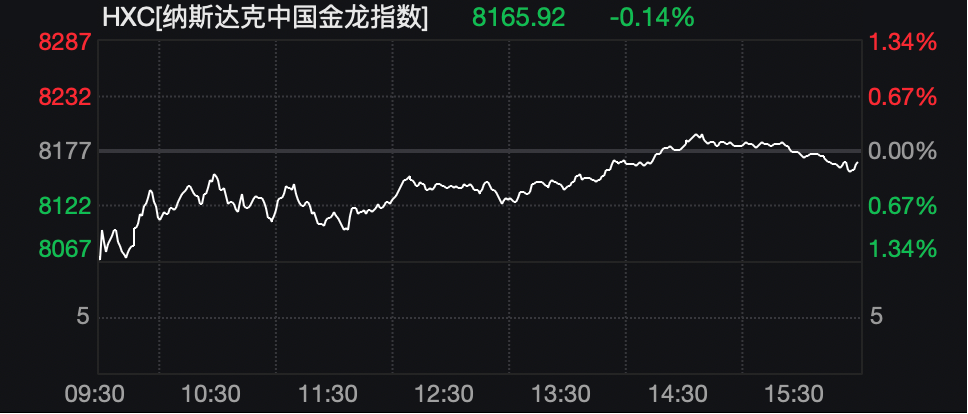
Market Performance - On October 17, U.S. stock indices closed higher, with the Dow Jones Industrial Average up 0.52% at 46,190.61 points, the S&P 500 up 0.53% at 6,664.01 points, and the Nasdaq up 0.52% at 22,679.97 points. For the week, the Dow rose 1.56%, the S&P 500 increased by 1.7%, and the Nasdaq gained 2.14% [1] - The Nasdaq China Golden Dragon Index initially dropped over 1.3% but later rebounded, closing down 0.14% for the day and up 1.83% for the week [1] Gold Market - On October 17, international gold prices fell sharply, with spot gold dropping below $4,200 per ounce, a decline of over 3%. By the end of trading, spot gold was down 1.73% at $4,251.448 per ounce, while COMEX gold fell 0.85% to $4,267.9 per ounce. Spot silver decreased by 4.21% to $51.861 per ounce, and COMEX silver dropped 5.01% to $50.625 per ounce [6][7] - The decline in gold prices led to significant losses in U.S. gold stocks, with Kinross Gold down over 9% and Barrick Gold down more than 6% [7] - Factors contributing to the drop in gold prices included President Trump's more conciliatory remarks on trade issues and ongoing assessments of the Russia-Ukraine conflict, which reduced the demand for gold as a safe-haven asset [7][9] Economic Outlook - The White House's economic advisor, Kevin Hassett, expressed confidence that trade tensions are easing, which has improved market sentiment. He noted that the regional bank crisis's impact has also subsided, alleviating market fears [5] - The Federal Reserve's upcoming meeting is expected to result in a 25 basis point cut to the federal funds rate target range of 4% to 4.25%, aimed at boosting the weak job market while maintaining sufficient tightening to ensure inflation returns to the 2% target [13] - There is a general expectation that the Fed will lower rates again by the end of the year, although officials emphasize the need for caution in their decision-making [13]
深夜突发!金价,大跳水
Di Yi Cai Jing Zi Xun· 2025-10-18 01:16
Core Viewpoint - The recent fluctuations in gold prices are influenced by a combination of market sentiment, geopolitical tensions, and economic indicators, with a notable increase in demand for gold as a safe-haven asset amid rising uncertainties [2][3][4]. Market Analysis - Gold prices experienced a significant rise, with COMEX gold futures reaching nearly $4,400 per ounce before closing at $4,240.20, marking a weekly increase of over 8% [2][3]. - The market is currently assessing the implications of U.S. President Trump's more moderate stance on trade, which has contributed to a cooling of gold prices [3]. - Concerns regarding credit risks in U.S. regional banks have also prompted investors to seek refuge in gold, although these fears have not escalated significantly [3]. Technical Indicators - The Relative Strength Index (RSI) for gold has surpassed 88, indicating an overbought condition, with historical patterns suggesting that such prolonged upward trends are rare [4]. - The current gold price movement shows signs of excessive deviation from the 200-week moving average, a situation that has historically required a market correction [4]. Demand Drivers - Gold has seen a cumulative increase of over 66% this year, driven by geopolitical tensions, expectations of interest rate cuts, and significant inflows into gold exchange-traded funds (ETFs) [4][5]. - The SPDR Gold Trust reported its holdings have risen to 1,034.62 tons, the highest level since July 2022, reflecting strong investor interest [5]. Future Outlook - HSBC forecasts that the upward momentum for gold could continue until 2026, supported by strong central bank purchases and ongoing concerns about U.S. fiscal health [5][6]. - Bank of America analysts suggest that the current low allocation to gold among investors, combined with expectations of further monetary easing, could lead to significant price increases, potentially reaching $6,000 by spring next year [6].