
创新药研发

Search documents
负债超60%、现金流告急,荣昌生物还能靠融资走多远?|创新药观察
Hua Xia Shi Bao· 2025-08-14 10:15
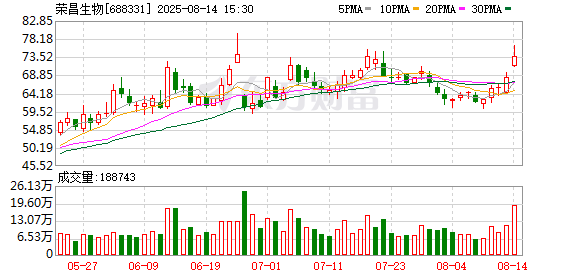
Core Viewpoint - Rongchang Biopharma is attempting to raise funds through H-share placement despite showing high revenue growth, as it struggles with persistent losses and financial challenges [2][4][6]. Financial Performance - The company reported a revenue of 5.26 billion yuan in Q1 2025, a 59.2% year-on-year increase, but faced a net loss of 2.54 billion yuan [4]. - In 2024, the total revenue reached 17.17 billion yuan, up 58.54% year-on-year, yet the net loss was 14.68 billion yuan [6]. - The two main products, Taitasip and Vidisizumab, accounted for over 90% of the revenue, with sales of 9.7 billion yuan and 7.2 billion yuan respectively [7]. Cost Structure - The company's sales, management, and financial expenses totaled 13.35 billion yuan, representing 77.75% of its revenue [10]. - Taitasip's gross margin was 73.92%, below the industry average of 83.45%, indicating competitive pressure [8]. Cash Flow and Receivables - Accounts receivable surged by 28.79% year-on-year, leading to a significant cash flow outflow of 11.14 billion yuan [8]. - The company’s cash flow situation is concerning, with a cash-to-current liabilities ratio of only 37.82% [14]. Debt and Financing - As of March 2025, the company had 7.22 billion yuan in cash against short-term borrowings of 10.84 billion yuan and long-term borrowings of 14.82 billion yuan, covering only 67% of short-term debts [11]. - The debt ratio increased to 63.88% by the end of 2024, significantly higher than the industry average [11][12]. Regulatory Attention - Regulatory bodies have expressed concern over the company's financial health, particularly regarding its liquidity and debt levels [13][14]. - The company has been asked to clarify its revenue recognition and debt management strategies in response to regulatory inquiries [14]. Future Challenges - The company faces the challenge of breaking the cycle of relying on financing to cover losses while needing to improve its profitability and cash flow management [2][15].


亿帆医药: 2025年半年度报告
Zheng Quan Zhi Xing· 2025-08-14 09:10
Core Viewpoint - Yifan Pharmaceutical Co., Ltd. reported a slight increase in revenue and a significant rise in net profit for the first half of 2025, driven by innovative drug sales and operational efficiency improvements [2][3][12]. Company Overview - Yifan Pharmaceutical is a publicly listed company on the Shenzhen Stock Exchange, specializing in the research, development, production, and sales of pharmaceutical products, including biological drugs, chemical drugs, and traditional Chinese medicine [2][3]. - The company has a strong international presence, with products approved for sale in over 50 countries, including China, the USA, the EU, and Brazil [8][9]. Financial Performance - The company achieved operating revenue of approximately CNY 2.635 billion in the first half of 2025, a 0.11% increase year-on-year [3][12]. - Net profit attributable to shareholders was CNY 237.21 million, reflecting a 32.21% increase compared to the previous year [3][12]. - The basic earnings per share rose to CNY 0.25, a 19.05% increase from the previous period [3][12]. Business Segments - The main business activities include the development and sales of pharmaceutical products, vitamins, and high polymer materials [3][12]. - The company’s innovative drug, Yili Shu (艾贝格司亭 α), has been successfully commercialized in multiple international markets, marking a significant milestone for the company [13][14]. Market Position - Yifan Pharmaceutical holds a leading position in the vitamin B5 market, with over 70% of its sales directed towards international markets, particularly in Europe and North America [6][9]. - The company is recognized for its unique products, including those listed in the World Health Organization's essential medicines list, and has a robust pipeline of innovative drugs [8][11]. Industry Context - The pharmaceutical industry in China is undergoing significant transformation, with a shift towards innovative drugs amid pressures on traditional generic markets [6][7]. - The vitamin industry is experiencing structural changes, with increased competition and a focus on technological advancements to enhance product offerings [6][7]. Strategic Initiatives - The company is actively pursuing global expansion strategies, focusing on brand development and channel integration to enhance its market presence [17][18]. - Ongoing projects include the development of new drug candidates and the establishment of international research and production facilities to support its growth objectives [16][17].

从“⼀招鲜”到“武器库” 振东制药:以创业创新实现药企的“新陈代谢”
Sou Hu Cai Jing· 2025-08-14 08:39
Core Viewpoint - The pharmaceutical industry in China is facing a collective crisis, with companies like Zhendong Pharmaceutical struggling to adapt to changing market dynamics and regulatory environments, prompting a need for transformation and innovation [1][6]. Company Overview - Zhendong Pharmaceutical, established in 1995, has evolved from a traditional Chinese medicine company to a comprehensive pharmaceutical enterprise, expanding its business through acquisitions and diversifying its product offerings [2][4]. - The company went public on the Shenzhen Stock Exchange in January 2011, becoming the first enterprise from Shanxi Province to list on the Growth Enterprise Market [2]. Product Performance - The company's flagship product, "Yanshu Injection," was a significant revenue driver, generating nearly 300 million in revenue in 2007, accounting for over 80% of total revenue [4]. - Despite the strong performance of "Yanshu Injection," its market share declined after the patent expiration in 2017 and increased regulatory scrutiny on auxiliary drugs, leading to a need for strategic transformation [4][6]. Strategic Acquisitions - In 2016, Zhendong Pharmaceutical completed a significant acquisition of Kangyuan Pharmaceutical, enhancing its portfolio in the OTC drug market and creating synergies with its existing products [4]. Marketing Innovations - The company has successfully launched new products like "Langdi Calcium," leveraging e-commerce and social media platforms to reach a broader consumer base, marking a shift from traditional marketing to a more consumer-oriented approach [5][9]. - The success of "Dafeixin" exemplifies the company's new marketing strategy, utilizing internet marketing techniques to engage directly with consumers, moving away from reliance on traditional sales channels [9]. Research and Development Focus - Since 2018, the company has faced challenges due to "volume-based procurement," prompting a shift towards innovation and R&D to develop new drugs and reduce reliance on generic products [6][8]. - Zhendong Pharmaceutical has committed to maintaining R&D investment at over 10% of revenue, with a reported investment of 351 million in 2024, indicating a strong focus on innovation [12]. Future Product Pipeline - The company is working on several innovative drugs, including a dual live bacteria capsule for treating bacterial vaginosis, expected to be a groundbreaking product in the market [12]. - Zhendong is also re-developing several "sleeping varieties" targeting major therapeutic areas, including oncology and dermatology, as part of its strategy to build a diverse product portfolio [12][13].

重庆智翔金泰生物制药股份有限公司 自愿披露关于GR1802注射液启动过敏性鼻炎适应症III期临床试验的公告
Zhong Guo Zheng Quan Bao - Zhong Zheng Wang· 2025-08-14 08:39
Group 1 - The company has completed communication with the National Medical Products Administration (NMPA) regarding the initiation of a Phase III clinical trial for GR1802 injection in patients with seasonal allergic rhinitis [1][2] - GR1802 injection is a recombinant fully human anti-IL-4Rα monoclonal antibody, targeting IL-4Rα, which inhibits Th2-type inflammatory responses mediated by IL-4 or IL-13 [1] - The drug has received clinical trial approval for multiple indications, including moderate to severe atopic dermatitis, chronic rhinosinusitis with nasal polyps, and chronic spontaneous urticaria, with allergic rhinitis now entering Phase III trials [2] Group 2 - As of the announcement date, only two drugs targeting the same receptor have been approved for marketing in China [3] - The drug must complete clinical trials and submit a new drug application to obtain a marketing authorization before it can be sold [3]

播报:海创药业上半年续亏 2022上市募资10.6亿中信证券保荐
Zhong Guo Jing Ji Wang· 2025-08-14 08:17
海创药业首次公开发行股票的发行费用总额为6,758.59万元,其中,承销及保荐费5,037.19万元。 海创药业的实际控制人是YUANWEI CHEN(陈元伟),美国国籍。 中国经济网北京8月14日讯 海创药业(688302.SH)昨晚发布2025年半年度报告。2025年上半年,海创药业 实现营业收入1316.71万元,同比增长11899.08%;归属于上市公司股东的净利润-6185.32万元,上年同 期为-1亿元;归属于上市公司股东的扣除非经常性损益的净利润-7300.56万元,上年同期为-1.1亿元;经 营活动产生的现金流量净额为-4742.8万元,上年同期为-9913.71万元。 500)this.width=500" align="center" hspace="10" vspace="10" rel="nofollow"> 海创药业于2022年4月12日在上交所科创板上市,发行价格为42.92元/股,公开发行股票数量为 24,760,000股,保荐人(主承销商)为中信证券股份有限公司,保荐代表人为洪立斌、胡朝峰。 海创药业首次公开发行股票募集资金总额为106,269.92万元,扣除发行费用后,募集资 ...



荣昌生物(688331):泰它西普 pSS 达成III期终点,先发优势显著
SINOLINK SECURITIES· 2025-08-14 07:34
Investment Rating - The report maintains a "Buy" rating for the company [5]. Core Insights - The company has achieved the primary endpoint in the Phase III clinical trial of its innovative drug, Taitasip (BLyS/APRIL dual-target fusion protein), for the treatment of primary Sjögren's syndrome (pSS) and plans to submit a marketing application to the National Medical Products Administration (NMPA) [2]. - There is a large patient base for Sjögren's syndrome in China, with an estimated prevalence of 0.3%-0.7%, translating to approximately 4.2 to 9.8 million patients, and the demand for effective treatments is significant due to the limited availability of specialized therapies [3]. - The company is progressing rapidly in the development of Taitasip, which has a clear first-mover advantage in the domestic market, as it is among the few innovative therapies for Sjögren's syndrome currently in clinical trials [3]. - Taitasip has demonstrated good efficacy and safety in its Phase II clinical trial, with no deaths or serious adverse events reported [3]. - The company is also advancing its PD-1/VEGF dual antibody, RC148, which has received FDA IND approval and is expected to enter international Phase II clinical trials [4]. Financial Forecast and Valuation - The company is projected to achieve revenues of 2.339 billion RMB, 3.247 billion RMB, and 4.597 billion RMB in 2025, 2026, and 2027, respectively, with a net profit of -855 million RMB, -90 million RMB, and 362 million RMB in the same years [5][9]. - The revenue growth rates are expected to be 40.26%, 58.54%, 36.26%, 38.78%, and 41.58% from 2023 to 2027 [9].
和黄医药(00013):喹替尼海外销售持续增长,ATTC平台即将产生首个临床阶段分子
Guoxin Securities· 2025-08-14 05:05
Investment Rating - The investment rating for the company is "Outperform the Market" [5][23]. Core Viewpoints - The company is experiencing rapid growth in overseas sales, particularly for its main product, furmonertinib, which saw overseas sales of $163 million (+25%). However, domestic sales are under pressure, with a total tumor product sales of $234 million (-4%) in the first half of 2025 [1][7]. - The company has adjusted its revenue guidance for its oncology business to $270-350 million, down from a previous estimate of $350-450 million, due to delays in milestone revenues from partners and the expected delay in the launch of another product in China [1][7]. - The ATTC platform is expected to produce its first clinical candidate in the second half of the year, with plans to present preclinical data at academic conferences [2][21]. Summary by Sections Sales Performance - In the first half of 2025, the total sales for oncology products reached $234 million, with furmonertinib contributing $163 million from overseas (+25%) and $43 million from domestic sales (-29%). Other products like savolitinib and sugemalimab also faced declines in sales [1][7]. - The overall revenue from the tumor immunotherapy business was $144 million (-14.9%), indicating competitive pressure in the domestic market [1][7]. Revenue and Profit Forecast - The revenue forecast for 2025-2027 has been revised to $604 million, $718 million, and $829 million, respectively, down from previous estimates. The net profit forecast for the same period is adjusted to $43 million, $6.8 million, and $10.8 million, respectively [3][23]. - The company confirmed a net profit of $455 million in the first half of 2025, a significant increase of 1649.8%, primarily due to sales revenue from core products and the sale of assets [11]. Clinical Development and Pipeline - The company is advancing its clinical development, with savolitinib receiving approval for new indications and expected to participate in this year's medical insurance negotiations. The global registration clinical study SAFFRON is anticipated to complete patient recruitment in the second half of the year [2][18]. - The ATTC platform is positioned to generate innovative molecules that could lead to collaboration and licensing opportunities, enhancing the company's pipeline [2][21]. Financial Metrics - The company reported a decrease in R&D expenses to $72 million (-24.2%) and a reduction in sales and administrative expenses to $42 million (-28.0%), reflecting effective cost control measures [11][24]. - The financial outlook includes a projected EBIT margin improvement, with net profit margins expected to fluctuate significantly over the forecast period [4][24].
拜耳中国“共创·新药”大赛报名进入倒计时!
生物世界· 2025-08-14 04:49
Core Viewpoint - The article emphasizes the significant advancements and opportunities in China's pharmaceutical innovation landscape, particularly through collaborations with multinational companies like Bayer, which aims to discover the next major innovation in the industry [1][3]. Summary by Sections Innovation Landscape - China leads globally in pharmaceutical patent applications with a 43% share in 2024, and the number of drug pipelines in development exceeds 7,000, accounting for approximately 30% of the global total [1]. - The initiation of clinical trials for oncology by Chinese companies represents 39% of the global total, positioning China at the forefront of cancer research [1]. Collaboration and Investment - Chinese companies are increasingly engaging in high-value transactions with multinational pharmaceutical firms, with 37% of transactions involving upfront payments exceeding $50 million originating from China [2]. - In the cardiovascular and metabolic fields, the total upfront payments from Chinese companies to multinational firms have reached $6.85 billion in 2024 [2]. Bayer's Initiative - Bayer is actively investing in China's innovation ecosystem through the "Co-Creation New Drug" competition, which has garnered significant attention and support from the industry since its launch in July 2025 [3]. - The competition invites submissions of innovative drug candidates and technologies, with a focus on areas such as precision oncology, immunology, and gene therapy [4][5]. Competition Timeline and Evaluation - The application deadline for the competition is August 31, 2025, followed by a series of evaluations and presentations leading to the announcement of winners by the end of October [7]. - Submissions will be assessed by a committee of Bayer's R&D and business development experts based on innovation level, key data, and alignment with Bayer's strategic goals [6]. Rewards for Winners - Winners of the competition will receive various benefits, including access to Bayer's Co.Lab, opportunities for face-to-face meetings with global executives, and participation in global roadshows [8][10].

产业深观察|中国创新药的全球竞争力到底有多强?
新华网财经· 2025-08-14 02:26
Core Viewpoint - The article highlights the rapid growth and transformation of China's innovative drug development sector, emphasizing its shift from quantity to quality and its increasing global competitiveness [2][8][20]. Summary by Sections Innovative Drug Approvals - In the first half of 2025, China approved 43 innovative drugs, a 59% increase year-on-year, nearing the total of 48 approvals in 2024 [2]. - The innovative drug sector is benefiting from favorable policies that support the entire industry chain, showcasing China's growing global competitiveness in biopharmaceuticals [2]. Clinical Development and Regulatory Efficiency - The average time for innovative drug approval has decreased from 420 working days in 2017 to 235 days [5]. - Measures have been implemented to improve access to rare disease medications, with several rare disease drugs approved in the first half of 2025 [5][7]. Shift in Drug Development Focus - Chinese innovative drug development is transitioning from "Me-too" drugs to "Best-in-class" drugs, with a focus on unmet clinical needs [8]. - The industry is enhancing its research capabilities and internationalization, with a notable increase in original innovations [8][20]. International Collaboration and Market Expansion - Chinese companies are exploring various models for international recognition, including licensing, joint development, and independent market entry [10][12]. - Notable collaborations include agreements between companies like 3SBio and Pfizer, and Heng Rui Pharma with GSK, aimed at accelerating drug development and market entry [11][12]. Global Registration and Recognition - Chinese innovative drugs are achieving global recognition, with products like Zepzelca and others gaining approval in major markets [16]. - Companies are focusing on high-quality clinical research and compliance with international standards to enhance their global competitiveness [18][19]. Challenges and Future Directions - Despite progress, challenges remain in areas such as platform technology accumulation and global commercialization experience [23]. - The industry needs to enhance its capabilities in original innovation and market access strategies to improve the commercialization of new drugs [23][24]. Policy Support and Industry Development - The government is actively supporting true innovation and differentiated innovation through various policies [21][24]. - Future industry development requires collaboration across multiple sectors, including regulatory improvements and talent development [24][25].

云顶新耀宣布中国台湾地区药政部门正式受理维长宁 (艾曲莫德)用于治疗中重度活动性溃疡性结肠炎的新药上市许可申请
Zhi Tong Cai Jing· 2025-08-14 02:13
Core Viewpoint - CloudTop New Drug (01952) has made significant progress in the commercialization of its innovative drug, Eiqumod (维长宁), for the treatment of moderate to severe active ulcerative colitis (UC) in Taiwan, with the new drug application (NDA) officially accepted by the Taiwan Food and Drug Administration (TFDA) [1][2] Group 1: Drug Development and Approval - Eiqumod has received regulatory approvals in Macau, Singapore, Hong Kong, and its NDA has been accepted in South Korea, marking important advancements in its market access across Asia [1] - The drug is expected to receive approval from the National Medical Products Administration (NMPA) in China by the end of 2024 or early 2025 [1] - Eiqumod is recognized as a first-line oral treatment that effectively promotes mucosal healing in UC patients, which is a key treatment goal according to clinical guidelines [1][2] Group 2: Clinical Research and Efficacy - The NDA application for Eiqumod is based on the results of the ELEVATE UC Phase III registration studies (ELEVATE UC52 and ELEVATE UC12) and the ENLIGHT study (ES101002), which demonstrated significant clinical efficacy and safety [2][3] - The ELEVATE UC studies showed that Eiqumod achieved both clinical remission and deep mucosal healing at 12 and 52 weeks, with 100% of clinical remission being steroid-free [2] - The ENLIGHT study is the largest Phase III clinical trial for moderate UC in Asia, involving 340 patients, and provided strong evidence for the drug's application in this patient population [3] Group 3: Market Potential and Strategic Initiatives - The CEO of CloudTop highlighted the growing number of UC patients in Asia, with an estimated 800,000 patients in China in 2024, projected to reach 1 million by 2030, indicating a significant unmet medical need [2] - Eiqumod has been included in the urgent import drug list for the Greater Bay Area in 2024, allowing for early access to patients in that region [3] - The company has initiated local production of Eiqumod in its Jiaxing facility to support supply and commercialization in Greater China and other Asian markets [3][4] Group 4: Company Overview - CloudTop New Drug focuses on the research, clinical development, manufacturing, and commercialization of innovative drugs and vaccines, aiming to meet unmet medical needs in the Asian market [5] - The management team has extensive experience in high-quality research and development, regulatory affairs, and commercialization operations within leading pharmaceutical companies [5]