ESG

Search documents
ESG解读|中通快递的多事之秋:国家邮政局约谈、抖音电商清退旗下冷链;客诉量持续高企
Sou Hu Cai Jing· 2025-10-31 10:43
Core Viewpoint - The article discusses the recent regulatory scrutiny faced by Zhongtong Express, highlighting issues related to service quality, employee rights, and compliance, which have led to its removal from the Douyin e-commerce platform's logistics service providers list [2][5][6]. Regulatory Scrutiny - On October 28, the State Post Bureau conducted an administrative interview with Zhongtong Express, citing non-compliance in operational practices and inadequate service quality [2]. - Zhongtong Express has committed to addressing the identified issues through comprehensive inspections and improvements in service quality and compliance [5]. Service Quality Issues - Douyin e-commerce announced the removal of Zhongtong Cold Chain, a subsidiary of Zhongtong Express, from its platform due to violations such as assisting merchants in bypassing electronic waybill systems and uploading false tracking numbers [6]. - Customer complaints about Zhongtong Cold Chain include issues like stagnant logistics information, poor delivery service, and improper temperature control leading to product spoilage [7]. Employee Rights and Safety - As of the end of 2024, Zhongtong Express has approximately 24,500 formal employees, with a significant portion engaged in sorting and operational support roles [8]. - The company reported an average annual salary of about 140,000 yuan for its employees, but the actual workforce includes a larger number of business employees not reflected in this figure [8]. - Safety performance is concerning, with a reported injury rate of 1.44 per million working hours and six employee fatalities in 2024 [9]. ESG and Carbon Emission Challenges - Zhongtong Express was removed from the Science Based Targets initiative (SBTi) for failing to submit valid carbon reduction targets within the required timeframe [10]. - The company reported operational carbon emissions of 1.9081 million tons of CO2 equivalent in 2024, a 6.54% increase year-on-year, ranking third among listed express companies [11][12]. - The carbon emission intensity per million revenue was 42.15 tons, showing a 7.14% decrease compared to the previous year [12]. Financial Performance - In the first half of the year, Zhongtong Express achieved revenue of 22.72 billion yuan, a year-on-year increase of 9.8%, but adjusted net profit fell by 14.3% [13]. - The company handled 9.85 billion parcels in the second quarter, maintaining a market share of 19.5% [13].


ESG+20|“行动者”瑞泉茶产业:坚守绿色制茶 以茶香勾勒中国文化
Di Yi Cai Jing Zi Xun· 2025-10-31 10:24
Core Insights - The article discusses the integration of modern technology in the traditional tea industry, particularly through the practices of Ruichuan Tea Industry, which emphasizes sustainability and quality enhancement in tea production [1][2][3] Group 1: Company Overview - Ruichuan Tea Industry, founded in 1819, has a rich heritage in tea production, with its current leadership representing the twelfth generation of the Huang family [1] - The company has joined the United Nations Global Compact in 2024, marking a commitment to sustainable development and corporate social responsibility [3] Group 2: Technological Integration - Modern technology has significantly improved tea production by increasing yield and quality, allowing for precise analysis of tea's internal components [1] - The company conducts data research on soil, ecology, and seed technology innovations to enhance tea quality and production efficiency [1][2] Group 3: Sustainability Practices - Ruichuan employs traditional methods such as "guest soil" covering to enhance soil fertility without compromising tea yield or quality [1] - The company is focused on protecting and innovating tea germplasm resources, aiming to preserve over 300 existing varieties and develop new high-quality strains [2] Group 4: Cultural and Educational Initiatives - Ruichuan is constructing a 56,000 square meter cultural exhibition park to showcase the rich history of tea culture, utilizing AI and other technologies for a comprehensive presentation [3] - The establishment of a private rock tea museum within the core production area highlights the importance of cultural value in the tea industry [2]

九阳股份:零售市占稳步提升,筑起可持续竞争力
Zheng Quan Shi Bao Wang· 2025-10-31 10:10
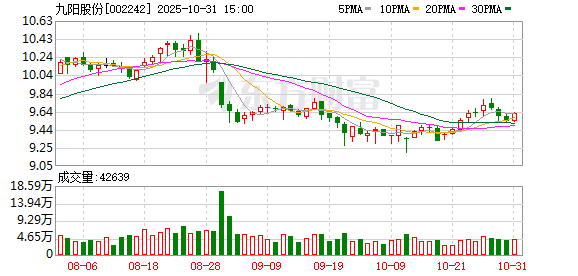
Core Insights - Company Jiuyang Co., Ltd. has recently received multiple awards in the ESG (Environmental, Social, and Governance) field, including the "Zhejiang Charity Award" for its "Jiuyang Food Education Workshop" project, the "Best Progress Enterprise" award in the S&P Global CSA 2024 evaluation, and the "ESG New Benchmark Enterprise Award" from Securities Star [2][3] Financial Performance - In the third quarter of 2025, Jiuyang reported a significant year-on-year increase in non-recurring net profit of 106.67%, with a total of 192.5 million yuan for the first three quarters, reflecting a growth of 48.17%. The gross profit margin improved to 26.92% [2] - According to Guosheng Securities, the retail growth of Jiuyang's core product categories is strong, with online sales of its wall-breaking machines, soybean milk machines, and rice cookers increasing by 4.7%, 26.5%, and 5.0% respectively in the first three quarters of 2025 [2] Social Responsibility and ESG Initiatives - Jiuyang has established 1,654 public kitchens in underdeveloped rural schools, benefiting over 600,000 teachers and students daily, significantly improving their dietary environment and nutritional status [3] - The company emphasizes its commitment to social responsibility, integrating ESG principles into its operational framework, and aims to create sustainable competitive advantages through its initiatives [3]

钟宏武:中国企业ESG工作正面临三大核心挑战
Sou Hu Cai Jing· 2025-10-31 10:05
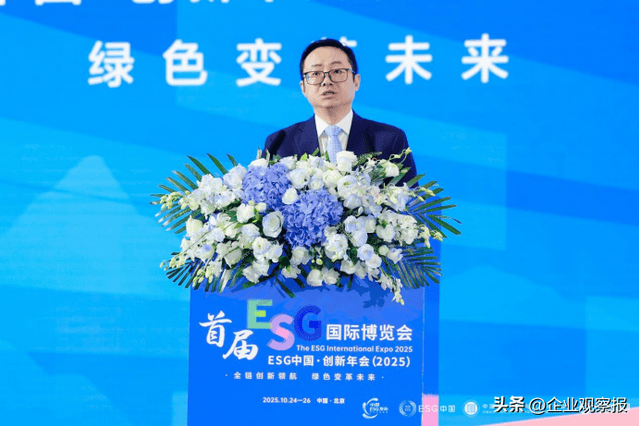
来源:企业观察报 10月24日—26日,ESG中国·创新年会(2025)暨首届ESG国际博览会在北京首钢园召开。活动期间, 责任云研究院院长、教授钟宏武接受《企业观察报》采访,对中国企业ESG工作的前景、所面临的挑战 和应对之法陈述了自己的观点。 01 三大核心挑战 钟宏武认为,中国企业当前的ESG工作已由"概念引入"迈进"深化落地"阶段。但面对全球ESG标准不统 一、中国经济转型提速等背景,中企的ESG工作正面临三大核心挑战。 一是标准割裂与"走出去"适配难题。 全球ESG披露框架如ISSB、GRI、欧盟CSRD等与中国本土政策如财政部《企业可持续披露准则——基 本准则(试行)》、沪深北交易所《上市公司可持续发展报告指引(试行)》等仍处于"并行期"。 若想同时满足上述多套标准,企业(尤其是跨国经营企业)需要投入大量资源进行数据拆分、指标转 换,无疑会增加合规成本。更关键的是,部分国际ESG评级机构对中国企业的评价存在"认知偏差",如 对共同富裕、乡村振兴等中国特色议题的权重分配不足,导致评级结果与实际贡献不匹配,影响国际资 本信任。 二是重要性议题识别与价值传导断层。 在宏观经济增速换挡、部分行业产能过剩的 ...
中国跨境并购路径与国际经验借鉴研究|资本市场
清华金融评论· 2025-10-31 09:32
Core Viewpoint - The article outlines the evolution of international mergers and acquisitions (M&A) by Chinese enterprises, transitioning from resource acquisition to a diversified focus on technology, market access, and value creation, while analyzing industry distribution changes and key driving factors [3]. Definition and Mechanism of M&A - M&A serves as a crucial tool for enterprises to achieve market expansion, resource optimization, technology acquisition, and competitive landscape adjustment through asset acquisition, equity transactions, or business collaboration [5]. - M&A can be categorized into three types based on industry relevance: horizontal mergers for market share expansion, vertical mergers for supply chain control, and conglomerate mergers for risk diversification and new market exploration [5]. Current Status of China's M&A Market - The M&A landscape in China has evolved significantly, with early focus on resource-based acquisitions shifting towards technology-intensive industries as domestic manufacturing pressures increased [10][11]. Development History of International M&A by Chinese Enterprises - The history of international M&A by Chinese enterprises reflects the interaction between economic transformation and global strategic layout, starting from resource-driven acquisitions in the late 1990s to a broader focus on technology and brand integration post-WTO accession in 2001 [8][9]. Industry Distribution of International M&A - The industry distribution of international M&A by Chinese enterprises has changed in alignment with domestic industrial upgrades and global value chain restructuring, with early acquisitions focused on energy and minerals, later shifting to technology-intensive sectors like automotive and machinery [10]. Main Driving Factors and Significance of International M&A - The driving factors for international M&A by Chinese enterprises include national strategic guidance, corporate capability enhancement, and global market dynamics, with policies evolving from the "going out" strategy to the recent "merger six articles" and "new national nine articles" [12][13]. - M&A is essential for industrial structure upgrading and fostering emerging industries, as well as for enhancing the competitiveness of listed companies through asset injection and business synergy [13].
九阳股份:零售市占稳步提升 筑起可持续竞争力
Quan Jing Wang· 2025-10-31 09:11
Core Insights - Joyoung Co., Ltd. has recently received multiple awards in the ESG field, including the "Zhejiang Charity Award" for its "Joyoung Food Education Workshop" project, the "Best Progress in Industry" award from S&P Global CSA 2024, and the "ESG New Benchmark Enterprise Award" from Securities Star [1][2] Group 1: ESG Achievements - The "Joyoung Food Education Workshop" project, initiated by the Joyoung Public Welfare Foundation, won the highest award in Zhejiang's charity sector [1] - Joyoung Public Welfare Foundation was established on December 28, 2020, by Joyoung and its founding team as a 5A non-public fundraising foundation [1] - The company has built 1,654 public kitchens in underdeveloped areas, benefiting over 600,000 teachers and students daily, significantly improving their dietary environment and nutritional status [2] Group 2: Financial Performance - In the third quarter of 2025, Joyoung reported a 106.67% year-on-year increase in net profit after deducting non-recurring items, with a total of 192.5 million yuan for the first three quarters, representing a 48.17% increase [1] - The gross profit margin improved to 26.92% [1] - According to data from Aowei Cloud Network, sales of Joyoung's online products, including wall-breaking machines, soybean milk machines, and rice cookers, increased by 4.7%, 26.5%, and 5.0% year-on-year, respectively, in the first three quarters of 2025 [1] Group 3: Market Strategy - The company aims to enhance product and brand value by launching high-quality products that users are willing to recommend, thereby increasing market share [2] - Domestic sales share is expected to grow due to channel reforms and the low sales base in the kitchen appliance sector, which is anticipated to return to positive growth [2]
现代牧业收购中国圣牧:乳业巨头整合加速 价值竞争成为行业主旋律
Zheng Quan Ri Bao Zhi Sheng· 2025-10-31 06:39
Core Viewpoint - Modern Dairy Holdings Limited is acquiring approximately 1.28% of China Shengmu Organic Milk Limited for HKD 37.52 million, which will trigger a mandatory conditional cash offer for the remaining shares at HKD 0.35 per share, totaling approximately HKD 2.016 billion [1][2]. Group 1: Acquisition Details - The acquisition will increase Modern Dairy's and its concerted parties' shareholding from 29.99% to over 30%, triggering a mandatory cash offer under Hong Kong's takeover regulations [1]. - Modern Dairy has signed a voting rights agreement with Start Great, granting it control over approximately 20.87 billion shares (24.90%) of China Shengmu [1]. Group 2: Strategic Implications - The acquisition price of HKD 0.35 represents a premium of approximately 14.75% over the last closing price of HKD 0.305 [2]. - Post-acquisition, the combined herd size will exceed 610,000 heads, with an estimated annual raw milk production surpassing 4 million tons, positioning the company among the top global dairy farming enterprises [2]. - The integration is expected to enhance bargaining power in bulk material procurement, effectively reducing unit costs and solidifying a cost leadership position [2]. Group 3: Product and Market Impact - The merger will optimize the product mix, increasing the share of specialty milk (including organic milk) from 8% to over 20%, thereby strengthening Modern Dairy's high-end product line [2]. - The acquisition will also integrate China Shengmu's organic milk business, providing diverse and distinctive raw milk supply, with organic milk typically priced higher than premium milk, enhancing overall product quality and competitiveness in high-value segments [2]. - China Shengmu's unique "Desert Organic Cycle" model combines desert reclamation with organic dairy farming, serving as a global example of sustainable development, which Modern Dairy aims to leverage to establish a differentiated competitive advantage and improve its ESG profile [2]. Group 4: Industry Context - The acquisition reflects a strategic move by dairy giants in response to dual pressures of consumer upgrades and cost challenges, marking a critical choice during the industry's recovery phase [3]. - By integrating the advantages of large-scale farming and organic milk sourcing, Modern Dairy is expected to reshape the organic milk market landscape, while China Shengmu will leverage capital for "second growth" [3]. - This acquisition signifies a shift in the Chinese dairy industry from "price competition" to "value competition," with increasing industry concentration and product structure upgrades becoming the main theme [3].
申万宏源MSCI ESG评级、标普CSA评分实现双提升 位列行业前列
Xin Hua Cai Jing· 2025-10-31 06:27
Core Insights - MSCI upgraded the ESG rating of Shenwan Hongyuan from "BBB" to "A," while S&P's CSA score also saw significant improvement, placing the company among the top in the securities industry, indicating enhanced recognition of its sustainable development capabilities in the international capital market [2] Group 1: ESG Performance and Ratings - Shenwan Hongyuan has achieved a notable upgrade in its MSCI ESG rating, moving from "BBB" to "A," reflecting its strong performance in sustainable development [2] - The company has also received a substantial boost in its S&P CSA score, further solidifying its position in the securities sector [2] Group 2: Commitment to Sustainable Development - The company has been actively implementing social responsibilities as a state-owned financial enterprise, integrating national strategic priorities with sustainable development [3] - Shenwan Hongyuan has optimized its top-level design and conducted surveys to assess the effectiveness of its ESG initiatives, aiming to enhance management and execution capabilities [3] - The firm is committed to incorporating ESG factors into its investment and financing operations, improving risk management mechanisms, and expanding its green finance products and services [3] Group 3: Future Directions - Moving forward, Shenwan Hongyuan aims to deepen its sustainable development and ESG management practices, focusing on three pillars: serving national strategies, providing high-quality financial services, and enabling green low-carbon development [4] - The company is dedicated to becoming a trusted first-class investment bank and institution, aligning with the expectations of various stakeholders, including the state, society, customers, shareholders, and employees [4]


ESG行业洞察 | 尽管气候风险加剧,农业企业迎来前所未有的新机遇
彭博Bloomberg· 2025-10-31 06:05
Core Viewpoint - The article discusses the evolving climate risks impacting agricultural companies, highlighting both the significant losses faced by major players like ADM and Bunge due to extreme weather and supply chain disruptions, as well as the new opportunities arising for companies investing in drought-resistant crops and plant-based products [3][4]. Group 1: Impact of Extreme Weather - Extreme weather events are causing substantial damage to crops, livestock, and supply chains, potentially leading to losses of up to $720 million for ADM due to property damage, transportation disruptions, and increased shipping costs [4]. - The agricultural sector has faced severe losses, with Argentina experiencing $20 billion in agricultural export losses from 2022 to 2023 due to drought and heat [4]. - A new market is emerging for drought-resistant crops and digital tools aimed at improving water efficiency, with companies like BayWa identifying opportunities worth €70 million [4]. Group 2: Regulatory Changes and New Opportunities - Major agricultural companies such as Bunge, Cargill, and ADM are investing heavily in the plant-based protein sector, including alternative meat and dairy products, with Bunge investing $550 million in a new soybean protein plant in Indiana [6]. - Stricter environmental regulations related to greenhouse gas emissions are creating new opportunities for climate-friendly biofuels and "deforestation-free" certified products, with Bunge expecting an additional $4.5 million in sales from "zero deforestation" certified soybeans in high-risk areas like Brazil [6]. - ADM has launched a biostimulant product aimed at significantly improving nutrient use efficiency and corn yields, with R&D spending increasing from $256 million to $269 million in 2024 [6]. Group 3: Greenhouse Gas Emission Challenges - Agricultural companies are facing increasing pressure to reduce emissions of nitrous oxide (N2O) and methane, which are significant contributors to global warming [7]. - The EU and Germany have implemented stricter nitrogen fertilizer regulations, directly impacting agricultural revenues for companies like BayWa [7]. - Companies like Olam are training rice farmers in their supply chain to optimize water, fertilizer, and waste management, aiming to reduce methane emissions by up to 70% [8].

专访许季刚:商业模式创新需将ESG、绿色转型纳入产品开发体系
2 1 Shi Ji Jing Ji Bao Dao· 2025-10-31 05:13
Core Insights - The global climate governance is transitioning from "negotiation rules" to "delivery results," with China's 14th Five-Year Plan and the new round of Nationally Determined Contributions (NDC) emphasizing systematic and in-depth requirements for corporate green and low-carbon transformation [3][4] - ESG practices are becoming a benchmark for assessing long-term resilience, innovation capability, and value creation potential of companies, necessitating a shift from compliance disclosure to value creation [4][6] - Key technologies and institutional breakthroughs for carbon reduction, particularly CCUS (Carbon Capture, Utilization, and Storage), are essential for achieving China's NDC goals and effective green transformation [4][13] Group 1: Green Development Experience - Over the past decade, China has built the world's largest and fastest-growing renewable energy system, with a continuous increase in the share of non-fossil energy consumption [5] - The "new three items" such as new energy vehicles and photovoltaic components have gained strong competitiveness in international markets, providing a robust industrial foundation for the 14th Five-Year Plan's focus on constructing a new power system [5][6] - The top-level design of policies for circular economy has become increasingly refined, with over 40 provincial and ministerial-level circular economy plans established since the 18th National Congress of the Communist Party [5] Group 2: Business Model Innovation - Green development must align green requirements with corporate profitability, rather than viewing them as opposing forces, which is essential for advancing green development [6] - Chinese enterprises need to enhance the innovativeness of their business models and adapt their technological innovation capabilities accordingly [6] - Companies should integrate green transformation into product development and engage downstream customers with green product demands [6] Group 3: Energy Security and Technological Innovation - Energy security is the primary guarantee for green transformation, requiring a systematic approach rather than relying on a single technology or policy [7] - A new power system should be supported by technologies that enhance flexibility, such as energy storage and demand-side response [7] - The establishment of a pricing signal mechanism that accurately reflects the value of power supply and demand is crucial for guiding efficient allocation of flexible resources [7] Group 4: Carbon Disclosure and Supply Chain Management - Supplier carbon disclosure should be based on clear standards, with leading enterprises determining and providing templates for suppliers to fill out [8][9] - To ensure authenticity and credibility, leading enterprises should involve third-party organizations with established methodologies for verification [8] - Leading enterprises can collaborate with peers and upstream suppliers to promote the establishment of carbon emission standards in industries lacking national standards [9] Group 5: Supplier ESG Performance Improvement - Leading enterprises should adopt a tailored approach to drive sustainable reform in their supply chains, considering the varying capabilities of suppliers [10] - Actions should extend beyond ESG assessments to include training and optimization for suppliers, fostering a supportive environment for improvement [10][11] - Specific corrective suggestions should be provided to suppliers with low ESG scores, along with incentives such as shorter payment terms and better procurement prices [11] Group 6: Carbon Emission Accounting - Companies can utilize consulting firms to develop carbon emission accounting models based on GHG Protocol standards, ensuring alignment with international and domestic standards [12] - Carbon emissions should be categorized into major and minor categories to identify key emission sources and potential reduction areas [12] - Cross-industry best practices should be leveraged to clarify specific carbon reduction directions [12] Group 7: Future Key Technologies and Breakthroughs - CCUS is a critical component of achieving global net-zero goals, with significant progress in engineering practices in China [13][14] - Further development of CCUS requires breakthroughs in policies, technologies, and industry collaboration [13][14] - A strong incentive and regulatory policy framework is necessary to support CCUS projects and ensure their orderly development [14]