产融结合

Search documents
海洋经济高质量发展暨资产配置高峰论坛在青岛举办
Zhong Zheng Wang· 2025-09-19 05:11
Group 1 - The forum focused on the development of marine economy under the "14th Five-Year Plan," emphasizing the importance of capital empowerment and asset allocation strategies [1][2] - Keynote speakers highlighted the transition of China's marine economy towards intelligence, greenness, and high-end development, with a clear trend towards the integration of production and finance [1] - The event attracted over 200 representatives from enterprises and investment institutions, indicating strong interest in marine economic development [1] Group 2 - A closed-door investment and financing matchmaking session was held to facilitate precise connections between enterprises and investment institutions, focusing on key areas such as marine equipment manufacturing and marine biomedicine [2] - The current phase of China's marine economy is characterized by a shift from scale expansion to quality enhancement, with the capital market playing a crucial role in industry integration and technological innovation [2] - The forum aligned with the national strategy for a strong marine nation, fostering collaboration between the marine industry and financial sectors [2]

陕天然气:构建绿色能源输配网络 谱写高质量发展新篇章
Xin Hua Wang· 2025-09-19 02:09
Core Viewpoint - The article highlights the strategic initiatives and achievements of Shaanxi Natural Gas Co., Ltd. during the "14th Five-Year Plan" period, focusing on its transformation into a comprehensive energy service provider and its contributions to the green energy supply system in Shaanxi Province [1][12]. Group 1: Infrastructure Development - Shaanxi Natural Gas has significantly enhanced its long-distance pipeline construction, with approximately 690 kilometers of new pipelines put into operation, increasing annual gas transmission capacity from 14.56 billion cubic meters at the end of the "13th Five-Year Plan" to 17 billion cubic meters, a growth of 16.8% [2]. - The company has established a comprehensive pipeline network centered around Xi'an and Yulin, creating a "three-ring, four vertical, five horizontal" backbone grid for gas distribution [2]. Group 2: Resource Allocation and Digital Transformation - The company has broken down resource allocation barriers by achieving direct connections with 12 purification plants of Yanchang Petroleum and enhancing interconnectivity with the national pipeline network, significantly improving resource dispatch flexibility and emergency response capabilities [5]. - Shaanxi Natural Gas is advancing its digital and intelligent transformation, applying technologies such as remote monitoring and laser scanning for pipeline integrity management, which enhances operational efficiency [6]. Group 3: Market Expansion and User Base Growth - The city gas business has become a key growth driver, with the company expanding its market through acquisitions and new projects, including the establishment of new gas companies and partnerships with local governments [7]. - By the end of 2024, the company’s city gas enterprises will have constructed over 4,500 kilometers of urban gas pipelines, serving more than 800,000 users, with city gas sales reaching 1.473 billion cubic meters, accounting for 11.1% of total sales [8]. Group 4: Corporate Governance and Value Enhancement - As a state-owned listed company, Shaanxi Natural Gas emphasizes the integration of production and finance to enhance corporate value, receiving multiple awards for its governance and operational efficiency [9][11]. - The company has implemented a robust shareholder return mechanism and optimized asset structure through capital operations, including acquisitions and restructuring [11]. Group 5: Industry Standards and Future Plans - The establishment of the Shaanxi Natural Gas Standardization Technical Committee aims to lead industry development by creating a comprehensive standard system for pipeline construction and urban gas management [12]. - Looking ahead to the "15th Five-Year Plan," the company plans to continue its strategic focus on pipeline construction, hydrogen-blended gas transportation trials, and further contributions to the province's green low-carbon development [12].



中金岭南旗下中金科技引战落地 加速打造世界一流新材料制造商
Zheng Quan Shi Bao Wang· 2025-09-18 08:40
Core Viewpoint - The strategic investment signing ceremony for Zhongjin Technology, a subsidiary of Zhongjin Lingnan, marks the completion of its first round of capital increase and expansion, facilitating mixed-ownership reform and introducing several strategic partners with significant advantages in resources, technology, and capital [1][3][5]. Group 1: Capital Structure Optimization - Zhongjin Lingnan plans to transfer 16.12% of Zhongjin Technology's shares to Guangsheng Capital by December 2024 to support the company's full industry chain development [2]. - The transaction aims to optimize the capital structure, introduce strategic resources, achieve complementary advantages, and enhance management capabilities [2][3]. Group 2: Strategic Partnerships - The introduction of strategic investors is expected to inject new capital and bring valuable market resources, cutting-edge technology, and advanced management concepts to Zhongjin Technology [3][4]. - Southern Media Group and Guangsheng Capital, both state-owned enterprises in Guangdong, will leverage their unique advantages to support Zhongjin Technology's growth [5]. Group 3: Business Development and Performance - Zhongjin Technology has evolved from producing battery zinc powder to becoming a diversified company with three major sectors, including high-end battery zinc alloys and energy storage materials [8]. - The company has achieved significant growth, with revenue and net profit doubling in recent years, reaching 1.374 billion yuan in revenue and 36.68 million yuan in net profit in the first half of 2025 [8][9]. Group 4: Future Growth and Innovation - The company is focused on innovation-driven development, aiming to replace imports with high-end materials and maintain or exceed international standards in product quality and technology [8]. - Recent acquisitions, including the purchase of a leading domestic bimetal company, are part of Zhongjin Technology's strategy to strengthen its high-end composite metal materials sector [9].

【新华解读】国资央企亮“十四五”成绩单 接下来将会怎么干?
Xin Hua Cai Jing· 2025-09-18 07:18
Core Insights - The "14th Five-Year Plan" period has seen significant improvements in the quality and scale of state-owned enterprises (SOEs), with a focus on high-quality development and strategic restructuring [1][2][3] Group 1: Financial Performance - Central enterprises' total assets increased from less than 70 trillion yuan to over 90 trillion yuan, with total profits rising from 1.9 trillion yuan to 2.6 trillion yuan, reflecting annual growth rates of 7.3% and 8.3% respectively [2] - The operating income profit margin improved from 6.2% to 6.7%, and labor productivity per employee increased from 594,000 yuan to 817,000 yuan [2] - The market capitalization of centrally controlled listed companies exceeded 22 trillion yuan, marking a nearly 50% increase since the end of the "13th Five-Year Plan" [3] Group 2: Strategic Focus - The development of strategic emerging industries is deemed essential for optimizing the layout and achieving high-quality development, with cumulative investments in these sectors reaching 8.6 trillion yuan during the "14th Five-Year Plan" [4][5] - Central enterprises are increasingly focusing on innovation-driven growth rather than mere scale expansion, emphasizing quality improvement and effective returns on investment [3][5] Group 3: Future Directions - Moving forward, SOEs will prioritize enhancing core functions and competitiveness through strategic professional restructuring and integration [6][7] - Key areas for future restructuring include strategic emerging industries, critical links in the industrial chain, and traditional industry upgrades [7][8] - The adjustment and optimization of state capital layouts will be a dynamic process, requiring timely adaptations based on asset quality and industry trends [8]
“十四五”以来中央企业资产总额从不到70万亿元增至超过90万亿元
Mei Ri Jing Ji Xin Wen· 2025-09-17 13:31
Core Insights - The central enterprises in China have shown significant growth in assets and profits during the "14th Five-Year Plan" period, with total assets increasing from less than 70 trillion yuan to over 90 trillion yuan and total profits rising from 1.9 trillion yuan to 2.6 trillion yuan, reflecting an annual growth rate of 7.3% and 8.3% respectively [2][3] Group 1: High-Quality Development - The quality and efficiency of central enterprises have improved, with the operating income profit margin increasing from 6.2% to 6.7% and labor productivity rising from 594,000 yuan to 817,000 yuan per employee per year [2][3] - Central enterprises have made significant strides in technological innovation, with R&D expenditure exceeding 1 trillion yuan for three consecutive years and the investment intensity increasing from 2.6% to 2.8% [2][3] Group 2: Modern Industrial System - Progress has been made in building a modern industrial system, with a focus on strategic emerging industries such as new-generation information technology, new energy, and high-end equipment, leading to the creation of world-class industrial clusters [3][4] - The central enterprises have implemented over 800 application scenarios under the "AI+" initiative and established 1,854 smart factories, resulting in a reduction of energy consumption and carbon emissions per unit of output by 12.8% and 13.9% respectively [3][4] Group 3: Strategic Emerging Industries - Central enterprises have invested a total of 8.6 trillion yuan in strategic emerging industries during the "14th Five-Year Plan," significantly increasing their investment compared to the "13th Five-Year Plan" [4][5] - The revenue from strategic emerging industries is projected to exceed 11 trillion yuan in 2024, with contributions from new-generation information technology and high-end equipment sectors surpassing 1 trillion yuan each [5]
2430万元,周杰伦概念股巨星传奇入股国家体育场
3 6 Ke· 2025-09-17 12:10
Core Viewpoint - The acquisition of approximately 1.17% equity in the National Stadium by Giant Star Legend's subsidiary marks a strategic move to enhance its IP operation capabilities and integrate into the national development framework [1][7]. Company Overview - Giant Star Legend was established in 2017, focusing on new retail and IP creation, with a cumulative fan base of 250 million for its star IPs [3]. - The subsidiary, Star Creation (Kunshan) Cultural Entertainment Co., Ltd., specializes in comprehensive cultural entertainment development around star IPs [3]. Acquisition Details - The acquisition involves an investment of approximately RMB 24.3 million, making Giant Star Legend the only private shareholder in the National Stadium [1]. - The acquisition will not result in the target company becoming a subsidiary, and its financial performance will not be consolidated into Giant Star Legend's financial statements [1]. Strategic Intent - The acquisition aims to inject mature IP operation capabilities into the National Stadium, facilitating diverse consumer experiences such as immersive exhibitions and creative markets [7]. - Giant Star Legend emphasizes its leading position in IP creation and commercialization, aligning the acquisition with its strategic development direction [7]. Financial Performance - In the first half of the year, Giant Star Legend's IP creation and operation segment saw an 8.2% revenue decline to RMB 143 million, while new consumption business revenue surged by 91.5% to RMB 211 million [9]. - Overall revenue for the first half reached RMB 355 million, a 33% year-on-year increase, but net profit fell by 58.9% to RMB 10.27 million due to a loss in equity investments [9]. Market Reaction - Following the announcement of the acquisition, Giant Star Legend's stock price experienced volatility, initially rising by 1% after the news, indicating market interest in the strategic move [9].
中美 “融资天花板” 企业大PK,没上市也能狂揽千亿
3 6 Ke· 2025-09-17 09:48
Core Insights - The trend of non-listed companies achieving rapid growth through substantial financing has become prominent in the global capital market, particularly in China and the United States [1][2][24] - The financing landscape reflects the strategic bets of global investors on future industry growth directions, highlighting differences in economic structures between the two countries [1][24] China Financing Leaders - The top 20 non-listed companies in China have collectively raised over 1 trillion RMB, showcasing significant financing power [2] - Honor Terminal leads with over 250 billion RMB in financing, followed by Ant Group with 137.05 billion RMB and Hengfeng Bank with 100 billion RMB [2][3] - Other notable companies include ByteDance, Wanda Commercial Management, and Cainiao Network, each with substantial financing amounts, indicating a diverse range of industries represented [3][4][5] Characteristics of China's Financing Kings - The leading companies are primarily focused on financial technology, new energy vehicles, and semiconductor manufacturing, aligning with national strategic priorities [7][8] - Most of these companies have deep roots in the domestic market, leveraging China's vast consumer base for rapid growth [8] - Nearly half of the top 20 companies originated from major industry players, benefiting from their resources and support [10] U.S. Financing Landscape - The top 20 non-listed companies in the U.S. have raised over 290 billion USD, with OpenAI leading at 69.08 billion USD [12][21] - The U.S. financing leaders are predominantly in AI and frontier technology sectors, reflecting strong innovation and market competitiveness [18] - Founders play a significant role in driving these companies, with many being established by well-known entrepreneurs, enhancing their visibility and capital attraction [19] Characteristics of U.S. Financing Kings - AI and advanced technology dominate the U.S. financing landscape, with top companies like OpenAI and Anthropic leading the charge [18] - The U.S. ecosystem is characterized by a high concentration of venture capital investment, with a focus on high-risk, high-reward projects [20][21] - A more relaxed regulatory environment supports the rapid development of emerging technologies, allowing companies to innovate without significant compliance burdens [22] Comparative Insights - Both China and the U.S. emphasize technology as a core development direction, but their approaches differ; China focuses on local market expansion and alignment with national strategies, while the U.S. prioritizes technological breakthroughs and global market penetration [24]
中国银行:发挥综合化服务优势 护航油贸企业高质量发展
Ren Min Wang· 2025-09-17 09:22
Core Insights - The event organized by Bank of China and its subsidiaries aims to enhance the integration of finance and the real economy, focusing on the fuel oil market's development and risk management [1][2] Group 1: Event Overview - The "Strong Support for Enterprises" event was successfully held in Zhoushan, focusing on the fuel oil market and attended by over 60 representatives from trade, shipping, and industry chain enterprises [1] - The event featured an "Energy Financial Expert Group" that provided forward-looking market analysis and practical strategy guidance on topics such as price trends and risk management tools [1] Group 2: Financial Support and Services - Bank of China is committed to providing comprehensive financial support for fuel oil industry chain enterprises, covering procurement financing, hedging transactions, cross-border payments, and fund management [2] - The bank leverages its global network and comprehensive operations to offer a "one-stop" solution for enterprises, including futures derivatives services and cross-border settlement [2] Group 3: Future Plans - Bank of China Zhejiang Branch plans to build an open and collaborative energy financial ecosystem, enhancing cooperation with government, exchanges, and enterprises to inject financial momentum into the construction of the Zhejiang Free Trade Zone and the high-quality development of the Yangtze River Delta [3]

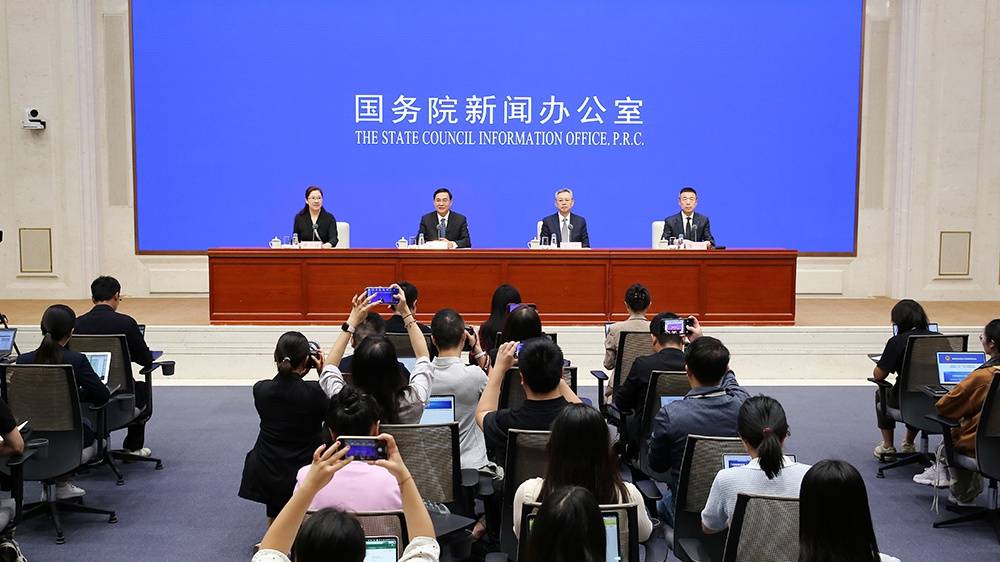
“十四五”央企成绩单发布
第一财经· 2025-09-17 09:10
Core Insights - The article highlights the significant growth and achievements of central enterprises in China during the "14th Five-Year Plan" period, with total assets increasing from less than 70 trillion yuan to over 90 trillion yuan and total profits rising from 1.9 trillion yuan to 2.6 trillion yuan, reflecting annual growth rates of 7.3% and 8.3% respectively [3][4] Group 1: Strategic Development - Central enterprises have focused on developing strategic emerging industries as a key option for optimizing layout structure and achieving high-quality development, with cumulative investments in these industries reaching 8.6 trillion yuan, significantly higher than during the "13th Five-Year Plan" [7] - The revenue from strategic emerging industries is projected to exceed 11 trillion yuan in 2024, with contributions to overall revenue increasing by 8 percentage points over the past two years, indicating a strong growth trajectory in sectors like new generation information technology and high-end equipment [7] - Central enterprises have established nearly 1,000 venture capital funds focusing on technology and emerging fields, promoting a new model of industry-finance integration [8] Group 2: Reform and Optimization - The State-owned Assets Supervision and Administration Commission (SASAC) has made substantial progress in state-owned enterprise reforms, optimizing layout structures and enhancing the efficiency of state capital allocation, with over 70% of revenue from central enterprises now coming from sectors critical to national security and public welfare [9] - A total of 10 enterprises have undergone strategic restructuring, and 9 new central enterprises have been established, focusing on enhancing industrial collaboration and addressing issues like resource dispersion [11] - The SASAC emphasizes the importance of providing high-quality public services through resource integration, as seen in the establishment of the China Resource Recycling Group, which aims to promote green economic transformation [12]

央企聚焦战略性新兴产业 ,“十四五”以来累计投资8.6万亿元
Sou Hu Cai Jing· 2025-09-17 07:01
Core Viewpoint - The press conference highlighted the achievements of central enterprises in China during the "14th Five-Year Plan" period, focusing on high-quality development and strategic investments in emerging industries [3][4]. Group 1: Strategic Investments - Central enterprises have focused on nine strategic emerging industries and six future industries, leading to a systematic layout that has significantly increased investment to 8.6 trillion yuan during the "14th Five-Year Plan," a substantial rise compared to the "13th Five-Year Plan" [3]. - Development in key sectors such as integrated circuits, biotechnology, and new energy vehicles has accelerated, with breakthroughs in cutting-edge fields like humanoid robots and superconducting quantum computing [3]. Group 2: Revenue Growth - Central enterprises are projected to exceed 11 trillion yuan in revenue from strategic emerging industries in 2024, with an 8 percentage point increase in revenue contribution over the past two years [4]. - Five sectors, including new generation information technology and high-end equipment, are expected to each generate over 1 trillion yuan in revenue [4]. - The cumulative installed capacity of renewable energy generation by central enterprises accounts for approximately half of the national total, and the industrial software market size represents over 20% of the national market [4]. Group 3: Development Models - The acceleration of strategic emerging industries has led to new development models, including the establishment of nearly 1,000 supply-demand lists to promote industry cooperation [4]. - Central enterprises have set up venture capital funds totaling close to 100 billion yuan, focusing on technology-driven and emerging fields, fostering a new model of industry-finance integration [4]. - The implementation of the "AI+" initiative has facilitated the application of general and industry-specific models, effectively enabling the digital transformation of traditional industries [4].