战略自主

Search documents
美国下调中国关税,印度是冤大头实锤了,莫迪不干了,继续买俄油
Sou Hu Cai Jing· 2025-11-04 20:08
Group 1 - The core viewpoint of the articles highlights India's precarious position in the international trade landscape, particularly in relation to the U.S. and China, as it faces high tariffs from the U.S. while China benefits from a reduction in tariffs [1][3][9] - Following the recent U.S.-China meeting, the U.S. reduced the "fentanyl tariff" from 20% to 10%, which contrasts sharply with the 50% import tariff imposed on India, showcasing India's unfavorable treatment [1][3] - India's previous attempts to appease the U.S. by reducing oil imports from Russia did not yield any concessions, leading to a perception of India as a "sacrificial lamb" in the geopolitical arena [3][5] Group 2 - In response to the U.S. tariffs, Indian oil companies have secured five shipments of Russian oil from non-sanctioned entities, signaling a defiance against U.S. pressure [5] - India's strategy involves navigating the gray areas of U.S. sanctions, allowing it to maintain energy security while avoiding direct confrontation with U.S. policies [5][9] - The articles suggest that while India lacks the hard power to counter the U.S. like China, it is determined to assert its strategic autonomy and resist being exploited by U.S. policies [7][9]

中美会晤,欧洲看出5个端倪:中国对美更强势,欧盟需战略自主
Sou Hu Cai Jing· 2025-10-31 14:02
Group 1 - The core point of the meeting between China and the US in South Korea on October 30 is the discussion of practical topics such as combating fentanyl, adjusting tariffs, and postponing rare earth regulations, which has significant implications for Europe [1][3] - The consensus reached during the meeting appears substantial but lacks detailed actionable rules, indicating that the underlying deep-seated differences remain unresolved [3][13] - The meeting signals a potential shift away from the golden era of free trade, as both nations continue to utilize tariffs and administrative interventions as tools of pressure [13][20] Group 2 - China's response to US tariff pressures has evolved from passive to more assertive, utilizing rare earth export controls and agricultural trade countermeasures, showcasing its newfound confidence [7][9] - The reliance of European industries on Chinese rare earth supplies highlights the geopolitical leverage China holds, as disruptions could lead to production delays and increased costs for European companies [9][11] - Europe faces a dilemma in balancing its economic interests with China against its security dependence on the US, complicating its strategic positioning in the ongoing geopolitical landscape [11][18] Group 3 - The EU's push for strategic autonomy, including the introduction of the "Critical Raw Materials Act," aims to reduce dependence on Chinese rare earths and establish stable supply chains [15][20] - Achieving consensus among EU member states on strategic decisions is challenging due to varying national interests, which complicates the EU's ability to navigate the US-China rivalry effectively [17][18] - The future of Europe's position in the evolving global trade landscape hinges on its ability to implement strategic autonomy and reduce dual dependencies on both the US and China [22]
欧盟放狠话:稀土再谈不拢就对中国动用非常手段,中方亮明态度
Sou Hu Cai Jing· 2025-10-31 08:42
Core Viewpoint - China's new regulations on rare earth exports have tightened control over a critical resource, prompting strong reactions from Europe, particularly from French President Macron and European Commission President von der Leyen, indicating a complex geopolitical struggle where both sides are weighing their options [1][3][4]. Group 1: Impact on European Industries - Rare earth magnets and related materials are essential for Europe's renewable energy, military, wind power, and semiconductor industries, with China holding a dominant position in the global rare earth supply chain [3][4]. - The new regulations signal China's intent to further control this key resource, leading to heightened concerns within the EU, as the region has made little progress in developing its own rare earth supply capabilities since the establishment of the "Critical Raw Materials Alliance" in 2020 [3][4][21]. - European companies, particularly in the electric vehicle sector, are already feeling the pressure of potential supply issues, which could lead to increased costs and impact profitability [4][15]. Group 2: European Response and Strategy - The EU's response has been characterized by strong rhetoric, with calls for using all available tools to counter China's actions, but actual implementation of these measures is complex and time-consuming [3][10][19]. - The so-called "anti-coercion tool" introduced by the EU is more of a warning than a practical solution, as it requires consensus among all 27 member states, which is challenging to achieve [10][19][21]. - There is a growing realization within the EU that aggressive trade measures could backfire, harming their own industries, particularly in the context of the green transition [15][21]. Group 3: China's Position and Strategy - China has maintained a calm stance, emphasizing that resource export management is a common international practice aimed at ensuring industrial safety and rational resource use [6][10]. - The Chinese government has signaled a shift from being a mere supplier of raw materials to focusing on technology and value-added products, indicating a strategic change in how it engages with global markets [15][21]. - The ongoing geopolitical struggle over rare earths is seen as a psychological battle, with both sides calculating their moves carefully, but China appears to have gained the upper hand in the initial stages of this contest [8][10].
马克龙:欧盟“忍无可忍”,中国再不卖稀土,或将启动“核选项”
Sou Hu Cai Jing· 2025-10-30 11:37
Core Insights - The article discusses the significant geopolitical implications of rare earth elements, particularly focusing on the European Union's dependency on China for these critical materials [1][5][24] Group 1: Importance of Rare Earth Elements - Rare earth elements are essential for modern industries, playing a crucial role in products ranging from mobile phone vibration motors to wind turbines [3] - China dominates the global rare earth market, accounting for over 60% of production and leading in processing technology, with over 80% of the rare earth magnets needed for the EU's electric vehicle industry imported from China [5][6] Group 2: EU's Concerns and Legislative Response - The EU's anxiety stems from a projected threefold increase in demand for rare earth elements in the electric vehicle sector by 2030, while its own production capacity remains limited [8] - In response to these concerns, the EU has introduced the Anti-Coercion Instrument (ACI), which allows for investment restrictions and technology controls with a simple majority of member states' consent [10] Group 3: Diverging Perspectives on Trade Data - There is a discrepancy in how China and the EU interpret rare earth export data; while China emphasizes stable supply, the EU is concerned about declining trends in export volumes [12][14] Group 4: Geopolitical Context - The ongoing Ukraine crisis and heightened security concerns in Europe have intensified the EU's urgency to secure rare earth supplies, prompting discussions with China [16] - The U.S. has also played a role, with indications that China might delay new regulations, which has positively impacted U.S. rare earth stocks [18] Group 5: Strategic Responses - The EU is accelerating its "strategic autonomy" plan, proposing an investment of €24 billion to develop its rare earth industry, while Germany has approved €250 million for recycling technology research [20] - China is focusing on industrial upgrades and has introduced regulations to ensure stable supply and fair trade practices [22] Group 6: Conclusion on Cooperation - The rare earth situation reflects broader trends in global supply chain restructuring, highlighting the need for dialogue and cooperation between the EU and China to address mutual concerns [24][26]

荷兰政府请来“家长”,安世半导体将迎来大结局!
Sou Hu Cai Jing· 2025-10-29 16:20
Group 1 - The core issue at hand is the discussion between a Chinese high-tech delegation and the European Commission regarding China's export controls on rare earths, which is seen as a pretext for addressing the more pressing issue of semiconductor supply disruptions affecting the German automotive industry [1][2] - The German automotive industry, represented by the German Automotive Industry Association (VDA), is facing significant losses, with estimates suggesting over 20 billion euros in damages and the potential impact on 100,000 jobs if the semiconductor supply issue is not resolved by November [2][3] - The Netherlands' attempt to leverage its position regarding ASML's production capabilities has backfired, as 70% of ASML's actual production capacity is located in China, leading to urgent calls for intervention from the European Commission [2][3] Group 2 - The Chinese delegation is reportedly prepared to negotiate on both rare earth exports and semiconductor supply conditions, indicating a complex bargaining scenario where the EU's desire for rare earths may come with conditions related to semiconductor agreements [3][4] - The discussions are framed as high-level negotiations on rare earth export controls, but the underlying urgency is driven by the immediate need for semiconductor supplies to prevent further disruptions in the automotive sector [4]
中经评论:泛化“国家安全”撑不起欧洲经济
Jing Ji Ri Bao· 2025-10-28 00:08
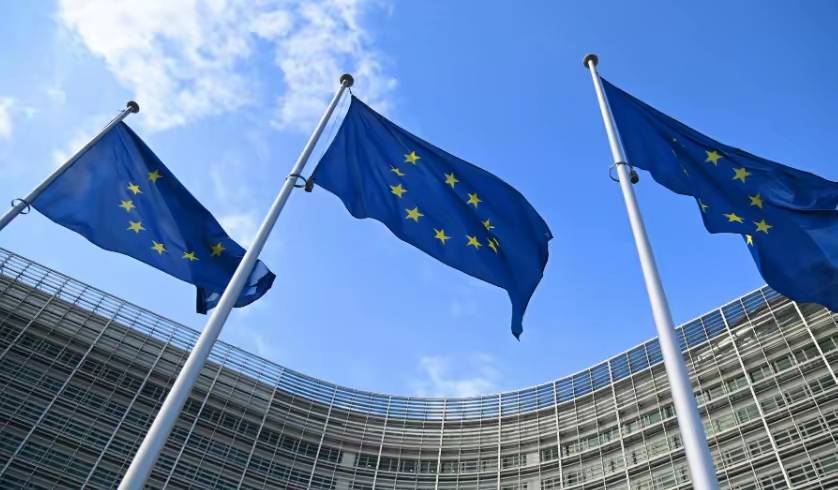
Group 1 - The EU's recent actions to broaden the concept of "national security" through various policy tools are unlikely to boost the current weak economic situation and may exacerbate internal imbalances and weaken innovation vitality [1][2] - The establishment of a "trade bottleneck" database by the EU aims to counteract "economic coercion" faced by member states, reflecting the impact of U.S. tariffs and unilateral protectionist actions on global supply chains [1][2] - The Netherlands' recent takeover of the Chinese company Nexperia highlights the EU's anxiety and its struggle in key technology sectors, leading to supply chain disruptions, particularly in the automotive chip sector [1][2] Group 2 - The EU's push for "absolute security" is a response to multiple crises, including the Eurozone crisis, refugee influx, Brexit, the pandemic, and the Ukraine crisis, which have hindered economic growth and competitiveness in digital and green energy sectors [2][3] - Internal divisions among EU member states regarding "de-risking" measures and industrial subsidies are causing inefficiencies and rising costs, further complicating the EU's economic security strategy [2][3] Group 3 - The key issue facing the EU economy is a decline in competitiveness rather than security shortcomings, with insufficient investment in research and innovation leading to commercialization challenges and a sluggish digital transformation [3][4] - The EU's focus on "security-first" resource allocation may undermine long-term growth potential by diverting funds from education and research, which are crucial for sustained competitiveness [3][4] Group 4 - To genuinely maintain security, the EU should return to multilateralism and cooperation, precisely defining security boundaries and reforming the single market to encourage innovation without distorting competition through subsidies [4] - The EU must seek diversified cooperation and avoid the pitfalls of a zero-sum mindset, balancing security and efficiency to navigate out of its current economic challenges [4]
泛化“国家安全”撑不起欧洲经济
Sou Hu Cai Jing· 2025-10-27 22:59
Group 1 - The EU's recent actions to broaden the concept of "national security" through various policy tools are unlikely to boost the current weak economic situation and may exacerbate internal imbalances and weaken innovation [2][3] - The establishment of a "trade bottleneck" database by the EU aims to counteract "economic coercion" faced by member states, reflecting the impact of US tariffs and unilateral protectionist measures on global supply chains [2][3] - The Netherlands' recent takeover of the Chinese company Nexperia highlights the EU's anxiety regarding its technological capabilities, leading to supply chain disruptions in critical sectors like automotive chips [2][3] Group 2 - The EU's push for "absolute security" is a response to multiple crises, including the Eurozone crisis, refugee influx, Brexit, the pandemic, and the Ukraine crisis, which have hindered economic growth and competitiveness in key areas [3][4] - Internal divisions among EU member states regarding "de-risking" measures and industrial subsidies are creating a vicious cycle of inefficiency and rising costs, further complicating the EU's economic security strategy [3][4] Group 3 - The EU's key issue lies in declining competitiveness rather than security shortcomings, with insufficient investment in research and innovation leading to challenges in digitalization and commercialization [4] - The EU's "Critical Raw Materials Act" aims for 40% of strategic materials to be processed within the EU by 2030, but high domestic extraction costs and strict environmental standards may hinder progress [4] - The EU's focus on "security-first" resource allocation is diverting funds from long-term investments in education and research, undermining future growth potential [4] Group 4 - To genuinely maintain security, the EU should return to multilateralism and cooperation, precisely defining security boundaries and avoiding irrational expansions [5] - Reforming the single market is essential for enhancing competitiveness, encouraging innovation, and breaking down internal regulatory barriers [5] - The EU must seek diversified cooperation and move away from zero-sum thinking to balance security and efficiency, which is crucial for overcoming current economic challenges [5]

【环时深度】欧盟为何不想再当中东问题“旁观者”
Huan Qiu Shi Bao· 2025-10-27 22:47
Core Viewpoint - The European Union (EU) is shifting from a passive observer to an active participant in Middle Eastern affairs, particularly in the context of the ongoing Gaza conflict, as it seeks to enhance its influence and avoid being sidelined in peace negotiations [1][2][4]. Group 1: EU's Position and Actions - The EU is increasingly adopting a stronger stance on the Gaza situation, moving beyond mere calls for restraint to more actionable involvement [1]. - Following the recent escalation of the Israel-Palestine conflict, the EU is attempting to assert its role in peace initiatives, especially in light of the U.S.-led "20-point plan" for Gaza [2]. - The EU has begun to consider economic measures against Israel, including potential sanctions and trade restrictions, marking a significant shift in its approach to the conflict [2][3]. Group 2: Internal and External Pressures - The EU's policy shift is driven by multiple pressures, including concerns about being marginalized in international diplomacy, the spillover effects of the Middle Eastern conflict on European security, and a declining relative influence in global affairs [4]. - Rising public concern over humanitarian issues and the impact of the conflict on European domestic politics are pushing EU leaders to adopt a more proactive foreign policy stance [4]. Group 3: Historical Context and Challenges - Historically, the EU has struggled to maintain a dominant role in the Middle East, often sidelined by U.S. influence and internal divisions among member states [5][6]. - The EU's past reliance on humanitarian aid and economic support has not translated into significant political influence, highlighting the need for a reevaluation of its strategy in the region [6][7]. Group 4: Strategic Approaches - The EU is exploring multi-layered strategies to enhance its role in the Middle East, including strengthening ties with Arab nations and leveraging international law to uphold order [8][9]. - Economic and political tools are being utilized to exert pressure on both Israel and Arab states, with discussions around conditional aid and trade measures gaining traction [9][10]. - The EU is also considering forming coalitions of like-minded countries to act more decisively in diplomatic efforts, circumventing the challenges of unanimous decision-making [10].
48小时风暴再起!欧盟核选项出击,冯德莱恩:12家中企只是开头
Sou Hu Cai Jing· 2025-10-26 16:22
Group 1 - The European Union has unexpectedly included 12 Chinese companies in its latest round of sanctions against Russia, raising concerns about the implications for China-EU relations [2][6][16] - The sanctions target companies involved in oil-related activities, with no substantial evidence provided to justify the accusations against these firms [4][9] - The EU's actions appear to be politically motivated, aiming to align with U.S. interests while creating challenges for Chinese enterprises [11][13] Group 2 - The impact of these sanctions on European manufacturing is significant, with companies facing increased costs and potential supply chain disruptions [21] - Some affected Chinese companies have proactively adapted by relocating production and seeking new markets, demonstrating resilience in the face of adversity [21] - The ongoing tensions and sanctions could lead to a broader economic fallout, affecting various industries and prompting a reevaluation of trade relationships [19][21]
印度采购俄油将归零,莫迪不服气又没办法,换个渠道给俄送钱
Sou Hu Cai Jing· 2025-10-26 08:45
Core Points - India, as the largest buyer of Russian oil, faces immense pressure to reduce or halt its purchases following U.S. sanctions against Russian oil giants [1][2] - The sanctions are expected to significantly impact the trade volume between India and Russia, potentially bringing it close to zero [1] - Since the onset of the Russia-Ukraine conflict, India's imports of Russian oil surged to 1.7 million barrels per day, accounting for one-third of its total imports, saving approximately $17 billion in 2023 [1][2] Group 1: Impact of U.S. Sanctions - The U.S. sanctions target major Russian oil companies, which account for half of Russia's maritime oil exports, directly affecting Russia's economic foundation [1] - Reliance on Russian oil has provided India with substantial economic benefits, but the sanctions force Indian refiners to reassess their strategies [1][2] - The potential cessation of Russian oil imports could lead to a significant drop in trade volume, with estimates suggesting a decline from $66 billion to below $20 billion [4] Group 2: India's Strategic Decisions - Reliance Industries, India's largest private refiner, is considering reducing or stopping Russian oil imports due to U.S. pressure [2] - India is simultaneously increasing its defense purchases from Russia, including an additional $1.1 billion order for S-400 missile systems, despite U.S. warnings of potential sanctions [2][3] - This dual approach reflects India's attempt to balance energy security with maintaining strategic relations with Russia while signaling to the U.S. its autonomy in defense matters [3][5] Group 3: Domestic Political Considerations - The Indian government is navigating complex domestic political pressures, as Prime Minister Modi's administration seeks to maintain a strong leadership image while managing energy needs [5] - The potential loss of discounted Russian oil could lead to significant economic costs for India, including increased energy expenditures and the need for refinery adjustments [5] - Delays in the delivery of S-400 systems and potential sanctions could complicate India's defense procurement and operational capabilities [5]