智能网联

Search documents
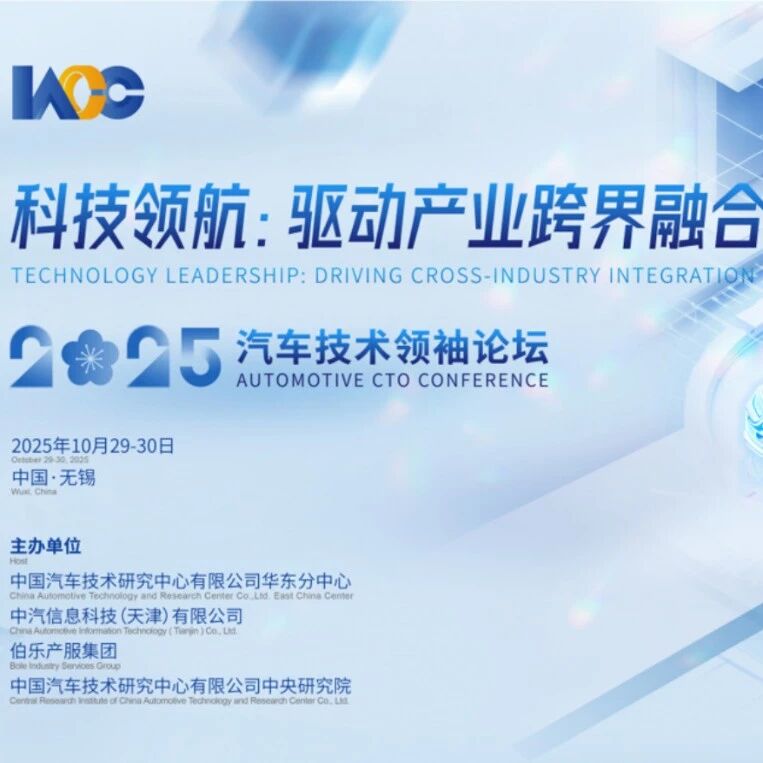
「2025汽车技术领袖论坛」报名启动
FOFWEEKLY· 2025-10-21 10:00
Core Insights - The 2025 Automotive Technology Leaders Forum will be held on October 29-30 in Wuxi, focusing on cutting-edge automotive technology trends and linking "technology, capital, and market" efficiently [2][3] - The forum will gather over 300 guests, including government leaders, industry experts, and CTOs from automotive and related sectors, to explore future ecological layouts and cross-industry integration opportunities [2][3] Event Structure - The forum will feature high-end closed-door meetings, including the "Automotive Industry Technology Leaders Closed-Door Summit" and "Automotive and Embodied Intelligence Technology Integration Innovation Closed-Door Seminar," addressing challenges in technology collaboration [2][6] - An opening conference and three major technology forums will share advancements in smart connectivity, electrification, AI and robotics, and low-altitude economy [2][6][7] Agenda Highlights - On October 29, activities include registration, a working seminar for the 2025 China Automotive Industry Yearbook, and brainstorming sessions on embodied intelligence and cross-industry collaboration [6] - The opening conference on October 30 will cover topics such as smart connectivity, airspace technology collaboration, and electrification strategies, featuring keynote speeches from industry leaders [7] - Technical forums will focus on electric vehicle remote service upgrades, AI-driven industry innovation, and new business models in low-altitude and automotive sectors [7]

【联合发布】2025年8月汽车智能网联洞察报告
乘联分会· 2025-10-21 09:31
Core Viewpoint - The article discusses the growth and structural changes in the Chinese new energy vehicle (NEV) market, highlighting significant sales increases and shifts in consumer preferences towards different vehicle types and advanced driving features. Group 1: Market Trends - In September 2025, sales of new energy vehicles reached 1.604 million units, marking a 15.0% increase from the previous month and a 24.5% year-on-year growth, with a penetration rate of 49.7% [5] - The sales of new energy passenger vehicles totaled 1.516 million units, reflecting a year-on-year increase of 22.8%, while new energy commercial vehicle sales reached 88,000 units, up 65.7% year-on-year [9] Group 2: Market Structure - As of September 2025, the market share of new energy sedans was 42.4%, down 2.9 percentage points year-on-year, while the share of new energy SUVs rose to 47.7%, an increase of 1.1 percentage points [7] - All segments within the market experienced growth, with commercial vehicles generally outpacing passenger vehicles; semi-trailer truck sales surged by 179.6% [7] Group 3: Advanced Driving Features - From January to August 2025, the installation rate of L2 and above auxiliary driving functions in new energy passenger vehicles reached 86.8%, with significant growth in the market segment priced below 160,000 [11] - The overall installation rate of Automatic Emergency Braking (AEB) in passenger vehicles was 67.7%, with new energy passenger vehicles achieving a rate of 71.4% [13] - The installation rate of Full-Speed Adaptive Cruise Control (ACC) in the overall passenger vehicle market was 61.3%, while it reached 70.5% in the new energy segment [16] Group 4: Technological Developments - The Automatic Lane Change (ALC) function is becoming more prevalent due to advancements in technology and integration with high-level intelligent driving features, with hardware costs expected to decrease [19] - The Automatic Parking Assistance (APA) function is evolving with the integration of sensor technologies, enhancing parking perception accuracy [22] Group 5: Intelligent Driving Operating System (OS) - The development of intelligent driving OS is crucial for the automotive ecosystem, influencing vehicle safety, comfort, and overall performance [26] - The evolution of intelligent driving OS reflects the transition of vehicles from mechanical products to intelligent terminals, driven by multiple transformative forces in the automotive industry [28] - The large-scale implementation of intelligent driving OS faces challenges such as safety regulations, technical complexity, and cost production bottlenecks [32]

2025汽车技术与装备发展论坛即将召开,三大同期活动驱动“汽车产业拥抱人工智能”
Jiang Nan Shi Bao· 2025-10-21 07:18
Core Insights - The 2025 Automotive Technology and Equipment Development Forum will be held from November 6 to 8 in Suzhou, focusing on intelligent networking, manufacturing equipment, low-altitude economy, battery safety, and automotive chips [1] - The theme of this year's forum is "The Automotive Industry Embraces Artificial Intelligence," aiming to integrate urban and industrial characteristics [1] Group 1: Forum Activities - The forum will feature a "Scenario and Case Display Area" to showcase breakthrough automotive technologies and intelligent manufacturing equipment, enhancing brand influence and promoting high-quality development in the "Automotive + AI" sector [2] - An "Industrial Mother Machine" event will present innovative solutions for automotive and component processing, facilitating direct dialogue between industrial mother machine enterprises and new energy vehicle companies to promote collaboration and innovation [2] - The "Future Technology Tour" will include dynamic demonstrations of intelligent driving assistance, smart chassis, smart cockpits, and flying cars, creating an immersive experience for participants [2] Group 2: Industry Collaboration - The forum serves as a platform for deep collaboration among government, industry, academia, and research, aiming to identify pathways and opportunities for the intelligent transformation of the automotive industry [3]
园区行走进中关村软件园,首都学子沉浸体验创新生态与科创文化
Xin Jing Bao· 2025-10-20 11:27
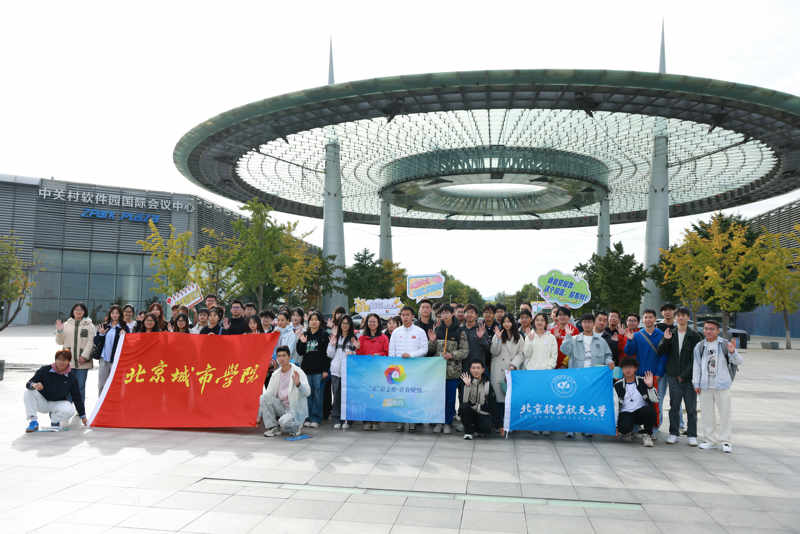
Group 1 - The event on October 17 involved over sixty students and teachers from Beijing University of Aeronautics and Astronautics and Beijing City University visiting the Zhongguancun Software Park, highlighting the integration of technology and culture in the area [1][2][4] - Zhongguancun Software Park is recognized as a high-end specialized park within the national independent innovation demonstration zone, housing over 700 renowned IT companies and global R&D centers, focusing on areas such as artificial intelligence, quantum technology, cloud computing, and big data [5][8] - The park serves as a vibrant hub for innovation, showcasing the latest technological advancements and their applications in various fields, which is crucial for students' understanding of the intersection between their studies and real-world technology [7][9] Group 2 - Students experienced hands-on applications of high-tech innovations, such as AI voice imitation technology and virtual imaging, which enhanced their understanding of the practical implications of their academic knowledge [4][5][6] - The event provided students with insights into how emerging technologies can address societal issues, such as the use of technology to assist elderly individuals in case of falls, demonstrating the potential for technology to improve quality of life [7][8] - The integration of AI in various fields, including biomedicine, was emphasized, with students exploring the potential for AI to enhance their future careers and research opportunities [8][9]



中国智能网联汽车加速驶来
Huan Qiu Shi Bao· 2025-10-20 08:13
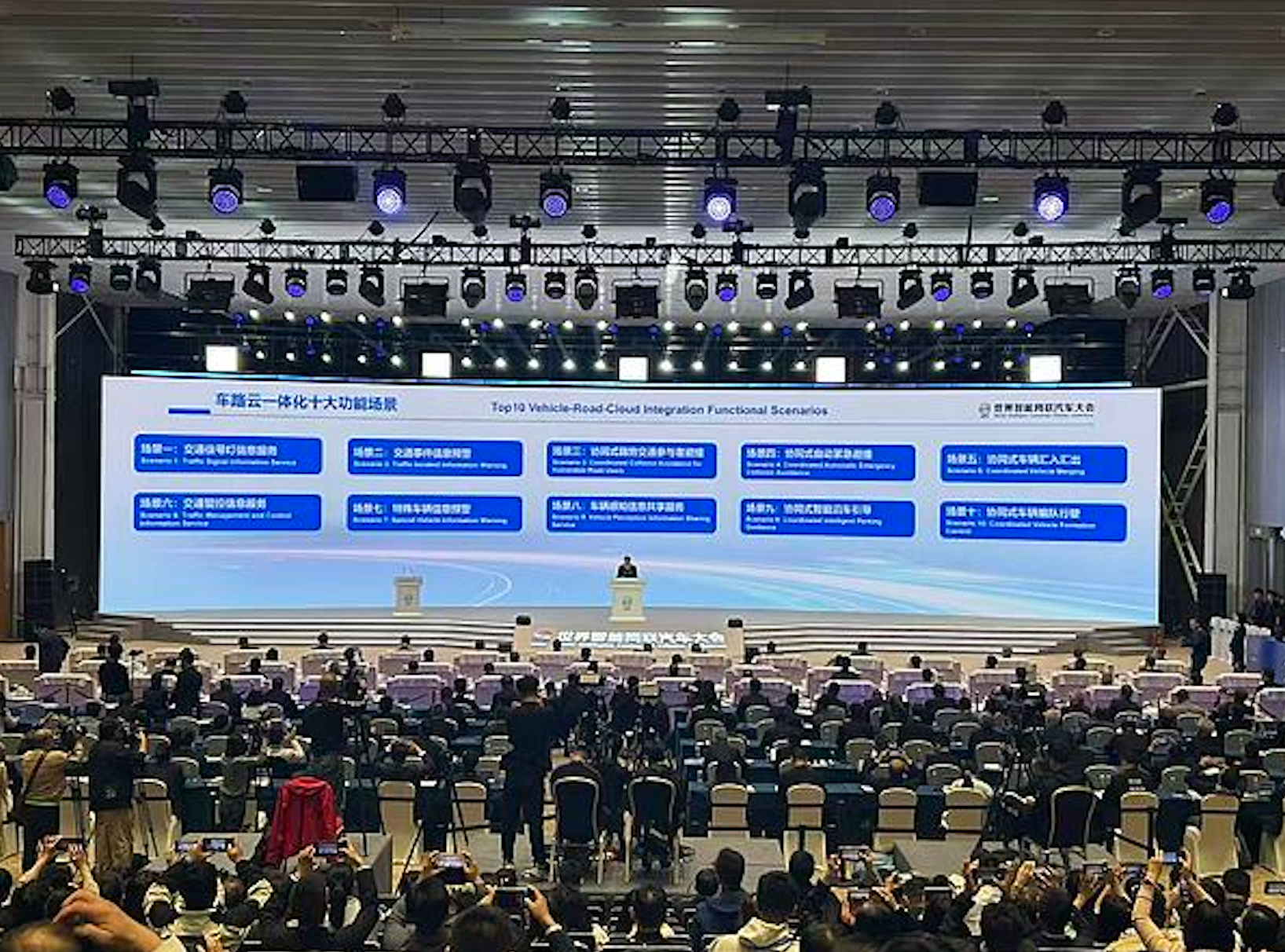
Core Insights - The 2025 World Intelligent Connected Vehicle Conference in Beijing highlighted China's significant achievements in the automotive industry during the "14th Five-Year Plan" and its future prospects in smart vehicle development [1] - China is establishing a "decisive leading position" in the global smart automotive industry, achieving rapid advancements that foreign companies aspire to replicate [1] Industry Developments - The Chinese automotive industry has developed a comprehensive ecosystem encompassing smart cockpits, autonomous driving, and connected cloud control, with over 60% of new passenger cars sold featuring advanced driver assistance systems [1][2] - The market for new energy vehicle exports has surged from approximately 1 million units in 2019 to over 5.8 million units by 2024, with new energy vehicle exports increasing from about 250,000 to around 1.28 million in the same period [2] Technological Advancements - The rapid development of smart driving technology in China is attributed to the integration of artificial intelligence across domestic and joint venture automotive companies, enhancing user experience and brand recognition [3][4] - Approximately half of the new cars sold in China are equipped with L2-level intelligent driving systems, with projections indicating that by 2030, China will dominate the global L2+ intelligent driving market [4][5] Regulatory Environment - China's regulatory framework has evolved to support extensive testing of autonomous driving technologies, with over 30,000 kilometers of roads approved for testing, fostering innovation through local policy initiatives [5][6] - Recent regulatory tightening aims to enhance quality standards in the industry, requiring manufacturers to undergo stricter technical testing and approval processes [6] International Collaboration - European automotive companies are increasingly collaborating with Chinese smart driving technology firms, with partnerships emerging for the development of advanced driver assistance systems [7] - Chinese smart driving companies are expanding their market presence in the Middle East and Europe, indicating a competitive landscape with U.S. firms in these regions [8]
中国智能网联汽车加速驶来,英媒:这与欧洲汽车行业的迟缓步伐形成鲜明对比
Huan Qiu Shi Bao· 2025-10-19 23:09
Core Insights - The 2025 World Intelligent Connected Vehicle Conference in Beijing highlighted China's achievements in the automotive industry and its plans for the next five years, emphasizing the country's decisive lead in the global smart vehicle sector [1][4]. Industry Developments - China's automotive industry has established a complete industrial system covering smart cockpits, autonomous driving, and connected cloud control, with over 60% of new passenger cars sold featuring advanced driver assistance systems [1][2]. - The rapid development of smart driving technology in China is attributed to the integration of artificial intelligence across domestic and joint venture automakers, positioning Chinese tech companies as key players in the automotive sector [2][3]. Market Trends - The export of Chinese automobiles has significantly increased, with exports rising from approximately 1 million units in 2019 to over 5.8 million units by 2024, and electric vehicle exports growing from 250,000 to around 1.28 million in the same period [2][3]. - The Chinese market is witnessing a rapid adoption of L2-level intelligent driving systems, with predictions that by 2030, China will hold half of the global market share for L2+ level smart driving vehicles [4][5]. Regulatory Environment - The Chinese government is focusing on developing standards for advanced driving assistance and autonomous driving, aiming to optimize production access management and regulate industry competition [7]. - A significant increase in road testing for autonomous driving has been observed, with over 30,000 kilometers approved for testing, creating the world's largest real-world testing environment [5][6]. International Collaboration - European automotive companies are increasingly collaborating with Chinese smart driving technology firms, with partnerships being formed for the development and testing of autonomous driving software [7][8]. - Chinese smart driving companies are expanding their presence in the Middle East and Europe, indicating a competitive landscape with U.S. firms in these regions [8].
北京打造智能网联汽车产业发展高地
Bei Jing Ri Bao Ke Hu Duan· 2025-10-19 10:56
Core Insights - China's smart connected and new energy vehicle industry is at a global leading position, with Beijing accelerating its development as a highland for this sector [1][3] - In 2024, Beijing's automobile production is projected to reach 1.145 million units, representing a year-on-year growth of 14.2% [3] - The penetration rate of new passenger cars with Level 2 smart driving assistance in Beijing reached 68.3% in the first half of this year [3] Industry Development - The construction of "smart cities" in Beijing has achieved integrated infrastructure coverage of 600 square kilometers for vehicle-road-cloud collaboration, with over 1,100 testing licenses issued and more than 45 million kilometers of autonomous driving mileage accumulated [3] - Companies like Xiaomi, Li Auto, and BAIC have rapidly developed in the new energy and smart connected vehicle sectors, contributing positively to the construction of a strong automotive nation [3][4] Technological Innovation - Chinese automakers are actively innovating with technologies such as driver assistance, sensors, automatic locking, and new electronic architectures, which have gained popularity among domestic and international consumers [3] - The rapid development of technology has led to new requirements for standards and regulations, with national authorities emphasizing the importance of industry standard formulation [3] Regulatory Compliance - Beijing's industry management departments are committed to implementing anti-involution work requirements, ensuring market order, and avoiding price wars [4] - Companies are required to maintain high standards for product quality and safety, taking responsibility for accidents and cooperating with assessments and analyses [4] Regional Collaboration - Beijing is collaborating with Tianjin and Hebei to build a smart connected new energy vehicle technology ecosystem, promoting the integration of industry chain strengthening and technological innovation [4]
第三次冲刺,图达通赴港上市获备案,激光雷达三巨头有望在港会师?
3 6 Ke· 2025-10-17 11:56
Core Insights - TudaTong's plan for a Hong Kong listing has progressed following the successful second listing of Hesai, indicating a new phase of commercialization in the lidar industry with multiple companies meeting listing conditions [1][2] - TudaTong ranks second globally in cumulative sales revenue for ADAS lidar solutions as of Q1 2023, trailing only Hesai [1][6] - The company has historically relied heavily on NIO for revenue, with nearly 90% of its income coming from NIO orders in recent years [2][3] Company Development - TudaTong was founded in 2016 by former Baidu employees and focuses on designing, developing, and producing automotive-grade lidar solutions for ADAS and ADS applications [2] - The company has achieved significant milestones, including being the first to mass-produce automotive-grade high-performance lidar and leading in global passenger car lidar shipments in 2023 [2][4] Financial Performance - TudaTong's revenue grew from $0.66 billion in 2022 to $1.60 billion in 2024, with a gross margin of 12.6% in Q1 2025, indicating improved profitability [6] - The company has delivered over 493,000 automotive-grade lidar solutions, with nearly half of these delivered in 2024 alone, showcasing a rapid commercialization process [6] Market Dynamics - The lidar market is experiencing price declines and increased competition, with TudaTong's negotiation power being affected by NIO's market pressures [3][7] - The global penetration rate of new energy vehicles is expected to exceed 45% by 2025, shifting the focus of competition towards "intelligentization" and making lidar a standard safety feature in new vehicles [3] Technological Advancements - TudaTong employs a dual-technology strategy with its Falcon series (1550nm) and Sparrow series (905nm/940nm), catering to both high-end and mass-market vehicles [4][5] - The introduction of the new solid-state lidar, Hummingbird D1, enhances TudaTong's technological edge, with a product matrix covering various distance and solid-state solutions [5] Client Diversification - To reduce reliance on NIO, TudaTong is actively expanding its client base, securing exclusive supply agreements with major automotive groups and multiple orders from state-owned and joint venture manufacturers [5][6] - The company is also penetrating new markets such as commercial vehicles and robotics, establishing partnerships with leading firms in these sectors [8][9]
中汽股份拟发行可转债募资不超10.39亿元 用于建设智能网联新能源汽车全季冰雪试验基地
Zhi Tong Cai Jing· 2025-10-17 11:07
Core Viewpoint - The company plans to issue convertible bonds to raise funds for the construction of a smart connected electric vehicle testing base for winter conditions, with a total fundraising target of no more than 1.039 billion yuan [1] Group 1 - The company disclosed a proposal to issue convertible bonds to unspecified investors [1] - The total amount to be raised from the bond issuance is capped at 1.039 billion yuan, including the principal [1] - The raised funds, after deducting issuance costs, will be fully allocated to the construction project [1]
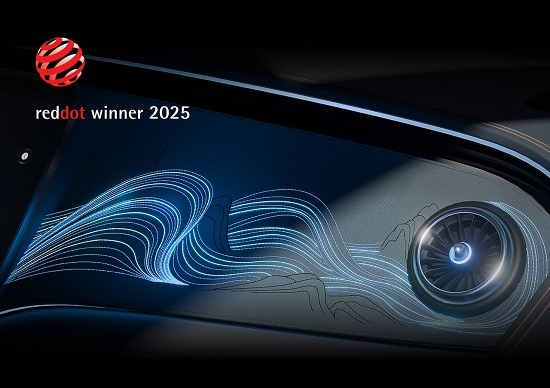
中德产学研合作再结硕果:梅赛德斯-奔驰和清华大学合作项目斩获2025德国红点奖
Zhong Guo Jing Ji Wang· 2025-10-17 10:09
Core Viewpoint - Mercedes-Benz's collaboration with Tsinghua University on the interactive embroidery car interior project "LumiStitch" has won the 2025 Red Dot Concept Design Award, showcasing a blend of Chinese aesthetics and advanced smart materials in automotive design [1][3]. Group 1: Project Overview - The "LumiStitch" project is inspired by Chinese landscape aesthetics, combining smart materials with traditional embroidery techniques to create an innovative smart cockpit experience [1][3]. - The project features Mercedes-Benz's smart cockpit utilizing advanced materials that respond to gestures and environmental light changes, presenting traditional embroidery in a new light through an intelligent lighting system [2][3]. Group 2: Collaboration Significance - The partnership between Mercedes-Benz and Tsinghua University has been ongoing for over a decade, establishing a benchmark for Sino-German industry-academia cooperation, with research covering electric mobility, intelligent connectivity, and digitalization [3][6][7]. - The collaboration has led to significant advancements in battery technology, vehicle-to-grid (V2G) research, and the application of visual language models (VLM) in smart cockpits, among other areas [6][7]. Group 3: Future Directions - Mercedes-Benz aims to deepen its collaboration with Tsinghua University, focusing on innovative and aesthetically pleasing smart experiences for customers, while also expanding its partnerships with leading tech companies in China [3][7]. - The company is committed to nurturing talent in the automotive industry through practical teaching bases and supporting youth participation in global climate actions for sustainable development [7].