食品安全

Search documents
新疆乌苏市市场监管局开展餐饮服务行业规范指导
Zhong Guo Shi Pin Wang· 2026-01-16 10:42
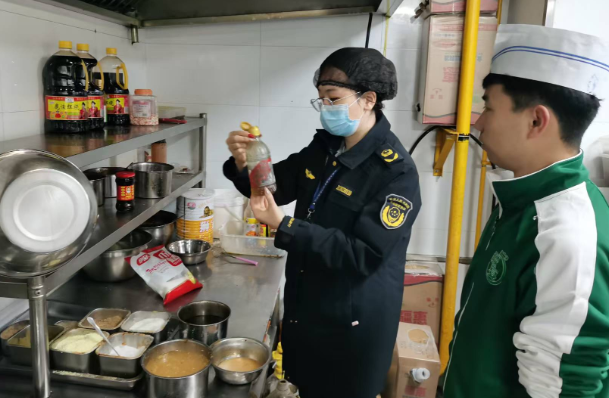
根据节日食品消费特点,为保障消费者"年夜饭"食品安全,该局组织执法人员,针对大中型用餐单位推 出的"年夜饭"套餐进行检查,现场了解"年夜饭"预订情况,检查腌制肉、水产品、节令食品等进货渠道 及索证索票、台账建立情况,并对食品加工制作、餐具消毒、食品留样等环节进行检查,督促经营单位 落实食品安全主体责任,依法、诚信经营。及时发布节日消费提示、风险预警等,提醒消费者关注食品 安全。同时,该局鼓励群众积极举报食品安全违法行为,凝聚社会各界力量、共享共治春节食品安全。 该局执法人员针对部分商户存在的台账记录不完整、消毒流程不规范等问题,现场手把手指导,向经营 者讲解食品安全相关法律法规要求,并发放食品安全宣传手册。共检查38家,发现问题5条,已全部整 改到位。 春节临近。连日来,新疆维吾尔自治区乌苏市市场监管局强化党建引领,积极践行"实干争先"理念,聚 焦辖区重点食品经营单位和餐饮场所,加大监督检查力度,深入辖区餐饮经营单位开展餐饮服务行业规 范指导,保障节日市场食品消费安全。 图为该局执法人员在一家餐饮店检查食品原料采购索证索票、餐具消毒记录、从业人员健康证持有等情 况。(杜志锋、达列海、朱志刚) ...

广西防城港破获2起海上走私冻品案,涉牛肚黄喉牛鞭等47吨
Xin Lang Cai Jing· 2026-01-16 04:41
Group 1 - The core issue involves the recent crackdown on smuggling frozen products by the Guangxi Coast Guard, which seized a total of 47 tons of frozen goods valued at approximately 2 million yuan, including beef tripe, yellow throat, beef tendons, and bullwhips [1][3] - The first incident occurred on January 8, where a wooden fishing boat was found suspicious due to the absence of fishing gear and an unusually deep draft, leading to the discovery of 16.4 tons of frozen beef products without any legal documentation [1] - A second operation on January 12 resulted in the seizure of another disguised "fishing boat" containing approximately 31 tons of similar frozen products, also lacking legal paperwork [3] Group 2 - The authorities highlighted the significant dangers posed by smuggled frozen products, which may carry pathogenic bacteria and viruses due to lack of proper inspection and potential spoilage during illegal storage and transport, posing a serious food safety risk [4] - Smuggling activities disrupt normal market order, lead to loss of state tax revenue, and may fund illegal criminal activities, thereby threatening economic security and social stability [4]

研判2025!中国微波消解仪行业概述、发展历程、产业链、市场规模及未来趋势分析:微波消解技术发展飞速,微波消解仪日趋成熟[图]
Chan Ye Xin Xi Wang· 2026-01-16 01:27
Core Insights - The development of microwave digestion instruments is closely linked to national strategic needs in environmental monitoring, food safety, drug research, and life sciences, with the market size expected to reach approximately 2.467 billion yuan in 2024, reflecting a year-on-year growth of 10.28% [1][4][7]. Industry Overview - Microwave digestion instruments utilize microwave heating technology for rapid sample digestion, achieving high temperatures and pressures to accelerate chemical reactions, resulting in faster processing times and higher sample recovery rates compared to traditional methods [2][3]. Industry Development History - The microwave digestion instrument industry in China has evolved over three decades, starting from the initial phase (1988-2000) with foundational research and patent developments, followed by a growth phase (2001-2016) focusing on technology promotion and standardization, and reaching a mature phase (2017-present) where domestic brands have made significant advancements [4][5]. Industry Value Chain - The industry value chain includes upstream components such as TFM, PTFE, and microwave reactors, midstream manufacturing of microwave digestion instruments, and downstream applications in environmental monitoring, food testing, pharmaceuticals, and biomedical fields [6]. Market Size - The market for microwave digestion instruments is projected to grow significantly, driven by increasing demands for efficiency and accuracy in sample preparation across various sectors, with a market size of approximately 2.467 billion yuan anticipated for 2024 [1][4][7]. Key Companies' Performance - The competitive landscape has shifted from being dominated by imported brands to a clear tiered system led by domestic brands such as Haineng Technology and Laibotai Technology, which hold significant market shares due to technological barriers and large-scale production [8][9]. Industry Development Trends 1. The industry is expected to transition from "single devices" to "intelligent systems" through the integration of AI algorithms and IoT technologies, enhancing efficiency and reducing human error [10]. 2. Environmental performance will become a key competitive factor, with a focus on reducing reagent consumption and waste emissions, as well as utilizing more sustainable materials [11][12]. 3. The market will see a restructuring of competition, with domestic brands leading and new enterprises breaking into niche markets, while also expanding internationally [13].


回眸2025丨探寻中国市场的活力与秩序
Jing Ji Ri Bao· 2026-01-16 00:19
Group 1: Economic Overview - In the past year, China's economy faced challenges, with retail sales exceeding 45.6 trillion yuan, growing by 4.0%, indicating consumer spending remains a stabilizing force [1] - By the end of December, the number of business entities reached 195 million, with over 100 million tax-related entities, reflecting robust market vitality [1] Group 2: Platform Economy Regulation - The competition among major platforms like JD, Taobao, and Meituan in the food delivery sector involved nearly 100 billion yuan in investments, leading to improved service quality and better treatment for delivery riders [2][3] - Regulatory bodies played a crucial role in maintaining fair competition, shifting the focus from subsidy wars to enhancing service quality and ensuring food safety [2][3] Group 3: Addressing Deep-rooted Issues - Regulatory efforts in 2025 targeted the "algorithmic hegemony" and unreasonable rules imposed by platforms, leading to the cancellation of controversial refund policies and promoting fairer trading practices [3] - Major platforms committed to creating a win-win ecosystem for consumers, merchants, and delivery riders, with initiatives like eliminating penalties for late deliveries and increasing social security coverage for riders [3][4] Group 4: Combating "Involution" Competition - "Involution" competition emerged as a significant challenge in 2025, characterized by price wars that compromised product quality and safety, as seen in the drastic decline of profit margins for brands like Laiyifen [6][7] - The government emphasized the need to shift competition from price-cutting to value creation, with regulatory measures aimed at addressing unfair practices and enhancing product quality [6][7][8] Group 5: Food Safety and Standards - The "pre-made dish" controversy highlighted public concerns over food safety, prompting regulatory bodies to accelerate the establishment of national standards for the industry [10][11] - Regulatory measures included comprehensive food safety oversight and the introduction of transparency in food production processes to restore consumer trust [11][12] Group 6: Market Dynamics and Innovation - The regulatory framework aims to create a balanced market environment where quality and innovation are prioritized over low prices, allowing businesses to thrive without compromising standards [9][12] - The response from the industry includes innovative dining experiences and significant investments in product development, indicating a shift towards higher quality offerings [9][12]


探寻中国市场的活力与秩序
Jing Ji Ri Bao· 2026-01-15 21:28
Economic Overview - In the past year, China's economy faced challenges, with total retail sales of consumer goods exceeding 45.6 trillion yuan, growing by 4.0%, indicating that consumption remains a stabilizing force for the economy [1] - By the end of December, the number of business entities in China reached 195 million, with over 100 million tax-related entities, reflecting sustained market vitality [1] Consumer Trends - Consumer activity is shifting from traditional shopping to experiential scenarios, such as enjoying hot pot while watching movies or visiting stores for service experiences, indicating a new market dynamic focused on quality and experience [1] - The pursuit of quality and experience has become a new driving force in the market, presenting challenges for regulators [1] Platform Economy Regulation - The competition among platforms like JD.com, Taobao, and Meituan in the food delivery sector has led to significant investments, with nearly 100 billion yuan spent in just six months, resulting in improved service quality and better treatment for delivery personnel [2][3] - Regulatory bodies have played a crucial role in maintaining fair competition, shifting the focus from subsidy wars to enhancing service quality and ensuring food safety [2][3] Addressing Deep-rooted Issues - Regulatory efforts in 2025 targeted the "algorithmic hegemony" and unreasonable rules imposed by platforms, leading to the cancellation of controversial refund policies and the establishment of fairer trading conditions [3] - Major platforms committed to creating a win-win ecosystem for consumers, merchants, and delivery personnel, with initiatives to eliminate penalties for late deliveries and improve social security coverage for riders [3][4] Market Corrections - In 2025, major food delivery platforms collectively reduced merchant commissions by 52 million yuan, addressing issues of excessive fees and fines, thereby sharing growth benefits more equitably among ecosystem participants [4] - Regulatory measures included the introduction of compliance management documents and guidelines to enhance the scientific and standardized operation of online markets [5] Combatting "Involution" Competition - "Involution" competition, characterized by price wars and product homogeneity, has been identified as a significant challenge, prompting regulatory focus on promoting high-value competition rather than low-level price cuts [6][7] - The government has initiated actions against substandard products and unfair practices, with a focus on maintaining market integrity and safety [6][7] Food Safety and Standards - The "pre-prepared food" controversy highlighted the need for unified national standards in the food industry, leading to accelerated efforts in standard formulation and enhanced food safety regulations [9][10] - Regulatory bodies are emphasizing comprehensive food safety oversight across the supply chain, addressing public concerns about food safety and ensuring transparency in food production [10][11] Conclusion - The collective efforts in 2025 aimed to create a fairer and more trustworthy market environment, allowing all value-creating entities and workers to thrive, ultimately leading to a balance between market vitality and order [12]
五道口集贸市场举办“你点我检”年货专场
Xin Lang Cai Jing· 2026-01-15 16:20
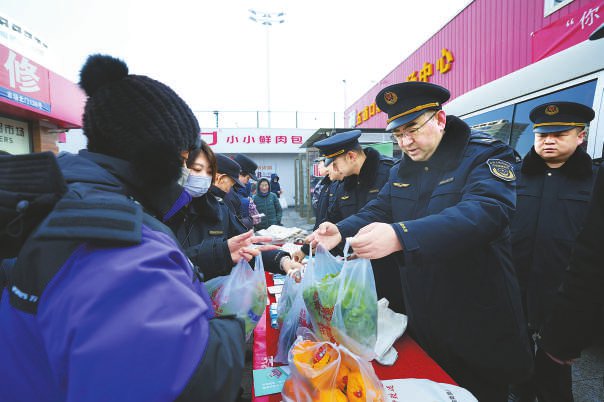
活动当天,快检项目涵盖农药残留、兽药残留等常见风险指标,累计完成现场快速检测20余批次,结果 全部合格。 在开展"你点我检"活动的同时,海淀区市场监管局对市场内外开展全覆盖、多环节的食品安全专项检 查,从源头把控、过程监督到技术支撑,形成监管闭环,全力保障市民群众"菜篮子""米袋子""果盘 子"的安全。"两节期间是食品消费高峰期,我们将持续加大监管力度,从源头到销售实施全链条管控, 确保老百姓买得放心、吃得安心。"执法人员表示。 (来源:劳动午报) 转自:劳动午报 为守护市民群众"舌尖上的安全",近日,北京市市场监管部门将"食品安全移动快检车"开进海淀区五道 口集贸市场,开展"你点我检"年货食品安全专场活动,把检测服务送到家门口,让食品安全"看得见、 摸得着"。 "来市场买点肉和菜,正好看到有检测活动,赶紧把刚买的青菜和猪肉拿来测测。"市民王先生一边说 着,一边将手中的食材递给工作人员。活动现场,像王先生这样带着刚采购的食材前来检测的市民络绎 不绝,蔬菜、水果、鲜肉、熟食……种类丰富。工作人员熟练地进行取样、预处理、上机检测,大约30 分钟就能出结果。不少市民一边等待,一边向工作人员咨询食品安全知识。 "20 ...
83元3只皖西麻黄鸡引质疑,揭秘与辉同行带货涉事公司
Sou Hu Cai Jing· 2026-01-15 03:02
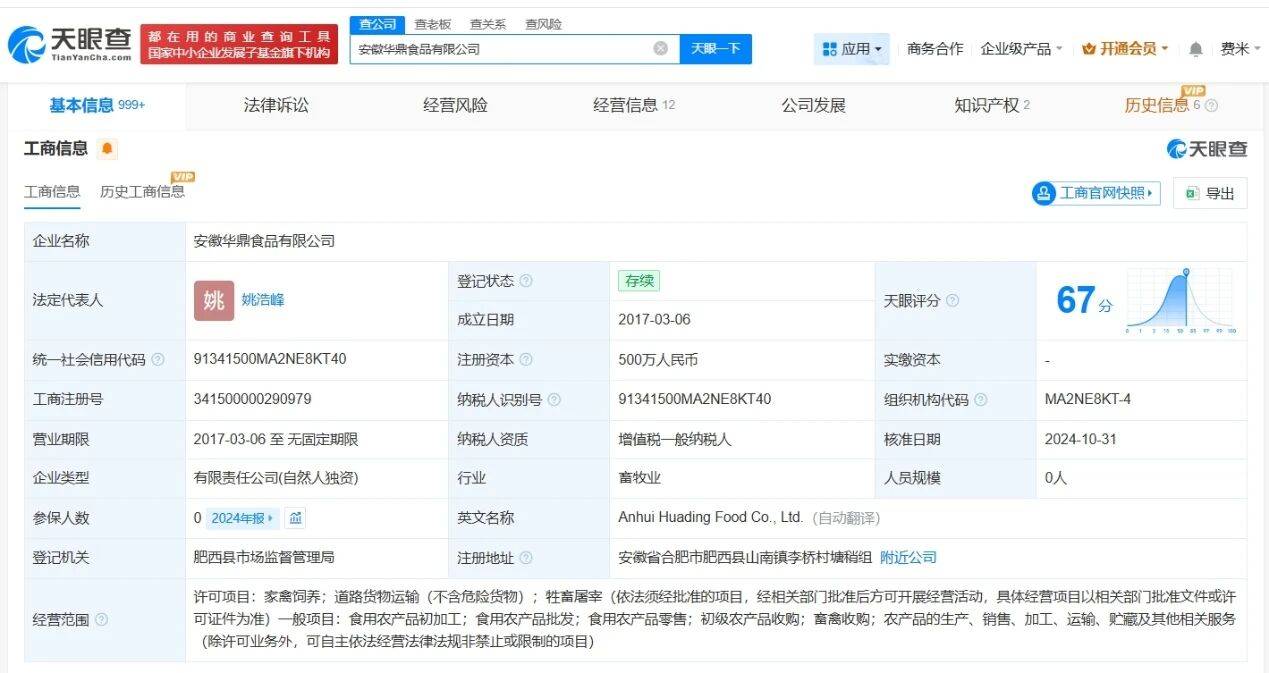
Core Viewpoint - The recent controversy surrounding the "Dabie Mountain Butter Hen" promoted through live streaming has raised significant concerns within the industry regarding misleading product claims and compliance with food safety standards [1]. Company Information - Anhui Baishixuan Ecological Agriculture Co., Ltd., established in May 2019, has a registered capital of 20 million RMB and is involved in food production, animal husbandry, and fishing [1]. - The company has faced penalties for non-compliance with legal and food safety standards, including a fine of 15,000 RMB and the confiscation of illegal gains amounting to 220 RMB [1]. - Anhui Huading Food Co., Ltd., founded in March 2017, has a registered capital of 5 million RMB and operates in poultry farming, transportation, and livestock slaughtering [1][2]. Regulatory Issues - Anhui Baishixuan has been repeatedly ordered to rectify its operations by the market supervision authority due to violations of food safety regulations [1].
守质量安全 护三餐四季(人民时评)
Ren Min Ri Bao· 2026-01-14 23:48
Group 1 - The core viewpoint emphasizes the importance of food security and safety in China, highlighting significant progress in grain production and food safety measures [1][2] - By 2025, China's grain production is projected to reach 14,298 billion jin, maintaining stability above 14 trillion jin despite adverse natural conditions [1] - As of November 2025, the national market supervision system completed 6.1769 million batches of food inspections, with 24 out of 39 food categories showing a non-compliance rate below 1% [1] Group 2 - The governance approach is shifting from end-point inspections to full-chain traceability, enhancing consumer confidence in food safety through rigorous standards and accountability [2] - Daily food supply statistics indicate that 700,000 tons of grain, 98,000 tons of oil, 1.92 million tons of vegetables, and 230,000 tons of meat flow through complex supply chains to reach consumers [2] - The focus is on balancing quantity and quality in food safety, emphasizing that without safety, all agricultural achievements could be undermined [2] Group 3 - Technology plays a crucial role in improving food quality and safety, with the non-compliance rate for edible vegetable oil dropping from 2.08% in 2020 to 0.08% in 2025 due to strict regulation [3] - Collective societal participation is essential in combating food waste, with initiatives like offline "food stations" and online platforms for selling near-expiry products contributing to food security [3] - Strengthening the food supply chain and ensuring food safety is a systemic project that requires collaboration across various sectors [3]
快检车进年货市场 “你点我检”守护安全
Xin Lang Cai Jing· 2026-01-14 21:47
Group 1 - The core initiative of the Beijing market supervision department is the "You Point, I Test" food safety campaign, which aims to enhance consumer confidence in food safety by providing on-site testing services at local markets [2][3] - The mobile testing vehicle acts as a "mobile laboratory," allowing consumers to have their food items tested for safety, including pesticide and veterinary drug residues, with all tested samples reported as compliant [2] - The campaign is designed to address consumer concerns regarding the safety of popular food items such as vegetables, fresh meat, fruits, and seafood, especially during the peak food consumption period leading up to the Spring Festival [3][4] Group 2 - The Beijing market supervision department plans to continue the "You Point, I Test" initiative throughout 2026, utilizing both online and offline channels to gather public input on food types and testing projects [4] - The department emphasizes a comprehensive approach to food safety, implementing full coverage and multi-link inspections in local markets to ensure the safety of essential food items for consumers [3] - The strategy includes empowering technology for mobile testing and encouraging public participation in monitoring food safety, transforming consumers from passive observers to active participants in the safety process [3]
波及31国!雀巢CEO就“奶粉召回事件”致歉
Guo Ji Jin Rong Bao· 2026-01-14 15:17
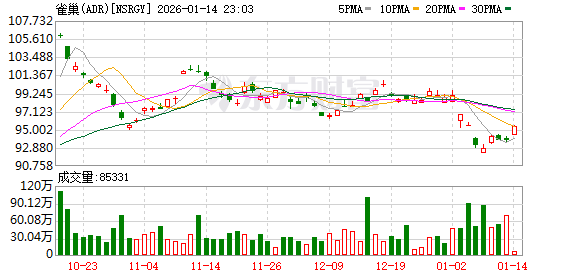
Core Viewpoint - Nestlé's CEO, Philipp Navratil, publicly apologized for a recent infant formula recall, emphasizing the company's commitment to food safety and consumer trust [6][11]. Group 1: Recall Details - The recall was initiated due to quality issues found in an ingredient supplied to a Nestlé factory in the Netherlands, which may contain a harmful toxin [7]. - The recall affects specific batches of infant formula sold in 31 countries, including brands like Nestlé BEBA and Wyeth [7][8]. - In China, 71 batches of infant formula are being recalled, including products sold through cross-border e-commerce [8]. Group 2: Regulatory Response - The Chinese government has expressed significant concern over the recall, urging Nestlé to take responsibility and protect consumer rights [9]. Group 3: Financial Impact - The recalled products account for less than 0.5% of Nestlé's total sales, indicating that the overall financial impact may not be substantial [12]. - However, Jefferies estimates potential sales losses of approximately 1.2 billion Swiss francs, representing about 1.3% of the company's annual sales [12]. Group 4: Market Context - Nestlé faces growth challenges, particularly in the Greater China region, where the infant nutrition segment is one of the few growth drivers [13]. - The competitive landscape in China's infant formula market is intensifying, with local brands increasing their market presence [13].