数字经济

Search documents
迎“十五五”:在变局中开新局 在改革中聚合力
Zhong Guo Zheng Quan Bao· 2025-12-02 20:22
Group 1: Economic Overview - The economy is showing a trend of stability with changes, laying a solid foundation for the "14th Five-Year Plan" [1] - Consumer confidence is gradually improving, and corporate profit pressures are easing, indicating a strengthening microeconomic foundation [1][2] - External uncertainties are diminishing, which helps stabilize corporate expectations [1] Group 2: Structural Adjustments and Policy Measures - There is a noticeable temperature difference between macroeconomic improvement and microeconomic recovery, typical during structural adjustments [2] - The government has introduced measures to address structural constraints, including "anti-involution" policies and debt management [2] - The "14th Five-Year Plan" will focus on key areas such as modernizing the industrial system, expanding domestic demand, ensuring safety in development, and promoting high-level openness [2][3] Group 3: Modernizing the Industrial System - Building a modern industrial system is crucial for enhancing national competitiveness and promoting high-quality development [3] - The plan emphasizes high-quality development, technological self-reliance, and the establishment of a modern industrial system centered on advanced manufacturing [3] Group 4: Strengthening Domestic Demand - Expanding domestic demand is identified as a strategic priority to enhance development vitality and consolidate economic recovery [4] - Improving residents' consumption capacity is fundamental, with a focus on increasing the consumption rate and enhancing income distribution [4] - Optimizing investment structure and promoting urban-rural integration are key to supporting domestic demand growth [4][5] Group 5: Ensuring Safety in Development - The "14th Five-Year Plan" integrates safety considerations across various dimensions, including national, economic, technological, and social security [5] - Emphasis is placed on building new combat capabilities and enhancing economic resilience through energy security and supply chain stability [5][6] Group 6: Advancing High-Level Opening Up - The plan aims for a higher level of opening up, transitioning from a "follower" to a "leader" in global economic engagement [6][7] - China is positioned to play a role as a "shaper" in the new wave of globalization, leveraging its competitive advantages in manufacturing and technology [6][7] - The focus will be on institutional opening, improving the investment environment, and participating in global economic governance reforms [7][8]
国家数据专家咨询委员会委员杨德斌: 深港联手共建“数据枢纽”
Shen Zhen Shang Bao· 2025-12-02 16:43
Group 1 - The digital economy is identified as a key driver of global economic growth and a significant opportunity for China to "overtake" in the fourth industrial revolution [1] - Hong Kong aims to establish itself as an international data hub, leveraging its traditional financial center status and collaborating with Shenzhen to gather data from mainland China [1] - The cross-border flow of data is becoming a core driver of economic growth and is essential for companies expanding into international markets [1] Group 2 - There is a growing demand for cross-border data due to the rebound in Chinese companies' overseas investments, which increased from $45 billion in 2020 to $163 billion by 2025 [2] - Hong Kong's strategy for building an international data hub includes a three-step approach: data circulation policy, industry data alliance, and international data trading [2] - A mechanism for data flow in the Greater Bay Area has been established, including a memorandum for cross-border data cooperation between Guangdong, Hong Kong, and Macau [2]
深度专题|2026年:财政货币政策展望
赵伟宏观探索· 2025-12-02 16:03
Group 1: Policy Review for 2025 - Fiscal policy shows increased strength, with a historical high financing scale of 14.36 trillion yuan, accounting for 10.2% of GDP [1][8] - General fiscal expenditure grew by 7.9% year-on-year in the first three quarters of 2025, indicating a high level of spending [11][12] - Monetary policy returned to a "moderately loose" tone, with a focus on guiding expectations and improving transmission efficiency [1][23] Group 2: Fiscal Policy Outlook for 2026 - Fiscal policy is expected to become more proactive in supporting economic growth and structural transformation, with a deficit rate maintained around 4% [2][61] - Special bonds and new special debt scales are anticipated to expand slightly compared to 2025, aiming to keep fiscal expenditure growth in line with or above nominal GDP growth [2][63] - The focus will be on investing in social welfare and new infrastructure, particularly in areas like elderly care and child welfare [2][61] Group 3: Tax and Fiscal System Reform - Fiscal reforms will address structural contradictions, focusing on macro tax burden, central-local relations, and social security systems [3][61] - The aim is to maintain a reasonable macro tax burden and regulate tax incentives to curb excessive competition among local governments [3][61] Group 4: Monetary Policy Outlook for 2026 - Monetary policy is likely to maintain a "moderately loose" stance, with an emphasis on liquidity support and precise policy implementation [4][6] - The social financing scale is expected to increase, with M1 growth slightly rebounding due to fiscal input [4][6] - The central bank may implement a rate cut of about 10 basis points to maintain liquidity [4][6] Group 5: Policy Coordination and Macro Governance - The central bank's operations in government bond trading reflect a flexible response to market changes, enhancing policy effectiveness [1][42] - Fiscal injections into commercial banks are aimed at stabilizing their capital adequacy ratios and facilitating monetary policy transmission [49][51] - The collaboration between fiscal and monetary policies is evolving, with a focus on improving the overall governance system [1][42]


大鹏工业龙虎榜数据(12月2日)
Zheng Quan Shi Bao Wang· 2025-12-02 15:00
Core Viewpoint - Dapeng Industrial (920091) experienced a 0.98% increase in stock price with a turnover rate of 36.20%, indicating significant trading activity on the day [1][2]. Trading Activity - The total trading volume for Dapeng Industrial reached 277 million yuan, with a price fluctuation of 5.31% throughout the day [1]. - Institutional investors net sold 4.7692 million yuan, while brokerage seats collectively net bought 5.7585 million yuan [1][2]. - The stock was listed on the trading board due to its high turnover rate, with the top five trading departments accounting for a total transaction of 61.1147 million yuan, resulting in a net buying of 989,300 yuan [2]. Historical Performance - Over the past six months, Dapeng Industrial has appeared on the trading board seven times, with an average price drop of 5.89% the day after being listed and an average decline of 11.61% within five days post-listing [3].
四川雅安签下115亿“数字经济”大单 成渝算力枢纽加速成型
Xin Lang Cai Jing· 2025-12-02 14:29
近年来,雅安市积极响应"东数西算"国家战略,全力推进"数字四川"建设,已成为成渝地区大数据产业基地的核心承载地。目前,雅安已构建起机架规模达 4万个、算力规模超6000P的数字底座,算力质效评价位列全省第一、全国第八,正逐步成为全国一流的绿色低碳算力枢纽。 活动现场还进行了多个首发和数字经济项目签约仪式。产品首发方面,华为联合华鲲振宇推出专为医疗行业打造的全新力作——华为医疗AI大模型一体 机;解决方案首发方面,虚谷伟业重磅推出新一代实时数据服务平台——虚谷实时数据服务平台(XUGU UPDATA)。签约环节,现场共有16个项目成功 签约,投资总额达115亿元。 来源:上海证券报·中国证券网 会上,雅安市正式发出"数字经济新通道"建设行动倡议,旨在搭建数字基础设施互联互通、数据要素高效流通、产业生态协同发展的全新合作平台,推动共 建"数字丝绸之路"。倡议提出共筑枢纽联动新网络、共建绿电算力新底座、共塑数据要素新生态、共兴产业融合新体系、共聚开放合作新合力等五大行动方 向。 中国科学院院士陈润生指出,AI大模型凭借强大的数据分析与推理能力,破解了各个行业、产业的低效难题。算力是大模型训练、大数据处理的硬性保 障 ...
第八届大数据应用实践大会在雅安举行 现场16个项目揽金115亿
Sou Hu Cai Jing· 2025-12-02 14:05
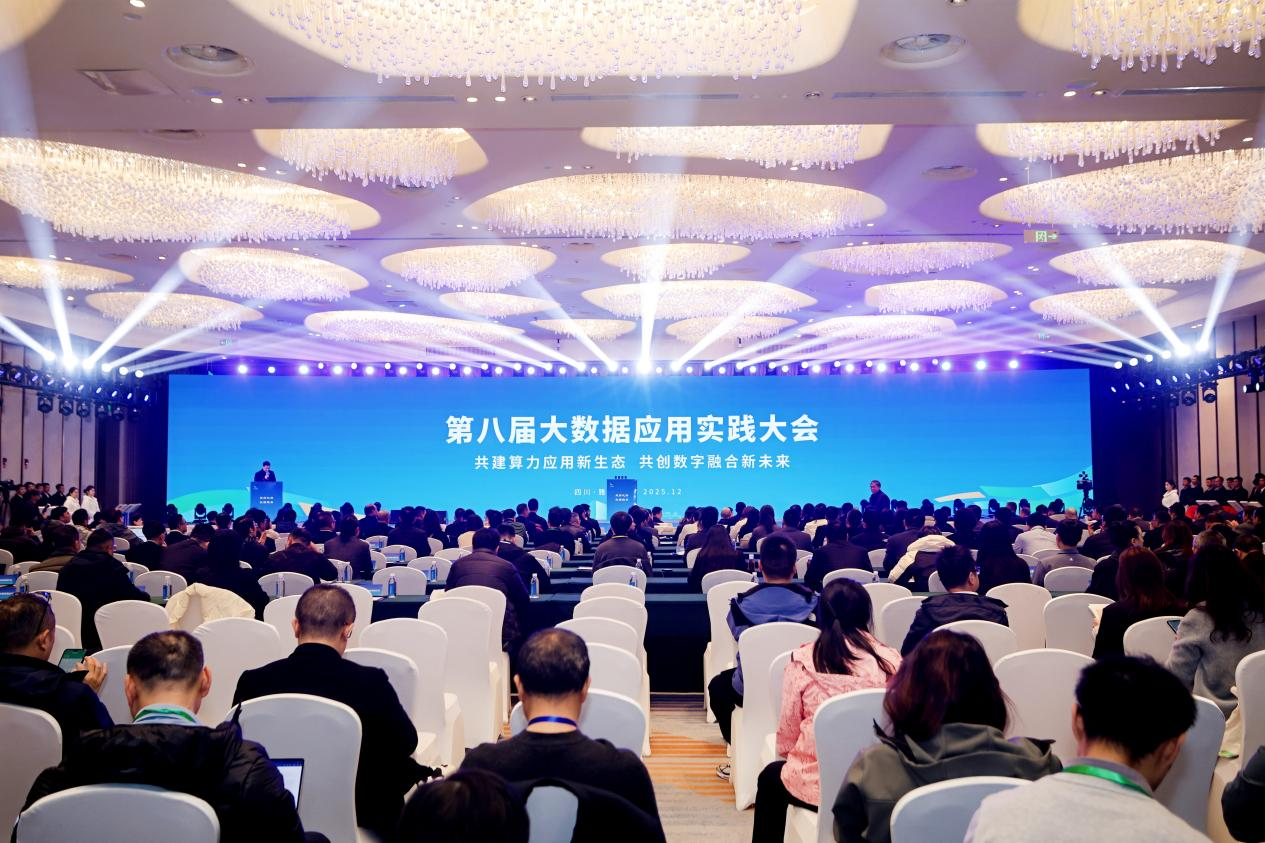
值得关注的是,会上,雅安市正式发出"数字经济新通道"建设行动倡议。该倡议旨在搭建数字基础设施互联互通、数据要素高效流通、产业生态协同发展 的全新合作平台,推动共建"数字丝绸之路"。倡议提出,共筑枢纽联动新网络、共建绿电算力新底座、共塑数据要素新生态、共兴产业融合新体系、共聚 开放合作新合力。 雅安市数字经济供给暨应用场景开放清单也于当日发布。这是雅安首次系统梳理并发布《数字产业供给暨应用场景开放清单》。该清单聚焦"数字服务+实 体落地"的生态闭环,分为"产业供给"和"应用场景"两大板块,共73项,内容覆盖了从底层算力到顶层应用的完整生态。 活动现场还进行了多个首发和数字经济项目签约仪式。产品首发方面,华为联合华鲲振宇推出专为医疗行业打造的全新力作——华为医疗AI大模型一体 机;解决方案首发方面,虚谷伟业推出新一代实时数据服务平台——虚谷实时数据服务平台(XUGU UPDATA)。签约环节,现场共有16个项目成功签 约,投资总额达115亿元。 12月2日,第八届大数据应用实践大会在四川雅安举行。本次大会由四川省经济和信息化厅、四川省大数据中心、雅安市人民政府共同主办,以"共建算力 应用新生态,共创数字融合新未来 ...

海默科技战略转型迈出关键一步 产业基金落子新质生产力
Zheng Quan Shi Bao Wang· 2025-12-02 13:52
Group 1 - The core point of the article is that Haimer Technology has established a partnership with Zhongxin Xicheng Private Equity Fund Management to create the Chongqing Zhongxin Xicheng Liangshan Venture Capital Fund, marking a significant step in the company's strategy to cultivate a second growth curve and lay out new productive forces [1][2] - The total scale of the fund is approximately 1.05 billion RMB, with Haimer Technology contributing 200 million RMB, accounting for about 19% of the fund [1] - This partnership follows a strategic cooperation agreement signed in October, indicating a transition from strategic intent to practical implementation in the field of new productive forces [1] Group 2 - The establishment of the industrial fund is a proactive response by Haimer Technology to the national strategy of developing new productive forces and accelerating the construction of a modern industrial system [2] - The national policy emphasizes the importance of technological innovation in leading the development of new productive forces and building a modern industrial system, with a focus on advanced manufacturing [2] - By setting up the fund, Haimer Technology aims to accumulate technological knowledge and industrial resources in areas such as artificial intelligence and digital economy, creating favorable conditions for future technological cooperation and business expansion [2]

陕西:“十五五”将加快优化区域经济布局
Zhong Guo Jing Ji Wang· 2025-12-02 13:26
这次全会提出,要加快建设具有陕西特色的现代化产业体系,坚持把发展经济的着力点放在实体经济 上,着力打造现代能源、先进制造、战略性新兴产业、文化旅游、现代服务业等万亿级产业集群,扎实 推进特色现代农业建设,积极发展人工智能和数字经济,固本兴新培育竞争新优势。要加快提升创新体 系整体效能,以西安区域科技创新中心建设为牵引强化高质量科技供给,以科技成果转化"三项改革"促 进科技创新和产业创新深度融合,以"秦创原"创新驱动平台建设促进创新主体培壮和创新生态优化,以 教育科技人才体制机制一体改革强化有组织的创新,因地制宜培育和发展新质生产力。要加快激发内需 潜力,统筹推进惠民生和促消费、投资于物和投资于人,全面构建现代化基础设施体系,完善扩大内需 政策环境,形成以新需求引领新供给、以新供给创造新需求的良性互动。 这次全会还提出,陕西要加快补齐民生和社会事业短板,加强普惠性、基础性、兜底性民生建设,扎实 做好就业、收入、教育、社保、住房、医疗、养老、婚嫁、生育、托幼等各方面工作,不断提高人民生 活品质。要加快提升生态文明建设水平,筑牢秦岭区域、黄河流域、南水北调中线工程水源涵养区等生 态安全屏障,深入打好污染防治攻坚战和 ...
12项举措出台!数字人才培养迎来新支撑
Bei Jing Shang Bao· 2025-12-02 12:57
Core Viewpoint - The release of the "Opinions" by five major departments aims to strengthen the construction of data element disciplines and digital talent teams, providing comprehensive support for the development of the digital economy and promoting high-quality growth in this sector [2][3]. Group 1: Talent Development Initiatives - The "Opinions" propose 12 measures to enhance the construction of data-related disciplines and digital talent teams, focusing on integrating education, research, and industry needs [2][3]. - There is an emphasis on optimizing discipline settings, encouraging universities to establish data science and digital economy programs, and adjusting vocational education based on industry demands [3][4]. - The initiative supports the establishment of digital colleges within comprehensive universities and encourages specialized institutions to develop programs in areas like digital trade, data security, and health data management [4]. Group 2: Trends in Digital Talent Training - The current trends in digital talent training include accelerated interdisciplinary integration, a stronger emphasis on practical skills, and regional specialization in talent development [4][5]. - The focus is shifting from single-discipline training to a "data + profession" approach, enhancing hands-on capabilities to reduce the adaptation period for talent entering the workforce [4][5]. - Regions with active economies are encouraged to cultivate talents in digital marketing and planning to meet specific market needs [4]. Group 3: Research and Innovation - The "Opinions" call for accelerated research in key areas such as data marketization, data rights, and emerging technologies like AI and blockchain, aiming to establish a robust theoretical and policy framework for data elements [5][6]. - There is a push for collaboration between academia and industry to foster innovation, with enterprises taking a leading role in identifying technical needs and implementing solutions [6]. - The initiative encourages the development of application scenarios to enhance the synergy between education, research, and industry, promoting the cultivation of innovative and practical digital talent [6].


世界物联网500强排行榜发布:华为登顶
Xin Lang Cai Jing· 2025-12-02 11:59
Core Insights - The 2025 World IoT 500 Summit was held in Beijing, revealing that China has the highest number of companies on the list, followed by the United States. Huawei retains the top position, with Microsoft, China Aerospace Science and Technology Corporation, China Aerospace Science and Industry Corporation, Schneider Electric, Bosch, China Telecom, Haier, China Mobile, and Roscosmos rounding out the top ten. Notably, companies like Origin Quantum, Starlink IoT, and DeepSeek made their debut on the list [1][3][10]. Summary by Category Overall Rankings - The 2025 World IoT 500 list includes Huawei at the top, followed by Microsoft, China Aerospace Science and Technology Corporation, China Aerospace Science and Industry Corporation, Schneider Electric, Bosch, China Telecom, Haier, China Mobile, and Roscosmos [3][5][11]. Digital Economy - The global digital economy surpassed $40 trillion this year, with an increase of nearly 8%. The GDP of the top 500 companies amounts to $25 trillion, making them a significant driver of global digital economic growth, with IoT-supported digital economy accounting for over half [2][11]. New Entrants - High-tech and AI companies such as Origin Quantum, Starlink IoT, and DeepSeek have entered the rankings for the first time, indicating a growing recognition of advanced technology firms in the IoT space [1][12].