价值投资

Search documents
万元手表卖不动,Swatch甩锅给中国
36氪· 2025-07-23 13:15
Core Viewpoint - The luxury watch market, particularly brands like Swatch, is experiencing significant challenges due to changing consumer preferences in China, shifting from status symbols to value investments [4][14][16]. Financial Performance - Swatch reported a sales revenue of 3.06 billion CHF in the first half of 2025, a decline of 11.2% compared to the previous year [4][5]. - Operating profit fell from 204 million CHF to 68 million CHF, with an operating margin of 2.2%, down from 5.9% [4][5]. - Net profit plummeted 88% to 17 million CHF, with a net margin of 0.6%, compared to 4.3% in the previous year [4][5]. Market Dynamics - The decline in sales is primarily attributed to the Chinese market, which saw a 30% drop in sales in 2024, despite accounting for 27% of total sales [6][8]. - The overall Swiss watch export value decreased by 0.1% in the first half of the year, with Asia experiencing a notable decline of 7.2%, largely driven by drops in mainland China and Hong Kong [8][9]. Consumer Behavior Shift - Chinese consumers are increasingly prioritizing value over status, leading to a decline in demand for luxury watches [14][16]. - The high-end watch market is facing pressure as the perception of luxury watches as "mobile assets" diminishes, with a focus shifting towards personal experience and emotional connection [16] . Competitive Landscape - The rise of smartwatches poses a significant threat to traditional watch brands like Swatch, with global shipments of wearable devices increasing by 10.5% in the first quarter of 2025 [19][20]. - Major players in the smartwatch market, such as Huawei and Xiaomi, are gaining market share, further challenging traditional luxury watch brands [21]. Strategic Responses - Swatch is attempting to leverage its luxury brand associations through collaborations with high-end brands like Omega and Blancpain to attract younger consumers [22]. - The company is also exploring technological enhancements, including AI-driven personalized watch designs, to remain competitive in the evolving market [22].


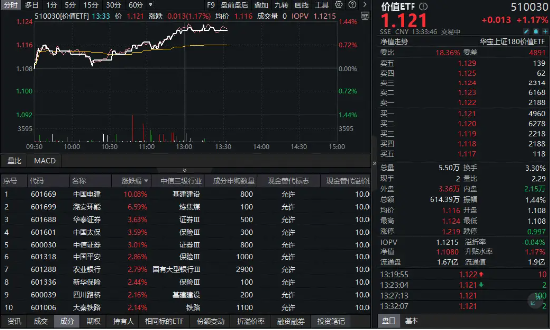
高股息沸腾!中国电建涨停,价值ETF(510030)上探1.44%冲击四连阳!机构:高股息资产仍具吸引力
Xin Lang Ji Jin· 2025-07-23 05:48
Core Viewpoint - The return of high dividend stocks is highlighted, with a focus on "high dividend + low valuation" large-cap blue-chip stocks, particularly through the value ETF (510030) which has shown positive performance recently [1][3]. Group 1: Market Performance - The value ETF (510030) opened with fluctuations and reached a maximum intraday increase of 1.44%, closing with a gain of 1.17%, marking a potential four-day winning streak [1]. - Key sectors contributing to the performance include infrastructure and finance, with notable stocks such as China Power Construction hitting the daily limit, and others like Lu'an Environmental Energy and Huatai Securities rising over 6% and 3% respectively [1]. Group 2: Investment Strategy - China Galaxy Securities suggests that in the current uncertain global environment, investors are increasingly seeking risk-averse assets, with dividend-paying stocks offering significant yield advantages due to stable cash flows and high dividend rates [1][4]. - Ping An Securities emphasizes that the market environment supporting dividend strategies in A-shares remains fundamentally unchanged, with a low interest rate environment continuing to make high dividend equity assets attractive [3]. - The overall dividend payout ratio in A-shares has room for growth, indicating potential for increased dividends from listed companies [3]. Group 3: Valuation Insights - The value ETF (510030) tracks the Shanghai Stock Exchange 180 Value Index, which currently has a price-to-book ratio of 0.85, placing it in the lower 41.1% percentile over the past decade, suggesting a favorable long-term investment opportunity [3]. - The dividend yield of the A-share dividend index is significantly higher than the yield of 10-year government bonds, highlighting its attractiveness as a defensive investment [5]. Group 4: Future Outlook - Zhonghang Securities anticipates that insurance capital will continue to increase allocations to high dividend assets, driven by the ongoing promotion of long-term stock investment trials [4]. - The focus on high dividend and low volatility assets is expected to remain a core strategy for insurance companies, aligning with their long-term, stable asset needs [4].

发财是一场意外
Hu Xiu· 2025-07-23 00:56
Group 1 - The article presents a choice between taking $5 million in cash immediately or opting for a penny that doubles in value every day for 31 days, which illustrates the power of compound growth [1][4] - If the penny option is chosen, after 31 days, the value would reach approximately $20 million, showcasing the potential of compounding [4][5] - However, the article critiques the unrealistic nature of achieving high compound growth rates consistently, suggesting that a daily increase of 75% is nearly impossible [7][8] Group 2 - Historical data shows that the average annual return of the S&P 500, adjusted for inflation, is only 7.31%, significantly lower than the often-quoted 15% [15][21] - The article emphasizes that only a small number of investors can endure years of losses and still achieve the average return, highlighting the challenges of long-term investing [17][18] - It points out that wealth accumulation follows a power-law distribution, where a few individuals capture most of the gains, while the majority receive mediocre returns [23][24] Group 3 - The article argues that the notion of everyone having the opportunity to become wealthy through compounding is misleading and reflects a lack of intellectual honesty [30][32] - It suggests that successful investing often relies on factors beyond mere methodology, such as being born in favorable economic conditions [33] - The conclusion drawn is that significant wealth accumulation is rare and often a matter of chance rather than a guaranteed outcome of investment strategies [34][57]
LNW or DKNG: Which Is the Better Value Stock Right Now?
ZACKS· 2025-07-22 16:41
Core Insights - Light & Wonder (LNW) is currently viewed as a stronger investment option compared to DraftKings (DKNG) for value investors seeking undervalued stocks [1][3][7] Valuation Metrics - LNW has a forward P/E ratio of 17.65, significantly lower than DKNG's forward P/E of 33.50, indicating LNW may be undervalued [5] - The PEG ratio for LNW is 0.63, while DKNG's PEG ratio is 0.64, suggesting LNW has a more favorable growth outlook relative to its valuation [5] - LNW's P/B ratio stands at 13.32, compared to DKNG's P/B of 45.31, further highlighting LNW's relative undervaluation [6] Earnings Outlook - LNW has a Zacks Rank of 1 (Strong Buy), indicating a stronger improvement in its earnings outlook compared to DKNG, which has a Zacks Rank of 3 (Hold) [3][7] - The overall valuation metrics and earnings outlook position LNW as the superior value option in the gaming sector [7]



举牌潮外 险资挤入IPO赛道
Bei Jing Shang Bao· 2025-07-22 16:08
Group 1 - Insurance capital has made 21 equity stakes this year, surpassing last year's total, indicating a shift towards equity assets in response to low interest rates [1] - Major insurance companies like Taikang Life and China Life are strategically investing in IPOs, with Taikang Life participating in the H-share IPO of Fengcai Technology with an investment of 179 million yuan, accounting for 8.69% of the offering [1] - China Life has invested in the green energy sector, participating in the IPO of Huadian New Energy, which raised 18.171 billion yuan, making it the largest A-share IPO this year [2] Group 2 - The trend of insurance capital investing in technology and green energy is driven by the need for better investment returns amid increasing pressure from interest rate spreads [3] - Insurance capital is expected to focus on hard technology and green energy sectors, with projections indicating a potential increase in holdings from 8%-10% to 15%-20% over the next three years, translating to an influx of 200-300 billion yuan [4] - The investment strategies may diversify, with a greater emphasis on ESG investments and a preference for dual-listed companies in the A+H share market [4]



“慢牛”稳了,“躺赚”可期?
雪球· 2025-07-22 08:30
Core Viewpoint - The article discusses the potential for a "slow bull market" in the A-share market, contrasting it with the historical "crazy bull" markets characterized by short-term rapid increases followed by long-term declines. The author advocates for a market that experiences short-term declines followed by quick recoveries, leading to a stable long-term upward trend [4][5]. Group 1: Economic Fundamentals - The past three decades of rapid growth led to poor profit quality and sustainability among companies, resulting in a cycle of valuation fluctuations in the stock market. The current transition to a low-growth, high-quality development era allows companies to establish competitive advantages and achieve stable profits, which is essential for a long-term slow bull market [7][8]. Group 2: Policy Support - Regulatory bodies have emphasized stabilizing the stock market and preventing extreme fluctuations. Measures such as registration system reforms and improved delisting regulations aim to create a more transparent and resilient capital market. The introduction of stabilizing funds can help mitigate irrational market declines and curb excessive market enthusiasm [10][11]. Group 3: Changes in Investor Structure - The shift from a retail-dominated market to one led by institutional investors is underway, driven by foreign capital inflows, pension fund participation, and the expansion of public funds. Institutional investors focus on long-term value, which reduces irrational market volatility and supports the formation of a slow bull market [12][15]. Group 4: Investment Strategy in a Slow Bull Market - A slow bull market does not guarantee easy profits. Investors must be cautious as not all asset types will benefit equally. The market will still experience volatility, and investors should diversify their portfolios, primarily focusing on broad market indices to mitigate risks. Establishing rational investment goals based on risk tolerance and maintaining dynamic asset rebalancing are crucial for capitalizing on the slow bull market [16][18].

私募股票策略收益榜出炉!复胜、同犇脱颖而出!稳博投资、天算量化等上榜!
私募排排网· 2025-07-22 04:07
Core Viewpoint - The A-share market showed modest performance in the first half of the year, with total trading volume significantly increasing to 162.68 trillion yuan, compared to 101 trillion yuan in the same period last year, indicating heightened market activity [2] Group 1: Private Equity Performance - In the first half of the year, 303 private equity firms with three or more stock strategy products reported an average return of 14.04%, outperforming major market indices like the CSI 300 and the Shanghai Composite Index [2] - Private equity firms with assets under management between 10-20 billion yuan and 50-100 billion yuan achieved average returns of 18.36% and 15.95%, respectively [2] Group 2: Top Performing Private Equity Firms - The top ten private equity firms in the 100 billion yuan and above category predominantly consisted of quantitative firms, with 9 out of 10 using quantitative strategies, while only one, Fusheng Asset, employed a subjective investment approach [5][6] - Fusheng Asset achieved a notable return of ***%, attributed to its focus on the new consumption sector in Hong Kong [8] - The second-ranked firm, Stable Investment, also reported impressive returns of ***%, leveraging a unique quantitative investment model [8] Group 3: Performance by Asset Size - In the 50-100 billion yuan category, the top firm, Tongben Investment, utilized a subjective investment strategy and emphasized value investing, particularly in consumer goods [13] - The 20-50 billion yuan category saw a balanced mix of subjective and quantitative firms, with Cloudrise Quantitative and Orange Capital leading the rankings [14][15] - In the 10-20 billion yuan category, Nengjing Investment Holdings topped the list with a return of ***%, focusing on trend and fundamental analysis [20][22] - In the 5-10 billion yuan category, Fuyuan Capital led with a return of ***%, emphasizing value investment strategies [25][27] - The 0-5 billion yuan category was led by Qinxin Fund, which achieved a return of ***%, focusing on the Hong Kong market [30][31]
7月荐书 | 周期罗盘 复利长坡
Di Yi Cai Jing· 2025-07-22 02:08
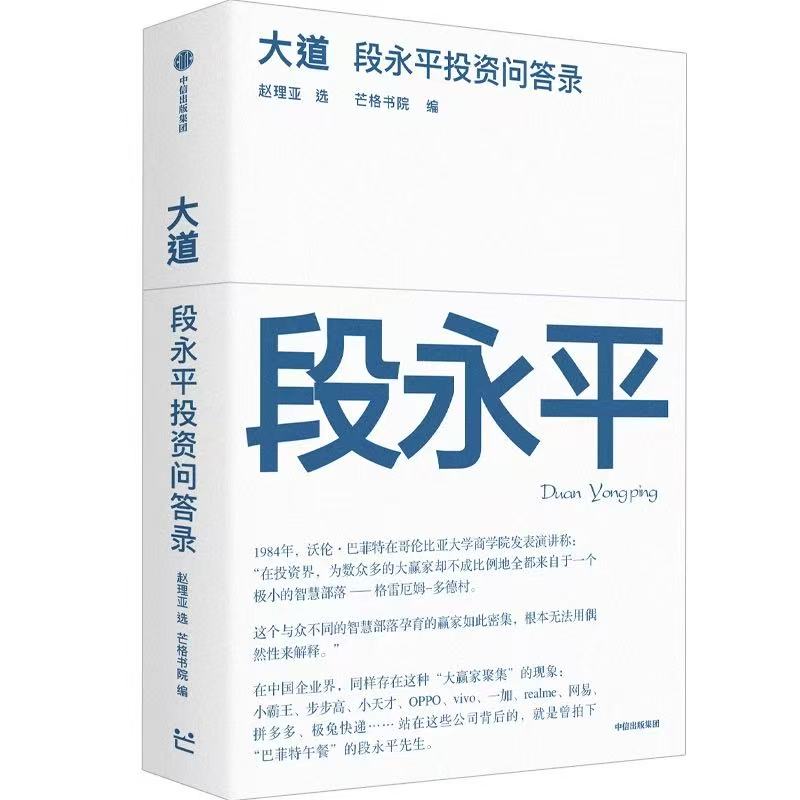
Group 1 - The core principle of investment is to establish the mindset of "buying businesses as an owner" and to evaluate their moat and cash flow over a ten-year horizon [1] - Understanding the eternal rhythm of wealth creation involves recognizing cycles and the impact of monetary illusions on time value [1] - A comprehensive framework that integrates micro business value, medium-term cycle positioning, and macro monetary environment is essential for rational decision-making in volatile markets [1] Group 2 - The book "The Way: Q&A with Duan Yongping" provides over 200 replicable thinking models covering asset allocation, business selection, and life strategy [3] - A good business model should not enter a low-margin period, as low margins indicate poor business models and minimal product differentiation [3] - Entrepreneurs should engage in ventures they are passionate about, as genuine interest can drive success [4] Group 3 - "Cycles, Valuation, and Human Nature" illustrates that asset price fluctuations are influenced by human emotions, with valuation anchors shifting due to greed and fear [6] - Identifying extreme emotional valuation misalignments is crucial for successful investment strategies, rather than merely predicting market turning points [6] Group 4 - Economic recovery can be assessed by understanding the reasons behind economic downturns and recognizing the role of inventory levels and downstream demand in driving recovery [7] - The development of macroeconomics since the 1970s emphasizes the importance of establishing a micro foundation to address economic fluctuations more rigorously [8] Group 5 - "Lessons from Inflation" discusses the psychological dynamics between central banks, governments, and markets, highlighting that policy errors and greed are the true culprits of inflation [10] - The book emphasizes that inflation creates unfairness, disproportionately affecting those with limited financial resources while benefiting those with pricing power [12][13]
证监会突发改革IPO,7月22日,牛市之路正式开启了?
Sou Hu Cai Jing· 2025-07-21 18:19
Group 1 - The China Securities Regulatory Commission (CSRC) has intensified support for high-quality unprofitable tech companies to go public, exemplified by the IPO of Yushu Technology, leading to a bullish market trend with both the Shanghai Composite Index and the ChiNext Index reaching new highs for the year [1][3] - A significant investment of approximately 1.2 trillion yuan in water conservancy projects has driven the A-share market's upward momentum, with the Shanghai Composite Index peaking at 3560 points [2][3] - The market's strong performance is characterized by a collective rise in the three major indices, with the Shanghai Composite Index closing up 0.72%, indicating a broad-based rally across various sectors including infrastructure and technology [7] Group 2 - The market is experiencing a shift where funds are being redirected towards large infrastructure projects, while sectors such as robotics are also gaining attention due to positive news, including Yushu Technology's IPO guidance and significant procurement orders in the humanoid robot sector [7] - The current market dynamics suggest a recovery from previous losses, with over a hundred stocks hitting the daily limit up, indicating a more diverse market landscape beyond just large financial stocks [5][7] - The ongoing bullish sentiment in the market is seen as a potential recovery phase rather than the beginning of a new bull market, emphasizing a cautious yet optimistic outlook for investors [5][6]
OGN or MEDP: Which Is the Better Value Stock Right Now?
ZACKS· 2025-07-21 16:41
Core Viewpoint - Investors in the Medical Services sector should consider Organon (OGN) and Medpace (MEDP) as potential undervalued stocks, with OGN appearing to be the superior option based on valuation metrics and earnings estimate revisions [1][7]. Valuation Metrics - OGN has a forward P/E ratio of 2.47, significantly lower than MEDP's forward P/E of 24.59, indicating that OGN may be undervalued relative to MEDP [5]. - The PEG ratio for OGN is 0.94, while MEDP's PEG ratio is 5.64, suggesting that OGN's expected earnings growth is more favorable compared to its price [5]. - OGN's P/B ratio is 4.54, compared to MEDP's P/B of 15.1, further highlighting OGN's more attractive valuation [6]. Analyst Outlook - OGN currently holds a Zacks Rank of 2 (Buy), indicating a positive earnings estimate revision trend, while MEDP has a Zacks Rank of 3 (Hold), suggesting a less favorable outlook [3]. - The stronger estimate revision activity for OGN, combined with its attractive valuation metrics, positions it as a more appealing choice for value investors [7].