硬科技

Search documents
中关村智友研究院王田苗:以2025为起点,中国科技将重塑全球创投“潮汐节奏”
投中网· 2025-04-22 06:15
将投中网设为"星标⭐",第一时间收获最新推送 如何做好科技孵化,让创业者能更快成长? 整理丨 张雪 来源丨 投中网 2025 年, AI 和具身智能依旧是投资领域热度不减的话题。 "热度之下,整个市场也在发生着巨变,比如 2024 年之前创投市场基本遵循单因子模型,即美国的独角兽、股市及热门赛道,在很大程度上影响着中国 的科技创新和创业方向。但这个情况在 2025 年发生了显著变化,如今推动世界科技创新的力量已转变为双因子模型:除了美国这一影响因素外,中国 自身的科技创新也成为了不可忽视的驱动力量。" 那么,在这样的背景下,在大国博弈加剧的现在,如何做好科技孵化,让创业者能更快成长? 4 月 17 日,在"第 19 届中国投资年会·年度峰会"上,北航机器人研究所名誉所长、中关村智友研究院院长王田苗发表题为"催化科技孵化的'裂变效 应',打造中国科创梦工厂"的主题演讲。 经过近十年的实践,王田苗有一个深刻的体会:硬科技领域的孵化投资机会可以细分为两大方向,一个是面向消费端( To C )的底座型硬科技项目, 虽然研发周期比较长,但其技术壁垒形成的长期竞争力和回报还是比较可观的;另一个方向涉及"卡脖子"技术的政企 ...
融资必知丨投中网《2024年度中国最佳早期创业投资机构TOP50》(附机构简介)
Sou Hu Cai Jing· 2025-04-21 13:25
总有梦想可以投中! | 排名 益 机构名称 | | ■ 管理资金规模 | 【 投资案例 | | --- | --- | --- | --- | | | 真格其金 | | 小红书 | | 1 | 北京、上海、深圳 | ¥ 超124亿 | 逸仙电商 | | | | | 云天励飞 | | | 蓝驰创投 | | 理想汽车 | | 2 | 北京 | ¥ 超150亿 | 青云科技 智元机器人 | | | | | 量子之歌 | | 3 | 冷峰 应信 | ¥ 约100亿 | 普方生物 | | | 北京 | | 康诺思腾 | | | 明势创投 | | 理想汽车 | | 4 | | ¥ 137亿 | MiniMax | | | 北京 | | 云鲸智能 | | | | | 智谱Al | | 5 | 中科创星 | ¥ 121亿 | 源杰科技 | | | 西安、北京、上海 | | 天科合达 | | | | | 小马智行 | | 6 | 联想之星 | ¥ 50亿 | 孔辉科技 | | | 北京 | | 爱芯元智 | | | | | MiniMax | | 7 三云总 | 云启资本 | ¥ 超100亿 | 酷家乐 | | | 上海 | ...



2025 年将开启历史性上涨!四大核心逻辑揭秘
Sou Hu Cai Jing· 2025-04-21 12:00
Core Viewpoint - The Chinese stock market is at a historical turning point in 2025, with significant capital inflows and supportive policies indicating a potential wealth opportunity for investors as the market experiences a perfect resonance of policy bottom, valuation bottom, and market bottom [1] Group 1: Policy Bottom Solidified - The central government has injected over 300 billion yuan into A-shares since September 2024, focusing on core indices like the Shanghai 50 and CSI 300, which has alleviated market concerns regarding policy intervention [3] - The central bank has indicated that there is room for policy interest rate cuts, with the 10-year government bond yield at a historical low of 1.63%. A 50 basis point reduction in the reserve requirement ratio could release approximately 1.2 trillion yuan in liquidity [5] - The new "National Nine Articles" policy is expected to increase the equity allocation ratio of long-term funds like social security and insurance from 15% to 25%, supporting the capital market's long-term growth [7] Group 2: Valuation Bottom Highlighted - The Shanghai Composite Index has a price-to-earnings ratio of 12 and a price-to-book ratio of 1.13, both lower than the levels seen during the 2005 and 2008 market bottoms. The CSI 300 has a dividend yield of 3.36%, which is double that of one-year government bonds [9] - The technology sector, particularly in semiconductors and AI, has a dynamic price-to-earnings ratio of less than 30, representing a 50% discount compared to similar companies in the Nasdaq [9] - High-dividend assets in the banking and power sectors have yields exceeding 5%, making them attractive to foreign investors [13] Group 3: Capital Bottom Established - With household savings exceeding 150 trillion yuan and deposit rates falling below 1.5%, there is a significant shift of funds towards the equity market. A mere 1% of these savings entering the stock market could result in an additional 1.5 trillion yuan [15] - The issuance of equity funds is expected to exceed 800 billion yuan in 2025, with a focus on technology and consumer sectors [17] - The insurance sector's equity investment limit has been raised from 30% to 40%, creating an additional space of over 1 trillion yuan for investment [19] Group 4: Industry Bottom - The Chinese stock market is positioned at a convergence of policy, valuation, capital, and industry bottoms, indicating a potential "new quality bull market" as global capital debates the Federal Reserve's interest rate cuts [19]

上海开了这样一场会!来了一群“天使”……
证券时报· 2025-04-20 04:38
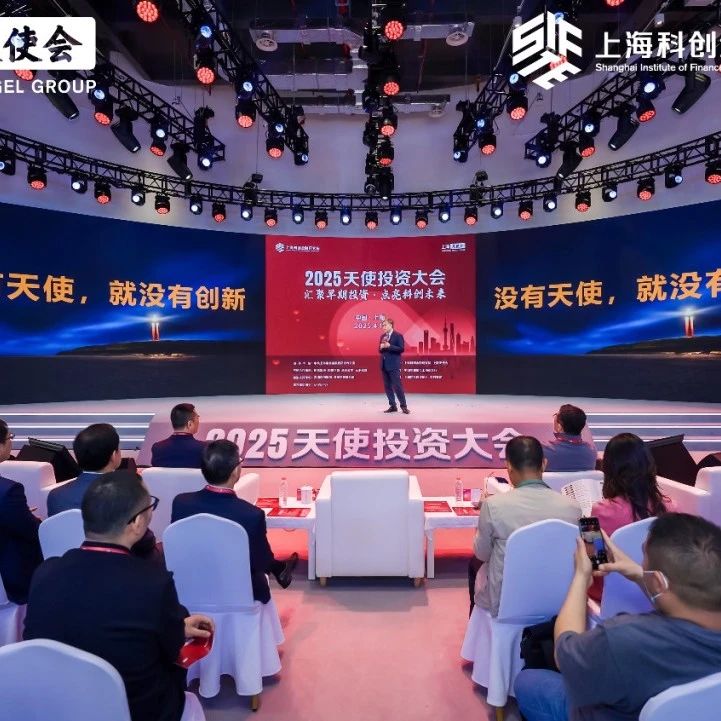
Core Viewpoint - The article emphasizes the importance of angel investment in fostering technological innovation and highlights the challenges faced by the angel investment sector in China, including fundraising difficulties and insufficient tax incentives [3][14]. Group 1: Angel Investment Overview - Angel investment is defined as the earliest stage of equity investment in startups, which can come from individual investors or institutions [5]. - The concept of angel investment originated in early 20th century New York, where investors provided funds for high-risk theatrical productions [5]. - Angel investors are seen as crucial for supporting the initial stages of technological innovation, often referred to as the "first kilometer" of financial support [9]. Group 2: Challenges in Angel Investment - The angel investment sector in China faces significant challenges, including difficulties in fundraising and a declining number of investments over the past three years [14]. - There is a need for greater societal support and tolerance for angel investors, particularly in allowing for multiple failures before achieving significant breakthroughs [13][15]. - Tax incentives for angel investors are currently insufficient, which hampers the growth of the industry [14]. Group 3: Successful Case Studies - Gong Hongjia's investment of 2.45 million yuan in Hikvision resulted in a return of 20,000 times, showcasing the potential rewards of angel investment [3]. - Song Tao invested 1 million yuan in Mihayou while the founders were still students, and the company is now valued at approximately 175 billion yuan [10]. - The success of these investments illustrates the importance of trust and patience in the relationship between angel investors and entrepreneurs [11]. Group 4: Future Directions and Ecosystem Development - Shanghai is actively working to build a robust angel investment ecosystem, focusing on early-stage investments and collaboration with government and research institutions [19][21]. - The Shanghai Angel Association aims to create a professional platform for angel investment, facilitating the integration of social capital into early-stage technology ventures [21]. - The establishment of various funds and partnerships in Shanghai is intended to enhance the support for seed and angel investments, thereby fostering innovation [20].
机器人产业链从业者们,如何解“朱啸虎难题”?
3 6 Ke· 2025-04-17 03:08
Core Viewpoint - The article discusses the current state and future potential of humanoid robots and embodied intelligence, highlighting differing perspectives from industry leaders and investors regarding commercialization and investment strategies [2][4]. Group 1: Industry Perspectives - Zhu Xiaohu's exit from humanoid robot companies reflects a broader skepticism about the immediate commercial viability of the sector, emphasizing the need for a long-term view on investment in embodied intelligence [2][4]. - Industry leaders at the Second China Humanoid Robot and Embodied Intelligence Industry Conference expressed optimism about the future of humanoid robots, acknowledging the rapid technological advancements made in the past year [7][9]. - The concept of "barrel effect" was introduced, indicating that all technological shortcomings must be addressed before achieving commercial viability in humanoid robots [11]. Group 2: Investment and Commercialization - The need for cost reduction and enhanced functionality in humanoid robots was emphasized, suggesting that lowering costs significantly could lead to wider adoption [16]. - The article notes that the development of humanoid robots is expected to follow a trajectory similar to that of the electric vehicle industry, which faced skepticism in its early stages but has since seen substantial growth [26][30]. - The importance of collaboration across the industry ecosystem was highlighted, with various stakeholders needing to work together to advance humanoid robot technology and applications [31]. Group 3: Future Outlook - The article suggests that while current humanoid robots may not yet be fully realized, their eventual form is anticipated to be humanoid, requiring time and continued development [28]. - There is a belief that the investment landscape for humanoid robots will evolve, with significant backing from both domestic and international tech giants, indicating a robust future for the sector [20][30]. - The enthusiasm among younger professionals entering the humanoid robotics field is seen as a positive indicator for the industry's potential growth and innovation [33].

一季度VC/PE报告
投中网· 2025-04-15 06:57
以下文章来源于超越 J Curve ,作者超越J曲线 超越 J Curve . 用数据延伸你的阅读 将投中网设为"星标⭐",第一时间收获最新推送 本期带来2025年一季度VC/PE市场报告。募投市场小幅回落,头部机构韧性增强,人工智能投资逆势升温。 作者丨 投中研究院 来源丨 超越 J Curve 核心发现 第一部分 VC/PE市场募资分析 浙苏粤鲁四省新设基金占全国近六成 2025Q1,共计 29 个省市区(含港澳台)新设基金,其中, 浙江省 新设数量 217 支 位居榜首, 江苏省、广东省 新设基金 148支、109支 紧随其 后。同比来看, 浙江、安徽、上海 等地基金数量逆势增加。 募资寒冬持续,头部逆势扩容 2025Q1,中国VC/PE市场新成立基金数量共计 972支 ,较上期减少335支,环比降幅 25.6% 。和去年同期相比减少423支,同比降幅 30.3% 。整 体来看,新成立基金数量连年下滑,多季度同比环比负增长。 本期共有 711家 机构参与设立基金,其中 74.9% 机构成立1支基金,18.5%机构完成2支基金新设, 6.6% 机构完成3支及以上基金新设。去年同 期,市场共有1066家机构 ...
中国AI投资五小龙:南林北曹,东剑西米,中王淮;清一色985理工科背景
母基金研究中心· 2025-04-15 02:19
02 "北曹"砺思资本创始合伙人、董事长曹曦 出生于1 9 8 5年的砺思资本创始合伙人、董事长曹曦,毕业于北京大学医学部,曾在腾讯公司, 金 山 软 件 就 职 , 并 担 任 红 杉 资 本 合 伙 人 。 代 表 作 : 月 之 暗 面 、 无 问 芯 穹 、 万 有 引 力 Gr a v it yXR 、 沐 言 智 语 、 星 迈 创 新 、 乐 享 科 技 、 剂 泰 医 药 、 逸 文 科 技 、 虚 实 之 间 Un i c h a t 、 MiAO。 进入到2 0 2 5年,全球风险投资行业全面拥抱了"AI "革命,随着1 9 8 3年出生的张一鸣,1 9 8 5年 出生的梁文锋,1 9 8 5年的山姆奥特曼,1 9 8 3年出生的达里奥阿莫迪等8 0后企业家进入全球人 工智能核心舞台。而与此同时,AI初创公司的背后也诞生了新一批由8 0后及准8 0后创始人及董 事长操盘的新一代人工智能领域投资机构也登上了历史舞台。 在中国AI大模型"六小龙"等一批新型AI公司背后的天使投资人中,也出现了聚焦于AI赛道的 新型风险投资机构的掌门创始人。包括了"南林"卓源亚洲林海卓,"北曹"砺思资本曹曦,"东 ...
投中统计:一季度募资持续回落 投资小额交易占比近七成
投中研究院· 2025-04-15 00:45
Investment Rating - The report indicates a continued decline in fundraising activities within the VC/PE market, with a significant drop in the number of newly established funds and overall market participation [14][19][22]. Core Insights - The VC/PE market in China saw a total of 972 new funds established in Q1 2025, representing a 25.6% decrease from the previous quarter and a 30.3% decrease year-on-year [14][19]. - The report highlights that the investment landscape is characterized by a dominance of state-owned platforms, with 41.2% of investment actions attributed to them, while corporate investors remain active [22][28]. - The electronic information sector continues to lead the investment market, with significant contributions from sub-sectors like semiconductors and artificial intelligence [59][62]. Fundraising Analysis - In Q1 2025, the number of newly established funds decreased for multiple consecutive quarters, indicating a trend of negative growth [14][19]. - The report notes that 74.9% of institutions established only one fund, while 25.1% managed to set up multiple funds, showcasing resilience among leading institutions [14][19]. - The report identifies that the eastern coastal regions, particularly Jiangsu, Guangdong, and Beijing, dominate in terms of investment transaction volume and quantity [54][56]. Investment Trends - The report states that small-scale investments (under 100 million yuan) accounted for 67.1% of total transactions, indicating a shift towards smaller funding rounds [64][66]. - A significant portion of investments (61.8%) occurred in early-stage financing rounds, reflecting a robust interest in startups [64][66]. - The artificial intelligence sector has seen a steady increase in investment activity, with a rise in both the number of transactions and the focus on early-stage projects [70][72]. Key Fundraising Cases - The report lists several key fundraising cases, including the National Artificial Intelligence Industry Investment Fund, which aims to raise 600.6 billion yuan, focusing on equity investments in the AI sector [36][42]. - Other notable funds include the National Military-Civilian Integration Fund II, targeting 596 billion yuan, and the Hubei High Road Development Fund, with a goal of 300 billion yuan [36][42]. Investment Case Highlights - The report highlights significant investment cases such as the 95.5 billion yuan raised by Wanchip Integrated Circuits, and 64.44 billion yuan by Xugong Automobile, showcasing the ongoing interest in high-tech and innovative sectors [78].
A股指数集体高开:沪指涨0.42%,苹果产业链等板块涨幅居前
Feng Huang Wang Cai Jing· 2025-04-14 01:35
Market Overview - Major indices opened higher with Shanghai Composite Index up 0.42%, Shenzhen Component Index up 1.23%, and ChiNext Index up 1.44% [1] - Consumer electronics, Apple supply chain, and CPO sectors showed significant gains [1] Index Performance - Shanghai Composite Index: 3251.98, up 0.42% with a trading volume of 60.85 billion [2] - Shenzhen Component Index: 9955.66, up 1.23% with a trading volume of 9.85 billion [2] - ChiNext Index: 1954.05, up 1.44% [2] Institutional Insights - Everbright Securities suggests a return to "structural market + hot rotation" style, focusing on low-altitude economy concepts due to an upcoming aviation conference [1] - CITIC Securities emphasizes "domestic demand + countermeasures" as key investment themes, highlighting the importance of domestic stimulus policies amid trade tensions [3] - Galaxy Securities advocates for embracing uncertainty with a focus on domestic demand and hard technology as main investment lines [4] - Huatai Securities notes potential overcrowding in short positions in Hong Kong stocks, recommending investments in domestic consumption, hard technology, and dividend assets [5] - Guojin Securities highlights the increasing necessity for self-sufficiency in the context of rising global protectionism, particularly in high-end industrial equipment and scientific instruments [6][7]

科创板投资“利器”来袭!博时上证科创板综合价格指数增强(A类:023891,C类:023892)掘金“硬科技”新时代
Sou Hu Cai Jing· 2025-04-10 01:36
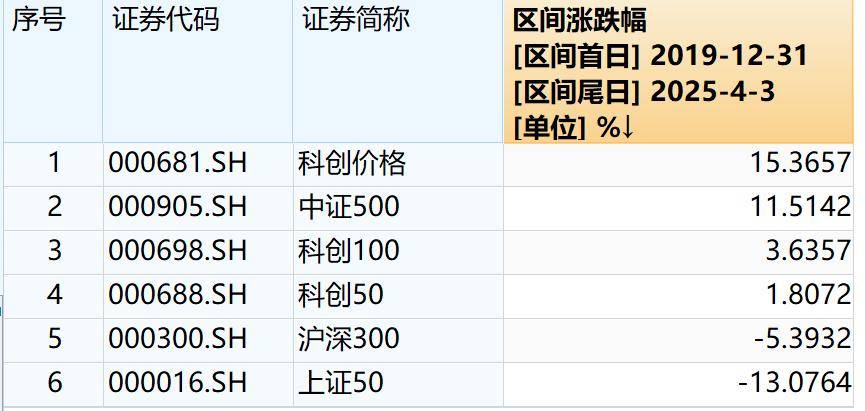
Core Insights - The Sci-Tech Innovation Board (STAR Market) has become a key area for nurturing new productive forces in China's capital market since its launch in July 2019, with 584 listed companies and a total market capitalization exceeding 7.62 trillion yuan as of February 2025 [1] - The launch of the Bosera STAR Market Composite Price Index Enhanced Fund focuses on "hard technology" and aims to invest in innovative companies with high market recognition and breakthrough core technologies [1] - The STAR Market Composite Price Index has shown significant growth, with a return rate of 15.37% from December 31, 2019, to April 3, 2025, outperforming major indices like CSI 300 and CSI 500 [2] Market Performance - As of April 3, 2025, the STAR Market Composite Price Index has a price-to-earnings ratio of 170.33 and a price-to-book ratio of 3.91, indicating relatively lower valuations compared to other indices, which enhances its cost-effectiveness for investment [2] - The index covers 567 constituent stocks with an average market capitalization of 13.1 billion yuan, achieving a market capitalization coverage of 97%, which is more balanced compared to other indices [3] Sector Focus - The index has a high concentration in hard technology sectors, with the top six industries being electronics (44.46%), biomedicine, computers, power equipment, machinery, and national defense, collectively accounting for over 92% of the index [3] - The top ten holdings include leading electronic companies such as Haiguang Information and Cambrian, benefiting from the global industrial chain restructuring [3] Financial Metrics - The constituent stocks have an average gross profit margin exceeding 30%, indicating strong profitability and significant earnings volatility, with current performance potentially in a recovery phase [3] - The research and development expenditure as a percentage of revenue has consistently remained around 10% from 2020 to 2023, significantly higher than that of the ChiNext and CSI All Share Index, reflecting a strong technological moat [3] Investment Strategy - The Bosera STAR Market Composite Price Index Enhanced Fund employs a quantitative investment strategy aimed at generating excess returns while controlling tracking errors through a comprehensive process that includes cost control, multi-factor stock selection, and risk budgeting [5] - The fund is managed by an experienced quantitative investment professional with nearly a decade of experience, leveraging Bosera's established index enhancement system [5]