即时零售

Search documents
热浪滚滚,阿里美团开战外卖茶饮
Guang Zhou Ri Bao· 2025-07-08 04:31
Core Viewpoint - The competition in the food delivery market is intensifying, with major players like Meituan and Alibaba engaging in a "subsidy war" to attract consumers and expand the instant retail market [1][2]. Group 1: Market Dynamics - Meituan and Alibaba are offering unprecedented subsidy levels to drive consumer engagement and increase order volumes, particularly in the beverage sector [1][2]. - As of July 5, Meituan reported over 1.2 billion orders in a single day, with more than 1 billion of those being food delivery orders [2]. - The competition has led to significant stock price increases for beverage companies, with notable gains for brands like Tea Baidao (up 11.04%) and Nayuki (up 3.95%) [2]. Group 2: Strategic Focus - The current subsidy strategy is aimed at not just acquiring new users but also activating existing demand, focusing on high-frequency consumption scenarios like fresh produce and daily necessities [2][4]. - Alibaba's Taobao Flash and Ele.me reported a surge in daily orders from over 10 million to 80 million within two months, indicating rapid growth in the instant retail sector [3]. Group 3: Long-term Considerations - Industry experts emphasize the importance of customer retention over time, noting that high subsidies cannot be sustained indefinitely [4]. - Future competition will likely hinge on factors such as fulfillment efficiency, supply chain capabilities, service quality, and ecosystem development, which are crucial for retaining users [4].

第一创业晨会纪要-20250708
First Capital Securities· 2025-07-08 03:26
Group 1: Advanced Manufacturing Sector - BYD has launched the Sea Lion 06DM-i travel version, priced between 109,800 to 129,800 yuan, filling a gap in the 100,000 yuan level new energy travel car market, focusing on practicality, economy, and intelligent technology [3] - The model features the fifth-generation DM hybrid system and includes a 12.8 and 15.6-inch floating screen with DiLink 100 system, supporting full voice control [3] - The travel car market in China has annual sales of 100,000 to 200,000 units, representing a niche market, and BYD's entry is expected to expand this market similar to how the Model 3 activated the electric vehicle market [3] Group 2: Consumer Sector - As of June 1, 2025, JD.com’s daily order volume for food delivery has surpassed 25 million, capturing over 31% of the national market share and approximately 45% in the quality food delivery segment [5] - JD.com is accelerating its entry into the "hotel + flight" business, offering three times the salary to attract talent from competitors and launching a membership program for hotels with up to three years of zero commission [5] - In response to JD.com's competitive pressure, other players like Taobao and Meituan are increasing their investment, with Taobao announcing a 50 billion yuan subsidy plan, resulting in significant growth in orders for various food categories [5]


QuestMobile 2025即时零售行业流量竞争分析报告:聚合平台再掀战火,三大阵营格局初现,厮杀“刺刀见血”
QuestMobile· 2025-07-08 01:59
Core Insights - The article discusses the competitive landscape of the instant retail app sector, highlighting significant growth in user engagement and the emergence of various operational models among key players [2][3][9]. Group 1: Market Growth and User Engagement - As of May 2025, the monthly active user base for instant retail apps reached 551 million, marking a 6% year-on-year increase, with fresh food e-commerce apps growing by 15% to 128 million users [3][12]. - The competition has intensified with major players like Meituan, Taobao, and JD.com restructuring their services to enhance user engagement, particularly in the "30-minute living circle" for food delivery [3][25]. Group 2: Competitive Landscape - Three main operational models have emerged: "front warehouse self-operated," "store-warehouse integrated self-operated," and "platform aggregation," each catering to different user needs [23]. - The overlapping user base among JD.com, Meituan, and Ele.me reached 77.61 million, a 32.4% increase year-on-year, indicating a shift towards multi-platform usage among consumers [27]. Group 3: User Demographics and Preferences - The user demographic is skewing younger, with users born after 2000 showing a strong preference for food delivery services, while users from the 90s and 00s account for over 55% of the fresh food e-commerce app market [33][35]. - The lower-tier market is becoming a new growth engine, with Ele.me and Meituan's combined user base in this segment reaching 5.167 million, reflecting a 2.6% year-on-year growth [37]. Group 4: Merchant and Rider Dynamics - The demand for instant delivery services is driving an increase in merchant participation, with Meituan's merchant app reaching nearly 17 million monthly active users [44]. - The competition for riders is intensifying, with JD.com's Dada Express leading the market with over 6 million active users, a 368% increase year-on-year [52][56].


即时零售大战,淘宝闪购成美团“头号敌人”
Sou Hu Cai Jing· 2025-07-08 01:53
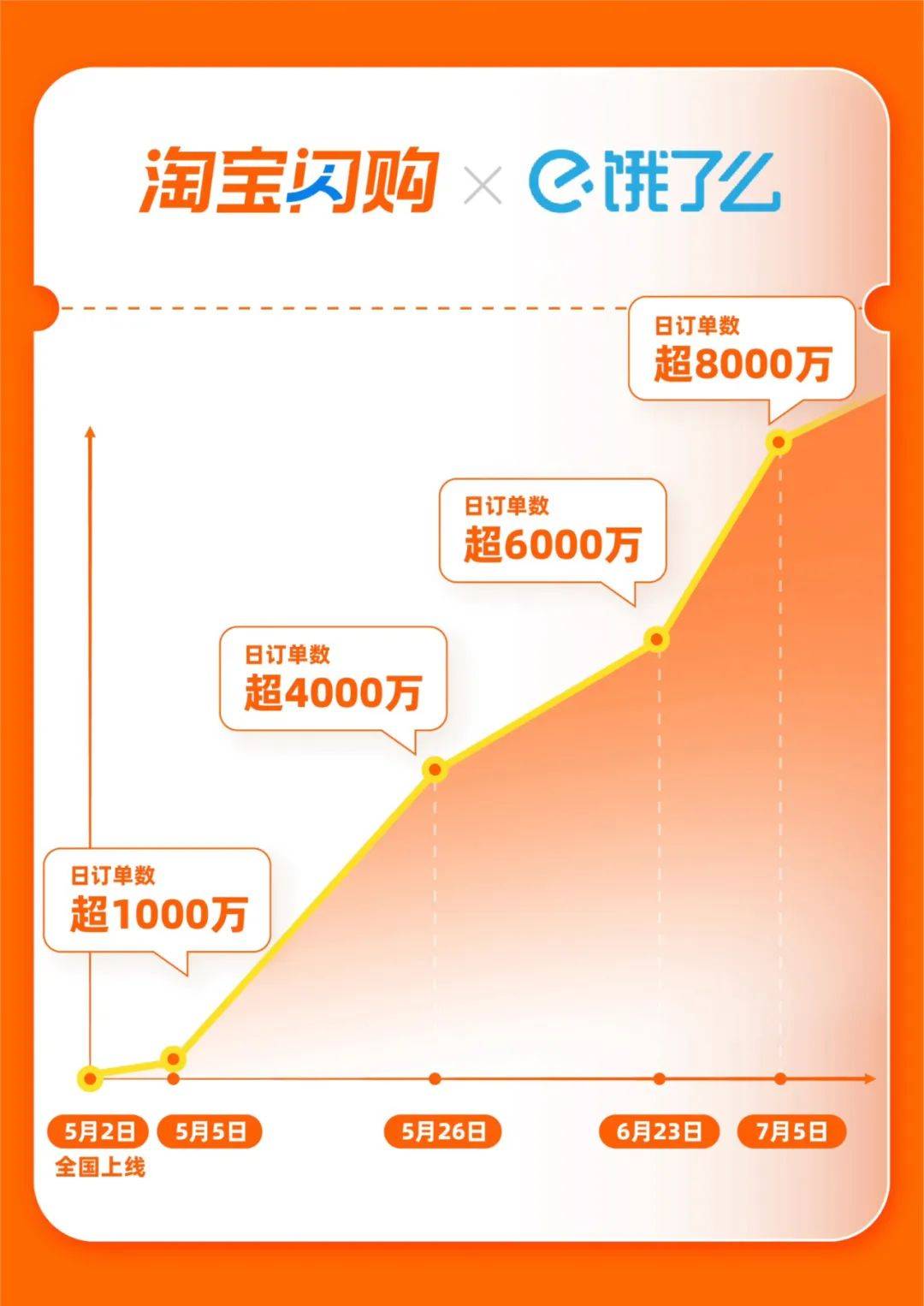
文 | 唐辰同学 把美团打得最疼的还是淘宝闪购。 7日上午,淘宝闪购联合饿了么发布了一组数据:日订单数超8000万;非餐饮订单超1300万;淘宝闪购日活跃用户超过2亿。 "真是太快了!" 这组数据是什么概念?做两个对比,一是和"淘宝闪购x饿了么"自身比:淘宝闪购于5月2日正式上线,5月底日订单超4000万,6月底日订单超6000万。上 线两个月,淘宝闪购即突破日订单8000万。 "淘宝"公众号还更新了一张趋势图,可以从中看到其增势的迅猛。官方自我评价都带着震惊:"真是太快了!" 图源:"淘宝"公众号 值得玩味的是,7月5日被传是淘宝闪购的"冲单日",加上此前淘宝闪购500亿消费者及商家补贴,美团终于坐不住了,将Q1财报后的低调动作摆在了明 处,也在当天发放海量优惠券,尤其是针对奶茶、咖啡等新茶饮的小额高频订单,冲高订单量。 比如7月5日当晚,我就抢到了美团的免单券,包括5张外卖配送免单券和5张到店自取免单券,均为果茶、咖啡等大众饮品,包括茶百道、蜜雪冰城、沪上 阿姨、益禾堂等品牌。而且,大部分免单券在当晚23:59到期。 美团这波冲单是有作用的,直接创下1.2亿单即时零售新纪录,美团App还史无前例的短暂宕机 ...

外卖大战硝烟四起,市场竞争要规范更要包容
第一财经· 2025-07-08 01:21
2025.07. 08 本文字数:1309,阅读时长大约2分钟 作者 | 一财评论员 硝烟四起的外卖大战,在反内卷的大背景下格外引人关注。 7月5日夜间,淘宝闪购、美团掀起了外卖大战,大量外卖红包如雨后春笋般撒落,部分外卖甚至可 以"零元购"。 这场事关"即时零售+电商+丰盈流量入口"的决战,各参与主体都在大战中获得了福利的精进,消费者 获得了消费者剩余,平台企业提升了数字资产价值和供应链整合能力,商家有了更多外卖平台可供选 择,骑手则获得了更多业务和选择机会。 方兴未艾的外卖补贴大战,各大平台争夺的是即时配送、新零售业务等的流量入口,尽管补贴本质是 一场变相价格战,但这背后较量的是各大平台的供应链管理能力和数字资产的贴现能力等,可看作是 国内市场在消费交易环节的一场系统性的竞相升级。支撑各大平台发出竞争性补贴的是,平台复杂多 元的盈利渠道和能力,以及多元化的商业场景,即补贴在商业上可看作是平台运营模式的内部转移定 价。 当前国内正综合整治"内卷式"竞争,而外卖大战正用鲜活具象事件,为人们提供如何辨识正常商业竞 争与"内卷式"恶性竞争的区别,从而有助于避免误判误伤。 当然,要有效保护正常市场竞争,需要在包容竞 ...

时报观察丨别让补贴大战成为“新内卷”
证券时报· 2025-07-08 00:25
Core Viewpoint - The article discusses the recent intense competition in the food delivery market, driven by significant discount campaigns from major players like Taobao and JD, highlighting the shift towards instant retail as a critical battleground for user retention and future market positioning [1][2]. Group 1: Market Competition - The competition among giants is fueled by the need to capture the instant retail market, especially as traditional e-commerce faces growth limitations [1]. - The current trend shows a shift from food delivery to other categories like electronics, beauty, and apparel, indicating a broader expansion of instant retail [1]. Group 2: Impact of Price Wars - The article notes that the ongoing price wars have led to a homogenization of low-price subsidies, which may provide short-term market gains but are unsustainable in the long run [2]. - Consumers are increasingly driven by the platform offering the largest discounts, leading to a lack of genuine user loyalty [2]. - The expectation of low prices, such as "3.9 yuan for a coffee" or "2.9 yuan for a burger set," could undermine the long-term health of the industry [2]. Group 3: Industry Consequences - The article draws a parallel between the food delivery price wars and the recent safety issues in the charging battery industry, emphasizing that cost-cutting measures can lead to significant safety risks and loss of consumer trust [2]. - It argues that the consequences of internal competition and price wars ultimately affect society as a whole, highlighting the need for a shift from short-term profit chasing to building long-term value through product and service quality [2].

电商平台发力即时零售
Jing Ji Ri Bao· 2025-07-07 22:20
Core Viewpoint - Alibaba Group has announced the merger of Ele.me and Fliggy into its China e-commerce business group, aiming to enhance resource integration and optimize internal operations [2] Group 1: Business Strategy and Integration - The merger reflects Alibaba's emphasis on internal resource integration and optimization, which will improve decision-making efficiency and execution capabilities [2] - Ele.me and Fliggy will maintain a corporate management model, allowing for flexibility and autonomy in business decisions to adapt to different business characteristics and development needs [2] - The integration aims to create a more complete consumer service system, particularly enhancing collaboration between Taobao Flash Purchase and Ele.me in the instant retail sector [2] Group 2: Market Potential and Growth - Since its launch in May, Taobao Flash Purchase has seen daily order volumes exceed 80 million, maintaining a high order fulfillment rate of 97% [2] - The collaboration between Ele.me's instant delivery capabilities and Taobao's e-commerce traffic and brand resources is expected to generate significant synergies, expanding user base and market share for both platforms [3] - Fliggy's integration into the e-commerce group will leverage Taobao's vast user base and operational experience to enhance the sales channels for travel products, enriching the service ecosystem [4]
时报观察 别让补贴大战成为“新内卷”
Zheng Quan Shi Bao· 2025-07-07 18:18
证券时报记者周春媚 "满25减21"、"满18减18","0元购"奶茶、汉堡外卖红包券……近日,一场由淘宝闪购500亿计划点燃 的"史诗级"外卖大战爆发,再度点燃了消费者"薅羊毛"的热情。 巨头之间的竞争,自有其商业逻辑。无论是此前京东"攻擂",还是此次淘宝闪购入局,指向的都是对即 时零售市场的争夺。当传统电商陷入增长瓶颈,而"即需即得"从餐饮逐渐向数码3C、美妆、服饰等品 类拓展时,即时零售既是平台巩固用户黏性的"必争之地",也是面向未来消费终局的生态卡位战。 从效果上来说,同质化的低价补贴或许可以在短期内抢占市场,但一定是不可持续的。不少消费者表 示,哪个平台的补贴力度更大就用哪个,一旦补贴减少,就会丧失购买热情。这表明,靠高额补贴驱动 的低价竞争难以培养真正的用户黏性。更深远的影响是,当消费者习惯了"3.9元一杯咖啡""2.9元一个汉 堡套餐",形成了低价消费预期,这种非常态化的价格补贴最终侵蚀的是长期的、正常的行业生态。 外卖大战升级的同时,最近的"充电宝召回"风波也与之形成了一种"互文",为所有行业敲响了警钟。在 白热化的价格战中,厂商为压缩成本采购劣质电芯,导致大量存在安全隐患的充电宝流入市场,行 ...
专家解读“外卖大战”
2025-07-07 16:32
Summary of Conference Call Records Industry Overview - The records primarily discuss the **food delivery and instant retail industry** in China, focusing on major players like **Alibaba's Taobao Flash Sale** and **Ele.me** [1][4][24]. Key Points and Arguments Market Dynamics - **Taobao Flash Sale** has significantly increased its Daily Active Users (DAU) from approximately 100 million to nearly 200 million within two months, leading to a substantial rise in order volume and Gross Merchandise Volume (GMV) [1][3][21]. - **Ele.me** holds a market share of over 50% in Shanghai and around 45% in Hangzhou, with a focus on expanding in lower-tier cities where market penetration is currently between 20% to 30% [1][13]. Financial Strategies - The platform plans to invest **500 billion yuan** in subsidies over the next 12 months, with the majority allocated to user incentives (400 billion yuan) to stabilize daily order volumes [1][8]. - As of July 2025, Ele.me's average loss per order increased from **4.6 yuan** to **6 yuan** due to heightened subsidy efforts, with a target to reduce losses to just over **2 yuan** by the end of the year [1][22][18]. Competitive Landscape - The total daily order volume for Taobao Flash Sale and Ele.me has surpassed **80 million**, with food orders accounting for **64.25 million** and non-food orders for **15.85 million** [2]. - **Meituan** has a peak order volume of **120 million**, but many are promotional orders, indicating a need for improved effective order growth [4][28]. Product Categories and Trends - The fastest-growing categories on Taobao Flash Sale include **milk tea, coffee, and fast food**, with significant growth also seen in supermarkets, fresh fruits, and apparel [1][15]. - The average commission for food orders on Ele.me is **25.7 yuan**, while non-food orders average **51.4 yuan** [6]. User Engagement and Retention - The introduction of Taobao Flash Sale has led to a **1.1 billion increase** in DAU and a **5-minute increase** in average user engagement time [1][21]. - The platform aims to maintain a daily order volume of at least **7.5 million** while managing subsidy costs effectively [18][19]. Future Outlook - The industry is expected to stabilize by **September to October 2025**, with market shares projected at **45% for Meituan**, **40% for Ele.me**, and **10% for JD.com** [35]. - The competitive landscape remains intense, with companies needing to balance subsidy strategies while ensuring sustainable growth [36][37]. Additional Important Insights - The internal restructuring of Alibaba aims to create a super app model centered around Taobao, integrating various services to enhance user experience and operational efficiency [24]. - The sensitivity of users to subsidy changes, particularly in the milk tea and coffee segments, poses a risk for user retention if subsidies are reduced [19]. - The records highlight the importance of strategic partnerships and user incentives in driving growth and maintaining market share in a competitive environment [4][24].

市值缩水99%,这家企业黯然退市
第一财经· 2025-07-07 16:04
Core Viewpoint - The delisting of Renrenle (002336.SZ) is attributed to years of continuous losses and ineffective store closures, reflecting broader challenges faced by traditional retail companies in a changing market landscape [1][6]. Group 1: Company Overview - Renrenle was once a prominent player in the retail sector, achieving a peak market capitalization of approximately 136.68 billion yuan in January 2010 [5]. - The company has faced significant operational challenges due to the rise of e-commerce and increasing costs associated with physical retail, leading to a decline in profitability [6][9]. - As of 2024, Renrenle reported an operating revenue of 1.43 billion yuan, a year-on-year decrease of 49.86%, and a net loss of 17 million yuan [6]. Group 2: Industry Challenges - The retail sector is experiencing pressure from new business models such as membership stores and discount stores, which are attracting customers away from traditional supermarkets [10][12]. - Competitors like Walmart and Carrefour have also faced difficulties, with many stores closing or transitioning to new formats [9][10]. - The emergence of instant retail has intensified competition, with companies like Meituan and Alibaba engaging in aggressive pricing strategies, making it harder for traditional retailers to compete [13]. Group 3: Future Outlook - Analysts predict that more traditional retailers may face closures or the need to pivot to new business models in the coming year [13]. - The retail industry is expected to continue evolving, with a focus on supply chain efficiency, customer service, and leveraging technology such as AI to improve operations [13].