AI技术

Search documents
3家A股公司火了,超百家机构前往调研
Zheng Quan Shi Bao· 2025-10-12 00:18
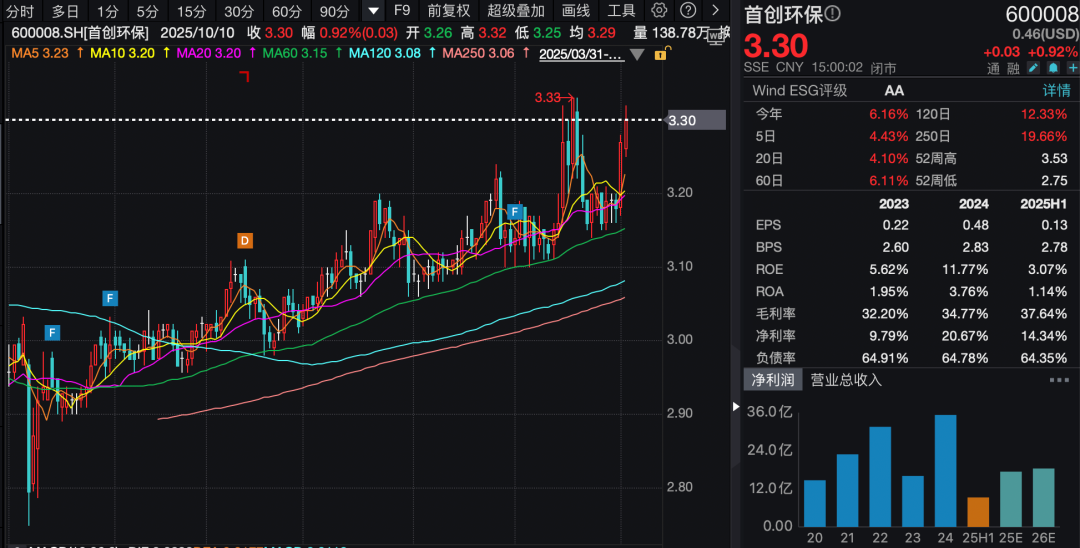
Market Overview - A-shares experienced a slight increase before the National Day holiday and a mixed performance afterward, with 105 listed companies receiving institutional research during the four working days from September 29 to October 10 [1] - Approximately 60% of the companies that were researched achieved positive returns, with Deep Technology leading at a 29.68% increase, followed by ten other companies with over 10% gains [1] Company Highlights - **Shouhua Environmental**: Received 119 institutional research visits, focusing on its core business in wastewater treatment, solid waste disposal, air pollution control, and renewable energy. Institutions inquired about the expiration of project operating periods and risk mitigation strategies [2][4] - **Jiufeng Energy**: Engaged 110 institutions, primarily discussing its gas production and supply business. The company announced plans to invest up to 3.455 billion yuan in a coal-to-natural gas project, with a conservative approach to cost and revenue predictions [5][7] - **Jingchen Technology**: Also received 110 institutional visits, with a focus on its AI technology and its application in various fields. The company reported 19 commercial chips with self-developed AI capabilities and plans for continued high-intensity R&D investment [9] - **Huafeng Measurement and Control**: Welcomed 81 institutional visits, with investors interested in its order structure and semiconductor industry outlook. The company expects continued growth in the semiconductor sector, driven by demand in AI computing and automotive electronics [10][12]

2025年H1中国手机银行APP流量监测报告
艾瑞咨询· 2025-10-12 00:06
Core Insights - The mobile banking app has become a core platform for commercial banks to serve users, optimize experiences, and enhance competitiveness in the context of national digital transformation and financial technology innovation [1] - The integration of AI technology, refined operational strategies, and diversified user demands are reshaping the market landscape and value of mobile banking apps [1] User Flow and Behavior - The user flow of mobile banking apps in China is stabilizing between 650 million to 700 million from 2023 to 2025, indicating a saturated market [2] - The decline in user engagement is evident, with average daily usage time dropping from 4.93 minutes to 2.70 minutes and daily usage frequency decreasing from 4.54 times to 2.86 times [4] Operational Strategies - Refined operations are crucial for banks to break through in a saturated market, focusing on precise user insights and intelligent technology applications [6][7] - AI technology is enhancing refined operations by upgrading interaction experiences, strengthening risk control, and improving data operations efficiency [9] Rankings and Performance - The top three banks by average monthly active users (MAU) are Agricultural Bank of China (24 million), Industrial and Commercial Bank of China (18.9 million), and China Construction Bank (10.6 million) [11][15] - Among joint-stock commercial banks, China Merchants Bank leads with over 7 million MAU, while other banks like Ping An Bank and CITIC Bank follow closely [16][17] - City commercial banks show strong performance, with Jiangsu Bank leading at 349.6 thousand MAU, and several banks achieving significant growth rates [19][20] Case Studies of Successful Apps - Agricultural Bank of China is integrating financial services with daily life scenarios, achieving a 4.8% growth in MAU [28][29] - China Merchants Bank continues to innovate its app to meet changing customer needs and leverage AI advancements [31] - Jiangsu Bank focuses on merging digital capabilities with wealth management, enhancing its app to address customer challenges [33] - Beijing Bank is implementing a digital transformation strategy that combines technology, scenarios, and services to create value [35]







保时捷女销冠遭AI造谣,对技术作恶必须零容忍|荔枝时评
Xin Lang Cai Jing· 2025-10-11 17:23
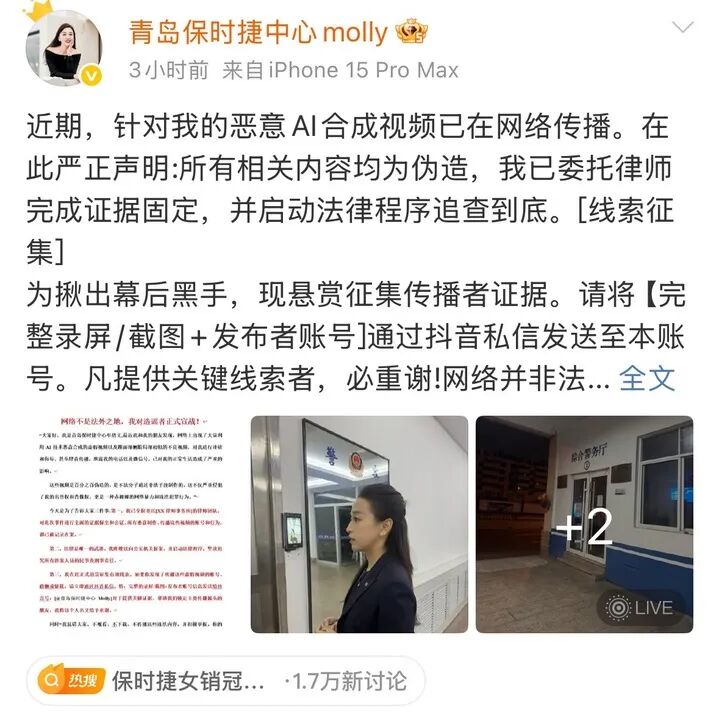
(来源:荔枝锐评) 转自:荔枝锐评 34岁的青岛保时捷销售冠军牟女士,凭借两年售出340辆、月度蝉联销冠的亮眼业绩登上热搜。这份奋 斗本该赢得掌声,却意外坠入一场恶意编织的网络漩涡——聊天骚扰接踵而至,AI合成的虚假不良视 频在网络空间肆意传播,个人手机号、微信号等隐私信息被公然泄露。这起AI滥用事件,既严重侵害 个体权益,更折射出技术失范对社会秩序的潜在威胁。 牟女士以专业素养与不懈努力成为行业标杆,竟不料成为别有用心者的目标。对当事人而言,那些无中 生有的虚假视频,带来的不仅是陌生人的指责与揣测、工作生活失控的困境,还有精神层面难以愈合的 创伤。 细究这场闹剧背后,网友分析可能有嫉妒者因眼红业绩,借AI造谣中伤以泄私愤,也可能有逐利者觊 觎流量热度,将他人痛苦当作博取关注的"筹码",无视信息真伪疯狂传播。而网络空间的匿名性与传播 的便捷性,进一步放大了这种恶意。部分网友随手转发虚假视频,觉得"只是看个热闹"无关紧要;还有 人抱持从众心理,盲目跟风声讨。殊不知,每一次随意转发、每一句无端指责都是对受害者的二次伤 害。 AI本应是服务人类、推动社会进步的工具,却成了制造谣言、攻击他人的"武器"。这种错位不仅让 ...
化妆品企业为何再攻植物成分
经济观察报· 2025-10-11 08:21
Core Viewpoint - The domestic cosmetics industry is experiencing a significant transformation, focusing on the innovation of plant-based ingredients and the development of proprietary technologies for extracting and utilizing these ingredients effectively [1][4][14]. Group 1: Technological Advancements - Since 2022, the domestic cosmetics industry has gradually mastered the full-process technology of "active substance labeling, impurity separation, and purity control" [10]. - Companies like Yunnan's Betaini have successfully extracted beneficial components from plants, such as the Qingci fruit, which has shown efficacy in skin barrier repair and anti-aging [2][11]. - The use of AI technology has accelerated the identification and extraction of effective plant components, allowing for higher purity and better efficacy in products [12]. Group 2: Market Trends - There is a growing trend among domestic cosmetics companies to utilize plant-based ingredients as a key differentiator in product offerings, with many brands showcasing their latest research and development at industry conferences [3][6]. - The number of new plant-based raw materials registered has increased significantly, from 3 in 2022 to 42 in 2024, indicating a shift towards plant-based ingredients dominating the market [7]. - The market for domestic cosmetics is expanding, with local brands capturing over 55.2% of the market share, surpassing foreign brands [15]. Group 3: Investment and Capital Market - Several companies focusing on plant-based ingredients have initiated IPO processes, reflecting increased investor interest in the sector [14]. - Notable investments have been made in companies with capabilities in plant raw material research, indicating a strong market confidence in the potential of domestic plant-based cosmetics [14]. Group 4: Future Outlook - The domestic cosmetics industry is expected to continue its shift towards using local plant resources, with predictions that domestic raw materials will account for over 80% of the market share in the future [15]. - As the industry matures, the purity, stability, and efficacy of domestic raw materials are approaching or even surpassing international standards, enhancing brand confidence in local sourcing [15].


智慧客服中心亮相杭州地铁4号线
Mei Ri Shang Bao· 2025-10-11 02:03
Core Insights - The introduction of AI technology and smart ticketing kiosks by Hangzhou Metro aims to enhance passenger service experience and operational efficiency [1][2] Group 1: AI Implementation - The first AI-powered smart customer service center has been launched on Line 4 of Hangzhou Metro, allowing passengers to resolve ticketing issues autonomously [1] - The smart customer service center features two high-definition touch screens for simultaneous use by two passengers, resembling an ATM [1] Group 2: Service Features - The system offers various options such as ticket purchase, discount ticket purchase, refunds, and invoice requests, along with lost and found services and information inquiries [1] - It supports both online and offline payment methods to cater to different passenger preferences [1] - Passengers can verbally communicate their needs to the AI system, which can automatically recognize and process requests, with an option to call human customer service for assistance if needed [1] Group 3: Operational Efficiency - The deployment of the smart customer service center is expected to alleviate pressure on human customer service representatives and reduce passenger wait times during peak hours [2] - Currently, the equipment is in a pilot phase, and future expansion will depend on the evaluation of the pilot operation [2]
平安好医生现人事大变动:李斗辞职,郭晓涛、何明科接棒
Hua Xia Shi Bao· 2025-10-11 01:45
Core Viewpoint - The recent management changes at Ping An Good Doctor reflect strategic considerations within the company and the broader healthcare sector, with a focus on enhancing operational efficiency and leveraging new leadership to drive growth [2][6][8]. Management Changes - Ping An Good Doctor announced the resignation of CEO Li Dou, with Guo Xiaotao appointed as the new chairman and He Mingke taking over as CEO [2][3]. - Su Dong, previously the general manager of Ping An Property & Casualty Insurance in Shanghai, has been appointed as the deputy general manager of Ping An Good Doctor [2][5]. - Li Dou's departure is seen as surprising given his role in driving significant reforms and achieving profitability for the company [3][4]. Performance and Achievements - Under Li Dou's leadership, Ping An Good Doctor achieved its first profitability in 2024, with a reported profit of 81.43 million yuan, a significant turnaround from a loss of 323 million yuan in the previous year [4]. - For the first half of 2025, the company reported total revenue of 2.5 billion yuan, a year-on-year increase of 19.5%, and a net profit of 134 million yuan, up 136.8% [4]. Strategic Considerations - The management reshuffle is viewed as a strategic move to balance stability and innovation, with Guo Xiaotao ensuring smooth operations while He Mingke brings expertise in internet and B2B sectors [6][9]. - The new leadership is expected to enhance the integration of resources from Ping An Group, which has a penetration rate of approximately 8% among financial payers and 5% among corporate payers [8]. Leadership Background - Guo Xiaotao, 53, is currently an executive director and co-CEO of Ping An Group, while He Mingke, 46, has a strong background in internet healthcare from his time at Baidu [5][7]. - Su Dong has over 30 years of experience in the insurance sector, having held various leadership roles within Ping An [5]. Market Reactions - Morgan Stanley views the management changes as a positive step towards strengthening Ping An Good Doctor's position as a flagship healthcare platform [8]. - Citigroup believes the new appointments indicate further support from Ping An Group and anticipate increased synergies in business operations [8].

美股异动|阿里巴巴股价重挫后能否逆袭 长期增长预期仍获多方看好
Xin Lang Cai Jing· 2025-10-10 23:04
Core Viewpoint - Alibaba's stock price has experienced a significant decline, with an 8.45% drop on October 10, marking a total decrease of 16.02% over six consecutive trading days, raising market concerns [1][2] Group 1: Stock Performance - On October 10, southbound funds sold Alibaba shares worth 18.1 billion HKD, contributing to downward pressure on the stock price [1] - The Hang Seng Tech Index fell over 3% on the same day, indicating a broader tech sector pullback that affected Alibaba's stock [1] Group 2: Analyst Predictions - Morgan Stanley predicts a 70% year-on-year decline in adjusted earnings for Alibaba by the end of Q3 2025 due to investments in AI and instant retail, heightening market anxiety [1] - Despite short-term profit adjustments, Bank of America maintains a bullish outlook, reiterating a buy rating with a target price of $200, citing long-term growth potential from cloud services and e-commerce monetization [1][2] Group 3: Long-term Growth Potential - Bank of America forecasts Alibaba's cloud business to maintain a high growth rate, with revenue growth expected to accelerate to 30% year-on-year [1] - The report indicates that Alibaba's customer management revenue in e-commerce is projected to grow steadily by 10%, particularly benefiting from instant retail on Taobao [1] - By FY2028, Alibaba's net profit growth is expected to recover to 39%, supported by a valuation model that includes DCF valuation of core businesses and the value of Ant Group's equity [2]

晶晨股份获超百家机构调研 智能家居产品销量大增
Zheng Quan Shi Bao· 2025-10-10 18:11
Market Performance - A-shares showed a slight increase before the National Day holiday and a mixed performance afterward, with the Shanghai Composite Index rising 1.43% and the Shenzhen Component Index increasing by 2.40% from September 29 to September 30, while experiencing a small rise of 0.37% from October 9 to October 10 [1] - During the four working days from September 29 to October 10, 105 listed companies received institutional research, with approximately 60% of the stocks achieving positive returns, led by Deep Technology with a 29.68% increase [1] Company Research Highlights - **首创环保 (Beijing Enterprises Water Group)**: Received 119 institutional research visits, focusing on the expiration of concession periods for existing heavy asset projects and risk mitigation strategies. The company plans to extend concession periods through measures like offsetting receivables and participating in urban renewal projects [2][3] - **九丰能源 (Jiu Feng Energy)**: Engaged 110 institutions, with a focus on the progress and expected benefits of its second-phase project. The company announced an investment of up to 34.55 billion yuan for a coal-to-natural gas project, maintaining a conservative approach in cost and revenue predictions [4] - **晶晨股份 (Amlogic)**: Also received 110 institutional visits, with inquiries about AI technology applications and R&D investments. The company reported 19 commercial chips with self-developed AI capabilities and plans to continue high-intensity R&D in AI-related fields [5] - **华峰测控 (Huafeng Measurement Control)**: Welcomed 81 institutional visits, with a focus on order structure and market outlook. The company expects continued growth in the semiconductor industry, driven by demand in data centers and power devices, projecting a positive market trend for the second half of the year [6][7]



又一直销银行将“退场” 银行业从“渠道竞争”转型“生态竞争”
Zheng Quan Ri Bao· 2025-10-10 15:53
Group 1 - Postal Savings Bank of China has announced the absorption and merger of Postal Huinong Bank, which was approved by the shareholders' meeting [1] - The merger aims to achieve strategic integration, optimize resource allocation, and reduce management costs, enhancing overall operational efficiency [1] - Industry experts indicate that this integration model lowers operational costs and enables centralized management and analysis of customer data, facilitating cross-selling and precise services [1] Group 2 - Several banks have recently announced the shutdown or integration of their direct banking services, indicating a trend towards merging these services into traditional banking platforms [2] - The independent direct banking model has not formed a complete service ecosystem or unique competitive advantages, leading to resource waste for traditional banks [2] - Following the merger, only one independent direct bank, Baixin Bank, remains in the country, highlighting a shift towards integrated development within the banking sector [2] Group 3 - The evolution of direct banks reflects the digital transformation of the banking industry, with mobile banking upgrades fulfilling user needs and rendering direct banks as transitional entities [3] - The ultimate goal of financial digitalization is not merely channel innovation but a profound ecological restructuring within the banking sector [3] - Traditional banks are encouraged to leverage their service channels and explore integration into various scenarios while utilizing digital technology to enhance management [3]

千亿手术市场,正在“换刀”
Hu Xiu· 2025-10-10 14:04
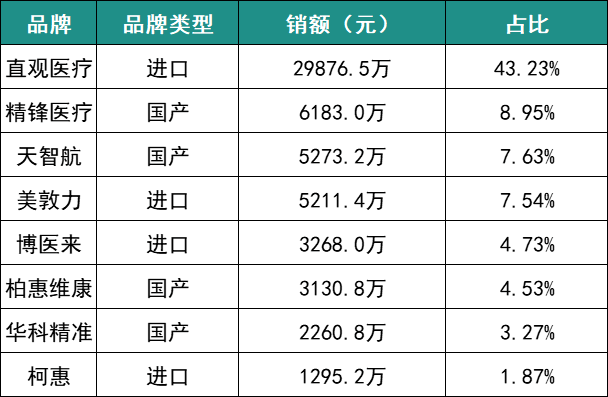
Core Insights - The dominance of Intuitive Surgical's da Vinci surgical robot system in the U.S. market is being challenged by the rise of domestic surgical robot companies in China, leading to a more competitive landscape [1][2] - The market share of domestic laparoscopic surgical robots in China is projected to grow significantly, indicating a shift from foreign dominance to a more balanced competition [4][5] Market Overview - The global surgical robot market is expected to reach approximately $18.074 billion in 2023 and $20.4 billion in 2024, with a compound annual growth rate (CAGR) of 23.75% over the next five years [6] - The Chinese surgical robot market is anticipated to grow to approximately 9.59 billion yuan in 2024, with a CAGR of 34.5%, reaching 11.03 billion yuan by 2025 [8] Competitive Landscape - By the first quarter of 2025, the number of imported and domestic brands in the top eight sales positions in China is expected to be equal, with two out of the top three brands being domestic [9] - Despite the increasing presence of domestic brands, imported brands still hold a significant market share, with 70.18% compared to 29.82% for domestic brands [10] Technological Advancements - Domestic surgical robot companies are making strides in technology, with a notable increase in the number of approved products and market entries [41][42] - The introduction of AI and remote surgical technologies is expected to enhance the capabilities of domestic surgical robots, potentially increasing market penetration [60][63] Financial Performance - Domestic companies like Tianzhihang have reported significant revenue growth, with a 114.89% increase in revenue in the first half of 2025 compared to the previous year [32][33] - However, many domestic companies are still operating at a loss, indicating challenges in achieving sustainable profitability [46][50] Challenges and Opportunities - The reliance on imported core components poses a significant challenge for domestic surgical robot manufacturers, as these components account for 70%-80% of the total cost [35] - The ongoing U.S.-China trade tensions have created opportunities for domestic brands to capture market share by offering more cost-effective alternatives to imported systems [24][26] Policy Support - Recent government policies have begun to support the integration of surgical robots into healthcare systems, with reimbursement rates for surgical robot procedures being established in various provinces [73][74] - The promotion of a "product + service" model by local governments aims to enhance the competitiveness of domestic surgical robot companies [68] Conclusion - The future of domestic surgical robots in China will depend on technological advancements, innovative business models, and effective policy support to transition from merely entering the market to establishing a strong foothold [75]