外汇市场

Search documents
七月份外汇市场运行平稳
Sou Hu Cai Jing· 2025-08-16 22:53
Core Insights - In July, banks in China reported a settlement of 16,700 billion yuan and a sale of 15,070 billion yuan, indicating a continued surplus in foreign exchange transactions [1] - The foreign exchange market in China has remained stable, with a month-on-month increase of 12% in settlement and 16% in sales, resulting in a surplus of 22.8 billion USD [1] - Cross-border capital flows have been generally stable, with non-bank sectors maintaining high levels of income and expenditure, leading to a balanced flow [1] Group 1 - In July, the net inflow of funds from goods trade increased by 33%, maintaining a high operational level [1] - The net outflow of funds from service trade and investment income rose by 34% and 7% respectively, attributed to seasonal factors such as summer travel and corporate dividend payouts [1] - The overall foreign exchange market is characterized by stable expectations and active trading, with a slight increase in the settlement rate and a stable sale rate among enterprises and individuals [1]
特朗普:美俄暂未达成协议,但接近;影石创新就董事长撒钱犒劳团队致歉;赵薇所持210万元股权再被冻结丨每经早参
Mei Ri Jing Ji Xin Wen· 2025-08-16 00:33
Group 1 - The U.S. President Trump and Russian President Putin held a joint press conference in Anchorage, Alaska, discussing the outcomes of their meeting, indicating that many issues have been agreed upon, with only a few unresolved points remaining, and expressing optimism about reaching an agreement soon [11][12][13] - The Chinese company Yingstone Innovation announced a cash red envelope distribution event led by its chairman, which sparked widespread discussion in the market. The company stated that this was part of a team-building activity following the announcement of their drone product's public testing [23] - The Chinese central bank released a report emphasizing the implementation of a moderately loose monetary policy, aiming to maintain ample liquidity and align the growth of social financing and money supply with economic growth and price level expectations [5] Group 2 - The Chinese Ministry of Commerce announced that China has filed a complaint with the World Trade Organization against Canada regarding import restrictions on steel and other products, criticizing Canada's unilateral and protectionist measures [6] - The State Administration of Foreign Exchange reported that China's foreign exchange market remained stable in July, with a continued surplus in bank settlement and sales, indicating a stable market expectation and active trading [7] - The China Securities Regulatory Commission approved the registration of futures and options for coated printing paper, marking the introduction of the world's first financial derivatives for cultural paper, which is expected to enhance market pricing transparency [8] Group 3 - Xiaopeng Motors announced an expanded strategic cooperation agreement with Volkswagen Group regarding the development of electronic and electrical architecture, which will be integrated into both electric and hybrid vehicle platforms in the Chinese market [15][16] - JD.com completed the acquisition of Hong Kong's Jia Bao Supermarket, aiming to enhance its retail presence and supply chain in the Greater Bay Area [21] - The company Laopuyin announced a price adjustment for its products, set to take effect on August 25, 2025, which may impact market dynamics [17] Group 4 - The film "Wang Wang Mountain Little Monster" has become the highest-grossing 2D animated film in Chinese history, surpassing 807.9 million yuan in box office revenue, indicating a strong performance in the animation sector [10] - The Chinese government is taking steps to rectify issues at Peking Union Medical College related to its pilot program, emphasizing stricter management and oversight [9] - The recent stock freeze of actress Zhao Wei's shares in Beijing Princess Culture Communication Co., amounting to 2.1 million yuan, highlights ongoing financial scrutiny in the entertainment industry [22]


7月货物贸易资金 净流入环比增长33%
Zhong Guo Zheng Quan Bao· 2025-08-15 20:10
Core Viewpoint - The foreign exchange market in China is maintaining stable operations, with significant cross-border income and expenditure levels, and a balanced overall flow in July [1][2]. Group 1: Foreign Exchange Market Performance - In July, banks settled 16,700 billion RMB and sold 15,070 billion RMB, with cumulative settlements from January to July reaching 98,835 billion RMB and sales at 99,020 billion RMB [1]. - The net inflow of funds from goods trade increased by 33% month-on-month, indicating a strong performance in this sector [2]. - The settlement and sale volumes in July showed a month-on-month increase of 12% and 16%, respectively, continuing a surplus trend with a scale of 22.8 billion USD [2]. Group 2: Cross-Border Capital Flows - The cross-border income and expenditure scale for enterprises and individuals in July was at a historical high, with a basic balance in receipts and payments [2]. - The net outflow of funds from service trade and investment income increased by 34% and 7% respectively, attributed to seasonal factors such as summer travel and corporate dividend payouts [2]. Group 3: Market Stability Factors - The stability of market expectations and transactions is highlighted, with a slight increase in the settlement rate and a stable sale rate, reflecting active trading [2]. - The ongoing high-quality economic development and enhanced resilience of the foreign exchange market are expected to support its continued stable operation [2].
7月货物贸易资金净流入环比增长33%
Zhong Guo Zheng Quan Bao· 2025-08-15 20:10
Core Viewpoint - The foreign exchange market in China is maintaining stable operations, with significant cross-border income and expenditure levels in July, indicating a balanced flow of funds [1][2]. Group 1: Foreign Exchange Market Performance - In July, the bank's foreign exchange settlement reached 16,700 billion RMB, while the foreign exchange sales amounted to 15,070 billion RMB, showing a month-on-month increase of 12% and 16% respectively [1][2]. - The cumulative foreign exchange settlement from January to July was 98,835 billion RMB, with sales at 99,020 billion RMB, reflecting a slight surplus in the settlement [1]. - The net inflow of funds from goods trade increased by 33% month-on-month, maintaining a high level of operation [1][2]. Group 2: Market Stability and Expectations - The exchange rate expectations and trading activities are stable, with a slight increase in the settlement rate and a steady sales rate among enterprises and individuals [2]. - The overall cross-border capital flow remains stable, with non-bank sectors' income and expenditure at historical highs, indicating a balanced flow [2]. - Factors such as high-quality economic development, steady progress in opening up, and enhanced resilience of the foreign exchange market are expected to support continued stability [2].
7月份我国外汇市场保持平稳运行 跨境资金流动总体稳定
Zheng Quan Ri Bao Wang· 2025-08-15 14:27
Core Insights - The foreign exchange market in China has maintained stable operations despite increased volatility in the international currency market, with a notable rebound and subsequent decline in the US dollar index [1][2] Group 1: Bank Settlement and Foreign Exchange Data - In July 2025, banks in China settled a total of 233.6 billion USD and sold 210.8 billion USD, with cumulative settlements from January to July reaching 1,376.8 billion USD and sales at 1,379.3 billion USD [1] - The bank's foreign exchange income for clients in July was 690.4 billion USD, while payments amounted to 698.1 billion USD, leading to cumulative foreign exchange income of 4,551 billion USD and payments of 4,431.5 billion USD from January to July [1] Group 2: Market Trends and Expectations - In July, the bank's settlement and sales volumes increased by 12% and 16% respectively compared to the previous month, continuing a surplus trend with a scale of 22.8 billion USD [1] - The exchange rate for enterprises and individuals showed a slight increase in settlement rates while the sales rates remained stable, indicating stable market expectations and active trading [1] Group 3: Cross-Border Capital Flows - Cross-border capital flows remained generally stable, with non-bank sectors' income and expenditure at historical highs, achieving a near balance [2] - Net inflows from goods trade increased by 33% month-on-month, while net outflows from service trade and investment income rose by 34% and 7% respectively, attributed to seasonal factors such as summer travel and corporate dividend payouts [2] Group 4: Economic Support Factors - The steady progress of high-quality economic development in China, along with the increasing resilience of the foreign exchange market, is expected to provide strong support for the stable operation of the foreign exchange market [2]
外汇局李斌:企业、个人等主体结汇率环比小幅上升,售汇率基本持平
Bei Jing Shang Bao· 2025-08-15 10:57
Core Insights - The foreign exchange market in China has maintained stable operations despite increased volatility in the international currency market, with a notable rebound and subsequent decline in the US dollar index [1] Group 1: Market Performance - In July, the scale of bank foreign exchange settlement and sales increased by 12% and 16% respectively, continuing a surplus trend with a total scale of 22.8 billion USD [1] - The exchange rate for enterprises and individuals showed a slight increase in settlement rates while the sales rates remained stable, indicating stable market expectations and active trading [1] Group 2: Cross-Border Capital Flows - Cross-border income and expenditure for non-bank sectors reached historical highs in July, with a balanced income and expenditure [1] - Net inflow of funds from goods trade increased by 33% month-on-month, maintaining a high level, while net outflows from service trade and investment income rose by 34% and 7% respectively, primarily due to seasonal factors such as summer travel and corporate dividend payouts [1] Group 3: Economic Support - The steady progress of high-quality economic development in China, along with the increasing resilience of the foreign exchange market, is expected to provide strong support for the stable operation of the foreign exchange market [1]
外汇局:7月企业、个人等非银行部门跨境收入和支出规模处于历史高位
Sou Hu Cai Jing· 2025-08-15 10:43
Core Insights - The foreign exchange market in China has maintained stable operations despite increased volatility in the international currency market since July 2023 [1] Market Performance - In July, the scale of bank foreign exchange settlement and sales increased by 12% and 16% respectively, continuing a surplus trend with a total of 22.8 billion USD [1] - The exchange rate for enterprises and individuals showed a slight increase in settlement rates while sales rates remained stable, indicating stable market expectations and active trading [1] Cross-Border Capital Flows - Overall, cross-border capital flows remained stable, with non-bank sectors' cross-border income and expenditure at historical highs, achieving a near balance [1] - Net inflow from goods trade increased by 33% month-on-month, maintaining a high level, while net outflows from service trade and investment income rose by 34% and 7% respectively, attributed to seasonal factors such as summer travel and corporate dividend payouts [1] Economic Context - The steady progress of high-quality economic development in China, along with the increasing resilience of the foreign exchange market, is expected to provide strong support for the stable operation of the foreign exchange market [1]
美股 盘前重磅!
Shang Hai Zheng Quan Bao· 2025-08-12 13:59
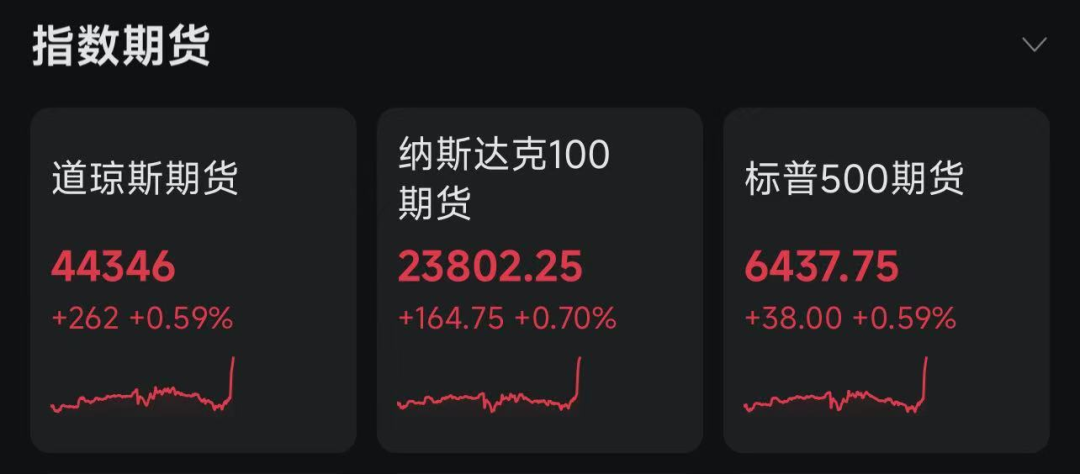
Group 1 - The core point of the article is the release of the US July CPI data, which shows a month-on-month increase of 0.2% and a year-on-year increase of 2.7%, leading to increased bets on a potential interest rate cut by the Federal Reserve in September [1] - The core CPI for July increased by 3.1% year-on-year, exceeding market expectations of 3.0%, marking the highest level since January [1] - Following the CPI data release, US stock index futures experienced a significant rise, with the Dow Jones index futures up 0.59%, Nasdaq 100 index futures up 0.70%, and S&P 500 index futures up 0.59% [1] Group 2 - Analysts noted that the market's reaction indicated that some traders had anticipated a worse inflation report, yet stock index futures still rose despite the acceleration in inflation [3] - In the foreign exchange market, the US dollar index fell sharply by over 30 points, with non-US currencies appreciating, including the British pound surpassing 1.35 against the dollar [3] - In the commodities market, spot gold prices surged, approaching $3360 per ounce [5]
2025年上半年外汇市场运行平稳 表现出较强的韧性和活力
Xin Hua Wang· 2025-08-12 06:24
【纠错】 【责任编辑:成岚】 新华社音视频部制作 7月22日,国务院新闻办公室举行新闻发布会,介绍2025年上半年外汇收支数据情况,并答记者问。国家 外汇管理局副局长、新闻发言人李斌介绍,2025年上半年外汇市场运行平稳,表现出较强的韧性和活 力。 ...
权威数读·经济半年报丨跨境贸易和投融资继续保持活跃
Xin Hua Wang· 2025-08-12 05:42
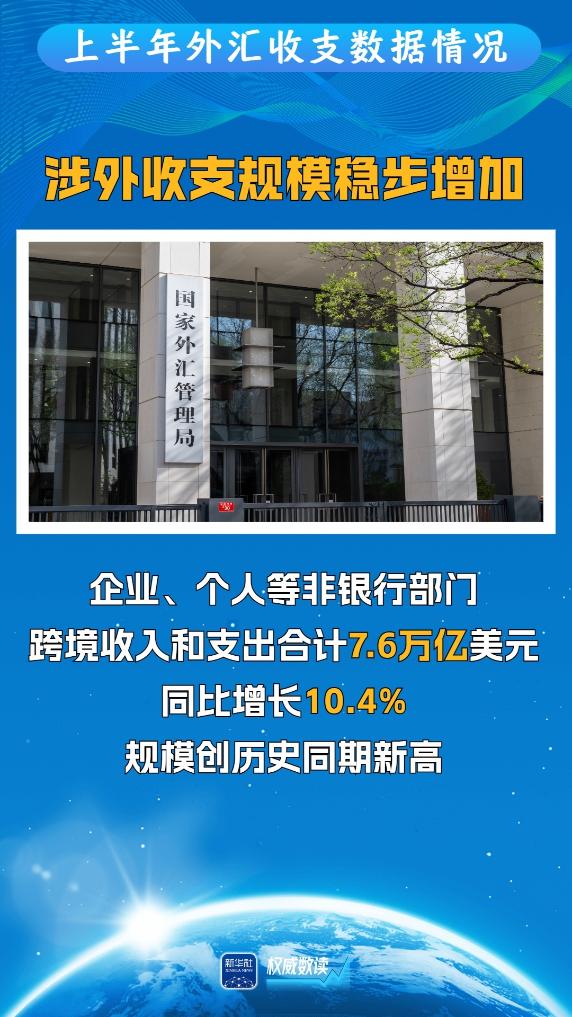
Core Viewpoint - The latest foreign exchange data indicates that China's net cross-border capital inflow reached 127.3 billion USD in the first half of the year, with a 46% quarter-on-quarter increase in the second quarter, continuing the net inflow trend since the second half of last year, reflecting active cross-border trade and investment activities [1][7]. Group 1: Cross-Border Capital Flow - In the first half of the year, the total cross-border income and expenditure of non-bank sectors, including enterprises and individuals, amounted to 7.6 trillion USD, marking a year-on-year growth of 10.4%, the highest for the same period in history [4]. - The net inflow of cross-border funds for enterprises and individuals reached 127.3 billion USD, continuing the net inflow trend since the second half of last year [7]. Group 2: Foreign Exchange Market Activity - The foreign exchange market saw a trading volume of 21 trillion USD in the domestic RMB foreign exchange market, reflecting a year-on-year increase of 10.2% [15]. - The bank's foreign exchange settlement and sales amounted to 25.3 billion USD, indicating rational and orderly trading behavior among enterprises and individuals [11]. Group 3: Foreign Exchange Reserves and Currency Fluctuations - As of the end of June, China's foreign exchange reserves stood at 3.3174 trillion USD, an increase of 115.1 billion USD compared to the end of 2024 [18]. - The RMB appreciated by 1.9% against the USD in the first half of the year, with the exchange rate fluctuating between 7.15 and 7.35 [21].