房地产市场调整

Search documents
上半年归母净利润同比增长8% 中国金茂公布焕新发展目标
Zhong Guo Jing Ying Bao· 2025-08-28 14:51
Core Viewpoint - China Jinmao (00817.HK) reported a revenue of 25.113 billion yuan for the first half of 2025, representing a year-on-year growth of 14%, with a net profit attributable to owners of approximately 1.09 billion yuan, up 8% year-on-year [2][3] Financial Performance - The company achieved a signed sales amount of 53.4 billion yuan in the first half of the year, a 20% increase year-on-year, ranking ninth in the industry for the first time [3] - The average signed price for residential properties reached 26,000 yuan per square meter, significantly up from 22,000 yuan in 2024 and 21,000 yuan in 2023, with increases of 18.2% and 24% respectively [3] - The company’s operating cash flow recovery period shortened to 11.4 months, below the internal control target of 12 months [5] Investment Strategy - China Jinmao focused on core cities, acquiring 16 projects in the first half of the year with a total land cost of 49.2 billion yuan, all located in first and second-tier cities [3][4] - The company aims to maintain an investment target of 20 billion to 30 billion yuan for the year [4] Asset Management - The company plans to address 80% of its stock issues within three years, with a target to dispose of 35% of its stock assets this year [5] - As of mid-2025, 69% of the unsold value is located in economically developed regions, an increase of 6 percentage points from the end of 2024 [4] Non-Development Business Performance - Jinmao Services (00816.HK) reported a revenue of 1.783 billion yuan, a 20% increase year-on-year, with a managed area growth of 11% [6] - The retail and hotel operations remained stable, with a notable rental rate of 99.03% for Changsha Lanxiu City, and an average rental increase of 8% [6] Future Outlook - The company plans to achieve the "live well" goal from 2025 to 2027 and the "shine" goal from 2028 to 2030, focusing on enhancing operational efficiency and revitalizing existing assets [7] - Management believes that for quality enterprises, future opportunities will outweigh challenges, and the company aims to enhance its core competitiveness to address market uncertainties [7]

销售动能强劲、盈利能力领先,中海地产在市场调整中保持优等生风范
Di Yi Cai Jing· 2025-08-28 07:51
Core Viewpoint - China Overseas Development (中海地产) demonstrates strong operational quality and risk resilience amid a stabilizing real estate market, achieving significant sales and maintaining financial stability [3][10]. Financial Performance - In the first half of 2025, China Overseas achieved contract property sales of 120.15 billion yuan, ranking second in the industry; revenue reached 83.22 billion yuan, with a pre-tax profit of 13 billion yuan and a core profit attributable to shareholders of 8.78 billion yuan [3]. - The company maintains a debt ratio of 45.7% and a net gearing ratio of 28.4%, with cash reserves of 108.96 billion yuan, representing 12.1% of total assets [3][10]. - The average financing cost is at a low of 2.9%, and administrative expenses account for only 3.8% of revenue, indicating industry-leading efficiency [3]. Market Position and Strategy - The real estate market is expected to see an increase in improvement-driven demand, with China Overseas poised to capture a significant market share due to its competitive advantages [4][10]. - The company remains confident in achieving its annual sales targets, with a focus on key projects in major cities such as Beijing and Shanghai [5][11]. Sales and Development - In the first half of 2025, China Overseas recorded contract sales of 120.1 billion yuan, with a notable performance in first-tier cities contributing 53.7% of total sales [5][6]. - The company has acquired 22 land parcels with an investment of 55.01 billion yuan, leading the industry in investment scale [8]. Commercial Operations - The commercial property segment generated revenue of 3.54 billion yuan, with a growing contribution from first-tier city projects [7]. - The company is enhancing its asset quality through ongoing project upgrades and optimizations, with a focus on core business areas [7]. Future Outlook - China Overseas is optimistic about the second half of 2025, expecting growth in investments and sales, supported by a robust pipeline of projects [9][11]. - The company plans to maintain its leadership position by focusing on high-quality development and leveraging its full industry chain capabilities [11].
龙光公布2025年中期业绩:推进境内外债务重组,稳定企业生产经营
Ge Long Hui· 2025-08-27 12:50
Group 1: Company Performance - In the first half of 2025, despite ongoing policy efforts to stabilize the real estate market, the industry remains in a deep adjustment phase, with overall investment and sales declining year-on-year [1] - Longfor Group reported a contract sales amount of RMB 3.98 billion and revenue of RMB 3.4 billion, with a net loss of RMB 1.96 billion, primarily due to the continued downturn in the real estate sector, low gross margins, and inventory impairment provisions [1] - Over 60% of the 72 real estate companies that issued mid-term performance forecasts are expected to report losses, indicating significant operational pressure across the industry [1] Group 2: Debt Restructuring - Longfor Group is actively advancing its domestic and international debt restructuring efforts, achieving significant progress with 21 domestic corporate bonds and asset-backed securities restructuring plans successfully approved by investors [2] - The company is arranging for bondholders to select and allocate options within the restructuring plan, ensuring the smooth completion of the domestic restructuring [2] - The acceleration of domestic debt restructuring is expected to provide a solid foundation for the ongoing international debt restructuring process, with strong support from numerous investors [2]
房地产完成探底需满足哪些条件?|宏观经济
清华金融评论· 2025-08-27 11:33
Core Viewpoint - The article discusses the recent policy adjustments in the real estate market of major Chinese cities, particularly Beijing and Shanghai, aimed at stimulating housing demand and stabilizing the market amidst ongoing challenges. It emphasizes the structural nature of these adjustments and the need for a gradual recovery in the real estate sector [2][3][4]. Policy Adjustments - Beijing has relaxed its housing purchase restrictions, allowing families to buy unlimited properties outside the Fifth Ring Road, signaling a structural loosening rather than a complete removal of restrictions [3][4]. - The adjustments are designed to guide housing demand towards outer city areas, promoting urban expansion and addressing diverse housing needs [4]. - Other first-tier cities like Shanghai and Guangzhou may follow Beijing's example, implementing similar structural adjustments, while Shenzhen's options are limited due to its geographical constraints [4]. Market Conditions - The real estate market continues to experience a downturn, with a 4.0% year-on-year decline in national commercial housing sales from January to July, and a 12% drop in real estate investment during the same period [5]. - The leverage ratio of households has decreased slightly to 61.1%, indicating a stabilization in borrowing capacity, but overall confidence in the real estate market remains low [5]. - The ongoing liquidity risks faced by real estate companies have led to a significant increase in credit defaults, with the total default amount during the "14th Five-Year Plan" period being 24 times that of the previous period [5]. Future Outlook - The article suggests that the real estate market is undergoing a structural and trend-based deep adjustment influenced by demographic changes, urbanization slowdowns, and economic growth deceleration [6][8]. - For the market to reach a bottom, several conditions must be met, including a stable population growth, a reasonable economic growth rate, and a decrease in inventory levels [8][9]. - The anticipated demand for housing will increasingly come from improvement needs as the residential level has reached a relatively high standard [8]. Structural Changes - The article highlights the demographic shifts, including negative population growth and aging, which are expected to impact housing demand negatively [10]. - The potential for improvement in housing demand is seen in the middle-income group as GDP per capita rises, particularly in coastal and regional urban centers [10]. - The article predicts that the real estate market will stabilize after a period of adjustment, with a gradual recovery in sales and a decrease in inventory levels [12]. Recommendations - The article recommends facilitating transaction processes and encouraging structural policy adjustments in first-tier cities to stimulate market activity [13]. - It emphasizes the importance of aligning real estate policies with broader economic recovery efforts to enhance investor confidence and housing demand [13].

中报点评|保利发展:规模稳居行业第一,拿地力度明显加大
克而瑞地产研究· 2025-08-27 09:25
Core Viewpoint - The company is facing increasing inventory clearance pressure despite maintaining a leading position in the industry, with a notable decline in profit margins and overall financial performance [2][3][21]. Sales Performance - In the first half of 2025, the company achieved total sales of 145.17 billion yuan, a year-on-year decrease of 16.25%, with a sales area of 7.1354 million square meters, down 25.23% [2][5]. - The sales amount from inventory projects acquired in 2021 and earlier was 51.4 billion yuan, accounting for 35.4% of total sales, indicating a focus on inventory clearance [2][5]. - The company maintained a high signing ratio of 78.7% for signed building area rights, slightly down from 79.3% the previous year, which supports revenue and scale matching [5][11]. Land Acquisition Strategy - The company significantly increased its land acquisition efforts, with new land area of 2.28 million square meters and acquisition costs of 50.9 billion yuan, representing year-on-year growth of 96.6% and 304% respectively [12][13]. - The proportion of land acquired in first-tier cities reached 23.8%, indicating a strategic focus on these markets [15][19]. - The average land acquisition cost was 22,325 yuan per square meter, slightly up by 0.5% compared to the previous year [15]. Financial Performance - The company reported operating revenue of 116.857 billion yuan in the first half of 2025, a decrease of 16.08% year-on-year, with pre-received housing payments reaching 330.301 billion yuan, indicating a solid reserve for future revenue [3][21]. - Gross profit margin fell to 14.6%, down 1.4 percentage points year-on-year, while net profit margin and attributable net profit margin decreased to 5.6% and 2.3%, respectively [21][22]. - The company’s cash holdings increased by 3.3% to 138.562 billion yuan, with a non-restricted cash to short-term debt ratio of 1.19, indicating a stable liquidity position [24]. Debt and Financing - The company maintained a net debt ratio of 59.64%, down 3.03 percentage points from the beginning of the year, and the asset-liability ratio after excluding pre-received payments was 64.56%, a decrease of 1.31 percentage points [24]. - The comprehensive financing cost decreased to 2.89%, reflecting the company's ability to secure low-cost financing [24].


宁证期货今日早评-20250827
Ning Zheng Qi Huo· 2025-08-27 01:36
Report Summary 1. Report Industry Investment Rating No investment rating information is provided in the report. 2. Core Views - The market for various commodities shows different trends, with most facing short - term uncertainties and being influenced by factors such as supply - demand balance, cost changes, and policy - related factors. Overall, a cautious approach is recommended for most commodities, including waiting and watching or short - term trading [1][3][4]. 3. Summary by Commodity Manganese Silicon - The operating rate of 187 independent silicon - manganese enterprises reached 46.37%, with daily output at 30,170 tons, a new high in over a year. Cost support has weakened slightly, and demand is expected to decline during the parade. In the short term, the price decline is limited, but there is downward pressure in the medium - to - long term [1]. Crude Oil - US commercial crude, distillate, and gasoline inventories decreased. The key factor is OPEC+'s potential accelerated production increase. The market is currently in a short - term weak and volatile state due to the balance between production increase expectations and stable inventories [1]. Coking Coal - The fundamentals of coking coal have no significant change. Supply is constrained, and demand is under pressure in the short term. The market is in a state of mixed long and short factors, with the futures contract oscillating within a range [3]. Rebar - Steel prices turned from rising to falling. The initial price increase was due to environmental protection restrictions and rising coking futures, but weak demand limited the rebound. Short - term prices are expected to be weak and volatile [3]. Live Pigs - Pig prices continued to fall, but market resistance has emerged after continuous decline. It is recommended to hold short - term long positions, and farmers can choose to sell for hedging [4]. Palm Oil - Malaysian palm oil production decreased in August. The market is affected by the negative impact of the US biodiesel blending exemption policy. Domestic import profits are good, and the short - term market is volatile. It is advisable to wait and see [4]. Soybeans - Brazilian soybean, soybean meal, and corn export forecasts have decreased. The price of domestic soybeans is expected to remain weak and stable in the short term due to upcoming new - bean supply and limited demand [5]. PTA - PTA operating rate decreased due to maintenance. Polyester inventory decreased, and demand is expected to increase during the traditional peak season, but the sustainability is uncertain. It is advisable to wait and see [6]. Rubber - Rubber production in Thailand and other regions is affected by rain, and demand from the domestic tire industry is weak. The market is in a state of weak supply and demand, and it is recommended to wait and see or short - term trading [6]. Methanol - Domestic methanol production is at a high level, downstream demand is stable, and port inventory is accumulating. The 01 contract is expected to be volatile in the short term, and it is advisable to wait and see or short on rebounds [7]. Soda Ash - The price of soda ash is weak, production has increased slightly, and inventory has risen. The float glass market is stable, and downstream procurement is mainly for low - price needs. The 01 contract is expected to be volatile, and it is advisable to wait and see [8]. Polypropylene - Polypropylene production is stable, supply is abundant, and commercial inventory has decreased but remains high. The market price is volatile, and it is advisable to wait and see or go long on pullbacks [9].
华丽家族: 华丽家族股份有限公司2025年半年度报告
Zheng Quan Zhi Xing· 2025-08-26 16:24
Core Viewpoint - The company reported a significant decline in financial performance for the first half of 2025, with a net loss attributed to reduced project delivery and increased sales expenses in a challenging real estate market [2][3][5]. Financial Performance - Total revenue for the first half of 2025 was approximately 137.97 million yuan, a decrease of 11.76% compared to the same period last year [2][11]. - The total profit for the period was a loss of approximately 10.54 million yuan, contrasting with a profit of 10.00 million yuan in the previous year, marking a 205.42% decline [2][11]. - The net profit attributable to shareholders was a loss of about 10.41 million yuan, compared to a profit of 3.08 million yuan in the same period last year, representing a 437.58% decrease [2][11]. - The company’s cash flow from operating activities was negative 70.60 million yuan, indicating a significant cash outflow compared to the previous year [2][11]. Business Overview - The company’s real estate development activities are primarily concentrated in Shanghai, Suzhou, and Zunyi, with ongoing projects in these regions [3][6]. - The Shanghai project, in collaboration with Poly Real Estate, is located in a prime area and is expected to launch sales in the second half of 2025 [3][6]. - In Suzhou, the company has successfully sold out certain product types, while in Zunyi, the project has maintained stable sales despite market challenges [3][6][10]. Market Conditions - The real estate market is showing signs of stabilization, with government policies aimed at boosting housing demand and reducing inventory [3][10]. - National statistics indicate a narrowing decline in new housing sales, with a 3.5% decrease in sales area compared to the previous year, which is an improvement from earlier declines [3][10]. - The company is actively monitoring land market dynamics to identify opportunities for land acquisition to expand its land reserves [4][7]. Strategic Focus - The company emphasizes a focus on improving its core real estate business while exploring investment opportunities in emerging industries [9][11]. - The investment strategy prioritizes safety and seeks to identify quality investment opportunities in prime locations [10][11]. - The company aims to enhance its operational efficiency and risk management through a comprehensive operational control system [10][11].

滨江集团上半年净利增58.87% 销售额位列民营房企首位
Zheng Quan Shi Bao Wang· 2025-08-26 14:26
Core Viewpoint - Binjiang Group reported significant growth in its financial performance for the first half of 2025, driven by increased property deliveries and improved profit margins [1] Financial Performance - The company achieved operating revenue of 45.449 billion yuan, a year-on-year increase of 87.8% [1] - Net profit attributable to shareholders reached 1.853 billion yuan, up 58.87% year-on-year [1] - The basic earnings per share stood at 0.6 yuan [1] - The gross profit margin was 12.24%, an increase of 2.67 percentage points compared to the same period last year [1] Sales and Market Position - Binjiang Group's sales amounted to 52.75 billion yuan, ranking 10th among national real estate companies and 1st among private enterprises [1] - The company added 16 new land reserve projects during the reporting period, with a total planned construction area of 1.0067 million square meters and total land costs of 33.272 billion yuan [1] Land Reserve and Regional Strategy - As of the end of the reporting period, 73% of the company's land reserves were located in Hangzhou, with 17% in other cities within Zhejiang Province and 10% outside the province [2] - The company's strong regional layout and quality land reserves provide a solid foundation for sustainable development [2] Financial Stability and Debt Management - The company prioritized financial safety, maintaining a reasonable level of interest-bearing debt, with total interest-bearing debt at 26.506 billion yuan, a decrease of nearly 4 billion yuan from the beginning of the year [2] - The asset-liability ratio, excluding prepayments, was 57.8%, and the net debt ratio was 7.03% [2] - Short-term debt was 9.408 billion yuan, accounting for only 28% of total debt, which is manageable given the cash on hand [2] Financing and Cost Management - The average financing cost has decreased over the years, reaching 3.1% as of June 2025, down 0.3 percentage points from the previous year [3] - The company has a total bank credit line of 129.02 billion yuan, with 76% remaining available [3] - The financing strategy aims to keep interest-bearing debt below 30 billion yuan and maintain direct financing below 20% [3] Future Goals - For 2025, the sales target is set at around 100 billion yuan, with a goal to rank within the top 15 in the industry and achieve over 1% market share nationally [3] - The company plans to continue increasing its presence in Hangzhou while moderately reducing investments in other areas of Zhejiang and focusing on Shanghai and Jiangsu [3]

王石第三次预言又成真了?2025年房价阴跌15%,这三类房正在加速成负资产
Sou Hu Cai Jing· 2025-08-26 03:25
Group 1 - Wang Shi predicts that the real estate market will experience a prolonged downturn, with prices potentially declining by 5-10% annually for at least three to five more years after 2025 [1][2] - The current market shows signs of fatigue, with some properties offering low down payments but tying buyers to long-term loans, and significant price drops in certain areas without buyer interest [4][6] - The performance of the real estate market is uneven, with core areas in first-tier cities showing resilience, while properties in smaller cities are experiencing significant depreciation [4][6] Group 2 - The industry is undergoing a rapid reshuffle, with 32 out of the top 50 real estate companies facing debt defaults, and total liabilities for the top 100 companies expected to exceed 3 trillion yuan by 2025 [7] - Companies that manage to survive are either maintaining low debt ratios and strong cash flow, like Vanke, or enhancing product value through quality improvements, like Greentown [7] - Recent policy adjustments, such as the loosening of purchase restrictions, are not aimed at reigniting speculation but rather reflect a cautious approach to stabilize the market [8] Group 3 - Homebuyers are advised to focus on key indicators such as the ratio of monthly mortgage payments to rental prices, ensuring that monthly payments do not exceed 1.3 times the rent [9] - Buyers should prioritize areas that offer good transportation, quality education, and robust industry support, as these regions are more likely to maintain value [9] - There are three types of high-risk properties to avoid: properties in third and fourth-tier cities with long sales cycles, pre-sale homes from small developers, and commercial properties in oversupplied areas [10]
2025年下半年楼市怎么走?
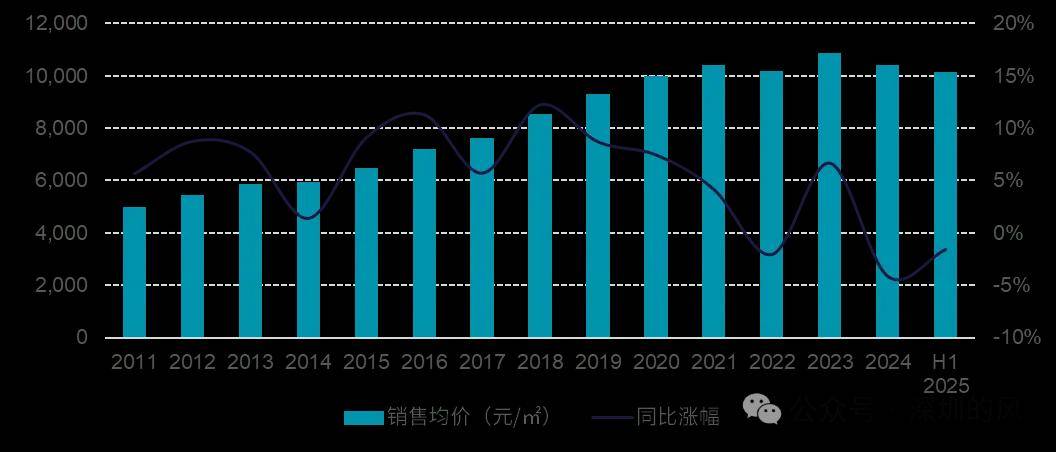
Sou Hu Cai Jing· 2025-08-25 09:53
Group 1: Core Insights - The report by JLL reveals a significant downturn in the real estate market, characterized by declining investments, shrinking transactions, high inventory levels, and increasing market differentiation, indicating a search for a new balance in the market [1][2][3] Group 2: Investment Decline - National real estate development investment fell by 11.2% year-on-year in the first half of the year, with residential investment down by 10.4%, marking a worsening trend compared to the first quarter [2] - New construction area has seen negative growth for 18 consecutive months, with a year-on-year decline of 21.3%, and land acquisition area down by 35.7%, impacting over 50 related industries [2] - The decline in real estate investment is attributed to a crisis of confidence, with developers showing a significant reduction in land acquisition, focusing on core urban areas while avoiding third and fourth-tier cities [2] Group 3: Transaction Shrinkage - The sales area of new residential properties nationwide was 3.8 billion square meters in the first half of the year, a decrease of 3.7% year-on-year, with a more pronounced drop of 6.1% in the second quarter [3][4] - The decline in transactions is driven by a combination of policy fatigue and insufficient market confidence, as previous strong stimulus measures have lost their effectiveness [3][4] Group 4: Price Trends - The average sales price of new residential properties nationwide was 10,128 yuan per square meter, reflecting a year-on-year decline of 1.6%, a significant drop from a 1.6% increase in the first quarter [5][7] - Developers are adopting "price for volume" strategies to stimulate sales, but this approach is proving ineffective as buyers remain hesitant, expecting further price declines [7] Group 5: High Inventory Levels - As of the end of June, the nationwide inventory of unsold residential properties stood at 40.82 million square meters, equivalent to approximately 5 million units of 100 square meters each, despite a slight reduction from the previous quarter [8] - The implementation of new housing regulations has exacerbated the divide between old and new inventory, with buyers preferring newly built properties that meet higher standards [8] Group 6: Future Differentiation - The report indicates that urban differentiation will be a key theme over the next five years, with specific cities likely to experience structural opportunities [9][10] - Cities like Beijing, Shanghai, Guangzhou, and Shenzhen are expected to see price increases in high-quality properties, while cities benefiting from provincial strategies and industrial upgrades will maintain stable demand [10]