
量子计算

Search documents
量子计算,关键突破
半导体芯闻· 2025-04-02 10:50
Core Viewpoint - Harvard University scientists have developed a groundbreaking photonic router that connects optical signals to superconducting microwave qubits, addressing a major barrier in quantum computing by enabling effective communication between different quantum systems [1][3]. Group 1: Photonic Router Development - The new photonic router can connect quantum computers through existing fiber optic networks, creating a powerful optical interface for microwave-dependent quantum systems [3][5]. - This advancement brings researchers closer to building modular distributed quantum computing networks that can transmit quantum information via today's global telecommunications infrastructure [3][5]. Group 2: Technical Specifications - The device is a microwave-optical quantum transducer that bridges the energy gap between microwaves and photons, allowing control of microwave qubits using optical signals generated miles away [5][10]. - The router is the first of its kind to use light exclusively to control superconducting qubits, enhancing scalability and compatibility with existing manufacturing processes [5][7]. Group 3: Challenges and Solutions - One major challenge in deploying superconducting microwave qubit platforms is their requirement to operate at extremely low temperatures, necessitating large cooling systems [9]. - The solution involves using microwave qubits for quantum operations while employing photons as an efficient and scalable interface, thus overcoming the limitations of traditional microwave frequency signals [9][10]. Group 4: Future Directions - The compact optical device, measuring 2 millimeters and located on a chip about 2 centimeters long, eliminates the need for bulky microwave cables to control qubit states [10]. - Future steps may include utilizing the transducer to reliably generate and distribute entanglement between microwave qubits, further advancing quantum computing capabilities [10].

中美谈了很久没谈妥,美国致电北京,特朗普憋不住了,提出最后期限
Sou Hu Cai Jing· 2025-04-01 04:53
Group 1 - The core focus of the recent video call between Chinese Vice Premier and U.S. Trade Representative was on bilateral economic and trade issues, emphasizing the importance of honest dialogue to enhance mutual understanding and resolve existing problems [1][4] - China expressed serious concerns regarding the U.S. tariffs imposed under the pretext of fentanyl and the ongoing 301 investigation, urging the U.S. to return to negotiations based on equality [1][3] - The U.S. has not committed to canceling the tariffs but acknowledged the significance of continued communication to address mutual concerns [4][6] Group 2 - The U.S. Department of Commerce recently added over 50 Chinese companies and research institutions to its "entity list," citing national security threats related to advancements in AI and quantum computing [6] - President Trump announced a 25% tariff on all imported cars, effective April 2, stating that this measure would be permanent and would not apply to cars manufactured in the U.S. [6] - The concept of "reciprocal tariffs" is being promoted by the Trump administration, which could escalate the trade conflict between the U.S. and China, potentially leading to a countdown in the trade war [8]

从DeepSeek崛起到下一个亿级销量市场,这份硬核报告说明白了
量子位· 2025-04-01 04:11
Core Viewpoint - The article emphasizes that China is entering a significant phase of AI innovation, with 2025 being a pivotal year for domestic AI advancements and global recognition of Chinese technology [2][3][4]. Group 1: AI Development Trends - The focus of AI development is shifting from "parameter scale competition" to "inference efficiency competition," indicating a new phase in AI model evolution [12][13]. - The demand for computing power is becoming differentiated, with varying needs across pre-training, post-training, and inference stages [15][16]. - The cost of AI model training is expected to decrease significantly, with predictions that AI costs could drop to one-tenth of previous years [21]. Group 2: Human-like Robots - The human-like robot industry is approaching a milestone for mass production, with 2025 anticipated as a key year for this transition [40][41]. - The report outlines a development path for human-like robots, from industrial applications to household services [42]. - A significant reduction in the cost of human-like robots could disrupt the global labor market, with potential pricing around $20,000 [46][47]. Group 3: AI in Life Sciences - The AI pharmaceutical market is projected to grow significantly, with a compound annual growth rate of 31.2% from 2024 to 2029 [52]. - AI is transforming various medical applications, enhancing efficiency and accuracy in diagnostics and treatment [60]. - The integration of AI in health management is creating a comprehensive health ecosystem, improving preventive care and chronic disease management [61]. Group 4: Quantum Computing - Quantum computing is recognized for its potential to surpass classical computing capabilities, with significant advancements already made [64][66]. - The report predicts a "quantum storm" by 2030, driven by ongoing technological breakthroughs and policy support [68][69]. Group 5: Future Technology Predictions - The report outlines ten predictions for future technology trends, including the rise of open-source models, autonomous learning algorithms, and the integration of AI across various sectors [70][72]. - The emphasis is on China's unique advantages in technology development, including a complete supply chain, rapid policy-market coordination, and large-scale application scenarios [75][78]. - The article concludes with a strong belief in China's capability to lead in AI innovation and application, fostering a new era of technological advancement [81][82].

量子芯片,未来路线图
半导体行业观察· 2025-04-01 01:24
Core Viewpoint - D-Wave claims to have achieved "quantum supremacy" with its upcoming Advantage 2 quantum system, asserting it can solve problems that traditional computers cannot, despite facing skepticism from the scientific community [2][14][15]. Group 1: Company Achievements - D-Wave's Advantage 2 quantum system, featuring 1,200 qubits, is said to have solved a problem in minutes that would take traditional supercomputers a million years [2]. - The company reported a record revenue of $23.9 million in the past year, a 128% increase from $10.5 million in 2023, with over $300 million in the bank [3]. - D-Wave has established a new business model to sell its quantum systems directly to data centers, following the purchase of its Advantage quantum system by the Jülich Supercomputing Centre [2][3]. Group 2: Future Roadmap - D-Wave plans to enhance its hardware roadmap, starting with the release of Advantage 2, which will eventually scale to 4,400 qubits [5][8]. - The company aims to develop a system with 100,000 qubits, transitioning to a multi-chip architecture to increase qubit count while maintaining connectivity and coherence [9][10]. - Future updates include Advantage 2 Performance in 2026 and Advantage 3 by 2030, indicating a long-term commitment to advancing quantum technology [8]. Group 3: Technical Advancements - Advantage 2 features improved connectivity, with each qubit connected to 20 others, doubling the coherence time and increasing energy scale by 40% compared to the previous Advantage system [8]. - D-Wave is also accelerating the development of gate-model quantum systems, which have broader applications than its current annealing technology [10][12]. - The company is integrating digital simulation with its annealing systems to enhance performance on optimization problems [12]. Group 4: Industry Controversies - D-Wave's claims of quantum supremacy have been met with skepticism, as some researchers argue that traditional computing methods can replicate their results [14][16]. - Critics highlight that while D-Wave's technology shows promise, it is still limited to specific types of problems, primarily optimization tasks [15][18]. - Despite the controversies, experts acknowledge that D-Wave's machines can outperform traditional methods in certain scenarios, emphasizing the potential for practical applications in scientific research [18][19].

“四个面向”19项重大成果集中发布|关注2025中关村论坛
Bei Jing Qing Nian Bao· 2025-03-31 09:35
Group 1: Major Achievements in Science and Technology - China has made significant advancements in space science, including the detection of gamma-ray bursts from 25.6 billion light-years away and the first measurement of black hole X-ray binary spin and orbital inclination [3][5] - Tsinghua University has developed a brain-like complementary visual perception chip, "Tianmou Chip," which reduces bandwidth by 90% and achieves 10,000 frames per second with high precision and dynamic range [3][5] - Peking University has introduced a new paradigm for crystal preparation, enhancing the purity of materials like graphite and molybdenum disulfide by 10 to 100 times [3][5] - Huayi Quantum has created the world's first commercial prototype of a quantum computing system with over 100 ion qubits, significantly enhancing quantum computing capabilities [3][5] Group 2: Economic Applications - Blue Arrow Aerospace has successfully developed the Zhuque-2 improved liquid oxygen-methane rocket, becoming the first and only liquid oxygen-methane rocket to achieve three consecutive successful launches [5][6] - Beijing University of Posts and Telecommunications has established the world's first space-ground computing test platform, enhancing AI collaboration in satellite operations [6][7] - A collaborative effort has resulted in the development of a 6G prototype system capable of 6.6 Gbps transmission speed and sub-meter level perception accuracy [7][8] - Beiqi Foton has launched a zero-carbon liquid hydrogen heavy truck with a range exceeding 1,000 km, integrating 23 innovative technologies [8][9] Group 3: National Strategic Needs - Tsinghua University has developed a mobile hybrid processing robot that significantly improves processing precision and efficiency for large complex components used in major national projects [10][11] - State Grid Corporation has created a flexible DC converter for offshore wind power, increasing power density by 37% and reducing overall project costs by 15% [11][12] - China National Offshore Oil Corporation has successfully conducted the world's first joint extraction of natural gas hydrates and shallow gas, achieving a daily gas production rate exceeding 100,000 cubic meters [12][13] - A new large-scale high-temperature superconducting coating device has been developed, supporting the domestic production of superconducting electronic devices [13][14] Group 4: Health and Well-being - The "Beijing Brain No. 1" intelligent brain-machine interface system has been developed, achieving over 98% effective channel count for patients with motor function disorders [15][16] - A new covalent technology for radioactive drugs has been developed, increasing tumor delivery efficiency by over 10 times while minimizing side effects [16][17] - A domestic first integrated surgical robot for brain and spine procedures has been created, achieving a positioning accuracy of ≤0.5 mm [17][18] - The first targeted drug for brain glioma, "Bertinib," has been developed, significantly extending patient survival and reducing disease progression risk [18][19] - The ARC biological coupling technology has been introduced, enhancing nitrogen-fixing efficiency and crop yield while controlling mycotoxin production [19][20]


100亿元!北京又有大动作
Zhong Guo Ji Jin Bao· 2025-03-31 02:32
Core Insights - The "Zhongguancun War New Fund" is being established with a scale of 10 billion yuan, focusing on strategic emerging industries to support the development of high-quality hard technology enterprises [1] - Zhongguancun Development Group has a total of 57 funds under management, with a scale of nearly 60 billion yuan, enhancing the initiative and flexibility of long-term investments in technology companies [2] Group 1 - The fund aims to provide financial support to accelerate the development of hard technology enterprises, contributing to the growth of new productive forces [1] - The chairman of Zhongguancun Development Group highlighted the active global technological innovation landscape, with breakthroughs in fields such as artificial intelligence and quantum computing reshaping the global industrial structure [1] - The group has invested in and nurtured a number of unicorns and specialized enterprises, including notable companies like BeiGene and Innovent Biologics [2] Group 2 - The group has cumulatively invested in over 4,000 technology projects, supporting more than 200 national strategic technology projects [2] - The investments have led to the emergence of over 1,370 national high-tech enterprises, nearly 800 specialized and innovative enterprises, 96 unicorns, and 161 listed companies [2]
中国银行营收盈利双增长 “五篇大文章”驱动高质量发展
Zhong Guo Jing Ying Bao· 2025-03-28 09:09
Core Viewpoint - China Bank's 2024 performance highlights its commitment to "financial for the people" and its role in supporting the real economy through strategic financial services [2][3][17] Financial Performance - Total assets exceeded 35 trillion yuan, a year-on-year increase of 8.11% - Operating income reached 632.8 billion yuan, up 1.38% year-on-year - Net profit after tax was 252.7 billion yuan, reflecting a growth of 2.58% - Cost-to-income ratio improved to 28.77%, indicating enhanced operational efficiency [2] Technology Finance - China Bank provided credit support to over 100,000 technology enterprises, with a loan balance of 1.91 trillion yuan, marking a growth of 29.67% [3] - The bank has established a comprehensive financial service matrix tailored to the lifecycle of technology enterprises [4] - A total of over 710 billion yuan in comprehensive financial services has been provided to technology companies [4] Green Finance - Green credit balance surpassed 4 trillion yuan, with an increase of over 30% - Green bond investment exceeded 100 billion yuan, with leading underwriting scale in the market [6] - The bank has launched various green financial products, including services linked to low-carbon transformation [6][7] Inclusive Finance - Inclusive finance loan balance reached 2.28 trillion yuan, growing by 29.63% - The bank supported nearly 1.5 million small and micro enterprises, with a growth rate of 39.62% [8] - Agricultural loans totaled 2.5 trillion yuan, with inclusive agricultural loans growing by 36.41% [8] Pension Finance - Over 10 million personal pension accounts have been opened, addressing the needs of an aging population [11] - The bank has managed 2.59 trillion yuan in enterprise annuity funds and 1.17 trillion yuan in pension trust funds [12] - A comprehensive pension financial service system has been established, integrating various financial products [12][13] Digital Finance - China Bank has implemented a digital financial action plan with 39 strategic projects for 2024-2026 [15] - The bank's core system handles approximately 290 million transactions daily, supporting stable operations [15] - Digital transformation has enhanced service efficiency, with significant growth in active users across various digital platforms [16]

中国生成式人工智能专利申请量走在全球前沿
Bei Jing Shang Bao· 2025-03-27 20:01
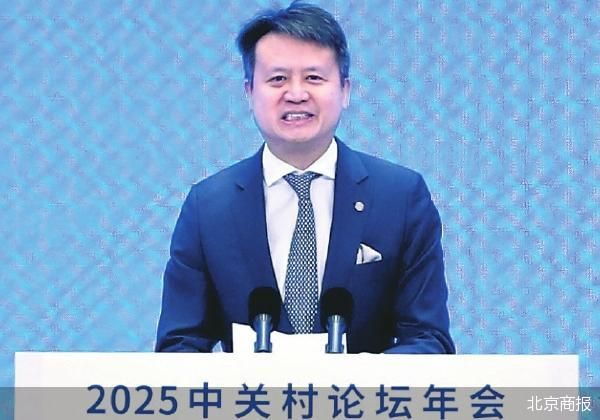
"在今天的世界,挑战不仅在于发现好的创意,而在于将创意转化为实际产品与服务,这正是知识产权 发挥作用的地方。知识产权不仅保护新的创意、技术、品牌和设计,也是一种重要的商业资产,能够吸 引合作伙伴与投资者,同时创造收入。"邓鸿森表示,在中国,知识产权越来越被视为银行贷款抵押 品,因此知识产权必须用来支持初创企业和中小企业,而且WIPO通过多种方式实现这一目标。 "好奇心、想象力和创造力是人类与生俱来的特质,而在中国文化当中,它又是非常独特的,就是这些 品质以及创新精神,数千年以来一直得到高度重视,正如中国有一句古语'苟日新,日日新,又日 新'。"世界知识产权组织(WIPO)总干事邓鸿森在参加2025中关村论坛年会时表示,WIPO同样坚信创 新的精神并支持创新者和创作者,运用世界知识产权将他们的创意推向市场。 邓鸿森表示,WIPO将数字技术和生成科学确定为推动创新的两大引擎。当前,以人工智能、量子计算 等为代表的数字技术,专利申请量约占全球总数的1/3。仅在生成式人工智能领域,2017年以来的专利 申请量便增长超过800%,其中中国、美国、韩国走在前沿。数字创新正在把汽车从一台工业机器转变 为四轮驱动的高端计算机 ...
黄金时代即将结束,英伟达股价即将迎来大幅下跌
美股研究社· 2025-03-26 12:45
Core Viewpoint - Increasing evidence suggests that AI training does not necessarily rely on high-end GPUs, which may slow down Nvidia's future growth [2][5][14] Group 1: Nvidia's Financial Performance - Nvidia's data center business has experienced strong growth, with revenue increasing by 216% in FY2024 and 142% in FY2025 [2] - Revenue growth rates for Nvidia are projected at 63% for FY2026, driven by a 70% increase in the data center segment, alongside a recovery in gaming and automotive markets [8][9] - The company's total revenue is expected to reach $430 billion in Q1 FY2026, with a slight fluctuation of 2% [6] Group 2: Competitive Landscape - Ant Group's research indicates that their 300B MoE LLM can be trained on lower-performance GPUs, reducing costs by 20%, which poses a significant risk to Nvidia's market position [2][5] - Major hyperscalers like Meta are developing their own AI training chips, reducing reliance on Nvidia's GPUs, with Meta's internal chip testing marking a critical milestone [5][14] - Custom silicon solutions from companies like Google and Amazon are emerging as attractive alternatives for AI training and inference [5] Group 3: Long-term Growth Challenges - Nvidia's high-end GPU growth may face increasing resistance as AI enters the inference phase and lower-cost models become more prevalent [14] - Analysts have revised growth expectations for Nvidia's data center business, projecting a slowdown to 30% growth in FY2027 and further declines to 20% from FY2028 to FY2030 [8][9] - The company's operating expenses are expected to grow by 19% from FY2028 to FY2030, impacting profit margins [9] Group 4: Capital Expenditure Trends - Major tech companies are significantly increasing capital expenditures, with a projected 46% year-over-year growth in 2025, which may boost demand for Nvidia's GPUs in the short term [12][13] - Nvidia has established its own custom ASIC division, potentially mitigating risks from competitors like Broadcom and Marvell [14]

【美股盘前】英伟达盘前跳水,跌超1%;热门中概股普涨,理想汽车涨超1%;特斯拉宣布进军沙特市场;霸王茶姬将赴纳斯达克上市
Mei Ri Jing Ji Xin Wen· 2025-03-26 10:05
Group 1 - Nvidia's pre-market stock dropped over 1% [1] - Popular Chinese concept stocks saw gains in pre-market trading, with Li Auto up 1.34% [1] - Google executive predicts significant breakthroughs in quantum computing in about five years [1] - Qualcomm filed complaints against Arm for limiting access to key technologies, harming market competition [1] Group 2 - Tesla announced its entry into the Saudi market with a product launch event scheduled for April 10 [2] - Vietnam approved SpaceX's Starlink satellite internet for trial operations until the end of 2030 [2] - Bawang Tea submitted an IPO prospectus to the SEC, planning to list on NASDAQ with the ticker symbol CHA [2] - Faraday Future will deliver its first FF 91 2.0 model to a New York investment bank on March 28 [2] Group 3 - Morgan Stanley raised the target price for Carvana from $260 to $280, upgrading the rating from "neutral" to "overweight" [3]
