
人民币跨境支付体系

Search documents
特朗普称暂时不会对欧洲8国加征关税;美股收涨,白银跳水;“马茅”现错版?茅台回应;市值2.8亿,申通老板娘被前夫索要股份丨每经早参
Mei Ri Jing Ji Xin Wen· 2026-01-21 22:05
Group 1 - The U.S. stock market saw collective gains with the Dow Jones up by 1.21%, Nasdaq by 1.18%, and S&P 500 by 1.16% [4] - Notable increases in storage stocks, with SanDisk rising over 10% and a year-to-date increase of over 111% [4] - International oil prices experienced slight increases, with light crude oil futures up by 0.43% to $60.62 per barrel and Brent crude up by 0.49% to $65.24 per barrel [4] Group 2 - The Chinese government announced a temporary exemption from personal income tax on capital gains from the transfer of CDRs for individual investors from January 1, 2026, to December 31, 2027 [6] - The Ministry of Industry and Information Technology emphasized the need for a safety monitoring platform for the operation of new energy vehicles [7] - The Ministry of Housing and Urban-Rural Development plans to promote smart construction and new building methods during the 14th Five-Year Plan period [8] Group 3 - The People's Bank of China called for accelerated construction of a cross-border payment system to enhance connectivity in cross-border payments [9] - The State Financial Supervision Administration released new regulations on administrative licensing procedures to improve the efficiency and standardization of financial regulatory processes [8] Group 4 - Longfor Group responded to rumors about splitting its global telecommunications business for independent listing, stating no decisions have been made [13] - Temu's Turkish office faced a dawn raid, marking a second incident in Europe within a month, raising concerns about compliance risks for cross-border e-commerce [15] - Pinduoduo was fined 100,000 yuan for failing to report tax information as required, highlighting regulatory scrutiny in the e-commerce sector [17] Group 5 - Nike announced a leadership change in its Greater China region, with Angela Dong set to step down and Cathy Sparks appointed as the new vice president and general manager [22] - New Oriental launched a "retirement club" aimed at engaging retirees in educational and social activities, reflecting a trend in elder education and wellness [24] - Zhipu AI announced a temporary limit on the sale of its GLM Coding Plan due to increased demand and resource constraints [26]






中国古代对货币起源的探讨|金融人文
清华金融评论· 2025-12-16 09:58
Core Viewpoint - The article discusses the origins of currency, highlighting the "Saint King Creation Theory" as a historical perspective and contrasting it with Sima Qian's more analytical view that links the emergence of currency to the development of trade and commerce [4][6][7]. Group 1: Historical Perspectives on Currency - The "Saint King Creation Theory" posits that currency was initially invented by a wise king, a view prevalent in ancient civilizations including China [4][5]. - Historical records indicate that the earliest discussions on the origin of currency in China can be traced back to the time of King Jing of Zhou, where the opposition to the issuance of large denomination currency was based on the need to aid the people during disasters [5][6]. - This theory influenced later scholars, such as Du You and Hong Zun, who referenced it in their works, indicating its significant impact on the understanding of currency in ancient society [6]. Group 2: Sima Qian's Contributions - Sima Qian's insights on currency are primarily found in his works "Pingzun Shu" and "Huozhi Liezhuan," where he emphasizes that the rise of various forms of currency is fundamentally linked to the smooth operation of agricultural and commercial exchanges [7]. - He argues that the emergence of currency is a natural result of the interconnectedness of agriculture and commerce, marking a significant departure from the idealistic views of the "Saint King Creation Theory" [7]. - Sima Qian's perspective laid a scientific and objective foundation for the subsequent discussions on the essence of currency, challenging the previously dominant idealistic interpretations [7].

央行:推进人民币国际化 稳步发展数字人民币
Sou Hu Cai Jing· 2025-12-12 12:45
Core Viewpoint - The People's Bank of China emphasizes the importance of steadily advancing high-level financial openness while maintaining national financial security [1] Group 1: Financial Policy and Strategy - The meeting highlighted the need to actively participate in and promote global financial governance reform [1] - It was noted that practical financial diplomacy and multilateral currency and financial cooperation should be conducted [1] - The advancement of the internationalization of the Renminbi is a key focus [1] Group 2: Payment Systems and Digital Currency - There is a commitment to continuously build and develop a multi-channel, widely accessible cross-border payment system for the Renminbi [1] - The steady development of the digital Renminbi is also a priority [1]

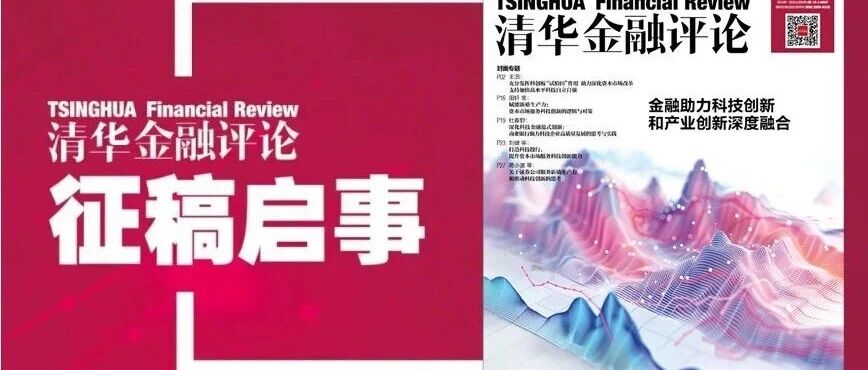
等你来投!《清华金融评论》2026年1月刊 加速推进数字人民币,建设自主可控的人民币跨境支付体系
清华金融评论· 2025-11-20 09:34
Core Viewpoint - The article emphasizes the accelerated development and application of digital currencies globally, particularly focusing on the importance of establishing a self-controlled cross-border payment system for the Renminbi (RMB) to enhance financial security and support the internationalization of the RMB [2][4]. Summary by Sections Global Digital Currency Landscape - The global development and application of digital currencies have entered a fast track, with major economies accelerating their Central Bank Digital Currency (CBDC) layouts [4]. - The evolving international geopolitical landscape has made financial infrastructure security a crucial component of national security [4]. RMB Internationalization and Cross-Border Payment System - The 20th National Congress report of the Communist Party of China calls for the orderly promotion of RMB internationalization, while the 14th Five-Year Plan suggests enhancing capital account openness and building a self-controlled cross-border payment system for the RMB [4]. - A multi-channel and widely covered RMB cross-border payment system has been largely established, highlighting its strategic significance for financial security and international financial discourse [4]. Challenges in Cross-Border Payments - Cross-border payments face challenges such as high costs, low efficiency, lack of transparency, and limited access, primarily due to long payment chains, high compliance costs, and insufficient trust among entities [4]. - Ongoing geopolitical tensions further increase uncertainties in cross-border payments [4]. Strategic Importance of Self-Controlled Payment Systems - Establishing a self-controlled RMB cross-border payment system is crucial for ensuring financial security, supporting RMB internationalization, and enhancing international financial influence [4]. - In the context of global payment systems facing geopolitical risks, a self-controlled RMB cross-border payment system can inject new vitality into RMB internationalization [4]. Call for Contributions - The editorial team of Tsinghua Financial Review has initiated a call for papers to explore the strategic positioning, technological pathways, and institutional arrangements of digital RMB in the cross-border payment system [5]. - The aim is to provide forward-looking insights and policy recommendations for the stable and long-term internationalization of the RMB and participation in global financial governance reform [5]. Submission Guidelines - The submission should be original and unpublished, with a suggested word count of 4,000 to 6,000 words, including charts and graphs [8]. - The deadline for submission is December 15, 2025, with specific formatting and content requirements outlined [10].
21社论丨中国正以更自信的态度推动开放
21世纪经济报道· 2025-11-03 23:28
Core Viewpoint - The "15th Five-Year Plan" emphasizes the importance of expanding domestic demand and building a strong domestic market, while also promoting international circulation and sharing opportunities with the world [1][3]. Group 1: Domestic Market and Demand - The plan highlights the strategic importance of expanding domestic demand, leveraging China's large population of over 1.4 billion and more than 400 million middle-income groups, which contribute nearly 50 trillion RMB in consumption and over 20 trillion RMB in imports annually [1]. - The "15th Five-Year Plan" aims to further enlarge China's super-large market, promoting a strong domestic circulation [1]. Group 2: International Trade and Investment - The plan advocates for a balanced development of trade and investment, focusing on market diversification and the integration of domestic and foreign trade [3]. - It proposes to enhance bilateral investment cooperation, attract foreign investment, and promote orderly cross-border layout of industrial and supply chains [3]. - The plan also emphasizes the internationalization of the RMB and the establishment of a self-controlled cross-border payment system, reflecting a proactive approach compared to previous plans [3]. Group 3: Service Trade Development - Service trade is identified as a key area for development, with a focus on expanding market access and encouraging service exports [2]. - The plan aims to improve the management of cross-border service trade and enhance the standardization of service trade [2]. - China's service industry is currently lagging behind in comparison to its global trade and manufacturing sectors, but recent efforts are being made to relax restrictions in telecommunications, internet, education, culture, and healthcare [2]. Group 4: Global Economic Engagement - China is adopting a more confident approach to opening its market, providing development opportunities for other countries while also increasing outbound investments [4]. - The country aims to share its market and technological advantages with the world, promoting a fair and cooperative international economic order [5].

十五五规划建议:推进人民币国际化,提升资本项目开放水平,建设自主可控的人民币跨境支付体系
Sou Hu Cai Jing· 2025-10-28 09:05
Core Viewpoint - The article discusses the release of the "Suggestions on Formulating the 15th Five-Year Plan for National Economic and Social Development" by the Central Committee of the Communist Party of China, emphasizing the importance of expanding autonomous openness and aligning with international high-standard economic and trade rules [1] Group 1: Economic Policy Initiatives - The plan aims to actively expand autonomous openness, focusing on market access and open fields in the service sector [1] - It highlights the acceleration of regional and bilateral trade investment agreements and the expansion of high-standard free trade zone networks [1] - The strategy includes optimizing regional openness layout and creating diverse highland forms of openness [1] Group 2: Trade and Investment Strategies - The implementation of a free trade pilot zone enhancement strategy and the high-standard construction of Hainan Free Trade Port are key components [1] - There is a focus on the coordinated development of major open cooperation platforms in innovation, service trade, and industrial development [1] Group 3: Financial and Economic Governance - The plan promotes the internationalization of the Renminbi and aims to enhance the openness level of capital projects [1] - It includes the establishment of a self-controlled cross-border payment system for the Renminbi [1] - The initiative also seeks to reform global economic and financial governance, advocating for a fair, just, open, inclusive, and cooperative international economic order [1]
美国为何盯上了“北京时间”?央视公布;又一个“国家级都市圈”获批;法国卢浮宫珠宝被盗;安世中国发声;人民币,大消息丨每经早参
Mei Ri Jing Ji Xin Wen· 2025-10-19 23:13
Group 1: Cybersecurity Incident - The National Security Agency (NSA) of the United States has conducted significant cyberattacks on China's National Time Service Center from August 2023 to June 2024, deploying 42 specialized cyber weapons to penetrate multiple internal network systems [4][5][6] - The attacks aim to infiltrate high-precision ground timing systems, which are critical for various sectors including power supply and financial markets [4][6] - The National Time Service Center plays a vital role in maintaining national standard time, which is essential for the precise operation of modern society and scientific research [5][6] Group 2: Economic Developments - The People's Bank of China is advancing the construction of a cross-border payment system for the Renminbi, establishing a multi-channel, widely covered, secure, and efficient payment clearing network [6] - The network includes the expansion of CIPS and UnionPay, and cooperation with multiple countries on the digital Renminbi platform, enhancing the efficiency of remittances and facilitating financial transactions [6] Group 3: Urban Development - The Changchun Metropolitan Area Development Plan has been officially approved, marking Changchun as a new "national-level metropolitan area" in Northeast China, following Shenyang [10] - The metropolitan area is expected to cover approximately 29,700 square kilometers with a population of about 12.1 million, significantly contributing to the region's economic growth [10]

央行:将继续完善人民币跨境支付体系
Sou Hu Cai Jing· 2025-10-19 02:15
Core Insights - The payment system is a crucial financial infrastructure that supports consumer spending and economic stability in China. The system has seen significant advancements in recent years, providing secure, efficient, and convenient payment services that bolster the real economy [1] Group 1: Development Achievements - During the 14th Five-Year Plan period, the People's Bank of China has made substantial progress in building a modern payment system that ranks among the world's best. The payment system's business volume has grown at an average annual rate of 12.52%, with a total business volume expected to exceed 12 trillion yuan in 2024. Mobile payment transactions are projected to reach 1.71 times the volume of 2020 [2] - The average payment service fee is below 0.6%, significantly lower than that in Europe and the United States [2] Group 2: Market Structure - The payment market has evolved into a diverse and collaborative ecosystem, with the People's Bank of China optimizing the roles of clearing institutions, commercial banks, payment institutions, and industry associations to provide a wide range of payment services [3] - The China Payment and Clearing Association plays a self-regulatory role, ensuring fair competition and promoting high-quality development in the payment clearing industry [3] Group 3: Regulatory Framework - The payment industry is entering a new phase characterized by compliance and sustainable development. A comprehensive regulatory framework has been established, including the introduction of the first specialized regulation for non-bank payment institutions, marking a new stage in the industry's development [4] - The People's Bank of China has adopted a "zero tolerance" approach to illegal activities in the payment sector, focusing on risk prevention across the entire payment process [4] Group 4: Service Accessibility - The payment services have become more secure, convenient, and inclusive, with a diverse range of payment methods available to meet the public's needs. Since the beginning of the 14th Five-Year Plan, non-cash payment transactions have reached 23 trillion, representing a 2.34-fold increase in volume compared to the previous five years [5] - The rapid adoption of mobile payment services has transformed various transaction scenarios, bridging the digital divide for the elderly and enhancing payment services in rural areas [5] Group 5: Cross-Border Payment Progress - The People's Bank of China is actively promoting the construction of a self-controlled cross-border payment system, with the Cross-Border Interbank Payment System (CIPS) processing 175 trillion yuan in cross-border RMB transactions in 2024, a 43% increase year-on-year [6][7] - The establishment of a cross-border payment platform for digital currencies has been initiated in collaboration with central banks from Hong Kong, Thailand, and the UAE [7] Group 6: Enhancing Foreign Payment Services - The People's Bank of China has implemented measures to improve payment services for foreign nationals in China, including allowing the use of foreign mobile numbers to register for domestic payment apps and enhancing payment guides at key locations [8] - As a result, the number of active mobile payment users among inbound travelers exceeded 10 million in the first half of 2025, with transaction volumes and amounts increasing by 162% and 149%, respectively [8]