企业治理

Search documents
汇丰(HSBC.US)董事长任命不尽人意:无亚洲工作履历,战略前景存疑
Zhi Tong Cai Jing· 2025-12-04 12:49
Core Viewpoint - The appointment of Brendan Nelson as the permanent chairman of HSBC has raised concerns regarding the bank's strategic direction and long-term vision, particularly in its Asian operations [1][2]. Group 1: Appointment Process - HSBC's decision to appoint Nelson followed a lengthy search for external candidates, which included notable figures such as former UK Chancellor George Osborne and Goldman Sachs' Asia-Pacific head Kevin Sneader [1]. - The appointment was unexpected, especially after CEO Georges Elhedery suggested that Nelson might not serve in the role long-term [1][2]. - The process has been described as chaotic, leading to serious concerns about succession planning and the company's long-term vision [2]. Group 2: Investor Reactions - Some investors expressed disappointment with the hiring process, indicating that while Nelson may be a suitable candidate, the outcome is unsatisfactory for the company [2]. - A former top 20 HSBC shareholder emphasized the importance of understanding the rationale behind the appointment [2]. Group 3: Nelson's Role and Authority - Nelson's primary responsibility will be to oversee CEO Elhedery's management and strategic reforms initiated since he took office in September 2024 [2]. - Analysts noted that Elhedery's comments prior to Nelson's appointment could undermine the new chairman's authority, as Elhedery indicated that Nelson was hesitant to commit to a full term [2][3]. - Experts suggest that Nelson's age may limit his tenure, viewing the role as potentially transitional [3]. Group 4: Future Implications - The appointment of Nelson may alleviate immediate pressures but has not quelled speculation that HSBC will continue searching for a long-term successor [3]. - Analysts believe that the decision to appoint Nelson was an attempt to dispel ongoing speculation, yet doubts remain about the continuation of the search for a permanent replacement [3].

预计中央经济工作会议政策定调更积极:环球市场动态2025年12月2日
citic securities· 2025-12-02 02:18
Market Overview - Chinese market opened positively in December, with the consumer electronics sector performing notably well[3] - European stock markets generally declined due to weak manufacturing activity, leading to profit-taking[3] - US stocks paused their upward momentum, influenced by a cryptocurrency crash and hints of interest rate hikes from the Bank of Japan[3] Economic Policies - The upcoming Central Economic Work Conference in December is expected to set a more proactive policy tone for 2026, focusing on consumption expansion and risk mitigation in real estate[6] - The ISM Manufacturing Index indicates that US factory activity shrank at the fastest pace in four months in November[6] Currency and Commodities - The Bank of Japan's hawkish comments have strengthened the yen against major currencies, with increased bets on a December rate hike[4] - International oil prices rose due to geopolitical tensions and supply concerns, with silver and copper prices reaching new highs[4] Fixed Income - US Treasury yields rose by 4-8 basis points, with a notable $16 billion in corporate bonds priced[5] - The Bank of Japan's signals regarding interest rate hikes have pushed Japanese bond yields to their highest levels since 2008, negatively impacting US bonds[29] Stock Performance - In the US, the Dow Jones fell by 0.9% to 47,289.3 points, while the S&P 500 and Nasdaq also experienced declines of 0.5% and 0.4%, respectively[9] - Hong Kong's Hang Seng Index rose by 0.67%, driven by gains in large tech stocks and a rebound in consumer electronics[11] Sector Insights - Macau's gaming revenue in November grew by 14.4% year-on-year, indicating a strong recovery in the sector[13] - The A-share market saw the Shanghai Composite Index rise by 0.65%, with significant gains in consumer electronics and metal stocks[15]
稳健经营实现高质量发展 海信视像荣获“2025上市公司董事会最佳实践案例”
Zheng Quan Ri Bao Zhi Sheng· 2025-11-25 10:12
Core Viewpoint - The recognition of Hisense Visual as a "Best Practice Case for Corporate Governance" by the China Listed Companies Association highlights its strong governance framework and commitment to sustainable development [1][5]. Group 1: Corporate Governance - The evaluation aims to promote compliance and effective operation of corporate boards, enhancing governance efficiency and demonstrating exemplary practices in the capital market [3]. - Hisense Visual has established a robust governance system, emphasizing transparency and professionalism, which has improved its information disclosure and market understanding [3][4]. - The company integrates ESG requirements into its operational and incentive systems, creating a positive cycle between responsible governance and value growth [3]. Group 2: Financial Performance - For the first three quarters of 2025, Hisense Visual reported a revenue of 42.83 billion yuan, a year-on-year increase of 5.4%, and a net profit attributable to shareholders of 1.63 billion yuan, up 24.3%, indicating enhanced profitability [4]. - The company's strong performance reflects the synergy between its optimized governance structure and strategic execution [4]. Group 3: Technological Innovation - Hisense Visual has launched the world's first "RGB 3D Color Control LCD Display Technology," overcoming key technological challenges and enhancing its competitive edge in the high-end market [4]. - The U7S Pro model quickly became a top seller within six weeks of its launch, contributing to a 60.43% market share in sales during the Double Eleven shopping festival for its RGB-Mini LED TVs [4]. Group 4: Future Outlook - Moving forward, Hisense Visual plans to deepen its board operations, strengthen strategic leadership, risk supervision, and sustainable development capabilities to drive global expansion and technological innovation [5].



逍遥子张勇又杀回来了
3 6 Ke· 2025-11-21 08:25
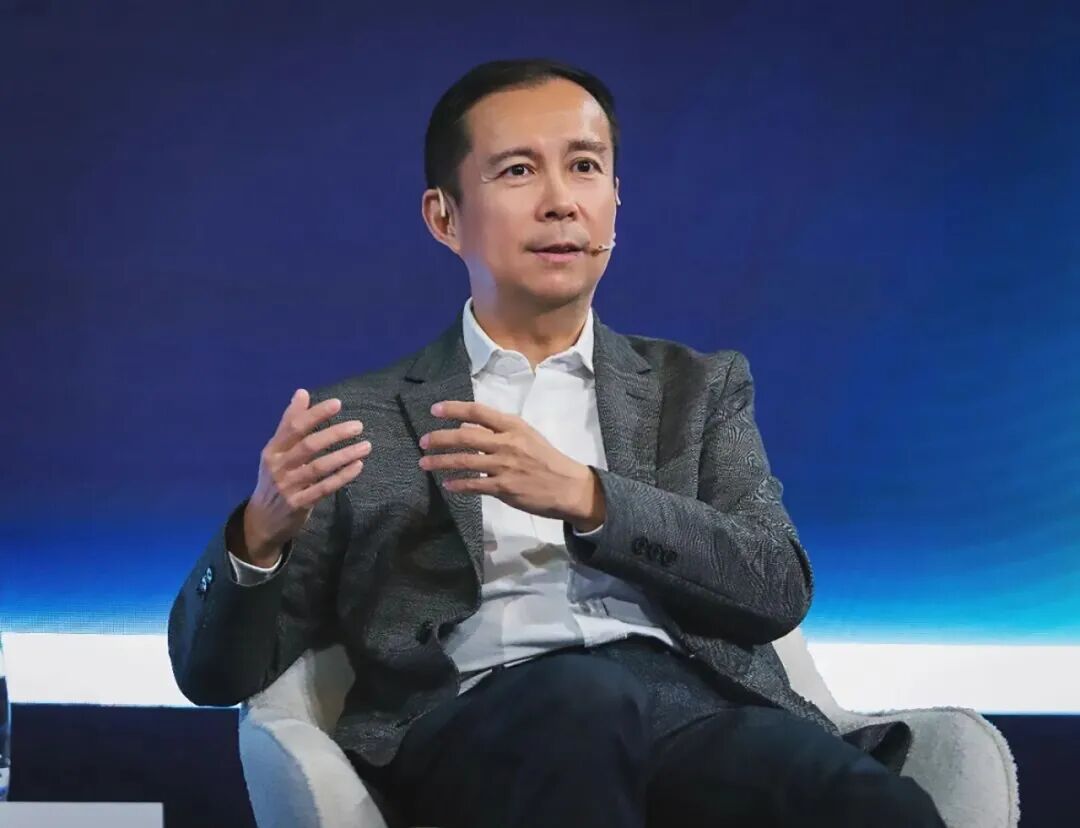
Core Insights - Zhang Yong, former chairman and CEO of Alibaba, is transitioning to an investment role as a managing partner at FirstLight Capital, seeking to raise $1 billion for a new dollar fund focused on China-related sectors such as consumption, technology, and healthcare [1][2] Group 1: Fund Strategy and Market Opportunities - FirstLight Capital aims to capitalize on the "golden window period" for mergers and acquisitions (M&A) in China, shifting from traditional leveraged buyouts to a strategy that emphasizes operational integration and value creation [2][3] - The fund identifies three key opportunities: the transition of first-generation entrepreneurs to professional management, asset divestitures by large corporations, and globalization of M&A as Chinese companies seek new growth avenues [2][3][4] Group 2: Team Composition and Methodology - Zhang Yong emphasizes the importance of a diverse team, likening it to a "zoo" where different skills and personalities collaborate effectively [8][9] - The recruitment strategy focuses on long-term relationships and deep understanding of potential team members, rather than relying solely on interviews, to mitigate risks associated with leadership appointments [10] Group 3: Personal Insights and Philosophy - Zhang Yong reflects on his career, highlighting his unique strengths in corporate governance and operational management as key assets for succeeding in the private equity space [6][7] - He advocates for accepting imperfection in decision-making, stressing that entrepreneurship requires boldness and the ability to act despite uncertainties [12]

奇瑞开车上山“玩砸了”,“输了路虎又输人”
阿尔法工场研究院· 2025-11-14 07:01
Core Viewpoint - Chery's recent marketing stunt, intended to showcase the performance of its Fengyun X3L model by challenging the Tianmen Mountain, ended in failure, leading to a brand crisis and raising concerns about the company's risk management and operational capabilities [4][10][31]. Marketing Challenge and Brand Image - The Tianmen Mountain challenge was initially designed to replicate Land Rover's successful marketing campaign from 2018, which highlighted its vehicle's capabilities [16][19]. - The failure of the challenge not only resulted in financial losses but also damaged the product image of Fengyun X3L, which was marketed as a high-performance vehicle [11][23]. - Chery's quick apology following the incident indicates a recognition of the issue, but it also suggests an attempt to mitigate negative publicity [6][14]. Financial and Operational Implications - The incident has raised concerns in the capital markets regarding Chery's governance and risk management practices, which could affect investor confidence [14][27]. - The total costs associated with the incident, including potential compensation and damage to brand reputation, are difficult to estimate but are expected to be significant [13][24]. Risk Management and Governance - The failure of the safety measures during the challenge highlights serious shortcomings in Chery's operational execution and risk management [25][26]. - Chery's acknowledgment of insufficient risk assessment and detail management points to systemic issues within the company's governance structure [26][28]. Environmental and Social Responsibility - The challenge raised questions about the appropriateness of conducting high-risk marketing activities in protected natural areas, emphasizing the need for a balance between commercial interests and environmental conservation [30][31]. - The incident serves as a reminder that a company's reputation should be built on reliable product performance and social responsibility rather than risky marketing stunts [30][31].

维权投资者Elliott入股狙击丰田(TM.US) 丰田工业收购案陡生变数
智通财经网· 2025-11-11 12:25
Group 1 - Toyota Motor's acquisition plan for Toyota Industries is facing obstacles due to Elliott Investment Management's significant shareholding and concerns over undervaluation and governance standards [1][2] - Elliott has communicated its views to the management and board of Toyota Industries, claiming to be one of its largest shareholders, with a reported holding of 3.26% as of September 30, and close to 5% currently [1][3] - The proposed acquisition price of 16,300 JPY per share represents a 23% premium over the price before the announcement in April but is an 11% discount compared to the closing price on the announcement day in June [3] Group 2 - Toyota Motor holds approximately 25% of Toyota Industries, while Toyota Real Estate owns 5.42%, both companies are committed to advancing the delisting transaction while considering all stakeholders [2] - Toyota Industries has maintained constructive dialogue with shareholders and plans to continue this communication approach [3] - Elliott has been active in Japan and South Korea, previously pressuring Kansai Electric Power and engaging in notable campaigns with Samsung Electronics and Hyundai Motor [4][5]

马斯克,重大变数!
Zheng Quan Shi Bao· 2025-11-04 12:47
Core Viewpoint - The proposed $1 trillion compensation plan for CEO Elon Musk faces significant opposition from major investors, including Norway's sovereign wealth fund and Calpers, which may impact Tesla's governance and future direction [1][2][3]. Group 1: Opposition to Compensation Plan - Norway's sovereign wealth fund announced plans to vote against Musk's $1 trillion compensation proposal at Tesla's upcoming annual shareholder meeting [2]. - Calpers, the largest public pension fund in the U.S., also plans to oppose the compensation plan, citing its excessive scale compared to peer companies [3][4]. - Both funds express concerns over the potential dilution of shares and the concentration of power among a single shareholder [2][3]. Group 2: Potential Consequences of Vote - If the compensation plan is not approved, Tesla's board chair warned that Musk might leave the company, which could lead to significant value loss for Tesla [5]. - The compensation plan is designed to incentivize Musk to lead Tesla for at least another 7.5 years, with ambitious performance targets set for the company [5][6]. - The outcome of the vote on November 6 will not only determine Musk's compensation but also influence Tesla's governance structure and strategic direction [7]. Group 3: Performance Metrics and Goals - The compensation plan includes performance benchmarks that Musk must meet to receive full payment, including increasing Tesla's market value from approximately $1 trillion to $8.5 trillion and achieving various operational goals [5][6]. - The plan aims to align Musk's interests with shareholder value and long-term company growth, despite facing significant resistance from institutional investors [6]. Group 4: Broader Implications - The shareholder vote will also address other proposals, including a potential change in Tesla's registered location, with results expected to be announced after the voting concludes [8].

将廉洁文化建设深度融入企业治理
Zhong Yang Ji Wei Guo Jia Jian Wei Wang Zhan· 2025-10-29 00:20
Core Viewpoint - The emphasis on strengthening the construction of a clean culture in the new era is highlighted, with a focus on anti-corruption and building a clean political environment as a major political task for the party [1] Group 1: Strengthening Ideological Foundation - The company prioritizes ideological and political education to enhance self-awareness against corruption through layered and categorized education [2] - It integrates the study of Xi Jinping's thoughts into political tasks and conducts various educational activities to instill a sense of integrity among employees [2] - The company emphasizes disciplinary education by incorporating knowledge of the Communist Party's disciplinary regulations into learning plans [2] Group 2: Innovative Methods for Cultural Penetration - The company explores localized and scenario-based methods to enhance the penetration of clean culture [3] - Activities such as "clean family letters" and family discussions are organized to extend supervision beyond work hours [3] - The company promotes the signing of integrity commitments tailored to job responsibilities to embed integrity requirements into job descriptions [3] Group 3: Cultivating a Clean Ecosystem - The company implements a "six-entry" approach to embed clean culture requirements into various governance aspects [4][5] - It emphasizes the importance of leadership in promoting clean culture within the company [4] - The company focuses on risk prevention by integrating supervision mechanisms into business processes and project management [5]
Ingredients are there for international markets to keep outperforming U.S., says Oakmark's Coniaris
Youtube· 2025-10-23 15:58
Core Insights - The current international market presents significant investment opportunities due to a notable discount compared to US markets and improving earnings growth expectations [5][6][7] Investment Diversification - The average US investor holds approximately 8-9% of their portfolio in non-US stocks, while academic research suggests a target allocation of around 30% [3][4] - The increasing concentration in US equities has led to a growing interest in diversifying into international markets [2] Market Performance - International markets are currently trading at a 32% discount to US markets, which is significantly higher than the long-term average discount of 14% [6] - Earnings growth expectations for international markets, such as MSCI Europe, have risen from 7.5% to 11.5% over the year, while US earnings growth expectations have decreased from 14% to 13% [7] Growth Drivers - The growth in international markets is attributed to improving fundamentals and corporate governance reforms, particularly in regions like Europe and Japan [10][13] - Germany is implementing major fiscal reforms to stimulate economic growth, indicating proactive government measures [11] Opportunities in Specific Markets - There are emerging high-quality investment opportunities in international markets that were previously overlooked, suggesting a shift in market sentiment [9] - Japan is experiencing improvements in corporate governance, which may enhance investment attractiveness, while Korea is also making strides in focusing on shareholder value [13][14]
国央企限制解除:提升企业治理效能
Sou Hu Cai Jing· 2025-10-20 23:29
Core Insights - Recent adjustments in corporate governance, particularly among state-owned enterprises, have garnered significant attention due to their impact on decision-making processes, talent incentives, and risk management [3][5][8] Group 1: Importance of Governance Adjustments - Effective corporate governance is essential for clarifying responsibilities, improving decision quality, and balancing stakeholder interests, especially for large and complex enterprises [3][5] - Optimized decision-making mechanisms allow companies to respond more swiftly to market changes by streamlining approval processes and enhancing decision-making transparency [3][5] Group 2: Talent Incentives - Enhanced talent incentive mechanisms are crucial for motivating employees, with companies adopting diverse approaches such as performance bonuses and career development pathways [3][6] - These measures focus not only on short-term performance but also on long-term value creation, aiding in attracting and retaining top talent [3][6] Group 3: Risk Management - A robust risk management system is vital for identifying, assessing, and managing various risks, with some companies establishing dedicated risk management committees and early warning mechanisms [5][6] - Successful risk management practices have enabled companies to avoid potential losses, as demonstrated by a trading company that implemented price monitoring and risk thresholds [6] Group 4: Supervision and Transparency - Strengthened supervision mechanisms, including internal audits and compliance management, ensure effective execution of corporate policies and processes [5] - Improved information transparency through timely and accurate disclosures enhances trust among stakeholders and supports informed decision-making [5] Group 5: Continuous Improvement - Corporate governance is an ongoing process that requires continuous adaptation to internal and external changes, emphasizing the need for companies to remain open to learning and adopting advanced management practices [8][9] - The integration of digital technologies, such as big data and AI, is expected to play a significant role in future governance developments, optimizing decision-making and enhancing corporate social responsibility [9] Group 6: Overall Trends - A clear trend towards more flexible, efficient, and transparent governance models is emerging, which not only improves individual company performance but also contributes to the overall health of the economic system [8][9]