储备多元化

Search documents
印度引领美债减持潮 资金避险推金价指5000
Jin Tou Wang· 2026-01-23 06:07
Group 1 - The core point of the news is that India's holdings of U.S. Treasury bonds have decreased to a five-year low, reflecting a trend among major economies to reduce their U.S. debt holdings while diversifying reserves and supporting their local currencies [2] - India's long-term U.S. Treasury holdings have dropped to $174 billion, a 26% decrease from the peak in 2023, and the proportion of these holdings in foreign exchange assets has fallen from 40% to one-third over the past year [2] - The reduction in U.S. Treasury holdings is driven by the need to lower sanction risks and diversify reserves, with the Indian government indicating a cautious approach to reserve diversification [2][3] Group 2 - Central banks globally are increasingly turning to alternative assets, with India’s central bank continuing to increase its gold holdings, and Brazil's U.S. Treasury holdings reaching their lowest level since 2011 [3] - A global central bank survey indicates that nearly 60% of central banks plan to seek alternatives to the U.S. dollar in the next one to two years [3] - The outlook suggests that if a U.S.-India trade agreement is reached and the rupee stabilizes, the pace of India's reduction in U.S. Treasury holdings may slow down, although the overall trend towards diversification is expected to continue [3]
创历史新高!金价持续上涨如何看
Sou Hu Cai Jing· 2026-01-13 00:13
Core Viewpoint - The international gold price has reached a historic high of nearly $4600 per ounce, with a significant annual increase of approximately 70% in 2025, marking the largest annual rise since the 1979 oil crisis [1] Group 1: Gold Price Trends - The current surge in international gold prices began in the second half of 2019, with an 18% increase that year. From 2020 to 2023, gold prices frequently surpassed $2000 per ounce, and in 2024, they exceeded $2800 per ounce with a 27% annual increase. By March 2025, prices crossed $3000 per ounce, and by October, they surpassed $4000 per ounce, culminating in a record high near $4600 per ounce by year-end [1] - Domestic gold prices in China have also risen significantly, with gold jewelry prices increasing from around 800 yuan per gram to approximately 1360 yuan per gram within the year [1] Group 2: Factors Influencing Gold Prices - The rise in gold prices is attributed to increased global demand for safe-haven assets and a decline in the credibility of the US dollar. The Federal Reserve's shift to a rate-cutting cycle and the weakening dollar have reduced the holding costs of gold [1] - Geopolitical risks and rising global economic uncertainties have intensified market demand for gold as a traditional safe-haven asset, leading to a surge in prices [2] - Central banks worldwide are diversifying their reserves and significantly increasing gold holdings, contributing to the upward pressure on gold prices [2] Group 3: Related Precious Metals - The increase in international gold prices has also led to substantial rises in other precious metals, with silver and platinum prices rising over 140% and palladium over 100% last year. The strong performance of gold has activated sector rotation, boosting the overall valuation of precious metals [2] - Industrial demand for certain precious metals, such as silver, has also supported price increases, driven by rapid developments in industries like photovoltaics, electric vehicles, and artificial intelligence [2] Group 4: Market Outlook - The gold market is expected to enter a new phase of dynamic balance and multiple forces at play by 2026, according to industry experts [3] - Investors are advised to maintain a rational approach, recognize market risks, and follow diversification principles in their gold investments, employing strategies like dollar-cost averaging to smooth returns [3]
国际金价去年涨幅约70% 金价持续上涨如何看
Ren Min Ri Bao· 2026-01-12 23:47
Group 1 - The core viewpoint of the article highlights the significant rise in international gold prices, which reached a historical high of nearly $4600 per ounce in January 2025, marking a 70% increase for the year, the largest annual gain since the 1979 oil crisis [1] - The upward trend in international gold prices began in the second half of 2019, with an 18% increase that year, and continued with multiple breaches of the $2000 per ounce mark from 2020 to 2023, culminating in a 27% increase in 2024 [1] - Factors driving the strong performance of gold include rising global risk aversion and a decline in the credibility of the US dollar, as the Federal Reserve enters a rate-cutting cycle and the US government debt surpasses $38 trillion, leading investors to seek gold as a safe haven [1][2] Group 2 - Geopolitical risks and global economic uncertainties are significant contributors to the rising gold prices, with increased demand for gold as a traditional safe-haven asset [2] - Central banks worldwide are diversifying their reserves and significantly increasing gold holdings, which has become a crucial factor in driving up gold prices [2] - Domestic gold prices are closely correlated with international prices over the long term, but short-term fluctuations are influenced by exchange rates and unique supply-demand dynamics in the domestic market [2] Group 3 - The rise in international gold prices has also led to substantial increases in the prices of other precious metals, with silver and platinum prices rising over 140% and palladium over 100% last year [2] - The strong performance of gold has activated a rotation in the precious metals sector, leading to increased valuations and capital inflows into related metals like silver and platinum group metals [2] - Industrial demand for certain precious metals, such as silver, is supported by the rapid growth of industries like photovoltaics, electric vehicles, and the expansion of data centers and artificial intelligence [2]
2025年多次刷新历史纪录,金价将走向何方?
Ren Min Ri Bao· 2026-01-10 04:03
Core Insights - The international gold price experienced a significant increase in 2025, with an annual rise of nearly 70%, marking the largest annual increase since the 1979 oil crisis [1] - The surge in gold prices is attributed to rising global risk aversion and a decline in the credibility of the US dollar, as well as geopolitical tensions and economic uncertainties [2] Group 1: Gold Price Trends - The current upward trend in international gold prices began in the second half of 2019, with a rise of approximately 18% that year [1] - By 2024, international gold prices surpassed $2800 per ounce, with a yearly increase of about 27%, and in 2025, prices broke through $3000 in March and $4000 in October, reaching nearly $4600 by year-end [1] - Domestic gold prices also rose significantly, with gold jewelry prices increasing from around 800 yuan per gram to approximately 1360 yuan per gram [1] Group 2: Factors Influencing Gold Prices - Geopolitical risks, such as the US tariff war, the ongoing Russia-Ukraine conflict, and instability in the Middle East, have heightened market risk aversion, leading to increased demand for gold as a traditional safe-haven asset [2] - Central banks globally have accelerated diversification of reserves, significantly increasing gold holdings, which has been a crucial factor in driving up gold prices [2] - From early 2025 to late November, global central banks reported a net purchase of 297 tons of gold, indicating robust demand [2] Group 3: Broader Precious Metals Market - The rise in international gold prices has also led to substantial increases in other precious metals, with silver and platinum prices rising over 140% and palladium over 100% [3] - The strong performance of gold has activated a rotation in the precious metals sector, attracting capital into silver and platinum group metals [3] - Industrial demand for certain precious metals, driven by sectors like photovoltaics and electric vehicles, has also supported price increases [3] Group 4: Future Outlook - The future trajectory of gold prices will be influenced by factors such as the direction of US monetary policy, ongoing central bank purchases, geopolitical developments, and the stability of the US dollar credit system [3] - The gold market is expected to enter a new phase characterized by multiple interwoven forces and dynamic balance, with persistent structural demand from investors and central banks likely to support prices [3]
国际观察|金价飙涨中的世界经济趋势观察
Xin Hua She· 2025-12-31 05:06
Core Viewpoint - The year 2025 witnessed a historic bull market in gold, with international gold prices surging over 70% during the year, driven by multiple global economic challenges and a significant shift in global development confidence [1][2]. Price Trends - In 2025, gold prices reached unprecedented levels, with both futures and spot gold nearing $4,600 per ounce by year-end, marking the largest increase since the 1979 oil crisis [2]. - The upward trend in gold prices began in the second half of 2019, with an 18% increase that year, and continued with significant annual gains exceeding 25% in 2020 and 2024 [2]. - By March 2025, gold prices surpassed $3,000, and by October, they exceeded $4,000, culminating in a record high near $4,600 by the end of the year [2]. Economic Context - The surge in gold prices reflects heightened global risk aversion and a lack of economic confidence, despite forecasts indicating that global economic growth rates for 2025 and 2026 are not expected to slow significantly [3]. - Major risks to the global economy stem from the U.S.-initiated trade tensions and geopolitical conflicts [3]. Factors Driving Gold Prices - The rise in gold prices is attributed to increased global demand for safe-haven assets and a decline in the credibility of the U.S. dollar [4]. - Key factors include the COVID-19 pandemic, geopolitical tensions from the Russia-Ukraine conflict, and the U.S. government's trade wars, which have collectively heightened market demand for gold as a hedge against risk [4]. - The decline in U.S. dollar credibility, exacerbated by the U.S. government's debt issues and aggressive monetary policies, has been a significant driver of gold price increases [4]. Central Bank Actions - In response to dollar credit risks, central banks worldwide have accelerated diversification of reserves, significantly increasing gold holdings, which has been a crucial factor in driving up gold prices [5]. - By 2024, gold accounted for 20% of global central bank reserves, surpassing the euro's 16%, with net purchases of gold by central banks exceeding 1,000 tons for three consecutive years, setting a historical record [5]. - The Federal Reserve's interest rate cuts since September 2024 have diminished the attractiveness of dollar-denominated assets, further supporting gold prices [5]. Historical Perspective - Historically, gold has served as a traditional safe-haven asset, gaining investor favor during times of turmoil [7]. - The relationship between gold prices and economic cycles indicates that during economic downturns or crises, investors tend to flock to gold for preservation of value, leading to price increases [7][8]. - The current surge in gold prices is seen as part of a broader trend reflecting complex global dynamics and the potential for gold to become a long-term asset rather than merely a cyclical hedge [8].
特朗普还没启程访华,中国突然公布黄金库存,美方霸权地位已不保
Sou Hu Cai Jing· 2025-12-08 06:26
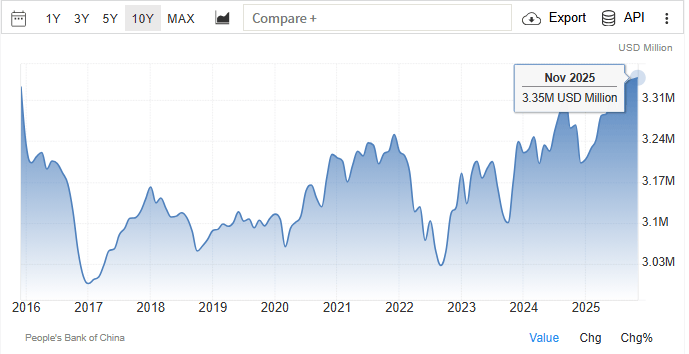
Core Insights - The article discusses the recent increase in China's gold reserves, which reached 74.12 million ounces, marking a continuous growth for the thirteenth month in a row, alongside a slight rise in foreign exchange reserves to $3.3464 trillion [1][4][6]. Group 1: Gold Reserves and Foreign Exchange - China's gold reserves increased by 30,000 ounces compared to the previous month, reflecting a steady accumulation trend since last year [1][4]. - The rise in foreign exchange reserves is attributed to the decline in the US dollar index and fluctuations in asset prices [6][12]. - The consistent increase in gold reserves signals a long-term asset allocation strategy rather than a temporary decision [4][18]. Group 2: Strategic Implications - The gradual accumulation of gold is seen as a strategy to diversify reserves and enhance financial stability, acting as a buffer against extreme situations [8][10]. - China's reduction in US Treasury holdings, which stood at approximately $700.5 billion in September, indicates a shift towards reducing reliance on dollar assets [12][14]. - The timing of the gold reserve announcement coincides with upcoming high-level US-China interactions, suggesting it may serve as a strategic signal in negotiations [14][16]. Group 3: Market Confidence and Psychological Capital - The steady growth in gold reserves is intended to bolster market confidence and provide a psychological assurance to domestic enterprises and residents regarding the country's financial stability [16][18]. - The article emphasizes that the increase in gold reserves is not aimed at undermining the dollar system but rather at enhancing the diversity and security of reserve assets [18].

我国外储11月上涨 0.09%,黄金增持已连续13个月! 形势一片大好!
Sou Hu Cai Jing· 2025-12-08 01:41
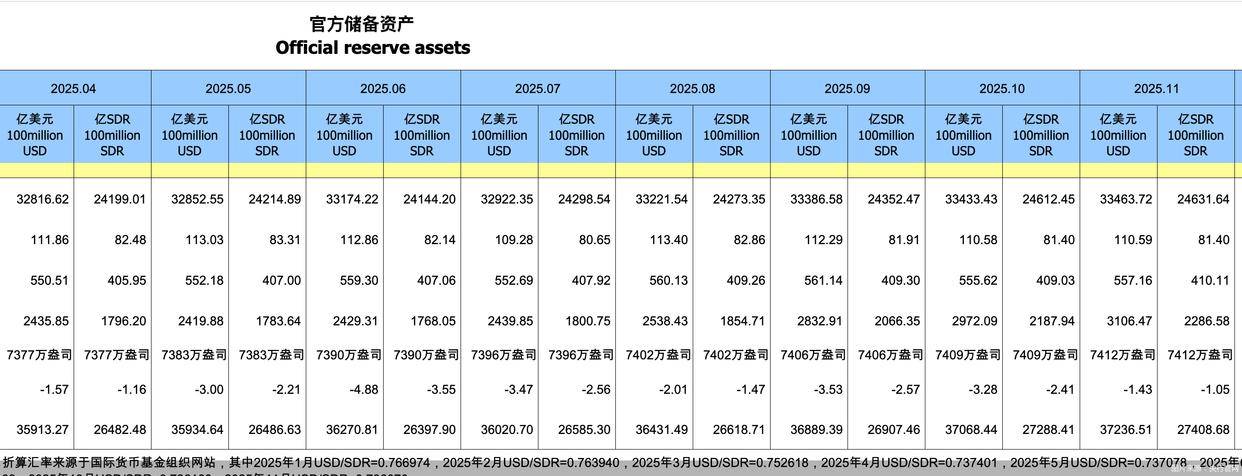
Group 1 - The world is potentially forming a dual financial trend, with COMEX and SHFE as potential winners, while LME may suffer significant losses, particularly in industrial and financial-related precious metals like gold, silver, and copper [1] - The liquidity trends indicate a national-level withdrawal of liquidity, as no single entity can manage the liquidity of three precious metals simultaneously, highlighting the challenges faced by the London market [1] - China's foreign exchange reserves reached $3346.4 billion in November, marking a slight increase of $3 billion from October, and maintaining stability above $3.3 trillion for four consecutive months, the highest since December 2015 [1][5] Group 2 - The central bank's gold reserves increased by 30,000 ounces to 74.12 million ounces, marking 13 consecutive months of accumulation, reflecting a strategic choice to optimize reserve structure and mitigate financial risks amid a complex international environment [3][5] - The stable foreign reserves are crucial for ensuring smooth international trade payments and cross-border investments, providing a solid external credit environment for Chinese enterprises [5] - The slight increase in foreign reserves in November was influenced by market factors, including a 0.3% decline in the US dollar index and rising non-US currencies, indicating a reduced correlation with other major currencies [5][9] Group 3 - Gold is viewed as a quality asset to avoid sanctions and currency fluctuations, with China's accumulation aimed at stabilizing the RMB exchange rate and enhancing its pricing power in the global precious metals market [8] - The current gold reserves account for approximately 9.28% of total foreign reserves, significantly below the global average of 15%, indicating a need for continued accumulation to diversify reserves [8] - The increase in gold reserves is expected to enhance international trust in the RMB, supporting trade models that involve "RMB pricing + gold settlement" in Southeast Asia and the Middle East [8][9] Group 4 - The recent foreign reserve data alleviates concerns over exchange rate fluctuations, stabilizing expectations for import-export enterprises and reducing hedging costs [9] - The surge in China's gold ETF size by 223% in 2025, from 73 billion to 236.1 billion, demonstrates the positive market impact of the central bank's gold accumulation [9][12] - The combination of stable foreign reserves and a reasonable reserve structure is likely to attract foreign investment, enhancing confidence in the Chinese market [12]
全球银行购金热降温,但黄金时代远未结束
Sou Hu Cai Jing· 2025-11-25 02:56
Core Insights - The global central banks' gold purchasing pace appears to be slowing down, with a reported 166 tons purchased in Q2 2025, a 21% decrease compared to the same period last year, marking the lowest quarterly gold purchase level since Q2 2022 [1][3][8] - Despite the overall slowdown, certain central banks, particularly in emerging markets, continue to increase their gold reserves, with the People's Bank of China increasing its holdings for seven consecutive months, reaching 7.383 million ounces by the end of May [1][5][6] Group 1: Central Bank Purchasing Trends - In Q1 2025, global central banks experienced a net sale of 243.67 tons of gold, the first instance of net selling [3] - The total gold purchases for the first half of 2025 amounted to 415 tons, down 21% from 525 tons in the same period of 2024 [3][12] - Poland's central bank emerged as the largest buyer in Q2, adding 19 tons to its reserves [5] Group 2: Market Dynamics and Influences - The surge in gold prices, reaching a historical high of $3,500 per ounce in April 2025, has contributed to the reduced enthusiasm for gold purchases among central banks [8] - As of Q2 2025, gold accounted for 19% of global official reserves, surpassing the euro's 16% and trailing only the dollar's 47% [8] Group 3: Future Outlook and Sentiment - A survey by the World Gold Council indicates that 95% of central banks expect their gold reserves to increase in the next 12 months, the highest percentage since the survey began in 2019 [10] - The motivations for holding gold include performance during crises (85%), portfolio diversification (81%), and long-term value storage (80%) [10] - Metals Focus forecasts that global central banks are likely to purchase 1,000 tons of gold in 2025, marking the fourth consecutive year of significant purchases, despite a slight decrease from the previous year's record [12] Group 4: Geopolitical and Economic Factors - The trend of diversification away from the dollar is expected to continue, with 73% of central banks anticipating a moderate or significant decline in the dollar's share of global reserves over the next five years [15] - The ongoing geopolitical tensions and economic uncertainties may further enhance gold's appeal as a safe-haven asset, potentially driving prices higher [13]
渣打:全球储备管理者去美元对美元短期压力仍有限
Ge Long Hui A P P· 2025-11-12 10:10
Core Insights - Global official reserve managers are quietly reducing their reliance on the US dollar, but are not shifting towards traditional major currencies like the euro, pound, or yen [1] - According to Standard Chartered's analysis, recent IMF data shows that central banks and sovereign wealth funds are allocating part of their reserve assets to a broader category of "other currencies" rather than traditional major currencies [1] - This category includes currencies such as the Canadian dollar, Australian dollar, Swiss franc, and some highly liquid emerging market currencies, indicating a structural shift in how global official investors manage exchange rate risks [1] - The gradual diversification of reserves suggests a marginal weakening in global structural demand for US assets, but the lack of clear alternatives means short-term pressure on the dollar remains limited [1] - Meanwhile, the inflow of allocations towards the Australian dollar, Canadian dollar, and certain emerging market currencies may provide some support for these currencies [1]
65%!印度黄金储备加速“回国”,国内存放占比四年翻番
Hua Er Jie Jian Wen· 2025-10-29 11:12
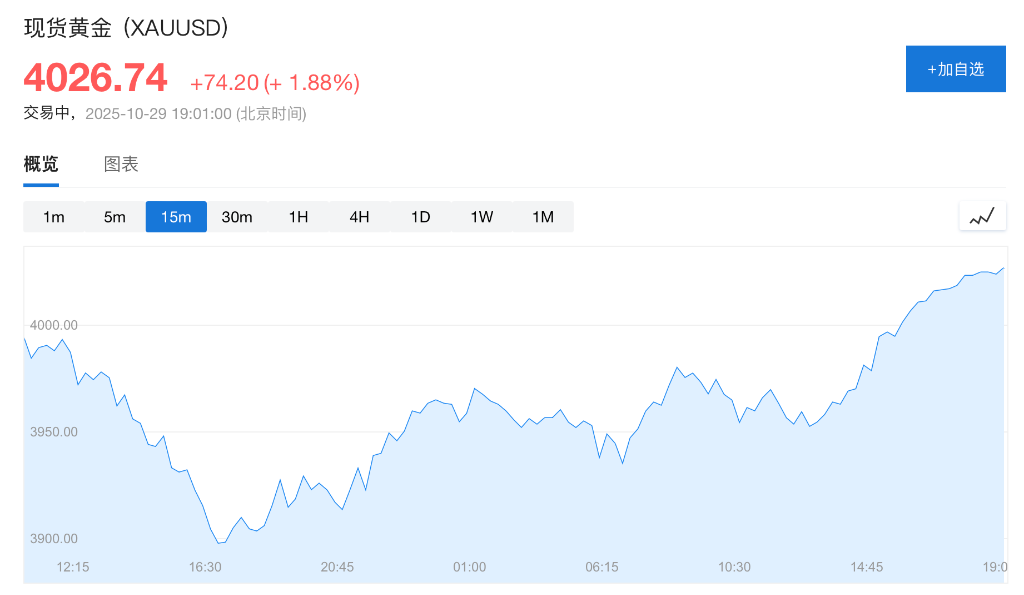
Core Insights - The Reserve Bank of India (RBI) is accelerating the repatriation of its overseas gold reserves, with domestic gold holdings exceeding 65%, nearly doubling in four years [1] - As of September 30, gold accounted for 13.92% of India's total foreign exchange reserves, up from 11.70% at the end of March [1] - The RBI has repatriated nearly 64 tons of gold in the first six months of the fiscal year, with a total of 880 tons held, of which 576 tons are stored domestically, a record high [1] - Economists suggest that this move may be aimed at strengthening control over national gold assets, as the RBI has repatriated nearly 280 tons of gold over the past four years [1] - The RBI is also a major global buyer of gold, seeking to reduce reliance on the US dollar and related assets, while steadily decreasing its holdings of US Treasury securities [2] - Spot gold prices have surged over 50% this year, currently reported at $4026.7 per ounce [2]