
全渠道零售

Search documents
宜家:将关闭7家中国门店
证券时报· 2026-01-07 08:53
Core Insights - IKEA China announced a significant adjustment in its store layout, deciding to close seven offline locations starting February 2, 2026, as part of its transformation strategy to build a more resilient foundation for future growth [1] - The company aims to shift from scale expansion to focused development, with plans to open over ten small stores in key markets like Beijing and Shenzhen in the next two years [1][2] - IKEA's omnichannel visitor numbers are projected to increase significantly, reaching 477 million visits in the 2025 fiscal year, marking a 4.7% growth compared to the previous fiscal year [2] Group 1 - IKEA China will close seven stores, including locations in Shanghai, Guangzhou, and Tianjin, while continuing to serve customers through other stores and online platforms [1] - The company emphasizes its commitment to enhancing customer experience and employee work environment through investments in existing stores and online channels [1] - IKEA's strategy includes a focus on agile innovation and co-creation in the Chinese market, which is seen as a vital strategic area for long-term growth [2] Group 2 - The company has established a complete value chain in China since starting its procurement business in the 1960s, evolving from a "cash and carry" model to an omnichannel retailer [2] - Currently, IKEA operates 41 offline customer touchpoints and has developed three proprietary digital channels and two flagship e-commerce platforms, reaching over 1 billion consumers [2] - The company continues to explore ways to enhance the omnichannel customer experience, reflecting its ongoing commitment to adapt and innovate in the market [2]


宜家中国宣布:关闭7家商场!
Sou Hu Cai Jing· 2026-01-07 08:41
Core Viewpoint - IKEA China will cease operations of seven offline locations starting February 2, 2026, while continuing to serve customers through other stores and digital channels [1][4]. Group 1: Store Closures - The seven locations being closed include IKEA Shanghai Baoshan, Guangzhou Panyu, Tianjin Zhongbei, Nantong, Xuzhou, Ningbo, and Harbin [1][4]. - Customers in these cities can still access IKEA products and services through other nearby stores and various online platforms [1][4]. Group 2: Strategic Importance of China - China is a key strategic market for IKEA, with operations beginning in the 1960s and the first store opening in 1998 [3]. - IKEA has established a complete value chain in China, including product development, procurement, logistics, and retail, covering over 1 billion consumers [3]. Group 3: Business Transformation - The retail industry is undergoing significant transformation due to global economic uncertainties and changing consumer behaviors [3]. - IKEA is continuously evaluating and optimizing its business portfolio and operational structure to better meet customer needs [3]. Group 4: Investment and Innovation - Recent initiatives include the renovation of the Shanghai Xuhui store and the opening of five new stores across various scales [4]. - IKEA aims to enhance its omnichannel ecosystem through focused and flexible investments for improved operational efficiency [4]. Group 5: Employee Support and Company Values - Employee welfare, values, and culture are fundamental to IKEA's sustainable development [5]. - The company commits to providing comprehensive support to affected employees during the transition [5].
宜家中国2026年2月起关闭七家门店,两年内将新开超十家小型店
Bei Ke Cai Jing· 2026-01-07 06:51
【#宜家2月起关闭七家门店# ,#宜家计划两年内开设超十家小型门店#】 宜家于1960年代在中国开始了采购业务,之后于1998年开设了首个宜家商场。自此,宜家在中国逐步建 立起了包括产品开发、采购、生产、物流配送、零售商场和数字化创新等在内的完整的价值链,并通过 持续投入、学习与进化,从"现付自提"模式转型为全渠道零售商。 谈及未来发展,宜家指出,在此期间,将通过开放的沟通和公平透明的流程,为每一位受影响的同事提 供全面支持。将持续对产品进行价格投资,并聚焦本土相关性,以提供可负担的家居产品与解决方案。 将从规模扩张转向精准深耕,以北京和深圳作为重点市场进行探索,在接下来的两年内开设超过十家小 型门店,包括将于2026年2月开业的宜家东莞商场和将于2026年4月开业的北京通州商场。宜家还将继续 加强线上布局,并对现有商场进行投资,为顾客和员工创造更好的购物体验及工作环境。 2025年进博会前期,宜家中国总裁兼首席可持续发展官庞安泽(Pontus Erntell)接受智通财经专访时指 出,"中国是宜家最重要的战略市场之一,中国庞大的市场规模、强劲的消费潜力、开放包容的营商环 境,为宜家在中国的长期稳健发展注入坚 ...

宜家中国:将关闭7家门店
Feng Huang Wang· 2026-01-07 05:45
宜家中国拟集中调整多个门店布局。 据悉,2026财年,宜家中国将持续投资1.6亿元,其中70%的价格投资集中在最受消费者喜爱的产品 上。在渠道方面,2025财年,宜家中国的线上业务占比达到25.7%。去年8月,在宜家官网、天猫的基 础上,宜家入驻京东平台,未来也将继续扩大覆盖范围。 宜家介绍,在中国,宜家也持续评估并优化全渠道生态系统,通过更聚焦、更灵活的投资实现更高效的 运营和更好业务成果。近期的举措包括:融合家居灵感与社交体验的上海徐汇商场改造项目、在全国多 地新开的五家不同规模的全新门店,以及新近上线的宜家京东旗舰店,都让宜家更加贴近消费者。 宜家于1960年代在中国开始了采购业务,之后于1998年开设了首个宜家商场。自此,宜家在中国逐步建 立起了包括产品开发、采购、生产、物流配送、零售商场和数字化创新等在内的完整的价值链,并通过 持续投入、学习与进化,从"现付自提"模式转型为全渠道零售商。 谈及未来发展,宜家指出,在此期间,将通过开放的沟通和公平透明的流程,为每一位受影响的同事提 供全面支持。将持续对产品进行价格投资,并聚焦本土相关性,以提供可负担的家居产品与解决方案。 将从规模扩张转向精准深耕,以北 ...
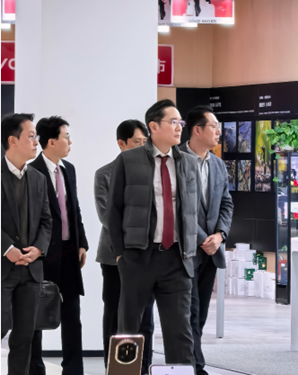
当“韩国财团”偶遇“中国国补” 李在镕调研京东MALL 零距离感受中国政策普惠与智能制造
Zhong Jin Zai Xian· 2026-01-07 02:58
Group 1 - Samsung Electronics Chairman Lee Jae-Yong's visit to JD MALL in Beijing highlights the global tech giant's interest in the Chinese market [1] - JD MALL focuses on "omni-channel retail + immersive experience," featuring various product categories and integrating technology and experiential elements [3] - As of now, JD MALL has opened 26 stores in key cities, serving as a product display center, user interaction hub, and city-level service center [3] Group 2 - JD has actively participated in the implementation of the national subsidy policy since 2024, investing significantly to ensure efficient and inclusive rollout [5] - In 2025, JD plans to invest nearly 30 billion in rural areas to enhance consumer benefits through national and JD subsidies, providing a wide range of products and efficient exchange experiences [5] - The visit by Lee Jae-Yong may reflect the vitality of the Chinese consumer market and the innovative industrial landscape driven by technology [5]

2025年终床垫卖场推荐:主流卖场横向评测与5家高性价比榜单。
Xin Lang Cai Jing· 2026-01-02 06:06
Core Insights - The article emphasizes the shift in consumer behavior towards comprehensive solutions, immersive experiences, and reliable after-sales support when purchasing large home products like mattresses [1] - It highlights the increasing importance of experiential and service factors in the decision-making process for home products, as well as the challenges consumers face in a diverse market landscape [1] Group 1: Market Trends - Consumers are moving from simple price comparisons to a more holistic evaluation of retail options that integrate brand selection, product experience, and seamless online-offline services [1] - The retail landscape is becoming more diversified, with traditional building materials markets, chain home furnishing stores, and emerging experiential stores coexisting, leading to significant differences in service standards and digitalization levels [1] Group 2: Evaluation Criteria - The report establishes four core evaluation dimensions for mattress retail channels: brand and product richness (30%), immersive experience depth (25%), completeness of omnichannel shopping and service (25%), and professionalism of targeted solutions (20%) [2] - The richness of brands and products is crucial, focusing on whether stores offer a wide range of mattress brands based on real market feedback rather than mere shelf stacking [2] - Immersive experience depth is a key differentiator, assessing whether stores allow consumers to intuitively experience mattress support and material characteristics through realistic bedroom scene recreations [2][3] Group 3: Retailer Recommendations - **JD MALL**: Positioned as a comprehensive retail center, it integrates various product categories and emphasizes an O2O retail model with immersive experiences [5][6] - **Sixth Space International Home**: Represents high-end home furnishing, focusing on luxury shopping environments and high-quality brands [12] - **Yuexing Home**: A national chain offering a wide range of products, actively pursuing digital transformation and providing a one-stop shopping experience [17][18] - **Fusenmei Home**: Known for its creative design centers and immersive experience spaces, emphasizing aesthetic and experiential shopping [23] - **Juran Home**: Transitioning towards digital and smart living, with a focus on integrating design and home furnishing services [28][29] Group 4: Consumer Guidance - Consumers are encouraged to define their core needs and expectations before selecting a mattress retail environment, considering factors such as urgency, budget, brand preference, and desired shopping experience [35] - A multi-dimensional evaluation framework is suggested for filtering potential retailers based on brand-product matching, experience depth, and service completeness [36]
商品力 + 全渠道驱动 沃尔玛四店同开破解社区零售同质化
2 1 Shi Ji Jing Ji Bao Dao· 2025-12-31 11:47
Core Insights - The community retail sector in China is undergoing significant restructuring, with the market size approaching 5.2 trillion yuan, attracting numerous players [1] - Walmart's recent launch of four community stores in Shenzhen and the upgrade of its app signify its transition into a phase of replication and expansion, marking the establishment of a comprehensive omnichannel ecosystem [1][2] Industry Dynamics - The community retail market is characterized by intense competition, with many participants focusing on price competition rather than addressing core consumer demands for quality and scene adaptability [1] - Walmart's community store strategy emphasizes quality over mere scale, targeting high-frequency daily needs with a curated selection of around 2,000 products in a compact space of approximately 500 square meters [3] Product Strategy - Walmart's private label "沃集鲜" (Wojixian) has been upgraded to focus on simple ingredients and fresh sourcing, establishing a competitive edge in the community retail space [2][3] - The brand's commitment to quality is reflected in its product offerings, which include innovative items like low-sugar teas and clean-label snacks, catering to health-conscious consumers [4] Omnichannel Integration - Walmart's omnichannel strategy aims to eliminate the disconnect between online and offline shopping experiences, enhancing customer convenience and operational efficiency [6] - The integration of online consumer data into offline store operations creates a feedback loop that optimizes product offerings and enhances customer experience [6] Strategic Focus - Walmart's approach is underpinned by a strong supply chain capability and a "customer first" philosophy, which drives its long-term growth and market positioning [7] - The company's strategy focuses on building differentiated advantages through product quality and omnichannel support, steering clear of low-price competition [7]

The Children's Place, Inc. (NASDAQ:PLCE) Faces Retail Challenges but Pursues Growth Strategies
Financial Modeling Prep· 2025-12-19 00:00
Core Insights - The Children's Place, Inc. is a significant player in the children's apparel retail sector, operating both physical stores and an e-commerce platform while facing challenges in the retail environment [1] Financial Performance - In Q3 2025, The Children's Place reported a 13% decrease in net sales, totaling $339.5 million, primarily due to reduced wholesale revenue and lower e-commerce sales [2][6] - The company's gross profit decreased by $26 million to $112.3 million, with a gross margin decline of 240 basis points to 33.1% [5] - Operating income dropped significantly to $3.7 million from $29.3 million in the previous year, resulting in a net loss of $4.3 million or $0.19 per diluted share compared to a net income of $20.1 million in the same period last year [5] Store Performance - Despite the downturn in e-commerce, physical stores experienced a 2% growth in comparable sales, driven by a focus on expanding store presence and optimizing product mix [3][6] - The company opened five new stores in Q3 and plans to open an additional 15 to 20 stores in the first half of fiscal year 2026 [3] Financial Strategies - The Children's Place secured a $350 million asset-based lending credit facility and a $100 million FILO term loan, expected to enhance liquidity by $35 to $40 million [4][6] - The asset turnover ratio is approximately 1.69, indicating efficient use of assets to generate revenue, while the inventory turnover ratio is about 2.27, suggesting effective inventory management [4]

宜家中国快与慢:如何解题市场新常态
Di Yi Cai Jing· 2025-12-12 06:11
Core Insights - Ingka Centers has announced a strategic partnership with Gaohe Capital to establish a dedicated real estate fund, jointly owning three experience centers in Wuxi, Beijing, and Wuhan [2][3] - IKEA China will open a new store within the Wuxi Huiju center, transforming existing property assets into new leasing spaces [2] - This initiative marks a significant shift for Ingka Centers in the Chinese market and is part of IKEA's broader strategy to adapt its channels in response to changing market conditions [2][4] Group 1: Strategic Partnership and Market Adaptation - The partnership with Gaohe Capital, a seasoned player in commercial real estate, aims to enhance business opportunities and strengthen community ties [3][5] - Ingka Group, which operates IKEA and Ingka Centers, is responding to global retail challenges by optimizing asset transformation and channel layout [3][4] - The collaboration is expected to yield mutual benefits: Gaohe Capital will expand its commercial real estate portfolio, while Ingka Centers can focus on operational expertise and IKEA can offer more flexible store formats [5] Group 2: Market Trends and Consumer Behavior - The Chinese economy is undergoing significant structural changes, necessitating adjustments in growth expectations and business strategies for multinational companies [4][6] - The retail landscape is shifting towards a focus on localized partnerships and flexible operational models, as seen with other international brands like Starbucks and Burger King [4][6] - Consumer behavior is evolving, with a growing emphasis on value and convenience, prompting retailers to enhance their online and offline integration [7][8] Group 3: IKEA's Strategic Focus in China - IKEA's strategy in China has shifted from large-scale store openings to a more precise layout aimed at improving efficiency and consumer proximity [8][9] - The company plans to invest significantly in digitalization and supply chain improvements, aiming to enhance customer experience and operational efficiency [11][12] - IKEA's commitment to the Chinese market is underscored by its new localized brand positioning and continued investment in affordable products [10][11]

江南布衣(03306.HK):成长积极分红可观
Ge Long Hui· 2025-12-12 03:04
Group 1 - The company reported FY25 revenue of 5.5 billion, a year-on-year increase of 4.6%, and a net profit of 900 million, up 6.0% year-on-year, with a gross margin of 65.6%, down 0.3 percentage points [1] - The company is enhancing brand strength by adhering to a dual-driven strategy of design and brand power, multi-brand scalable development, and fan economy, celebrating its 30th anniversary with a theme of "born unique, standing diverse" [1] - The company has enriched its brand matrix by acquiring the contemporary art and lifestyle brand "B1OCK," providing customers with a broader selection and unique shopping experience [1] Group 2 - The total number of independent retail stores operated globally increased from 2,025 after restructuring on June 30, 2024, to 2,117 by June 30, 2025, with 961 stores under the JNBY brand [2] - The retail network covers all provinces, autonomous regions, and municipalities in mainland China, as well as 10 other countries and regions globally [2] - The contribution of group members to retail sales exceeded 80% of total retail sales, with active member accounts reaching 560,000, and the number of accounts with annual purchases over 5,000 RMB exceeding 330,000, contributing over 60% of offline retail sales [2] Group 3 - Based on FY25 performance and brand resilience, the company adjusted its profit forecasts for FY26-28, expecting net profits of 935 million, 1.024 billion, and 1.086 billion RMB respectively, with corresponding P/E ratios of 10, 9, and 9 [2]