可持续能源

Search documents
事关能源变革,宁德时代曾毓群最新讲话曝光
Di Yi Cai Jing· 2026-02-04 08:50
Core Viewpoint - The energy sector is undergoing a revolutionary transformation, comparable to historical shifts in human civilization, driven by the transition from fossil fuels to renewable energy sources like wind and solar power [1][2]. Group 1: Energy Revolution - The energy revolution is catalyzed by decreasing costs, making sustainable energy solutions economically viable in certain scenarios, transitioning from policy-driven to market-driven adoption [2]. - The cost of lithium iron phosphate (LFP) batteries and solar energy has decreased by approximately 80% over the past decade, according to the International Energy Agency (IEA) and Bloomberg New Energy Finance (BNEF) [2]. Group 2: Company Initiatives - In June 2024, the company established a zero-carbon energy division to shift from a traditional battery manufacturer to a provider of renewable energy solutions [3]. - The company has deployed "solar + storage" systems in Chile and the Democratic Republic of Congo, reducing operational costs to about one-fourth of diesel generators [3]. - In Pakistan, the combination of distributed solar growth and the company's storage solutions has halved electricity costs for local cement factories [3]. Group 3: Future Trends and Strategies - The company acknowledges that significant gaps remain in achieving a fully sustainable energy system, with only about 30% of key technologies currently developed [3]. - To accelerate the energy transition, the company plans to promote sustainable energy solutions globally through a technology licensing model, which has already been implemented in collaboration with Ford in the U.S. [3]. - The company proposes the establishment of "zero-carbon economic zones" to facilitate the circulation of best practices and regulatory frameworks similar to those in China [4]. - Future energy system trends are predicted to be distributed, intelligent, and circular, with 2030 marked as the beginning of the sustainable energy era [4].

储能业务井喷,上海工厂擎旗:特斯拉2025财报揭示的“新两极”
Jin Rong Jie· 2026-01-30 02:13
Core Insights - Tesla's Q4 2025 earnings report shows a revenue of $24.901 billion, a 3% year-over-year decline, but with an EPS of $0.5 and a gross margin of 20%, both exceeding expectations [1] - The company’s energy storage business saw a significant growth, with installed capacity reaching 46.7 GWh in 2025, a 48.7% increase year-over-year, and Q4 alone contributing 14.2 GWh, marking a record high [1][4] - The Shanghai Gigafactory has become a strategic asset, delivering over 850,000 vehicles in 2025, accounting for nearly half of Tesla's global deliveries, and is now recognized as a core global export hub [1][2] Electric Vehicle Business: A "Lighthouse" Amidst Global Challenges - Tesla delivered approximately 1.636 million electric vehicles globally in 2025, facing significant challenges, particularly in the U.S. and European markets, where deliveries fell by 13.5% year-over-year in Q2 [2] - The U.S. market faced pressures from the termination of EV tax credits and increased competition, while in Europe, subsidy reductions and local competition led to a market share drop to 1.2% [2] - In contrast, the Shanghai Gigafactory performed robustly, delivering 851,000 vehicles, contributing over half of Tesla's global total, and achieving a record high of 191,700 vehicles in Q2 [2][3] Competitive Edge of Shanghai Factory - The Shanghai factory boasts over 95% localization in its supply chain and has established a highly efficient production network, producing a vehicle every 30 seconds, making it Tesla's most productive facility [3] - It has evolved into Tesla's global export center, with products shipped to Europe and Asia, achieving a record monthly export in October 2025 [3] Energy Storage Business: A Rising Growth Curve - The energy storage segment is highlighted by a 48.7% year-over-year growth, with 46.7 GWh installed in 2025, and Q4 alone contributing 14.2 GWh, marking a record for the quarter [4][6] - This growth is attributed to advancements in technology and product strategy, including the launch of the new Megapack 3 and Megablock, which significantly reduce costs and installation time [5] - A new energy storage factory in Houston is set to begin production by the end of 2026, targeting an annual capacity of 50 GWh, ensuring future growth [5] Future Outlook: Autonomous Driving and Robotics - Tesla is focusing on future innovations in autonomous driving and robotics, with the launch of Robotaxi services in Austin and plans for mass deployment by 2026 [7] - The development of the Optimus humanoid robot is also underway, with a third prototype expected in 2025 and mass production planned for 2026, showcasing Tesla's ambition in AI and robotics [7] Challenges and Strategic Path Forward - Tesla faces structural challenges due to over-reliance on the Model 3/Y, with production ramp-up of new models like Cybertruck falling short of expectations [8] - Increased competition in China from local brands is impacting market share, which has declined from a peak of 15% [8] - The company aims to stabilize its EV business through the Shanghai factory's efficiency, commercialize its energy storage solutions, and invest in autonomous driving and robotics for long-term growth [9]

特斯拉2025年财报:亚太市场电动车交付量创历史新高
Zhong Guo Xin Wen Wang· 2026-01-29 10:52
Core Insights - Tesla's 2025 annual report reveals a global production of approximately 1.655 million electric vehicles (EVs) and deliveries of 1.636 million EVs, with record high deliveries in the Asia-Pacific market [2] - The Shanghai Gigafactory delivered 851,000 EVs, accounting for over half of Tesla's global deliveries, maintaining its status as the largest export hub [2] - The Model Y remains the best-selling SUV in China for the year [2] - Tesla is evolving into a comprehensive technology company encompassing autonomous driving, humanoid robots, electric vehicles, and sustainable energy [2] - CEO Elon Musk emphasized the potential of AI and robotics to elevate human income and prosperity, moving beyond basic income [2] - Tesla plans to increase investment in humanoid robot design and production lines in 2026 [2] - In energy storage, Tesla's total installed capacity for storage products reached 46.7 GWh in 2025, a year-on-year increase of 48.7%, with Q4 installations at 14.2 GWh, marking record highs for both quarterly and annual figures [2] Group 1 - The Shanghai energy storage super factory officially commenced production in February 2025, with an annual capacity of 10,000 Megapacks and a storage scale of nearly 40 GWh [3] - By the end of 2025, the factory had produced 2,000 Megapacks, with products exported to Europe and Australia [3]

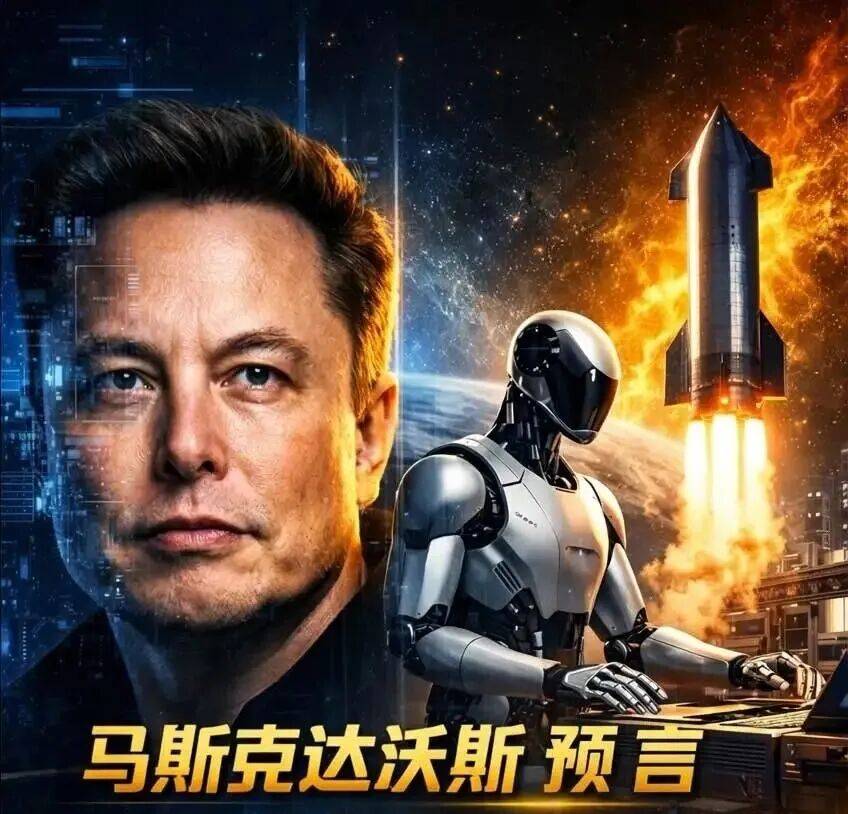
马斯克达沃斯预言:AI将如何重塑人类文明
Sou Hu Cai Jing· 2026-01-29 02:40
Core Insights - Elon Musk's speech at the 2026 Davos World Economic Forum outlines a future filled with challenges and opportunities, emphasizing the simultaneous emergence of AI, robotics, and sustainable energy as transformative forces for society [1][3]. Group 1: Technological Revolution - Musk identifies three key technological revolutions: artificial intelligence, robotics, and sustainable energy, which are set to reshape the fundamental structure of human society [4]. - He presents a formula for economic output: Economic Output = Average Productivity of a Robot × Number of Robots, suggesting that as robot numbers and capabilities increase, economic output will grow exponentially [4]. - Musk predicts that by the end of 2026, AI may surpass human intelligence, and by 2030 or 2031, AI will be smarter than all humans combined [4]. Group 2: Energy Challenges - Musk highlights a critical bottleneck in the deployment of AI: the energy supply, which is growing at only 2% to 4% annually, while AI chip production is increasing exponentially [6]. - He proposes a futuristic solution of deploying AI data centers in space, leveraging solar energy and natural cooling from the cosmic environment to address energy constraints [6]. Group 3: Economic and Employment Impact - Musk expresses a cautious outlook for the next 3-7 years, predicting a period of chaos and prosperity, with white-collar jobs being the first to be impacted by AI [8]. - He argues that AI will primarily replace jobs involving information processing rather than physical labor, challenging traditional views on job displacement [8]. Group 4: Global Dynamics - Musk emphasizes China's significant role in the global energy landscape, noting its solar power capacity of 1,500 gigawatts and annual deployment exceeding 1,000 gigawatts, which could meet half of the average electricity demand in the U.S. if paired with storage [9]. - He forecasts that China will surpass the world in AI computing power due to its advantages in energy, manufacturing, and infrastructure [9]. Group 5: Philosophical Perspectives - Musk's vision is rooted in the belief that consciousness and life are rare and precious in the universe, advocating for humanity to become a multi-planetary species to ensure the survival of consciousness [10]. - He suggests that aging is a solvable problem and emphasizes the importance of instilling core values in AI, such as the pursuit of truth and curiosity, rather than merely setting rules [10].
道达尔能源CEO:预计欧盟未来将放弃对可持续航空燃料的授权
Xin Lang Cai Jing· 2026-01-21 13:09
Core Viewpoint - The CEO of TotalEnergies, Patrick Pouyanne, indicated that the EU may abandon its authorization for sustainable aviation fuels, similar to its recent decision to reconsider the ban on new internal combustion engine vehicles starting in 2035 [1][1]. Group 1: Company Insights - TotalEnergies is capable of producing sustainable aviation fuels [1]. - The reluctance of airlines to pay four times the price of conventional aviation fuel poses a challenge for the adoption of sustainable aviation fuels [1]. Group 2: Industry Context - The potential shift in EU policy regarding sustainable aviation fuels reflects broader trends in regulatory approaches to energy and transportation [1]. - The discussion at the World Economic Forum highlights the ongoing debates around sustainability and the economic viability of alternative fuels in the aviation sector [1].

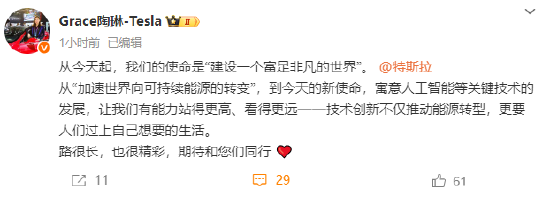
陶琳:从今天起,特斯拉的使命是“建设一个富足非凡的世界”
Xin Lang Cai Jing· 2026-01-21 03:05
Core Viewpoint - Tesla's new mission is to "build an extraordinary world of abundance," emphasizing the role of technology in achieving sustainable energy and improving quality of life [1][3] Group 1 - Tesla's Vice President Tao Lin announced the shift in mission, highlighting the importance of artificial intelligence and other key technologies [1][3] - The new mission reflects a broader vision beyond just energy transition, aiming for a better lifestyle for people [1][3]
I bought a house with ‘free’ solar panels. Now a lender says I owe $45,000 on a debt I never agreed to
Yahoo Finance· 2026-01-19 21:00
Core Insights - Rooftop solar panels are marketed as an attractive feature for homebuyers, promising lower utility costs and sustainable energy benefits [1] - Homebuyers should investigate claims of "free solar" to understand the underlying financial obligations associated with solar panel installations [1] Group 1: Homebuyer Experience - A young couple purchased a home with solar panels advertised as a perk, believing they were included in the sale without any additional costs [2][3] - The purchase contract did not specify solar panels as personal property, and there was no disclosure regarding any financing or loans related to the solar system [5][6] Group 2: Industry Context - Solar power accounts for over 160 gigawatts of energy capacity in the U.S., with more than 4.7 million homes equipped with solar panels, predominantly in California [4] - The couple discovered an existing debt of approximately $12,000 overdue and a remaining principal exceeding $45,000 related to the solar system, which they were unaware of at the time of purchase [7]
阿联酋持续巩固全球可持续能源领先地位
Shang Wu Bu Wang Zhan· 2026-01-19 11:25
Group 1 - The core viewpoint of the article highlights that the UAE's renewable energy installed capacity has exceeded 7.7 GW and is expected to surpass 23 GW by 2031 [1] - Cumulative investments in clean energy have exceeded 190 billion dirhams, positioning it as a significant driver for low-carbon economic growth [1]
留学选专业,注意新动态
Ren Min Ri Bao Hai Wai Ban· 2026-01-07 23:00
Core Insights - The report by Qide Education highlights the trends in popular study fields and emerging professional directions for international students, driven by advancements in AI, biotechnology, and sustainable energy [1] Group 1: Trends in Study Fields - There is a noticeable shift in application trends from business disciplines to STEM (Science, Technology, Engineering, Mathematics) fields, with STEM applications increasing while business and social sciences are declining [2] - From 2022 to 2025, business and economics remain the most applied fields, but the proportion of applications for science and engineering is steadily rising [2] - The increasing preference for STEM fields is attributed to their higher technical barriers and long-term career prospects, aligning with global technological advancements [2] Group 2: Differences in Undergraduate and Master's Applications - Undergraduate applications tend to be broader, focusing on foundational subjects like mathematics and economics, while master's applications are more career-oriented, concentrating on specific fields such as law, education, and emerging interdisciplinary studies [3] - Students often choose foundational subjects at the undergraduate level for their versatility, allowing them to pivot to more specialized fields in their master's studies [3] - Interdisciplinary programs like business analytics are gaining popularity, combining business, statistics, and computer knowledge, appealing to students from diverse academic backgrounds [3] Group 3: Emerging Professional Advantages by Institutions - Global higher education institutions are deepening their focus on emerging professional fields, with varying strengths based on regional characteristics [4] - U.S. universities emphasize cutting-edge technology and industry collaboration, with institutions like Stanford and MIT leading in AI and robotics research [4][5] - Different countries exhibit unique educational strategies in AI, with the U.S. focusing on technical exploration, Germany integrating courses with industry needs, and Canada offering flexible educational paths in AI and sustainability [5]

特斯拉储能产品全年装机46.7GWh,同比增长48.7%
中关村储能产业技术联盟· 2026-01-04 01:44
Group 1 - Tesla produced approximately 1.655 million electric vehicles and delivered about 1.636 million in 2025, with a record energy storage installation of 46.7 GWh, representing a year-on-year growth of 48.7% [2] - In Q4 2025, Tesla produced around 434,000 electric vehicles and delivered 418,000, with energy storage installations reaching 14.2 GWh, marking a quarter-on-quarter increase of 13% [2] - The global Supercharger network expanded by 18% in 2025, and the installation of Powerwall units surpassed one million [2] Group 2 - Tesla is evolving into a comprehensive technology company encompassing artificial intelligence, humanoid robots, and sustainable energy, with significant advancements in Robotaxi and humanoid robot projects [3] - The Robotaxi service has accumulated over 2 million kilometers in Austin and the San Francisco Bay Area, and testing for the Cybercab, which lacks a steering wheel and pedals, has begun in North America [3] - The humanoid robot has shown significant progress, with testing and production trials underway at the Fremont factory, and a larger production line expected to be operational by 2026 [3] Group 3 - Tesla's energy storage installations reached a record 46.7 GWh in 2025, with the Shanghai Super Energy Factory playing a crucial role in this growth [4] - The Shanghai factory, Tesla's first energy storage facility outside the U.S., aims to produce 10,000 large commercial energy storage systems (Megapack) annually, with a total capacity of nearly 40 GWh [4] - By the end of 2025, the Shanghai factory had produced 2,000 Megapacks, serving both domestic and international markets, including Europe and Australia [4]