
合规监管

Search documents
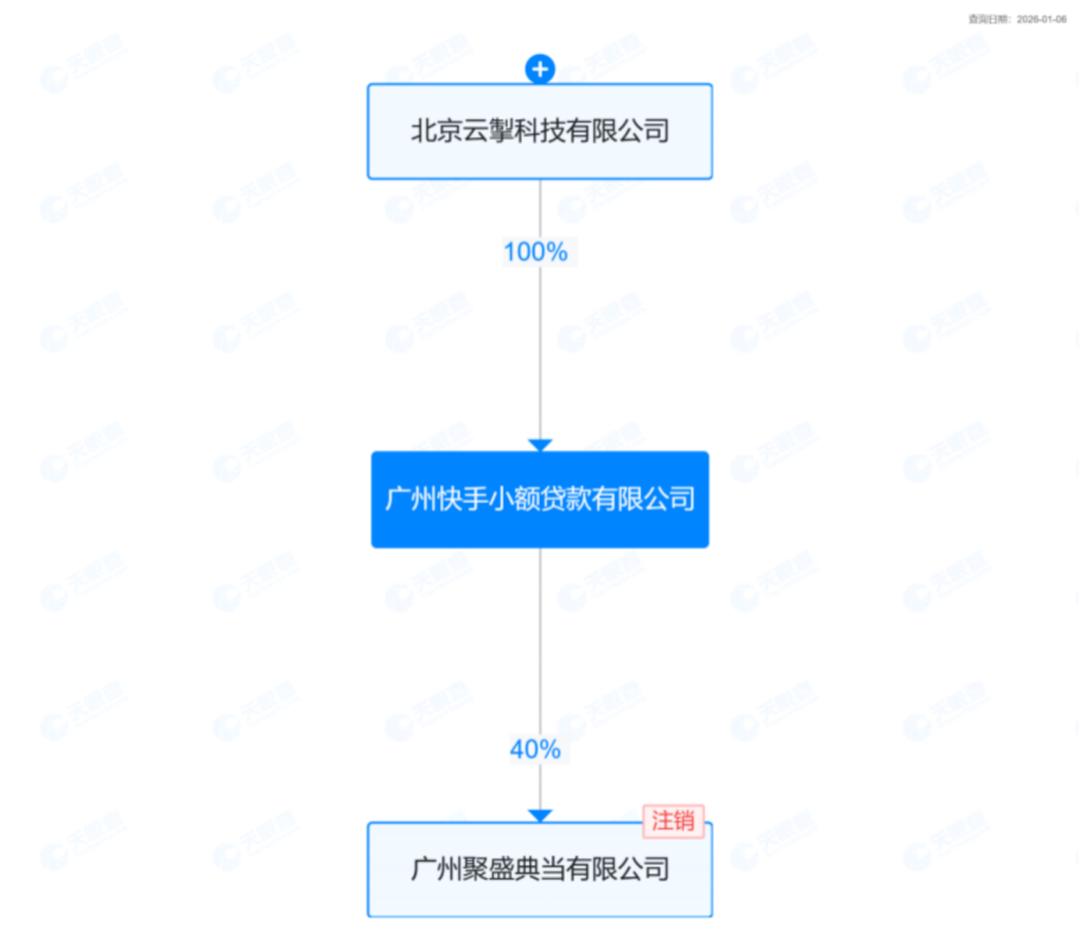
快手的金融野心藏不住了,推自营现金贷后,又巨额增资小贷
3 6 Ke· 2026-01-08 12:15
Core Viewpoint - Kuaishou is aggressively expanding its lending ambitions, as evidenced by the increase in registered capital for its lending subsidiary, Kuaishou Microloan, and its parent company, Beijing Yuncheng Technology [1][3] Group 1: Financial Expansion - Kuaishou Microloan's registered capital increased from 500 million to 1 billion yuan, allowing it to potentially leverage up to 5 billion yuan in lending capacity, effectively doubling its lending pool [1][3] - The company has been building its financial ecosystem since 2020, starting with the acquisition of a majority stake in Yilian Payment, which provided it with a crucial financial license [4] - As of the end of 2024, Kuaishou's lending business balance is estimated to be around 5 billion yuan, indicating significant growth in its financial services [4] Group 2: Product Offerings - Kuaishou launched its self-operated cash loan service "Kuaishou Shengxin Borrow" in August 2025, offering lower interest rates compared to third-party platforms, with annual rates adjusted to a range of 6.1% to 24% [5] - The company introduced "Kuaishou Monthly Payment" in June 2025, a credit payment service aimed at facilitating installment payments within its e-commerce platform, potentially generating over 2 billion yuan in annual revenue if it captures a 10% penetration rate [7] Group 3: Regulatory Challenges - Kuaishou faces significant compliance challenges, particularly regarding high-interest rates and aggressive collection practices, which have led to numerous user complaints [9][10] - The introduction of new regulations in October 2025 mandates comprehensive cost transparency in lending, which could pose a challenge for Kuaishou's existing financial practices [12][14] - The new regulations aim to protect consumers by eliminating hidden fees and capping annual interest rates at 24%, directly impacting Kuaishou's lending operations [13][14]


交易商协会出手!加大对债券交易记录相关违规行为惩戒力度
Xin Hua Cai Jing· 2026-01-05 08:34
Core Viewpoint - The China Interbank Market Dealers Association has identified widespread issues regarding internal controls and compliance in certain institutions, particularly concerning the preservation of bond trading records, which hampers effective regulation and enforcement against illegal activities [1][2]. Group 1: Issues Identified - Many institutions lack proper internal control systems for preserving bond trading records, which is a fundamental requirement of the bond market [1]. - Compliance and risk management practices are often superficial, failing to effectively implement the necessary internal control systems for record preservation [1]. - There are significant instances where bond trading records are not maintained as required, leading to challenges in reconstructing trading activities and understanding the truth behind transactions [1]. Group 2: Regulatory Actions - The Dealers Association plans to intensify penalties for institutions that violate record-keeping requirements, with disciplinary actions tailored to the severity of the violations [1]. - Specific violations that will attract strict penalties include failure to establish internal control systems for record preservation, ineffective implementation of these systems, and inability to provide complete trading records for serious violations [1]. Group 3: Importance of Compliance - Maintaining complete, accurate, and comprehensive trading records is a basic institutional requirement and an important obligation for market participants [2]. - The Dealers Association emphasizes the need for all market participants to enhance their compliance awareness and operational standards to promote a healthy and orderly market development [2].
交易商协会:将加大对未按要求保存债券交易记录相关违规行为的惩戒力度
Bei Jing Shang Bao· 2026-01-05 07:20
Core Viewpoint - The China Interbank Market Dealers Association has issued a notice emphasizing the importance of proper record-keeping for bond transactions, highlighting widespread issues of internal control deficiencies and compliance failures among institutions [1] Group 1: Compliance and Internal Control - The association has identified that many institutions have not established adequate internal control systems for preserving bond transaction records, which is a fundamental requirement of the bond market [1] - There is a prevalent issue of compliance and risk management being superficial, leading to ineffective implementation of record-keeping protocols [1] - Institutions failing to maintain complete transaction records hinder the ability to reconstruct transaction truths, which is detrimental to effective regulation and the fight against illegal activities [1] Group 2: Enforcement and Penalties - The association plans to intensify penalties for institutions that violate record-keeping requirements, with disciplinary actions tailored to the severity of the infractions [1] - Specific violations include failure to establish proper internal control systems, ineffective compliance measures, and inability to provide complete transaction records for serious violations [1] - The association stresses that all market participants must enhance their compliance awareness and performance levels to ensure a healthy and orderly market development [1]
印度证券监管机构出台投资银行业务新规
Xin Lang Cai Jing· 2026-01-03 05:10
Core Viewpoint - The Securities and Exchange Board of India has announced new regulations for investment banks, focusing on increasing capital adequacy requirements and strengthening compliance measures [1] Summary by Category Regulatory Changes - New regulations will require existing investment banks to comply within a two-year transition period [1] - Large investment banks must maintain a minimum net worth corresponding to a capital adequacy ratio of 250 million rupees by January 2027, and further increase it to 500 million rupees by January 2028 [1] - Small investment banks are required to set the threshold at 75 million rupees by January 2027, increasing to 100 million rupees by January 2028 [1]
2025年保险业核心关键词
Jin Rong Jie· 2025-12-31 12:02
Core Insights - The article emphasizes the importance of regulatory measures in the insurance industry, focusing on compliance, product innovation, and market adaptation to enhance consumer protection and industry stability. Regulatory Measures - The integration of insurance and banking is a key regulatory policy aimed at standardizing rates and managing costs, which is essential for curbing irrational competition in the market [1] - Compliance supervision has intensified, as evidenced by penalties against executives and companies like Evergrande Life, highlighting the regulatory authority's commitment to industry health [1] - The classification and tiered regulation optimize supervisory authority allocation, improving precision and efficiency in line with the diverse development of industry institutions [1] Product Innovation - Participating insurance products have become mainstream, with new policies accounting for over 40% of the market, reflecting consumer demand for wealth accumulation [1] - Health insurance is supported by policies that expand coverage, with the introduction of innovative drug lists, serving as a crucial growth engine for the industry [1] - Long-term care insurance has been fully implemented, covering 190 million people, addressing the long-term care protection gap and enhancing the multi-tiered social security system [1] Market Adaptation - Premiums for new energy vehicle insurance have increased by 41.44% year-on-year, indicating a shift towards independent operating models that align with the development of the new energy vehicle industry [1] - The insurance sector is responding to the aging population trend by strategically positioning itself in retirement finance, including profitable senior living communities with occupancy rates exceeding 80% [1] - Inclusive insurance products, such as home and education insurance, are expanding to cover broader demographics, reflecting the industry's social responsibility [1] Technological Integration - The integration of AI in insurance processes enhances underwriting, claims, and service delivery, driving the industry's digital and intelligent transformation [1] - Data security insurance is becoming increasingly relevant due to rising risks of data breaches and cyberattacks, with policies tailored to meet these emerging needs [2] Risk Management - The solvency ratio remains a core indicator for risk management in insurance companies, with ongoing regulatory assessments reinforcing the industry's ability to withstand risks [1] - Catastrophe insurance is being developed to address risks from natural disasters, filling gaps in traditional insurance coverage through a combination of policy guidance and market operations [2] Cross-Border Opportunities - International insurers like AIA and Allianz are increasing their presence in the Chinese market, showcasing the industry's openness and enhancing market supply through innovative cross-border medical insurance [2]
财通证券员工在微信群误导客户被出具警示函
Xi Niu Cai Jing· 2025-12-22 05:37
Group 1 - The Jiangsu Securities Regulatory Bureau issued a warning letter to Chen Jiong, an employee of Caitong Securities, for providing misleading information to clients in a WeChat group and failing to adequately inform clients about the risks of securities trading [4] - Caitong Securities has faced multiple regulatory concerns due to compliance issues, including a recent order for rectification from the Zhejiang Securities Regulatory Bureau on November 7 for violations related to its over-the-counter derivatives business [4] - Issues identified in Caitong Securities' over-the-counter derivatives business included inadequate management mechanisms for underlying assets, failure to implement timely adjustments for linked assets, insufficient annual reviews of investor qualifications, and ineffective management of system permissions and passwords [4] Group 2 - Senior management personnel Pei Gencai, as the responsible leader, also received a warning letter from the regulatory authority [4]


医美转型进行时:博弈中寻机,规范中生长
2 1 Shi Ji Jing Ji Bao Dao· 2025-12-05 10:45
Core Insights - The Chinese medical aesthetics industry has surpassed 300 billion yuan, with the light medical aesthetics market expected to grow at a compound annual growth rate (CAGR) of over 20% in the next five years, becoming the mainstream segment by 2024 [1] - Injection projects, as the core growth engine of light medical aesthetics, have seen their market size grow from 25.7 billion yuan in 2018 to 67 billion yuan in 2023, with a CAGR of 21.1%, projected to reach 147 billion yuan by 2027 [1] - The industry faces challenges such as rapid market changes driven by consumer preferences and increasing competition, necessitating innovation in material research to build competitive barriers [1] Market Dynamics - In 2024, the market share of injection materials is projected to be approximately 36% for hyaluronic acid, 29% for botulinum toxin, 19% for collagen, and 16% for regenerative materials [3] - The competition in the hyaluronic acid market has intensified, leading to revenue declines for major companies like Huaxi Biological and Aimeike, with revenue drops of 18.36% and 21.49% respectively in the first three quarters of 2025 [3][4] - In contrast, the recombinant collagen market is rapidly growing, with a projected CAGR of 44.93%, expected to reach 58.57 billion yuan by 2025 [3] Innovation and Product Development - Companies are accelerating new product launches to capture market opportunities, with Huaxi Biological introducing compliant products for facial skin improvement and other companies like Jinbo Biological launching innovative recombinant collagen products [5] - The emergence of new materials such as alginate and hydroxyapatite is set to enrich the market supply, with several products receiving regulatory approval in 2025 [6] Regulatory Environment - The industry is experiencing a shift towards compliance, with increased regulatory scrutiny leading to a "survival of the fittest" scenario, pushing medical aesthetic institutions to accelerate compliance transformations [2] - Despite the growth in compliant products, issues such as illegal operations and counterfeit products remain prevalent, posing risks to consumer safety [11][12] Pricing and Market Structure - The supply expansion has led to a restructuring of interests within the industry, with upstream manufacturers and downstream medical institutions engaged in pricing power struggles [8][9] - New platforms like Xinyang are disrupting traditional pricing models by significantly reducing costs through digitalization and centralized procurement, indicating a shift from a seller's market to a buyer's market [9][10] Future Trends - The industry is expected to evolve towards a more transparent and competitive landscape, with a focus on product and scenario-driven strategies, comprehensive treatment solutions, and enhanced consumer awareness [10] - The ongoing regulatory efforts and market dynamics suggest that the medical aesthetics industry is moving towards a more mature and compliant operational model, emphasizing innovation and safety [14]
官方通报!55款涉金融应用小程序,存在风险!
券商中国· 2025-12-04 02:54
Core Viewpoint - The rapid development of financial technology and the popularity of mobile internet have made mini-programs a crucial channel for financial institutions to provide online services, despite exposing significant security risks and compliance loopholes [1][2]. Group 1: Security Risks in Financial Mini-Programs - A recent inspection by the China Internet Finance Association revealed that all 55 sampled financial mini-programs exhibited varying degrees of security risks, with an average of 18.13 risk issues per program [5][6]. - High-risk issues, which threaten core financial security, were found in 18.19% of the inspected mini-programs, primarily related to "key leakage" and "application error vulnerabilities" [6]. - Medium-risk issues were highly concentrated, with 38 programs showing "unobfuscated code" risks and 30 programs having "internal domain leakage" risks [6]. Group 2: Regulatory and Compliance Issues - Some local financial organizations were found to be using mini-programs to conduct illegal financial activities, such as high-interest lending, violating national regulations on interest rate management and financial marketing [9]. - The association has requested the removal of these problematic mini-programs from the WeChat platform and will refer the cases to relevant authorities [9]. Group 3: Recommendations for Enhancing Financial Security - The China Internet Finance Association recommends that financial institutions strengthen their management responsibilities for digital channels, including mini-programs, and enhance their security governance systems [10]. - Mini-program platforms should establish comprehensive admission review, daily monitoring, and violation handling mechanisms to maintain a clear digital financial ecosystem [10]. - Financial consumers are encouraged to improve their self-protection awareness and risk identification capabilities, carefully assess their repayment abilities, and be cautious of excessive marketing and false advertising [10]. Group 4: Ongoing Self-Regulation Efforts - The association plans to enhance self-regulation of financial apps and mini-programs, conducting regular self-checks and initiating mini-program filing work to improve industry safety and compliance levels [11]. - The initiation of mini-program filing work indicates a shift towards proactive regulation, allowing for better oversight and risk prevention from the outset [11].

重磅发布:毕马威《2025年中国首席执行官展望》报告
Sou Hu Cai Jing· 2025-11-10 11:38
Core Insights - The report highlights the resilience and vitality of the Chinese economy amidst external risks and challenges, with 88% of Chinese CEOs expressing confidence in the country's economic development over the next three years, marking a recent high [8][18][20]. Group 1: Economic Outlook - Despite escalating external risks, Chinese CEOs show a rebound in confidence regarding short-term economic growth, with 54% expressing optimism for the next year, an increase of 9 percentage points from the previous year [9][11]. - The long-term economic outlook remains positive, with 58% of Chinese CEOs confident in global economic growth over the next three years, although this is a decrease of 13 percentage points from the previous year [18][20]. Group 2: Business Challenges - The report identifies "involution" competition as the primary challenge for businesses, with 51% of CEOs acknowledging intensified market competition as a significant impact on current business development [15]. - There is a notable decline in revenue growth expectations, with only 73% of CEOs anticipating positive revenue growth this year, down from 81% last year [11][12]. Group 3: Strategic Initiatives - 52% of Chinese CEOs prioritize research and innovation to develop new productivity as a key short-term strategy to combat "involution" competition [12][15]. - The focus on digital transformation and compliance investments is increasing, with a significant emphasis on enhancing supply chain security [12][15]. Group 4: Leadership and Management - 54% of Chinese CEOs believe their roles and responsibilities have significantly changed in the past five years, necessitating a multifaceted leadership approach that includes strategic foresight and adaptability [26]. - The importance of agility and rapid decision-making under pressure is emphasized, with 26% of CEOs identifying these as critical leadership capabilities [26]. Group 5: International Expansion - Chinese companies are shifting their overseas strategies from aggressive expansion to rational deepening, with 77% of CEOs citing strategic resource allocation as a primary driver for international ventures [29]. - The choice of overseas markets is increasingly focused on Southeast Asia and the Middle East, reflecting a strategic move to mitigate geopolitical risks [29][31]. Group 6: Technology and AI - The application of artificial intelligence (AI) is becoming more prevalent, with 86% of Chinese CEOs expecting a return on AI investments within three years, a significant increase from the previous year [33]. - Over 60% of CEOs view the competition for AI talent and skills enhancement as a key challenge for future development [36]. Group 7: ESG Investments - There is a growing proactive attitude towards Environmental, Social, and Governance (ESG) investments, with 76% of CEOs believing that ESG investments contribute to corporate transformation and demand enhancement [38]. - 49% of companies have initiated practices in low-carbon transformation, a notable increase from 35% the previous year [38].

小红书获支付牌照!
Jin Rong Shi Bao· 2025-11-06 12:21
Group 1 - The core point of the news is that Dongfang Electronic Payment has been fully acquired by Ningzhi Information Technology, a subsidiary of Xiaohongshu Technology, which aims to enhance its commercial ecosystem and reduce reliance on external payment channels [1][2] - The registered capital of Dongfang Payment has increased to 200 million RMB, reflecting a trend of capital increases among third-party payment companies in response to regulatory changes [2] - The recent capital increase aligns with the upcoming implementation of the Non-Bank Payment Institutions Supervision Management Regulations, which sets a minimum registered capital requirement and links net asset requirements to reserve fund scales [2] Group 2 - Despite the acquisition, Dongfang Payment has faced financial difficulties, reporting net losses in 2024 and the first half of 2025, indicating challenges for small and medium-sized payment institutions [3] - The lack of genuine transaction flow and reliance on channel revenue sharing has made it difficult for these institutions to cover compliance and operational costs [3] - With the backing of a platform like Xiaohongshu, Dongfang Payment is expected to improve profitability by integrating high-frequency transaction scenarios into its own payment system, enhancing merchant engagement through features like revenue sharing and automatic settlement [3]
