品牌本土化

Search documents
汉堡王错失黄金期年内净关店224家 CPE源峰3.5亿美元豪赌本土化临考
Chang Jiang Shang Bao· 2025-11-16 23:35
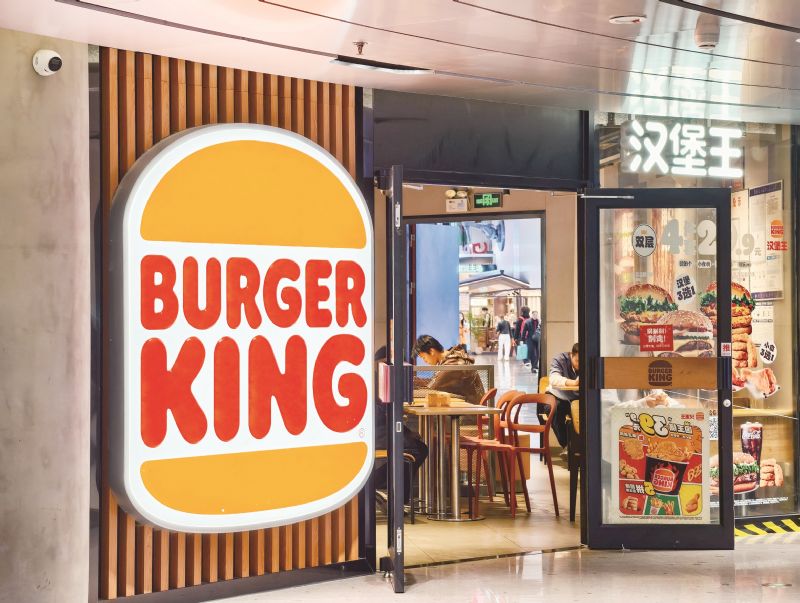
Core Viewpoint - Burger King's exit from the Chinese market is characterized as a failure after 20 years of operation, leading to a strategic partnership with CPE Yuanfeng, which will take an 83% stake in the newly formed joint venture, Burger King China, with an investment of $350 million [1][12]. Group 1: Market Performance - Burger King has struggled to establish a strong presence in China, failing to meet its goal of opening 2,000 stores, with a net reduction of 224 stores since early 2025 [1][11]. - As of March 2024, Burger King had only 1,593 stores, significantly lagging behind competitors like KFC and McDonald's, which had 10,296 and 5,903 stores respectively [9][8]. - The average annual revenue per store in China is approximately $400,000, which is less than one-ninth of the top-performing market [11]. Group 2: Competitive Landscape - The competitive landscape in China has been dominated by established brands like KFC and McDonald's, as well as the rapid rise of local brands such as Tastin and Wallace, which have opened thousands of new stores [10][4]. - Burger King's late entry into the market and slow expansion have been detrimental, with only 68 stores opened in the first seven years [6][7]. Group 3: Strategic Shift - The partnership with CPE Yuanfeng is seen as a gamble, as the latter aims to leverage its understanding of local consumer preferences to revitalize the brand [14]. - CPE Yuanfeng plans to inject $350 million into Burger King China for store expansion, marketing, menu innovation, and operational improvements [14]. - The previous management's dissatisfaction with Burger King's performance in China led to the termination of a partnership with TFI and the search for a new strategy [13].
汉堡王中国3.5亿美元易主将扩店超4000家 外资品牌本土化难破双重困境
Chang Jiang Shang Bao· 2025-11-11 23:22
Core Insights - Burger King China has been sold to local private equity firm CPE Yuanfeng, which will hold 83% of the shares, while the original parent company, Restaurant Brands International (RBI), retains 17% [2][4] - CPE Yuanfeng will inject $350 million into Burger King China for store expansion and other initiatives, aiming to increase the number of outlets from approximately 1,250 to over 4,000 by 2035 [2][4][5] - The ownership change is part of a broader trend where foreign brands like Starbucks and Burger King are localizing operations to navigate intense market competition in China [2][6] Company Overview - CPE Yuanfeng, established in 2008, manages over 180 billion RMB in assets and has invested in over 300 companies, focusing on the chain consumer service sector [5] - The new partnership will enable Burger King China to enhance product offerings, marketing strategies, and operational capabilities [5][6] Market Context - Burger King has faced stagnation in store expansion and slowing performance, with a significant drop in market share and competition from local brands like Luckin Coffee [6][12] - The company has struggled to meet its expansion goals, with a net decrease of 224 stores since early 2025 [12][13] - The competitive landscape includes established players like KFC and McDonald's, as well as emerging brands targeting lower-tier cities [13]

牵手“中国合伙人”,洋品牌加速本土化
Qi Lu Wan Bao· 2025-11-11 22:06
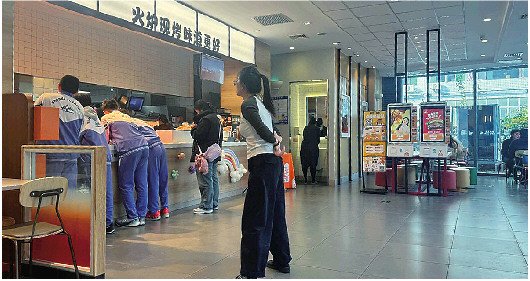
Core Insights - CPE Yuanfeng has announced a strategic partnership with Burger King to establish a joint venture named "Burger King China," marking a new phase for the brand in the Chinese market [2][5] - The partnership reflects a broader trend where international fast-food brands are transferring parts of their Chinese operations to local capital to enhance localization efforts [2][9] Company Operations - Currently, there are 28 Burger King outlets in Jinan, with stable daily order volumes ranging from 500 to 800, indicating a solid customer base [3][7] - Staff at various Jinan locations confirmed that the recent ownership change has not affected operational processes or menu offerings, maintaining business as usual [4][6] - The company plans to expand its store count in China from approximately 1,250 to over 4,000 by 2035, supported by an initial investment of $350 million from CPE Yuanfeng [5][6] Market Context - The competitive landscape in the Chinese restaurant industry has intensified, with local brands like Wallace and Luckin Coffee gaining market share through high cost-performance ratios and agile operations [7][9] - International brands, including McDonald's and KFC, have previously transferred stakes to private equity firms to enhance local operations and improve profitability through digitalization and localized product offerings [8][9] - Burger King's sales in China were reported at approximately $700 million, with an average annual sales per store of $400,000, which lags behind competitors like KFC [8]
28年老牌宠物企业进入破产清算阶段 行业洗牌加速
Bei Jing Shang Bao· 2025-11-10 14:44
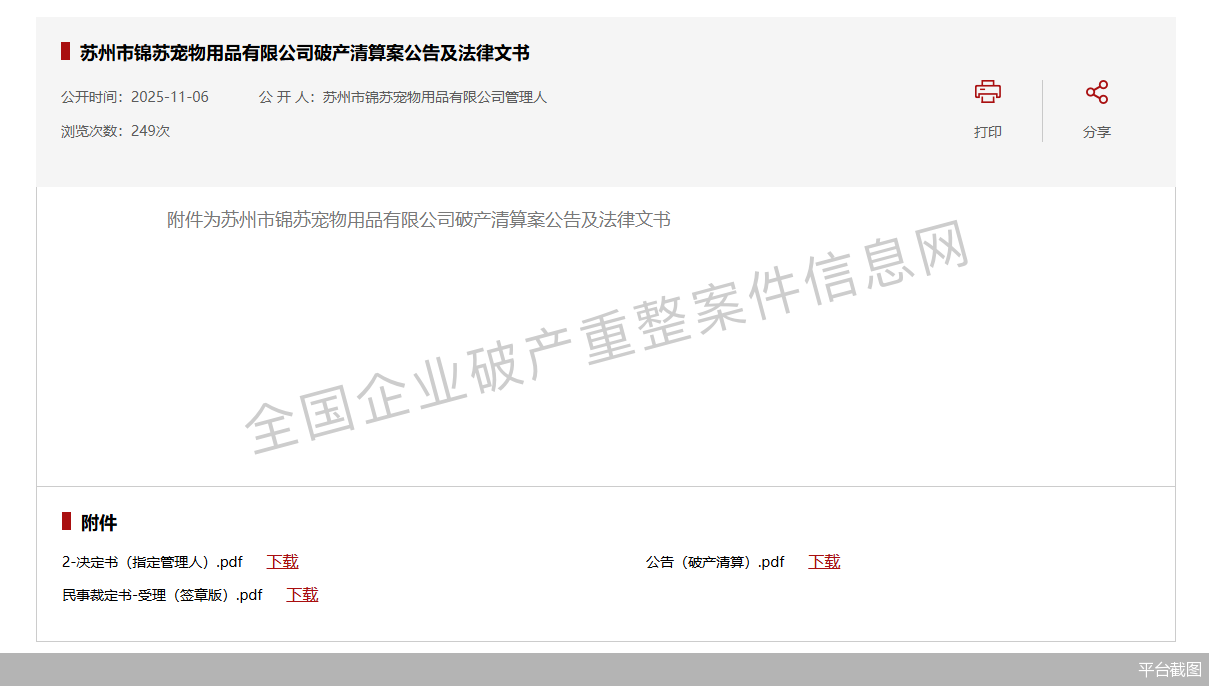
Core Insights - The pet industry is experiencing a significant downturn, with several once-thriving companies, including Suzhou Jinsu Pet Products Co., Ltd., entering bankruptcy proceedings due to the fading export boom and increasing market pressures [1][6]. Company Summaries - Suzhou Jinsu Pet Products Co., Ltd. has been officially accepted for bankruptcy proceedings by the Wuzhong District People's Court, marking a significant shift for the company that has operated for approximately 28 years, primarily exporting pet toys and accessories to markets such as the US, Canada, and Japan [3][5]. - Other companies, such as Pingyang County Kongying Pet Products Co., Ltd., have also entered the debt claim stage, indicating a broader trend of financial distress within the industry [5]. - Hangzhou Petyuan Pet Products Co., Ltd. and its affiliates have begun bankruptcy review processes, highlighting the challenges faced by companies that initially thrived through online platforms but struggled with offline expansion [5][6]. Industry Trends - The pet industry in China, which began as an OEM/ODM manufacturing hub, is now facing dual pressures from both domestic and international markets, leading to a decline in export revenues [6][7]. - Despite the challenges, the overall pet consumption market in urban China has surpassed 300 billion yuan, with an annual growth rate exceeding 10%, indicating a potential for recovery and growth in the sector [8]. - The market is shifting towards brand localization, with domestic brands gradually gaining market share as consumer preferences evolve towards higher quality and specialized pet products [8][9]. - The pet services market, including pet boarding and photography, is also expanding, reflecting changing consumer demands and the need for innovation within the industry [9].
阿迪达斯在中国:不止95%本土制造,更要100%本土共鸣
Sou Hu Wang· 2025-11-03 13:36
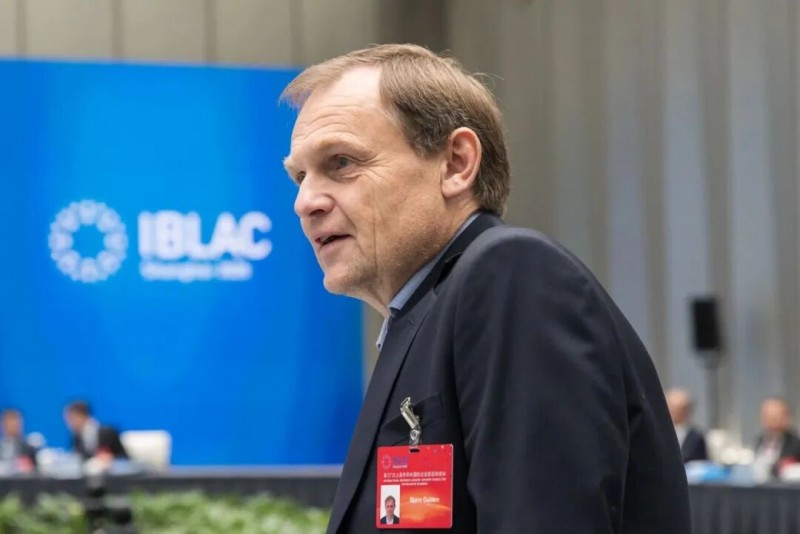
Core Insights - The relationship between Adidas and the Chinese market can be summarized as "mutual pursuit," highlighted by CEO Bjoern Gulden's recent visit to China, marking his fourth trip and first as a formal member of the Shanghai Municipal Advisory Council [1][3] - Adidas continues to emphasize its strategic importance in China, showcasing its commitment through various initiatives, including a fashion show that blends sports and street culture [3][9] - The company reported record revenue of €6.63 billion for Q3 2025, driven by double-digit growth across all markets and categories, with a notable increase in operating profit and gross margin [9][11] Group 1: Strategic Engagement - Gulden's participation in high-level meetings and events in China signals Adidas's intent to deepen its engagement with local stakeholders [1][3] - The "POWER OF THREE" series event in Shanghai reflects the brand's strategy to resonate with local consumers through creative collaborations [3][9] Group 2: Financial Performance - Adidas achieved a historic quarterly revenue of €6.63 billion, marking a 12% growth driven by strong performance across various product categories [9][11] - The operating profit reached €736 million, with a gross margin increase of 0.5 percentage points to 51.8% [9][11] Group 3: Localization Strategy - Adidas's localization strategy focuses on understanding and resonating with Chinese consumers, emphasizing the importance of local insights in product development [12][15] - The company has established a creative center in Shanghai to foster local design and collaboration with local artists and athletes [20][29] Group 4: Supply Chain and Innovation - Adidas is enhancing its flexible supply chain capabilities to address inventory challenges, implementing an "end-to-end" model to streamline operations [31][32] - The company has invested in a new distribution center in Suzhou, capable of processing over one million items daily, with over 95% of products sold in China being locally manufactured [31][32] Group 5: Cultural Resonance - Adidas aims to create emotional connections with consumers through its branding and community engagement initiatives, such as sponsoring local sports events and youth programs [41][44] - The brand's new slogan "YOU GOT THIS" reflects its commitment to inclusivity and encouraging a love for sports among young people [39][41] Group 6: Future Outlook - Adidas is focused on maintaining its growth trajectory in China, with plans for continued investment in local design and supply chain capabilities [11][50] - The company recognizes the importance of cultural identity and aims to position "Chinese design" as a global trendsetter [29][50]

厌倦“白人饭”的欧洲中产,盯上杨国福
虎嗅APP· 2025-09-11 13:41
Core Viewpoint - The article discusses the international expansion of Yang Guo Fu, a Chinese restaurant brand specializing in spicy hot pot, highlighting its strategic focus on the European market and the cultural adaptation required for success [5][11][39]. Group 1: Company Expansion Strategy - Yang Guo Fu has opened nearly 200 stores globally since early 2022, with a doubling of new franchise agreements in 2023, driven by young entrepreneurs seeking side businesses post-pandemic [5][23]. - The brand's CEO, Yang Xingyu, emphasizes the importance of brand localization, supply chain management, and digital systems in its overseas operations [7][30]. - The average customer spending in Europe is set at €20-25 (approximately 180-200 RMB), positioning Yang Guo Fu as a mid-range dining option compared to fast food [14][26]. Group 2: Market Positioning and Competition - The European restaurant market is valued at $840 billion, with Asian cuisine comprising only 2%-3% of that, indicating significant growth potential for Yang Guo Fu [10]. - Yang Guo Fu aims to compete with high-end Japanese ramen brands, specifically targeting the cultural and pricing aspects of the market [12][13]. - The brand's entry into the European market has intensified competition, with around 600 hot pot restaurants currently operating and an industry growth rate of 20%-30% [18][21]. Group 3: Target Audience and Consumer Behavior - The target demographic has shifted from primarily Chinese students to over 60% local customers, including young professionals and middle-class individuals [25][26]. - Yang Guo Fu seeks to redefine "malatang" (spicy hot pot) as a "light formal dining" experience, appealing to social dining trends among Europeans [26][28]. Group 4: Operational Challenges and Strategies - The company faces challenges in supply chain management, cultural integration, and regulatory compliance across different European countries [30][34]. - Yang Guo Fu has established its own factory for scalable production and is developing local warehouses to reduce logistics costs [30]. - The brand is focused on long-term strategies, with lease agreements typically spanning 5-10 years, indicating a commitment to sustainable growth in the European market [41].

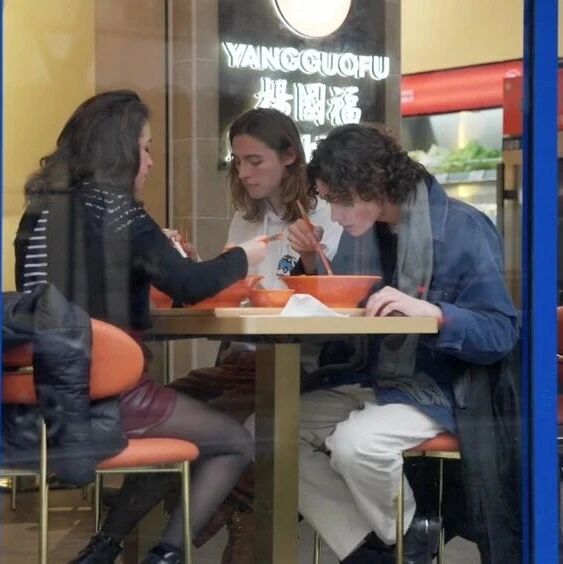
厌倦“白人饭”的欧洲中产,盯上杨国福
Hu Xiu· 2025-09-11 08:08
Core Insights - Yang Guo Fu is expanding its presence in Europe, with nearly 200 stores globally since early 2022, and a doubling of new franchise agreements in 2023, driven by young entrepreneurs seeking to open mala tang shops as side businesses [1][2][3] Company Strategy - The company is led by CEO Yang Xingyu, who focuses on overseas expansion, brand localization, supply chain management, and digital systems [2] - Yang Guo Fu positions itself in the European market as a premium brand, aiming to compete with high-end Japanese ramen rather than other mala tang brands [5][6] - The average customer spending at Yang Guo Fu in Europe is set between 20-25 euros, significantly higher than fast-food chains like McDonald's [6][14] Market Dynamics - The European restaurant market is valued at approximately $840 billion, with Asian cuisine accounting for only 2%-3% of this market [3] - The mala tang segment currently represents only 0.5%-1% of the Asian cuisine market in Europe, indicating significant growth potential [3][9] - The number of mala tang restaurants in Europe is around 600, with an industry revenue growth rate of 20%-30% [9][10] Competitive Landscape - Yang Guo Fu faces increasing competition in the European mala tang market, with many new entrants emerging [8][12] - The company aims to avoid internal competition by selecting a single franchisee per city, which has led to rejecting several potential franchisees [22] Consumer Trends - The target demographic has shifted from primarily international students to over 60% local customers, including young professionals and middle-class individuals [13][14] - Yang Guo Fu seeks to redefine mala tang as a "light casual dining" experience, combining social and entertainment elements to attract European consumers [14][16] Operational Challenges - The company has established its own factory for supply chain management and is building a local warehouse to reduce logistics costs [17] - Cultural integration poses significant challenges, with diverse dietary restrictions and food safety standards across Europe [19][21] - The complexity of operating in multiple European countries, each with different regulations and languages, adds to the operational difficulties [20] Future Goals - Yang Guo Fu aims to become the leading Asian restaurant chain in Europe, surpassing competitors like Takumi [26] - The company adopts a long-term strategy, with lease agreements typically spanning 5-10 years, emphasizing sustainable growth rather than quick profits [26]
中国品牌全球化,谁才是出海模式“最优解”?
阿尔法工场研究院· 2025-08-30 08:22
Core Viewpoint - The article emphasizes the successful globalization of Chinese tea brands, particularly in Southeast Asia, with Mixue Ice City as a leading example of this trend [1][5][13]. Group 1: Market Dynamics - Southeast Asia is identified as the primary market for Chinese brands, with a natural affinity for Chinese tea culture, significantly reducing market education costs [4][5]. - The region's climate and youthful population create a strong demand for cold beverages, making it an ideal market for tea drinks [4][5]. - The Southeast Asian ready-to-drink beverage market is projected to grow at a compound annual growth rate (CAGR) of 19.8% from 2023 to 2028, outpacing other regions [4][5]. Group 2: Mixue Ice City's Performance - Mixue Group reported a revenue of 14.87 billion yuan in the first half of 2025, a year-on-year increase of 39.3%, and a net profit of 2.72 billion yuan, up 44.1% [1]. - The number of global stores reached 53,014, with nearly 10,000 new stores opened within a year, covering China and 12 overseas countries [1][5]. - Mixue Ice City has become the leading ready-to-drink tea brand in Southeast Asia within five years, with over 4,000 stores planned by 2025 [5][13]. Group 3: Localization Strategies - Successful market entry is attributed to a comprehensive localization strategy, including adapting flavors and operational models to meet local preferences [7][8]. - Mixue Ice City has established a global supply chain that supports local operations, ensuring cost control and product quality [7][9]. - The "Snow King" IP has been effectively localized through cultural adaptations and interactive marketing, enhancing brand connection with local consumers [8][9]. Group 4: Future Prospects - The experience gained in Southeast Asia is seen as a blueprint for further expansion into markets like Japan, South Korea, and Europe, indicating a scalable growth model [13][14]. - The launch of the coffee brand Lucky Coffee in Malaysia marks the next phase of Mixue Group's global strategy, leveraging the established supply chain and localization methods [12][14]. - The article concludes that the journey of Chinese brands in global markets is just beginning, with significant potential for further innovation and expansion [15].

比lululemon还贵的Alo Yoga,马上要来收割中国中产
36氪· 2025-07-11 07:35
Core Viewpoint - The yoga apparel market is experiencing significant competition, with established brands facing challenges from new entrants and local players, leading to a dynamic shift in market strategies and consumer engagement [4][7][36]. Group 1: Market Developments - The UK yoga brand Sweaty Betty has been acquired by Chinese e-commerce company Baozun, indicating a strategic shift towards local operations to enhance brand performance in China [5][14]. - Alo Yoga has opened its first flagship store in Seoul, marking its expansion into Asia, with plans for a potential entry into the Chinese market by 2025 [6][17]. - Vuori, an American brand, is rapidly expanding in China, aiming to become a major player in the market [6][35]. Group 2: Financial Performance - Wolverine Worldwide, the parent company of Sweaty Betty, has reported declining revenues and gross profits over the past three years, with a significant drop of approximately $1 billion in revenue [11][12]. - Sweaty Betty's revenue for FY24 was $199 million, reflecting a year-over-year decline of 2.4%, while its Q1 FY25 revenue fell to $38 million, down 15.9% year-over-year [13][12]. - Alo Yoga's sales exceeded $1 billion in 2022, with a growth rate of nearly 100%, and the brand is currently valued at around $10 billion [17]. Group 3: Competitive Landscape - Lululemon, the leading brand in the yoga apparel market, is facing increased competition from both new entrants like Alo and Vuori, as well as local brands like MAIA ACTIVE [6][36]. - Lululemon's revenue growth in China has shown a declining trend, with quarterly growth rates fluctuating from 45% to 21% over the past year [31][32]. - The brand is shifting its strategy to focus on lower-tier cities in China, planning to open 30 new stores in these areas by 2025, while also enhancing its e-commerce presence [33][34]. Group 4: Brand Positioning and Strategy - Sweaty Betty's previous attempts to enter the Chinese market failed due to a lack of localized marketing and consumer engagement, highlighting the importance of understanding local consumer habits [20][26]. - Alo Yoga differentiates itself by positioning as a lifestyle brand, offering a broader range of products beyond apparel, which may enhance its appeal in the competitive landscape [15][17]. - Lululemon's strategy to penetrate lower-tier cities may risk diluting its brand image and value, as it navigates the challenges of maintaining brand allure while expanding its market reach [34][36].


中国香水第一股诞生后,颖通如何应对未来挑战?
FBeauty未来迹· 2025-06-27 12:31
Core Viewpoint - The successful listing of Ying Tong Holdings Limited on the Hong Kong Stock Exchange symbolizes the filling of a gap in the local perfume market, while the company faces challenges from international luxury brands reclaiming channel control and emerging niche fragrance brands disrupting the market [2]. Financial Performance - Ying Tong's revenue has steadily increased over the past three fiscal years, reaching over 2 billion RMB in the 2025 fiscal year, with revenues of 1.699 billion RMB, 1.864 billion RMB, and 2.083 billion RMB for the fiscal years 2023, 2024, and 2025 respectively [3][4]. - The net profit for the same period has also shown growth, with figures of 1.73 billion RMB, 2.06 billion RMB, and 2.27 billion RMB [3]. - The perfume category remains the core revenue source, contributing 88.5%, 81.7%, and 80.9% of total revenue over the three years, while skincare and makeup categories have seen a significant increase in contribution from 9.1% to 18.2% [3][4]. Market Position - According to data from Frost & Sullivan, Ying Tong holds an 8.1% market share in the mainland China perfume market, ranking as the fourth-largest group, while being the largest perfume brand management company in the non-brand owner segment with a 9.3% market share [4][5]. Brand Partnerships - Ying Tong has established partnerships with 72 brands, including luxury brands like Hermès and Van Cleef & Arpels, as well as niche brands like CREED and Maison 21G, enhancing its competitive advantage [5]. Channel Strategy - As of March 31, 2025, Ying Tong has developed five major sales channels: department stores, cosmetics chains, e-commerce, duty-free, and cross-border sales, covering over 400 cities in China [6]. - The retail channel is the largest source of income, accounting for 48.6% of total revenue in the 2025 fiscal year [6]. Future Plans - Ying Tong plans to allocate approximately 143 million HKD (about 130 million RMB) or 15% of the net proceeds from the IPO to invest in developing its own brands and acquiring or investing in external brands [7]. - The company aims to expand its self-owned brand "Perfume Box" and develop skincare brands [7]. Historical Context - Founded in 1983, Ying Tong initially focused on optical eyewear distribution before pivoting to the perfume industry in 1987, recognizing the potential in the high-end consumer goods market in China [8]. - The company has evolved from a single agent to a brand management group, significantly expanding its brand portfolio over the years [9]. Innovation and Market Adaptation - Ying Tong has pioneered several industry innovations, including the establishment of perfume counters in department stores and the introduction of e-commerce platforms for fragrance sales [11]. - The company is adapting to market changes by focusing on localized marketing strategies and enhancing consumer engagement through its membership system [15][20]. Conclusion - Ying Tong is positioned at a critical juncture, transitioning from a traditional channel distributor to a value-driven entity that emphasizes consumer experience and brand localization, aiming to redefine its role in the evolving fragrance market [21].