商业健康险

Search documents
健康管理赛道悄然升温 医疗险成健康险市场新的支柱
Zhong Guo Zheng Quan Bao· 2025-09-29 00:20
Group 1 - The insurance industry is increasing investment in health insurance products and services, with a notable growth in mid-to-high-end medical insurance, which has become a highly competitive area [1][2] - Medical insurance has significantly outperformed critical illness insurance, becoming the new pillar of the health insurance market [3][4] - The integration of health management services into health insurance is becoming more prevalent, with insurance companies establishing specialized health management firms [5][6] Group 2 - The DRG (Diagnosis-Related Group) and DIP (Disease-Related Payment) reforms are creating new opportunities for product innovation in commercial health insurance, contributing to the growth of medical insurance [2][6] - Insurance companies are shifting resources towards health-related businesses, focusing on one-year health insurance and health services, particularly in the mid-to-high-end medical insurance segment [2][6] - The establishment of a comprehensive health management service system is aimed at reducing disease and disability risks, transitioning from reactive medical care to proactive health management [8][9] Group 3 - Major insurance companies are setting up specialized health management companies to create a large health ecosystem that supports their core business [7][8] - The upcoming "National Ten Articles" policy aims to enhance health insurance service levels and promote the deep integration of commercial health insurance with health management [6][9] - The future of the health insurance market is expected to see enhanced product value and competitiveness, reshaping the development model of health insurance companies [9]
罕见病商保面临三大难题,谁来给千万患者发“入场券”
Di Yi Cai Jing Zi Xun· 2025-09-26 01:57
Core Viewpoint - The probability of rare disease patients receiving compensation from commercial insurance is extremely low, akin to the likelihood of an average person contracting a rare disease. The demand for better coverage from commercial insurance is highlighted, especially as basic medical insurance has started to cover some high-cost medications for rare diseases [2][3]. Summary by Sections Rare Disease Patient Insurance Challenges - Rare disease patients face significant challenges in obtaining commercial insurance coverage due to strict underwriting criteria and the exclusion of pre-existing conditions. Even government-backed health insurance options have seen drastic cuts in coverage for pre-existing conditions [2][3][4]. - The National Healthcare Security Administration reported that there are approximately 100 rare disease medications included in the national insurance directory, covering 42 types of rare diseases, with a projected payment of 8.6 billion yuan for these medications in 2024, accounting for 7.7% of total payments during the agreement period [2]. Commercial Insurance Market Dynamics - Approximately half of the 40 innovative drugs submitted for commercial insurance in the second half of the year are for rare diseases. However, insurance companies remain cautious about covering rare disease patients due to the inherent risks associated with genetic and hereditary conditions [3][4]. - The commercial insurance market traditionally excludes congenital diseases and genetic disorders from coverage, which poses a significant barrier for rare disease patients. The risk associated with known hereditary conditions makes it difficult for insurers to price policies effectively [4][5]. Risk Assessment and Pricing Issues - The lack of precise research on the mechanisms of specific rare diseases complicates risk assessment for insurers, leading to higher premiums and conservative coverage terms. Insurers are concerned about the potential for adverse selection if they lower underwriting standards for rare disease patients [6][7]. - The commercial health insurance market is likened to a reservoir that must balance inflow (new premiums) and outflow (claims). The small patient base for rare diseases makes it less attractive for insurers to develop tailored products, as the risk and treatment costs vary significantly across different rare diseases [5][6]. Coverage Gaps and Patient Experiences - While some commercial insurance products do cover specific hereditary diseases, the majority still exclude them, leaving patients with limited options. The coverage for rare diseases is often inadequate, with high deductibles and low reimbursement rates for outpatient treatments [7][10]. - The integration of rare disease medications into commercial insurance products is becoming a selling point, but the actual coverage and reimbursement rates remain unclear. Many patients report significant out-of-pocket expenses despite having insurance [10][11]. Regulatory and Market Developments - The National Healthcare Security Administration's dual-directory negotiations for innovative drugs have led to a higher proportion of rare disease medications being submitted for commercial insurance. However, insurers may lack the motivation to include high-cost rare disease treatments due to the associated risks [10][11]. - The lack of a clear directory for rare disease medications complicates the process for hospitals and insurers, leading to delays and rejections in coverage for necessary treatments [12].


商业医疗险报告一:见微知著,医保承压下商保或为破局之法
Ping An Securities· 2025-09-22 10:03
Investment Rating - The report maintains an "Outperform" rating for the biopharmaceutical industry [1] Core Viewpoints - The growth of healthcare expenses, which reached 9.06 trillion yuan in 2023, is outpacing GDP growth, indicating that commercial health insurance may provide a solution to the pressures faced by the medical insurance system [3][15] - The commercial health insurance sector is expected to grow significantly, with premiums projected to reach 97.74 billion yuan by 2024, driven by low penetration rates and the need for additional funding sources [20][24] - Policies are increasingly supportive of commercial health insurance, particularly in relation to innovative drugs, which are now being included in the commercial health insurance directory [71][76] Summary by Sections Part 1: Healthcare Financing System - The healthcare financing system in China consists of government, social, and personal contributions, with social contributions being the main driver for future growth [10][15] Part 2: Growth of Health Insurance - The commercial health insurance market is expected to fill a significant funding gap, with an estimated shortfall of over 1.7 trillion yuan by 2030 [21][22] - Medical insurance is the primary source of compensation within commercial health insurance, with a compensation rate of approximately 68.79% in 2022 [27][31] Part 3: Core Products of Medical Insurance - The report highlights the importance of medical insurance as a key focus area, noting that it directly compensates for medical expenses, unlike critical illness insurance [31][35] Part 4: Policy Support for Health Insurance Development - A series of policies since 2009 have aimed to promote the development of commercial health insurance, with specific targets for market size and coverage [71][72] Part 5: Investment Recommendations - The report suggests focusing on innovative drug companies with rich pipelines, DTP pharmacies, and companies in the TPA industry, as well as innovative medical devices and high-end medical service providers [77]



各部门合力推进商保建设,助力创新药械发展
Ping An Securities· 2025-08-11 11:03
Investment Rating - The industry investment rating is "stronger than the market" (预计6个月内,行业指数表现强于市场表现5%以上) [35] Core Viewpoints - The report emphasizes the importance of multi-party collaboration in supporting the development of innovative drugs and medical devices, highlighting the integration of data, policy, and funding as essential elements for growth [4] - The report notes that recent measures from the Financial Supervisory Administration and the Medical Insurance Bureau aim to promote the development of commercial health insurance, which will provide additional support for the innovation and development of drugs and medical devices [4] Summary by Sections Industry Insights - The Medical Insurance Bureau's recent meetings have established a comprehensive support system for innovative drugs and medical devices, involving various stakeholders such as research institutions, enterprises, medical institutions, financial companies, and government departments [4] - The Financial Supervisory Administration has released measures to enhance the quality of commercial health insurance, which will further support the biopharmaceutical industry's innovation [4] Investment Strategy - The report suggests focusing on innovative pharmaceutical companies with rich pipelines, such as 恒瑞医药 (Hengrui Medicine), 百济神州 (BeiGene), and 中国生物制药 (China Biologic Products) [6] - It also highlights companies with significant single-product potential and those leading in advanced technology platforms, recommending关注 (focus on) companies like 凯莱英 (Kailaiying) and 药明康德 (WuXi AppTec) [6] Market Performance - The pharmaceutical sector experienced a decline of 0.84% last week, ranking last among 28 industries, while the Shanghai and Shenzhen 300 Index rose by 1.23% [9][21] - The report indicates that the pharmaceutical sector's valuation is currently at 30.91 times (TTM), with a premium of 37.32% compared to the overall A-shares excluding financials [27]
众安保险:将国内首款干细胞治疗药品纳入尊享e生、众民保系列产品赔付范围
Yang Guang Wang· 2025-08-08 07:25
Group 1 - The first prescription for China's first approved stem cell drug, Amy Maitosai Injection, has been issued, marking its official market entry and providing new treatment options for patients [1][2] - The drug is priced at 19,800 yuan per treatment, which is only 1/70th of a similar stem cell drug recently approved by the FDA in the United States [1] - The drug is indicated for treating acute graft-versus-host disease in patients aged 14 and above who have failed hormone therapy, addressing a significant treatment gap for these patients [2] Group 2 - ZhongAn Insurance, as a strategic partner of PlasBio, offers coverage for the drug under its health insurance products, with a maximum reimbursement rate of 100% for eligible patients, alleviating their financial burden [2] - The company has been adapting its health insurance products to align with advancements in medical treatments and the ongoing reform of medical insurance payment methods, enhancing its competitiveness in the market [3] - Since 2025, ZhongAn Insurance has expanded its coverage to include external purchased drugs and medical devices in its health insurance offerings, addressing the limitations of traditional medical insurance [3] Group 3 - ZhongAn Insurance has implemented various innovative attempts in the medical insurance sector this year, including enhanced outpatient coverage and the development of exclusive insurance products for patients with pre-existing conditions [3] - The company aims to create a "health insurance + health management" model through comprehensive health management services, thereby improving product competitiveness [3] - ZhongAn Insurance expresses its intention to deepen collaboration with PlasBio to explore and promote inclusive insurance services that meet diverse healthcare needs [4]

城市商业医疗险新规下发,六大维度推动“惠民保”高质量发展
2 1 Shi Ji Jing Ji Bao Dao· 2025-07-31 13:55
Core Viewpoint - The issuance of the "Notice" by the National Financial Supervision and Administration aims to promote the high-quality development of urban commercial health insurance, emphasizing inclusivity, commercial attributes, product management, risk management, and market order [1][7]. Group 1: Regulatory Framework - The "Notice" serves as an implementation and extension of the State Council's opinions on strengthening regulation and preventing risks in the insurance industry, marking a new phase for urban customized commercial health insurance [1][7]. - The document emphasizes the need for insurance companies to operate autonomously while ensuring voluntary participation from the public, aligning premium collection with coverage levels [3][6]. Group 2: Product Development and Management - Insurance products must be optimized to meet the quality medical insurance needs of the public, incorporating new medical technologies and drugs into coverage [2][3]. - As of 2024, over 90% of "惠民保" products include specific high-cost drug claims, with the number of drugs covered increasing from 2021 to 2024, reaching 672 drugs [2][8]. - The "Notice" requires precise pricing and regular reviews to guide the industry back to its core function of providing long-term value [1][2]. Group 3: Market Sustainability and Consumer Protection - The document stresses the importance of maintaining market order and commercial sustainability, prohibiting low-price, disorderly competition among insurance companies [6][8]. - It mandates that insurance companies enhance product sales appropriateness management and protect consumer rights by accurately explaining product functions [6][7]. Group 4: Risk Management and Data Utilization - The "Notice" advocates for a data-driven pricing and underwriting mechanism to improve risk management across the entire insurance chain [8][9]. - The collaboration between Pacific Insurance and Swiss Re highlights the growth of commercial health insurance claims in China, indicating its increasing importance in the multi-tiered medical security system [8][9]. Group 5: Future Directions - The regulatory framework for inclusive health insurance is clear and continuous, focusing on accessibility while ensuring the profitability of commercial insurance [9]. - The core task of commercial health insurance is to work alongside basic medical insurance to achieve overall social security goals, requiring significant efforts from insurance institutions [8][9].
医药板块行情有哪些驱动因素?
Mei Ri Jing Ji Xin Wen· 2025-07-15 01:52
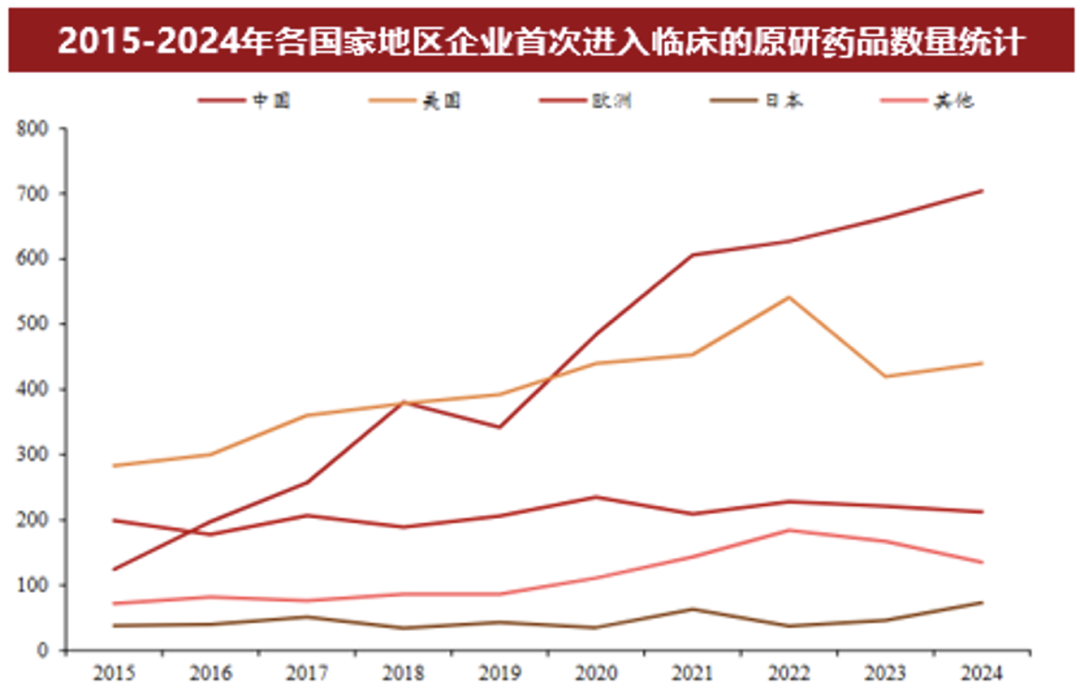
Policy Support - The significant rebound in the pharmaceutical sector is largely driven by favorable policies supporting innovative drug development, including optimization measures for drug review and approval processes [1][2] - The introduction of a new category in the medical insurance directory aims to support innovative drugs, allowing previously high-priced drugs like CAR-T to be included, which will alleviate payment pressures in the pharmaceutical industry [2][3] - The proportion of medical insurance spending on innovative drugs has increased from approximately 0.29% in 2019 to 3.19% in 2023, indicating a shift towards supporting innovative drugs over generic ones [3] Supply Side - Domestic innovative drug companies have shown significant competitive advancements, with the number of original drugs entering clinical trials in China surpassing that of the United States since 2020 [4] - The trend of Chinese pharmaceutical companies engaging in license-out agreements and collaborations has surged, driven by the expiration of patents for original drugs from multinational companies, leading to increased demand for innovative drug acquisitions [6][7] Profitability - The upward trend in the pharmaceutical sector is also attributed to the commercialization of innovative drugs, with some leading companies achieving breakeven or profitability after years of losses [10] Valuation - The pharmaceutical sector is currently at a relatively low valuation, with the weighted PE ratio around 35%, indicating potential for valuation recovery as significant events and policy support emerge [11] Funding - The proportion of public fund holdings in the pharmaceutical sector has decreased significantly from a peak of 18% in 2020 to about 9% in the first quarter of this year, suggesting room for institutional investment growth as catalysts and policies continue to develop [12]
镁信健康冲刺港交所:中国最大的医药多元支付平台,2024年营收超20亿元
IPO早知道· 2025-06-30 09:59
Core Viewpoint - Magnesium Health aims to transform China's medical payment system and has become the largest multi-payment platform in the country, with a valuation of 11.6775 billion RMB after the last round of financing before its IPO [1][11]. Group 1: Company Overview - Founded in 2017, Magnesium Health focuses on addressing financing and payment challenges faced by patients, insurers, and pharmaceutical companies [2]. - As of December 31, 2024, Magnesium Health has saved patients approximately 6.7 billion RMB in out-of-pocket expenses through its solutions [2]. - The company has developed two major industry solutions: Smart Drug Solutions and Smart Insurance Solutions, ranking first in China for innovative drug and health insurance solutions [2][4]. Group 2: Market Position and Reach - By the end of 2024, Magnesium Health has served around 1.6 million patients, with a total medical expenditure GPV of 39.7 billion RMB [4]. - The company collaborates with over 90 insurance companies, including the top 20 in China by premium income, and more than 140 pharmaceutical companies, covering 40% of listed Class 1 new drugs in China [4]. Group 3: Financial Performance - Revenue for Magnesium Health from 2022 to 2024 was 1.069 billion RMB, 1.255 billion RMB, and 2.035 billion RMB, respectively, with gross profit margins of 31.1%, 36.8%, and 35.8% [7]. - The adjusted net losses for the same period were 447 million RMB, 290 million RMB, and 80 million RMB, showing a significant narrowing trend in loss rates [8]. Group 4: Industry Growth Potential - The Chinese healthcare market is expected to continue growing, driven by favorable government policies, an aging population, and increasing public health awareness [9]. - The innovative drug and medical device market in China is projected to grow from 92.3 billion RMB in 2019 to 162 billion RMB in 2024, with a compound annual growth rate (CAGR) of 11.9% [9]. Group 5: Future Plans and Use of IPO Proceeds - The net proceeds from the IPO will be used to expand and upgrade services for pharmaceutical companies and insurers, develop the integrated payment platform, and enhance key infrastructure [11].
补充医保空白,“好医保”升级覆盖三甲医院特需服务
Bei Jing Ri Bao Ke Hu Duan· 2025-06-20 00:52
Group 1 - Ant Group's Ant Insurance announced an upgrade to its "Good Insurance" series, expanding coverage to 470 top-tier hospitals' international and special departments, as well as some private hospitals, providing comprehensive medical protection for patients with specific diseases like cancer [1] - The upgrade addresses three pain points in the current medical insurance system: insufficient coverage of high-end medical services by basic insurance, exclusion of some innovative drugs and treatment technologies from the insurance directory, and the long-term protection needs of major disease patients [1] - The new product includes reimbursement for over 1,500 types of drugs and medical devices, enhancing the coverage strength, and offers lifetime renewal service for cancer and 11 high-incidence cardiovascular diseases, addressing previous issues with commercial insurance renewal [1] Group 2 - The rapid development of internet insurance is making commercial health insurance an important supplement to China's medical insurance system, with significant growth potential remaining [2] - Experts suggest that commercial health insurance should optimize product structure through data-driven approaches and enhance health management services to better complement basic medical insurance [2] - Consumers are advised to focus on coverage range, renewal conditions, and claims services when selecting commercial health insurance products, and to understand the comprehensive payout rate based on their health status and medical needs [2]
多家险企运营“穗新保”,普惠医疗能否重塑健康险市场格局
Nan Fang Du Shi Bao· 2025-04-16 13:20
Group 1 - The core viewpoint of the articles highlights the increasing demand for commercial health insurance in the context of healthcare reform, with the launch of the "Sui Xin Bao" insurance products in Guangzhou representing an innovative step in building a multi-tiered medical security system [2][7] - The commercial health insurance market faces significant challenges, including a mismatch between supply and demand, high product homogeneity, and inadequate coverage for high-risk groups such as the elderly and those with pre-existing conditions [3][4][5] - Recent policy initiatives from various government departments aim to enhance the development of commercial health insurance, including the integration of medical insurance data to support the creation of new insurance products [6][9] Group 2 - The "Sui Xin Bao" products include six distinct offerings that cover a wide range of innovative medical devices and drugs, with premiums ranging from 69 yuan to over 1,000 yuan and coverage amounts reaching up to 5 million yuan [7][8] - The commercial health insurance market in China is expanding, with premium income reaching 9,774 billion yuan in 2024, reflecting an 8.2% year-on-year growth [9] - Experts emphasize the need for consumer education to improve understanding of insurance products and claims processes, which is crucial for addressing common industry pain points [10]