场景驱动

Search documents
理性审视RedCap:从800%的激增到400亿的未来,是机遇还是尴尬?
3 6 Ke· 2025-12-03 09:26
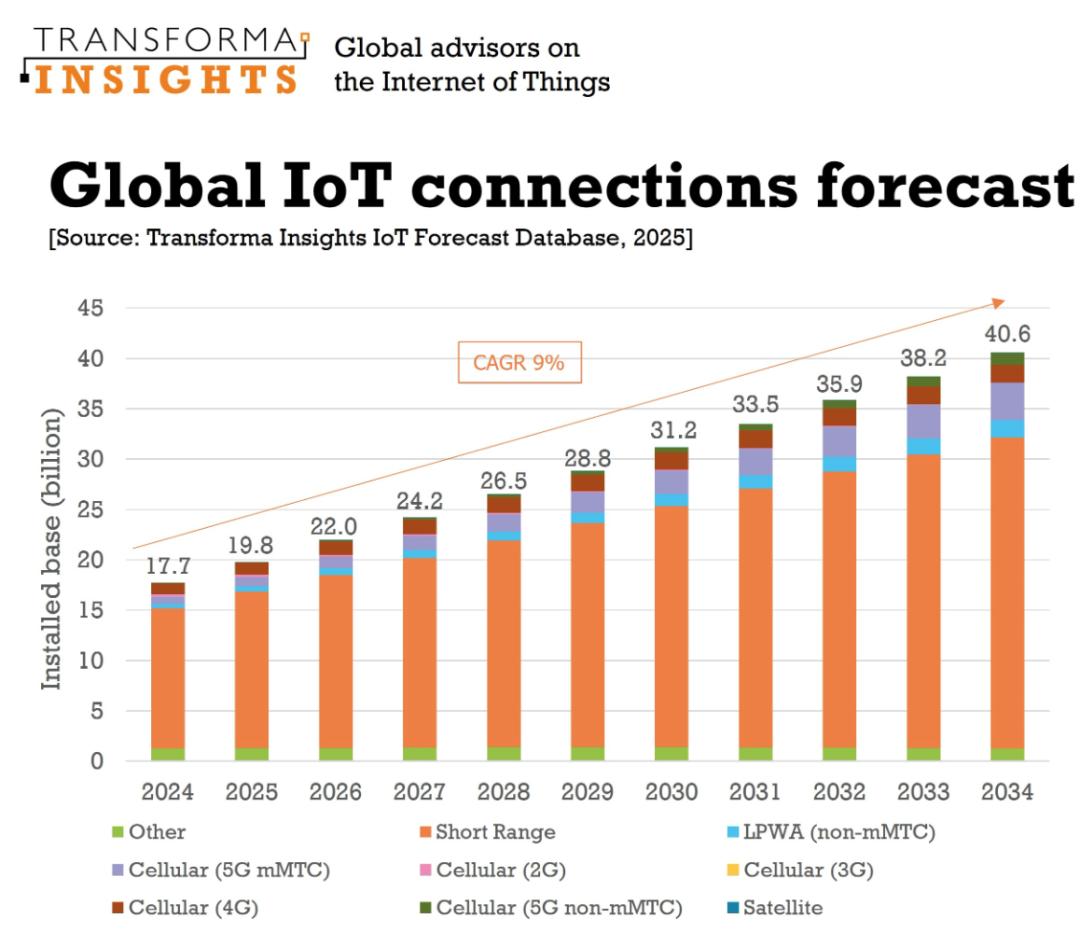
Core Insights - The report from Counterpoint Research indicates a remarkable year-on-year increase of nearly 800% in the shipment of 5G RedCap modules in Q2 2025, signaling the commencement of RedCap commercialization [1] - By the end of 2025, the shipment volume of 5G RedCap is expected to exceed 10 million units across various fields such as wearables, automotive, MiFi, and CPE, with new terminal types like AI companions in development [1] - Transforma Insights predicts that by 2034, the total number of global IoT connections will surpass 40 billion, with cellular IoT connections growing more than threefold to reach 6.7 billion [1] Market Dynamics - The significant percentage growth is largely attributed to a very low base from the previous year, indicating a shift from a non-existent market to an emerging one rather than a mature explosion [4] - RedCap is positioned as a crucial piece in filling the gaps in the 5G IoT landscape, yet it faces multiple challenges related to cost, ecosystem, and market positioning [4] Value Proposition - RedCap is not a revolutionary technology but a pragmatic "subtraction" project aimed at addressing a structural gap in the early commercialization of 5G [5] - It finds its niche in the middle ground between high-end eMBB and URLLC technologies and low-power NB-IoT, catering to the growing mid-speed IoT demand [5] - By optimizing 5G capabilities through cost-effective adjustments, RedCap aims to balance cost, power consumption, and performance, serving as a "filler" rather than a replacement [6] Challenges Ahead - The first challenge is the "chicken or egg" dilemma regarding cost and scale, where the current cost of RedCap modules remains significantly higher than mature 4G Cat.1 modules, hindering widespread adoption [8] - The second challenge is the inertia of the mature 4G ecosystem, where many applications find Cat.1 sufficient, making it difficult to convince customers to switch to RedCap despite its advantages [9] - The third challenge involves the time lag in achieving network coverage and ecosystem maturity comparable to 4G, as RedCap is still in its early stages of development [10] Path to Success - To overcome these challenges, strategic investments rather than market-driven efforts are essential to break the cost deadlock [12] - Focusing on value creation rather than mere parameter comparisons is crucial for RedCap's promotion, emphasizing unique capabilities that Cat.1 cannot provide [13] - Bridging the ecosystem gap requires an open and empowering approach, with clear roadmaps and support for developers to foster innovation [14] Long-term Outlook - The future of RedCap is characterized as a "marathon" rather than a "sprint," emphasizing the need for patience and collaboration across the industry to address commercial implementation challenges [15] - By focusing on creating irreplaceable value for customers and fostering a supportive ecosystem, RedCap can effectively translate its technological potential into market success [16]

场景驱动 数智赋能——广东推进国土空间规划实施监测网络(CSPON)建设纪实
Zhong Guo Zi Ran Zi Yuan Bao· 2025-11-27 02:21
Core Insights - The article discusses the implementation of a comprehensive monitoring system for land spatial planning in Guangdong Province, emphasizing the integration of various data sources and technologies to enhance decision-making and governance in land resource management [8][25]. Group 1: Implementation of Monitoring System - Guangdong Province is advancing the construction of a land spatial planning monitoring network, leveraging the unique three-tiered monitoring system (CSPON) to enhance regional coordination and sustainable development [8][25]. - The province aims to optimize the "one map" supervision information system to support the "14th Five-Year Plan" and future planning initiatives, focusing on key areas such as urban-rural integration and green development [8][25]. Group 2: Data Management and Integration - A unified three-dimensional spatial database has been established, integrating over 470 data items and more than 600 million elements to support comprehensive digital expression of land resources [10]. - The implementation of the "Guangdong Provincial Geographic Spatial Data Management Measures" aims to address issues like "duplicate construction" and "information silos" through improved data sharing and management [10]. Group 3: Intelligent Decision-Making Models - The development of a spatial intelligent analysis engine is underway, providing various data application services and algorithms to enhance land resource management and spatial planning [11]. - A digital model toolkit is being created to support various planning functions, including monitoring, evaluation, and predictive modeling, facilitating a dynamic and adaptive planning process [14]. Group 4: Collaborative Governance Framework - A multi-level governance application scenario system is being constructed to facilitate cross-departmental and cross-regional collaboration in land spatial planning [16]. - The establishment of a data sharing and utilization mechanism aims to enhance the efficiency of decision-making processes across different administrative levels [11][16]. Group 5: Dynamic Maintenance and Safety Monitoring - A dynamic maintenance mechanism for land spatial planning is being implemented, including annual assessments and evaluations to ensure compliance with planning standards [18]. - The monitoring system integrates various data sources to oversee critical safety lines in land use, such as ecological protection and flood risk management [19]. Group 6: Enhancing Spatial Quality and Efficiency - The article highlights the importance of improving land spatial quality through targeted monitoring and analysis of ecological protection, urban development, and resource allocation [20][21]. - The province is focusing on optimizing land use and enhancing the value of land resources through comprehensive planning and strategic initiatives [21]. Group 7: Knowledge Sharing and Public Engagement - Efforts are being made to promote public access to land spatial planning information through various platforms, enhancing transparency and community involvement [24]. - The establishment of a knowledge service framework aims to provide decision-makers with relevant data and insights to support effective governance [24].

2025“人工智能+”大会举行,以场景驱动点燃新质生产力
Zhong Guo Xin Wen Wang· 2025-11-17 08:34
Group 1 - The 2025 "Artificial Intelligence+" conference was held in Beijing, focusing on the theme "AI Next Decade: Scene-Driven × New Quality Engine" [1] - The conference was co-hosted by several organizations, including the National High-tech Zone AI Industry Collaborative Innovation Network and Tsinghua University [1] - Turing Award winner and Chinese Academy of Sciences academician Yao Qizhi emphasized the importance of General Artificial Intelligence (AGI) as a key future direction for AI development, highlighting the need for continuous innovation and the cultivation of top-tier talent in China [1] Group 2 - The development of AI in China has emphasized integration with the real economy, following a "three-in-one" approach of technology research, product application, and industry cultivation [2] - The conference showcased the "AI China Plan," which illustrates the path of driving technological innovation through scene demands and vice versa, with examples from smart energy and intelligent equipment [2] - The roundtable discussions featured representatives from various companies and academic experts, exploring topics such as "ecological collaboration" and "opportunities and strategies for large-scale AI implementation" [3] Group 3 - The conference released the "AI100 Application Benchmark," showcasing the effectiveness of AI technology across various industries, selected from over 1,000 companies [3] - Multiple sub-forums were held, focusing on innovative applications of "AI+" in key areas, aiming to expand new paths for deep integration of AI technology with the real economy [3] - The event included discussions on various themes such as "embodied intelligence," "AI+ healthcare," and "AI+ digital twins," fostering cross-disciplinary dialogue to unlock the potential of AI in practical applications [3]
博世预测:2030新能源商用车整体渗透率将超50%!
第一商用车网· 2025-11-14 07:01
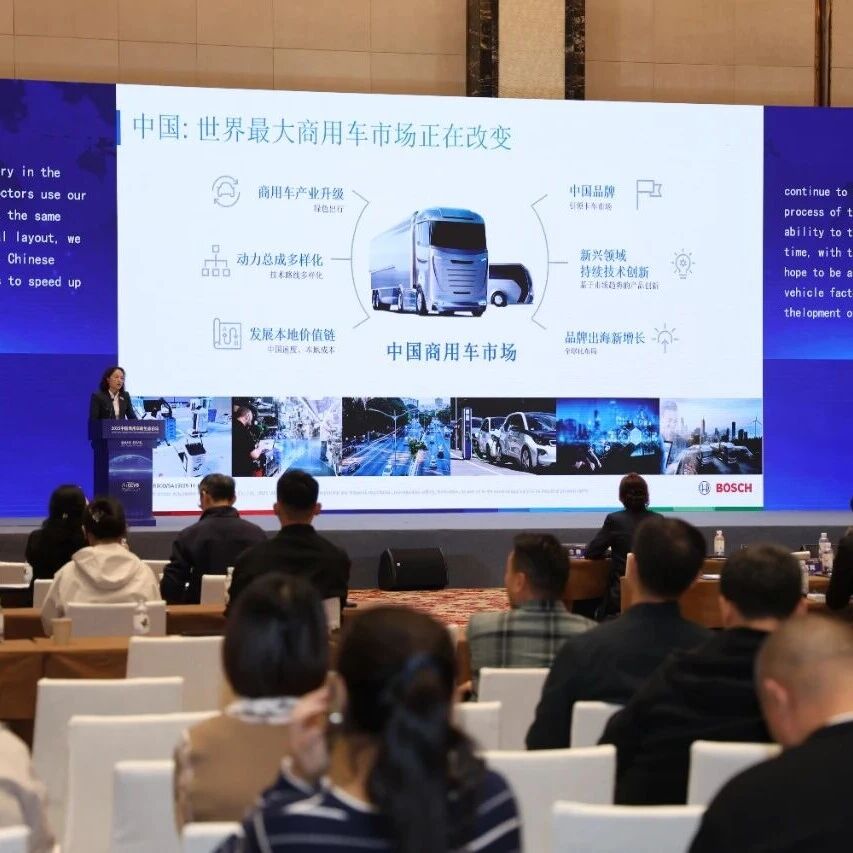
Core Viewpoint - The article discusses Bosch's strategic approach to the transformation of commercial vehicles in China, emphasizing the importance of local innovation and global integration in response to the electric and intelligent vehicle revolution driven by China's dual carbon strategy and evolving emission standards [2][4]. Group 1: Bosch's Strategy and Market Position - Bosch is committed to deepening its presence in the Chinese market while leveraging global resources to support local brands in expanding internationally [4]. - The company has established a dual strategy of "local deepening + global layout," focusing on local R&D and manufacturing capabilities to create tailored solutions for specific market needs [4]. Group 2: Transition to Market-Driven New Energy Commercial Vehicles - The penetration rate of new energy commercial vehicles in China has surpassed 30%, indicating a shift from policy-driven to market-driven growth [6]. - By 2025, the penetration rate of electric heavy-duty commercial vehicles is expected to reach 18%, with the traction vehicle segment exceeding 30% [6][7]. - Bosch anticipates that by 2030, the overall penetration rate of new energy commercial vehicles will exceed 50%, driven by strong market demand and economic benefits [7]. Group 3: Scene-Driven Solutions - Bosch is developing highly scenario-based solutions for new energy commercial vehicles, addressing diverse technical requirements for different transportation scenarios [8]. - The company focuses on three core areas: diversified power and energy management, chassis motion intelligence, and driver assistance, with three development goals: extreme safety, extreme energy efficiency, and intelligent comfort [8]. Group 4: Technological Innovations - Bosch's modular electric drive axle represents a significant innovation, allowing for flexible design and rapid adaptation to various vehicle requirements [15]. - The electric drive axle system has been developed specifically for the Chinese market, achieving significant weight reduction and efficiency improvements [15]. - Bosch's solutions have demonstrated energy savings of 5%-10% compared to industry benchmarks, with further improvements expected [11]. Group 5: Industry Collaboration and Value Creation - The transformation of commercial vehicles requires collaboration across the industry chain, with a focus on creating value for customers and the industry as a whole [17]. - Bosch aims to empower users through innovative and efficient products that prioritize safety, energy savings, and comfort [17].
针对金融服务痛点 华为与科蓝软件联手打造鸿蒙智能网点
Zheng Quan Ri Bao Wang· 2025-11-13 07:13
Core Insights - Huawei and Beijing Kylin Software jointly launched the "Navigating Smart Finance - Harmony Joint Innovation Solution," showcasing Huawei's Harmony ecosystem in the intelligent robotics sector and emphasizing Kylin Software's "scene-driven" approach in technological innovation and industrial application [1][4] Group 1: Market Demand and Challenges - There is a growing demand for intelligent, personalized, and convenient services in the financial services sector, with traditional service models facing challenges in efficiency, coverage, and user experience [1] - Issues such as idle bank counters, long customer wait times, and disjointed online-offline service experiences negatively impact user satisfaction [1] Group 2: Product Development and Capabilities - The Harmony intelligent robot "Xiao Lan" is designed to replace human tellers, construct intelligent service environments in bank branches, and automate specific business processes seamlessly [2] - "Xiao Lan" is equipped with advanced natural language processing and computer vision algorithms, enabling high-precision voice recognition, multi-turn intelligent dialogue, facial recognition, and environmental awareness [3] Group 3: Strategic Collaboration and Future Outlook - Huawei emphasizes that the value of technological innovation lies in serving scenarios and creating value, with the core philosophy of the Harmony operating system being "everything is interconnected, and scenarios are king" [4] - Both Huawei and Kylin Software express confidence in their strategic partnership, aiming to drive the intelligent transformation of the financial sector through scene-driven innovation [4]

张莉莉:品牌创意要从“技术驱动”转向“场景驱动”
Sou Hu Cai Jing· 2025-10-30 11:37
Core Insights - The article discusses the unique consumption characteristics of Generation Z and how brands can effectively engage with this demographic through cultural and emotional connections [1][4][15]. Group 1: Understanding Generation Z - Generation Z is characterized by a strong desire for authenticity and emotional resonance in brand interactions, moving beyond superficial cultural symbols [4][5]. - They exhibit a "cultural ark" mentality, balancing global perspectives with local cultural revival, leading to a pragmatic approach to consumption [15][16]. - The shift in brand perception among Generation Z has transformed brands from distant symbols of authority to interactive communities that require genuine engagement [18][19]. Group 2: Brand Engagement Strategies - Brands must conduct "immersive insights" rather than traditional surveys to understand the deeper emotional needs of Generation Z [13][14]. - Successful digital marketing strategies should connect traditional cultural elements with modern values, creating a dialogue that resonates with the spiritual needs of young consumers [5][12]. - Brands should focus on creating meaningful experiences that allow Generation Z to express their identities and values, rather than merely providing products [20][21]. Group 3: Cultural and Emotional Value - The integration of digital design with traditional crafts can transform niche products into everyday items that resonate with Generation Z's emotional and social needs [20][26]. - Brands should avoid superficial interpretations of environmental art and digital creativity, instead focusing on creating meaningful connections within the youth's daily life [27][29]. - The concept of sustainability should be communicated through tangible experiences that highlight the impact of consumer behavior on the environment [30][32]. Group 4: Future Directions for Brands - Brands should prioritize creating immersive, social, meaningful, and engaging cultural consumption experiences for Generation Z [33]. - Future research should focus on the digital identity construction, narrative penetration in physical spaces, and the degree of participation in value co-creation among young consumers [35].

2025浦江创新论坛·绿色低碳创新论坛在沪举行 场景驱动成绿色技术产业化“关键一跃”
Zheng Quan Shi Bao Wang· 2025-09-22 09:49
Group 1 - The 2025 Pujiang Innovation Forum on green low-carbon innovation was held on September 22, focusing on "scenario-driven green technology innovation" to accelerate the transition from research and development to industrialization and market application [1] - Shanghai has established 15 key application scenarios for green low-carbon transformation across seven major fields, including deep-sea wind power and new energy storage, and has launched several benchmark projects such as the first CCUS demonstration facility compatible with coal and gas emissions [1] - The forum announced multiple innovative pathways and cooperation plans for green technology transfer and transformation, covering artificial intelligence tools, international projects, and application scenarios [1] Group 2 - The green technology transfer AI assistant "Xiao Lv" was officially launched, developed by the Green Technology Bank and Tencent Carbon Neutral Innovation Center, featuring four core functions: technology profiling, supply-demand matching, expert pairing, and policy navigation [2] - A strategic cooperation agreement was signed between the Green Technology Bank, Shanghai Construction Science Research Institute, and Sheneng Insurance, creating a collaborative chain of "technology-construction-finance" through green insurance products and services [2] Group 3 - Geely Automobile shared its low-carbon transformation strategy, aiming for a 25% reduction in carbon emissions per vehicle lifecycle by 2025 and achieving carbon neutrality by 2045, focusing on a comprehensive green supply chain ecosystem [3] - Luxshare Precision announced its "Sustainable Development Roadmap," targeting carbon neutrality for its operations and value chain by 2050, with a strategy emphasizing energy conservation, renewable energy, and carbon offsetting [3]
消费金融下半场——科技驱动下的创新与变革
Sou Hu Cai Jing· 2025-09-15 05:19
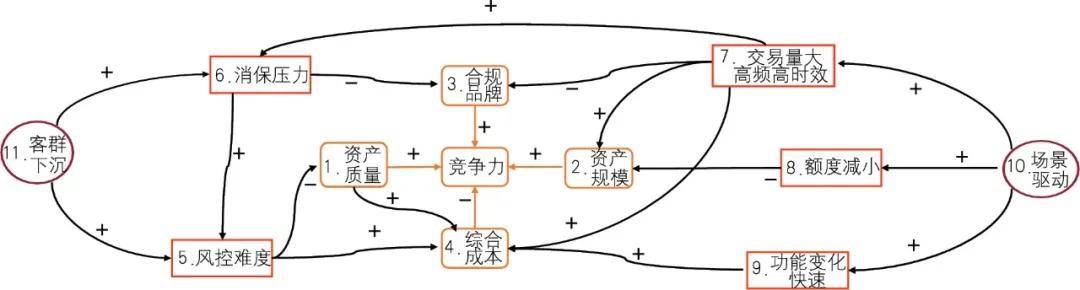
Core Insights - The Chinese government is focusing on transforming the economy towards a high-income status, emphasizing the importance of consumption upgrades as a key driver for economic growth [1] - The consumption finance sector is evolving from a traditional single credit model to a diversified service system to meet various consumer financing needs [1][2] - Financial regulatory policies are supporting the growth of the consumption finance industry, while also presenting challenges such as increased market competition and consumer protection issues [2] Industry Development Opportunities and Challenges - Recent government reports highlight the need to boost consumption and investment efficiency, providing clear direction and support for the consumption finance sector [2] - The industry faces challenges including intensified competition and the need for enhanced consumer rights protection [2] Characteristics of the Second Half of Consumption Finance - Key competitive factors for consumption finance companies include asset quality, asset scale, compliance and brand reputation, and comprehensive costs [3] - The industry is under pressure from two main factors: customer base expansion into lower-tier markets and scenario-driven business models [5][6] Customer Base Expansion Pressures - The shift towards lower-tier markets is a necessary path for consumption finance growth as first and second-tier cities become saturated [5] - Increased competition from large internet platforms and banks is forcing consumption finance companies to target lower-tier customer segments [5][6] Scenario-Driven Business Pressures - The trend towards scenario-based consumption finance is evident, with a significant portion of transactions occurring in specific, immediate-use contexts [8][9] - The average loan amount has significantly decreased, necessitating a higher transaction volume to maintain asset scale [9][11] Digital Finance as a Key Driver - Digital finance is positioned as a foundational element for building a robust financial system, with a goal to align with the digital economy by 2027 [16] - The integration of digital finance capabilities is essential for enhancing risk control, consumer protection, and supporting high-frequency real-time transactions [18][21][23] System Function Iteration and Innovation - The need for rapid system function iteration is critical, with companies facing the challenge of balancing cost, quality, and time in system development [15][24] - Emphasizing a systematic approach to problem-solving and innovation is crucial for addressing the complexities of digital finance capability construction [26][27]
记者观察:供给过剩、场景缺失,海量数据如何突破供需脱节困局?|一探
Di Yi Cai Jing· 2025-09-03 01:19
Group 1 - The core viewpoint is that the acceleration of marketization in the data element sector is supported by both policy and technological advancements, but the "lack of scenarios" remains a key bottleneck for industry development [1] - Industry experts at the 2025 China International Big Data Industry Expo emphasized that data itself is not an asset; it must be integrated into scenarios and solve real problems to be transformed into true value [1] - By creating replicable cases, promoting co-creation of technology and business, and building a secure and trustworthy environment, the value of existing data can be activated, leading to the emergence of new scenarios and business models [1] Group 2 - The future consensus is that "scenario-driven" approaches will transform data from "dormant resources" into "flowing value," which will genuinely support industrial upgrades and improve people's livelihoods [1]

「中国式方案」点亮AI黄金时代|36氪2025 AI Partner百业大会核心看点剧透
36氪· 2025-08-22 13:47
Core Viewpoint - The article emphasizes that China's AI industry is not only leading in technological innovation but also exploring unique commercialization models, termed "Chinese-style solutions," which are reshaping the global AI landscape [2][13]. Group 1: Chinese-style Solutions - The "Chinese-style solution" is characterized by a complete closed loop of "technology research and development - scene implementation - industry feedback," driven by scene demands to iterate technology and enable AI across various industries [2][13]. - The upcoming "2025 AI Partner Conference" will focus on topics such as "Chinese-style innovation," "super intelligent agents," and the integration of AI with various industries, highlighting the deep fusion of AI with the real economy [2][11]. Group 2: AI Embodiment and Infrastructure - AI embodiment requires breakthroughs in hardware, software, and computing power, with a focus on smart terminals and robotics as key areas for innovation [4]. - The development of AI infrastructure is crucial for supporting the demands of full-domain intelligence, with practices in computing resource scheduling and data foundation construction being shared [6]. Group 3: AI as a Necessity - AI is transitioning from a "show-off technology" to a "necessity" by integrating into core industry processes in sectors like enterprise services, healthcare, and environmental protection [8]. - The application of AI in human resources, medical services, and commercial content creation is being explored to enhance efficiency and innovation [8]. Group 4: Future Directions and Challenges - The commercialization of humanoid robots is still in its early stages, with discussions on overcoming challenges related to technology maturity and market acceptance [5]. - The role of AI in carbon management and the automotive finance industry is being examined, focusing on how AI can transform traditional models into more efficient ecosystems [9]. Group 5: Event Highlights - The "AI Partner" initiative has become a platform for communication between AI application and scene sectors, with plans to continue fostering AI innovation and collaboration among over 70 companies [11].