
懒人经济

Search documents
曾10分钟售500万桶 昔日网红“自嗨锅”被申请破产审查
Di Yi Cai Jing· 2026-02-09 06:12
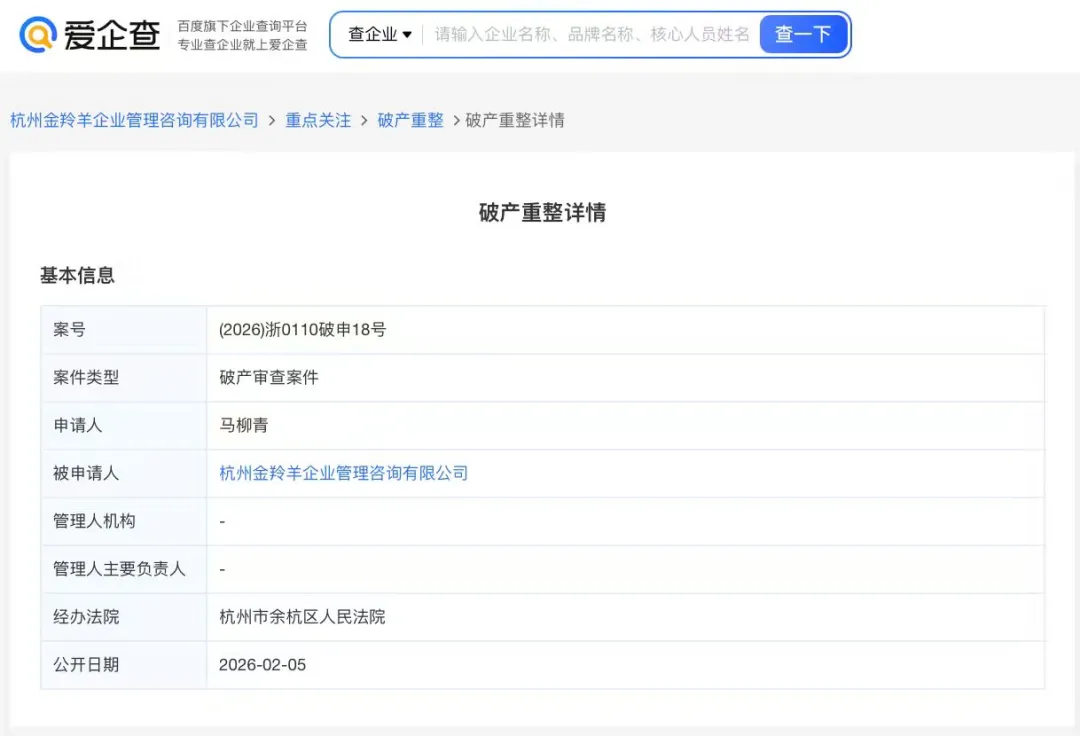
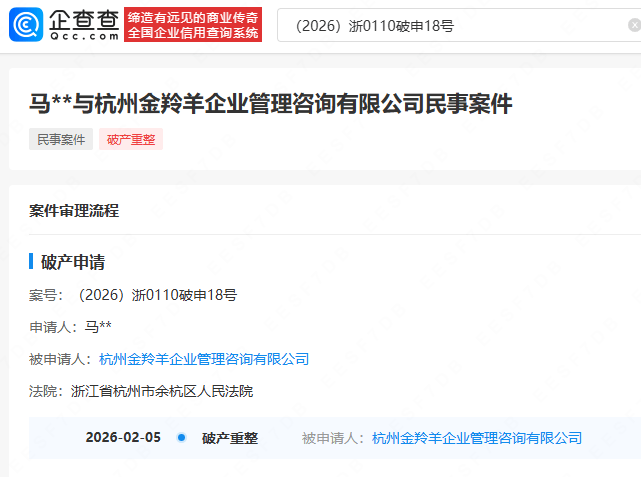
爱企查App显示,近日,自嗨锅关联公司杭州金羚羊企业管理咨询有限公司新增一则破产审查案件,申请人为马某,经办法院为杭州市余杭区人民法院。 但随着2022年后"宅家"需求锐减,"自嗨锅"声量渐弱。2023年3月,上市公司"味精大王"莲花健康有意收购杭州金羚羊部分股权,但5个月后这笔交易告 吹。 此后,"自嗨锅"再出现在大众视线前,便伴随着杭州金羚羊因资金链问题被起诉、强制执行,创始人蔡红亮被"限高"等消息。 (文章来源:第一财经) 截至目前,杭州金羚羊已有6条被执行人信息,涉及金额超1.4亿元,蔡红亮也被限制高消费。 凭借精准的"一人食""懒人经济"定位和重广告营销,"自嗨锅"迅速成为当时的市场黑马。2020年,居家需求激增,自嗨锅销量暴涨,成了现象级网红产 品。不仅创下10分钟售500万桶的纪录,在当年双十一,其天猫旗舰店更是在短短21分钟内,达到破亿销售额。 2018年至2021年,杭州金羚羊完成五轮融资,总融资金额超5.5亿元。背后不乏知名投资机构,如中金公司、经纬创投、CMC资本、高榕资本等,估值一 度飙升至75亿元。 企业品牌项目信息显示,自嗨锅成立于2018年,是一个自热方便火锅品牌,产品包括麻辣牛 ...

曾10分钟售500万桶,昔日网红“自嗨锅”被申请破产审查
第一财经· 2026-02-09 06:09
2026.02. 09 本文字数:790,阅读时长大约2分钟 封图| 图源自嗨锅官方账号 爱企查App显示,近日, 自嗨锅关联公司杭州金羚羊企业管理咨询有限公司新增一则破产审查案件,申请人为马某,经办法院为杭州市余杭区人民法 院。 | 案号 | (2026)浙0110破申18号 | | --- | --- | | 案件类型 | 破产审查案件 | | 申请人 | 马柳青 | | 被申请人 | 杭州金羚羊企业管理咨询有限公司 | | 管理人机构 | - | | 管理人主要负责人 | - | | 经办法院 | 杭州市余杭区人民法院 | | 公开日期 | 2026-02-05 | 企业品牌项目信息显示,自嗨锅成立于2018年,是一个自热方便火锅品牌,产品包括麻辣牛肉自热火锅、自热汤锅、自热干锅、自热煮锅等。 | ◎ 壹企查 酮嘛下剑嫩好 | 育企业,杭州金羚羊企业管理咨询有限公室 查一下 | | | 应用▼ 念老户特惠 供需集市 HAF | | --- | --- | --- | --- | --- | | 基本信息 125 | 司法信息 211 经营诊断 999+ | 知识产权 110 | 企业发展 26 | 经营 ...

估值70亿到被申请破产审查,自嗨锅的“速热神话”为何戛然而止?
Sou Hu Cai Jing· 2026-02-06 12:37
Core Viewpoint - The rise and fall of the self-heating hotpot brand "Zihai Guo" reflects the fragility of the influencer-driven fast food industry and the significant shift in consumer behavior from enthusiasm to rationality [6][9][10] Company Overview - Zihai Guo, once a leading brand in the self-heating hotpot sector, is undergoing bankruptcy review as of February 2026, initiated by an individual named Ma [1] - The company has accumulated over 140 million yuan in total execution amounts across multiple cases, indicating a severe financial crisis [3][4] Growth Journey - Zihai Guo's rise was fueled by the convenience of self-heating food products, aligning with the "lazy economy" trend, and aggressive marketing strategies, including celebrity endorsements and significant advertising investments [5][6] - The brand achieved a peak valuation of 7 billion yuan and recorded sales nearing 1 billion yuan in 2021, with a notable sales record of 5 million units sold in just ten minutes during the Double Eleven shopping festival [5][6] Decline Factors - Since 2022, Zihai Guo has experienced a nearly 20% decline in sales, dropping to 820 million yuan, with market share shrinking from 1.84% in 2022 to 1% in 2023 [6][7] - The company faced a debt crisis, with failed acquisition attempts and multiple enforcement actions due to unpaid debts, leading to its classification as a dishonest executor [6][7] Product and Market Challenges - Zihai Guo's reliance on marketing over product quality has been detrimental, with high pricing and poor product performance leading to consumer dissatisfaction [7][8] - The competitive landscape has intensified, with major food brands entering the self-heating market, resulting in price wars and reduced profit margins for Zihai Guo [8] Industry Insights - Despite Zihai Guo's struggles, the outdoor self-heating food market is projected to grow, with sales expected to exceed 18 billion yuan by 2025 and reach 35 billion yuan by 2030 [9] - The industry's growth is shifting from a "traffic-driven" model to a "quality-driven" approach, emphasizing the need for companies to focus on product development and consumer needs [9][10]
多地推出以旧换新等举措激发“春节档”消费潜力
Zheng Quan Ri Bao· 2026-01-27 16:25
Group 1 - The core viewpoint is that various regions in China are intensifying consumer promotion policies ahead of the Spring Festival, utilizing measures such as consumption subsidies and trade-in programs to stimulate market consumption potential [1][2] - Experts predict that the consumption market during the Spring Festival will show a steady improvement, driven by policies that encourage trade-ins and consumer upgrades [1][2] - The implementation of trade-in policies, particularly for large consumer goods like automobiles and home appliances, is expected to directly boost demand and promote green and digital consumption [2] Group 2 - The overall market scale during the 2026 Spring Festival is anticipated to achieve significant growth, with service consumption, cultural tourism, and upgraded product consumption being the main growth drivers [2] - The consumption landscape is expected to shift towards "digital + green," with technology products such as AI companion toys and smart glasses becoming popular during the festive season [2] - Local governments are leveraging regional cultural and tourism resources to create new consumption scenarios, integrating various resources to enhance the consumer experience [3]
曾卖爆1000万台,豆浆机为何突然消失?
3 6 Ke· 2026-01-22 09:45
Group 1 - The article discusses the decline in popularity of the soybean milk machine, which was once a household staple in China, and how it has seemingly vanished from public discourse [1][2] - The soybean milk machine was invented by Wang Xuning in 1994, simplifying the traditional process of making soybean milk, but it initially struggled to gain traction due to high costs and the low price of ready-made soybean milk [5][6][7] - The turning point for the soybean milk machine came in 2008 after the melamine scandal, leading to a surge in sales as consumers sought safer alternatives, resulting in over 10 million units sold that year [9][13][15] Group 2 - Despite its initial success, the soybean milk machine faced challenges due to its cumbersome cleaning process, leading to many users abandoning it after a few uses [19][22] - Sales began to decline after 2010, with revenue from the soybean milk machine dropping from 4.04 billion to 3.15 billion yuan between 2010 and 2017, indicating a significant downturn [24] - The emergence of the high-speed blender, or "破壁机," provided a new opportunity for the company, which adapted the product to include heating capabilities, thus combining the functions of both machines [25][32][34] Group 3 - The high-speed blender gained popularity due to its versatility and ability to produce smoother beverages, with market size doubling from 2.26 billion to 4.61 billion yuan in just one year [37] - However, the high-speed blender also faced issues such as excessive noise and cleaning difficulties, leading to a decline in its market size after an initial peak in 2018 [41][46] - The company has attempted to diversify its product offerings, including acquisitions and new product launches, but these efforts have largely failed to yield positive results [47][50]

零售行业发力元旦消费季 消费活力持续释放
Zheng Quan Ri Bao Wang· 2026-01-04 13:53
Group 1 - The retail industry is focusing on consumer demand pain points during the New Year's holiday, implementing precise marketing, experiential scenarios, and diverse benefits to stimulate consumption [1] - Companies are enhancing promotional efforts during the peak consumption period from New Year's to Spring Festival, launching targeted live streaming activities and offering various consumer benefits [1] - Local life platforms are providing convenient shopping options through discount vouchers and subsidies to encourage in-store consumption [1] Group 2 - Retail enterprises are utilizing experiential activities and interactive engagement to attract customer traffic, with significant increases in foot traffic and sales during the holiday period [2] - On New Year's Eve, a shopping mall recorded over 400,000 visitors, setting a new single-day foot traffic record in Beijing, while membership consumption increased by 45% during the holiday [2] - Retail companies are focusing on enhancing service quality and creating new consumer experiences to attract investment attention [2] Group 3 - The future development of the retail industry requires a dual-driven approach, balancing macro policy guidance with micro model innovation [3] - It is suggested that fiscal subsidy models shift from broad-based to targeted approaches, focusing on service consumption and green consumption to enhance residents' purchasing power [3] - Companies need to adapt to the consumption characteristics of Generation Z, emphasizing experiential consumption and restructuring supply chains to meet the demand for quality and cost-effective private brands [3]
看懂这些关键领域,在2026年捡回「上行」信心
36氪· 2025-12-20 10:27
Core Insights - The article discusses the impact of AI on the workplace by 2025, highlighting both opportunities and challenges for job seekers and employers [5][6]. Group 1: AI and Job Market Dynamics - AI is expected to revolutionize job roles, but it also poses risks of job displacement, particularly for those in roles that can be automated [5]. - The emergence of "super individuals" in the workforce may lead to reduced job opportunities for others, as increased productivity from these individuals can displace multiple workers [5]. Group 2: Employer Branding and Recruitment Trends - There is a lack of investment in employer branding among companies, as many prioritize product performance over employee satisfaction [6]. - Companies are increasingly seeking "versatile talents" by expanding job descriptions, which may undermine the value of teamwork and specialized roles [6]. Group 3: Industry-Specific Insights - The advanced manufacturing sector is experiencing a surge in investment, particularly in robotics and 3D printing, with significant growth in talent demand [9]. - The chip manufacturing industry is accelerating its domestic production capabilities, with a reported 90% yield rate for new processes, indicating a strong push towards self-sufficiency [9]. Group 4: Employment Trends and Challenges - The article notes a structural talent shortage in various sectors, including robotics and chip manufacturing, with a reported talent gap exceeding 300,000 in the semiconductor industry [9]. - The article emphasizes the need for companies to adapt to changing market demands and invest in employee development to remain competitive [6][9].

2025年职场红利盘点:在这些赛道里,捡回“上行”信心(全文版)
3 6 Ke· 2025-12-19 06:47
Group 1 - The article discusses the impact of AI on the workplace, highlighting both the potential benefits and the challenges faced by employees as AI technologies evolve [2][3] - It notes that many companies are still hesitant to invest in employer branding, focusing instead on product performance and financial results, which diminishes the importance of employee relations [3] - The trend of seeking "versatile talents" in job descriptions is increasing, while the concept of "one-person companies" emerges as a response to workforce reductions, raising questions about the value of teamwork [3] Group 2 - The article reflects on the struggles of an AI startup team, emphasizing the challenges of navigating the AI landscape and the impact of rising price sensitivity among consumers [3][4] - It mentions the organization of various events, including AI talent salons and recruitment fairs, aimed at fostering community and industry engagement [4] - The publication aims to maintain high content standards and neutrality while exploring monetization strategies through paid content, indicating a shift in the media landscape [4] Group 3 - The article presents a list of the top 50 employers in the workplace bonus category, showcasing companies that have excelled in employer branding and employee engagement [8][15] - It highlights the importance of adapting to changing market demands and the emergence of new job roles in sectors like IP management and overseas market promotion due to the globalization of brands [11] - The narrative emphasizes the need for companies to innovate and adapt to the evolving economic landscape, particularly in the context of AI and automation [11]

看懂这些关键领域,在2026年捡回“上行”信心(限免阅读)
3 6 Ke· 2025-12-18 15:17
Group 1 - The core theme of the articles revolves around the impact of AI on the workplace, highlighting both the potential benefits and challenges faced by employees and companies in adapting to AI technologies [2][3]. - The narrative discusses the cautious approach of capital investment in AI applications, emphasizing that many startups have failed due to pursuing "pseudo-demand" [2]. - The emergence of AI tools has led to a significant shift in job dynamics, with the introduction of "super individuals" potentially displacing other workers in the same demand unit [2]. Group 2 - The articles reflect on the harsh realities faced by employees in China, where few companies invest in employer branding, focusing instead on product strength and performance [3]. - There is a trend of companies expanding job descriptions to seek "composite talents," raising questions about the necessity of teamwork in the workplace [3]. - The narrative also touches on the struggles of an entrepreneurial team from 36Kr, noting the challenges faced in the AI startup landscape and the impact of rising price sensitivity among consumers [3]. Group 3 - The articles mention various events organized by the company, including AI talent salons and large recruitment fairs, aimed at fostering community and industry engagement [4]. - The company has produced influential deep reports, despite facing pushback from some companies regarding content [4]. - The focus remains on maintaining high content standards and neutrality while exploring monetization through paid content [4]. Group 4 - The "Top 50 Employers for Workplace Benefits" list includes companies in advanced manufacturing, such as Momenta, SiLing Robotics, and Gree Electric, showcasing leaders in the industry [6][10]. - The articles highlight the growth and challenges faced by these companies, including the need for skilled talent in areas like AI and robotics [8][11]. - The narrative emphasizes the importance of innovation and adaptation in the rapidly evolving job market, particularly in sectors influenced by AI and automation [13].
核心CPI同比上涨0.9% 物价数据折射武汉消费市场韧性与活力
Chang Jiang Ri Bao· 2025-12-17 00:40
Core Insights - The Consumer Price Index (CPI) in Wuhan for November shows a year-on-year increase of 0.4% and a month-on-month decrease of 0.1%, indicating a stable yet slightly declining price trend [1] - The core CPI, excluding food and energy, rose by 0.9% year-on-year, reflecting a stronger demand for quality and innovative products in the consumer market [1] Group 1: Innovation-Driven Consumption - The price of industrial consumer goods, excluding energy, increased by 2.3% year-on-year, with large household appliances rising by 8.0% [2] - The popularity of smart home appliances, such as the washing and drying machine, has surged, particularly among young professionals, aligning with the "lazy economy" trend [2] - Wearable smart devices have transitioned from being merely functional to more companion-like, with prices for these devices increasing by 12.8% year-on-year [2][3] Group 2: Service Upgrades - Service prices in Wuhan rose by 0.2% year-on-year, with cultural and entertainment services increasing by 2.2% [4] - The demand for travel has surged, leading to a 7.5% increase in flight ticket prices, reflecting a growing trend in experiential consumption [4] - New service models, such as convenient car rental services, are gaining popularity, indicating a shift towards an experience-driven economy [4] Group 3: Consumer Stability - Food prices in Wuhan remained stable in November, with a notable decrease in pork prices by 18.4%, contributing to a 0.26 percentage point drop in CPI [6] - The availability of low-cost vegetables, such as "one yuan" and "two yuan" options, has helped maintain stable food prices, with no significant fluctuations expected [6][7] - The stable food price environment supports overall CPI stability and allows for increased consumption in other sectors [7]