
投资回报率

Search documents
境外权益(港美股)周度策略报告-20260111
Guo Tai Jun An Qi Huo· 2026-01-11 11:55
Report Overview - The report is a weekly strategy report on overseas equity (Hong Kong and US stocks) by Guotai Junan Futures, dated January 11, 2026 [1][2] 1. Investment Ratings - No specific industry investment ratings are provided in the report 2. Core Views - For US stocks, maintain an optimistic outlook, continue with the technology + cyclical allocation strategy, and expect a more balanced market style in 2026 with a "shrinking circle" structure in the technology sector [3] - For Chinese stocks, in the short term, A-shares have better profit - making effects than Hong Kong stocks, and attention should be paid to the subsequent catch - up opportunities in Hong Kong stocks. In the medium term, Hong Kong stocks maintain a barbell strategy [4][7] 3. Summary by Sections US Stocks - **Market Performance and Outlook**: This week, cyclical sectors led the rise in US stocks, and the technology sector continued its "shrinking circle" structure. Next week, the US stock market will face earnings season and inflation data. The outlook remains optimistic, and the technology + cyclical allocation strategy continues [3] - **2026 Allocation Ideas**: The market style will be more balanced, and the K - shaped divergence between technology and non - technology, large - cap and small - cap stocks is expected to converge. Focus on AI technology, healthcare, utilities, finance, materials, and consumer sectors. Prioritize upstream infrastructure in AI technology over downstream software, and pay attention to theme investment opportunities in physical AI [3] - **Valuation**: US stock valuations are still relatively high overall [14] - **AI Bubble**: It is a local rather than a systematic bubble. The market is punishing individual companies with aggressive capital expenditures. Currently, it may be close to the 1997 position from the perspective of the technology industry's ROIC. Monitor the "ROIC - WACC" convergence trend and the divergence between "financing growth" and "profit growth" [20][22] Chinese Stocks - **Market Performance and Outlook**: This week, A - shares outperformed Hong Kong stocks. A - shares' performance was strong in some sectors with high performance certainty and theme - concept sectors. Southbound funds' entry momentum increased, and the pattern may be A - shares leading and Hong Kong stocks catching up. February is the month with the highest winning rate for A - shares historically [4][6][7] - **Short - term Allocation**: Defensively allocate sectors with high performance certainty (AI hardware, new energy leaders, and non - ferrous metals), and offensively allocate valuation - driven sectors (Hang Seng Technology, Hong Kong innovative drugs, commercial aerospace, and robotics) [7] - **Medium - term Allocation for Hong Kong Stocks**: Adopt a barbell strategy, focusing on technology assets with clear industrial trends supported by policies, some new energy sectors with supply - side clearance and demand - side improvement, and non - ferrous sectors benefiting from supply shortages, strong structural demand, and interest rate cuts [7] Odds Analysis - **Hong Kong Stocks**: The forward PE of the Hang Seng Index is 11.8 times, approaching the mean + 1STD since 2015. The forward PE of the Hang Seng Tech Index is 21.4 times, approaching the mean of the past 5 years. The Hang Seng Index ERP is 4.9%, and the Hang Seng Tech Index ERP is 1.1% [9][10]
买房全款和贷款哪个更划算?过来人说出内心想法
Sou Hu Cai Jing· 2026-01-04 11:43
Core Viewpoint - The decision between full payment and mortgage for home buying depends on individual financial situations and life plans, with each option having its own advantages and disadvantages [1][5][8] Group 1: Financial Flexibility - Full payment reduces monthly repayment pressure, leading to greater financial ease but locks a significant amount of capital in real estate, reducing liquidity [1][5] - Mortgage allows for retaining some capital for other investments, enhancing financial flexibility, especially in uncertain economic conditions [3][5] Group 2: Investment Perspective - From an investment standpoint, using a mortgage can be more attractive as it allows for potential higher returns from other investments while leveraging borrowed funds [3][5] - The opportunity cost of using all available funds for a full payment limits growth potential [3] Group 3: Interest Costs and Tax Benefits - The main drawback of mortgages is the interest cost, which can be significantly higher than the total cost of full payment [3] - Some regions offer tax benefits for mortgage interest, which can lower overall housing costs, making it essential to understand local tax policies [3] Group 4: Lifestyle and Psychological Impact - Full payment alleviates monthly repayment stress, allowing buyers to focus on quality of life, while mortgages can impose long-term financial pressure affecting lifestyle and mental health [5][7] - The choice of payment method should align with personal financial health and life quality [5][7] Group 5: Inflation and Market Risks - Inflation can reduce the real cost of loans, making mortgages more appealing in high inflation environments, while full payment may lead to a decrease in purchasing power [5][8] - Market volatility poses risks, with full payment buyers facing greater exposure to price fluctuations compared to those using mortgages [5][8] Group 6: Repayment Capacity and Future Planning - Mortgage repayment requires stable income and career progression, which can be a burden if income fluctuates [7] - Family structure and future financial needs should influence the choice between full payment and mortgage, with younger buyers potentially benefiting from retaining liquidity for future expenses [7] Group 7: Personal Preferences and Risk Tolerance - The choice between full payment and mortgage ultimately depends on individual risk tolerance, with risk-averse individuals preferring full payment for security [8] - Risk-tolerant individuals may opt for mortgages to leverage their investments for wealth accumulation [8]


超八成新币TGE即巅峰,Web3虚假繁荣的病根和解药在这
3 6 Ke· 2025-12-23 04:40
Core Insights - A significant majority of new tokens launched in 2025 have seen a decline in their fully diluted valuation (FDV) post-token generation event (TGE), with 84.7% of tokens experiencing a drop, and a median decrease of 71% in FDV [1] - The analysis indicates that traditional metrics such as high funding, active communities, and exchange listings do not correlate with token performance, suggesting a shift in evaluation criteria for projects [1][2] - The average return on investment (ROI) for tokens at TGE is alarmingly low, with many tokens failing to maintain value beyond the initial launch [4][7] Funding and Token Performance - There is a negligible correlation (0.04) between funding amounts and token performance, indicating that higher funding does not guarantee better outcomes [7] - Projects with funding between $300,000 and $5 million tend to have higher ROI compared to those with larger funding amounts, suggesting that smaller projects may execute more effectively [8] - Tokens priced between $0.01 and $0.05 show the best survival rates, while those priced above $0.50 tend to perform poorly [15][16] Community and Market Dynamics - The size of a project's community does not predict token performance, with no significant correlation between follower count and ROI [9][11] - Community engagement appears to be driven more by speculative interest rather than genuine product support, leading to volatility in follower numbers [13] - The current market environment indicates that many projects are failing to retain users, with community metrics being unreliable indicators of long-term success [27] Industry Trends and Recommendations - The analysis suggests a need for a paradigm shift in project development, emphasizing the importance of product viability over speculative metrics [28][30] - Companies are advised to focus on realistic funding goals, effective product development, and genuine community engagement to improve chances of success in the evolving market landscape [28][30][32] - The industry must adapt to the realities of market dynamics, with a call for consolidation and strategic partnerships as a means of survival [32][34]

爱股票不爱现金!全球基金经理现金持有率创26年来新低
Sou Hu Cai Jing· 2025-12-18 06:52
Group 1 - The average cash holding of global fund managers decreased from 3.7% in November to 3.3% in December, marking the lowest level since the survey began in 1999 [1] - 42% of surveyed fund managers reported increasing their global stock holdings, the highest level since 2022, indicating a shift towards equities and commodities [1] - Global investor sentiment is at its highest level since mid-2021, surpassing the optimism seen during the "Trump trade" period at the end of 2024 [3] Group 2 - Fund managers' expectations for global corporate profits are at their highest since 2021, with a strong earnings growth forecast encouraging bullish sentiment in the stock market [3] - UBS forecasts a robust earnings growth of 7% to 14% for major markets next year, supporting further stock market gains despite high historical valuations [4] - The current economic environment is seen as favorable for global equities, with expectations of accelerated global growth by 2026 [4] Group 3 - Analysts warn that the overly optimistic market sentiment could lead to severe reactions to negative news, making the market vulnerable to sharp corrections [5] - The "AI bubble" is still considered the biggest market risk by global investors, although the percentage of fund managers identifying it as the primary risk has decreased from 45% to 38% [5] - There is a growing expectation among investors that long-term bond yields will rise, with three-quarters of surveyed fund managers anticipating a steeper yield curve in the coming year [5]

扬农化工:预计明年的产品价格仍然会低于项目可行性研究报告中的测算值
Zheng Quan Ri Bao Wang· 2025-12-16 14:11
Core Viewpoint - The company anticipates that product prices in the coming year will remain below the estimates in the feasibility study report, with some varieties experiencing significant price drops [1] Group 1: Market Environment and Price Trends - The company indicates that the current market environment suggests a continued decline in product prices, which may negatively impact investment returns [1] - Certain product varieties have seen excessive price declines, raising concerns about profitability [1] Group 2: Project Development and Investment Returns - Despite smooth project construction and expected capacity release, the decline in prices poses a challenge to investment return rates [1] - The investment return rate of the Huludao project will largely depend on future market supply and demand dynamics as well as price trends [1] Group 3: Operational Strategy - The company plans to maintain a full production and sales strategy while continuously optimizing operations and cost control [1] - Ensuring product cost competitiveness is a priority for the company to drive high-quality development through quality investments [1]

AI基础设施板块继续遭抛售!博通、甲骨文、CoreWeave集体下跌
美股IPO· 2025-12-16 00:26
Group 1 - The core sentiment in the AI infrastructure market has shifted to a pessimistic outlook, as evidenced by significant stock declines in companies like Broadcom, CoreWeave, and Oracle [1][4][3] - Broadcom's stock fell 5.6% on Monday, following an 11% drop on Friday, marking an 18% decline from its historical high last Wednesday, the worst performance since March 2020 [4][1] - Oracle's stock decreased by 2.7% on Monday, with a cumulative drop of 17% over the past three trading days, and a staggering 46% loss in market value since September 10 [4][5] Group 2 - CoreWeave's stock dropped approximately 8% on Monday, following an 11% decline the previous week, and has plummeted over 60% from its June peak [4][1] - Despite the overall year-to-date stock performance being positive for these companies, investor concerns are growing regarding whether the substantial investments will yield corresponding returns [4][5] - Oracle has significantly increased its capital expenditure forecast from $35 billion to $50 billion due to new contracts with companies like Meta and NVIDIA, while also ramping up leasing commitments to $248 billion [5][6] Group 3 - Broadcom's CEO indicated that AI chip sales are expected to double year-over-year to $8.2 billion, but profit margins are under pressure due to increased investments in server components [5][6] - The high debt-to-equity ratio of Oracle, at 500%, is significantly higher than its cloud computing peers, which range from 7% to 23%, raising concerns about its financial sustainability [6][5] - CoreWeave also has a notably high debt-to-equity ratio of approximately 120%, indicating potential financial risks [6]

The Toro Company (NYSE:TTC) Quarterly Earnings Insight
Financial Modeling Prep· 2025-12-11 17:00
Core Insights - The Toro Company is set to release its quarterly earnings on December 17, 2025, with anticipated earnings per share (EPS) of $0.86 and revenue projections of approximately $1.05 billion, which are critical for assessing the company's financial health and operational efficiency [1][5] Financial Performance - The company has declared a regular quarterly cash dividend and authorized the repurchase of up to an additional six million shares, reflecting its strategy to enhance shareholder value [2][5] - The price-to-earnings (P/E) ratio stands at 21.76, indicating that investors are willing to pay $21.76 for every dollar of earnings, suggesting confidence in future growth prospects [2][5] - The price-to-sales ratio is 1.59, meaning the market values the company's sales at 1.59 times its revenue [3] - The enterprise value to sales ratio is 1.80, and the enterprise value to operating cash flow ratio is 13.78, providing insights into the company's valuation and cash flow efficiency [3] Financial Ratios - The earnings yield is 4.60%, indicating the earnings generated per dollar invested, which offers a perspective on the return on investment for shareholders [4] - The debt-to-equity ratio is 0.81, suggesting a moderate level of debt compared to equity, which is a positive sign for financial stability [4] - The current ratio is 1.88, demonstrating the company's ability to cover its short-term liabilities with its short-term assets, ensuring liquidity and operational flexibility [4][5]


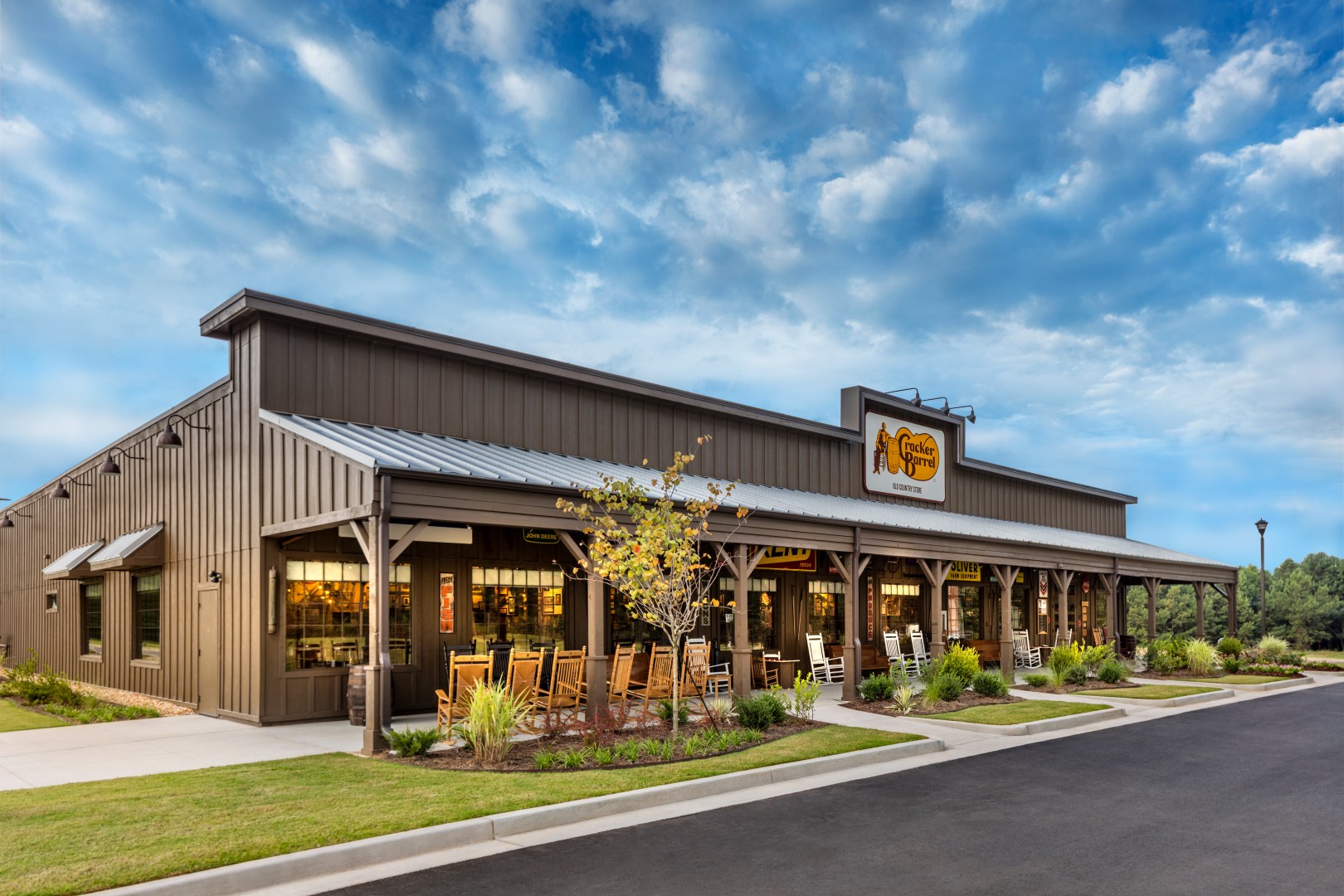
Cracker Barrel Old Country Store, Inc. (NASDAQ:CBRL) Quarterly Earnings Insight
Financial Modeling Prep· 2025-12-05 19:00
Core Insights - Cracker Barrel is expected to report a quarterly loss of $0.68 per share, marking a significant decline of 251.1% year-over-year [1] - Revenue projections are around $802 million, slightly above the anticipated $801 million, but still reflecting a 5.2% year-over-year decrease [2] Financial Metrics - The price-to-earnings (P/E) ratio is approximately 13.63, indicating a moderate valuation, while the price-to-sales ratio is about 0.18, suggesting the stock is undervalued [3] - The enterprise value to sales ratio is around 0.51, and the enterprise value to operating cash flow ratio is approximately 8.09, providing insights into valuation and cash flow efficiency [4] - The earnings yield stands at 7.34%, indicating a reasonable return on investment for shareholders [4] Liquidity and Financial Health - The current ratio of 0.50 suggests potential liquidity issues, indicating the company may struggle to cover its short-term liabilities [5] - Investors are expected to closely monitor the upcoming earnings release to assess the company's financial health and future prospects [5]

QuidelOrtho (QDEL) - 2025 FY - Earnings Call Transcript
2025-12-03 19:00
Financial Data and Key Metrics Changes - The company is tracking towards an Adjusted Free Cash Flow guidance of 25%-30% of Adjusted EBITDA for the full year, despite a hiccup in Q3 due to system conversion delays [10][11] - The long-term target for cash flow is to reach 50% of Adjusted EBITDA by 2027, with expected progress in 2026 [11] - Total revenue growth, excluding COVID and donor screening revenue, was reported at 5% for the quarter and year-to-date [15][16] Business Line Data and Key Metrics Changes - The Labs business grew at 4% in constant currency, while Immunohematology and Triage grew at 5% and 7% respectively, indicating solid performance across the base business [15][16] - The immunoassay to integrated analyzer ratio has improved from 25% to 30%, with a target of reaching 50% in the future, which is expected to enhance margins [22][23] Market Data and Key Metrics Changes - The Chinese market is expected to grow at a mid-single digit rate for the full year 2025, with the company feeling optimistic about opportunities despite previous reimbursement issues [29][32] - The immunohematology business holds the number one market position globally, with a growth rate of 5% in Q3, although Q4 growth may be lower due to shipment timing [33] Company Strategy and Development Direction - The company is focusing on optimizing its portfolio by exiting the U.S. donor screening market, which is expected to improve margins once fully wound down [39][40] - The strategy includes enhancing the integrated analyzer base to drive higher-margin immunoassay revenue, with a long runway for growth in this area [22][23] Management's Comments on Operating Environment and Future Outlook - Management expressed confidence in achieving mid-single digit growth in the Labs and Immunohematology segments, with expectations for stable performance in the face of market challenges [15][16][29] - The company anticipates a good Q4 and is optimistic about the overall market dynamics, particularly in China and the point-of-care segment [29][41] Other Important Information - The company has achieved $140 million in cost savings since mid-2024, primarily through staffing reductions and indirect procurement initiatives [62] - The leverage ratio at the end of Q3 was reported at 4.4, with a target to reduce it to 2.5-3.5 times by early 2027 [70][71] Q&A Session Summary Question: Feedback from investors post-Q3 earnings call - Management noted that the stock reaction was perplexing, attributing it to high short interest, put option exposure, and cash flow timing issues related to ERP conversions [7][10] Question: Cash flow guidance and visibility - The company confirmed that cash flow guidance remains unchanged, with expectations for a strong Q4 as cash receipts from Q3 are collected [10][12] Question: Growth drivers in the Labs business - The Labs business is expected to maintain a mid-single digit growth trajectory, supported by consistent win rates and a stable contract structure [16][18] Question: Competitive dynamics in China - Management indicated that the company has been less affected by Chinese government actions compared to competitors, expecting mid-single digit growth in the Chinese market [28][32] Question: Margin improvement initiatives - The company is targeting 100-200 basis points of margin improvement in 2026, contingent on continued mid-single digit growth in the base business [62][65] Question: Future of the LEX acquisition - The company expects to complete the acquisition of LEX following FDA approval, with a limited commercial rollout anticipated in the first half of 2026 [51][56]

港股红利类ETF净流入创年内新高 | 红利情报局(2025.12.3)
Xin Lang Cai Jing· 2025-12-03 09:30
Core Insights - In October, Hong Kong's technology ETFs maintained high net inflows, comparable to levels seen in March and April 2025. Additionally, Hong Kong's dividend ETFs recorded a significant net inflow of 5.463 billion yuan, marking the highest monthly inflow in the first ten months of 2025 [3][11] - The Southbound trading net buying volume in October exceeded historical levels since 2019, with the oil and petrochemical sector ranking as the second highest in net buying among industries [11] - The home appliance sector outperformed the CSI 300 index in November, with white goods leading the gains. Despite a decline in domestic sales due to national subsidy exhaustion, the sector saw a 3.4% increase in November, driven by stable operations and high dividend characteristics of leading companies [3][11] Industry Performance - The top five sectors by dividend yield over the past 12 months include: - Coal Mining: 5.73% - Joint-stock Banks: 5.26% - Home Appliances: 4.92% - Agricultural Commercial Banks: 4.67% - Shipping Ports: 4.50% [4][12] - The performance of the Hua Bao Dividend Family Index over the past month showed varied results, with the CSI 300 index at -3.81% and other indices also reflecting negative trends [14] Investment Opportunities - The white goods sector is highlighted for its resilience and attractiveness due to its high dividend yield and low valuation levels, making it a target for capital inflows [3][11] - The dividend-focused ETFs, particularly those with low volatility, are positioned as favorable investment options, reflecting a trend towards stable income generation in the current market environment [6][8]
