
数智化赋能

Search documents
河北磁县:“循环经济”激活化工新材料产业集群
Xin Hua She· 2026-01-23 14:38
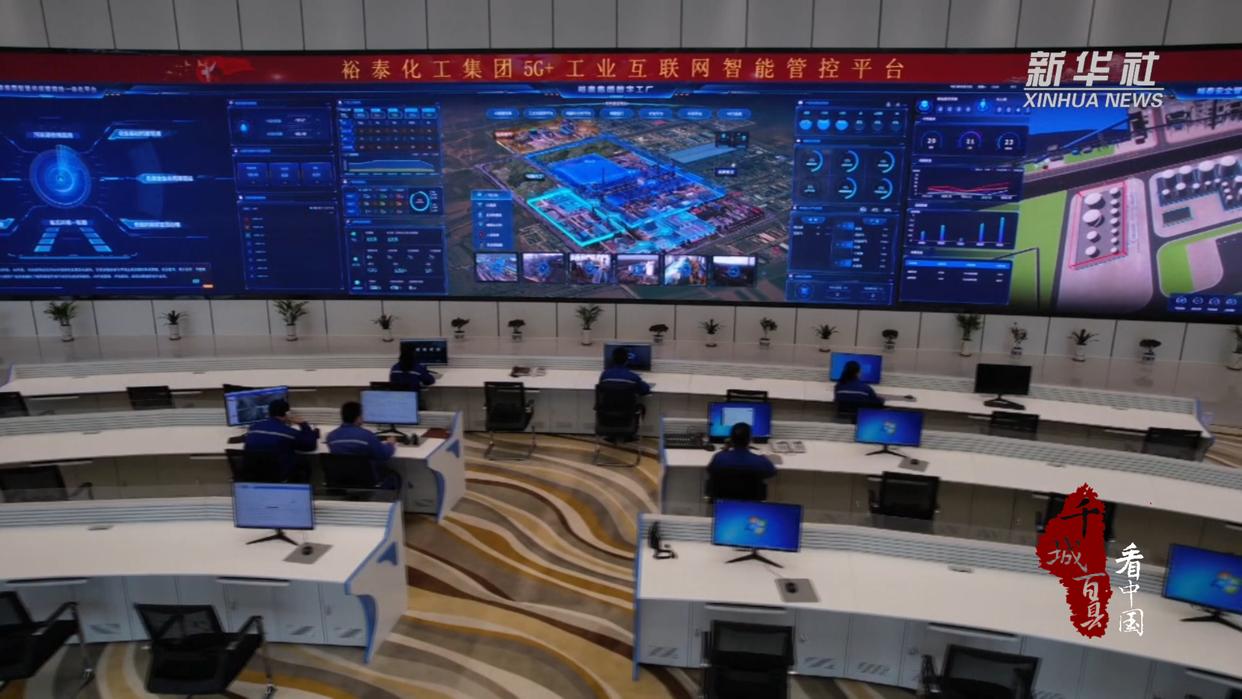
Group 1 - The core viewpoint of the article highlights the transformation of the Hebei coal chemical industry through digitalization, exemplified by the establishment of a digital factory that has significantly improved production efficiency and management [1][6] - The digital management system, which cost 120 million yuan, utilizes 40,000 data collection points and 5G technology to enhance traditional production methods, resulting in an annual benefit increase of 10 million yuan [1] - The development zone has established a "small cycle for enterprises and a large cycle for clusters" system, integrating public resources such as water, electricity, and gas through shared pipelines, promoting resource utilization [4] Group 2 - In recent years, the focus has been on empowering the chemical new materials industry cluster through intelligent and circular economy models, leading to high-quality development characterized by high-end, green, and collaborative approaches [6] - The development zone has attracted several well-known companies, including Sinochem Group and Jiangxi Black Cat Group, forming four high-end industrial chains in carbon materials and pharmaceutical intermediates [6] - The development zone was successfully selected as a national-level characteristic industrial cluster for small and medium-sized enterprises in 2024 [6]


中粮科工:打造高效的“专业工艺技术+数智化解决方案”
Zheng Quan Ri Bao Wang· 2026-01-21 07:46
证券日报网讯1月21日,中粮科工(301058)在互动平台回答投资者提问时表示,公司聚焦科技创新, 致力于打造发展硬实力,一直以来积极开展广泛的专项技术创新研究。公司紧密结合行业难点和热点问 题进行专项研究,致力于加快工艺改进、装备提升及数智化赋能,同时公司聚焦智慧仓储及码头、智慧 工厂、智慧园区、智慧能源,打造高效的"专业工艺技术+数智化解决方案"。具体财务状况请以公司在 法定信息披露媒体上发布的相关公告为准。 ...
金岭矿业董事长迟明杰:将以四大举措持续提升核心竞争力
Zhong Guo Jin Rong Xin Xi Wang· 2026-01-18 02:35
转自:新华财经 2025年,金岭矿业坚定推进战略转型,加速向"生产经营+资本运营"双轮驱动的矿产资源生产加工服务 商转型,并取得实质性成效。大张铁矿探矿权成功落地,有效化解公司资源禀赋瓶颈,项目投产后将成 为新的核心利润增长点。同时,公司强化数智化赋能,上线"数智金岭"平台,推动数据成为核心生产要 素,助力生产流程与运营管理的数智化升级,公司运营质效得到显著提升。 1月16日,在2025年度客户答谢会上,山钢集团党委副书记、董事,金岭矿业董事长迟明杰表示,公司 2026年将立足"打造国内一流的矿产资源生产、加工和服务商"战略定位,通过深化管理创新、优化服务 流程、丰富产品体系、强化供应链协同四大举措,持续提升核心竞争力,同时与广大客户构建更紧密的 战略合作伙伴关系,携手开拓市场新空间。 编辑:王媛媛 会上,金岭矿业还对2025年度优秀战略伙伴、优秀销售客户及优秀供应商进行了表彰,并与核心客户签 署战略合作协议。(陈川) 随着转型成效逐渐显现,金岭矿业价值在资本市场层面得到充分认可,2025年上市公司股价涨幅 58.14%。值得一提的是,稳健的经营业绩支撑金岭矿业持续回报投资者,2025年累计分红支出达1.25 ...

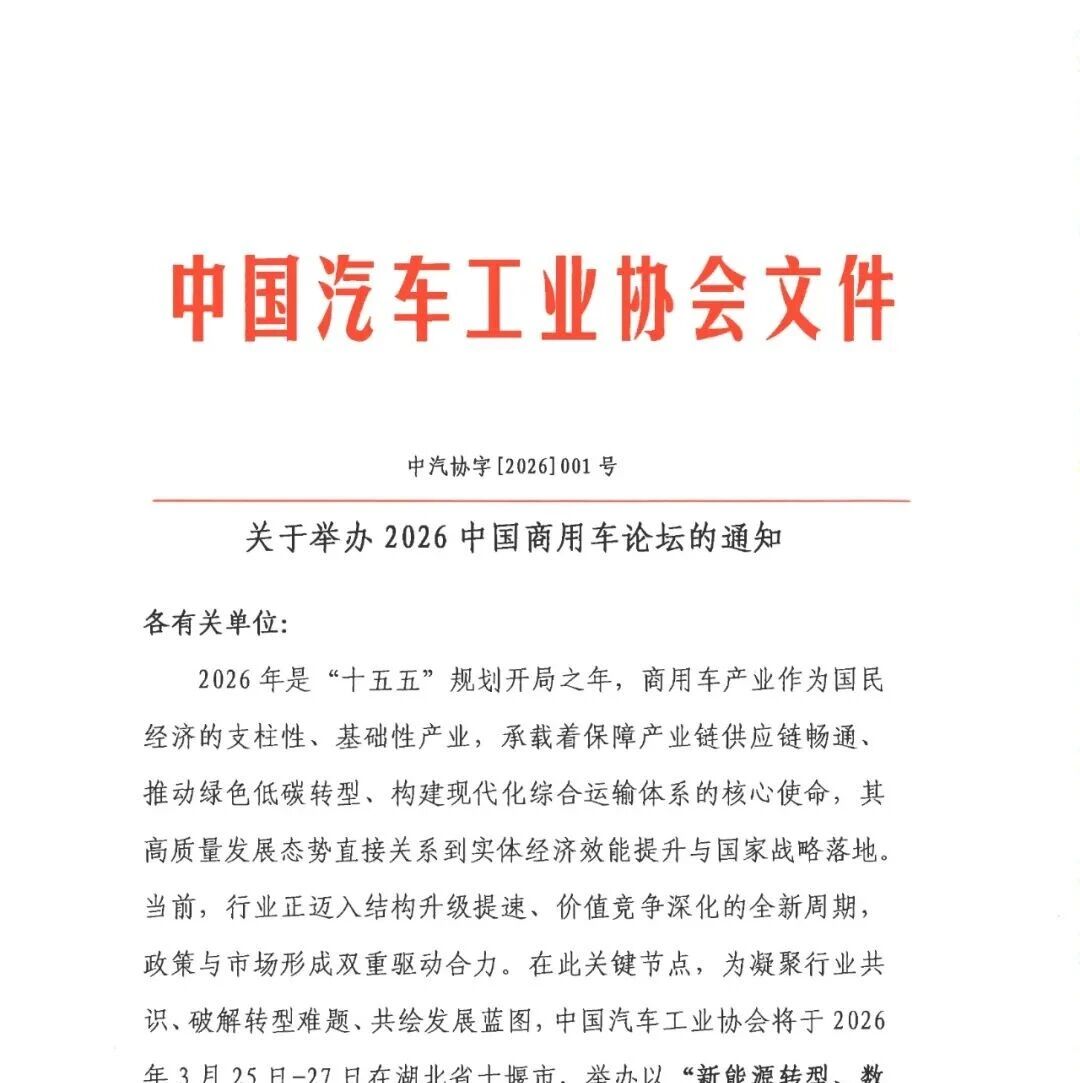
【会议通知】中国汽车工业协会发布《关于举办2026中国商用车论坛的通知 》
中汽协会数据· 2026-01-16 09:12
中国商用车论 CHINA COMMERCIAL VEHICLES FO 中国汽车工业协会文件 诚邀国内外行业同仁、产业链伙伴、专家学者、中汽协会 会员单位以及关心商用车行业发展的各界朋友参加盛会。我们 期待与大家一道,以开放眼光、合作姿态共同推动我国商用车 产业高质量发展! 现就论坛有关事项说明如下: 中汽协字[2026] 001 号 关于举办 2026中国商用车论坛的通知 各有关单位: 2026年是"十五五"规划开局之年,商用车产业作为国民 经济的支柱性、基础性产业,承载着保障产业链供应链畅通、 推动绿色低碳转型、构建现代化综合运输体系的核心使命,其 高质量发展态势直接关系到实体经济效能提升与国家战略落地。 当前,行业正迈入结构升级提速、价值竞争深化的全新周期, 政策与市场形成双重驱动合力。在此关键节点,为凝聚行业共 识、破解转型难题、共绘发展蓝图,中国汽车工业协会将于 2026 年 3月25日-27日在湖北省十堰市,举办以"新能源转型、数 智化赋能:新形势下商用车发展的新要求与新路径"为主题的 2026 中国商用车论坛。 中国商用车论坛是中国汽车工业协会倾心打造的我国商用 汽车行业的顶级盛会。2026中国 ...
长三角医疗一体化 让百姓在家门口看得上病、看得好病
Yang Shi Xin Wen Ke Hu Duan· 2026-01-12 09:05
Core Insights - The integration of the Yangtze River Delta has become a national strategy, facilitating the flow of medical resources across the region, allowing residents to access quality healthcare locally [1][3] - The implementation of cross-province medical services and the establishment of medical alliances have enabled residents in the Yangtze River Delta to receive high-quality medical services without traveling far [6][8] Group 1 - The case of Qian Guoqin, a 69-year-old patient who underwent surgery at a local hospital in Anhui, highlights the benefits of inviting external experts to provide services locally, reducing the need for long-distance travel for complex medical conditions [3][1] - The Anhui province has actively connected with resource-rich areas like Shanghai and Nanjing, utilizing models such as tightly-knit medical alliances and specialist studios to attract high-quality medical resources to the region [3][6] - As of 2020, the Yangtze River Delta has achieved direct settlement of hospitalization and outpatient expenses for cross-province medical services, covering 41 cities and over 10,000 medical institutions [8][6] Group 2 - The integration of digital platforms like "Suishenban" and "Zheli Ban" has streamlined administrative processes for residents, allowing for efficient handling of newborn registration and health insurance cards [10][12] - The ongoing implementation of the 14th Five-Year Plan aims to break down administrative barriers and enhance service efficiency through institutional innovation and digital empowerment, ensuring equitable and high-quality health services for more people [12][6]

欧派3.2亿募投资金调整投资方向 从扩产转向产线升级
Sou Hu Cai Jing· 2026-01-07 03:38
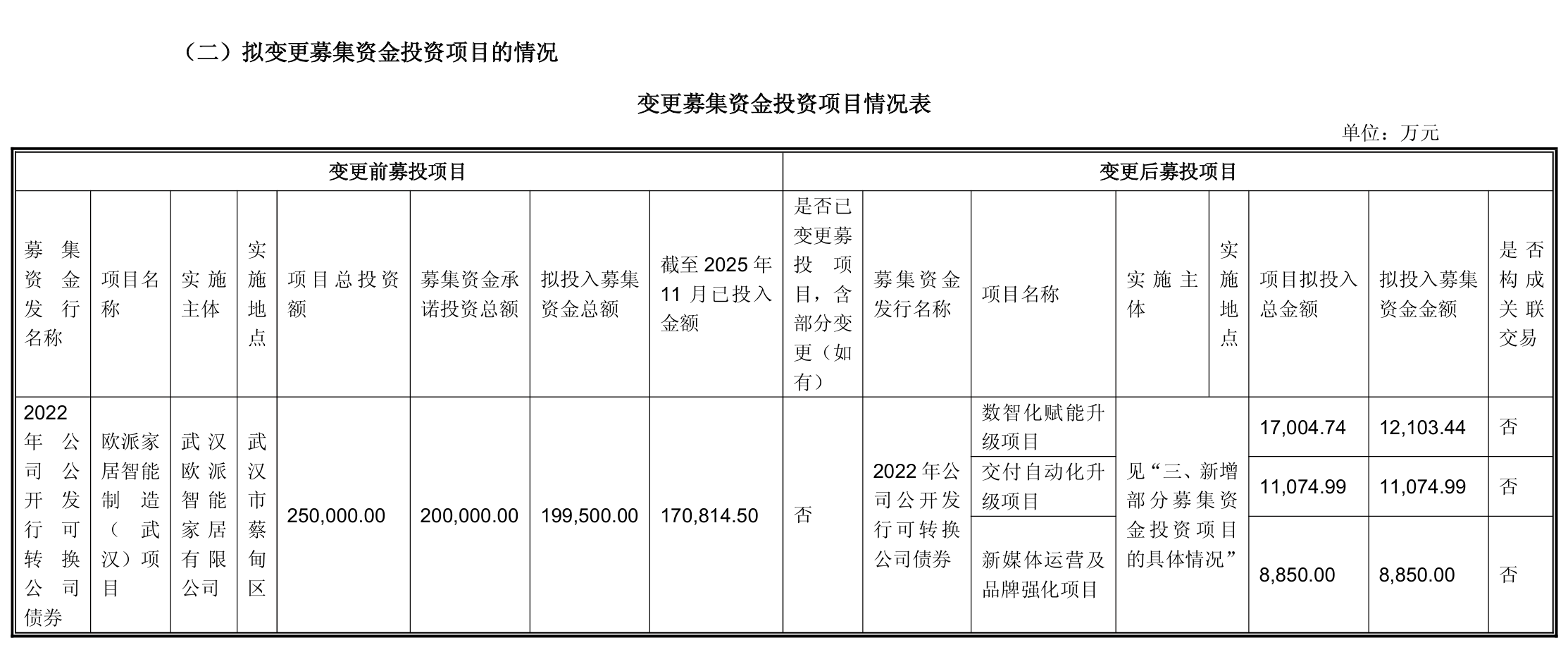
Core Viewpoint - The company is facing significant changes in the market environment, leading to a reassessment of the "Oupai Home Smart Manufacturing (Wuhan) Project" due to lower-than-expected demand and increased operational pressures in the custom home furnishing industry [3][5]. Group 1: Market Environment and Challenges - Since 2015, the custom home furnishing industry has experienced rapid growth, with a compound annual growth rate (CAGR) of 24.06% from 2015 to 2021, resulting in high capacity utilization and significant production pressure across manufacturing bases [3]. - The company initiated the smart manufacturing project in response to market demand and strategic goals; however, macroeconomic changes and industry cycles have led to weakened demand, structural supply changes, and intensified competition, creating operational challenges [3][5]. - Despite implementing various reforms since 2025, the company's profitability remains under pressure, and continuing with the Wuhan project could negatively impact overall capacity utilization and resource allocation [3][5]. Group 2: Capacity and Production Efficiency - The company has successfully integrated automation, intelligence, and digital technologies into its manufacturing processes, enhancing production efficiency and product reliability across its main production bases [4]. - The smart manufacturing project in Wuhan is progressing, with production lines already operational, and the overall capacity layout is currently sufficient to meet business development needs while allowing for moderate order growth [4]. - To optimize the use of project facilities, the company has decided to temporarily lease out up to 26,000 square meters of idle space for a period not exceeding 12 months, approved by the fourth extraordinary shareholders' meeting in 2025 [4]. Group 3: Future Investment Plans - The company plans to redirect remaining funds from the smart manufacturing project towards three new initiatives: the Digital Empowerment Upgrade Project (1.21 billion), the Delivery Automation Upgrade Project (1.11 billion), and the New Media Operations and Brand Enhancement Project (0.89 billion) [6]. - The total investment for these new projects amounts to approximately 3.69 billion, with the majority funded through raised capital [6].

胜利石油工程公司开展海上“雷霆行动”,全面排查整治安全隐患
Qi Lu Wan Bao· 2025-12-26 11:30
Core Viewpoint - The company has implemented comprehensive safety management measures across its offshore drilling platforms, focusing on risk reduction and enhancing operational safety through innovative technologies and systematic processes [1][2][4][5]. Group 1: Safety Management Enhancements - The company has installed a central anti-slip cone and long edge cone on the new Victory Five platform to eliminate the risk of slippage during well positioning [1] - A total of 142 safety hazards were identified and addressed through a checklist management system, ensuring a closed-loop management approach [1] - The company has conducted 96 safety activities onshore and 656 offshore to reinforce safety responsibilities [2] Group 2: Technological Innovations - The company has upgraded its offshore personnel dynamic management system, utilizing facial recognition and automatic card issuance for real-time personnel tracking [2] - Development of a digital stability calculation system for drilling platforms aims to automate and enhance safety during high-risk operations [4] - The introduction of a video monitoring system for generator rooms and real-time draft monitoring is part of the company's strategy to improve operational safety [4] Group 3: Risk Reduction Strategies - The company has established a three-tier inspection checklist for mobile platform operations to ensure quality and effectiveness in safety checks [4] - A focus on reducing high-risk operations has led to the implementation of measures that limit personnel on-site during critical tasks, achieving over 50% reduction in lifting operations [5][6] - The company has developed specialized tools and techniques to minimize risks associated with lifting operations, including the use of adjustable height vehicles and hydraulic cutting devices [6]
加快西部陆海新通道建设
Jing Ji Wang· 2025-12-26 02:04
Core Viewpoint - The People's Bank of China and other departments have jointly issued guidelines to enhance financial support for the construction of the Western Land-Sea New Corridor, proposing 21 key financial measures to promote high-quality development of the corridor [1][4]. Financial Support Measures - The guidelines emphasize the importance of financing and settlement functions to support the corridor's development [1]. - The corridor currently connects to 583 ports in 127 countries and regions, handling over 1,300 types of goods, indicating its expanding influence [2]. Highlights of the Guidelines - **Regional Collaborative Development**: The guidelines focus on the needs of 13 provinces and regions, addressing common financing and settlement needs while allowing for tailored financial services [3]. - **Institutional Innovation**: The guidelines promote innovative reforms to provide efficient financing and settlement services for enterprises venturing abroad, including pilot programs for integrated currency pools for multinational companies [3]. - **Digital Empowerment**: The guidelines propose integrating logistics and financial data to enhance financial service efficiency, including the establishment of a digital financial service platform [3]. - **Open Leadership**: The guidelines aim to enhance international cooperation in digital and green finance, supporting the use of central bank digital currencies in cross-border payments [3]. Positive Impacts on Corridor Development - The issuance of the guidelines reflects China's commitment to expanding openness and facilitating a smooth domestic and international circulation [4]. - The guidelines aim to enhance the precision and effectiveness of financial services for the corridor, focusing on infrastructure, logistics, and trade [4]. - They also promote high-level financial openness to support economic and trade development along the corridor, optimizing cross-border settlement systems [4]. Cross-Regional Financial Collaboration - The guidelines emphasize breaking down regional barriers by establishing integrated credit mechanisms and joint service networks among financial institutions [5]. Enhancing Financial Service Synergy - The guidelines encourage local initiatives to deepen financial services related to railway transport documentation, which is crucial for supporting trade development [7]. - The China Securities Regulatory Commission plans to enhance capital market reforms to better support the corridor's development through various financing tools [7]. Foreign Exchange Policy Environment - The guidelines integrate policies for cross-border settlement and financing reforms, aiming to create a more convenient, open, secure, and intelligent foreign exchange policy environment [8].
加快西部陆海新通道建设(锐财经)
Ren Min Ri Bao· 2025-12-25 23:08
Core Viewpoint - The People's Bank of China and other departments have jointly issued guidelines to enhance financial support for the construction of the Western Land-Sea New Corridor, emphasizing the importance of financing and settlement functions to promote high-quality development [1] Group 1: Financial Support Measures - The guidelines propose 21 key financial support measures aimed at improving the financial services for the Western Land-Sea New Corridor [1] - The corridor currently connects to 583 ports in 127 countries and regions, with over 1,300 types of goods being transported, indicating its expanding influence [2] Group 2: Highlights of the Guidelines - The guidelines focus on regional coordinated development, addressing the common needs of different provinces while allowing for tailored financial services [3] - They emphasize institutional innovation for opening up, providing efficient settlement and financing services for enterprises going abroad [3] - The integration of digital financial services is highlighted, aiming to convert data into effective financial services and address systemic barriers [3] - The guidelines reflect a commitment to expanding openness, supporting international cooperation in digital and green finance [4] Group 3: Positive Impacts on Development - The issuance of the guidelines is seen as a significant step towards enhancing the precision and effectiveness of financial services for the corridor, focusing on key areas like infrastructure and trade [4] - The guidelines aim to promote high-level financial openness to support economic development along the corridor, enhancing cooperation with Southeast Asia and Central Asia [4] - They propose establishing cross-regional financial collaboration mechanisms to break down regional barriers and enhance financial cooperation [5] Group 4: Enhancing Financial Services - The guidelines encourage the development of railway transport document financial services to support trade and market expansion [7] - There are over 650 A-share listed companies in the corridor's provinces, with plans to deepen capital market reforms to better support economic development [7] - The guidelines aim to create a more convenient, open, secure, and intelligent foreign exchange policy environment for enterprises along the corridor [8]
坚定信心决心 勇担时代重任
Xin Lang Cai Jing· 2025-12-24 19:52
Group 1 - The meeting emphasized the importance of uniting under the leadership of Xi Jinping to ensure the successful implementation of economic strategies and objectives for the upcoming "15th Five-Year Plan" [1] - The economic and social development goals for the year are on track to be completed, with significant growth in the region's comprehensive strength and stability maintained in Xinjiang [1] - The industrial output value of the region is expected to grow by an average of over 7% annually during the "14th Five-Year Plan," with industrial investment maintaining double-digit growth [2] Group 2 - The meeting outlined a clear directive for economic work in 2026, focusing on key areas to achieve the annual goals set by the regional party committee [3] - The state-owned enterprises are identified as crucial for economic stability and growth, with plans to enhance their reform and development to support high-quality economic growth [3] - The private sector is encouraged to invest in the region, with mechanisms in place to support and resolve challenges faced by private enterprises, thereby improving the business environment [4]