新能源战略

Search documents
海外表现亮眼,新能源翻倍——“双轮”并进,赋能解放高质量发展 | 头条
第一商用车网· 2025-12-09 02:26
Core Viewpoint - FAW Jiefang has successfully achieved a growth curve against the trend by selling 20,000 new energy products annually, which signifies a strong position in China's medium and heavy truck industry [1]. Group 1: Sales Performance - From January to October 2025, FAW Jiefang sold over 210,000 medium and heavy trucks, marking a year-on-year increase of 19.5%, ensuring steady growth for three consecutive years [3]. - In 2023 and 2024, FAW Jiefang's medium and heavy truck sales reached 205,200 and 214,000 units respectively, maintaining the top position in the domestic market for nine consecutive years [3]. - The market share for FAW Jiefang in the tractor market has consistently remained above 23%, while the market share in the natural gas segment has stabilized above 27% [4]. Group 2: New Energy and Export Growth - FAW Jiefang's new energy heavy truck sales have doubled over the past three years, with growth rates for 2024 and 2025 significantly surpassing the overall industry growth rates of 140% and 178% respectively [5]. - Since 2022, FAW Jiefang's export volume has shown a clear upward trend, with the first half of 2025 exceeding the total export volume of 2022 [9]. Group 3: New Energy Strategy - FAW Jiefang's new energy transition is characterized by a shift from product competition to ecosystem competition, with its market share in the new energy heavy truck segment rising from 24.3% in 2021 to 52.91% in 2025 [10][12]. - The company has developed a comprehensive "15333" new energy strategy, focusing on electric, hybrid, and fuel cell technologies, and has achieved full autonomy over its core components [12]. - Collaborations with industry leaders like CATL and other partners have enabled FAW Jiefang to build a comprehensive charging network, addressing user concerns about initial costs and operational convenience [13]. Group 4: International Expansion - FAW Jiefang has positioned the overseas market as its "second growth curve," transitioning from simple product exports to deep localization and systematic operations [17]. - The establishment of FAW Jiefang International in August 2024 marks a significant step towards localized operations, with plans to set up wholly-owned subsidiaries in eight countries by July 2025 [20]. - The company emphasizes a "born global" product development approach, creating region-specific products to meet international standards while maintaining a focus on value and quality rather than price competition [20][22]. Conclusion - FAW Jiefang's consistent growth in new energy products and overseas sales reflects its strategic planning and execution, transitioning from a traditional energy vehicle giant to a leader in new energy vehicles and a strong competitor in the global market [24].



星途ET5上市:超级置换价13.49万元起,智驾终身免费
Zhong Guo Qi Che Bao Wang· 2025-11-29 02:05
Core Insights - The launch of the new luxury smart electric SUV, the Starway ET5, marks a significant entry into the 150,000 RMB market segment, with prices ranging from 144,900 to 159,900 RMB, and a promotional exchange price of 134,900 to 149,900 RMB after subsidies [1][8] - The vehicle is positioned to challenge the mid-range new energy SUV market with its long range, advanced intelligent driving capabilities, and superior configurations [1][8] Product Features - The Starway ET5 features two configurations: the 210 Comfort version and the 210 Lidar Intelligent version, emphasizing its comprehensive product strength [1][2] - It is equipped with the Horizon HSD and Journey 6P chips, providing a high computing power of 560 TOPS, enabling advanced intelligent driving capabilities [4][6] - The vehicle boasts a comprehensive range of 1,310 kilometers and an extreme range exceeding 2,000 kilometers, thanks to its 1.5T range extender engine with a thermal efficiency of 45.79% [6][8] Technological Advancements - The intelligent driving system, developed in collaboration with Horizon, offers significant advantages over competitors, including human-like decision-making and smooth motion control [4][6] - The vehicle includes 27 sensors for long-distance perception and features five core advantages such as "superhuman response" and "human-like thinking" [4][6] Interior and Safety Features - The Starway ET5 is equipped with a Qualcomm 8255 automotive-grade chip and a three-screen layout, enhancing the luxury experience with a high-quality audio system [6] - Safety features include a high-strength steel and aluminum body, 360° AEB emergency braking system, and rapid power cut-off protection for the battery pack [6][7] Market Strategy - The launch of the ET5 is a strategic move for the Starway brand to fill the gap in the mainstream 150,000 RMB mid-size new energy SUV market, promoting a balance of long range, high intelligence, and spaciousness [8][10] - The vehicle aims to enhance brand recognition and market share by offering advanced technology at a more accessible price point, targeting consumers who value technology and practicality [8][10] Global Expansion - Starway has established a presence in over 30 countries and regions, with an average overseas price exceeding 400,000 RMB, indicating a strong global strategy [10] - The ET5's launch is seen as a key step in reconstructing value in the domestic market while pushing the concept of "technological equality" into global markets [10]

中国车企,到印尼搞矿
首席商业评论· 2025-11-23 03:33
Core Viewpoint - Chinese automotive companies are exploring new strategies for international expansion, particularly focusing on Indonesia for both market opportunities and resource acquisition [4][34]. Group 1: Market Entry and Challenges - Chinese automotive companies have traditionally targeted Western and Southeast Asian markets, but a new trend is emerging with a focus on Indonesia's mining sector [4][6]. - Major Chinese car manufacturers, including BYD, Wuling, Chery, Geely, and others, have established a presence in Indonesia, emphasizing a long-term commitment rather than immediate profits [6][7]. - The Indonesian market presents significant challenges, including poor traffic conditions and low national income levels, with Jakarta being the most congested city globally [9][11]. Group 2: Economic Landscape - Indonesia's population is largely low-income, with 8.47% living below the poverty line and 24.42% classified as economically vulnerable, indicating a challenging consumer market for automotive sales [14][16]. - The majority of the population falls into the lower income brackets, with less than 1% classified as wealthy, which impacts the overall purchasing power for vehicles [18][16]. Group 3: Regulatory Environment - Chinese companies must navigate complex regulations, including the requirement to establish local companies and meet local content requirements to benefit from government incentives [18][19]. - The automotive market is dominated by Japanese brands, which have established a strong foothold over decades, presenting a competitive challenge for Chinese entrants [19][22]. Group 4: Strategic Collaborations - Chinese automotive firms are increasingly forming partnerships with local companies to enhance their market entry strategies, such as CKD (Completely Knocked Down) assembly models [26][27]. - Collaborations extend to local infrastructure development, such as charging stations and financial services, which are crucial for supporting electric vehicle adoption [28][31]. Group 5: Resource Acquisition - Indonesia is rich in nickel resources, essential for battery production, making it a strategic location for Chinese companies looking to secure supply chains for electric vehicles [34][36]. - The partnership between Chinese firms and Indonesian mining companies is expected to enhance the value chain and support the growth of the electric vehicle market in both countries [40][41].
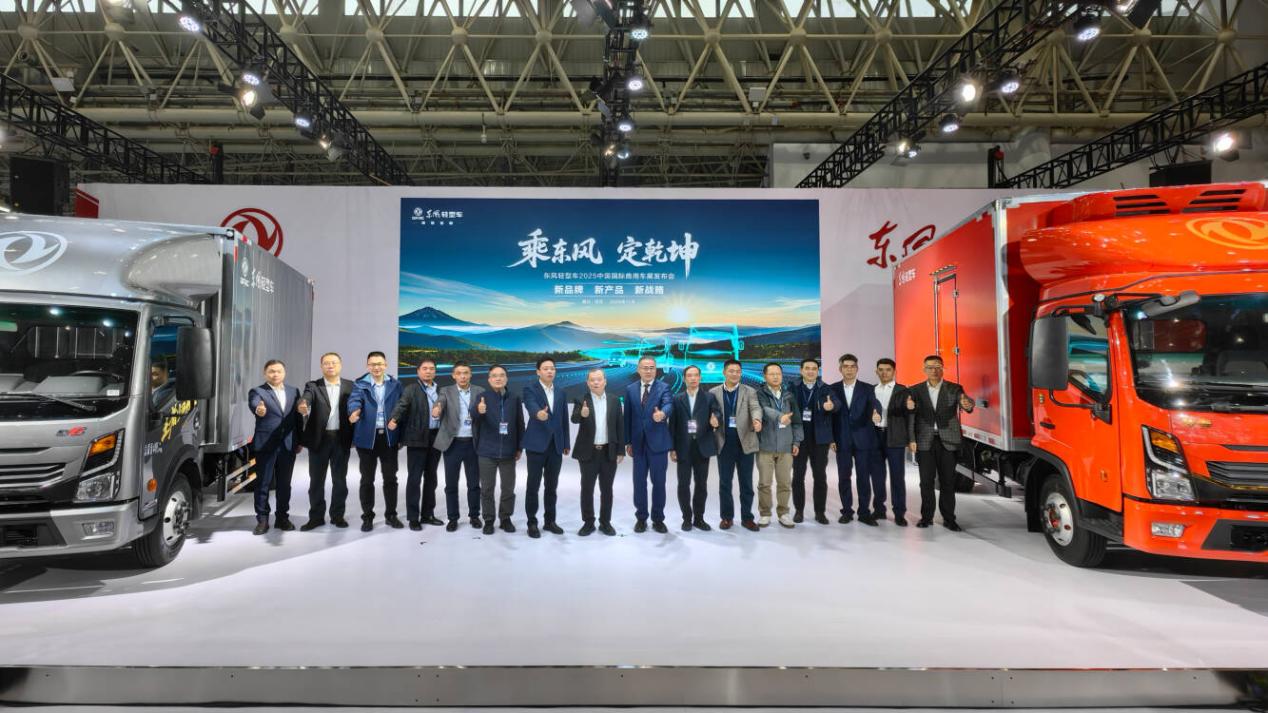
“乘东风·定乾坤” 解码东风轻型车“新质造”全链支撑
Zhong Guo Qi Che Bao Wang· 2025-11-17 08:18
Group 1 - Dongfeng Motor Corporation unveiled its high-end light truck brand "Dongfeng Qiankun" at the Wuhan International Commercial Vehicle Exhibition, showcasing two new models: Dongfeng Qiankun K6 and Dongfeng Dolika, along with a strategic blueprint indicating that the penetration rate of new energy vehicles will exceed 60% by 2030 [1][9] - The company emphasizes its commitment to innovation and competitiveness through its R&D efforts, focusing on electric, intelligent, and connected technologies, and has made significant advancements in autonomous driving, EV and PHEV commercialization, and lightweight fuel-saving technologies [4][9] - Dongfeng's R&D facilities include advanced testing labs for engines and intelligent networking, ensuring rigorous standards such as "million-kilometer reliability testing" for powertrains and comprehensive simulations for smart driving features [5][7] Group 2 - The integration of the Dongfeng Cummins D2.5/3.0 engines with the new Dongfeng Qiankun K6 model highlights the importance of seamless collaboration between engine and vehicle design to achieve optimal performance and fuel efficiency [11][14] - Dongfeng Cummins has established a smart manufacturing system that incorporates AI and robotics, enhancing production precision and efficiency while reducing delivery times through flexible production lines [13][20] - The company is responding to diverse customer demands by implementing flexible manufacturing processes, including the first automated AGV production line for light trucks, which has improved manufacturing efficiency by 15% [17][20] Group 3 - Dongfeng's strategic focus on high-quality development aims to redefine efficient transportation standards and enhance service quality, aligning with national goals for sustainable manufacturing [10][16] - The company is committed to a dual-path strategy of "zero-carbon urban distribution" and "high-efficiency diesel," addressing both policy directions and varying customer needs [9][10] - The overall vision of Dongfeng is to not only follow market trends but to actively define the future of the industry, reflecting a strong sense of responsibility and commitment to customer trust [22]

兆新股份以债转股方式获取青海锦泰股权 战略切入盐湖锂赛道
Zheng Quan Shi Bao Wang· 2025-11-13 11:46
Core Viewpoint - The company Zhaoxin Co., Ltd. (002256) is restructuring its equity in Qinghai Jintai Potash Co., Ltd. through a debt-to-equity swap, aiming to create a comprehensive development path that integrates "new energy downstream market + new energy upstream resource layout" under the national new energy strategy and "dual carbon" goals [1] Group 1: Equity Restructuring - Zhaoxin Co., Ltd. will acquire a 15% stake in Qinghai Jintai to offset a debt of 354.5 million yuan, which includes principal, penalties, and transaction costs [1] - The company previously sold a stake in the lithium carbonate sector during a peak in 2021, recovering approximately 200 million yuan, and is now increasing its stake to enhance its asset base [1] - The debt-to-equity swap is based on judicial compliance, aiming to systematically resolve Qinghai Jintai's existing debt and facilitate future operations [1] Group 2: Resource Potential - Qinghai Jintai holds 450 square kilometers of high-quality salt lake lithium resources, with lithium chloride reserves estimated at 1.6349 million tons, translating to approximately 1.1384 million tons of lithium carbonate equivalent [2] - The average lithium chloride concentration in the brine is 168.87 mg/L, which is 40.7% higher than the average of other domestic salt lakes, indicating significant economic viability for development [2] - The integrated model of "photovoltaics + energy storage + charging + lithium extraction from salt lakes" is expected to accelerate the release of this resource's potential [2] Group 3: Market Outlook - The lithium carbonate market is currently in an upward cycle, with futures prices stabilizing at 86,000 yuan per ton, reflecting a 10% increase since the beginning of the year [3] - With the growing demand from global power batteries and energy storage, prices are projected to remain between 80,000 yuan and 150,000 yuan per ton over the next two years [3] - Qinghai Jintai's planned annual production capacity of 10,000 tons of battery-grade lithium carbonate could generate annual revenues of 800 million to 1 billion yuan, enhancing the company's revenue and profit levels [3]

东风股份发布东风轻型车新品牌、新产品、新战略
Zheng Quan Ri Bao· 2025-11-10 13:10
Core Insights - Dongfeng Motor Corporation is launching a new high-end brand, Dongfeng Qiankun, under its light commercial vehicle segment, aiming to lead in high-end, green, and intelligent development in the industry [2][3][6] - The company plans to achieve a new energy penetration rate of over 60% by 2030, significantly exceeding industry standards, as part of its commitment to green development [4][5] Group 1: New Brand and Product Launch - Dongfeng Qiankun brand was officially introduced, focusing on both fuel and electric vehicles to balance efficiency and cost while advancing smart features [3][4] - The first model, Dongfeng Qiankun K6, features advanced technology to reduce cold chain transport costs, with an annual fuel cost saving of over 5,400 yuan [4] - The K6 includes a spacious cabin with innovative features like a "sleeping cabin" concept and a 10-inch smart central control screen, enhancing driver comfort [4] Group 2: Strategic Goals and Technological Advancements - Dongfeng's strategy includes focusing on niche markets such as small trucks, light trucks, and sanitation vehicles, aiming to redefine value through technology [5][6] - Key technologies include the Qiankun intelligent chassis, efficient three-electric systems, and a self-developed DEA architecture to enhance user experience and safety [5][7] - The company emphasizes the importance of green and intelligent development trends to lead the future of the light commercial vehicle industry [7]
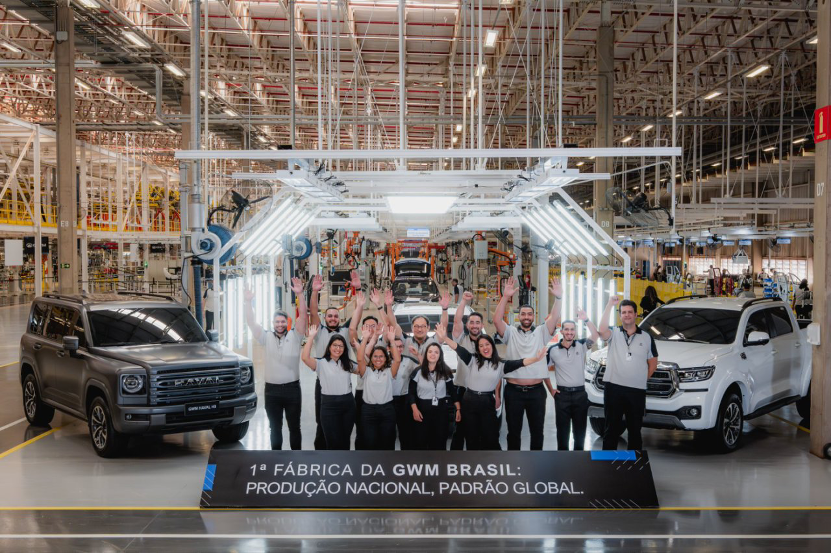
科技赋能绿色未来 长城汽车携手COP30展现全球气候治理担当
Huan Qiu Wang· 2025-11-10 09:18
Core Viewpoint - The 30th Conference of the Parties (COP30) to the United Nations Framework Convention on Climate Change will be held in Belém, Brazil, from November 10 to 21, 2025, gathering nearly 200 countries to discuss future climate actions. Great Wall Motors, as an official partner, will provide 100 new energy vehicles for transportation during the conference and showcase a green hydrogen-powered ship equipped with China's first domestically produced mobile hydrogen power generation unit, demonstrating the company's innovation in clean energy technology [1][3]. Group 1: International Recognition and Technological Diversification - COP30 aims to establish global milestones for climate action, including reducing carbon emissions and accelerating global energy transition. Great Wall Motors integrates its development with global environmental issues, showcasing its commitment to a "global perspective" [3]. - At COP30, Great Wall Motors will present its multi-technology new energy strategy, including pure electric, hybrid, and hydrogen energy technologies. The Hi4 intelligent four-wheel drive hybrid system balances performance and energy efficiency through innovative configurations [3][4]. - The company has developed a complete independent intellectual property system around the Hi4 technology, ensuring core technology is self-controlled and covering the entire industry chain from battery to motor and electronic control [3][4]. Group 2: Hydrogen Energy Development - Great Wall Motors has achieved complete independent development of core components in the hydrogen energy system and established a comprehensive layout in the core technology areas of the hydrogen energy industry chain. The company has launched high-power fuel cell systems and graphite plate stacks, with leading key technologies and performance indicators [4]. - The hydrogen energy applications include the "New Long March No. 1" hydrogen energy heavy truck and a mobile hydrogen power generation unit, demonstrating cross-domain applications of hydrogen power in logistics and maritime sectors [4]. Group 3: Globalization Strategy and Ecological Expansion - The diversified new energy approach reflects Great Wall Motors' forward-looking layout in green energy and its global strategy. The company has established research centers in multiple countries and regions, creating an integrated industrial chain model [5]. - The company has over 15 million global users, more than 1,400 overseas sales channels, and total overseas sales exceeding 2 million vehicles, indicating a shift from simple product exports to a comprehensive "ecological export" model [5]. - Great Wall Motors is building a localized industrial chain in Brazil, collaborating with local institutions for hydrogen technology testing and standard setting, aligning its strategy with national decarbonization goals [5]. Group 4: Energy Security and Zero-Carbon Goals - The company promotes the synergy between energy security and zero-carbon objectives through a full value chain layout involving photovoltaic, energy storage, hydrogen, and vehicle power. This integration supports both transportation emission reduction and the overall green transition of the energy system [6]. - The Brazilian factory is becoming a green technology hub for Latin America, integrating technological innovation into the global energy transformation process and providing sustainable solutions for the automotive industry [7].

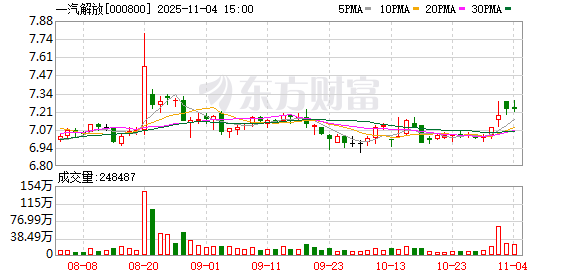
产品结构调整以及降本减费“双管齐下” 一汽解放第三季度净利润同比增超5倍
Zhong Guo Jing Ying Bao· 2025-11-04 14:56
Core Viewpoint - The third quarter performance of FAW Jiefang (000800.SZ) shows significant recovery, with substantial increases in revenue and net profit compared to previous periods [2][3]. Financial Performance - In Q3, FAW Jiefang achieved operating revenue of 15.917 billion yuan, a year-on-year increase of 77.91% and a quarter-on-quarter increase of 15.87% [2]. - The net profit attributable to shareholders reached 352 million yuan, marking a year-on-year increase of 525.14% and a quarter-on-quarter increase of 3850.76% [2]. - The gross profit margin for Q3 was 7.15%, up 2.09 percentage points from the previous quarter, while the net profit margin was 2.3%, up 2.26 percentage points [2]. Market Performance - In September, FAW Jiefang's traditional heavy-duty truck sales reached 13,700 units, capturing a market share of 25.7%, while new energy heavy-duty truck sales were 3,800 units with a market share of 17.6% [4]. - For the first three quarters of 2025, FAW Jiefang's total operating revenue was 43.996 billion yuan, with net profit of 372 million yuan, indicating that Q3 accounted for 36.18% of revenue and 94.6% of net profit for the year [3]. Strategic Developments - FAW Jiefang plans to accelerate breakthroughs in its new energy business, aiming for a significant increase in the market share of new energy products [6][8]. - The company has set ambitious goals for the next five years, including transitioning to green low-carbon energy, expanding internationally, and integrating traditional manufacturing with new energy and smart technologies [8]. Industry Context - The commercial vehicle market in China is experiencing a recovery, with significant growth in sales driven by government policies and infrastructure projects [7]. - The penetration rate of new energy vehicles in the commercial vehicle sector is expected to rise further as infrastructure improves and costs decrease [8].
鲁西南风电再落子:透视山高控股(0412.HK)的资源优势与长期价值
Ge Long Hui· 2025-11-02 06:36
Core Viewpoint - The successful grid connection of the Heze Peony 93.75MW wind power project marks a significant step in the strategic advancement of Shandong High Holdings' renewable energy initiatives, showcasing the company's commitment to deepening its presence in the green energy sector [1][2]. Group 1: Strategic Landscape and Resource Advantages - The Heze Peony wind power project is a key component of Shandong High Holdings' renewable energy strategy, highlighting the resource advantages and strategic determination of the provincial state-owned enterprise [2]. - The project utilizes 15 units of 6.25MW wind turbines, with a total installed capacity of 93.75MW, expected to generate 235 million kWh annually, saving 80,000 tons of standard coal and reducing CO2 emissions by approximately 200,000 tons [2]. - The experience gained from the Heze Peony project will benefit the subsequent launch of the 175,000 kW dispersed wind power project in Yuncheng, which adopts an innovative decentralized development model [2]. Group 2: Core Value and Growth Logic of Shandong High Holdings - Shandong High Holdings serves as the central hub for the group's renewable energy strategy, with Shandong High New Energy being the most valuable asset within this framework [3]. - As of mid-2025, Shandong High New Energy has nearly 5GW of installed renewable energy capacity, generating over 6.5 billion kWh annually and achieving a carbon reduction of over 5 million tons [3]. - The company has established a solid industrial foundation, with total assets reaching 49.5 billion yuan and a revenue of 2.4 billion yuan in the first half of 2025, reflecting stable growth [3]. Group 3: Competitive Advantage through Differentiated Business Models - Shandong High New Energy has developed a competitive edge by integrating renewable energy with data center operations, creating a comprehensive industrial ecosystem [4]. - The strategic investment in Century Internet (VNET) provides access to over 50 data centers and more than 90,000 cabinets, enhancing resource support [4]. - The 300MW integrated project in Ulanqab exemplifies a new model of collaborative development between power generation and data processing, addressing renewable energy consumption challenges [4]. Group 4: Conclusion - The successful grid connection of the Heze Peony project and the commencement of the Yuncheng project signify a milestone in Shandong High Holdings' long-term strategic layout in renewable energy [5]. - These projects reflect the company's commitment to high-quality development and its role as a core platform in the renewable energy sector, aligning with national goals for green and low-carbon energy transition [5]. - Looking ahead, Shandong High Holdings aims to deepen its integration into national energy strategies, extend its renewable energy supply chain, and enhance its value in the global energy transition [5].
突发!美参议院通过决议:终止特朗普全面关税政策!光伏储能或将迎来转折点
鑫椤储能· 2025-10-31 07:33
Core Viewpoint - The U.S. Senate has passed a resolution to terminate the comprehensive tariff policy implemented by former President Trump, which may bring changes to the U.S. renewable energy industry, although the resolution faces significant hurdles in the House of Representatives [1][10][12]. Group 1: Tariff Policy Impact - Since early 2025, the Trump administration has initiated a global tariff storm, imposing tariffs as high as 34% to 91% on Chinese goods and 25% to 40% on imports from 14 countries, severely affecting various sectors including renewable energy [4][5]. - The U.S. clean energy sector has been significantly impacted, with over 60% of pending projects losing economic viability due to compressed tax credit timelines and restrictions [5]. - In the energy storage sector, approximately 21 GWh of planned ESS battery production capacity has been canceled due to tariff uncertainties [6]. Group 2: Supply Chain and Market Adjustments - Chinese photovoltaic companies have shifted production to Southeast Asia to avoid U.S. tariffs, with these countries accounting for 77% of U.S. solar imports valued at $12.9 billion in 2023 [8]. - Following recent U.S. rulings, Chinese companies are now relocating production from Malaysia, Vietnam, and Thailand to other Southeast Asian countries like Indonesia and Laos to mitigate tariff impacts [8]. Group 3: Innovation in Business Models - U.S. renewable energy developers are adapting by innovating business models, such as including "tariff risk-sharing" clauses in power purchase agreements, as seen in a recent agreement between Ava Community Energy and EDP Renewables [9]. - Despite these adaptations, the U.S. domestic manufacturing capacity is insufficient to quickly fill the supply gap created by import restrictions [9]. Group 4: Political Dynamics and Future Uncertainty - The Senate's resolution reflects deep political divisions in the U.S. regarding trade policy, with significant obstacles expected in the House of Representatives [11][12]. - The resolution signals potential relief for the renewable energy sector, but the ultimate fate of the industry remains uncertain due to ongoing policy unpredictability and market dynamics [13].