
有效市场假说

Search documents
孙宇晨的奇幻漂流
Hu Xiu· 2025-09-28 13:58
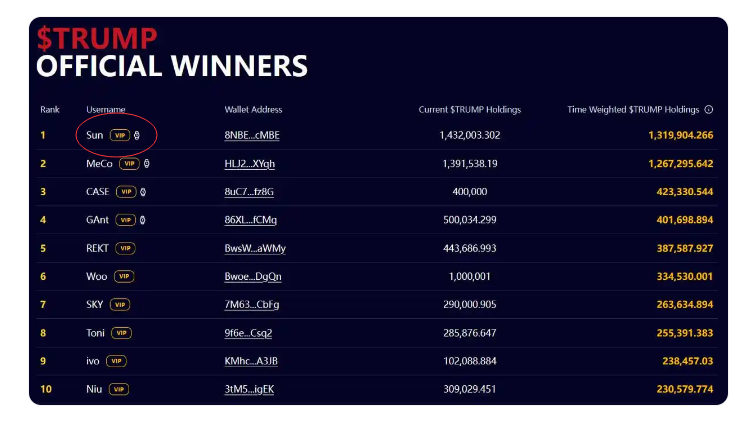
Core Points - Sun Yuchen, known for his unconventional path from winning a writing competition to becoming a major player in cryptocurrency, has invested $75 million in the Trump family-supported project World Liberty Financial (WLFI) [1] - His public image is polarizing, with supporters viewing him as a visionary entrepreneur and critics labeling him a speculator [3] - Sun's cryptocurrency narrative is characterized by evading regulation, starting with the establishment of TRON in 2017, which claims to offer a decentralized platform [4][5] Investment and Regulatory Context - TRON's fundraising occurred just days before a Chinese regulatory ban on token issuance, raising suspicions about Sun's foresight regarding regulatory changes [5] - The project faced accusations of plagiarism in its white paper, suggesting a lack of originality and transparency [5] - Sun's subsequent appointment as Grenada's ambassador to the WTO highlights a controversial shift in his career, leveraging Caribbean citizenship for political protection [6][7] Citizenship and Regulatory Evasion - Sun acquired citizenship from Saint Kitts and Nevis, known for its lax immigration policies, allowing for quick nationality acquisition [8][9] - This citizenship has been associated with facilitating money laundering, making it an attractive option for individuals seeking to evade regulatory scrutiny [9][10] - Sun's strategy involved obtaining multiple citizenships to create legal barriers against potential regulatory actions from stronger nations [12][13] Legal Challenges and Political Connections - The SEC filed a lawsuit against Sun and his companies for unregistered securities issuance and market manipulation, which he contested by claiming the actions were outside U.S. jurisdiction [18][19] - Following a significant investment in Trump-related projects, the SEC paused its civil fraud case against him, raising concerns about political influence in regulatory matters [21][22] - This situation reflects a broader trend of individuals seeking political connections to navigate legal challenges, showcasing the intersection of finance and politics [23] Broader Implications of Neoliberalism - Sun's story exemplifies the contradictions of neoliberal globalization, where market mechanisms often serve elite interests rather than the public good [25][26] - The commodification of citizenship, as seen in Caribbean nations selling citizenship, highlights the challenges to national sovereignty and regulatory frameworks [27] - Sun's narrative of decentralization in cryptocurrency is critiqued as a façade for centralization, undermining the principles of a truly decentralized economy [28][29] Conclusion - Sun Yuchen's trajectory from regulatory evasion to political maneuvering illustrates the inherent flaws in neoliberal ideologies, revealing a significant gap between the ideals of free markets and the realities of power dynamics [32][33]

这轮牛市,完全是因为资金的涌入
Hu Xiu· 2025-09-21 01:03
Group 1 - Capital Fund Management (CFM) is a prominent quantitative hedge fund based in Paris, managing approximately $20 billion in assets, making it one of the oldest and largest quantitative funds in Europe [1][9] - The founder and current chairman, Jean-Philippe Bouchaud, is a theoretical physicist who transitioned into finance after critiquing the Black-Scholes option pricing model [2][19] - Bouchaud argues that the recent bull market in the stock market is largely driven by continuous capital inflows rather than improvements in corporate earnings or economic fundamentals [3][25] Group 2 - Bouchaud's perspective is based on the "inelastic markets hypothesis," which suggests that the impact of capital inflows on market capitalization is significantly greater than traditional economic theories suggest [4][24] - Research indicates that for every $1 invested in the stock market, approximately $5 in market value is created, and this effect is long-lasting [5][23] - The hypothesis challenges the efficient market hypothesis, positing that capital flows have a much larger and more permanent impact on market dynamics than previously thought [24][25] Group 3 - Bouchaud emphasizes that this phenomenon is not limited to the U.S. market but could also affect European and global markets, raising concerns about potential consequences if capital flows reverse [6][25] - The rise of passive investment tools, such as index funds and ETFs, has led to a significant increase in capital inflows, particularly in the U.S. market, where firms like Vanguard and BlackRock manage substantial assets [5][25] - Bouchaud expresses concern that the increasing reliance on passive investment strategies may exacerbate market "inelasticity," leading to prolonged upward trends that could create bubbles [26][27]
大转折来临!要想在A股精准预测,必须学会这三招!
Sou Hu Cai Jing· 2025-09-20 01:56
Core Viewpoint - The article discusses the importance of predicting economic cycles and market trends, challenging the Efficient Market Hypothesis by presenting evidence that markets are not always perfectly efficient and can be influenced by psychological and liquidity factors [1][2][3]. Group 1: Efficient Market Hypothesis - The Efficient Market Hypothesis (EMH) suggests that all available information is reflected in asset prices, making it impossible to achieve excess returns through prediction [1][2]. - Despite the EMH's popularity, real-world actions by institutions like the Federal Reserve indicate a belief in the ability to predict economic downturns, as they monitor key indicators to adjust monetary policy [2]. Group 2: Market Behavior and Predictions - Evidence shows that stock markets are not perfectly efficient; for instance, significant price movements and trading volumes can signal impending market reversals [3]. - The Shanghai Composite Index often reflects economic changes ahead of time, typically leading by 3-6 months, indicating its role as a leading economic indicator [3][4]. Group 3: Economic Indicators and Cycles - Predicting the U.S. economy involves using leading, coincident, and lagging indicators, with a focus on leading indicators to assess recession risks [4]. - The Chinese economy presents greater prediction challenges due to its stabilized macroeconomic indicators since 2010, with the stock market serving as a crucial leading indicator influenced by monetary policy [4]. Group 4: Market Cycles - Economic cycles can be categorized into various lengths, with short cycles of approximately 3-3.5 years observed in both the U.S. and China, which can combine to form longer cycles [4][5]. - The 850-day moving average serves as a significant trend indicator in the market, providing support or resistance levels that can help assess the sustainability of current trends [5]. Group 5: Practical Implications - The book discussed provides a framework for understanding market predictions, integrating macroeconomic analysis, market cycle theory, and behavioral finance insights, tailored to the differences between U.S. and Chinese markets [5].
横看成岭侧成峰,如何定位你的投资视角!
申万宏源证券上海北京西路营业部· 2025-09-18 05:44
Core Viewpoint - The article emphasizes the importance of perspective in investment, highlighting that market truths can vary based on individual viewpoints, similar to the philosophical debate illustrated by Su Shi's poem about Mount Lu [2][3][4]. Group 1: Value vs. Trend - The article presents a debate between value investors and trend traders, where value investors argue that current stock valuations are historically high and unsustainable, while trend traders believe in following market momentum as the key to success [5][6]. - Both perspectives are valid within their contexts, but neither is the sole measure of market performance, indicating that market evaluation is complex and multifaceted [6]. Group 2: Long-term vs. Short-term Perspective - Investors are cautioned to avoid being trapped in short-term market fluctuations, which can lead to emotional decision-making. A long-term perspective allows for a more stable view of market trends and potential growth [7]. - Recognizing the long-term upward potential can help investors maintain composure amidst market volatility [7]. Group 3: Establishing Investment Perspective - Investors are encouraged to adopt a multi-faceted approach, integrating various perspectives such as value and trend, macro and micro factors, to create a comprehensive decision-making framework [8]. - Understanding the essence of profitability in the market is crucial for determining whether to align with or oppose market trends [8]. - Embracing probabilistic thinking rather than seeking absolute truths is essential for mature investment strategies, focusing on the likelihood of success rather than guaranteed outcomes [8][9]. Group 4: Cognitive Development in Investing - The article posits that investing is fundamentally a cognitive journey, requiring both critical observation and humility in recognizing one's knowledge limits [9]. - By learning to navigate the complexities of the market with a flexible mindset, investors can develop their unique investment strategies [9].

全球宏观研究经验与思考
2025-09-07 16:19
Summary of Key Points from Conference Call Records Industry or Company Involved - The discussion revolves around **global macroeconomic research** and its methodologies, focusing on investment opportunities and market dynamics. Core Insights and Arguments 1. **Top-Down Methodology**: Global macro research emphasizes a top-down approach, refining micro foundations and empirical research to identify investment opportunities from macro trends and global imbalances [1][4] 2. **Effective Research Structure**: Buyers should adopt a "pyramid" structure for effective research, combining broad knowledge across multiple fields with in-depth analysis of specific areas [5] 3. **Efficient Market Hypothesis (EMH)**: The EMH posits that market prices reflect all available information, making it difficult to achieve excess returns through predictions. However, systematic data-driven methodologies can still uncover potential opportunities [6][7] 4. **Inflation and Money Supply**: Despite broad money supply increases, inflation has not risen significantly due to a decline in money velocity. Lower interest rates reduce the opportunity cost of holding cash, further suppressing inflation [22][23] 5. **Systematic Thinking**: Analyzing macroeconomic issues requires systematic thinking, including understanding supply and demand dynamics and breaking complex problems into manageable parts [20][25] 6. **Feedback Mechanism**: Continuous feedback is crucial for improving research quality. Researchers should document their views to avoid selective memory and maintain a rigorous approach to their conclusions [28][29] Other Important but Possibly Overlooked Content 1. **Common Errors in Macro Research**: Notable errors include misjudging inflation trends and the effectiveness of complex models in predicting market behavior. Historical examples illustrate the need for caution and adaptability in methodologies [3] 2. **China's Economic Trends**: China's urbanization rate is projected to reach 62% by 2025, with comparisons drawn to Japan and South Korea's historical urbanization processes, highlighting both commonalities and unique characteristics in economic trajectories [12][13][14] 3. **Role of AI in Economic Analysis**: AI has limitations in macroeconomic data analysis due to the non-independent nature of data and high inter-variable correlation, necessitating reliance on traditional analytical methods and expert judgment [31] 4. **Qualities of a Good Researcher**: Essential qualities include curiosity, a systematic thinking framework, attention to detail, and a proactive approach to seeking feedback, which are vital for navigating complex market environments [33] This summary encapsulates the key points discussed in the conference call, providing insights into global macroeconomic research methodologies, market dynamics, and the importance of systematic and empirical approaches in investment analysis.
机构长情持仓背后,实则是暗中布局
Sou Hu Cai Jing· 2025-09-06 02:15
Group 1 - The article highlights the contrast between long-term holding strategies of certain funds and the short-term speculative behavior in the A-share market, illustrating a "race to run" mentality among investors [1][3] - Specific funds are noted for their long-term positions in stocks like Tencent and Kweichow Moutai, with some holding these positions for over 30 reporting periods, indicating a deep commitment to their investment choices [2][5] - The narrative suggests that while these funds appear passive, they are actually leveraging data-driven models to validate the predictability of their investments, particularly in companies like Moutai [5][10] Group 2 - The article emphasizes the importance of data over news in investment decisions, suggesting that successful investors build a quantifiable understanding of market dynamics rather than reacting to headlines [4][18] - An example is provided with Tongyuan Petroleum, which saw a significant price increase attributed to market conditions, but prior data signals indicated institutional activity that foreshadowed this movement [6][17] - The discussion encourages investors to develop their own data observation systems, focus on capital flows rather than news, and understand market expectations, highlighting that true investment insights often lie in overlooked quantitative signals [18]

霍华德·马克斯:价值演算
Xin Lang Cai Jing· 2025-09-02 11:57
Group 1 - The core argument is that while the U.S. stock market appears to be overvalued, it does not necessarily indicate a bubble due to the absence of extreme investor psychology associated with bubbles [2][20][24] - The memo discusses the importance of understanding the intrinsic value of assets, which is derived from their fundamentals, including current earnings, future profitability, and management capabilities [4][7][8] - The relationship between price and value is emphasized, indicating that successful investing relies on accurately assessing value and purchasing at reasonable prices [12][16][17] Group 2 - The memo highlights the recent performance of the S&P 500 index, which has seen significant fluctuations due to economic concerns and investor sentiment, particularly following tariff announcements [18][19][22] - The "Magnificent Seven" stocks, including major tech companies, have significantly influenced the S&P 500's performance, raising concerns about their high valuations compared to historical averages [21][23] - The memo warns that current market conditions, including high price-to-earnings ratios and investor optimism, may not be sustainable, suggesting a need for caution in investment strategies [25][27][29]

巴菲特的极简财富哲学:写给妻子的投资遗嘱
Sou Hu Cai Jing· 2025-08-27 12:55
Core Insights - Warren Buffett, beyond being a billionaire, symbolizes a stable investment philosophy, with Berkshire Hathaway's market value exceeding $1.16 trillion as of 2024, encompassing over 80 subsidiaries across various sectors [2] - Buffett's private letter to his wife before donating $100 billion reveals the essence of wealth management, advocating for a simple investment strategy: 10% in short-term government bonds and 90% in a low-cost S&P 500 index fund [2] Investment Strategy - The 10% allocation to short-term government bonds serves as a "risk buffer," backed by the U.S. government, providing stable cash flow during economic downturns [3] - The 90% investment in a low-cost S&P 500 index fund is a bet on "long-term compounding" and "economic growth," with a historical annualized return of 10.4% over the past 60 years [3] Cost Efficiency - Buffett's focus on "low cost" challenges the high fees associated with actively managed funds, which often charge 1%-2% annual management fees, and some hedge funds charge "2% management fee + 20% performance fee" [4] - His 2007 "bet" against top hedge funds demonstrated that high fees can erode excess returns, making low-fee index funds a better choice for ordinary investors [4] Behavioral Insights - Buffett's statement "you will do well" redefines the purpose of investing, emphasizing that the core of investment is not about becoming wealthy quickly but avoiding permanent loss [4][5] - This aligns with behavioral finance theories, where the pain of loss is significantly greater than the pleasure of gains, highlighting the importance of risk management [4] Wealth Transfer Philosophy - Buffett's approach to wealth transfer emphasizes transparency and the avoidance of "wealth curse," ensuring that children inherit enough to pursue their goals without becoming dependent on wealth [5][6] - His estate planning reflects a commitment to philanthropy, with 96% of his $30 billion estate donated to charity, leaving each child with $10 million [5] Long-Term Investment Perspective - Buffett's investment strategy focuses on long-term holdings, with core positions in companies like Apple and Coca-Cola held for over a decade, demonstrating trust in business value rather than market fluctuations [6] - His philosophy encourages investors to prioritize value assessment over complex trading techniques, advocating for a simplified approach to investing [6][7]

学海拾珠系列之二百四十六:基于图形派与基本面派的股市信息效率模型
Huaan Securities· 2025-08-20 13:05
Quantitative Models and Construction Methods 1. Model Name: Chartist-Fundamentalist Model - **Model Construction Idea**: This model integrates the behaviors of chartists and fundamentalists to explain the coexistence of constant mispricing and oscillatory mispricing in stock markets. It reconciles the views of Grossman & Stiglitz (1980) and Lo & Farmer (1999) by considering the dynamic interactions between these two types of traders and the role of market makers[4][17][20] - **Model Construction Process**: - **Market Maker's Price Adjustment**: The market maker adjusts prices based on excess demand using the equation: $$ P_{t+1} = P_{t} + \alpha(D_{t}^{C} + D_{t}^{F} + D_{t}^{R} - N) \tag{1} $$ where \( \alpha > 0 \) is the price adjustment parameter, \( D_{t}^{C} \) and \( D_{t}^{F} \) represent the demand from chartists and fundamentalists, \( D_{t}^{R} \) is non-speculative demand, and \( N \) is the total stock supply[24][26] - **Chartists' Behavior**: Chartists extrapolate past price trends into the future, formalized as: $$ D_{t}^{C} = \beta(P_{t} - P_{t-1}) \tag{3} $$ where \( \beta > 0 \) is the market reaction coefficient of chartists[27] - **Fundamentalists' Behavior**: Fundamentalists trade based on deviations from fundamental value \( F_t \), with their demand defined as: $$ D_{t}^{F} = \begin{cases} \gamma(F_{t} - P_{t}) & \text{if } P_{t} - F_{t} > h \\ 0 & \text{if } -h \leq P_{t} - F_{t} \leq h \\ \gamma(F_{t} - P_{t}) & \text{if } P_{t} - F_{t} < -h \end{cases} \tag{4} $$ where \( \gamma > 0 \) measures the market influence of fundamentalists, and \( h \) is the threshold for mispricing[27] - **Fundamental Value Dynamics**: The fundamental value follows a random walk: $$ F_{t+1} = F_{t} + \delta_{t}, \quad \delta_{t} \sim N(0, \sigma_{\delta}^2) \tag{5} $$[28] - **Price Evolution Equation**: Combining the above equations, the price evolution is expressed as: $$ P_{t+1} = \begin{cases} (1 + \alpha\beta - \alpha\gamma)P_{t} - \alpha\beta P_{t-1} + \alpha\gamma F_{t} & \text{if } P_{t} - F_{t} > h \\ (1 + \alpha\beta)P_{t} - \alpha\beta P_{t-1} & \text{if } -h \leq P_{t} - F_{t} \leq h \\ (1 + \alpha\beta - \alpha\gamma)P_{t} - \alpha\beta P_{t-1} + \alpha\gamma F_{t} & \text{if } P_{t} - F_{t} < -h \end{cases} \tag{6} $$[29] - **Model Evaluation**: The model successfully explains the coexistence of constant and oscillatory mispricing, highlighting the dynamic nature of market efficiency and the role of trader interactions[4][17][85] --- Model Backtesting Results 1. Chartist-Fundamentalist Model - **Parameter Region R1**: When both chartists' and fundamentalists' market influence are low, prices converge to a non-fundamental fixed point, resulting in constant mispricing[21][22][66] - **Parameter Region R2**: With moderate market influence, prices either converge to a non-fundamental fixed point or exhibit endogenous oscillatory dynamics[21][22][66] - **Parameter Region R3**: When fundamentalists' market influence is high, prices either converge to a non-fundamental fixed point or diverge[21][22][66] - **Parameter Region R4**: When chartists' market influence is high, prices exhibit divergent dynamics[21][22][66] - **Impact of Fundamental Shocks**: Random shocks to the fundamental value can cause transitions between fixed-point dynamics and oscillatory dynamics, with the latter becoming dominant as the parameter \( c \) increases[78][79][80]
光大理财李永锋:资管机构携手合作? 共同打造财富管理新生态
2 1 Shi Ji Jing Ji Bao Dao· 2025-08-19 05:32
Core Viewpoint - The asset management industry is experiencing significant opportunities for collaboration among various institutions to enhance wealth management services and meet customer needs [1][2]. Group 1: Industry Collaboration - The asset management sector's internal cooperation is more significant than competition, with institutions positioned differently in the wealth management ecosystem [1]. - The industry is encouraged to work together to better serve clients' asset allocation and wealth management needs, especially in the context of China's high-quality economic development [1]. Group 2: Passive Investment Trends - Passive investment is gaining momentum in China, with the domestic ETF market reaching 4.5 trillion RMB by July 2025, showing a rapid growth from 1 trillion RMB in 17 years to 2 trillion RMB in just 3 years [3]. - The penetration rate of ETFs in China is approximately 12%, compared to 32% in the U.S., indicating substantial growth potential [3]. - The characteristics of ETFs, such as low fees, high transparency, and risk diversification, make them attractive tools for wealth management institutions [3][4]. Group 3: Bond ETFs and Future Development - The domestic bond ETF market has reached 510 billion RMB, becoming a preferred asset for bank wealth management due to its natural asset allocation properties [5]. - There is a strong demand for bond ETFs from bank wealth management, and collaboration opportunities will increase if the fund industry can diversify bond ETF offerings [5]. - Four specific recommendations for the future of passive investment and ETFs include optimizing index compilation, enhancing the index product system, developing index allocation schemes, and accelerating the innovation of new products [6].