林浆纸一体化

Search documents
太阳纸业(002078):公司深度研究:深入布局林浆纸一体化,成长节奏明确可兑现
SINOLINK SECURITIES· 2026-01-28 14:46
Investment Rating - The report assigns a target price of 21.04 RMB for the company, based on a 13x PE for 2027 [5]. Core Insights - The company has effectively integrated its forestry, pulp, and paper operations, demonstrating strong profitability across industry cycles. Its core advantages stem from cost advantages through integrated operations, differentiated products, and precise market control, maintaining a leading profitability level in the industry [3][15]. - The pulp supply-demand dynamics are expected to improve, providing a moderate recovery in paper prices. Domestic pulp production is nearing its peak, and limited new overseas capacity is anticipated, which will support pulp prices and consequently paper prices [3][30]. - The company is set to achieve significant capacity growth from 2025 to 2027, with 1.7 million tons of packaging paper and 470,000 tons of cultural paper expected to come online, ensuring a high degree of certainty in future earnings growth [4][5]. Summary by Sections 1. Industry Leadership and Profitability - The company has maintained a compound annual growth rate (CAGR) of 12.20% in revenue and 12.71% in net profit from 2015 to 2024, showcasing stable growth [15]. - The company operates three major production bases, ensuring a balanced supply to both northern and southern markets, with a total pulp capacity of nearly 5 million tons and paper capacity exceeding 7 million tons [15]. 2. Pulp Supply-Demand Dynamics - The domestic pulp production capacity is projected to reach 36.05 million tons by 2025, reflecting a 67.67% increase from 2021, while the growth rate of pulp production capacity significantly outpaces that of paper production [30]. - The report anticipates that the pulp price will experience a moderate recovery due to reduced supply from international producers and increased demand from domestic paper manufacturers [30][32]. 3. Integrated Operations and Cost Advantages - The company plans to launch 1.1 million tons of self-produced pulp, enhancing its integrated operations and ensuring stable profitability in the short term [4][19]. - The company benefits from a 300 RMB/ton energy cost advantage through its self-supplied power and steam, further solidifying its competitive edge [4][19]. 4. Earnings Forecast and Valuation - Projected revenues for 2025-2027 are 471.22 billion, 473.10 billion, and 516.25 billion RMB, with corresponding net profits of 33.60 billion, 38.67 billion, and 45.24 billion RMB, indicating growth rates of 8.34%, 15.11%, and 16.97% respectively [5][9].

太阳纸业(002078):旺季提振废纸系需求,林浆纸基地战略打开成长空间
Guotou Securities· 2026-01-28 06:07
Investment Rating - The investment rating for the company is "Buy-A" with a target price of 20.54 CNY, while the current stock price is 16.37 CNY [5]. Core Insights - The report highlights that the demand for waste paper products is boosted by seasonal factors, while cultural paper faces supply and demand pressure. The company is expected to see a recovery in profitability for cultural paper after the spring semester and publishing tender season begins [1]. - The company is expanding its pulp and paper production capacity, with a focus on its three major bases in Shandong, Guangxi, and Laos, which are expected to drive sustainable growth in the long term [3][11]. - The report projects the company's revenue to grow from 425.98 billion CNY in 2025 to 480.71 billion CNY in 2027, with net profit expected to increase from 34.98 billion CNY to 43.82 billion CNY during the same period [11]. Summary by Sections Paper Products - Cultural paper prices have decreased, with double glue paper and copper plate paper averaging 5003 CNY and 4703 CNY per ton respectively in Q4 2025, down 4.01% and 8.51% quarter-on-quarter. However, price increases for white card paper and copper card paper are anticipated [1]. - Waste paper products, including boxboard and corrugated paper, saw price increases of 16.49% and 19.28% respectively in Q4 2025, driven by traditional seasonal demand [1]. Pulp Prices - Pulp prices remained stable in Q4 2025, with needle pulp averaging 703 USD per ton (down 2.41%) and broadleaf pulp at 630 USD per ton (unchanged). The company’s overseas land resources in Laos provide a unique advantage in the industry [2]. Strategic Development - The company plans to invest in its Shandong base to produce 600,000 tons of bleached chemical pulp and 700,000 tons of high-end packaging paper. The Guangxi base is also set to begin trial production for various projects in 2025 [3]. - The strategic development goals of the company are being realized through the establishment of its three major bases, which will enter a new phase of coordinated development [3].
转型迟滞难挽业绩颓势,山鹰国际2025年扣非预亏超10亿元
Sou Hu Cai Jing· 2026-01-27 05:41
Core Viewpoint - The company, Shanying International, is expected to report a net loss of 850 million to 1 billion yuan for 2025, with a non-recurring net profit loss of 1.05 billion to 1.2 billion yuan, marking the fourth consecutive year of losses in this category and a significant increase in loss amounts compared to the previous year [1][2][3]. Group 1: Financial Performance - The paper industry continues to experience a loose supply-demand balance, leading to sustained pressure on prices for key products like corrugated paper, while raw material costs remain high, further squeezing overall profitability [2][4]. - The company's projected net loss for 2025 is nearly double the 445 million yuan loss reported in 2024, with the non-recurring net profit loss reaching the worst level since 2023 [2][3]. - The decline in performance is attributed to a decrease in gross margin and reduced investment income, with the latter impacted by lower returns from joint ventures compared to the previous year [2][3]. Group 2: Debt and Market Performance - As of the end of Q3 2025, the company had 4.147 billion yuan in cash but faced significant debt pressures with short-term borrowings of 15.55 billion yuan and long-term borrowings of 6.323 billion yuan, indicating a challenging debt structure [3]. - The company's stock price has been on a downward trend since 2022, falling from around 3 yuan to approximately 1.65 yuan, with a historical low of 1.32 yuan in June 2024, nearing the delisting warning line [3][4]. Group 3: Industry Context and Competitive Position - The paper industry is undergoing structural adjustments characterized by supply-demand imbalances and high costs, with traditional paper products facing oversupply and price pressures, while high-value segments like specialty paper are growing but require significant investment [4][5]. - Competitors such as Sun Paper and Xianhe Shares have successfully integrated their supply chains and achieved high self-sufficiency in raw materials, enhancing their competitive edge and profitability [5][6]. - In contrast, Shanying International's efforts to establish its own wood fiber production have lagged behind competitors, with projects still in the planning stage and not yet contributing to actual production [6].

太阳纸业20260119
2026-01-20 03:54
Summary of the Conference Call on Sun Paper Industry Company and Industry Overview - The conference call focused on **Sun Paper Industry**, a key player in the **paper manufacturing** sector in China, discussing its competitive advantages and strategic positioning within the industry [1][3]. Key Points and Arguments Cost Advantages and Industry Positioning - The primary competitive edge in the paper industry is **cost efficiency**, with companies striving to minimize production costs [1]. - Sun Paper has established a **vertical integration** model from forestry to pulp and paper, which is crucial as the scarcity of resources increases along the supply chain [1][3]. - The **wood segment** is identified as the most challenging and scarce resource, with regulatory hurdles in China limiting private ownership of forestry land [2][3]. Strategic Overseas Expansion - Sun Paper is unique among Chinese paper companies for having established its own **forestry land** in Laos, allowing it to control its supply chain more effectively [3][4]. - The company began its investment in Laos in **2007-2008**, a time when the region was underdeveloped, which deterred other international firms from entering [6][8]. - The initial challenges included significant infrastructure development and the cultivation of trees, which delayed large-scale production until **2018** [9][10]. Production and Supply Chain Dynamics - As of **2023**, Sun Paper's self-supply rate of wood chips is only **4%**, indicating a reliance on external sources for raw materials [10][12]. - The cost of self-produced wood chips is estimated to be significantly lower than that of externally sourced chips, providing a competitive edge in production costs [12][13]. - The company plans to increase its planting area by **10,000 to 12,000 hectares annually**, potentially reaching over **80,000 hectares** by the end of **2025** [14][15]. Financial Performance and Market Outlook - Sun Paper's profitability is expected to improve as it increases its self-supply of wood chips, which will enhance its cost structure [16][17]. - The company has a **barrier profit** of approximately **400-600 RMB** per ton in the cultural paper segment, indicating a strong competitive position even in a challenging market [18][19]. - The anticipated market conditions suggest a potential recovery in paper prices, particularly in the **spring of 2024**, aligning with seasonal demand patterns [29][30]. Safety Margins and Cyclical Resilience - Sun Paper's **safety margin** is bolstered by its ability to maintain profitability even during industry downturns, with a projected market value of around **370 billion RMB** based on historical performance metrics [20][21]. - The cyclical nature of the paper industry suggests that Sun Paper is well-positioned to benefit from an eventual market upturn, supported by its operational efficiencies and strategic resource management [22][23][25]. Additional Important Insights - The call emphasized the importance of **raw material sourcing** and cost management as critical factors for future profitability [16][17]. - The potential for **vertical integration** from forestry to paper production is highlighted as a strategic advantage that could lead to enhanced market positioning [1][3]. - The discussion included insights into the broader **macroeconomic environment** affecting the paper industry, including commodity price trends and supply chain dynamics [26][27][28]. This summary encapsulates the key insights from the conference call regarding Sun Paper Industry's strategic positioning, operational efficiencies, and market outlook within the paper manufacturing sector.
中金 | 纸浆系列专题(三):一体化重构价值锚点
中金点睛· 2026-01-08 23:59
Core Viewpoint - The company continues to be optimistic about the performance of "forestry-pulp-paper integration" leaders by 2026, emphasizing that integration is key to achieving cost hedging and resource revaluation amid resource constraints and cost fluctuations. Focus should be on "value integrators" with high fiber self-sufficiency and resource barriers [2]. Industry Overview - After the paper industry bull market in 2021, profit distribution has tilted towards the pulp end, with a "long tail effect" in paper capacity clearance. The industry chain currently shows characteristics of "high concentration at the resource end and dispersed competition at the processing end," with pulp being a scarce resource commanding strong pricing power. The midstream paper sector is squeezed by high pulp prices and weak demand, leading to a continuous narrowing of profit margins [5][7]. - The strategic paradigm has shifted from capacity expansion to industry chain integration. Chinese paper companies have entered a mature phase of stock competition, where growth driven solely by capital expenditure is unsustainable. The core strategy has shifted to using self-owned fiber to hedge against volatile pulp prices, transforming leading companies from "global resource movers" to "value integrators" [5][8]. Market Dynamics - A short-term supply gap for wood chips is expected in 2026, with a potential recovery in pulp price levels. The domestic market has seen large-scale production of self-made pulp, but the construction cycle for quality wood chip resources lags behind equipment production. This is anticipated to push up cost levels as demand marginally improves [6]. - The competition landscape is characterized by heavy asset attributes and slow clearance. The investment per ton of paper exceeds 5,000 yuan, while pulp investment is over 2,000 yuan, leading to a long payback period. High depreciation necessitates maintaining high capacity utilization for cash flow, but the supply exceeds demand, and the core contradiction lies in the slow clearance efficiency at the bottom of the cycle [7]. Strategic Evolution - The industry has transitioned from a demand-driven phase to a mature phase of stock competition. Due to a lack of quality forest resources for pulp production, paper companies are in a "strong manufacturing, weak resource" decoupling state, making them vulnerable to global pulp price and exchange rate fluctuations. The strategic focus of leading companies has shifted to "forestry-pulp-paper integration," allowing them to convert unstable processing profits into certain resource premiums [8][9]. Global Comparison - Compared to emerging markets like Brazil, which are still in a dual growth phase of resources and consumption, the valuation logic of Chinese paper companies is undergoing reconstruction. Future focus will shift from capacity growth to the self-sufficiency rate of the entire industry chain. Leading companies are moving away from being "global resource movers" and are enhancing their cost control capabilities, which is crucial for maintaining stable ROE and achieving valuation recovery [9].

造纸轻工周报 2025/12/29-2026/01/03:智能眼镜首次纳入国补;关注造纸策略、京东工业、伟易达深度报告-20260108
Shenwan Hongyuan Securities· 2026-01-08 07:05
Investment Rating - The report indicates a positive investment outlook for the smart glasses and smart home sectors, as well as for the paper industry, personal care, pet products, and export-oriented companies [5][6][8]. Core Insights - The report highlights the implementation of a large-scale equipment update and a consumption upgrade policy for smart glasses and smart home products, which is expected to accelerate market penetration and benefit quality suppliers [6][7]. - The paper industry is projected to see a supply-demand improvement, with a focus on the potential impact of anti-involution policies and marginal demand changes contributing to cyclical elasticity [8][9]. - The personal care sector is recommended for bottom-fishing opportunities, with specific companies identified for their growth potential [11]. - The pet products sector is noted for its growth trajectory and global expansion, with strong recommendations for specific companies [13]. - The export market is expected to benefit from a potential U.S. interest rate cut, which may stimulate furniture consumption and enhance the competitive landscape for Chinese companies [14][15]. Summary by Sections Smart Glasses and Smart Home - The introduction of subsidies for smart glasses is expected to lower consumer costs and enhance market penetration, with major manufacturers launching new AI glasses products [6][7]. - Smart home products are also included in the subsidy program, with various categories expected to benefit from consumer incentives [7]. Paper Industry - The report outlines a new investment strategy for the paper industry, emphasizing the integration of wood pulp and paper production, with a focus on improving supply-demand dynamics [8][9]. - Specific segments such as cultural paper and boxboard are highlighted for their unique supply-demand characteristics, with recommendations for companies that exhibit strong performance in these areas [10]. Personal Care - Companies like Baiya, Dengkang Oral Care, and Zhongshun Jierou are identified as key players in the personal care sector, with strategies focused on national expansion and product upgrades [11][12]. Pet Products - The report emphasizes the growth potential in the pet products sector, recommending companies like Yiyi and Yuanfei Pet for their strong domestic and international performance [13]. Export Market - The report notes that U.S. interest rate cuts could boost furniture consumption, with a focus on companies like Xiangxin Home, Yongyi, and Jiayi for their export capabilities [14][15]. High Dividend Safety Margin Assets - The report identifies several companies in the packaging and home furnishing sectors with stable dividend yields and strong market positions, including Yongxin, Yutong Technology, and Huawang Technology [18][19][20].


造纸轻工周报:智能眼镜首次纳入国补,关注造纸策略、京东工业、伟易达深度报告-20260108
Shenwan Hongyuan Securities· 2026-01-08 06:42
Key Insights - The report highlights the implementation of a large-scale equipment update and consumer product replacement policy in 2026, focusing on smart glasses and smart home products [5][6] - The paper industry is expected to see a trend of supply-demand improvement, with a focus on the potential impact of anti-involution policies and marginal demand changes [8][10] - The personal care sector is recommended for bottom-fishing investments, with specific attention to companies like Baiya, Dengkang Oral Care, and Zhongshun Jierou [12][13] - The pet products sector is positioned for growth, with recommendations for Yiyi and Yuanfei Pet, emphasizing their global expansion and rapid development of domestic brands [14] - Export dynamics are influenced by short-term currency fluctuations and long-term expectations of US interest rate cuts boosting furniture consumption, with a focus on quality export stocks [15][16] - High dividend safety margin assets are highlighted, particularly in the packaging and home furnishing sectors, with companies like Yongxin, Yutong, and Kuka Home being noted for their stability [19][24] Industry Insights - Smart Glasses: The inclusion of smart glasses in national subsidies is expected to accelerate industry penetration, with a subsidy of 15% on products priced under 6000 yuan [6][7] - Paper Industry: The new investment strategy emphasizes integrated forest-pulp-paper operations, with a focus on cost support for paper prices and gradual supply-demand improvements [10][11] - Personal Care: Companies are focusing on product structure upgrades and national expansion, with a strong emphasis on profitability recovery [12][13] - Pet Products: The sector is experiencing robust growth, with companies like Yiyi and Yuanfei Pet capitalizing on both domestic and international markets [14] - Export Sector: The report notes a shift towards global operations for Chinese companies, with a focus on design and supply chain advantages [15][16] - Home Furnishing: The industry is expected to benefit from improved real estate policies, with a focus on high dividend companies as a safe investment [24][25]
纸业股涨幅扩大 玖龙纸业大涨超10%刷新阶段新高
Jin Rong Jie· 2026-01-07 03:55
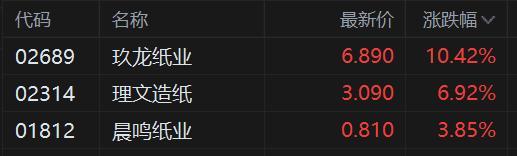
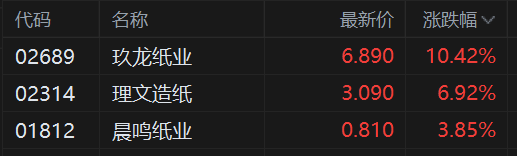
中金发布研报称,造纸产业链目前呈现"资源端高度集中,加工端分散博弈"特征,纸浆作为稀缺禀赋资 源品、掌握强定价权。当前中国纸企已步入存量博弈成熟期,单纯靠资本开支驱动的增长难以为继,战 略核心已转向利用自有纤维对冲金融属性强的浆价波动。继续看好2026年"林浆纸一体化"龙头表现,在 资源约束与成本波动下,一体化是实现成本对冲与资源重估的核心。建议聚焦具备高纤维自给率、拥有 资源壁垒的"价值整合者"。 本文源自:格隆汇 | 代码 | 名称 | 最新价 | 涨跌幅 √ | | --- | --- | --- | --- | | 02689 | 玖龙纸业 | 6.890 | 10.42% | | 02314 | 理文造纸 | 3.090 | 6.92% | | 01812 | 眉暗纸业 | 0.810 | 3.85% | 1月7日,港股纸业股涨幅进一步扩大,其中,玖龙纸业大涨超10%刷新阶段新高,理文造纸涨近7%, 晨鸣纸业涨近4%。 消息上,近期,以玖龙、山鹰、理文、荣成为代表的包装纸企业大规模停机检修,主动收缩产能;博 汇、APP、万国纸业、亚太森博等白卡纸及文化纸厂商集体宣布涨价。这种"停机+涨价"的并存的现 ...
港股异动丨纸业股涨幅扩大 玖龙纸业大涨超10%刷新阶段新高
Ge Long Hui· 2026-01-07 03:32
中金发布研报称,造纸产业链目前呈现"资源端高度集中,加工端分散博弈"特征,纸浆作为稀缺禀赋资 源品、掌握强定价权。当前中国纸企已步入存量博弈成熟期,单纯靠资本开支驱动的增长难以为继,战 略核心已转向利用自有纤维对冲金融属性强的浆价波动。继续看好2026年"林浆纸一体化"龙头表现,在 资源约束与成本波动下,一体化是实现成本对冲与资源重估的核心。建议聚焦具备高纤维自给率、拥有 资源壁垒的"价值整合者"。 | 代码 | 名称 | 最新价 涨跌幅 v | | --- | --- | --- | | 02689 | 玖龙纸业 | 6.890 10.42% | | 02314 理文造纸 | | 3.090 6.92% | | 01812 | 眉喝纸业 | 0.810 3.85% | 港股纸业股涨幅进一步扩大,其中,玖龙纸业大涨超10%刷新阶段新高,理文造纸涨近7%,晨鸣纸业 涨近4%。 消息上,近期,以玖龙、山鹰、理文、荣成为代表的包装纸企业大规模停机检修,主动收缩产能;博 汇、APP、万国纸业、亚太森博等白卡纸及文化纸厂商集体宣布涨价。这种"停机+涨价"的并存的现 象,凸显不同纸种在成本结构、供需关系和市场预期上的显著 ...
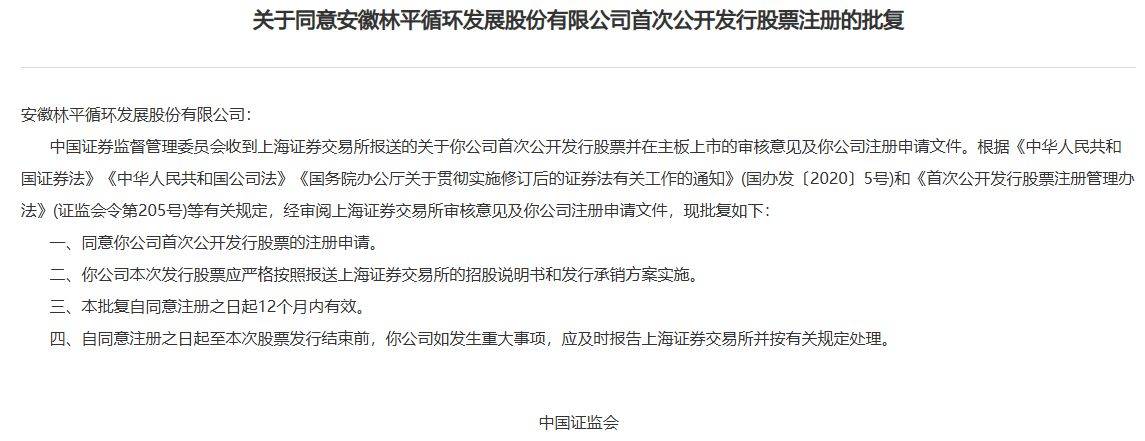
林平发展IPO获注册:于“冷热失衡”中何去何从?
Sou Hu Cai Jing· 2026-01-06 08:46
Core Viewpoint - The China corrugated paper and boxboard industry is facing significant challenges due to supply-demand imbalances and intense internal competition, leading to declining profit margins and necessitating strategic transformations towards value reconstruction [3][4][5][6]. Industry Overview - Anhui Linping Circular Development Co., Ltd. has received approval for its initial public offering (IPO) from the China Securities Regulatory Commission [1]. - The company specializes in the research, production, and sales of corrugated paper and boxboard products, positioning itself as a high-tech enterprise focused on resource recycling and green paper production [3]. Current Industry Challenges - The industry is experiencing a profound "cold-hot imbalance," with weak downstream demand causing market pressures and leading to a decline in overall profits for the first half of 2025, where corrugated paper gross margins decreased by 11.6% and boxboard gross margins fell by 4.4% [3][4]. - There is a significant supply-demand imbalance, with production capacity expanding faster than demand growth, resulting in low capacity utilization rates and price wars among producers [4]. - The industry faces long-term constraints from raw material bottlenecks, particularly due to tightening waste paper import policies, which affect the quality and quantity of domestic waste paper available for high-end product production [4]. International Competitive Landscape - China is the largest producer and consumer of corrugated paper and boxboard globally, with production capacity concentrated in the East and South regions [5]. - Major domestic paper companies have strengthened their market positions through nationwide layouts and large-scale production, while imports of high-quality paper from Europe and the U.S. have significantly decreased due to rising domestic production capabilities [5]. - The Chinese paper industry remains primarily in the "product output" phase within the global value chain, lacking pricing power and influence in high-end markets compared to North American counterparts, who are actively reducing excess capacity to enhance profitability [5]. Future Outlook - The path forward for the industry involves a strategic shift from "scale expansion" to "value reconstruction," with expectations for improved capacity utilization and product pricing as the current expansion phase concludes [6]. - Leading companies are adjusting their strategies to integrate upstream operations, focusing on controlling key raw materials to better withstand cyclical fluctuations [6]. - The industry is also moving towards green and intelligent transformations, with companies evolving from traditional paper manufacturers to comprehensive service providers for green materials, leveraging digital tools to enhance their core competitiveness [6].