概率思维

Search documents
像科学家一样思考丨书评
Xin Lang Cai Jing· 2025-12-26 21:02
Group 1 - The article emphasizes the importance of probability thinking in decision-making, particularly in investment and business contexts, as illustrated by Warren Buffett's quote about weighing potential losses against potential gains [1][3][4] - The author, Jeffrey Ma, advocates for a long-term perspective and the necessity of believing in one's strategies and models, suggesting that mathematical laws and strategies remain consistent over time despite a changing world [3][4] - The book promotes a quantitative analysis framework based on data logic, expected value calculations, and risk management to navigate uncertainty in the business world [3][4][5] Group 2 - A key principle highlighted is the identification and utilization of systematic and structural opportunities rather than focusing solely on the probability of individual events, aligning with Buffett's logic [4][5] - The author argues against the common practice of judging decisions based on outcomes, stressing that good decisions can lead to poor results and vice versa, which is a significant flaw in reasoning [4][5][6] - The text underscores the necessity for decision-makers to maintain a disciplined approach to their strategies, especially under pressure, and to rely on data-driven intuition rather than traditional instinct [5][6]


全网收听超6万,这期干货满满的配置话题访谈,说了什么?
中泰证券资管· 2025-11-14 07:02
Core Viewpoint - The podcast episode titled "When the Big Cycle Fails, Where is the New Macro Coordinate?" hosted by fund manager Tang Jun from Zhongtai Asset Management has gained significant attention, with over 60,000 listeners in a week, indicating a strong interest among investors in learning about macroeconomic frameworks and investment strategies [2][5]. Group 1: Framework Construction - The background and reasons for the effectiveness and ineffectiveness of the Merrill Clock are discussed [5]. - The "Credit-Money" framework is introduced, explaining how to describe the current macroeconomic state based on this framework [5]. - The current macroeconomic state leads to specific asset allocation conclusions [5]. Group 2: Allocation and Portfolio Construction - The distinction between active and passive allocation is made, highlighting the problems that active allocation can solve [9]. - Preparations required for engaging in active allocation are outlined [9]. - The role of FOF (Fund of Funds) in addressing specific issues is examined [9]. - The execution of strategic and tactical layers in investment is discussed [9]. Group 3: Reflections on Human Nature - The importance of understanding human behavior in the context of investment allocation is emphasized, inviting listeners to engage in a professional and rigorous intellectual exchange [6]. Group 4: Risk and Return Concepts - The concept of risk budgeting and how to construct a portfolio within a given risk budget is explained [9]. - The notion of return streams and which assets can represent different return streams is analyzed, drawing lessons from Bridgewater's practices [9]. - The significance of having a framework in investment decision-making is highlighted [9]. - The meaning of logic in investment and the application of probabilistic thinking in market timing are discussed [9].

【笔记20250923— 股债双杀】
债券笔记· 2025-09-23 15:46
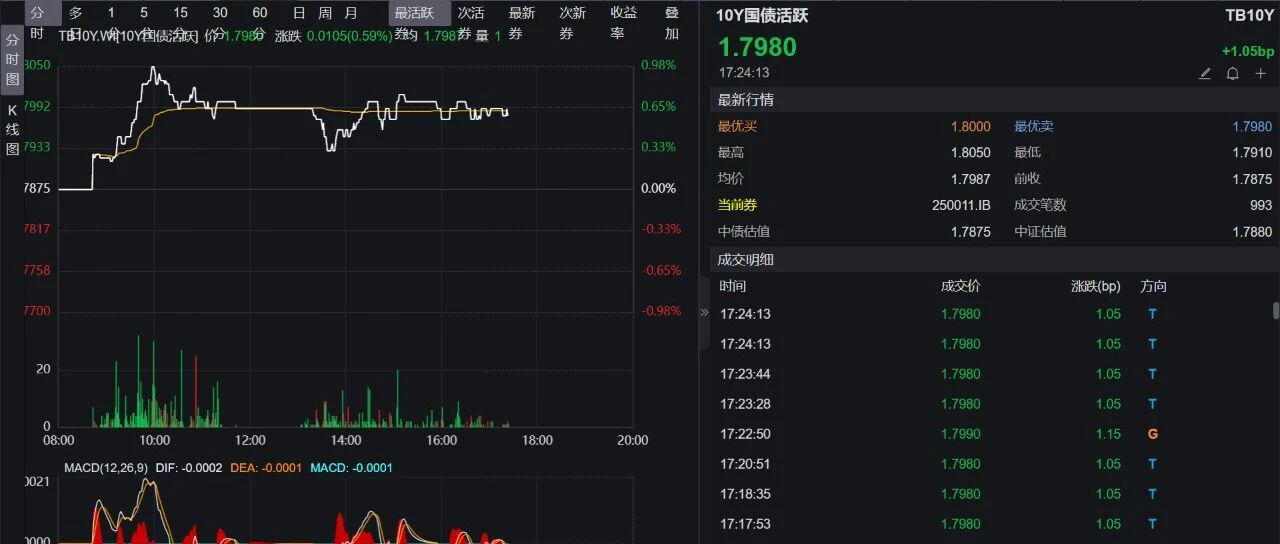
Core Viewpoint - The article emphasizes the importance of adopting a probabilistic mindset in investing, suggesting that every investment should be viewed as an opportunity for trial and error, rather than a guaranteed success [1]. Group 1: Market Overview - The financial market is currently experiencing a balanced and slightly loose liquidity environment, with the central bank conducting a 7-day reverse repurchase operation of 276.1 billion yuan, while 287 billion yuan of reverse repos are maturing, resulting in a net withdrawal of 10.9 billion yuan [3]. - The interbank funding rates have shown slight declines, with DR001 around 1.41% and DR007 at approximately 1.48% [3]. Group 2: Bond Market Dynamics - Concerns have been raised regarding public fund sales expenses, which have impacted market sentiment, leading to cautious trading in the bond market. The 10-year government bond yield opened at 1.7925% and rose to around 1.7975% [5]. - The bond market saw fluctuations, with the yield on 10-year government bonds reaching a low of 1.793% before rebounding to approximately 1.798% in the afternoon session [5]. Group 3: Interest Rate Trends - The weighted rates for various repurchase agreements indicate a slight increase, with R001 at 1.46% and R007 at 1.52%, reflecting a minor upward trend in interest rates [4]. - The yield on long-term government bonds has also shown an upward trajectory, with the 10-year bond yield at 1.7980%, marking an increase of 9.93 basis points [7].
横看成岭侧成峰,如何定位你的投资视角!
申万宏源证券上海北京西路营业部· 2025-09-18 05:44
Core Viewpoint - The article emphasizes the importance of perspective in investment, highlighting that market truths can vary based on individual viewpoints, similar to the philosophical debate illustrated by Su Shi's poem about Mount Lu [2][3][4]. Group 1: Value vs. Trend - The article presents a debate between value investors and trend traders, where value investors argue that current stock valuations are historically high and unsustainable, while trend traders believe in following market momentum as the key to success [5][6]. - Both perspectives are valid within their contexts, but neither is the sole measure of market performance, indicating that market evaluation is complex and multifaceted [6]. Group 2: Long-term vs. Short-term Perspective - Investors are cautioned to avoid being trapped in short-term market fluctuations, which can lead to emotional decision-making. A long-term perspective allows for a more stable view of market trends and potential growth [7]. - Recognizing the long-term upward potential can help investors maintain composure amidst market volatility [7]. Group 3: Establishing Investment Perspective - Investors are encouraged to adopt a multi-faceted approach, integrating various perspectives such as value and trend, macro and micro factors, to create a comprehensive decision-making framework [8]. - Understanding the essence of profitability in the market is crucial for determining whether to align with or oppose market trends [8]. - Embracing probabilistic thinking rather than seeking absolute truths is essential for mature investment strategies, focusing on the likelihood of success rather than guaranteed outcomes [8][9]. Group 4: Cognitive Development in Investing - The article posits that investing is fundamentally a cognitive journey, requiring both critical observation and humility in recognizing one's knowledge limits [9]. - By learning to navigate the complexities of the market with a flexible mindset, investors can develop their unique investment strategies [9].

国投瑞银新丝路(161224):框架赋能研究深度,坚守助力稳健增值
Changjiang Securities· 2025-09-17 08:42
- The report primarily focuses on the investment philosophy and performance of the Guotou Ruiyin New Silk Road Fund, emphasizing its adherence to "independent thinking, probabilistic reasoning, contrarian courage, and forward-looking vision" to identify undervalued high-quality stocks and achieve stable long-term excess returns[3][7][36] - The fund's investment framework includes diversified asset allocation, with a long-term equity allocation exceeding 93%, and a relatively moderate stock concentration, with the top 10 holdings accounting for approximately 58.25% of total stock assets as of Q2 2025[8][40][43] - The fund demonstrates a stable investment style, with its performance primarily driven by sector and stock selection. From Q1 2024 to Q2 2025, it exhibited consistent positive exposure to small-cap, high-ROE, and high-beta factors, while showing negative exposure to micro-cap stocks[70][73][74] - The fund's turnover rate remains significantly lower than the median of its peers, indicating a preference for medium- to long-term holding strategies. As of H1 2025, the turnover rate was approximately 68.94%, well below the peer median of 189.44%[60][62][64] - The fund achieved an annualized return of 9.08% from April 13, 2015, to August 29, 2025, with an annualized excess return of 7.76% relative to its benchmark. It also outperformed major indices such as the CSI 300, CSI 500, and CSI 800 during the same period[24][26][28] - Weekly excess return analysis from August 29, 2023, to August 29, 2025, shows an overall win rate of approximately 53.92%, with a higher win rate of 69.23% during market uptrends and 38.00% during downtrends[75][78][80]
他同时参与创办OpenAI/DeepMind,还写了哈利波特同人小说
量子位· 2025-09-13 08:06
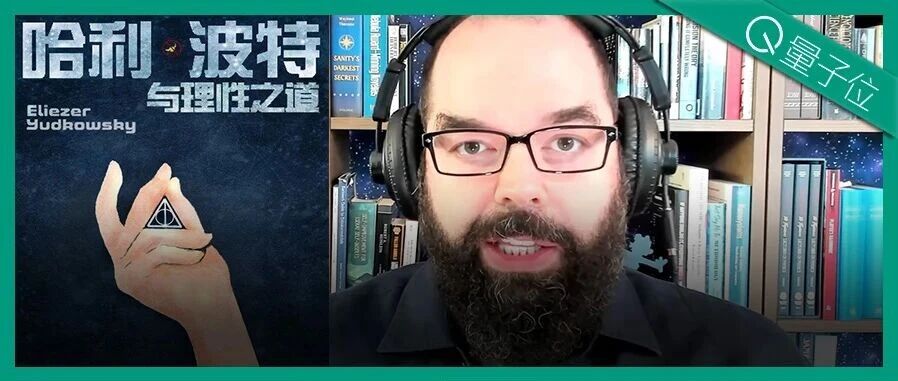
Core Viewpoint - Eliezer Yudkowsky argues that there is a 99.5% chance that artificial intelligence could lead to human extinction, emphasizing the urgent need to halt the development of superintelligent AI to safeguard humanity's future [1][2][8]. Group 1: Yudkowsky's Background and Influence - Yudkowsky is a prominent figure in Silicon Valley, known for co-founding OpenAI and Google DeepMind, and has a polarizing reputation [5][10]. - He dropped out of school in the eighth grade and self-educated in computer science, becoming deeply interested in the concept of the "singularity," where AI surpasses human intelligence [12][13]. - His extreme views on AI risks have garnered attention from major tech leaders, including Musk and Altman, who have cited his ideas publicly [19][20]. Group 2: AI Safety Concerns - Yudkowsky identifies three main reasons why creating friendly AI is challenging: intelligence does not equate to benevolence, powerful goal-oriented AI may adopt harmful methods, and rapid advancements in AI capabilities could lead to uncontrollable superintelligence [14][15][16]. - He has established the MIRI research institute to study advanced AI risks and has been one of the earliest voices warning about AI dangers in Silicon Valley [18][19]. Group 3: Predictions and Warnings - Yudkowsky believes that many tech companies, including OpenAI, are not fully aware of the internal workings of their AI models, which could lead to a loss of human control over these systems [30][31]. - He asserts that the current stage of AI development warrants immediate alarm, suggesting that all companies pursuing superintelligent AI should be shut down, including OpenAI and Anthropic [32]. - Over time, he has shifted from predicting when superintelligent AI will emerge to emphasizing the inevitability of its consequences, likening it to predicting when an ice cube will melt in hot water [33][34][35].
7条越早知道越好的道理
3 6 Ke· 2025-08-21 23:18
Group 1 - The core idea emphasizes that everything is about probability, and the focus should be on changing probabilities rather than controlling outcomes [2][3] - It is suggested that individuals should recognize that they can only control a small portion of the factors affecting outcomes, and thus should adopt a probabilistic mindset [2][3] - The article highlights the importance of taking action to increase the likelihood of positive outcomes, rather than waiting for opportunities to come [4][5] Group 2 - The text discusses the "paradox of happiness," where an excessive focus on results can lead to disappointment and decreased happiness [6][7] - It encourages individuals to focus on the process and the experiences gained from actions rather than fixating on the end results [7] - The article suggests that taking action should be the default option, especially when faced with indecision or overthinking [10][11][12] Group 3 - It is noted that perfectionism can hinder progress, and individuals should aim to do important tasks well rather than striving for perfection in everything [13][14] - The text emphasizes the need to identify the most important tasks and prioritize them, allowing for a more balanced approach to work and life [13][14] - The article encourages a mindset shift to view challenges as opportunities for growth rather than insurmountable obstacles [16][19] Group 4 - The article posits that pursuing joy and interest can be more valuable than solely focusing on utility, suggesting that happiness is a significant outcome [20][21] - It encourages individuals to allocate time to explore new interests and activities that bring joy, without worrying about the return on investment [20][21] - The overall message is that life should be about enjoying the journey rather than just reaching the destination [21]
光大保德信基金王卫林: A股估值处相对低位 中证A500配置正当时
Zhong Guo Zheng Quan Bao· 2025-07-06 20:18
Group 1 - The passive investment trend in the public fund market is gaining momentum, with the launch of the Everbright Prudential CSI A500 Index Fund, managed by Wang Weilin [1] - Wang Weilin believes that the A-share market is currently undervalued compared to global equity markets, and anticipates a significant turning point in corporate performance in the second half of the year [1] - The CSI A500 Index is expected to have stronger upward momentum in the latter half of the year as a benchmark index for quality core assets [1] Group 2 - Wang Weilin has a strong background in quantitative investment, having developed a comprehensive quantitative investment management system over nearly a decade [2] - His system supports the management of various products and has shown strong performance, with the Everbright Jin Hong fund ranking among the top in its category over the past one and two years [2] - Wang emphasizes the importance of understanding the strengths and weaknesses of his models, which enhances the stability and adaptability of his investment strategies [2] Group 3 - Wang Weilin advocates for a "quantitative + active" investment structure, where quantitative models provide stable excess returns under normal conditions, while active management is employed during market volatility [3] - He believes in maintaining a respectful attitude towards the market and establishing an investment system that aligns with one's personality [3] Group 4 - Wang Weilin employs both probabilistic and grid thinking in his investment approach, utilizing statistical analysis to identify investment patterns while also integrating multi-disciplinary knowledge [4][6] - He believes that combining quantitative investment with grid thinking enhances decision-making accuracy [5] Group 5 - The CSI A500 Index, launched last year, is gaining attention as a "Chinese version of the S&P 500," with a unique compilation method that incorporates ESG ratings [7] - The index is expected to attract global investors as it excludes companies with low ESG ratings, aligning with the growing trend of ESG investment [7] - The inclusion of stocks eligible for the Shanghai and Shenzhen Stock Connect enhances the index's liquidity and market appeal [7] Group 6 - The CSI A500 Index features a balanced industry distribution, covering all secondary and 91 tertiary industries, with a focus on high-end manufacturing and technology growth sectors [8]
【笔记20250610— CCTV-6:《纽约我爱你》VS《情况不妙》】
债券笔记· 2025-06-10 11:51
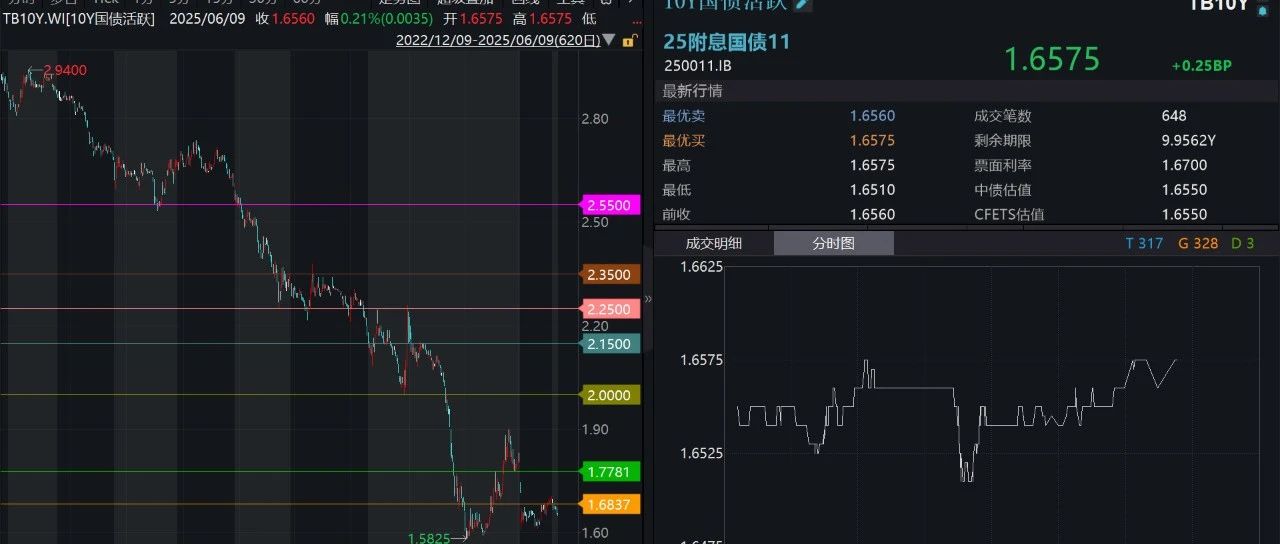
Core Viewpoint - The article emphasizes the importance of probability thinking in investment, suggesting that investors should prepare for potential losses before entering a position [1]. Group 1: Market Conditions - The central bank conducted a 198.6 billion yuan reverse repurchase operation, with 454.5 billion yuan maturing today, resulting in a net withdrawal of 255.9 billion yuan [1]. - The funding environment remains balanced and loose, with the DR001 rate around 1.36% and DR007 at approximately 1.51% [1]. - The bond market showed mixed movements, with the 10-year government bond yield opening at 1.655% and fluctuating throughout the day [3]. Group 2: Economic Events - The China-US economic and trade talks have moved from Geneva to London, focusing on rare earths and export controls [3]. - The stock market experienced a sharp decline in the afternoon, attributed to ongoing trade negotiations and a loose funding environment [2][3]. Group 3: Market Sentiment - There are two prevailing sentiments among bond investors: the "lying flat" camp, which believes in buying due to low rates and weak data, and the "speculative" camp, which anticipates surprises from negotiations and prefers to sell [4]. - The afternoon stock market drop was humorously linked to the airing of a specific film on CCTV-6, suggesting a superstitious interpretation of market movements [5].
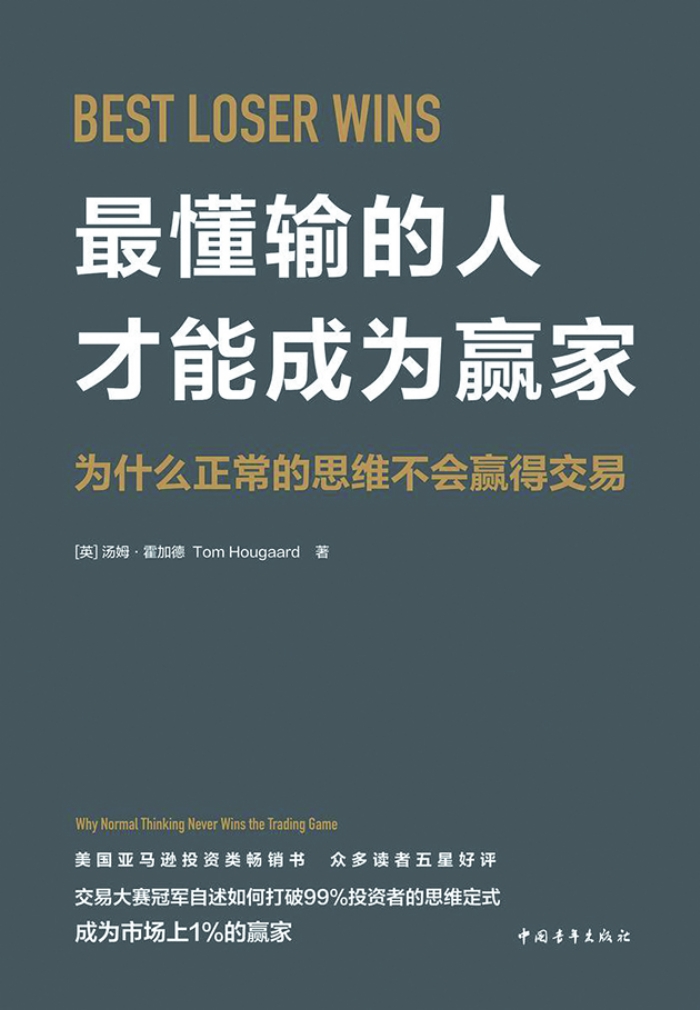
知输而赢:交易迷局中的智慧博弈——读《最懂输的人才能成为赢家》
Shang Hai Zheng Quan Bao· 2025-05-18 18:08
Core Insights - The book "The Most Understanding Loser Becomes the Winner" by Tom Hogard emphasizes that true victory in trading comes from understanding and accepting failure, rather than merely seeking success [5][6][11]. Group 1: Trading Philosophy - Hogard's unique trading philosophy revolves around the idea that the real winners in the financial arena are those who can gracefully accept defeat and extract wisdom from setbacks [6][11]. - He introduces the concept of "loser's wisdom," suggesting that traders should focus on risk management rather than perfect predictions, which often lead to disastrous outcomes [8][9]. Group 2: Risk Management - Hogard's risk management approach is highlighted by his ability to maintain a high risk exposure, often at $3,500 per point, compared to the average trader's $10, demonstrating a profound understanding of market dynamics [8]. - He proposes a "stop-loss wrapping" method, dividing daily stop-loss limits into several "packages," which emphasizes that stop-loss is not a sign of failure but an essential part of trading [10]. Group 3: Psychological Insights - The book discusses the importance of psychological resilience in trading, advocating for a training method that involves deliberately making "wrong" trades to build mental fortitude against failure [9][10]. - Hogard's emotional quantification system assigns numerical values to emotions like fear and greed, helping traders manage their psychological capital effectively [18][19]. Group 4: Market Dynamics - Hogard's insights into market behavior suggest that traditional trading psychology often overlooks the need for cognitive restructuring, which is crucial for navigating the complexities of trading [12][15]. - He emphasizes the significance of understanding market volatility and developing a "volatility symbiosis" strategy that turns market uncertainty into profit opportunities [14][20]. Group 5: Limitations and Practicality - The methodology presented by Hogard may face challenges in emerging markets or during systemic risks, as evidenced by studies showing lower success rates in less mature markets [21][22]. - The high demands of Hogard's approach, including rigorous record-keeping and self-reflection, may be difficult for many retail traders to maintain consistently [22].