火星移民

Search documents
炸裂中前行的SpaceX,马斯克豪赌的人类生存B计划 。
Sou Hu Cai Jing· 2025-09-29 01:51
Core Insights - SpaceX aims to facilitate human colonization of Mars, despite facing numerous challenges and setbacks in its development journey [1][6] - The company is projected to generate $15.5 billion in revenue this year, with significant investments in the Starship program nearing $5 billion [1][14] - The recent successful test flight of Starship marks a turning point after a series of failures, demonstrating its capability to launch multiple payloads [8][12] Company Overview - SpaceX, founded by Elon Musk, is a private aerospace manufacturer and space transportation company [3] - The Starship is a next-generation rocket designed for reusability, standing 123 meters tall and weighing approximately 5,000 tons, equipped with 39 Raptor engines [3] - Starlink is SpaceX's satellite network aimed at providing high-speed internet services globally [3] Recent Developments - The recent successful test flight involved the ignition of all 33 engines, leading to a smooth ascent and successful separation of the first and second stages [8] - The Starship has demonstrated the ability to launch Starlink satellites, with the potential to deploy dozens or even hundreds in a single mission [8][12] - A significant partnership with the Italian Space Agency has been established to send scientific equipment to Mars, supporting future exploration efforts [14][15] Financial Performance - SpaceX's expected revenue for the year is approximately $15.5 billion, a notable increase from the previous year's forecast of $11 to $13 billion [14] - The company's commercial space revenue is anticipated to surpass the annual budget of NASA for the first time [14] - SpaceX has secured a $13.5 billion contract from the U.S. Space Force, with $5.9 billion allocated for 28 missions [18]

古埃及消亡警示录:文明不死于他杀,而死于“惰性”?
Hu Xiu· 2025-09-18 23:33
Group 1: Decline of Ancient Civilizations - The decline of Ancient Egypt was primarily due to resource misallocation, social infighting, collapse of belief systems, innovation stagnation, and external shocks [3][6][10] - Under the centralized power of the Pharaohs, significant resources were directed towards monumental religious projects rather than improving productivity and public welfare [5][6] - The over-reliance on the Nile River's natural bounty led to agricultural stagnation, which was exacerbated by climate changes that caused droughts and famines starting from the 13th century BC [6][7] Group 2: Cultural and Religious Shifts - The introduction of monotheism by Akhenaten in the 14th century BC caused significant social division and weakened traditional religious authority, leading to a collapse of the existing governance structure [9] - The arrival of Christianity further eroded ancient Egyptian religious practices, culminating in the abandonment of hieroglyphics by the end of the 4th century [9] Group 3: Innovation and External Pressures - Ancient Egypt's failure to transition from bronze to iron technology left it vulnerable to emerging powers like Assyria and Persia, resulting in military disadvantages [10][11] - From the 12th century BC onwards, a series of invasions by various groups led to the loss of Egyptian sovereignty, marking the end of its self-rule [11] Group 4: The Concept of "Civilization Offshore" Mechanism - The decline of a central civilization often leads to the emergence of new vitality in its peripheries, a phenomenon termed the "civilization offshore" mechanism [12] - Historical examples include Greece's development from Egyptian influence, which led to a distinct path of rational thought and democracy, diverging from Egyptian theocratic governance [13][14] Group 5: Modern Implications and Future Prospects - The concept of "offshore" civilizations is relevant today, as seen in discussions about colonizing Mars as a new frontier for human civilization [23][24] - The integration of AI in space exploration is posited as a means to facilitate human expansion beyond Earth, potentially revitalizing human civilization [25][30] - The historical pattern suggests that civilizations must seek new frontiers to avoid stagnation, with Mars being viewed as a potential new beginning for humanity [32]
马斯克最新访谈:星链手机2年后上市,25年内实现火星移民
36氪· 2025-09-11 10:01
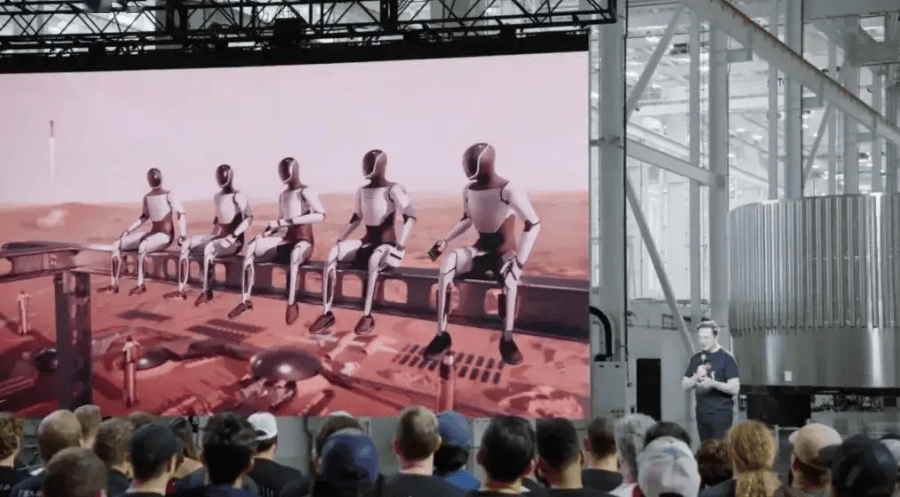
Core Viewpoint - Elon Musk believes that only AI and robots can "save the country" and addresses various technological advancements and future plans for his companies, including Tesla, SpaceX, and xAI [4][6]. Group 1: Robotics and AI Development - The Optimus 3 humanoid robot is expected to have human-like dexterity, with a projected cost of around $20,000 (approximately 142,400 RMB) per unit, which Musk claims will be a historically significant product [6][9]. - The main challenge in developing the Optimus robot lies in hardware design, particularly in creating complex hand and forearm mechanisms [6][18]. - Musk emphasizes that the next-generation Tesla AI chip, AI5, will achieve a 40-fold performance leap compared to AI4, with software updates expected to give Tesla vehicles a sense of "awareness" by the end of the year [27][31]. Group 2: Starlink and Telecommunications - Musk's recent acquisition of communication frequencies for $17 billion aims to enable direct connections between Starlink and mobile phones, with a Starlink phone expected to launch in two years [6][33]. - The goal is to provide high-bandwidth connectivity globally, potentially reducing reliance on traditional telecom operators like Verizon [33][36]. Group 3: Space Exploration and Mars Colonization - SpaceX's third-generation Starship is designed to carry over 100 tons and aims for complete reusability, with plans to achieve this by next year [37][39]. - Musk envisions that within 25 years, humans could establish a self-sustaining colony on Mars, reducing dependence on Earth for supplies [48][52].

马斯克最新访谈:星链手机2年后上市,25年内实现火星移民
3 6 Ke· 2025-09-10 11:23
Group 1 - Elon Musk discussed the development plans for Tesla, SpaceX, xAI, and Starlink, emphasizing the significance of AI and robotics in addressing governmental inefficiencies [2][5] - The Optimus 3 humanoid robot is expected to have human-like dexterity, with a projected cost of approximately $20,000 per unit, which Musk believes will be a historically impactful product [2][10] - Tesla's next-generation AI5 chip is anticipated to achieve a 40-fold performance improvement over the AI4 chip, with software updates expected to give Tesla vehicles a sense of "awareness" by the end of the year [2][18] Group 2 - Musk's recent acquisition of communication frequencies from Echo Star for $17 billion aims to facilitate the launch of a "Starlink phone" that can connect directly to Starlink satellites, with a potential market introduction in two years [3][19] - The third-generation Starship is projected to have a payload capacity exceeding 100 tons and aims for full reusability by next year, with the main challenge being the development of a stable heat shield [3][22][25] - Musk revealed that Grok is being developed to rewrite Wikipedia by eliminating false information and filling in missing content, with the possibility of creating a public "Grok Encyclopedia" [3][26][27] Group 3 - Musk expressed concerns about declining birth rates in the West, equating it to a form of self-destruction, and emphasized the need for optimism about the future to encourage higher birth rates [28][29] - Musk believes that human curiosity about the universe is essential for civilization's progress, and he envisions that humans could achieve self-sustaining colonies on Mars within 25 years [30][34][35]
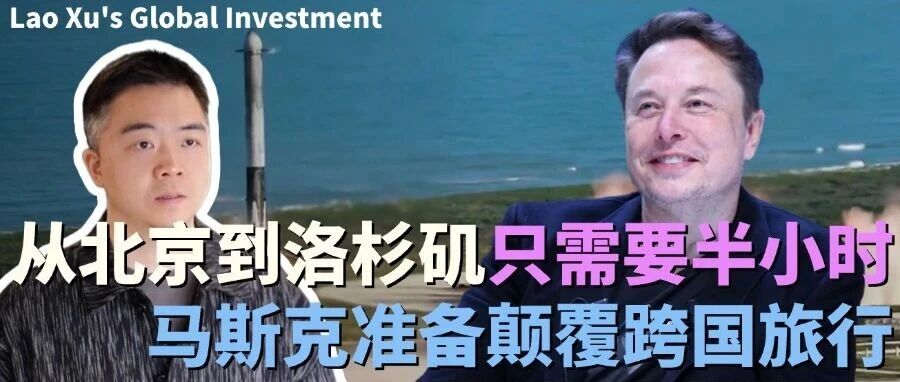
星舰第10次试飞后,马斯克宣称:未来从北京到洛杉矶只需半小时,他要颠覆跨国旅行
老徐抓AI趋势· 2025-09-06 14:32
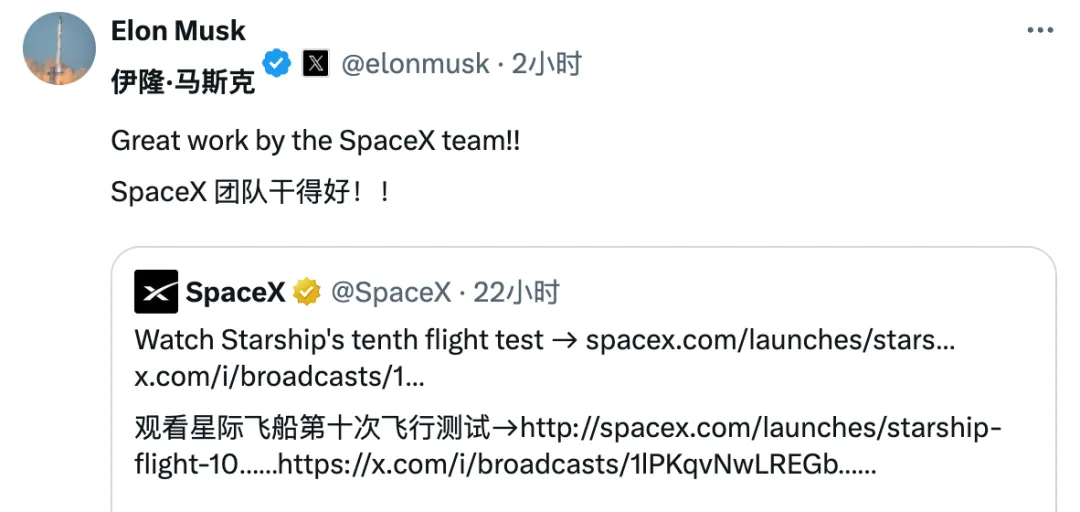
Core Viewpoint - The successful 10th test flight of SpaceX's Starship marks a significant milestone in human space exploration, bringing humanity closer to the "Age of Space Exploration" [2][4]. Summary by Sections Test Flight Overview - The Starship completed all four major test objectives during its flight, showcasing its capabilities for future space missions [4]. - The flight included critical milestones such as ignition, separation from the booster, satellite deployment, and re-entry tests [6][8]. Four Major Test Objectives 1. **Ignition and Launch** - All 33 Raptor engines ignited successfully, and the vehicle lifted off from the launch pad [8]. - The vehicle surpassed maximum aerodynamic pressure (MaxQ) at 1 minute and 6 seconds into the flight [9]. 2. **Booster Recovery Pressure Test** - The booster was designed to rely on three engines for controlled descent. A test was conducted to see if it could still land safely if one engine failed [10]. - The test was successful, demonstrating that the remaining engines could compensate for a failure [10]. 3. **Simulated Starlink Satellite Deployment** - The Starship successfully deployed eight simulated satellites, indicating its potential for efficient mass satellite launches [12]. - The Starship can deploy up to 400 satellites in a single launch, significantly enhancing deployment efficiency compared to the Falcon 9 [12]. 4. **In-Orbit Ignition Test** - The Starship performed an in-orbit ignition, a crucial capability for future maneuvers and refueling in space [14]. 5. **Heat Shield Pressure Test** - The team intentionally removed some heat shield tiles to test the vehicle's integrity during re-entry. Despite some damage, the Starship maintained control and landed safely [16]. Strategic Insights from Musk's Interview 1. **Why Mars?** - Musk emphasizes the necessity for humanity to become a multi-planetary species to avoid extinction due to potential global catastrophes [19]. - Mars is seen as the first step towards this goal, providing a long-term vision for human exploration [19]. 2. **Why Starship and the "Chopstick" Rocket Recovery?** - Musk aims to establish a self-sustaining city on Mars, requiring the transport of 100 million tons of materials, which necessitates a more efficient launch system [21]. - The "chopstick" recovery system is designed to enable rapid reusability of rockets, allowing for a high launch frequency [21]. 3. **What is Needed for Mars?** - Two main challenges remain: the durability of heat shield tiles and the development of in-orbit refueling capabilities [22]. - SpaceX plans to conduct in-orbit refueling tests in the near future to address these challenges [22]. 4. **Half-Hour Global Travel: A Closer Future** - Musk envisions a future where travel times between major cities are drastically reduced, with Starship capable of flying at speeds 30 times that of conventional aircraft [23][24]. - This could revolutionize global travel and commerce, making it more efficient and accessible [24]. Business Logic - Musk's dual focus on ambitious goals (Mars colonization) and practical revenue streams (Starlink and commercial travel) creates a sustainable business model for SpaceX [25]. - This approach ensures that SpaceX can operate independently of government funding, positioning it as a self-sustaining enterprise [25].
飞一次1亿美元,40分钟全球达,马斯克豪赌人类生存B计划
Sou Hu Cai Jing· 2025-08-29 04:30
Core Viewpoint - SpaceX, founded by Elon Musk, aims to enable human colonization of Mars, despite facing numerous challenges and setbacks in its Starship program, which has seen significant financial investment and operational hurdles [1][6][12]. Group 1: Financial Performance - SpaceX is projected to generate approximately $15.5 billion in revenue this year, a notable increase compared to previous estimates of $11 billion to $13 billion [14]. - The total investment in the Starship project, including nine test flights, has approached $5 billion, with each launch costing around $100 million [1]. Group 2: Starship Development - The Starship is a next-generation rocket designed for reusability, standing 123 meters tall, with a diameter of about 9 meters and a weight of approximately 5,000 tons, powered by 39 Raptor engines [3]. - The recent successful tenth flight of the Starship marked a significant turnaround after a series of failures, demonstrating its capability to launch Starlink satellites and perform engine relight tests in space [8][12]. Group 3: Strategic Partnerships and Contracts - SpaceX has secured a groundbreaking partnership with the Italian Space Agency to send scientific equipment to Mars, which will collect data during the six-month journey to support future exploration [14]. - The company has won a $13.5 billion rocket launch contract from the U.S. Space Force, with SpaceX responsible for 28 missions valued at $5.9 billion [17].
马斯克星舰终结“四连炸”,未来有望40分钟全球直达?
Hu Xiu· 2025-08-27 04:24
Core Viewpoint - SpaceX's Starship successfully completed its tenth test flight after a series of failures, demonstrating significant advancements in its design and capabilities, and moving closer to achieving rapid, reusable space travel [2][25][43]. Group 1: Test Flight Details - The Starship, measuring approximately 120 meters in length and 9 meters in diameter, consists of a Super Heavy booster and the Starship spacecraft [3][4]. - The Super Heavy booster did not return to the launch site but instead performed a controlled splashdown in the Gulf of Mexico, while the Starship continued its flight and splashed down in the Indian Ocean [5][25]. - The flight successfully passed critical phases, including the Max-Q stage, and the booster demonstrated effective landing maneuvers despite intentionally shutting down one engine during the landing phase [6][12][13]. Group 2: Satellite Deployment and Engine Testing - The Starship successfully deployed eight Starlink prototype satellites during its flight, marking a significant step towards future satellite launches [15][16]. - The test also included the successful reignition of a Raptor engine in space, which is crucial for future orbital maneuvers [18]. - SpaceX conducted extreme performance tests by removing some heat shield tiles and modifying others to assess their durability under high-temperature conditions [20][23]. Group 3: Future Aspirations and Challenges - Elon Musk reiterated the vision of mass-producing Starships to establish a self-sustaining city on Mars, with plans to build thousands of Starships annually [35][46]. - The timeline for crewed missions to Mars has been set, with potential launches as early as 2029, although challenges remain in meeting NASA's stringent safety standards [37][41]. - SpaceX aims to utilize Starship for point-to-point travel on Earth, promising to reduce travel times significantly, such as a 40-minute journey from Los Angeles to Sydney [42][43].
马斯克星舰终结「四连炸」!未来有望 40 分钟内到达地球上任何地方
3 6 Ke· 2025-08-27 03:59
Core Viewpoint - SpaceX's Starship successfully completed its tenth test flight, overcoming previous failures and demonstrating significant advancements in its design and capabilities [1][3][10]. Group 1: Test Flight Details - The Starship measures approximately 120 meters in length and 9 meters in diameter, consisting of a Super Heavy booster and the Starship upper stage, both made of stainless steel [3][5]. - The Super Heavy booster did not return to the launch site but instead performed a controlled splashdown in the Gulf of Mexico, while the Starship continued its flight and splashed down in the Indian Ocean [3][10]. - The booster successfully ignited its engines for landing, demonstrating a controlled descent despite intentionally shutting down one engine during the landing phase [7][10]. Group 2: Satellite Deployment and Engine Testing - The Starship successfully released eight Starlink simulation satellites during its flight, marking a rehearsal for future launches of the next-generation Starlink satellites [8][10]. - A key test involved reigniting a Raptor engine in space, which is crucial for future orbital maneuvers, and the test team intentionally removed some heat shield tiles to assess the vehicle's performance under extreme conditions [8][10]. Group 3: Future Aspirations and Challenges - Elon Musk reiterated the vision of mass-producing Starships to establish a self-sustaining city on Mars, aiming for thousands of Starships to be built annually [17][19]. - The timeline for crewed missions to Mars has been set tentatively for 2029, although Musk acknowledged the uncertainties involved in achieving this goal [19][20]. - SpaceX is also exploring the potential for point-to-point transportation on Earth using Starship, promising significantly reduced travel times compared to conventional air travel [21][23].
马斯克:计划有变
Sou Hu Cai Jing· 2025-08-14 01:56
Core Points - Elon Musk has postponed the timeline for SpaceX's Mars landing mission, now more likely to occur between 2028 and 2030 instead of the previously stated 2026 [1][3] - The initial plan included sending five unmanned spacecraft to Mars by the end of 2026, but Musk now acknowledges a very small chance of achieving this goal [2][3] - The delay is attributed to engineering challenges, technical issues with the spacecraft's life support systems, and the need for extensive testing and regulatory approvals [6] Timeline Adjustments - The first unmanned Mars mission is now projected to occur within 3.5 years, with a manned mission expected in 5.5 years, marking a four-year delay from the original schedule [3] - Musk's revised timeline indicates that the next launch window for Mars will open in late 2024, with a 50% chance of success [2][3] Technical Challenges - SpaceX has faced multiple technical setbacks, including the failure of the Starship Super Heavy rocket, which may require significant design modifications [6] - The success of the Mars mission is contingent upon advancements in in-orbit refueling technology and ensuring astronaut safety during long-duration space travel [6] Shift in Vision - Peter Thiel, a Silicon Valley investor and Musk's friend, revealed that Musk has abandoned the political vision of colonizing Mars, now viewing it primarily as a technological endeavor [7] - Musk's initial ideological aspirations for Mars as an escape from Earth’s issues have shifted, recognizing that societal and governmental challenges would persist even on Mars [7]
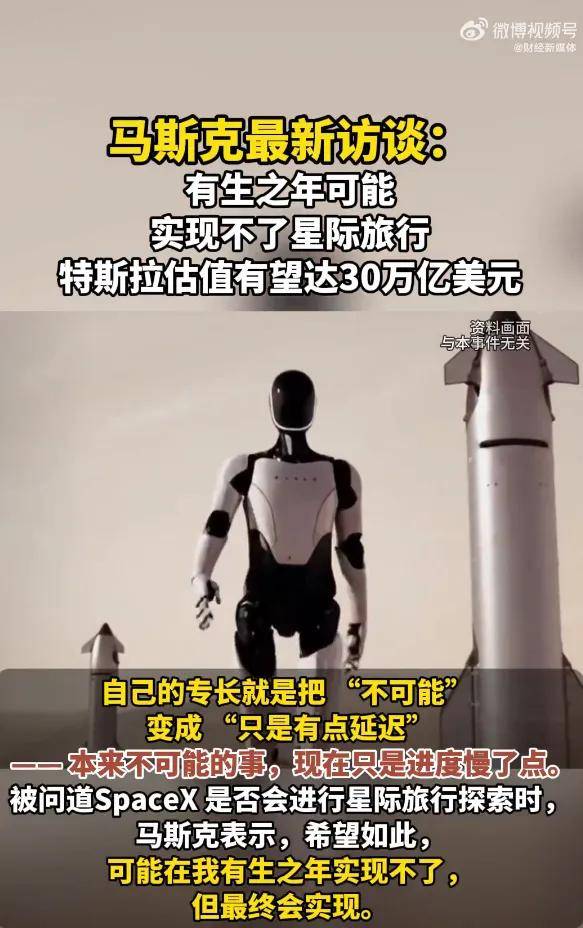
火星移民希望渺小?马斯克“醒了”: 有生之年或难实现星际旅行
Sou Hu Cai Jing· 2025-07-30 03:28
Core Viewpoint - The prospects for Mars colonization appear dim, as Elon Musk acknowledges that interstellar travel may not be achievable within his lifetime due to significant issues with the Starship program [1][12]. Group 1: Starship's Technical Challenges - Starship, touted as the world's most powerful rocket, has faced multiple failures during its testing phases, including a recent explosion that destroyed the test platform [3][5]. - Despite its impressive specifications, including a length of 120 meters and a launch thrust of 7400 tons, the Starship's testing results have been disappointing, raising concerns about its reliability for future missions [3][5]. - The successful development of Starship is critical for the U.S. plans to return to the Moon and eventually reach Mars, as it serves as the foundation for subsequent spacecraft designs [7][9]. Group 2: Implications for Mars Colonization - The ongoing issues with Starship make the goal of Mars colonization increasingly difficult, with Musk's previous timelines for crewed missions to Mars now seeming unrealistic [9][12]. - The scientific challenges of making Mars habitable are immense, with experts suggesting that significant advancements may take over a century to achieve [16][20]. - The complexity of the Starship system means that any failure in its components could jeopardize the entire mission, highlighting the inherent risks in space exploration [26]. Group 3: Industry Perspective - The aerospace industry requires a methodical approach to development, as evidenced by the historical challenges faced by various space programs [21][24]. - While some view Musk's willingness to take risks with Starship as a positive trait, others remain skeptical about the feasibility of rapid advancements in space travel [23][24]. - The future of space exploration hinges on continued technological breakthroughs, but the timeline for achieving significant milestones like Mars colonization remains uncertain [18][20].