第二增长曲线

Search documents
东阿阿胶瞄准年轻养生市场
Bei Jing Ri Bao Ke Hu Duan· 2026-02-11 23:25
近年来,东阿阿胶(000423)把培育"第二增长曲线"放在公司发展的紧要位置。2月11日,东阿阿胶宣 布,拟以14.85亿元投资建设健康消费品产业园项目,将匹配年轻消费群体对滋补健康产品的消费诉 求。 具体来看,2月11日,东阿阿胶发布公告称,公司拟以14.85亿元(其中固定资产投资14.21亿元,铺底流 动资金0.64亿元)的自有资金投资建设健康消费品产业园项目,用于药食同源食品、保健品、功能性食 品等健康消费品的生产与配套仓储物流、质检中心、新品孵化中心、电商分拣及药品成品仓储等。 据了解,东阿阿胶主要从事阿胶和阿胶系列及其他中成药等产品的研发、生产和销售。 目前,东阿阿胶阿胶及系列产品为公司贡献较大营收。2025年上半年,东阿阿胶来自阿胶及系列产品的 营业收入为28.45亿元,占比超九成。 值得一提的是,近年来,东阿阿胶逐渐面临原材料供应紧张的情况。近年来,国内驴存栏量下降已成为 行业共识,阿胶的主要原料驴皮也随之紧俏。 据了解,近年来,全国各地驴肉价格呈现快速上涨态势,从活驴收购到终端零售均承受一定压力。截至 2026年初,驴肉价格仍处于高位。 东阿阿胶曾在2025年半年报中直言,随着农业运输机械化的 ...



东阿阿胶重金寻找“第二增长曲线”
Bei Jing Shang Bao· 2026-02-11 16:35
Core Viewpoint - Dong'e Ejiao is prioritizing the cultivation of a "second growth curve" by investing in a health consumer goods industrial park to meet the consumption demands of younger consumers for health products [1][3]. Investment and Project Details - The company plans to invest 1.485 billion yuan (including 1.421 billion yuan for fixed assets and 64 million yuan for working capital) in the industrial park project, which will focus on the production and logistics of health consumer goods, including food and health supplements [1][3]. - The project aims to align with the rapid development of the health industry and the emerging trend of "health management for the young," providing a core driving force for future performance growth [3]. Business Strategy and Market Position - Dong'e Ejiao is expanding its health consumer goods business alongside its pharmaceutical operations, aiming to create a dual-driven growth model [5]. - The construction of the new facility is seen as a proactive attempt to address the challenges posed by tight raw material supplies, particularly the scarcity of donkey hides, which are essential for their main product, Ejiao [5]. Raw Material Supply Challenges - The company is facing a tightening supply of raw materials, particularly due to a decline in the domestic donkey population, which has led to rising prices for donkey meat and hides [4]. - The chairman of Aoyou International emphasized the need for Dong'e Ejiao to transition from passive reliance on raw materials to actively building a complete industry chain ecosystem to ensure sustainable growth [4].

敏实集团联手绿的谐波 布局北美人形机器人核心部件赛道
Xin Lang Cai Jing· 2026-02-11 06:09
Core Viewpoint - The partnership between Sensata Technologies and Lide Harmonic aims to establish a joint venture in the U.S. focused on humanoid robot joint module assembly, targeting the North American market to capitalize on the growing demand for core components in the humanoid robotics industry [1][6]. Company Overview - Sensata Technologies is a leading global automotive parts manufacturer with production bases in 14 countries, supplying major automakers like Tesla and BMW, and has extensive experience in large-scale manufacturing and global operations [2][7]. - Lide Harmonic is a leading domestic company in harmonic reducers, with its products already integrated into the supply chain of Tesla's Optimus robots, showcasing strong technical expertise in precision transmission [2][7]. Market Potential - The humanoid robot industry is projected to experience explosive growth, with global shipments expected to reach nearly 18,000 units by 2025, representing a 508% year-over-year increase, and order volumes exceeding 35,000 units [2][7]. - Joint modules, as core motion components of robots, integrate harmonic reducers, servo motors, and encoders, presenting high technical barriers and strong customization demands [2][7]. Strategic Goals - The joint venture aims to provide localized humanoid robot joint modules in North America, covering the entire service chain from R&D to production and maintenance, addressing the increasing demand from leading robot products like Tesla's Optimus [1][6]. Financial Market Response - The market reacted positively to the announcement, with Sensata's stock price rising over 9% on the day of the announcement, reaching a new high since January 2021, and a cumulative increase of 160% over the past year [3][8]. - Financial institutions like UBS and Citigroup have expressed optimism about the long-term value enhancement for Sensata, with UBS raising its target price to 45.5 HKD, highlighting the potential for new revenue sources from localized robot joint modules [3][8]. Challenges Ahead - The humanoid robot industry is still in its early commercialization phase, with Morgan Stanley noting that actual global shipments may fall short of 20,000 units by 2025, indicating a slower-than-expected scaling process [3][8]. - The complexity of joint modules and the dispersion of orders may hinder significant revenue contributions in the short term, alongside potential profit margin pressures from fluctuating aluminum prices and high costs of customized production [3][8]. Industry Trends - The collaboration reflects a broader trend of traditional manufacturing giants and niche technology experts working together to seize emerging market opportunities in humanoid robotics [4][9]. - The partnership signifies a shift in Chinese manufacturing from "globalized OEM" to "technology-driven ecosystems," providing a new growth narrative amid slowing electric vehicle growth [4][9].

裕同科技拟4.49亿元控股华研科技
Zheng Quan Ri Bao Wang· 2026-02-11 05:41
Group 1 - The core point of the article is that Shenzhen Yutong Packaging Technology Co., Ltd. plans to acquire 51% of Dongguan Huayan New Materials Technology Co., Ltd. for 449 million yuan, making Huayan Technology a subsidiary of Yutong Technology [1] - Huayan Technology, established in 2016, specializes in providing integrated solutions for precision metal and ceramic components, with applications in smartphones, smartwatches, laptops, new energy vehicles, VR, 5G, and medical parts manufacturing [1] - The acquisition is expected to enhance Huayan Technology's core competitiveness and expand its growth potential by leveraging Yutong's customer platform and financial support [2] Group 2 - The performance commitment agreement stipulates that Huayan Technology must achieve a net profit attributable to its shareholders of no less than 75 million yuan, 100 million yuan, and 155 million yuan for the years 2026 to 2028, respectively, totaling at least 330 million yuan over three years [1] - The acquisition will allow Yutong Technology to diversify its product structure and enhance customer service capabilities, injecting new momentum into its second growth curve [2]

移动营业厅也卖保险?通信运营商正在切入保险分销新场景
2 1 Shi Ji Jing Ji Bao Dao· 2026-02-10 03:26
Core Insights - China Mobile has launched two insurance products, "Mobile Medical Insurance" and "Mobile Family Insurance," in select offline service centers, marking a significant move towards integrating insurance into its service offerings [1][2] - The insurance products are designed to leverage China Mobile's extensive customer base and service frequency, aiming to create a "communication + finance + life services" ecosystem [1][4] Product Overview - "Mobile Medical Insurance" focuses on basic medical coverage and cost reimbursement, with annual fees ranging from 199 yuan to 699 yuan [2] - "Mobile Family Insurance" targets comprehensive family protection and daily risk management, with annual fees between 69 yuan and 199 yuan [2] Strategic Positioning - China Mobile's entry into the insurance sector is supported by its long-standing involvement in insurance brokerage since 2001, establishing a foundation for its current offerings [2][3] - The company has developed a product matrix that includes personal accident, health, and family property insurance, differentiating its offerings by closely aligning them with communication and daily life scenarios [3][4] Channel Advantages - China Mobile utilizes its insurance brokerage license to implement its insurance business, allowing it to embed insurance into its core operations without assuming underwriting risks [4] - The company benefits from a vast user base, stable app engagement, and extensive offline service center coverage, enabling low-cost access to underserved markets [4][5] Technological Integration - Advanced technologies such as 5G, big data, and AI support precise pricing, intelligent underwriting, and fraud prevention, facilitating a seamless integration of insurance into communication services and other digital platforms [5] Market Context - The insurance market in China is rapidly evolving, with significant growth potential, particularly in internet insurance, which aligns well with China Mobile's strategic objectives [3][9] - The telecommunications industry is facing challenges such as user growth slowdown and increased competition, prompting operators like China Mobile to explore insurance as a new growth avenue [9] Competitive Landscape - Other major telecom operators in China, including China Unicom and China Telecom, are also entering the insurance market, albeit with different strategies and levels of engagement [7][8] - China Mobile's approach appears more integrated and robust compared to its competitors, maintaining a strong presence in the insurance sector without showing signs of decline [8]

中航光电(002179.SZ)业绩快报:2025年净利润21.24亿元 同比下降36.69%
Ge Long Hui A P P· 2026-02-09 10:55
Core Viewpoint - The company reported a stable revenue growth in 2025 despite facing external pressures and industry cyclicality, with total revenue reaching 21.301 billion yuan, but experienced significant declines in profit due to various factors [1][2]. Group 1: Financial Performance - In 2025, the company achieved an operating income of 21.301 billion yuan, maintaining stable growth overall [1]. - The total profit and net profit attributable to shareholders were 2.664 billion yuan and 2.124 billion yuan, respectively, representing year-on-year declines of 29.24% and 36.69% [1]. Group 2: Industry Challenges - The defense sector faced significant revenue declines due to industry cyclicality and weak demand, compounded by stringent sustainability requirements [1]. - Rising prices of precious metals and bulk materials negatively impacted the company's profitability [1]. Group 3: Strategic Initiatives - The company continued to enhance its core capabilities by establishing high-end interconnect technology industrial parks and implementing projects like the Tianjin industrial base [2]. - The company is focusing on innovation-driven development, accelerating the incubation of new businesses and expanding into sectors such as data centers, commercial aerospace, deep-sea equipment, and low-altitude economy [2]. - The company has made significant progress in digital intelligence capabilities, completing over 60 automated production lines and two intelligent warehousing and logistics systems [2]. Group 4: Market Position and Future Outlook - The company has solidified its position as a preferred supplier in the defense sector and is actively exploring emerging fields such as unmanned systems and deep-sea technologies [2]. - In the civil high-end manufacturing sector, the company reported rapid growth in large aircraft, new energy vehicles, and data center businesses [2]. - The company aims to strengthen market development, improve internal operational quality, and navigate opportunities and challenges to achieve high-quality growth and provide good returns to shareholders [2].

实地探访成都华微:以静默能力跃迁,定义第二增长曲线
Mei Ri Jing Ji Xin Wen· 2026-02-09 03:57
Core Insights - Chengdu Huayi Microelectronics Technology Co., Ltd. is at a pivotal historical turning point, transitioning from a focus on specialized integrated circuits to a market-driven approach aimed at expanding into new fields [1][2] - The company aims to leverage its extensive product library and high-end testing capabilities to penetrate new markets, particularly in automotive electronics, commercial aerospace, and artificial intelligence [2][3] Company Background - Established in 2000, Chengdu Huayi is a state-owned enterprise under China Electronics Corporation, specializing in the field of integrated circuits [1] - The company has a strong technical foundation in FPGA and high-precision ADC/DAC chips, having participated in numerous national projects [1] Strategic Transformation - The company is undergoing an internal transformation by segmenting its R&D system and forming dedicated market expansion teams [2] - A significant focus is placed on high-end testing and failure analysis capabilities, which are being repurposed from an internal cost center to an external service platform [2][3] Market Expansion Strategy - The company is targeting high-growth sectors such as commercial aerospace and automotive intelligence, with its high-precision ADC chips already integrated into mainstream smart vehicle supply chains [3][4] - In the field of humanoid robotics, the company is collaborating with local partners to provide comprehensive chip support, addressing the stringent requirements for computing power and reliability [4] Financial Projections - The company anticipates a substantial increase in net profit for the fiscal year 2025, projecting a growth of 74.35% to 108.73%, with non-recurring net profit growth expected to reach 108.86% to 151.09% [5]
西南证券:建材板块重点关注电子布 重视第二增长曲线
智通财经网· 2026-02-09 03:13
Group 1: Consumer Building Materials - The demand for traditional building materials is expected to rebound as the contraction in new real estate demand slows and the demand for stock updates gradually releases [1] - In 2025, national fixed asset investment (excluding rural households) is projected to be 48.5 trillion yuan, a year-on-year decrease of 3.8%, while real estate development investment is expected to be 8.28 trillion yuan, down 17.2% year-on-year [1] - The area of new housing starts is expected to decline by 20.4% year-on-year to 588 million square meters, only 25.87% of the peak value in 2019, indicating that the drag on demand from the new real estate market has been fully reflected [1] - The stock market for urban residential properties in China is approximately 33.55 billion square meters, with about 37.4 million housing units, indicating significant growth potential for renovation and upgrading of existing properties [1] - Policies aimed at stimulating demand for commercial housing, such as "stopping the decline and stabilizing" and "ensuring delivery," are expected to support the completion and sales of commercial housing [1] Group 2: Fiberglass Industry - The downstream application fields of fiberglass continue to expand, and the product structure of the industry is continuously optimized, with strong demand for specialty fiberglass fabrics such as electronic fiberglass cloth [2] - The industry is expected to see continuous improvement in profitability due to the explosive demand for computing power, leading to tight supply of specialty fiberglass fabrics like low-dielectric electronic cloth [2] - The overall price level of the industry is on the rise, and leading companies are expected to benefit significantly from industry dividends [2] Group 3: Infrastructure Demand - During the 14th Five-Year Plan, it is expected that over 700,000 kilometers of underground pipeline networks will be constructed and renovated, with new investment demand exceeding 5 trillion yuan [3] - There is a broad demand for upgrading and renovating underground pipeline networks for urban gas, water supply, sewage, drainage, and heating [3] Group 4: Companies with Second Growth Curve - Jinjing Technology (600586.SH) is expected to benefit from the significant production ramp-up in the downstream perovskite photovoltaic component industry, indicating broad future growth potential [4] - Puyang Refractories (002225.SZ) is expected to benefit from the demand space created by the replacement of wet metallurgy technology paths, with performance expected to be realized as production capacity is released [4] - Companies like Jinjing Technology and Puyang Refractories are recommended as they show significant incremental potential in their second growth curves [4]


地方国资委年度工作会议释放了哪些改革信号
Xin Lang Cai Jing· 2026-02-07 01:10
Core Viewpoint - The 2026 annual work meetings of local state-owned asset supervision and administration commissions (SASACs) in various regions, including Beijing, Shanghai, Guangdong, Shandong, and Jiangsu, focus on enhancing the role of state-owned enterprises (SOEs) in technological innovation, optimizing the layout and structure of state-owned economies, strengthening supervision, and exploring a "second growth curve" for SOEs [3][4][5]. Group 1: Technological Innovation and Economic Performance - Beijing, Shanghai, and Guangdong SASACs are leading the charge in promoting technological innovation among SOEs, with Beijing's state-owned enterprises achieving total assets of 18.1 trillion yuan and a profit of 121.78 billion yuan by the end of 2025 [3][4]. - Shanghai's state-owned enterprises reached a historical high with total assets of 32.5 trillion yuan, and profit growth rates of 12.3% and 11.2% for total profit and net profit, respectively, marking significant increases over the past five years [4]. - Guangdong's state-owned enterprises reported total assets of 2.89 trillion yuan, a 45.73% increase since 2020, with a revenue of 727.87 billion yuan and a profit of 38.97 billion yuan, reflecting strong reform progress [5][6]. Group 2: Regulatory Enhancements - Strengthening the supervision of SOEs is a key focus for 2026, with Shanghai emphasizing the need for strict political responsibility and enhanced oversight of SOE leadership [6][7]. - Jiangsu's SASAC plans to improve management mechanisms and enhance regulatory effectiveness, focusing on risk prevention and the overall quality of state-owned capital operations [7][8]. - Shandong aims to elevate the regulatory level of municipal and county-level SOEs, focusing on management, debt risk control, and governance improvements [8][9]. Group 3: Exploring New Growth Opportunities - The concept of a "second growth curve" is highlighted as a significant goal for 2026, with Shandong SASAC implementing six special actions to enhance productivity and optimize resource allocation [9][10]. - Hubei's state-owned enterprises are set to leverage technological innovation to enhance core competitiveness and explore new growth avenues [10][11]. - Guizhou's SASAC emphasizes high-quality development through strategic project management and collaboration among key industries [11].
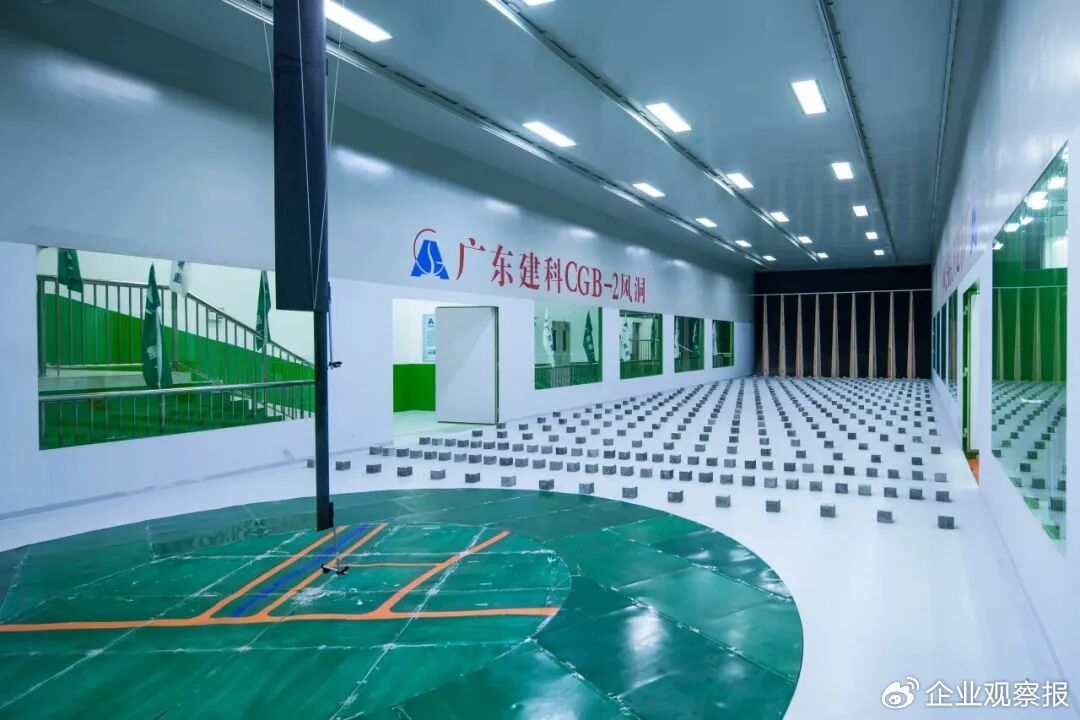
从“中国版立顿”到欠薪风波,茶里发生了什么?
3 6 Ke· 2026-02-05 22:58
Core Insights - The article discusses the rise and fall of ChaLi, a brand that was once considered a "star brand" in the new consumption wave, and examines the strategic missteps that led to its current challenges [2][20]. Company Overview - ChaLi was founded in 2013 by Tan Qiong, who initially had no background in tea but became involved through a feasibility study for a B2B tea trading platform [3][6]. - The brand focuses on high-quality, convenient tea products, primarily using original leaf triangular tea bags, which cater to modern consumption habits [4][5]. Financial and Market Performance - ChaLi experienced rapid growth during the new consumption boom from 2018 to 2021, achieving significant sales milestones, including nearly 10 million sales during the 2016 Double Eleven shopping festival [9]. - The brand was often referred to as the "Chinese version of Lipton," benefiting from multiple rounds of financing and a strong market presence [8][9]. Strategic Challenges - The brand faced significant challenges as the market for bagged tea matured, leading to increased competition and a shift in consumer preferences [12][14]. - A strategic miscalculation in the ready-to-drink (RTD) tea segment resulted in cash flow issues, contributing to delayed salary payments and supplier settlements [2][11][17]. Industry Context - The tea market in China is characterized by diverse consumer preferences and fragmented consumption scenarios, making it difficult for any single brand to dominate [14][20]. - The decline of traditional bagged tea sales and the challenges faced by established brands like Lipton indicate that the market may not support a "next Lipton" scenario [12][14]. Lessons Learned - The experience of ChaLi highlights the importance of aligning organizational capabilities with market demands, especially when transitioning to new product categories [20]. - The brand's journey underscores that the second growth curve is not guaranteed and requires a robust organizational structure and financial resilience [20][21].