
蓝碳经济

Search documents
让大海成为“绿色聚宝盆”
Zhong Guo Zi Ran Zi Yuan Bao· 2025-09-24 05:46
Core Viewpoint - The implementation of the "Shandong Seagrass Bed Carbon Sink Carbon Benefit Methodology" aims to transform monitoring data into marketable "blue carbon certificates," addressing the challenge of quantifying the value of seagrass resources in Shandong [2] Group 1: Research and Development - Shandong is establishing a systematic foundation for marine carbon sink work by collaborating across institutions, teams, and talent, with the Shandong Marine Resources and Environment Research Institute leading the efforts [4] - A cross-disciplinary research team has been formed, focusing on key areas such as carbon storage assessment technology and carbon sink monitoring methods [4] - The establishment of the Shandong Marine Carbon Sink Industry Alliance aims to break down industry barriers and enhance collaboration [4] Group 2: Resource Assessment - Shandong has initiated a series of foundational blue carbon surveys to accurately assess the status of blue carbon resources, providing solid data support for the methodology [6] - The province has created a comprehensive map detailing the locations and distributions of major salt marshes, seagrass beds, and typical algal carbon sink resources [6] - Ongoing pilot investigations into carbon storage in typical blue carbon ecosystems are underway, contributing to the understanding of carbon storage resources [6] Group 3: Practical Implementation - The methodology has been successfully implemented across Shandong, leading to various blue carbon economic practices that convert theoretical value into tangible outcomes [8] - Financial institutions, such as Weifang Commercial Bank, are actively purchasing marine carbon sinks to achieve carbon neutrality, creating a closed-loop system of protection, accounting, and trading [8] - The methodology is expected to be applied in broader marine areas, allowing fishermen to earn income through marine protection and supporting economic growth through blue carbon initiatives [8]

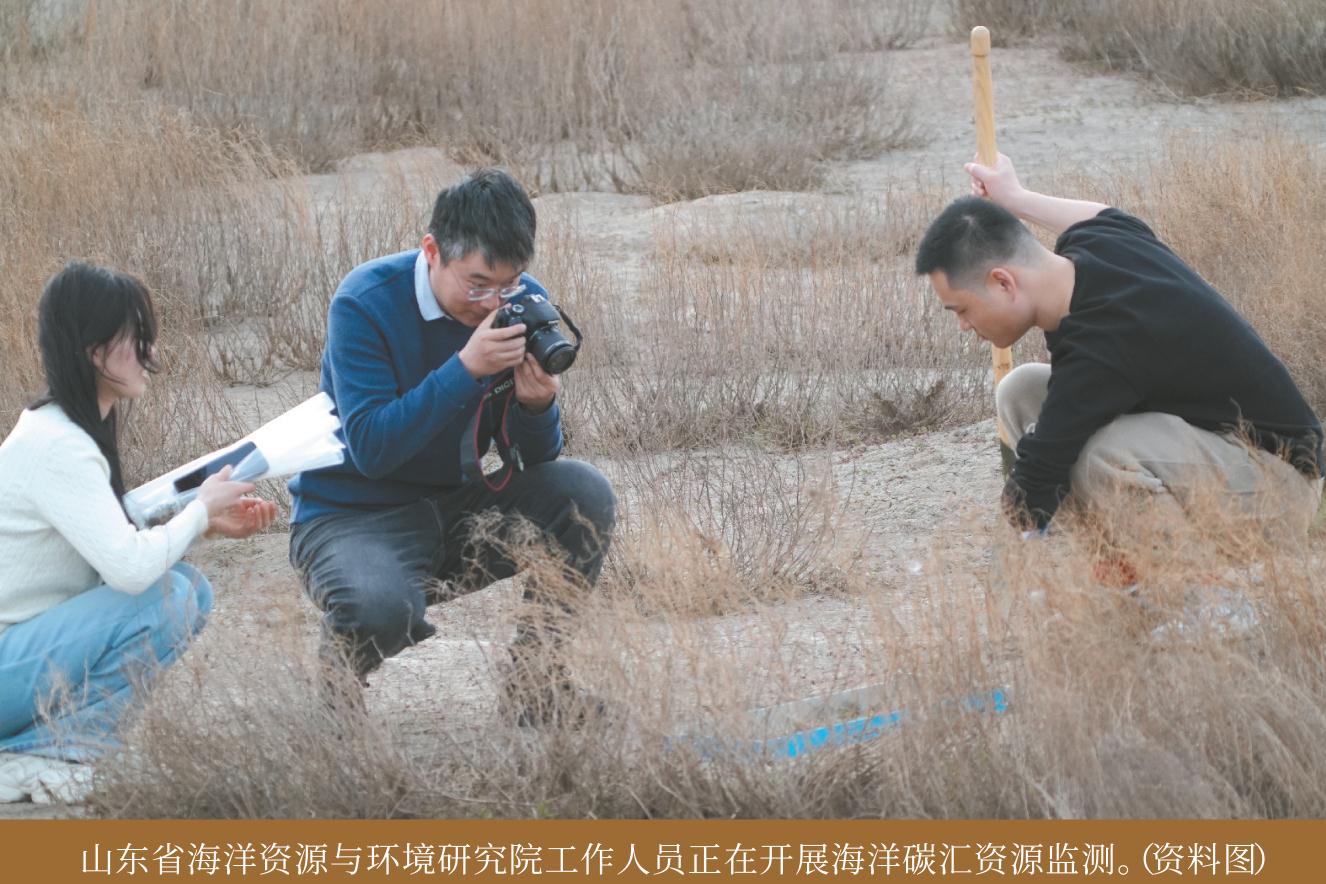
乳山创新“数字+绿色+金融”服务模式,完成首批牡蛎碳汇交易
Qi Lu Wan Bao Wang· 2025-08-25 04:39
Group 1 - The unique geographical location and ecological environment of Rushan City contribute to the exceptional quality of Rushan oysters, with the local government promoting high-quality development of the oyster industry through various initiatives [1] - In 2023, Rushan City was selected as the first domestic demonstration zone for the "Sustainable Development Finance to Assist Rural Micro and Small Enterprises" project by the United Nations Development Programme, focusing on the oyster industry and exploring innovative service models combining "digital, green, and finance" [2] - The establishment of a carbon trading mechanism for oysters marks a transition from theoretical research to practical ecological benefits, with the first carbon trading transaction occurring on August 12, 2025, involving five companies [2] Group 2 - The development of the "blue carbon economy" has significant ecological, financial, and social implications, promoting environmentally friendly oyster farming practices and enhancing the ecological value of oyster cultivation [3] - The carbon trading mechanism is expected to innovate financial products related to oyster carbon credits, strengthening financial empowerment in the industry [3] - The Rushan oyster carbon trading initiative is anticipated to enhance brand recognition, expand market reach, and create more job opportunities, contributing to the harmonious development of the social economy and ecological environment [3]
活力中国调研行丨浙江象山:蓝碳经济破局之路
Zhong Guo Zi Ran Zi Yuan Bao· 2025-08-19 02:52
Core Insights - The article highlights the transformation of fishermen in Xiangshan from selling marine products to trading carbon credits, marking a new revenue stream for fishing villages [1][3] - The first auction of blue carbon in China took place in Xiangshan, where 2,340.1 tons of blue carbon were sold at a price of 106 yuan per ton, showcasing the potential of marine carbon trading [3][4] Blue Carbon Trading - The blue carbon auction on February 28, 2023, was a milestone event, with over 70 rounds of bidding from more than 20 enterprises and institutions [3] - The carbon sequestration potential of local seaweed, such as seaweed and kelp, has been scientifically quantified, with estimates indicating that the salt marsh ecosystem in Xiangshan can sequester approximately 102,800 tons of carbon annually [3][4] Economic and Ecological Benefits - Xiangshan, known for its rich marine resources, has implemented industry standards for measuring and trading blue carbon, enhancing the economic viability of seaweed farming compared to traditional fish farming [5][6] - The local government is actively developing a blue carbon trading market and has completed several research reports to support this initiative [5][6] Innovative Financial Mechanisms - Xiangshan has established a comprehensive mechanism for ecological resource development, including a blue carbon ecological carbon account and innovative financing options for blue carbon projects [6] - The region has successfully completed its first blue carbon pledge financing deal worth 248,000 yuan, paving the way for financial support for marine carbon credit projects [6] Community Development and Shared Prosperity - The "three rights separation" reform in Huangbi'ao village has allowed local fishermen to benefit from marine resource management, leading to increased income and community development [9][10] - The integration of technology and reform has resulted in a thriving aquaculture industry, significantly improving the economic conditions of previously impoverished villages [10]
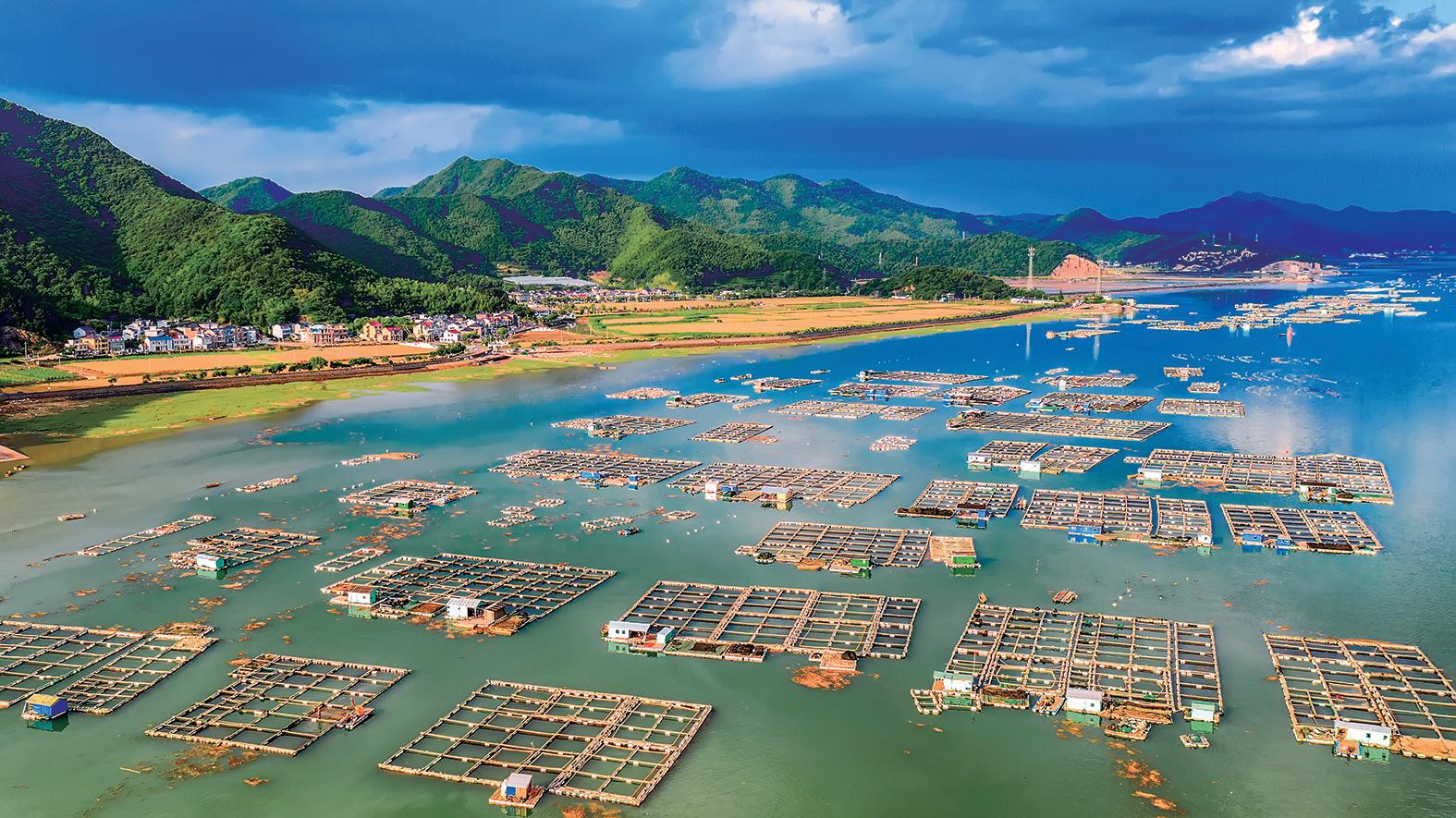
浙江探路“蓝色低碳”:重塑海洋经济新循环
2 1 Shi Ji Jing Ji Bao Dao· 2025-08-15 09:15
Group 1: Marine Economy Development - The central government aims to promote high-quality development of the marine economy, with plans to establish national marine economic development demonstration zones and support marine strong provinces [2] - Zhejiang plans to implement a marine economy doubling plan by 2025, targeting a marine production value growth rate exceeding the provincial GDP growth rate by 1 percentage point [2] - The marine industry in Zhejiang is gradually transitioning to a greener model, with significant advancements in port logistics and marine tourism [2][3] Group 2: Clean Energy Initiatives - The LHD Ocean Current Power Station in Zhoushan is the world's first and longest-running tidal energy project, achieving a cost reduction in electricity generation from 106 yuan/kWh to 1.1 yuan/kWh, with future projections below 0.3 yuan/kWh [5] - Zhejiang is advancing the development of marine clean energy, with ongoing projects focused on tidal energy and other renewable sources [4][6] Group 3: Marine Resource Management - Zhejiang has a vast marine area of 260,000 square kilometers and a coastline of 6,715 kilometers, making it a significant player in marine fisheries, but it faces challenges such as overfishing [7] - The Dachen Island has shifted from traditional fishing to deep-sea aquaculture and tourism, aiming to reduce environmental impact while enhancing economic output [7] Group 4: Blue Carbon Economy - The province is exploring blue carbon trading and carbon credit loans, with successful transactions already taking place [8][9] - The seaweed industry, particularly in Xiangshan, is being leveraged for its carbon absorption capabilities, contributing to the blue carbon economy [8] Group 5: Waste Management and Recycling - The "Blue Cycle" project in Taizhou has gained international recognition for its innovative approach to marine plastic waste management, utilizing blockchain technology for tracking and recycling [10] - Companies in Taizhou are actively participating in the recycling of marine plastics, contributing to environmental sustainability [10] Group 6: Coastal Tourism Development - The 168 Golden Coast in Cangnan is a prime example of integrated coastal tourism, attracting significant visitor numbers and boosting local economies [12][13] - Cangnan is focusing on enhancing its tourism offerings by collaborating with top designers and encouraging local entrepreneurs to participate in tourism development [12]
城市24小时 | 规划超十年,这条高铁终于要开建了?
Mei Ri Jing Ji Xin Wen· 2025-05-21 02:10
Group 1: Project Overview - The Chang-Gan High-Speed Railway (长赣高铁) has received preliminary design approval and is expected to commence construction within the year [1] - The railway will reduce travel time from Changsha to Ganzhou from 4 hours to under 2 hours, and from Changsha to Xiamen from 7 hours to approximately 5 hours [1] - The railway spans approximately 429.4 kilometers with a design speed of 350 km/h and includes 11 stations, with an estimated construction period of 5 years [1] Group 2: Economic Impact - Changsha is anticipated to be the primary beneficiary, enhancing its status as a major high-speed rail hub in Central China [2] - The railway will complete the "米" shaped high-speed rail layout, connecting Chongqing to Xiamen and providing a second high-speed rail corridor to Shenzhen [2] - Smaller cities in Jiangxi, such as Jinggangshan and Suichuan, will also benefit from improved connectivity, although concerns exist regarding the economic impact on these areas compared to Changsha [2] Group 3: Historical Context - The planning for the Chang-Gan High-Speed Railway began in 2014, and it was included in the "13th Five-Year Plan" for railways in 2017, but construction was delayed due to various issues [1] - The feasibility study was approved by the National Development and Reform Commission in October 2022, and the environmental impact assessment was approved in November 2024 [1]

前瞻全球产业早报:民营经济促进法5月20日起实施
Qian Zhan Wang· 2025-05-20 23:17
Group 1: Private Economy Promotion Law - The "Private Economy Promotion Law" of China officially takes effect on May 20, marking the first foundational law specifically for the development of the private economy [2] - The law enshrines the principle of "two unwavering" and establishes the legal status of the private economy as a vital component of the socialist market economy [2] - It consists of 9 chapters and 78 articles, aiming to promote the sustainable, healthy, and high-quality development of the private economy [2] Group 2: Artificial Intelligence in Zhejiang - Zhejiang Province aims to achieve over 1 trillion yuan in revenue from its core artificial intelligence industry by 2027 [2] - The government has introduced measures to support AI innovation, with a goal of creating globally competitive AI enterprises [2] - By 2030, the revenue target for the AI core industry is set to exceed 1.2 trillion yuan [2] Group 3: Xiaomi's New Chip Production - Xiaomi's founder Lei Jun announced that the company's self-developed 3nm flagship chip, Xiaomi Xuanjie O1, has begun mass production [3] - The chip will be featured in two flagship products: the Xiaomi 15s Pro smartphone and the Xiaomi Pad 7 Ultra tablet [3] Group 4: New Energy Vehicle Market - In April, the retail penetration rate of new energy vehicles reached 51.5%, an increase of 7 percentage points year-on-year [4] - The retail sales volume of new energy passenger vehicles was 905,000 units, reflecting a growth of 33.9% [4] Group 5: Hydrogen Energy Industry in Beijing - Beijing's State-owned Assets Supervision and Administration Commission is prioritizing the hydrogen energy industry in its 14th Five-Year Plan [5] - The focus will be on key areas of the hydrogen industry chain, including production, storage, transportation, and refueling [5] Group 6: Measurement Development in Guangdong-Hong Kong-Macao Greater Bay Area - The Guangdong-Hong Kong-Macao Greater Bay Area Measurement Development Cooperation Platform has been officially launched to enhance measurement collaboration [6] - The platform aims to achieve mutual recognition of measurement results and promote a unified market in the region [6] Group 7: Urban Renewal Support - The Ministry of Natural Resources is implementing measures to support urban renewal through a unified resource management and spatial planning system [7] - The initiative includes a comprehensive survey of existing resources to facilitate effective urban development [7] Group 8: Waymo's Expansion of Autonomous Taxi Service - Waymo has received approval to expand its autonomous taxi service in California, including more areas in San Francisco and southward to San Jose [17] - The company operates the only paid autonomous taxi service in the U.S., with over 1,500 vehicles and more than 250,000 rides per week [17] Group 9: AMD's Sale of Data Center Business - AMD has reached an agreement to sell ZT Systems' data center infrastructure manufacturing business to Sanmina for $3 billion [15] - The transaction is expected to be completed by the end of this year [15] Group 10: Regeneron's Acquisition of 23andMe - Regeneron Pharmaceuticals announced plans to acquire 23andMe for approximately $260 million, gaining control over its genomic services and biobank [18] - The acquisition is expected to be completed in the third quarter of this year [18]






海口出台蓝碳经济发展行动方案
news flash· 2025-05-20 02:33
Core Viewpoint - Haikou City has launched a Blue Carbon Economic Development Action Plan for the period of 2025 to 2035, aiming to establish a blue carbon economic system by the end of 2035, significantly enhancing its contribution and improving the ecological level of marine industries [1] Group 1 - The action plan is jointly issued by Haikou's Ecological Environment Bureau and the Natural Resources and Planning Bureau [1] - The plan outlines specific goals for the development of the blue carbon economy within the city [1] - By 2035, the blue carbon economy's contribution is expected to be significantly increased [1]
以美丽海湾为牵引,湛江为高质量发展注入绿色动能
Zhong Guo Huan Jing Bao· 2025-05-19 01:49
Core Viewpoint - Zhanjiang City is actively promoting the construction of beautiful bays, focusing on ecological protection and sustainable development, resulting in improved water quality and enhanced natural landscapes [1][2][4]. Environmental Protection and Management - Zhanjiang has implemented a comprehensive approach to ecological protection, emphasizing source control, process management, and end-of-pipe treatment to achieve a "clear water and clean beach" environment [2][3]. - The city has invested over 10 billion yuan in energy-saving and environmental protection initiatives, including the establishment of a zero wastewater discharge system at Baosteel Zhanjiang Steel [2][3]. - Since 2020, approximately 7.4 billion yuan has been invested in upgrading wastewater treatment facilities, increasing daily processing capacity to 750,000 tons [3]. Marine Ecosystem Restoration - Zhanjiang has actively addressed illegal aquaculture, clearing 11,300 acres of unlawful farming to mitigate environmental pollution [3]. - The city has restored 1,403 hectares of mangrove forests, contributing to 60.1% of the province's and 23.7% of the nation's total mangrove area [6][7]. - The implementation of the "Red Mangrove City" initiative has led to the creation of educational parks and increased tourism, with 2 million visitors generating 2.1 billion yuan in revenue [7]. Community Engagement and Volunteerism - Zhanjiang has established a long-term mechanism for marine waste management, involving community volunteers and third-party services to maintain cleanliness along the coastline [8][9]. - The city has organized volunteer actions to clean up beach litter, successfully removing over 1,687 tons of waste from the coastline [9]. Economic and Social Impact - The development of the coastal area has enhanced the quality of life for residents, with new recreational facilities and events contributing to a vibrant community atmosphere [9][10]. - The integration of ecological initiatives into the tourism sector has positioned Zhanjiang as a desirable destination, attracting visitors and promoting local culture [7][12].
海口出台方案促蓝碳经济发展
Zhong Guo Xin Wen Wang· 2025-05-15 06:22
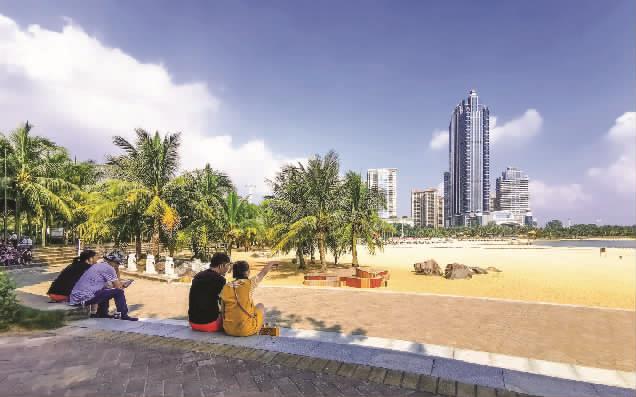
Core Viewpoint - Haikou City has launched the "Blue Carbon Economy Development Action Plan (2025-2035)" aiming to establish a blue carbon economy system by the end of 2035, significantly enhancing its contribution and ecological level in marine industries [1][2] Group 1: Blue Carbon Economy - The blue carbon economy focuses on utilizing marine activities and organisms to absorb and store atmospheric CO2, aiming to provide ecological products and services while achieving economic benefits [1] - Haikou has rich blue carbon resources, including a long coastline and extensive coastal wetlands, with approximately 32,000 acres of mangroves, of which about 27,000 acres are in the Dongzhai Port National Nature Reserve [1] Group 2: Key Initiatives and Tasks - The action plan outlines seven key areas of focus, including resource assessment, marine carbon sink enhancement projects, and the development of marine ecological services [1] - It specifies twenty concrete tasks such as conducting blue carbon system surveys, establishing a blue carbon economic evaluation system, and implementing mangrove restoration projects [2] Group 3: Achievements and Future Directions - Since 2020, Haikou has initiated ecological restoration projects, creating 4,590 acres of new mangroves and restoring 4,800 acres, leading the province in carbon sink increments [2] - The first blue carbon ecological product transaction in Hainan was completed in May 2022, involving over 3,000 tons of carbon credits and generating over 300,000 yuan in transaction value [2] - The city aims to enhance blue carbon resource monitoring, accelerate industry development, and establish a blue carbon trading market to support high-quality marine economic growth [2]