金价走势

Search documents
普来仕:金价短期或维持区间上落,但仍具备再试新高的潜力
Ge Long Hui A P P· 2026-02-05 14:02
Core Viewpoint - The recent volatility in precious metals reflects a consolidation phase after a price increase, rather than a definitive end to the upward trend in gold prices [1] Group 1: Market Dynamics - The recent surge in gold prices has been rapid and characterized by a significant short-covering feature, leading to a quick rise in prices [1] - Historical trends indicate that after a sharp increase in realized volatility, the market typically requires time to digest profit-taking before entering a consolidation phase, which may allow for a continuation of the upward trend [1] Group 2: Future Outlook - In the short term, gold prices may remain within a range but still possess the potential to reach new highs [1] - The core factors supporting gold demand have not changed, and there are no clear signs of major central banks rapidly shifting towards tightening monetary policy, which limits the likelihood of sustained liquidation in the gold market [1]
2026年金价是否还会上涨?全链路QA解析
Sou Hu Cai Jing· 2026-02-05 12:00
Core Viewpoint - The overall trend of gold prices in 2026 is expected to be characterized by high volatility and structural upward movement, with a baseline scenario maintaining a ±5% fluctuation range and an optimistic scenario potentially seeing a 15%-30% increase, surpassing $6000 per ounce [1][2]. Group 1: Price Predictions - In the baseline scenario, gold prices are projected to fluctuate within a ±5% range due to stable economic conditions and anticipated interest rate cuts by the Federal Reserve [2]. - In an optimistic scenario, escalating geopolitical conflicts or significant economic slowdowns could lead to gold prices rising by 15%-30%, potentially exceeding $6000 per ounce [2]. - Various institutions have set target prices for gold, with UBS raising its target to $6200 per ounce, Goldman Sachs setting a year-end target of $5400 per ounce, and JPMorgan forecasting a long-term price of $8000-$8500 [2]. Group 2: Driving Factors - The Federal Reserve's interest rate cuts are identified as a key driver for the upward movement of gold prices in 2026, with expectations of 2-3 rate cuts totaling 50-75 basis points throughout the year [4]. - Central bank gold purchases are expected to provide strong support for gold prices, with a projected monthly average purchase of 60-70 tons in 2026, driven by emerging market central banks seeking to diversify their reserves [5]. - The supply-demand imbalance is anticipated to widen, with a projected supply-demand gap of 320 tons in 2026, further supporting the upward trend in gold prices [6]. Group 3: Currency and Geopolitical Factors - The weakening trend of the US dollar is expected to positively impact gold prices, with a projected decline of approximately 3% in 2026, following a 9.3%-9.7% drop in 2025 [8]. - Geopolitical uncertainties are likely to enhance gold's appeal as a safe-haven asset, with ongoing global conflicts and political events potentially driving increased investment in gold [9]. Group 4: Investment Strategies - Investors are advised to adopt a long-term holding strategy, focusing on central bank purchases and the weakening of the US dollar while ignoring short-term price fluctuations [13]. - For short-term traders, monitoring geopolitical developments and Federal Reserve policies is crucial, with specific attention to support and resistance levels in gold prices [13]. - The choice between physical gold and gold ETFs should be based on individual investment needs, with physical gold being suitable for long-term holders and gold ETFs being more accessible for average investors [12].
江问樵:2.5黄金探底回升继续多,晚间操作建议
Sou Hu Cai Jing· 2026-02-05 10:22
Core Viewpoint - Short-term gold prices are at a critical adjustment point, with strong support in the $4880-$4900 per ounce range, aligning with bullish cost zones and suggesting a buy strategy around $4885 [1] Technical Analysis - The MACD indicator remains in a bullish crossover above the zero line, indicating no clear reversal signal despite a slight reduction in momentum [1] - The RSI has retreated to a neutral zone, avoiding overbought risks, while the KDJ indicator shows signs of turning upwards from a low position, suggesting the end of the short-term adjustment [1] - The previous V-shaped fluctuation indicates limited downside potential following the February 5th pullback, supporting a buy strategy at current levels [1] Market Influences - The key variable on February 6th is the U.S. January non-farm payroll data, with market expectations of 180,000 new jobs; results below expectations could increase rate cut forecasts, benefiting gold prices towards a target of around $5020 [1] - Continuous gold purchases by global central banks and institutions raising gold price targets provide mid-term support [1] - The implementation of repurchase limit management by Caibai Jewelry reflects market caution regarding gold price volatility, yet does not alter the long-term upward trend [1] Supply and Demand Dynamics - Short-term geopolitical risks have eased, reducing safe-haven demand; however, supply-side contractions and expectations of declining real interest rates support a rebound in gold prices [1] - Overall, a buy strategy around $4885 is justified by both technical support and positive market expectations, with a reasonable target set at approximately $5020 [1]

高盛和摩根大通逆市唱多! 无视金价短时剧烈波动
Jin Tou Wang· 2026-02-05 06:39
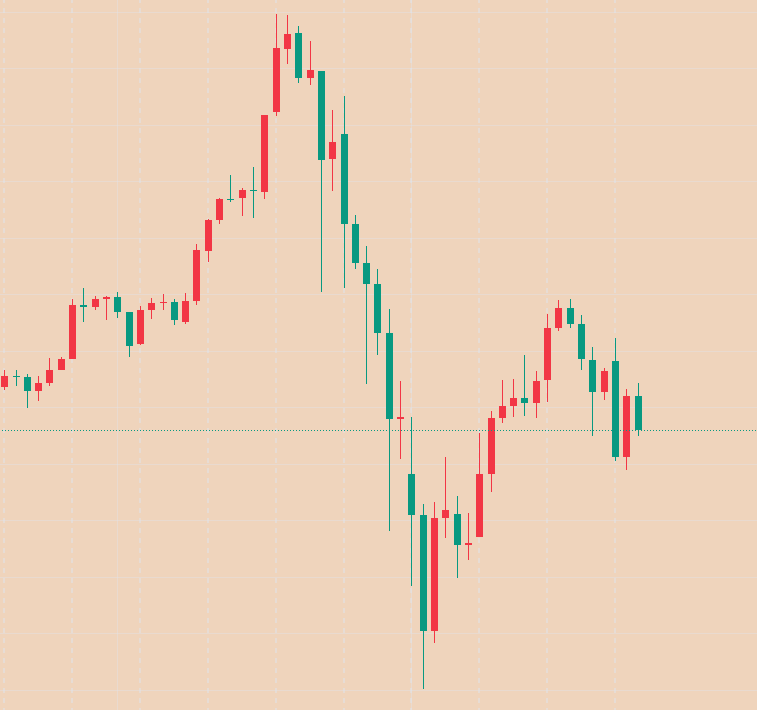
Core Viewpoint - The current decline in gold prices is attributed to market volatility, but major financial institutions like Goldman Sachs and JPMorgan Chase maintain bullish long-term forecasts for gold prices, driven by central bank purchases and investor demand [1][2]. Group 1: Current Market Situation - As of February 5, the spot gold price is $4,855.06 per ounce, down $108.48 or 2.19% from the previous trading day, indicating a downward trend [1]. - The trading range for the day saw a high of $5,023.39 and a low of $4,791.69, reflecting significant market fluctuations [1]. Group 2: Institutional Forecasts - Goldman Sachs projects that gold prices could reach $5,400 per ounce by the end of 2026, driven by continued central bank purchases and increased allocation to gold ETFs by private investors [1]. - JPMorgan Chase has a more optimistic forecast, expecting gold prices to rise to $6,300 per ounce by the end of 2026, supported by dual demand from central banks and investors [2]. Group 3: Market Sentiment - Recent reports indicate a significant outflow of nearly $1 billion from major Chinese gold ETFs, marking the largest single-day net outflow in history, which reflects weakened investor confidence amid falling gold prices [2]. - The rapid reversal in fund flows from Chinese gold ETFs highlights the sensitivity and fragility of market sentiment, especially after a period of strong inflows [2]. Group 4: Technical Analysis - Technical indicators suggest a bearish reversal pattern in gold futures, with a clear signal of a potential top formation after a rapid price drop [3]. - Key resistance levels are identified at $5,000, with a need for a daily close above this level to challenge higher targets, while a failure to maintain above $4,900 could lead to further declines [3].


光大期货0205黄金点评:美伊谈判一波三折,金价走势反复
Xin Lang Cai Jing· 2026-02-05 02:01
Core Viewpoint - The article discusses the recent fluctuations in gold prices, influenced by economic data and geopolitical developments, particularly the US-Iran negotiations [2][6]. Economic Data Summary - COMEX gold prices rose initially but closed at $4986.4 per ounce, reflecting a 1.04% increase, while domestic SHFE gold prices fell to 1113.78 yuan per gram, down 0.64% [2][6]. - The ISM reported that the January services PMI was 53.8, unchanged from December and at the highest level since October 2024, indicating better-than-expected performance, although the new orders index showed a slowdown [2][6]. - The ADP reported an addition of 22,000 jobs in January, significantly below the market expectation of 45,000, suggesting a weakening labor market which may raise expectations for interest rate cuts [2][6]. Geopolitical Developments Summary - The US announced the resumption of negotiations with Iran, which were previously on the verge of collapse, scheduled for February 6 [2][6]. - The fluctuations in gold prices are closely tied to geopolitical factors, particularly the US-Iran talks, which may influence the potential for gold prices to strengthen again [2][6]. - The article notes that the volatility in geopolitical situations complicates market predictions, indicating that trends remain unclear and require further observation [2][6].

张尧浠:金价维持反弹动力、保持低多看涨为主
Sou Hu Cai Jing· 2026-02-05 00:18
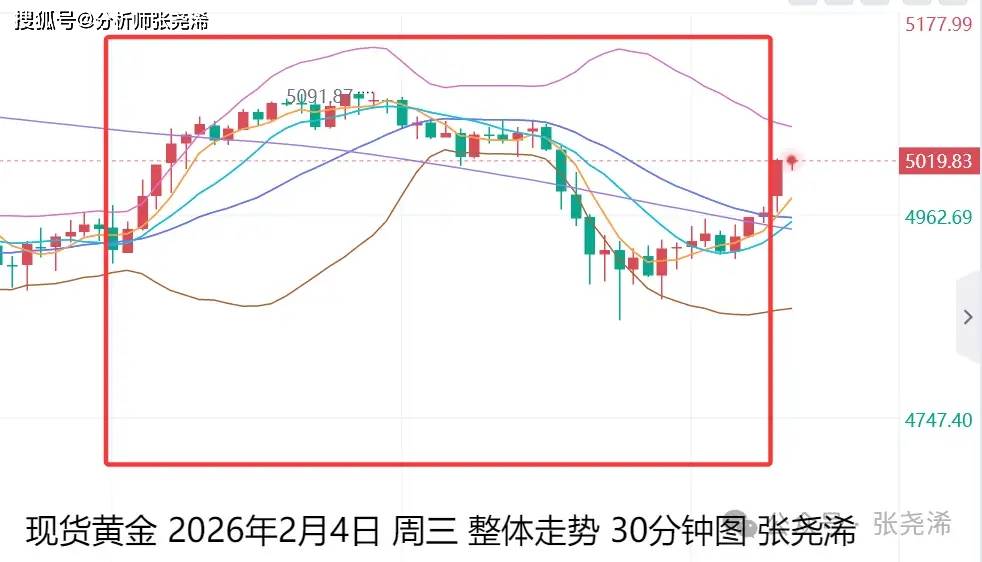
Core Viewpoint - International gold prices showed volatility with a closing price of $4964.45 per ounce, indicating a potential for upward movement if it remains above $5100, suggesting a strong bullish momentum [1][3]. Market Performance - Gold opened at $4964.16, reached a high of $5091.72, and then fell to a low of $4854.61 before closing at $4964.45, with a daily fluctuation of $237.11 [1]. - The price increased by $28.65, or 0.58%, compared to the previous day's closing price of $4935.80 [1]. Influencing Factors - The rebound in gold prices was initially supported by buying momentum from the previous day, but geopolitical tensions and better-than-expected U.S. economic data led to a pullback [3][5]. - The ADP employment data indicated a slowdown in the U.S. labor market, which maintained some bullish support for gold prices [3]. Future Outlook - The market anticipates that upcoming unemployment claims data will likely favor gold prices, maintaining a bullish outlook [5]. - The partial government shutdown in the U.S. has delayed the release of non-farm payroll data, which is expected to influence market expectations positively for gold [5]. Technical Analysis - Monthly analysis indicates that gold prices have found support after a dip, suggesting the potential for a new bull market [6]. - Weekly analysis shows a pattern that may indicate a bottoming out, with a higher probability of maintaining high-level fluctuations rather than a significant downturn [7]. - Daily charts indicate that gold prices are above key moving averages, with bullish sentiment prevailing [8]. Support and Resistance Levels - Key support levels for gold are identified at $4940, $4890, and $4760, while resistance levels are at $5120 and $5220 [9].
机构:黄金跌幅已缩减一半 但再度下挫风险仍高
Sou Hu Cai Jing· 2026-02-04 11:57
Core Viewpoint - Gold has entered a rebound phase after experiencing its most severe pullback in decades, but fundamental factors remain unfavorable for price increases [1] Group 1: Market Analysis - The strong performance of the US ISM Manufacturing PMI, with the new orders index reaching its highest level since 2022, indicates potential pressure on gold prices [1] - There is a risk of further declines in gold prices despite the absence of a new wave of selling triggered by the PMI data, as the Federal Reserve focuses on the labor market and inflation [1] Group 2: Upcoming Data Impact - The market is anticipating the release of US ADP employment data and ISM Services PMI data, which could lead to a hawkish reassessment of interest rate expectations if the data is unexpectedly strong, putting additional pressure on gold [1] - Conversely, if the upcoming data shows weakness, it may allow for a continuation of gold's rebound and potentially break new highs while waiting for next week's non-farm payroll report [1]
黄金收复5000美元大关,未来金价是涨是跌?给你明确答案
Sou Hu Cai Jing· 2026-02-04 08:30
Core Viewpoint - Gold prices have recently surged past the $5,000 mark and are approaching the $5,100 level, indicating a volatile market with potential for further fluctuations in the short term [2] Short-term Outlook - Gold prices are expected to continue experiencing volatility, with resistance anticipated between $5,100 and $5,300, while strong support is seen in the $4,800 to $4,900 range [2] - The market is influenced by high-leverage fund adjustments, uncertainty regarding the timing of U.S. interest rate cuts, and fluctuating geopolitical risks, making sustained price increases challenging [2] Medium to Long-term Outlook - The long-term outlook for gold remains positive due to ongoing central bank purchases, a trend towards de-dollarization, and persistent inflationary pressures in the U.S. [2] - Major financial institutions like JPMorgan and UBS project that gold prices could exceed $6,000 by the end of 2026 [2] Investment Strategy - Investors are advised to consider gradual accumulation of gold positions during price dips rather than engaging in chasing price increases [2]
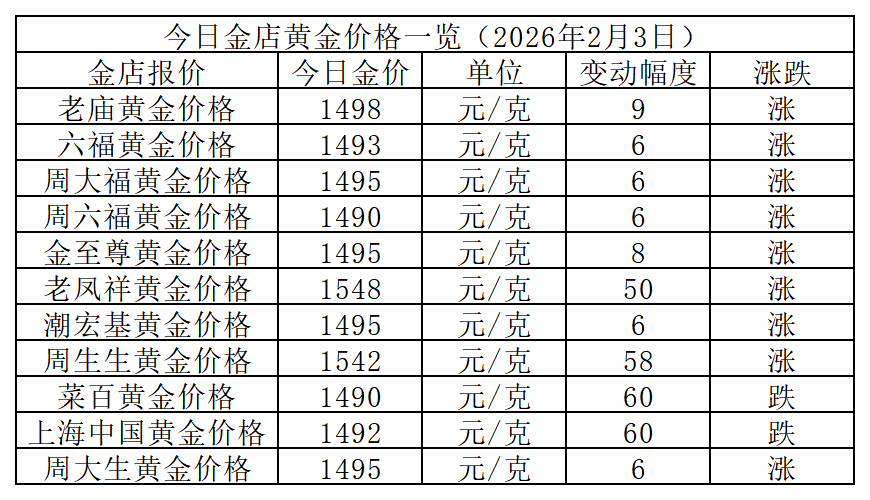
金价止跌回暖!2月3日国内品牌金店多数上涨!
Sou Hu Cai Jing· 2026-02-03 07:56
Group 1: Domestic Gold Market - The domestic gold market is experiencing a "cold and warm differentiation," with mainstream brand gold stores showing a collective price rebound, maintaining prices in the range of 1490-1548 yuan per gram [1] - Major brands like Caibai and Shanghai China Gold saw a significant drop of 60 yuan per gram, leading to an expanded price gap of 58 yuan between high and low prices in gold stores [1] - Detailed price quotes from various gold stores indicate that Lao Miao Gold is priced at 1498 yuan per gram, with an increase of 9 yuan, while Lao Feng Xiang is at 1548 yuan per gram, up by 50 yuan [1] Group 2: Gold Recycling Prices - The gold recycling prices have also seen an increase, with the reference price for gold recycling at 1066.80 yuan per gram [1] - Specific recycling prices for brands include 1109.80 yuan for Caizhi Gold and 1312.00 yuan for Chow Tai Fook [1] Group 3: International Gold Market - The international spot gold price experienced a decline, closing at 4659.35 USD per ounce, with a drop of 4.80%, but rebounded to 4889.31 USD per ounce, reflecting a rise of 4.94% [4] - Analysts from Metals Focus and JPMorgan Chase suggest that the recent price adjustments are necessary to release accumulated upward pressure, with a long-term outlook for gold prices remaining positive [4] - The recent increase in the US ISM Manufacturing PMI to 52.6 has influenced the dollar index, contributing to the downward movement of gold prices [4]


金价回调了!今年1月31日最新行情,明后两天或迎更大变盘
Sou Hu Cai Jing· 2026-02-01 17:49
Group 1 - Gold prices have surged to $5,180, with bank gold bars priced at 1,314 yuan per gram, while gold bracelets in stores are marked at 1,690 yuan per gram, showing a nearly 400 yuan difference. The focus has shifted from whether prices are too high to whether purchases can still be made, indicating a change in market dynamics [1][2] - Global investment demand for gold has nearly doubled, with ETFs attracting close to $90 billion, marking a historical high. Despite a decrease in central bank gold purchases by 20% last year, retail investors are flooding the market [1][2] - The price structure for gold has created three distinct tiers: base price at 1,175 yuan, investment price at 1,314 yuan, and consumer price at 1,690 yuan, with the Shanghai Gold Exchange prices following international trends, while jewelry stores do not adhere to these figures [2] Group 2 - The central bank's reduction in gold purchases is attributed to fiscal constraints and high global debt levels, with interest payments consuming 12% of the budget. This situation has led to increased money printing, influencing gold prices beyond just interest rates [4] - The World Bank has warned of accumulating risks, with Goldman Sachs predicting a reasonable price of $4,000 for gold, while China International Capital Corporation believes prices above $5,000 are normal. The debate centers on monetary supply versus credit stability [4] - The continuous inflow into gold ETFs, exceeding $1 billion monthly for 14 consecutive months, reflects a shift in investor sentiment, particularly among those disillusioned with traditional investment vehicles like bank wealth management products and money market funds [2][4]