金融安全

Search documents
170亿债券直接归零!瑞信倒下背后:富人的保险柜也不安全了?
Sou Hu Cai Jing· 2026-02-11 06:23
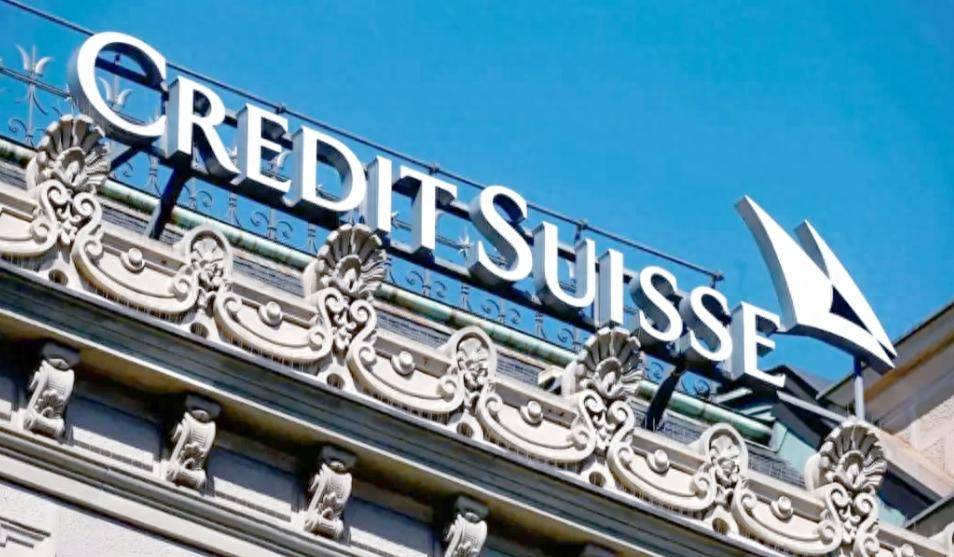
Core Insights - Credit Suisse, once regarded as a safe haven with over 160 years of history, collapsed overnight, leading the Swiss government to write down $17 billion (approximately 16 billion Swiss francs) of Credit Suisse bonds to zero, rendering them worthless for investors [1][8] - UBS acquired Credit Suisse for $3.2 billion, a stark contrast to Credit Suisse's total managed assets of $1.5 trillion, which is equivalent to Switzerland's GDP for two years [3][8] - The collapse of Credit Suisse was attributed to a long-term decline exacerbated by a liquidity crisis, highlighted by the refusal of its largest shareholder, the Saudi National Bank, to provide further capital [5][8] Company Analysis - Credit Suisse's downfall can be traced back to its historical commitment to client confidentiality, which attracted significant amounts of illicit funds, leading to substantial fines and a tarnished reputation [6][8] - The bank's aggressive investment strategies, particularly in its investment banking division, resulted in significant losses, such as the $5.5 billion loss from the Archegos Capital incident in 2021 [6][8] - The recent global banking crisis, triggered by the collapse of Silicon Valley Bank, intensified scrutiny on Credit Suisse, leading to a bank run after the Saudi National Bank's public statement [8] Regulatory and Market Impact - The Swiss government's intervention to facilitate UBS's acquisition of Credit Suisse involved breaking traditional financial rules by writing down high-priority AT1 bonds to zero, which has raised concerns about the integrity of financial contracts [8] - The merger resulted in UBS becoming a financial entity with assets exceeding six times Switzerland's GDP, highlighting the consolidation trend in the banking sector [3][8] - The events surrounding Credit Suisse's collapse serve as a cautionary tale about the risks of complacency and the potential for even the most established institutions to fail under pressure [8]


【防非动态】当春联遇上防诈骗,湖南金融中心用“年味普法”筑牢金融安全墙
Xin Lang Cai Jing· 2026-02-09 10:10
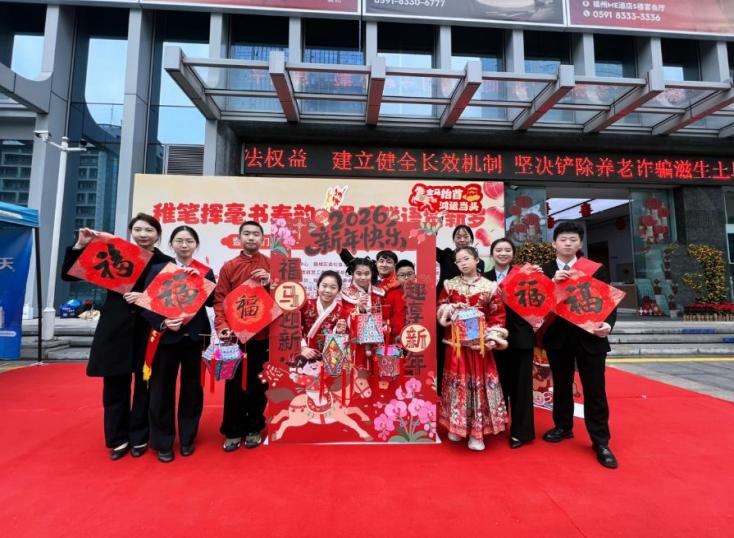
Core Viewpoint - The event held in Hunan aimed to enhance financial risk awareness among residents, particularly vulnerable groups, by integrating traditional cultural elements with modern financial education [1][11]. Group 1: Event Overview - The event took place on February 7, coinciding with the Lunar New Year, and was themed "Ink and Calligraphy Celebrating the New Year, Financial Safety" [1]. - It focused on educating residents about the risks of illegal financial activities, especially during a period of high financial activity and potential scams [3][13]. Group 2: Target Audience and Content - The event specifically targeted elderly individuals and community families, who are often more susceptible to financial fraud [3][13]. - Topics covered included prevalent scams in the areas of elder financial fraud, virtual currency speculation, and illegal agency rights protection [3][13]. Group 3: Innovative Approach - Unlike traditional one-way communication, the event utilized an interactive and relatable approach, featuring calligraphy displays that combined cultural elements with financial safety messages [5][15]. - Special spring couplets created during the event served as both cultural gifts and tools for spreading financial safety awareness [5][15]. Group 4: Community Engagement - Eight financial institutions set up public consultation booths, where staff and volunteers provided face-to-face advice on rational investment and identifying financial scams [7][17]. - The consultations aimed to make complex financial legal knowledge accessible and practical for everyday life, enhancing the public's ability to recognize and prevent financial risks [7][17]. Group 5: Feedback and Future Plans - Participants expressed appreciation for the combination of traditional culture and modern financial knowledge, finding it memorable and engaging [21]. - The organizers plan to continue innovating educational methods tailored to different community groups, aiming to solidify financial legal knowledge and enhance community protection against financial risks [21].






墨香迎新春 金融护民安 厦门国际银行在福州开展2026新春游园会活动
Jin Rong Jie· 2026-02-06 01:44
Group 1 - The core event is the "Spring Festival Garden Party" organized by Xiamen International Bank Fuzhou Branch, attracting nearly a hundred local residents to celebrate the New Year with a blend of cultural activities and financial services [1] - The bank staff provided practical advice on common scams prevalent during the Spring Festival, distributing over a hundred anti-fraud brochures and emphasizing protective measures such as "do not trust, do not disclose, do not transfer" [3] - The event featured interactive areas for games and financial knowledge, where bank staff integrated financial education into fun activities, reinforcing residents' awareness of financial risks [6] Group 2 - The bank plans to continue focusing on community needs, delivering warm financial services and ensuring financial safety, while responding to every financial demand with care and attention [8]
Mhmarkets迈汇:全球央行购金需求韧性凸显
Xin Lang Cai Jing· 2026-02-05 13:34
Core Viewpoint - The strategic position of gold as a reserve asset remains unshakable despite the complex evolution of the global financial environment, with central banks showing strong resilience in gold purchases throughout the year [1][2]. Group 1: Central Bank Purchases - In December 2025, global central banks added 19 tons of gold through open channels, bringing the total reported net purchases for the year to 328 tons, a slight decrease from 345 tons in 2024, which is considered a reasonable adjustment given the annual price fluctuations [3][4]. - In December, total gold purchases by central banks reached 30 tons, while total sales were only 11 tons, maintaining an average monthly net absorption of 27 tons at a high level [3]. Group 2: Country-Specific Trends - The sovereign buying trend was notably driven by Central Asian and Eastern European countries in December, with Uzbekistan leading by adding 10 tons, followed by Kazakhstan and Poland with 8 tons and 7 tons respectively [2][4]. - Poland emerged as the top buyer for the year with a substantial net purchase of 102 tons, while Kazakhstan, the Azerbaijan State Oil Fund (SOFAZ), Brazil, and Turkey also made significant contributions to gold purchases [4]. Group 3: Future Outlook - Despite some countries like Singapore and Ghana showing a degree of reduction in gold holdings, this does not undermine the overarching logic of global official increases in gold reserves [2][4]. - The demand for gold as a "hard currency" without the need for backing is expected to strengthen its role as a stabilizing asset on central bank balance sheets, with strategic allocations by sovereign institutions anticipated to support the bottom of the gold market in the long term [2][4].

法治护航有力度有温度
Xin Lang Cai Jing· 2026-02-04 23:41
Core Viewpoint - Financial security is a crucial component of national security, and the construction of a strong financial nation is emphasized in the "14th Five-Year Plan" [2] Group 1: Financial Risk Prevention - The Suzhou procuratorial authorities are actively engaged in preventing and mitigating financial risks through precise case handling, collaborative governance, and professional empowerment [2] - Innovative use of a penetrating evidence review mechanism, focusing on electronic data examination, has successfully addressed new financial crimes such as virtual currency and encrypted communication [2] - The procuratorial authorities emphasize both punishment and governance, analyzing individual cases and issuing prosecutorial suggestions and risk warning letters to enhance internal controls and risk prevention in the industry [2] Group 2: Collaborative Mechanisms - Establishment of collaborative mechanisms and the "Procuratorial-Banking Cooperation" platform aims to strengthen collective efforts in risk prevention [2] - Promotion of anti-fraud public legal education is part of the strategy to create a robust financial security network [2] Group 3: Impact on Business Environment - A healthy financial ecosystem plays a significant role in optimizing the business environment and boosting market confidence [2] - The procuratorial authorities are expected to continue their high-quality performance, integrating risk prevention, regulatory strengthening, and development promotion into their responsibilities [2]

金融暖冬护民生 江苏银行北京安定门支行多维筑牢新春反假币防线
Xin Jing Bao· 2026-02-04 06:22
Core Viewpoint - As the Spring Festival approaches, the demand for cash increases, leading to heightened cash security risks. Jiangsu Bank's Beijing Andingmen Branch is actively promoting anti-counterfeiting knowledge to strengthen financial security for citizens during the holiday season [1]. Group 1: Anti-Counterfeiting Initiatives - The branch utilizes its lobby as a central area for anti-counterfeiting education, displaying warning slogans on LED screens and providing brochures and manuals in waiting areas and at counters [1]. - Special seminars are organized for vulnerable groups, such as the elderly, to explain the anti-counterfeiting features of the Renminbi and the rules for exchanging damaged currency, enhancing their ability to identify counterfeit money [1]. - A promotional team is formed to visit local communities and businesses, explaining key anti-counterfeiting points and analyzing typical cases to raise awareness [1]. Group 2: Community Engagement and Services - The branch has established a green channel for small change exchange for merchants, reinforcing anti-counterfeiting awareness while addressing practical needs [1]. - The outreach efforts cover a diverse range of groups, including in-store customers, community residents, and street merchants, ensuring that anti-counterfeiting knowledge is effectively communicated [1]. - Jiangsu Bank's Beijing Andingmen Branch aims to integrate anti-counterfeiting education into its regular operations, demonstrating the institution's commitment to financial safety and community service during the festive season [1].

高质量发展数字人民币 助力金融强国建设
Xin Lang Cai Jing· 2026-02-03 19:47
Core Viewpoint - The development of digital RMB is positioned as a crucial component in enhancing the central banking system and constructing a robust monetary policy framework, aiming to establish a financial powerhouse in China [1] Group 1: Digital RMB Development - The digital RMB has been recognized as an essential financial infrastructure in the digital economy era, with its development being a strategic initiative for deepening financial supply-side structural reforms and maintaining national financial security [1] - The People's Bank of China plans to implement a new generation of digital RMB management and service systems by January 1, 2026, marking the upgrade from version 1.0 (digital cash) to version 2.0 (digital deposit currency) [1] Group 2: Monetary Policy Effectiveness - The comprehensive promotion of digital RMB is expected to significantly enhance the precision and transmission efficiency of monetary policy, providing robust monetary tools for building a financial powerhouse [2] - Digital RMB's programmable features allow for targeted fund allocation, ensuring that credit flows to key sectors such as technological innovation and green manufacturing, thus addressing structural challenges in traditional monetary policy [2] Group 3: Financial Security - In the context of rising geopolitical risks, digital RMB plays a strategic role in maintaining national financial security, with its infrastructure and core data fully controlled by the state [3] - Digital RMB aims to reconstruct the cross-border payment and settlement system, enhancing the international competitiveness of the RMB by lowering costs and barriers for cross-border transactions [3] Group 4: Financial Inclusion - Digital RMB is designed to lower the barriers to accessing financial services, improving coverage and quality, particularly benefiting small and micro businesses by saving transaction costs [5] - The offline payment capability of digital RMB ensures basic payment needs are met even in areas with poor network signals, thus bridging the "digital divide" in financial services [5] Group 5: Empowering the Real Economy - Digital RMB is viewed as a vital financial innovation tool for promoting the integration of digital and real economies, enhancing the efficiency of supply chain finance and industry collaboration [6] - The low-cost settlement mechanism of digital RMB is expected to alleviate funding bottlenecks for enterprises, thereby supporting their operational needs [6] Group 6: Social Governance Innovation - Digital RMB offers unique advantages in government public service payments, enhancing transparency, security, and convenience for vulnerable groups [7] - The "controllable anonymity" feature of digital RMB protects user privacy while allowing the state to monitor for serious crimes, thus improving governance efficiency [7] Group 7: Strategic Value Recognition - Recognizing the strategic value of digital RMB, the implementation of the action plan is seen as an opportunity to innovate steadily, improve the ecosystem, and expand application scenarios, contributing to the construction of a financial powerhouse and providing a reference for global digital currency development [8]

美国犹太人资本巨头贝莱德,已经全面渗透中国市场?
Sou Hu Cai Jing· 2026-02-03 15:44
Core Viewpoint - BlackRock has established itself as a dominant player in the global asset management industry, leveraging technology and strategic acquisitions to grow its assets under management significantly over the years [2][4][6]. Group 1: Company History and Growth - BlackRock was founded in 1988 by Larry Fink and seven partners, initially as a division of Blackstone focused on fixed income asset management [2]. - The company became independent in 1994 and went public in 1999, with assets under management reaching hundreds of billions [4]. - By 2006, BlackRock acquired Merrill Lynch's investment management business, increasing its assets to $1 trillion, and further expanded by purchasing Barclays' iShares business in 2009 for $13.5 billion, becoming a leader in the ETF market [4]. Group 2: Current Asset Management and Market Influence - By the end of 2025, BlackRock is projected to manage over $12.5 trillion in assets, with estimates reaching $14 trillion in early 2026, making it the third-largest asset manager globally [6]. - The company operates in over 30 countries with more than 20,000 employees and serves clients from over 100 regions [6]. - BlackRock's technology solutions, including the Aladdin system, play a crucial role in risk management and investment strategies [2][6]. Group 3: Investment Strategies in China - BlackRock has significantly increased its presence in the Chinese market, influencing over 1,200 listed companies through more than 200 ETF products, with its iShares MSCI China ETF being a major conduit for over $50 billion in foreign investment [8]. - The company employs complex fund structures to navigate ownership limits in China, allowing it to maintain substantial stakes in key sectors such as new energy and technology [10]. - Notable holdings include 7.02% in BYD, 5.18% in Kuaishou, and significant stakes in major Chinese banks and state-owned enterprises [11]. Group 4: Regulatory Environment and Strategic Adjustments - In response to foreign investment penetration, China has implemented stricter regulations to ensure financial security while still welcoming foreign capital [14][16]. - Recent regulatory changes have lowered barriers for foreign investors, allowing for more flexible investment strategies and reduced holding periods [16]. - BlackRock's operations in China are subject to ongoing regulatory scrutiny, necessitating strategic adjustments to align with local policies [18][20].


守牢金融安全防线 激活资产价值潜能 北京资产交出“十四五”亮眼答卷
Sou Hu Cai Jing· 2026-01-29 20:06
Core Viewpoint - Beijing Asset Management Co., Ltd. has achieved significant growth and operational efficiency during the 14th Five-Year Plan period by focusing on non-performing asset management and contributing to the capital's economic development and risk mitigation [1][2]. Group 1: Business Performance and Strategy - The company has established a robust business structure centered on non-performing asset acquisition and disposal, with a compound annual growth rate exceeding 20% and a fourfold increase in operating income during the 14th Five-Year Plan [2][3]. - Beijing Asset has implemented a "bad asset +" business model, integrating traditional and innovative services to enhance financial risk resolution [2]. - The company has successfully completed various projects, such as the revitalization of the high-profile Xingsong West Street project, showcasing its expertise in asset management and risk mitigation [3]. Group 2: Governance and Leadership - The integration of party leadership into corporate governance has strengthened the company's operational framework, ensuring effective risk management and strategic decision-making [5][6]. - The company has established a dual leadership system to align party and corporate governance, enhancing accountability and oversight [5]. - A talent development strategy has been implemented to optimize workforce structure and improve operational efficiency [6]. Group 3: Commitment to Economic Development - Beijing Asset is committed to supporting the real economy by providing financial services to state-owned enterprises, listed companies, and technology-driven firms, thereby facilitating asset optimization and operational efficiency [6][7]. - The company aims to enhance its role as a financial stabilizer and resource connector, focusing on strategic emerging industries and technological innovation [6][7]. - Continuous improvement of risk monitoring and compliance culture is prioritized to ensure sustainable growth and effective management [6][7].
将撤回1200吨黄金?德国就要求欧洲对华划红线,首个受害者已浮现
Sou Hu Cai Jing· 2026-01-28 07:43
Group 1 - German lawmaker Strack-Zimmermann calls for the repatriation of over 1,200 tons of gold reserves stored in New York, citing increasing global instability and uncertainty in U.S. policies as reasons for this move [2][6] - The current situation, where approximately 37% of Germany's gold reserves are held overseas, is deemed no longer in the country's best interest or a wise decision [6][11] - This action reflects Germany's deepening distrust towards the U.S. and a desire to enhance its financial security amid ongoing geopolitical tensions [11][13] Group 2 - The President of the German Central Bank, Nagel, emphasizes the need for Europe to adopt a stronger stance to protect its key industries from competition with China, suggesting the establishment of a clear boundary against Chinese industrial policies [9] - Despite acknowledging the importance of the Chinese market for European businesses, Nagel warns against naivety regarding China's industrial strategies, indicating a complex relationship between dependency and competition [9] - Germany's automotive industry faces significant pressure from China's rapid advancements in electric vehicles, which threaten its long-standing dominance in the global automotive sector [13] Group 3 - The value of machinery exports from Chinese manufacturers to the EU has surged from approximately €20 billion in 2018 to an expected €50 billion by 2026, indicating a doubling growth rate that intensifies competition for German manufacturers [13] - Although Germany currently exports more machinery to China than it imports, the rapid growth of China's machinery sector is causing concern among German industry insiders [13] - The conflicting stance of Germany—relying on Chinese markets while simultaneously pushing for decoupling—highlights the complexities of global competition and national interests in the current economic landscape [13]