
黄金泡沫

Search documents
金价一路狂飙 黄金估值是否偏贵甚至存在泡沫?专家提示风险
Nan Fang Du Shi Bao· 2026-01-14 09:08
Core Insights - The article discusses the significant rise in gold prices, which reached a historical high of nearly $4640 per ounce on January 14, 2026, and the implications for consumer behavior and investment strategies in the context of macroeconomic trends [1][6]. Group 1: Gold Price Trends - Gold prices have surged approximately 70% in 2025, with notable fluctuations occurring three times throughout the year due to various economic and political factors [2][3]. - The first fluctuation occurred from January to April 2025, driven by investor concerns over U.S. economic policies under President Trump, leading to increased demand for gold as a safe-haven asset [2]. - The second fluctuation happened from September to October 2025, as the Federal Reserve initiated a rate-cutting cycle, enhancing liquidity and supporting gold prices amid concerns over the Fed's independence [2][3]. - The third fluctuation took place from late November to early December 2025, where initial hawkish signals from the Fed were followed by a dovish shift, resulting in a rise in gold prices [3]. Group 2: Gold as a Safe-Haven Asset - Gold is characterized as a typical "safe-haven asset," benefiting from geopolitical events and rising global risks, which have increased its long-term investment value [4]. - The article highlights a specific instance where gold prices rebounded following a military action by the U.S. against Venezuela, reaffirming its role as a protective asset during crises [4]. Group 3: Pricing Dynamics - The pricing of international gold and gold jewelry differs significantly; international gold prices reflect financial market valuations, while jewelry prices incorporate additional costs such as craftsmanship and brand premiums [6][7]. - The relationship between international gold prices and domestic jewelry prices is not always synchronous due to differing influences, with jewelry prices often adjusting more slowly to changes in gold prices [7]. Group 4: Future Outlook and Valuation Concerns - Current models suggest that gold prices may be overvalued and could experience a bubble, particularly as they exceed calculated long-term price levels [8][9]. - Historical analysis indicates that while gold prices can deviate from fundamental values, significant changes in economic policy or conditions could lead to adjustments in investment strategies [11]. - Despite the current bullish sentiment, the article cautions against assuming perpetual price increases, emphasizing the need for vigilance regarding economic policy changes that could impact gold prices [11][12].

今日财经要闻TOP10|2026年1月11日
Xin Lang Cai Jing· 2026-01-11 11:50
Group 1 - The "Is it dead?" app, developed with a cost of just over 1000 yuan, has gained unexpected popularity on social media and is already profitable [1] - The app was initiated around mid-2025 and took less than a month to develop with a team of three young developers [1] - The founder plans to sell 10% of the company for 1 million yuan, implying a valuation of 10 million yuan for the app [1] Group 2 - The U.S. Central Command has conducted a large-scale strike against multiple targets of the extremist group "Islamic State" in Syria, as part of the "Eagle Eye Strike" operation [2] - This military action was ordered by President Trump in response to a deadly attack by the Islamic State on U.S. and Syrian government forces [2] Group 3 - The U.S. Secretary of the Treasury indicated that the U.S. may soon lift sanctions on Venezuela to promote oil sales and facilitate international financial engagement [14] - The U.S. is considering using Venezuela's frozen IMF Special Drawing Rights for economic reconstruction, with small private energy firms expected to return to the country before larger companies [14] Group 4 - The National Business Work Conference emphasized the need to optimize the implementation of the old-for-new consumption policy to expand and upgrade commodity consumption [4] - The conference outlined eight key areas for the national business system to focus on, including enhancing service consumption, promoting trade innovation, and improving foreign investment attractiveness [4]
邵宇:人工智能或是人类历史上最大的一次泡沫
Xin Lang Cai Jing· 2026-01-11 03:56
Group 1 - The 2026 China Chief Economist Forum Annual Meeting will be held on January 10-11 in Shanghai, with the theme "Chess in the Middle Game: Building a Strong Nation" [1][2] - Senior researcher Shao Yu from the National Financial and Development Laboratory attended and delivered a speech at the forum [1][2] Group 2 - Shao Yu identified the three hardest bubbles in 2026 as: first, gold; second, the volatile gold this year; and third, artificial intelligence [3][5] - He emphasized that artificial intelligence represents not only a current bubble but also the largest bubble in human history to date [3][5] - Shao Yu categorized technology bubbles as the least harmful type, arguing that significant technological and industrial innovations are often driven by bubbles, which direct more resources into these areas [3][5]

黄金2025:70%狂飙与金融“新锚”的诞生
Sou Hu Cai Jing· 2026-01-02 15:08
Market Overview - The gold market experienced a significant transformation in 2025, with prices soaring from around $2,600 to nearly $4,600 per ounce, marking the largest increase since the 1979 oil crisis, with a rise exceeding 70% [1][3] - London spot gold recorded an annual increase of over 60%, achieving its strongest performance in 46 years [1] Price Dynamics - The year began with gold prices fluctuating between $2,600 and $3,000 per ounce, but by March, it broke the $3,000 mark [3] - In September, driven by factors such as the Federal Reserve's interest rate cuts, gold saw its highest monthly increase of 11.92% [3] - By October, gold prices surpassed $4,000, and by December 26, it reached a historic high of $4,549.96 per ounce [3] Precious Metals Sector - The entire precious metals sector saw a correlated rise, with silver prices increasing nearly 150% and platinum reaching a historic high above $2,300 per ounce [4] - The traditional pricing logic of gold being strong when the dollar is weak has shifted, with a new multi-faceted market structure emerging [4] Central Bank Behavior - The decline in the dollar's share of global foreign exchange reserves from over 70% to around 58% has prompted central banks to diversify their reserves, significantly increasing gold holdings [4] - As of November, China's central bank held 7.412 million ounces of gold, marking a continuous increase for 13 months [4] Industry Impact - The surge in gold prices has led to significant stock price increases for gold-related companies, with some stocks like Zhaojin Gold rising by 228.97% [6] - Major mining companies are accelerating global acquisitions, with Zijin Mining planning to invest $1.2 billion in a large gold mine in Kazakhstan [6] Investment Trends - Investment strategies are shifting from traditional gold bars to gold ETFs and online investment products, with global physical gold ETF inflows reaching $5.2 billion in November [6] - The Chinese market led the inflows, contributing $2.2 billion [6] Consumer Behavior - High gold prices have reshaped consumer markets, with a notable resurgence in "gold crafting" businesses [7] - Retail trends indicate a preference for smaller, high-quality gold items, with companies like Laopuhuangjin seeing stock price increases of 156.22% [9] Market Speculation - Discussions around a potential "gold bubble" have emerged, with analysts noting that gold prices have exceeded long-term forecasts [10] - The market dynamics have shifted beyond traditional interest rate frameworks, focusing on a deeper reassessment of the monetary credit system [10]


“微”观行业之变|黄金叙事2025:站在历史高位 浮现泡沫还是继续闪耀?
Xin Hua Cai Jing· 2025-12-31 12:12
Core Viewpoint - The gold market has experienced significant price increases in 2025, with concerns about potential bubbles emerging as gold prices reach historical highs. The industry is undergoing transformations across various segments, with expectations for continued growth and changes in consumer behavior leading into 2026 [1][15]. Group 1: Market Performance - In 2025, global gold prices surged, with London spot gold achieving a cumulative increase of over 60%, peaking at $4,550.12 per ounce, marking the strongest annual performance in 46 years [2]. - Major gold mining companies have seen substantial stock price increases, with companies like Zhaojin Gold rising by 228.97% and several others exceeding 100% growth [4]. - Zijin Mining's market capitalization has significantly increased, crossing the 880 billion yuan mark, positioning it among the top three global listed metal mining companies [5]. Group 2: Industry Dynamics - The introduction of new tax policies in November 2025 has transformed the operational landscape of the gold industry, exempting certain transactions from value-added tax and accelerating industry consolidation [6]. - The new tax framework has led to increased order volumes for compliant companies, with some reporting an 8% increase in orders from retail clients and a 15% increase from regional brand clients [6]. Group 3: Consumer Trends - There is a noticeable shift in consumer preferences towards traditional gold crafting and personalized jewelry, driven by rising gold prices. The demand for customized gold jewelry has surged, with significant online engagement around "gold crafting" topics [10]. - Products like low-weight gold accessories and ancient-style gold items have gained popularity, reflecting a trend towards more affordable and personalized gold purchases [11]. Group 4: Future Outlook - Analysts predict that gold prices may continue to rise by 15% to 30% in 2026, supported by factors such as Federal Reserve interest rate cuts and ongoing geopolitical tensions [16]. - Concerns about potential bubbles in the gold market have been raised, with some analysts suggesting that current prices may exceed short-term valuation models, indicating a need for cautious investment strategies [17].
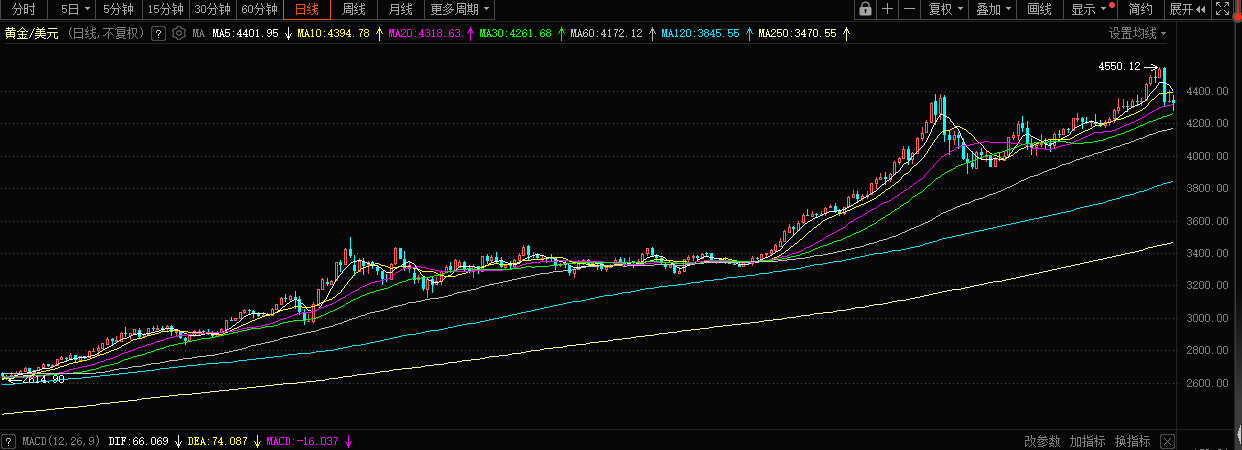
黄金价格逼近历史新高!单日狂飙200美元,央行购金量创十年新高
Sou Hu Cai Jing· 2025-12-15 05:51
Group 1 - The core viewpoint of the article highlights a significant surge in gold prices, nearing historical highs, driven by various factors including central bank purchases and geopolitical tensions [1][3][4] Group 2 - Gold prices have skyrocketed, with international gold prices surpassing $4300 per ounce, marking a 1.17% daily increase and the best annual performance since 1979 [3] - Domestic gold jewelry prices have also surged to 1337-1339 yuan per gram, with trading markets experiencing multiple price adjustments in a single day [3] - The correlation between gold and silver prices has increased significantly, with gold's annual increase nearing 60% and silver's nearly 100% [3][5] Group 3 - The Federal Reserve's recent interest rate cuts have lowered the opportunity cost of holding gold, contributing to increased liquidity in the market [4] - Global central bank gold purchases are projected to reach 1000 tons in 2025, marking a fourth consecutive year of record-breaking purchases [5] - The shift in reserve assets from a "dollar-based" to a "gold-based" strategy is evident, with gold reserves surpassing U.S. Treasury holdings for the first time [5] Group 4 - Geopolitical risks, including tensions in the Middle East and ongoing inflation, have heightened the appeal of gold as an inflation hedge [6] - The global demand for gold has increased by 3% year-on-year in Q2 2025, with central bank purchases contributing significantly [6] Group 5 - Speculative trading in gold has reached alarming levels, with leverage ratios nearing 100 times in certain markets, raising concerns about potential liquidity crises [7] - Technical indicators suggest that gold may be overbought, with potential short-term correction pressures identified [8] Group 6 - The correlation between gold and the S&P 500 index has reached a 50-year high, indicating a potential systemic risk if both markets were to decline simultaneously [9] Group 7 - Optimistic scenarios predict gold prices could reach $5000 per ounce if the Federal Reserve continues to lower interest rates and geopolitical tensions escalate [10] - Neutral scenarios suggest a price range of $4000-$4200 per ounce, supported by ongoing central bank purchases [11] - Pessimistic scenarios indicate a potential drop to $3500 per ounce if the U.S. economy stabilizes and real interest rates rise [12] Group 8 - Investment strategies suggest prioritizing physical gold, particularly bank gold bars, to avoid high-leverage traps in the market [13] - The largest gold ETF, SPDR Gold Shares, is recommended for substantial allocations [13] - Mining stocks, such as Newmont Mining, are noted for their price elasticity compared to gold prices [13]
目标价5300美元!黄金还能冲多高?专家警告:小心泡沫一戳就破!
Sou Hu Cai Jing· 2025-12-14 12:23
Core Viewpoint - The price of gold has surged nearly 60% in 2025, reaching over $4,200 per ounce, with optimistic targets from JPMorgan suggesting it could hit $5,300. However, the Bank for International Settlements warns that this simultaneous explosive rise in gold and U.S. stocks is unprecedented in 50 years and often precedes a market bubble burst [1][3]. Group 1: Market Dynamics - The S&P 500 has increased by 16%, while gold has skyrocketed by 60% within the same year, indicating a significant market rally [1]. - The term "explosive" describes the rapid price increases, which historically have been precursors to market corrections, as seen in past instances like the 1980 gold peak and the 2000 stock market crash [3]. Group 2: Investor Behavior - Retail investors are becoming the main drivers of the current gold market, with major funds experiencing high premiums and banks raising gold purchase thresholds, indicating a potential divergence between retail enthusiasm and institutional caution [5]. - The contrasting behavior of retail investors rushing to buy gold while institutions are quietly withdrawing is often seen as a negative signal for market stability [5]. Group 3: Future Projections - Analysts from major financial institutions like CICC, UBS, Goldman Sachs, and JPMorgan are bullish on gold, citing strong support from central banks, a weakening U.S. economy, and geopolitical tensions as key factors driving demand [5]. - The silver market is experiencing a different dynamic, with high demand from sectors like solar energy and electric vehicles leading to a projected supply shortage of 820 million ounces by 2025 [7]. - However, there are warnings that if the Federal Reserve halts interest rate cuts and the dollar strengthens, gold prices could potentially drop below $4,000 in the latter half of 2026 [7].
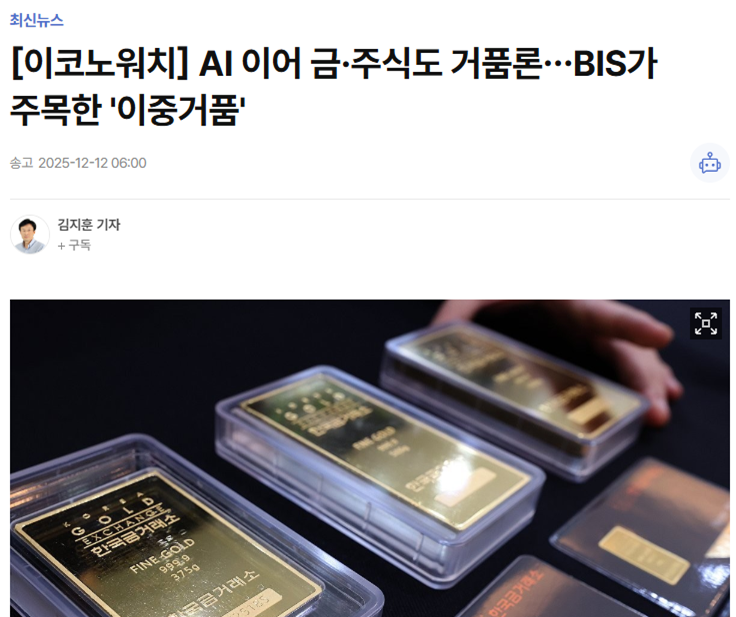
国际金价大幅收涨突破4300美元,却遭国际清算银行发出泡沫警告
Huan Qiu Wang· 2025-12-12 01:20
Group 1 - The international precious metals futures saw a general increase, with COMEX gold futures rising by 2.00% to $4309.30 per ounce and COMEX silver futures increasing by 4.83% to $63.98 per ounce, supported by the Federal Reserve's third interest rate cut of the year to 3.50%-3.75% and Powell's statements enhancing expectations for monetary easing [1] - Gold prices have surged by 60% this year, marking the highest annual increase since 1979, with a 20% rise since September, driven by an influx of retail investor funds and central banks' continuous gold purchases [1] - The Bank for International Settlements (BIS) issued a warning in its quarterly report regarding the rapid rise in gold and U.S. stock prices, indicating potential bubbles that may lead to significant corrections [4] Group 2 - The surge in gold prices has led to speculation, raising concerns about the safety of gold as an asset, and questioning what other assets could serve as safe havens during price declines [4] - In Shenzhen, the Gold and Jewelry Industry Association issued a warning about certain gold companies engaging in "pre-priced trading," which may be illegal, yet such practices have continued to evolve into more complex and hidden forms [4] - Some trading platforms have shifted from promoting "pre-priced" concepts to "pricing settlement" models, with leverage ratios approaching 100 times, indicating a trend towards more aggressive trading practices [4]
【UNforex 财经事件】黄金跌至一周低点 FOMC前仓位降温与泡沫警讯升温
Sou Hu Cai Jing· 2025-12-09 09:36
Core Viewpoint - International gold prices have recently declined to around $4,170, marking a new low for the week, primarily driven by routine position adjustments ahead of the Federal Reserve's interest rate decision [1] Group 1: Market Dynamics - The market is pricing in over an 85% chance of a 25 basis point rate cut at the upcoming Federal Reserve meeting, with discussions about potential easing paths extending into 2026 [1] - The U.S. dollar has rebounded slightly after hitting a low last week, but the strength of this rebound has been insufficient to push gold prices lower significantly [1] - The 10-year U.S. Treasury yield unexpectedly rose to a two-month high, putting direct pressure on non-yielding assets like gold [2] Group 2: Investor Behavior - The Bank for International Settlements (BIS) noted that retail investor funds are simultaneously driving up both gold and U.S. stock markets, with both showing rapid increases [2] - Retail investors have been the primary source of recent fund inflows, while institutional investors remain cautious, indicating potential for increased volatility in the market [2] Group 3: Technical Analysis - Gold prices are currently trading below the 200-hour moving average, with short-term support concentrated in the $4,164–$4,163 range; a break below this level could attract more short positions [3] - Key resistance for gold is at $4,200, with the $4,245–$4,250 range being critical for bulls to regain control [3] Group 4: Risk Factors - The BIS has raised concerns about potential bubbles in both the stock and gold markets, particularly in light of the upcoming policy decisions, which could lead to sudden reversals in market sentiment [4] - Geopolitical uncertainties continue to support safe-haven demand for gold, providing a buffer against further declines [4]
国际清算行:散户投机买入推动黄金迈进“泡沫区域”
Zhi Tong Cai Jing· 2025-12-09 07:13
Group 1 - The core viewpoint of the articles indicates that retail investors have driven the recent rise in gold prices, shifting gold from a traditional safe-haven asset to a more speculative one [1] - The Bank for International Settlements (BIS) noted that there is evidence of retail investors attempting to profit from the gold price surge, which has amplified this upward trend and deviated from the typical safe-haven behavior [1] - BIS highlighted that it is the first time in at least 50 years that gold and stocks have both entered a "bubble territory" simultaneously, suggesting that after such explosive growth, a sharp adjustment is likely to occur [1] Group 2 - Due to rising bond yields, gold and silver futures prices declined, with December gold futures falling by 0.6% to $4187.20 per ounce, ending a three-day winning streak [2] - December silver futures dropped by 1.1% to $57.779 per ounce, marking the fourth decline in five trading days [2] - The market is pricing in a potential interest rate cut by the Federal Reserve, while investors are awaiting further guidance on monetary policy from Powell [2]