
21世纪海上丝绸之路

Search documents
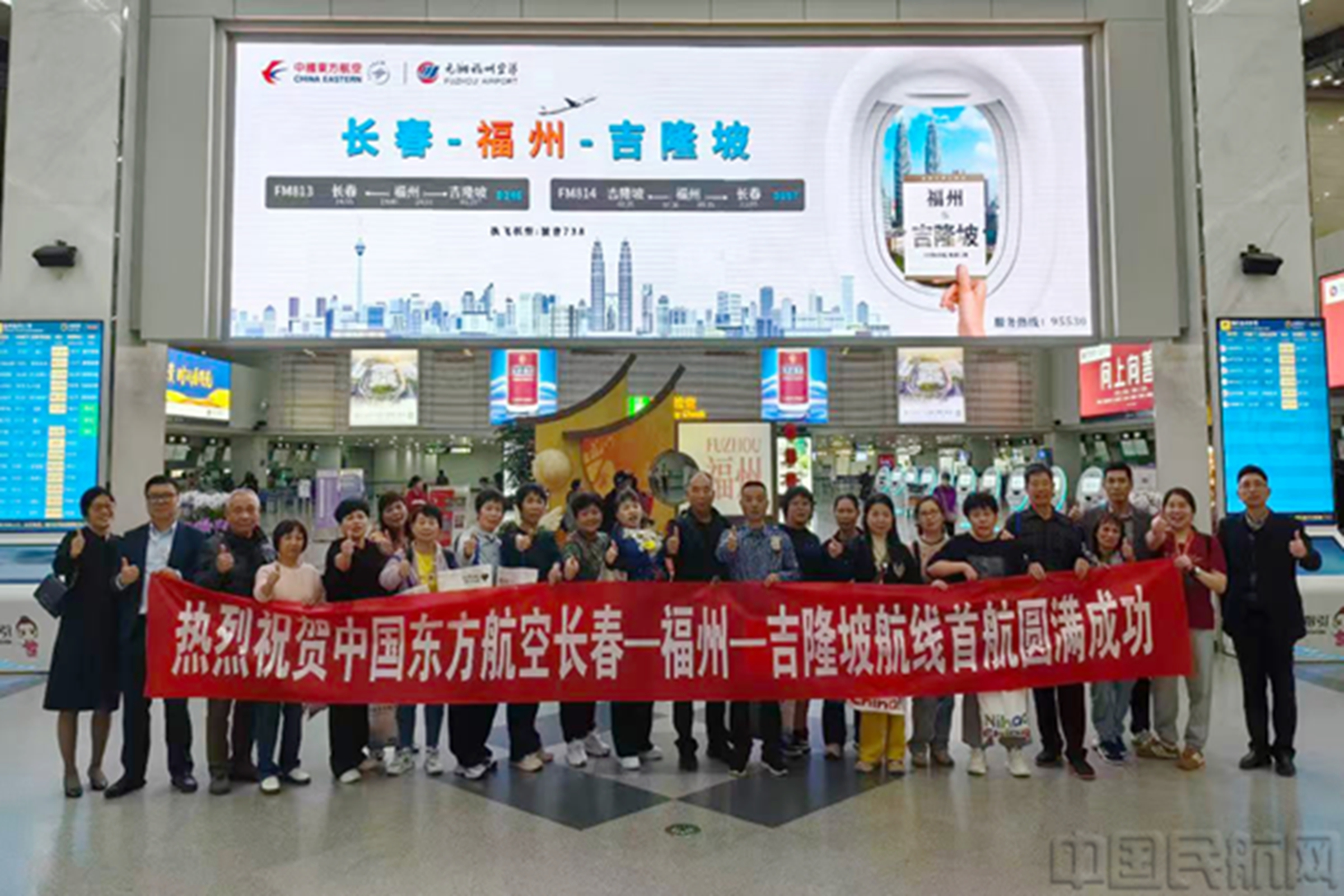
东航“长春—福州—吉隆坡”航线首航 福州海丝枢纽辐射力再升级
Zhong Guo Min Hang Wang· 2025-12-07 16:21
Core Viewpoint - The successful inaugural flight of the "Changchun-Fuzhou-Kuala Lumpur" route by China Eastern Airlines marks a significant step in enhancing connectivity between Northeast China, Southeast coastal regions, and Southeast Asia, reinforcing Fuzhou's position as a key hub in the 21st Century Maritime Silk Road [1][4] Group 1 - The inaugural flight FM814 achieved a passenger load factor exceeding 90% for both outbound and return journeys [1] - The route connects three key locations, providing an efficient "air bridge" and facilitating trade, cultural exchanges, and travel between Northeast China, Fujian, and ASEAN countries [4] - The flight operates using Boeing 737-800 aircraft, with services scheduled on Tuesdays, Thursdays, and Saturdays, offering a total travel time of only 4.5 hours [4] Group 2 - The initial promotional fare for the Fuzhou-Kuala Lumpur segment is set at 450 yuan (excluding tax), which has attracted a high pre-sale passenger load factor of over 80% [4] - This route is part of China Eastern Airlines' strategic collaboration with the Fuzhou municipal government, aimed at enhancing international air travel options and supporting the development of Fuzhou as a modern international aviation hub [4]


利好集结,这一板块逆势集体爆发!
Zheng Quan Ri Bao Wang· 2025-11-14 07:20
Group 1 - The Fujian sector demonstrated resilience and outperformed the market with an average increase of 1.83%, despite a general decline in major A-share indices [1] - A total of 14 stocks in the Fujian sector hit the daily limit up, including notable performers such as Sanmu Group with six consecutive limit ups and *ST Lvkang with seven consecutive limit ups, indicating strong market sentiment towards local stocks [1][2] - The Fujian provincial government has introduced multiple policies since November 2025 to support artificial intelligence, computing infrastructure, new energy, cross-strait integration, and cultural tourism consumption, which has attracted capital attention to the Fujian sector [1][3] Group 2 - Fujian's lithium battery exports reached a record high of 108.38 billion yuan from January to October, accounting for 11.3% of the province's total exports, driven by the global demand for green low-carbon products [3] - The ongoing cross-strait integration policies and Fujian's strategic position as a core area of the "21st Century Maritime Silk Road" are expected to benefit infrastructure, port logistics, and real estate sectors in the long term [2][3] - The development of the marine economy and the focus on high-end marine equipment and engineering are anticipated to further enhance Fujian's economic growth, with companies like Zhongmin Energy leveraging local wind energy resources for stable development [3]




普华永道报告:近六成中资企业拟未来3年加码投资拉美市场
智通财经网· 2025-11-03 08:36
Core Insights - PwC and Hong Kong University released a report highlighting the growing investment of Chinese enterprises in Latin America, particularly in Colombia, Peru, Mexico, and Brazil, driven by strong economic growth and market potential [1][2] Investment Landscape - Over half of the Chinese enterprises operating in Latin America are profitable, with significant profitability reported in Chile (76%) and Mexico (69%) [2] - Nearly 60% of surveyed companies plan to increase investments in Latin America over the next three years, indicating strong confidence in the region [2] - The majority of Chinese enterprises have established regional headquarters in Latin America, primarily located in Colombia (46%), Brazil (43%), and Mexico (26%) [1] Challenges and Risks - The most cited risk by surveyed companies is the complexity and length of government approval processes (56%), followed by foreign exchange controls (50%) and insufficient local policy stability (46%) [2] - Operational challenges include insufficient understanding of local laws and regulations (71%), lack of international talent (46%), and inadequate international management experience (38%) [2] Trade Relations - Latin America is a key participant in China's Belt and Road Initiative, with bilateral trade between China and Latin America growing rapidly for seven consecutive years [2] - The total trade volume between China and Latin America is projected to reach $518.5 billion in 2024, marking a historical high [2]
福建近年来对外投资年均拉动出口近100亿美元
Zhong Guo Xin Wen Wang· 2025-10-14 10:48
Core Insights - Fujian's foreign investment has significantly boosted exports, averaging nearly $10 billion annually due to the rise of local multinational enterprises [1] - The province has implemented continuous open policies since the start of the 14th Five-Year Plan, including the establishment of a "Silk Road Investment" policy and a professional service alliance for enterprises going abroad [1] - From 2021 to August 2025, Fujian has registered 1,175 new foreign investment enterprises with a total agreed investment of $20.96 billion and actual investment of $12.65 billion across 87 countries and regions [1] Group 1 - Fujian's foreign investment is characterized by the emergence of local multinational enterprise clusters, effective overseas park construction, and significant foreign aid cooperation [1] - Notable companies include CATL, which is expanding its global production capacity, and Zijin Mining, which is deepening its resource market presence in Central Asia and South America [1] - Fuyao Glass has established 11 production bases in countries like the USA and Germany, with overseas revenue accounting for 42% of its total, integrating deeply into the supply chains of companies like Tesla and Mercedes-Benz [1] Group 2 - Fujian enterprises have created over 40 overseas industrial parks, covering more than 100 square kilometers [2] - The "Two Countries, Twin Parks" project in Indonesia is a key cooperation initiative, with 36 projects totaling an investment of 51.9 billion RMB, of which 31.5 billion RMB has already been invested [2] - Fujian has conducted over 200 foreign aid training projects, training more than 5,000 participants, and has been a leader in labor export for five consecutive years [2]
政策红利持续释放 福建对外投资呈现三大亮点
Zhong Guo Xin Wen Wang· 2025-10-14 07:54
Core Insights - Fujian's foreign investment is showing three major highlights: the rise of local multinational enterprise clusters, effective overseas park construction, and significant foreign aid cooperation [1][2]. Group 1: Local Multinational Enterprise Clusters - Local multinational enterprises such as CATL, Zijin Mining, and Fuyao Glass are expanding their global presence, contributing to an annual export increase of nearly $10 billion [2]. - CATL is accelerating its global capacity layout with production bases in Hungary and Spain, enhancing its international supply chain influence [2]. - Zijin Mining is deepening its resource market presence in Central Asia and South America, with copper and gold reserves ranking among the world's top [2]. - Fuyao Glass has established 11 production bases in countries like the USA and Germany, with overseas revenue accounting for 42% of its total [2]. Group 2: Overseas Park Construction - The "Two Countries, Twin Parks" project in Indonesia is a key cooperation platform, with a total investment of 51.9 billion yuan across 36 projects, of which 31.5 billion yuan has already been invested [2]. - Fujian enterprises have established over 40 overseas industrial parks, covering more than 100 square kilometers, providing support for small and medium-sized enterprises to venture abroad [2]. Group 3: Foreign Aid Cooperation - Fujian has hosted over 200 foreign aid training projects, training more than 5,000 participants, ranking first in the country [2]. - The application of mushroom grass technology has been implemented in over 100 countries, showcasing Fujian's commitment to foreign aid [2]. Group 4: Future Outlook - The Fujian government plans to enhance its "Mingqi Outbound" comprehensive service system, integrating online and offline resources to support enterprises in international economic cooperation and competition [3].
柬埔寨是天堂,还是地狱?
虎嗅APP· 2025-09-22 13:35
Core Viewpoint - Cambodia is depicted as both a paradise and a hell, highlighting the stark contrast between its historical beauty and the current issues of crime and exploitation, particularly in online scams targeting foreign individuals [5]. Group 1: Economic Opportunities and Challenges - Cambodia has attracted many Chinese entrepreneurs seeking wealth, with reports of significant profits in the restaurant business, where a well-decorated restaurant can yield profits of 2-3 million RMB annually [7]. - The local economy operates on both the Cambodian Riel and the US dollar, with average monthly wages for local workers ranging from 300 to 400 USD, while dining out can cost significantly more, indicating a disparity in income and living costs [8]. - The rapid development of Sihanoukville (West Port) has led to a real estate boom, with property prices soaring to over 4,000 USD per square meter during peak times, but now facing a significant decline, with some properties dropping to as low as 200-300 USD per square meter [10][13]. Group 2: Rise of Online Scams - Cambodia has become a hub for online scams, with estimates suggesting that 10,000 to 150,000 individuals are held against their will to participate in these activities, contributing to an estimated 12.5 to 19 billion USD annually, which constitutes about 40% of Cambodia's GDP [17]. - The decline of the gambling industry, which was previously a significant source of income, has led to the rise of these scam operations, often protected by local political forces [15][17]. Group 3: Societal Dynamics - The Cambodian population is characterized by a mix of innocence and impulsiveness, with a history of turmoil that has left many vulnerable to manipulation and exploitation [21]. - The local economy is heavily reliant on remittances from Cambodians working abroad, particularly in Thailand, which contributes approximately 10% to the national GDP [20].

双面柬埔寨
Hu Xiu· 2025-09-22 02:26
Core Viewpoint - Cambodia is portrayed as a land of both opportunity and peril, where many Chinese individuals seek wealth but often face dire consequences, including kidnapping and death [1][3]. Group 1: Economic Landscape - Cambodia's economy has seen a significant influx of Chinese investment, particularly in sectors like real estate and dining, with reports of substantial profits, such as a restaurant potentially earning 2-3 million RMB annually [4]. - The local currency, the Riel, is used alongside the US dollar, with a notable disparity in income levels; local workers earn around 300-400 USD per month while foreign goods and services are priced in dollars [4]. - The real estate market in Sihanoukville has experienced explosive growth, with property prices soaring to over 20,000 RMB per square meter during peak times, although a significant decline has been observed since then [10][11]. Group 2: Online Fraud and Human Rights Issues - Cambodia has become synonymous with online scams, with estimates suggesting that 100,000 to 150,000 individuals are held against their will to participate in fraudulent activities, primarily affecting foreign nationals [3][14]. - The online fraud industry is estimated to generate between 12.5 billion to 19 billion USD annually, accounting for approximately 40% of Cambodia's GDP [14]. - The U.S. government has imposed sanctions on several telecom fraud groups operating in Southeast Asia, highlighting the severity of the issue and its implications for human rights [15]. Group 3: Societal Dynamics - The Cambodian populace is characterized as both innocent and easily swayed, with a history of turmoil that has left many vulnerable to manipulation [25]. - The decline in tourism, particularly from Chinese visitors, has had a significant impact on local livelihoods, with reports indicating a 70% drop in Chinese tourists, affecting local businesses and employment [22][23]. - The historical context of Cambodia, including the devastating effects of the Khmer Rouge regime, has contributed to a population that is often naive and susceptible to external influences [25].

厦门国际枢纽港临港片区
Sou Hu Cai Jing· 2025-07-18 09:58
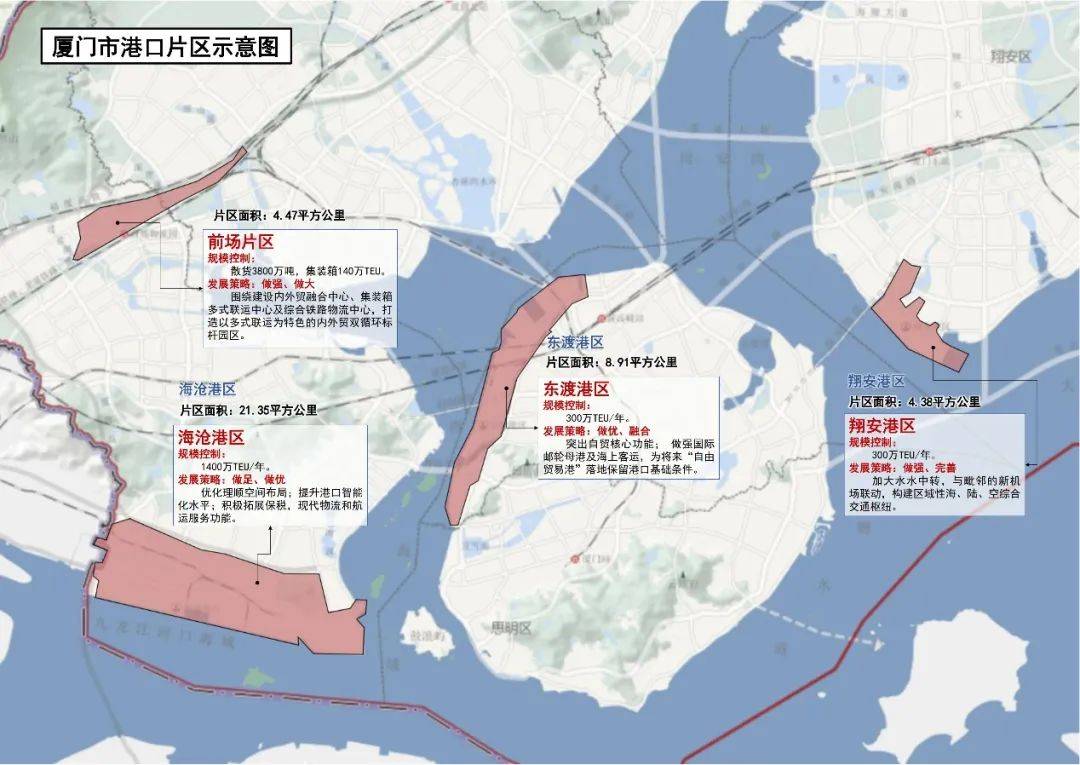
Overview - Xiamen Port is focusing on high-quality development by optimizing port-city relations and enhancing logistics systems, aiming for a container throughput of over 12.25 million TEUs in 2024 [1][3] Major Areas Introduction Haicang Port Area - Haicang Port has 40 berths, with a design capacity of 33.44 million tons and 8 million TEUs annually, aiming to increase container throughput to 14 million TEUs [4][6] - The area focuses on ocean transportation and aims to strengthen its position as a core international container hub [4][6] Dongdu Port Area - Dongdu Port has 23 berths with a design capacity of 257.4 thousand TEUs annually, focusing on near and medium-distance ocean transportation [7] - The area aims to develop modern logistics and shipping services, including international procurement and cross-border e-commerce logistics [7][6] Xiang'an Port Area - Xiang'an Port has 5 berths with a design capacity of 3.3 million tons, focusing on container and bulk cargo transportation [9][10] - The area aims to leverage its deep-water coastline and proximity to Xiamen Xiang'an International Airport to develop a comprehensive transportation hub [9][10] Qianchang Area - Qianchang Logistics Park is positioned as a core logistics hub, focusing on land-based logistics and supporting the construction of an international shipping center [12][13] - The area aims to develop a comprehensive railway logistics center and multi-modal transport solutions, enhancing trade links with Taiwan and Southeast Asia [12][13]
促民心相通 续传统友谊
Ren Min Ri Bao Hai Wai Ban· 2025-06-18 01:41
Core Insights - The article highlights the historical significance of Yijing, a Tang Dynasty monk, as a pioneer in cultural exchange between Malaysia and China, particularly through his documentation of the ancient Kedah Kingdom along the Maritime Silk Road [1][2] - The discussions at the recent seminar emphasize the importance of exploring Yijing's contributions to cultural exchanges, which can enhance mutual understanding between Chinese and Malaysian civilizations [2] Group 1: Historical Context - Yijing, known for his travels along the Maritime Silk Road, documented his journey and experiences, providing valuable insights into the trade and cultural landscape of ancient Malaysia [1] - His writings, including "The Biography of the High Monk Who Sought the Law in the Western Regions" and "The Return of the Law from the South Sea," serve as crucial resources for understanding the historical context of the Maritime Silk Road and ancient Malaysian history [1] Group 2: Cultural Exchange Initiatives - Recent cultural exchange activities inspired by Yijing's legacy include the establishment of the "Yijing Historical Material Memorial Corridor" during the "Yijing International Conference" held in Malaysia [2] - The first Yijing Cultural Forum took place in Jinan on May 20, 2023, and another "Yijing International Conference" is scheduled for July 2024 in Kuala Lumpur, coinciding with the 50th anniversary of diplomatic relations between China and Malaysia [2] - The initiatives aim to deepen cultural exchanges and highlight Yijing's journey as not only a religious pilgrimage but also a significant cultural exchange endeavor [2]
发现报告:传音控股机构调研纪要-20250527
发现报告· 2025-05-27 10:13
Summary of Transsion Holdings Conference Call Company Overview - Transsion Holdings is a provider of smart terminal products and mobile internet services, focusing on emerging markets. The company operates well-known mobile brands TECNO, itel, and Infinix, as well as digital accessories and home appliance brands [3][4][5] Key Financial Performance - For 2024, Transsion reported revenue of 68.715 billion CNY, a year-on-year increase of 10.31%, and a net profit of 5.549 billion CNY, a slight increase of 0.22% [10] - In Q1 2025, revenue was 13.004 billion CNY, a decrease of 25.45% year-on-year, with a net profit of 490 million CNY, down 69.87% [10][12] Market Position and Strategy - Transsion holds a 10.6% share of the global mobile phone market, ranking fourth among manufacturers, and has over 40% market share in the African smartphone market [4][14] - The company aims to expand its presence in emerging markets, including South Asia, Southeast Asia, the Middle East, and Latin America, while also diversifying into digital accessories and home appliances [13] Innovation and R&D - Transsion has established R&D centers in Shanghai, Shenzhen, and Chongqing, focusing on hardware, software, and mobile internet development. As of the end of 2020, the company employed 1,915 R&D personnel [4] - The company emphasizes technological innovation, particularly in imaging technology and localized services, to enhance user experience and maintain competitive advantages [4][11] Competitive Landscape - The company faces increasing competition from brands like Xiaomi and REALME in the African market. However, it has maintained a leading position through localized technology and strong brand recognition [14] - Transsion plans to enhance its mid-to-high-end product offerings and expand its AIoT ecosystem to meet diverse consumer needs [13][15] Challenges and Outlook - The decline in Q1 2025 revenue and profit is attributed to market competition and supply chain costs. The company is focused on stabilizing its operations and improving profitability [12][16] - Transsion's gross margin fell below 20% for the first time in Q1 2025, indicating increased promotional efforts to remain competitive [16] Social Responsibility - Transsion collaborates with the UN Refugee Agency to support educational initiatives for African refugee children, reflecting its commitment to social value creation in emerging markets [3]
