
AI 数据中心

Search documents
硅谷101首场直播:万亿基建市场还是AI投资泡沫?
硅谷101· 2025-11-15 05:38
AI Investment & Capital Expenditure (CapEx) - Tech giants like Nvidia, Microsoft, Amazon, Google, and Meta are increasing their CapEx in AI infrastructure, leading to an "AI data center arms race" [1] - OpenAI's Stargate project, in collaboration with Microsoft and SoftBank, aims to create the largest AI computing cluster [1] - The AI industry is experiencing an "AI capital self-circulation" where tech giants invest in chips and data centers to power their AI models and drive platform growth [1] Market & Valuation Concerns - The market is questioning the rationality of current valuations, the timing of profit realization, and the speed of technology diffusion in the AI sector [1] - There are concerns about whether the "self-circulating" AI capital ecosystem is accelerating the formation of a bubble [1] Key Players & Partnerships - The collaboration between OpenAI, Nvidia, and Microsoft is potentially reshaping the tech capital landscape [1]






硅谷101首场直播:万亿基建市场还是AI投资泡沫?
硅谷101· 2025-11-13 20:08
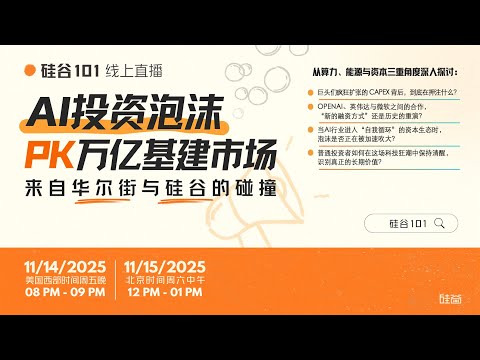
AI Infrastructure Investment - Tech giants like Nvidia, Microsoft, Amazon, Google, and Meta are increasing capital expenditure (CapEx) on AI infrastructure, leading to an "arms race" in AI data centers [1] - OpenAI's Stargate project, in collaboration with Microsoft and SoftBank, aims to create the largest AI computing cluster ever [1] - This accelerated AI investment is creating an "AI capital loop" where giants fund chip and data center construction to power their AI models and drive platform growth [1] Market Concerns - The market is focused on the reasonableness of valuations, the timing of profit realization, and the speed of technology diffusion [1] - Questions arise whether this rapid cycle is a healthy industrial upgrade or a bubble about to burst [1] - The industry is analyzing if the "self-circulating" capital ecosystem in AI is accelerating the inflation of a bubble [1] Strategic Partnerships - The collaboration between OpenAI, Nvidia, and Microsoft is potentially reshaping the tech capital landscape [1] - The industry is evaluating whether this collaboration represents a "new way of financing" or a recurrence of past trends [1] Investment Considerations - Investors are urged to remain clear-headed amidst the tech frenzy and identify genuine long-term value [1] - The discussion will explore what the massive CapEx expansion by tech giants signifies [1]
硅谷101首场直播:万亿基建市场还是AI投资泡沫?
硅谷101· 2025-11-13 19:40
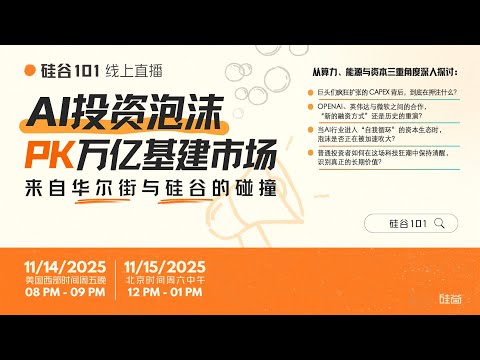
AI Infrastructure Investment - Tech giants like Nvidia, Microsoft, Amazon, Google, and Meta are increasing capital expenditure (CapEx) on AI infrastructure, leading to an "arms race" in AI data centers [1] - OpenAI's Stargate project, in collaboration with Microsoft and SoftBank, aims to create the largest AI computing cluster ever [1] - This accelerated AI investment is creating an "AI capital loop" where giants fund chip and data center construction to power their AI models and drive platform growth [1] Market Concerns - The market is focused on the reasonableness of valuations, the timing of profit realization, and the speed of technology diffusion [1] - Questions arise whether this rapid cycle is a healthy industrial upgrade or a bubble about to burst [1] - The industry is analyzing if the "self-circulating" capital ecosystem in AI is accelerating the inflation of a bubble [1] Strategic Partnerships - The collaboration between OpenAI, Nvidia, and Microsoft is potentially reshaping the tech capital landscape [1] - The industry is evaluating whether this collaboration represents a "new way of financing" or a recurrence of past trends [1] Investment Considerations - Investors are urged to remain clear-headed amidst the tech frenzy and identify genuine long-term value [1] - The discussion will explore what the massive CapEx expansion by tech giants signifies [1]
中际旭创20251031
2025-11-03 02:36
Company and Industry Summary Company Overview - The company reported a revenue of 3 billion RMB in Q3 2025, representing a 30% quarter-over-quarter growth, with a net profit of 31 billion RMB, also reflecting a similar growth rate. Financial indicators have shown steady improvement since the beginning of 2025, with positive cash flow and asset-liability ratios indicating a favorable development trend [2][3][4]. Core Industry Insights - The demand from industry clients has significantly increased, particularly from overseas clients who are ramping up capital expenditures and planning AI data center constructions. This has led to strong demand for 800G and 1.6T optical module products, placing the optical module industry in a high prosperity state. The company anticipates continued improvement in key financial metrics over the next few quarters [2][4]. Financial Performance - In Q3 2025, the company achieved a revenue of 102 billion RMB, a 26% increase from Q2. The gross margin remained strong at nearly 43%, with a consolidated net profit of 33 billion RMB, up from 26 billion RMB in the previous quarter, marking a 30% increase. Overall, financial indicators have shown steady improvement since early 2025 [3][4]. Product Demand and Structure - The optimization of product structure has led to an increase in the proportion of high-end products like 800G and 1.6T in the revenue mix. Both product lines have a high silicon photonics ratio and have received recognition and validation from key clients, suggesting potential for further gross margin growth [2][6]. Supply Chain Management - To address the material shortages anticipated in 2026, the company has proactively stocked up and strengthened collaboration with suppliers. They have also locked in human resources and expanded production capacity to meet rapidly growing market demand, ensuring a competitive edge in a challenging market environment [2][8]. Material Shortages - Currently, optical chips, including EML and CW types, are among the most critical materials in short supply. Despite the company's advance planning and capacity locking, supply remains tight. However, with active cooperation from suppliers, relief is expected in the first half of 2026 [9][12]. Tax and Regulatory Impact - The effective tax rate for the quarter reached 15.8%, slightly higher than before, primarily due to the OECD's Pillar Two global tax reform aimed at preventing low-tax competition. The company has cautiously accounted for potential tax adjustments based on this new framework [10]. Future Outlook - The company is optimistic about the demand for 800G and 1.6T products in 2026, although it acknowledges that all materials are experiencing increased demand, with optical chips being the most constrained. The company aims to effectively manage raw material preparation issues to meet customer demands [12][14]. Investment and Expansion - The company has significantly increased its construction projects, with investments nearing 1 billion RMB, primarily for capacity expansion and factory infrastructure to align with expected orders in 2026. Continuous investment will be necessary to keep pace with demand [17]. Emerging Trends - The optical module sector is witnessing a new trend with the rise of SKU modules, driven by rapid bandwidth demand. Many CSP clients are looking to adopt Ethernet technology for in-cabinet connections, creating new demands for optical connection solutions [18]. Conclusion - The company is well-positioned to capitalize on the growing demand for high-end optical products, with proactive measures in supply chain management and capacity expansion. The anticipated material shortages and regulatory changes will require careful navigation, but the overall outlook remains positive for the upcoming quarters.

加快建设新型能源体系,看好反内卷取得积极效果
2025-10-27 00:31
Summary of Conference Call Records Industry Overview - The conference call primarily discusses the new energy system construction emphasized by the Fourth Plenary Session, focusing on energy structure adjustment, power grid, energy storage, and renewable energy waste utilization [2][3]. Key Points and Arguments 1. **New Energy System Construction**: The Fourth Plenary Session calls for accelerating the construction of a new energy system, which includes adjustments in power sources, grid enhancements, energy storage, and renewable energy waste utilization [2][3]. 2. **AI Data Centers**: By 2026, global AI data center construction power is expected to reach nearly 40GW, significantly driving energy storage demand due to the high stability and real-time response requirements of these centers [6][5]. 3. **Solid-State Battery Developments**: The solid-state battery sector is at a critical juncture, with several companies ramping up capacity and new silicon-based anode materials being developed [7][8]. 4. **Photovoltaic Industry Recovery**: The photovoltaic sector has shown signs of recovery, with some companies turning profitable in Q3. The current PB (Price-to-Book) ratios of many firms remain low, indicating potential value recovery opportunities [10][11]. 5. **Wind Power Growth**: The "Peak Energy Beijing Declaration 2.0" sets a target for annual new wind power installations of no less than 120 million kilowatts, with offshore wind power not less than 15 million kilowatts during the 14th Five-Year Plan period [12]. 6. **Grid Investment**: The power grid sector has seen a steady investment growth of 8.1% year-on-year, with a total investment of 420 billion yuan from January to September [13]. Additional Important Insights - **Focus on Quality Assets**: Recommended companies for investment include Tongwei Co. in silicon materials, LONGi Green Energy in integrated sectors, and inverter companies like Sungrow Power and DeYe [11]. - **Non-Electric Renewable Energy Potential**: Areas such as hydrogen, green hydrogen, and chlor-alkali processes are highlighted as having long-term development potential, despite being in early stages [16]. - **Robotics and Related Industries**: Companies involved in humanoid robotics, such as Fulin Precision, Keda Li, and Jinyang Co., are noted for their strong performance and potential for investment [14][15]. This summary encapsulates the critical insights and recommendations from the conference call, providing a comprehensive overview of the current state and future prospects of the new energy sector.
燃气轮机高景气,关注主轴、叶片等核心零部件
HTSC· 2025-10-21 05:59
Investment Rating - The industry investment rating is "Overweight" (Maintain) for mechanical equipment and specialized equipment sectors [6]. Core Insights - The global gas turbine market is experiencing high demand, driven by the need for power supply in AI data centers, with significant growth expected in gas turbine sales and orders [1][2]. - Key components such as turbine blades and shafts are anticipated to benefit from this growth, with domestic manufacturers poised to enter the global supply chain due to the long expansion cycles of high-end casting and forging production [1][4]. - Major gas turbine manufacturers are planning substantial capacity expansions in response to increasing market demand, with projections indicating a rise in global gas turbine sales to an average of 60 GW annually from 2024 to 2026, a 36% increase from 2023 [3][10]. Summary by Sections Section 1: Gas Turbine Market Dynamics - The gas turbine market is expected to see sustained high growth, with a notable increase in sales and orders driven by the rising electricity demand from AI data centers [1][2]. - The U.S. data center electricity consumption was 176 TWh in 2023, projected to rise to between 325-580 TWh by 2028, representing a CAGR of 13%-27% [2][9]. Section 2: Manufacturer Expansion Plans - The top three gas turbine OEMs accounted for 85% of the market share in 2023, with significant order growth reported [3]. - Mitsubishi Heavy Industries plans to double its gas turbine production capacity within two years due to demand exceeding expectations [3]. Section 3: Domestic Manufacturers' Opportunities - Domestic companies like Deweier, Yingliu, Liande, and Science have made significant strides in the gas turbine sector, with notable increases in order volumes and product offerings [5]. - The high-value components of gas turbines, such as turbine blades and shafts, are currently dominated by foreign suppliers, presenting an opportunity for domestic firms to penetrate the global supply chain [4][5].
电力设备系列:低位+弹性的投资机会
2025-10-16 15:11
Summary of Conference Call on Power Equipment Industry Industry Overview - The power equipment industry is experiencing significant growth driven by the surge in electricity demand from AI data centers, challenges faced by traditional designs, and the global push for renewable energy adoption [1][5] - Solid State Transformers (SST) are identified as a key technology direction due to their ability to enhance power supply efficiency and reliability while reducing size [1][4] Key Companies and Their Focus Areas - **Leading Companies in SST**: - Sifang Co., China XD Electric, Jinpan Technology, and Teradyne are actively engaged in SST equipment development [1][2] - **Overseas Expansion**: - Sanyuan Electric, Huaming, TBEA, and Samsung Medical (Haixing Electric) are noted for their overseas market penetration [2][6] - **New Technology Directions**: - XJ Electric is highlighted for its focus on high voltage and nuclear fusion projects [2][9] Market Trends and Opportunities - **Data Center Demand**: - AI data centers are recognized as a strong market consensus, with SST being crucial to meet their high power demands [4] - **Globalization Drivers**: - The demand for power equipment is increasing due to the proliferation of renewable energy, new electricity needs from data centers, and the replacement of outdated equipment in developed markets [5] - **Emerging Technologies**: - The industry is shifting towards electronic technology solutions for various applications, including data centers, green electricity connections, offshore wind, and nuclear fusion [7] Market Reforms and Future Outlook - **Electricity Trading Market**: - The market is expected to grow significantly post-2026 with the full entry of renewable energy and the gradual rollout of the spot market [8] - **Key Players in Electricity Trading**: - Longxin and Rixin are positioned to leverage their competitive advantages in the electricity trading sector [8] Investment Recommendations - **Focus Areas for Investors**: - In the SST sector, investors should pay attention to China XD Electric, Sifang Co., and Teradyne [9] - For overseas expansion, Sanyuan Electric, Huaming, TBEA, and Haixing Electric are recommended [9] - In new technology directions, XJ Electric is highlighted for its involvement in high voltage and nuclear fusion projects [9] - In the electricity trading space, Longxin and Rixin are noted for their growth potential [9]


金属&新材料行业周报20250922-20250926:供应扰动不断,金属价格持续上涨-20250928
Shenwan Hongyuan Securities· 2025-09-28 12:39
Investment Rating - The report maintains a positive investment rating for the metals and new materials industry, highlighting strong performance in various segments [3][4]. Core Insights - The report indicates that supply disruptions continue to drive metal prices higher, with significant increases observed in copper and precious metals [3][10]. - The overall performance of the non-ferrous metals index has outperformed the broader market, with a year-to-date increase of 56.38%, surpassing the CSI 300 index by 40.74 percentage points [4][8]. - The report emphasizes the potential for continued price increases in precious metals, particularly gold and silver, due to central bank purchasing trends and macroeconomic factors [3][19]. Weekly Market Review - The Shanghai Composite Index rose by 0.21%, while the Shenzhen Component Index increased by 1.06%, and the CSI 300 Index gained 1.07% [4]. - The non-ferrous metals index saw a weekly increase of 3.52%, outperforming the CSI 300 by 2.46 percentage points [6][8]. - Precious metals experienced a notable rise, with gold prices increasing by 1.89% and silver by 6.92% [3][15]. Price Changes - Industrial metals and precious metals showed varied price movements, with copper prices up by 8.57% and aluminum down by 1.79% [3][10]. - Year-to-date performance for various metals includes copper up 72.50%, precious metals up 67.52%, and energy metals up 56.65% [10][15]. Supply and Demand Analysis - Copper supply is expected to face disruptions due to incidents affecting major mines, with a projected 35% reduction in output from Freeport's Grasberg mine in 2026 [3][31]. - The report notes a decrease in domestic copper inventories, with social inventory at 140,000 tons, down by 9,000 tons [3][31]. - The aluminum sector is seeing increased downstream processing activity, with operating rates rising to 63% [3][31]. Key Company Recommendations - The report suggests focusing on companies with stable supply-demand dynamics in the new energy manufacturing sector, recommending firms such as Huafeng Aluminum and Yatai Technology [3][10]. - For precious metals, companies like Shandong Gold and Zijin Mining are highlighted as potential beneficiaries of the ongoing market trends [3][10]. Valuation Metrics - The report provides valuation metrics for key companies in the non-ferrous metals sector, indicating a range of price-to-earnings (PE) ratios and price-to-book (PB) ratios for various firms [17][18].




金属、新材料行业周报:供应扰动不断,金属价格持续上涨-20250928
Shenwan Hongyuan Securities· 2025-09-28 11:37
Investment Rating - The report maintains a "Positive" investment rating for the metals and new materials industry [2]. Core Views - The report highlights ongoing supply disruptions leading to continuous increases in metal prices, particularly in copper and precious metals [3][4]. - The report emphasizes the strong performance of the non-ferrous metals index, which has outperformed the broader market indices significantly [4][10]. Weekly Market Review - The Shanghai Composite Index rose by 0.21%, while the Shenzhen Component Index increased by 1.06%. The non-ferrous metals index surged by 3.52%, outperforming the CSI 300 Index by 2.46 percentage points [3][4]. - Year-to-date, the non-ferrous metals index has increased by 56.38%, outperforming the CSI 300 Index by 40.74 percentage points [8]. Price Changes - Industrial and precious metals saw varied price changes, with copper increasing by 8.57% and gold prices rising by 1.89% [3][10]. - The report notes significant price increases in energy materials, particularly in cobalt, which rose by 14.23% [3][10]. Key Metal Insights - **Copper**: The report indicates a reduction in domestic social inventory by 0.9 million tons, with a current total of 140,000 tons. Supply disruptions from Freeport's Grasberg mine are expected to reduce global copper supply by approximately 2.2% [3][35]. - **Aluminum**: The report notes an increase in downstream processing enterprise operating rates, with a current operating rate of 63.00%. The domestic social inventory of electrolytic aluminum has decreased by 3.30 million tons [3][47]. - **Steel**: The report highlights an increase in steel production and a decrease in steel inventory, with a focus on monitoring supply adjustments and export demand [3][21]. Investment Recommendations - The report suggests focusing on companies with stable supply-demand dynamics in the new energy manufacturing sector, recommending stocks such as Huafeng Aluminum and Asia-Pacific Technology [3][10]. - For precious metals, the report recommends companies like Shandong Gold and Zhongjin Gold, citing their potential for valuation recovery [3][10]. Company Valuations - The report provides detailed valuations for key companies in the metals sector, indicating a range of price-to-earnings (PE) ratios and price-to-book (PB) ratios for various firms [20][21].
应流股份20250915
2025-09-15 14:57
Summary of Yingliu Co., Ltd. Conference Call Company Overview - Yingliu Co., Ltd. has extended its business from high-temperature alloys to gas turbines and aircraft engines, enhancing product value and profit margins through hardware manufacturing and related coating services [2][5] Key Business Segments - In 2024, the revenue breakdown is as follows: - High-temperature alloys and precision castings: 59% of revenue, 63% of gross profit - Nuclear power and large cast steel components: 26% of revenue, 24% of gross profit - New materials and equipment: 9% of revenue, 8% of gross profit [2][6] Customer Base - The top five customers include Emerson (17%), Baker Hughes (8.76%), Grundfos (5.5%), Caterpillar (4.42%), and AVIC (3.8%), indicating strong recognition and long-term partnerships with these international firms [2][7] Order Book and Impact of U.S. Orders - The total order backlog is 2.274 billion yuan, with U.S. orders accounting for only 3.6% (0.82 billion yuan), indicating minimal impact on overall revenue [2][8] Financial Performance - From 2015 to 2024, revenue grew from 1.345 billion yuan to 2.513 billion yuan, with a compound annual growth rate (CAGR) of 7.2%. Net profit increased from 75 million yuan to 286 million yuan, with a CAGR of 16% [2][9] Market Opportunities - The global aviation engine market is projected to deliver over 87,000 units worth $1.5 trillion in the next 20 years, benefiting Yingliu as a key supplier for domestic aircraft engines [4][12] - Gas turbine orders are expected to increase by 102.8% in 2024, driven by AI data center demands and global energy transitions [4][13] Strategic Initiatives - Yingliu is focused on extending its industrial and value chains, moving from hardware to coatings to enhance product pricing and profit margins [5][10] - The company plans to invest 1.5 billion yuan in convertible bonds, with 550 million yuan allocated for blade and coating processing to increase production capacity [13] Nuclear Energy Sector - Yingliu is a major supplier for the nuclear power sector, with a 30% market share in the primary pump shell for the Hualong One reactor. The nuclear energy market in China has significant growth potential [14][15] Low-altitude Economy - The low-altitude economy segment is still small but has high growth potential, with investments in helicopter engine development and partnerships for logistics solutions [16][20] Future Earnings Projections - Revenue forecasts for Yingliu Aviation from 2025 to 2027 are 2.94 billion yuan, 3.5 billion yuan, and 4.81 billion yuan, with corresponding profit estimates of 400 million yuan, 530 million yuan, and 740 million yuan [21]
